

P0333 on 2005-2012 Toyota RAV4 3.5L V6: Knock Sensor 2 Circuit High Causes and Fixes
P0333 on the RAV4 V6 almost always indicates a failed knock sensor on Bank 2 (the firewall side) or a damaged wiring harness. The sensors are located under the intake manifold, making replacement a labor-intensive job. Rodent damage is a very common cause due to the use of soy-based wire insulation. It is highly recommended to replace both knock sensors and the wiring harness at the same time to avoid future repeat repairs.
- P0333 on a 2005-2012 RAV4 V6 points to an electrical fault in the Bank 2 knock sensor circuit, not necessarily engine knock.
- The most common causes are a failed knock sensor or a damaged wiring harness.
- The repair is complex and requires removing the intake manifold, making it a 5/5 difficulty for DIY.
- Due to the high labor involved, always replace both knock sensors and the connecting wire harness at the same time.
- Always use new intake manifold gaskets during reassembly to prevent vacuum leaks.
What's Unique About the 2005-2012 Toyota RAV4
On the Toyota 2GR-FE V6 engine, the two knock sensors are located in the 'V' of the engine, underneath the entire intake manifold assembly. Bank 2 is the cylinder bank closer to the firewall, making it particularly difficult to access. Because of the significant labor involved in removing the intake manifold, most technicians and experienced owners strongly recommend replacing both knock sensors and the short wiring harness that connects them as a set, even if only one has failed. A very common issue on this and other Toyota platforms is rodent damage to the wiring in this protected engine valley; the soy-based insulation on the wires is attractive to critters.
Symptoms You May Notice
- Check Engine Light (CEL) is on
- Vehicle Stability Control (VSC) and 4WD warning lights may also illuminate simultaneously.
- Reduced engine power and poor acceleration (limp mode).
- Inability to use cruise control or shift into overdrive/highest gear.
- Decreased fuel economy
- Audible engine pinging or knocking (less common with this specific circuit fault code).
- Replacing only the Bank 2 sensor and not the harness. If the harness is the issue (or fails soon after), the code will return, requiring the entire job to be done again.
- Assuming the engine is actually knocking. This code is an electrical circuit fault, not a direct measurement of knock.
- Splicing/repairing a rodent-damaged harness. While possible, a full replacement is more reliable and recommended given the labor to access it.
Most Likely Causes
- Damaged Knock Sensor Wiring Harness 🔴 High Probability → Shop Engine Wiring Harness The engine valley where the harness is located is a common nesting spot for rodents (mice, chipmunks), who often chew through the soy-based wire insulation, causing a short circuit. The plastic connectors and wiring can also become brittle and fail from constant high-heat exposure under the manifold.
How to confirm: After removing the intake manifold, visually inspect the short harness that connects the two sensors for any signs of chewing, nests, droppings, breaks, or corrosion. Perform a continuity test on each wire with a multimeter.
Typical fix: Replace the knock sensor sub-harness. This is a relatively inexpensive part that should be replaced whenever the sensors are accessed, especially if there is any sign of rodent activity.
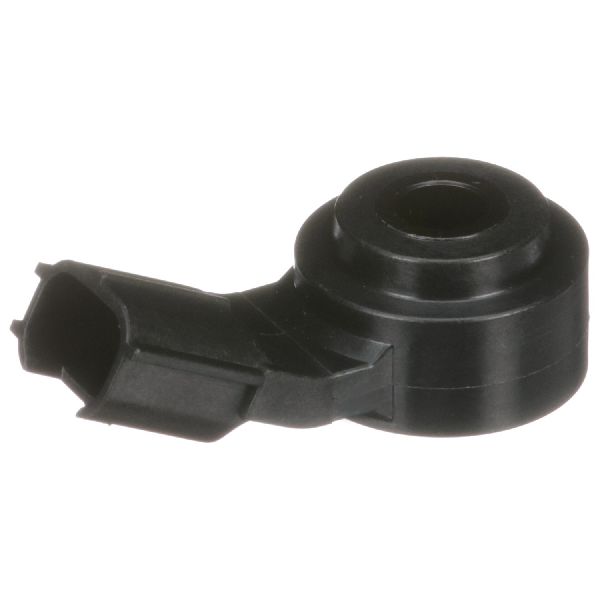
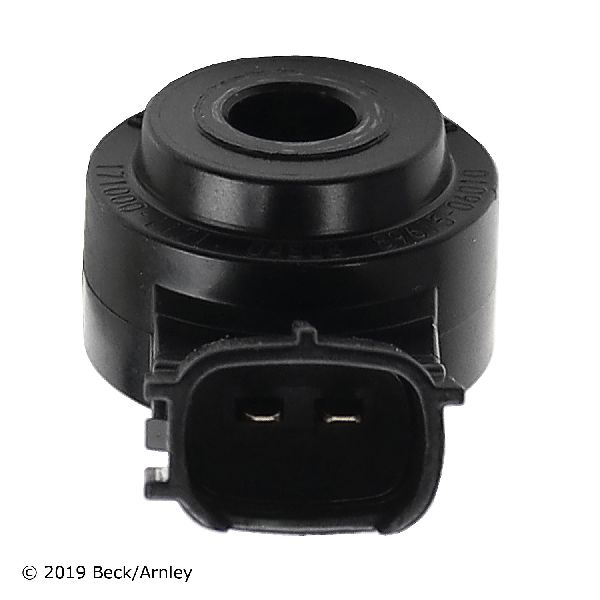
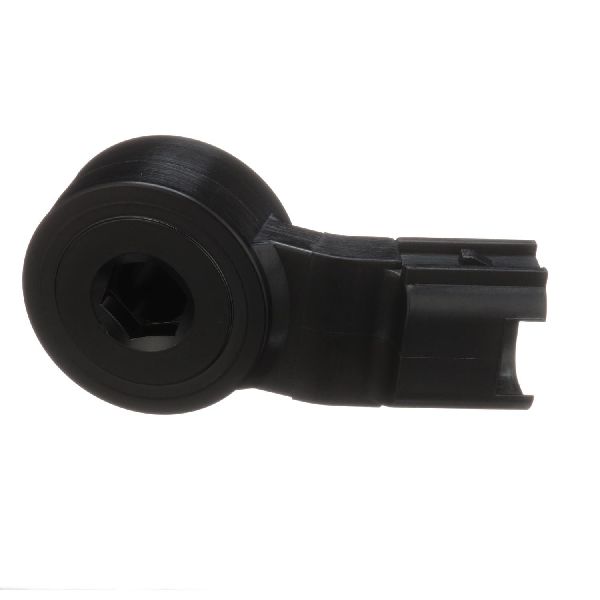
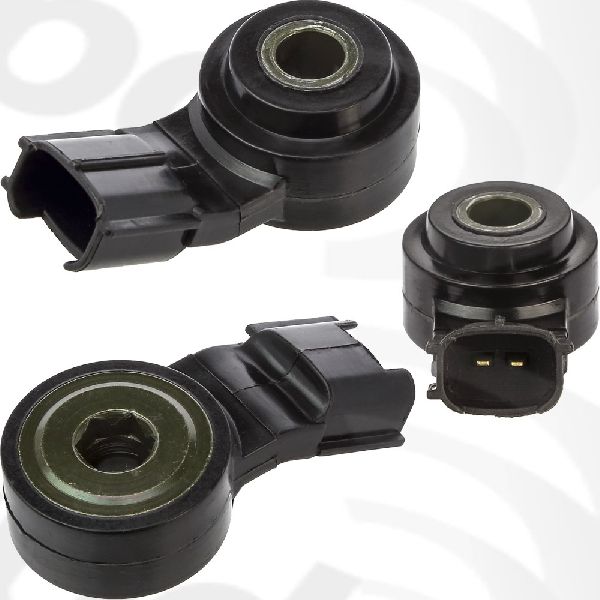
Est. part cost: $20-$60 - Failed Knock Sensor (Bank 2) 🔴 High Probability → Shop Ignition Knock (Detonation) Sensor The sensors live in a high-heat environment under the intake manifold, and the internal piezoelectric element can fail over time, leading to an open circuit or incorrect voltage readings.
How to confirm: After accessing the sensor, test its resistance with a multimeter. A reading outside the manufacturer's specification (typically 120-280 kΩ for this sensor) confirms failure. An open circuit (infinite resistance) is a common failure mode.
Typical fix: Replace the knock sensor. It is highly recommended to replace both sensors (Bank 1 and Bank 2) and the sub-harness at the same time due to the labor involved.
Est. part cost: $40-$150 per sensor
Rare But Worth Checking
- Faulty Engine Control Module (ECM): → Shop Engine Control Module (ECM) This is very rare. All other possibilities, especially sensor and wiring issues, should be exhaustively ruled out before considering ECM replacement.
- Poor Connection at the ECM: A loose or corroded pin at the main engine computer connector can cause this code. This is unlikely but worth checking if the sensors and harness are confirmed to be good.
Diagnosis Steps
- Confirm the code P0333 is present using an OBD-II scanner. Check for other codes like P0328.
- Plan for major disassembly. To access the sensors and harness, you must remove the air intake, throttle body, and the upper and lower intake manifold (plenum).
- Once the intake manifold is removed, carefully inspect the engine valley for signs of rodents (nests, droppings, chewed wires). This is a very common cause.
- Visually inspect the knock sensor harness for any damage. Disconnect it from both sensors.
- Test the resistance of both knock sensors using a multimeter. The expected resistance is between 120-280 kΩ. A reading that is open (infinite) or extremely high (in the MΩ range) indicates a failed sensor.
- Even if only one sensor tests bad, it is best practice to replace both sensors and the harness due to the high labor cost of the job.
- Install the new sensors, ensuring they are torqued to the correct specification (typically 15 ft-lbs or 20 N*m). Over- or under-tightening can affect sensor performance.
- Install the new wiring harness and connect it securely. Ensure it is routed correctly and clipped into place.
- Before reassembly, thoroughly clean the intake manifold and cylinder head mating surfaces.
- Reassemble the intake manifold using new gaskets to prevent vacuum leaks. This is a critical step.
- Reconnect all other components, hoses, fuel lines, and the battery.
- Clear the trouble codes with the scanner and perform a test drive to ensure the code does not return.
Parts You'll Likely Need
- Knock Sensor
(OEM #89615-20090 (superseded by 89615-06010))— This is the most common failure point for code P0333. It is recommended to replace both sensors (Bank 1 and Bank 2) at the same time.
Trusted brands: Denso (OEM supplier), Toyota (Genuine), NTK
OEM price range: $120-$200
Aftermarket price range: $40-$90 - Knock Sensor Wire Harness
(OEM #82219-07010)— This harness is extremely prone to damage from heat and rodents chewing the soy-based insulation. It is inexpensive and should always be replaced when replacing the sensors to ensure a lasting repair.
Trusted brands: Toyota (OEM)
OEM price range: $40-$60
Aftermarket price range: $20-$40 - Intake Manifold Gasket Set
(OEM #17176-0P010 (Upper/Plenum Gaskets), 17177-0P010 (Lower Gaskets))— These are one-time-use gaskets that must be replaced anytime the intake manifold is removed to prevent vacuum leaks.
Trusted brands: Toyota (OEM), Fel-Pro, Mahle
OEM price range: $40-$70
Aftermarket price range: $20-$40
Related Codes That Often Appear With This One
- P0333 — In some cases, owners have reported that a loose gas cap can trigger this code, as noted in NHTSA ODI #11624192.
- P0328 — This is the code for Knock Sensor 1 Circuit High (Bank 1). If the wiring harness is damaged by rodents, it often affects the wires for both sensor circuits simultaneously, causing both codes to appear.
Technical Service Bulletins (TSBs) & Recalls
- T-SB-0094-09 Rev1: While not directly for P0333, this TSB addresses other 2GR-FE engine issues like ticking noises and various camshaft position codes (P0014, P0015, etc.) for 2006-2009 RAV4s, showing Toyota's acknowledgement of early issues with this engine family.
Platform-Specific Known Issues
- The use of soy-based wiring insulation on many Toyota models from this era makes the knock sensor harness a prime target for rodents seeking shelter and food in the warm, protected engine valley.
Mechanic-Grade Diagnostic Values
- Knock Sensor Internal Resistance — expected: 120 - 280 kΩ at 20°C (68°F). Failure: A reading of infinity (Open Line) or an extremely high, fluctuating reading in the Mega-Ohm (MΩ) range indicates a failed sensor.
- Knock Sensor Circuit Voltage at ECM — expected: Below 4.5V during normal operation.. Failure: The ECM will set code P0333 if it detects a voltage of 4.5V or more for longer than one second.
- Knock Sensor AC Voltage Output (Dynamic Test) — expected: A small AC voltage reading should be generated on a multimeter when the engine block is tapped near the sensor.. Failure: No AC voltage reading when tapping suggests the sensor's piezoelectric element is dead.
Scan Tool Commands That Help
- Toyota Techstream: Freeze Frame Data Viewing — This is not a command, but a critical data-viewing function. Use it to see the exact engine conditions (engine temp, speed, load, etc.) at the moment the P0333 code was triggered. This can provide clues, though the cause is almost always the sensor or wiring.
- Toyota Techstream: Clear DTCs — Used after the physical repair is complete to turn off the Check Engine Light. The system is a continuous monitor, so if the fault is not fixed, the code will return quickly.
Wiring & Ground Locations
- Knock Sensor ECM Pins (Bank 2) — At the main Engine Control Module (ECM), typically located in the engine bay or behind the glove box. The specific connector and pin numbers vary by year.. To perform a definitive continuity test, you must check the wiring from the sensor connector in the engine valley to the corresponding pins at the ECM. For example, on some Toyota V6s, the Bank 2 knock sensor signal is at Pin 8 of connector 'D'. This isolates the fault to the wiring itself, ruling out the sensor or ECM.
- Engine Harness Grounds — The 2GR-FE has several critical engine harness ground points bolted directly to the cylinder heads and valve covers. One is on the side of the front cylinder head, underneath the throttle body area.. A poor or corroded main engine ground can introduce electrical noise and voltage offsets, potentially causing false sensor circuit codes. While not a primary cause for P0333, ensuring these grounds are clean and tight is good practice during any major engine work.
Real Owner Repair Stories
- Reddit user on r/4thGen4Runner (2004 Toyota 4Runner V6 (1GR-FE, a similar V6 with the same knock sensor layout)) — Intermittent P0333 code that seemed to appear more frequently when using lower octane (85) fuel and would often disappear when using premium (91) fuel.
❌ Tried (didn't work) Driving with higher octane fuel, which only masked the issue temporarily.
✅ What actually fixed it The owner performed the full intake manifold removal. No rodent damage was found. The Bank 2 knock sensor was found to have corrosion and tested at a fluctuating 5-11 MΩ (5,000-11,000 kΩ), far outside the 120-280 kΩ spec. The good sensor tested at 199 kΩ. Replacing both knock sensors (with NTK brand), the harness, and all associated gaskets permanently fixed the code. - Toyota Owner (NHTSA ODI #10821880) — While driving in the city, the TRAC and Check Engine Light came on. A code reader retrieved P0333, and a dealership confirmed that rodents had chewed the wiring.
- Toyota Owner (NHTSA ODI #10626222) — Reported a P0333 check engine light where a cable previously replaced for rodent damage was found to be the culprit again.
OEM Part Supersession History
89615-20090→89615-06010— Part update/consolidation by Toyota.
Heads up: The new part number (89615-06010) is the correct and current replacement for a wide range of Toyota vehicles, including the 2005-2012 RAV4.
Model Year Variations Within This Range
- 2006-2012: There are no significant variations within the 2006-2012 RAV4 V6 model years that change the fundamental cause or repair procedure for code P0333. However, a known service item on the 2GR-FE engine is the VVT-i oil line, which was updated from a rubber/metal combination to an all-metal design to prevent oil leaks. If performing the knock sensor repair, it is an opportune time to inspect and replace this line if it's the older rubber style.
Diagnostic Flowchart
Other Known Issues on This Vehicle
Issues unrelated to this code that are worth knowing about as an owner of this generation:
- VVT-i Oil Line Rupture 🔴 High — Common on pre-2010 models. The original rubber section of the hose degrades, potentially causing rapid, catastrophic oil loss and engine seizure. (Ref: LSC 90K (Limited Service Campaign))
- Steering Intermediate Shaft Clunk 🟠 Medium — Very common on 2006-2008 models, but can affect later years. A clunking or popping noise is heard/felt in the steering wheel at low speeds. (Ref: T-SB-0318-08 (supersedes ST001-08), T-SB-0033-11)
- Timing Chain Cover Oil Leak 🟠 Medium — Affects many early 2GR-FE engines (approx. 2005-2009). A significant oil leak develops where the timing cover meets the engine block, requiring a labor-intensive engine-out or drivetrain-drop repair.
- Water Pump Failure 🟠 Medium — The water pump can fail prematurely, sometimes before 100,000 miles, leading to coolant leaks and potential overheating.
- Excessive Oil Consumption 🟡 Low — Some earlier 2GR-FE engines may consume oil due to piston ring design, though it is less prevalent than on some 4-cylinder Toyota engines of the era.
Used vs. New Parts: Buying Guide for This Vehicle
When a used part is the smart pick: For this specific repair, using used parts is strongly discouraged for the sensors and wiring harness due to the extremely high labor cost to access them. A failure of a used electronic part would require re-doing the entire 4-5 hour job. A used intake manifold or engine brackets could be considered if they were damaged during disassembly.
Donor-vehicle mileage cap: roughly under 80000 miles for the part to have meaningful remaining life.
What to inspect on the donor part:
- For a used intake manifold, inspect for cracks, especially around bolt holes.
- Ensure all threaded inserts are intact and not stripped.
- Verify all mating surfaces are flat and free of deep gouges.
OEM-only on this vehicle (don't cheap out):
- Knock Sensor Wire Harness: Given the high heat environment and propensity for rodent damage, a new OEM harness (verified by VIN) is the most reliable choice to ensure a lasting repair.
Aftermarket brands forum-validated for this vehicle:
- Denso: Denso is the original equipment manufacturer (OEM) for Toyota, so their sensors are identical to the genuine Toyota part.
- NTK: Widely regarded in forums as a high-quality alternative, with repair stories confirming their sensors test within OEM resistance specifications.
Brands owners have reported issues with on this vehicle:
- No-name 'kits' from online marketplaces (Amazon, eBay, etc.). The risk of receiving a part that is dead-on-arrival or fails prematurely is very high. The cost savings on the part do not justify the risk of repeating the significant labor involved.
Real Owner Stories
Aggregated from forums and TSBs cited above. Mileages and costs reflect what owners reported in those sources.
2005-2012 Toyota RAV4 3.5L V6
Symptoms: The owner diagnosed a P0333 code and suspected rodent damage in the engine valley.
What fixed it: Removed the air intake, throttle body, and upper/lower intake manifolds to confirm chewed wires; replaced the knock sensors and the wiring harness.
Source hint: YouTube: 'RAV4 V6 Remove and Test Knock Sensors - 2005-2012 - Code P0333 - 3.5l - Toyota 2GR-FE motor'
Toyota Tacoma V6 (2GR-FE related)
Symptoms: P0333 code triggered by rodent damage to the soy-based wiring insulation in the engine valley.
What fixed it: DIY repair of the knock sensor harness after finding the wires chewed through by rodents.
Source hint: TacomaWorld: 'PSA: Rodent proof your engine before it's too late! (P0333 - DIY Knock sensor harness repair)'
Toyota Tacoma V6 (2GR-FE related)
Symptoms: Check engine light with code P0333.
What fixed it: Dealer repair of a chewed wiring harness.
Cost: $1200-$1500
Source hint: TacomaWorld: 'Rodents Chewing Knock Sensor Wires'
2007-2009 Lexus RX 350 3.5L V6
Symptoms: P0333 Knock Sensor 2 Circuit High Bank 2 Code.
What fixed it: Replacement of the knock sensor and harness located under the intake manifold.
Source hint: ClubLexus: 'P0333 Knock Sensor 2 Circuit High Bank 2 Code'
Documented NHTSA Reports
NHTSA ODI #11624192
Symptoms: An owner reported a clunking sound from the rear end and noted that a loose gas cap can throw a P0333 code for the knock sensor.
Observations: The report highlights that the sensors are located under the manifold, making it a labor-intensive job.
Related OBD-II Codes
Frequently Asked Questions
Does TSB-0094-09 Rev1 mean Toyota will fix my P0333 code for free?
Why did my RAV4's VSC and 4WD lights come on at the same time as the Check Engine Light for P0333?
Is it true that rodents are attracted to the wiring in my 2005-2012 RAV4?
Can I just replace the one bad knock sensor on my 3.5L V6?
What is the correct resistance for a new knock sensor on the 2GR-FE engine?
Are there any other major engine issues I should check while the intake is off for the P0333 repair?
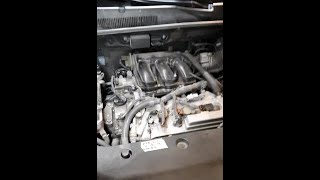
Helpful Videos
We Have This Part in Stock


The information in this article is provided for general reference and educational purposes only. Vehicle specifications, procedures, and part compatibility can vary by production date, trim level, and region. Always consult your vehicle's factory service manual and verify part numbers before purchasing or performing repairs. Safety-critical components such as airbags, seat belts, and braking systems should be installed by a qualified professional.
- Toyota RAV4:
- 🧭 Diagnostic Flowchart
- 🎬 Helpful Videos
- 🛍️ Shop This Part
- What's Unique About the 2005-2012 Toyota RAV4
- Symptoms You May Notice
- Most Likely Causes
- Rare But Worth Checking
- Diagnosis Steps
- Parts You'll Likely Need
- Related Codes That Often Appear With This One
- Technical Service Bulletins (TSBs) & Recalls
- Platform-Specific Known Issues
- Mechanic-Grade Diagnostic Values
- Scan Tool Commands That Help
- Wiring & Ground Locations
- Real Owner Repair Stories
- OEM Part Supersession History
- Model Year Variations Within This Range
- Other Known Issues on This Vehicle
- Used vs. New Parts: Buying Guide for This Vehicle
- Real Owner Stories
- 2005-2012 Toyota RAV4 3.5L V6
- Toyota Tacoma V6 (2GR-FE related)
- Toyota Tacoma V6 (2GR-FE related)
- 2007-2009 Lexus RX 350 3.5L V6
- Documented NHTSA Reports
- NHTSA ODI #11624192
- Related OBD-II Codes
- Frequently Asked Questions
- 🎟️ Get 5% Off