

P0341 on 2004-2009 Toyota Prius: Camshaft Position Sensor 'A' Circuit Causes and Fixes
On a 2004-2009 Toyota Prius, code P0341 most often points to a failing camshaft position sensor. This can cause the engine to crank but not start, or to stall while driving. Replacing the sensor is a common and relatively inexpensive DIY fix. However, the code can also be triggered by a faulty crankshaft sensor, wiring issues, or even low fuel pressure.
- P0341 on a Gen 2 Prius usually means the camshaft position sensor is failing, but it's not the only cause.
- Symptoms include stalling, rough idle, and a no-start condition.
- Before buying parts, check the sensor's wiring and connector for obvious damage.
- Consider other possibilities if a new camshaft sensor doesn't fix it, such as the crankshaft sensor, the 12V battery, or even the fuel system.
- Replacing the camshaft position sensor is an easy and affordable DIY job that often resolves the issue.
What's Unique About the 2004-2009 Toyota Prius
The 2004-2009 Prius (Gen 2) uses the reliable 1NZ-FXE engine, which has a timing chain, not a belt. While the camshaft position sensor itself can fail like on any car, this code can sometimes appear due to issues unrelated to the sensor. A weak 12V battery can cause voltage drops during cranking, leading to erratic sensor signals. More unique to the Prius, other engine performance problems that cause the engine to run erratically, such as low fuel pressure, can confuse the sensor correlation check and trigger a P0341 even when the sensor itself is good. A major vehicle-specific issue is that replacing the camshaft position sensor requires the removal of the large and complex hybrid inverter assembly, making it a much more labor-intensive job than on most vehicles.
Symptoms You May Notice
- Check Engine Light is on
- Engine is hard to start or cranks but won't start
- Engine stalls, especially at low speeds or idle
- Rough idling or surging
- Hesitation or lack of power during acceleration
- Reduced fuel economy
- Replacing the crankshaft position sensor when the camshaft sensor is the actual issue, or vice-versa.
- Assuming a major mechanical failure (like timing chain) before thoroughly checking the sensor, its wiring, and the 12V battery.
- Replacing sensors without checking for underlying issues like low fuel pressure that could set the code indirectly.
Most Likely Causes
- Failing Camshaft Position Sensor 🔴 High Probability → Shop Engine Camshaft Position Sensor Like any electronic component exposed to heat cycles in the engine bay, the sensor can wear out over time. Internal circuits can fail or the sensor can lose sensitivity. Accessing it on the Gen 2 Prius is very difficult, requiring removal of the hybrid inverter.
How to confirm: Test the sensor's resistance with a multimeter. It should be between 1,630-2,740 Ω when cold and 2,065-3,225 Ω when hot. An out-of-spec reading confirms failure. Given the high labor cost to access it, thorough diagnosis is recommended over speculative replacement.
Typical fix: Replace the camshaft position sensor.
Est. part cost: $25-$70 - Wiring or Connector Issue 🟡 Medium Probability The wiring harness in the engine bay is subject to heat and vibration, which can lead to chafed insulation, broken wires, or a loose/corroded connector at the sensor.
How to confirm: Visually inspect the wiring harness leading to the camshaft position sensor for any signs of damage, melting, or corrosion. Check that the connector is securely plugged in and the pins are clean. Wiggle the harness while the engine is running to see if it causes a stall.
Typical fix: Repair the damaged section of wiring or clean/replace the connector.
Est. part cost: $5-$30 - Stretched Timing Chain or Timing Issue ⚪ Low Probability → Shop Engine Timing Chain While the 1NZ-FXE has a durable timing chain, very high mileage (well over 200,000 miles) can lead to stretching. This causes the camshaft and crankshaft to go slightly out of sync, triggering the code.
How to confirm: This is an advanced diagnosis. It involves comparing the camshaft and crankshaft sensor signals on an oscilloscope to see if their timing relationship is correct. A rattling noise from the engine on startup can also be a symptom.
Typical fix: Replace the timing chain, tensioners, and guides. This is a labor-intensive job.
Est. part cost: $150-$400
Rare But Worth Checking
- Faulty Crankshaft Position Sensor: A failing crankshaft sensor can send erratic signals that the ECM misinterprets as a problem with the camshaft sensor's correlation. One owner on PriusChat with a 2004 Prius at 397k miles reported that codes P0341 and P0A90 were ultimately solved by replacing the crankshaft position sensor, noting its plug was also loose.
- Weak 12V Auxiliary Battery: → Shop Vehicle Battery A weak 12V battery can cause low voltage during engine cranking. This can lead to erratic signals from various sensors, including the camshaft sensor, and may trigger a P0341 code, sometimes during extended cranking periods.
- Low Fuel Pressure / Fuel System Issue: An erratic idle or stalling due to a failing fuel pump or clogged filter can cause the engine speed to fluctuate in a way that the ECM interprets as a cam/crank correlation error. A PriusChat user with P0341 and P3190 (Poor Engine Power) ultimately traced the fault to a bad fuel pump after replacing multiple sensors with no success. The measured fuel pressure was only 20 PSI, while the minimum specification is 21 PSI.
- Faulty Engine Control Module (ECM): This is extremely rare, but the ECM's internal circuitry for interpreting the sensor signal can fail. This should only be considered after all other possibilities, including sensors, wiring, and mechanical timing, have been exhaustively ruled out.
Diagnosis Steps
- Read the code with an OBD-II scanner and note any other codes present. Codes like P3190 or P0A90 can point toward other root causes.
- Check the 12V auxiliary battery's health. A weak battery can cause various electrical issues and spurious codes on a Prius.
- Visually inspect the camshaft position sensor's wiring and connector. Look for any damage, corrosion, or loose connections. The sensor is located on the top of the valve cover on the passenger side of the engine.
- If the wiring looks good, the most common and cost-effective next step is to replace the camshaft position sensor. Use a quality brand like Denso.
- Clear the codes and test drive the vehicle to see if the code returns.
- If the code persists, more advanced diagnostics are needed. Use a multimeter to check for proper voltage (typically 5V reference and 12V power depending on the pin) and ground at the sensor connector.
- Consider other causes noted with this code. Check fuel pressure to rule out a fuel delivery problem. Inspect the crankshaft position sensor and its wiring, as it can also trigger P0341.
- If all sensors and wiring are confirmed good, the final step is to analyze the mechanical timing by comparing cam and crank signals with an oscilloscope to check for a stretched timing chain.
Parts You'll Likely Need
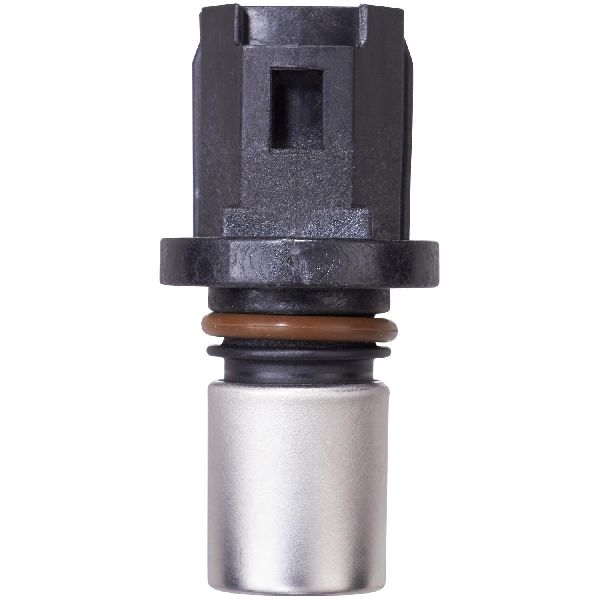
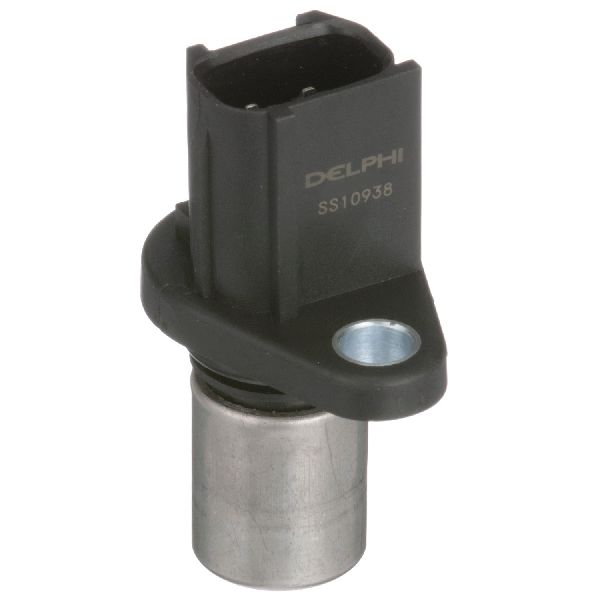
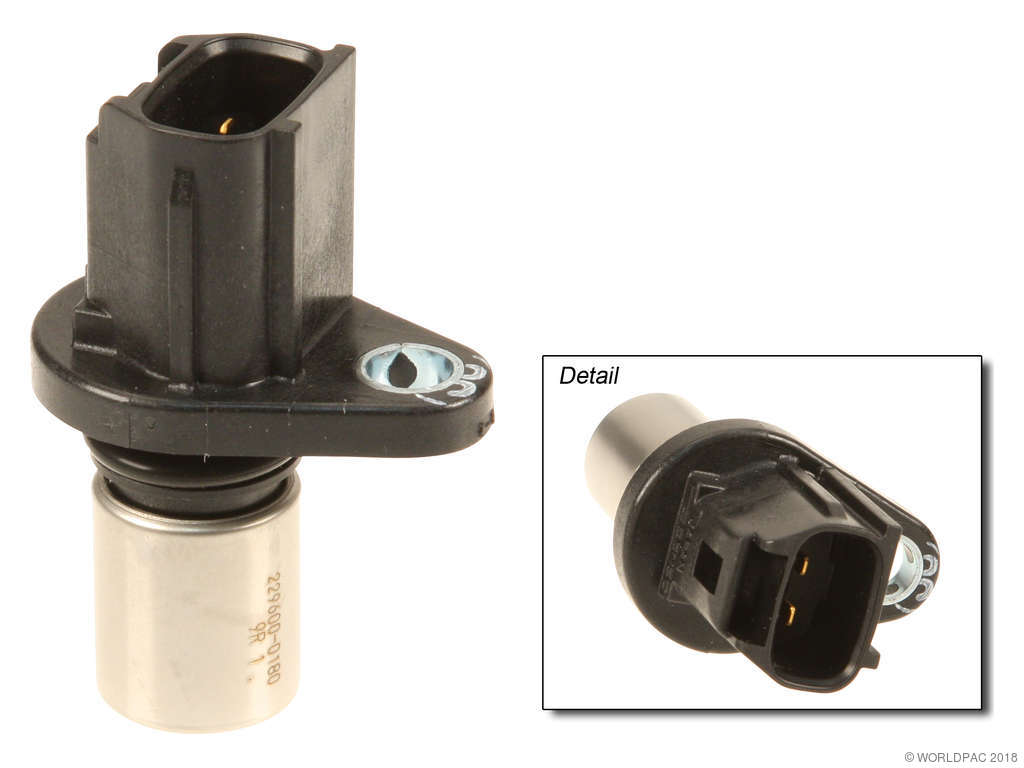
- Camshaft Position Sensor
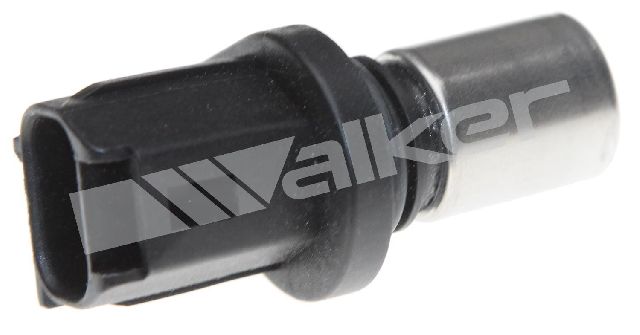
(OEM #90919-05024)— This sensor is the most frequent point of failure for code P0341. It is an electronic component that wears out over time. The OEM part number for the Gen 2 Prius (1NZ-FXE) is 90919-05024. Be aware that part number 90919-05045, often confused with the cam sensor, is actually the CRANKSHAFT sensor.
Trusted brands: Denso (OEM supplier), NTK/NGK, Standard Motor Products
OEM price range: $60-$90
Aftermarket price range: $25-$50
Related Codes That Often Appear With This One
- P0340 — P0340 indicates a general malfunction in the camshaft position sensor circuit (e.g., no signal), while P0341 points to a performance/range issue (e.g., erratic signal). They often appear together as they relate to the same component.
- P0300, P0301, P0302, P0303, P0304 — These are misfire codes. Incorrect camshaft timing information can lead to the ECM improperly timing spark and fuel, causing misfires in one or more cylinders.
- P3190 — This Toyota-specific code means 'Engine Does Not Start' or 'Poor Engine Power'. It often appears with P0341 because a faulty camshaft position sensor signal can prevent the engine from starting or cause it to run very poorly.
- P0A90 — This code indicates a 'Drive Motor 'A' Performance' issue. In one documented case, it appeared alongside P0341 when a faulty crankshaft position sensor caused the entire hybrid system to behave erratically and shut down.
Technical Service Bulletins (TSBs) & Recalls
- T-SB-0172-09 Rev2: Details the common Combination Meter (speedometer display) failure and the replacement procedure.
- NHTSA Campaign 12V536000: A recall related to the hybrid inverter water pump, which could fail and cause the vehicle to stall.
- T-SB-0174-12: Pertains to ABS/VSC warning lights illuminating due to overly sensitive monitoring logic, affecting 2004-2009 Prius models.
Platform-Specific Known Issues
- Crankshaft Sensor Failure as Root Cause: Multiple owners on forums like PriusChat have reported that replacing the camshaft position sensor did not fix the P0341 code. The actual cause was a faulty crankshaft position sensor or its connector. In one case with a 2004 Prius, the car would jerk and die, throwing P0341 and P0A90, and the fix was a new crankshaft sensor.
- Fuel System Causing False Code: A 2007 Prius owner on PriusChat experienced P0341 and P3190 (Poor Engine Power) after an engine swap. After replacing the cam sensor, crank sensor, and MAF sensor with no luck, the problem was finally resolved by replacing the fuel tank/pump assembly. The low fuel pressure caused an erratic run condition that the ECU misinterpreted as a cam timing fault.
Mechanic-Grade Diagnostic Values
- Camshaft Position Sensor Resistance (Cold) — expected: 1,630 - 2,740 Ω. Failure: Reading is outside this range, or shows an open (infinite) or short (near zero) circuit.
- Camshaft Position Sensor Resistance (Hot) — expected: 2,065 - 3,225 Ω. Failure: Reading is outside this range after the engine is warmed up.
- Fuel Pressure (at idle) — expected: 325 kPa (47 psi) is the nominal operating pressure, with a minimum of 147 kPa (21 psi) required.. Failure: Pressure below 21 PSI can cause stalling and may trigger a false P0341 code.
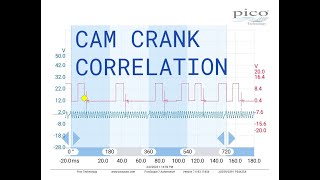
- Camshaft vs. Crankshaft Signal Waveform — expected: Using an oscilloscope, expect to see 3 distinct pulses from the camshaft sensor (G2 signal) for every 2 full rotations of the crankshaft (NE signal).. Failure: The P0341 code specifically triggers if 12 or more cam signal pulses are detected within two crank rotations, indicating a noisy or faulty signal. A misaligned signal pattern can indicate a jumped timing chain.
Hidden / Shadow Codes Worth Checking
- P0342: Camshaft Position Sensor 'A' Circuit Low Input. This indicates the signal voltage was below a threshold (e.g., <0.3V) for a set time, pointing to a short to ground or a failed sensor. (see via Standard OBD-II scanner. It is a more specific fault than the general P0341 performance code.)
- P0343: Camshaft Position Sensor 'A' Circuit High Input. This indicates the signal voltage was above a threshold (e.g., >4.7V) for a set time, pointing to a short to power or a failed sensor. (see via Standard OBD-II scanner. It provides a more precise diagnosis than the general P0341 code.)
Wiring & Ground Locations
- C1 Connector — The 2-pin electrical connector on the camshaft position sensor itself, located on the passenger side of the cylinder head, underneath the hybrid inverter assembly.. This is the primary connection point to check for corrosion, damage, or a loose fit when diagnosing the sensor circuit.
- E4 ECM Connector — The specific connector on the Engine Control Module (ECM) where the camshaft position sensor wires terminate. The ECM is located behind the right side of the dashboard.. This is the termination point for checking wire continuity from the sensor. A problem here could indicate an ECM issue, though it is rare.
- Ground Point EC — An engine ground point located at the rear of the 1NZ-FXE engine.. A loose or corroded main engine ground can cause floating voltages and erratic signals for multiple sensors, including the camshaft position sensor, leading to false codes.
Real Owner Repair Stories
- PriusChat user 'way2coolwheels' (2007 Toyota Prius) — Engine would run for a few hours, then stumble and die, setting P0341 and P3190 (Poor Engine Power). Would restart, run for a minute, then die again.
❌ Tried (didn't work) Replacing the Camshaft Position Sensor, Replacing the Crankshaft Position Sensor, Replacing the MAF sensor, Replacing ignition coils
✅ What actually fixed it The user measured fuel pressure and found it was only 20 PSI. Replacing the entire fuel tank/pump assembly resolved all codes and running issues. The erratic run condition from fuel starvation was causing the ECM to misinterpret the cam/crank correlation.
OEM Part Supersession History
90919-05045 (Crankshaft Sensor)→90919-05087— Minor internal revision for improved durability and moisture resistance.
Heads up: These parts are for the CRANKSHAFT position, not the camshaft. They are often misidentified in catalogs. Using a crankshaft sensor in place of a camshaft sensor will not work.90919-05026 (Camshaft Sensor)→90080-19014— Part number consolidation/update.
Heads up: Some sources still show confusion, but 90080-19014 is a valid number for the camshaft position sensor on this engine.
Diagnostic Flowchart
Other Known Issues on This Vehicle
Issues unrelated to this code that are worth knowing about as an owner of this generation:
- Combination Meter Failure 🟠 Medium — Common, especially in colder climates. The display may fail to illuminate at startup, and can prevent the car from turning off normally. (Ref: T-SB-0172-09 Rev2. Toyota issued a TSB and a warranty enhancement program for this issue, though it is now expired. The cause is a failing capacitor on the circuit board.)
- Inverter Coolant Pump Failure 🔴 High — A very common failure on Gen 2 models, often occurring after 100,000 miles. Failure can cause the hybrid system to overheat and shut down while driving. (Ref: A recall (NHTSA campaign 12V536000) was issued for some 2004-2009 models due to a manufacturing defect that could cause the pump to fail. Common codes are P0A93.)
- Excessive Oil Consumption 🟠 Medium — Many 1NZ-FXE engines begin to consume significant amounts of oil, often starting around 100,000-150,000 miles. This is often attributed to carbon buildup on low-tension piston rings. A clogged PCV valve can also be a contributing factor.
- Brake Actuator Failure 🔴 High — The ABS/brake actuator assembly can fail, leading to warning lights (ABS, VSC, TRAC) and changes in brake feel. This is an expensive repair. (Ref: Toyota issued a warranty extension for this component. TSBs like TSB-0174-12 and policy bulletin POL16-03 relate to this issue.)
- HID Headlight Failure 🟡 Low — On models equipped with HID headlights, the bulbs or ballasts can fail intermittently, causing flickering before complete failure.
Used vs. New Parts: Buying Guide for This Vehicle
When a used part is the smart pick: A used part is a reasonable choice for a wiring harness pigtail if the original connector is damaged. A complete, low-mileage used fuel pump assembly from a reputable salvage yard can also be a cost-effective solution, as the OEM part is expensive.
Donor-vehicle mileage cap: roughly under 120000 miles for the part to have meaningful remaining life.
What to inspect on the donor part:
- For a wiring pigtail, ensure the plastic is not brittle and the locking tab is intact.
- For a fuel pump assembly, check the donor vehicle's history for accidents or flood damage. Visually inspect the unit for rust or physical damage before purchase.
OEM-only on this vehicle (don't cheap out):
- Camshaft Position Sensor
- Crankshaft Position Sensor
Aftermarket brands forum-validated for this vehicle:
- Denso (This is the Original Equipment Manufacturer for Toyota; a Denso-branded sensor is equivalent to a genuine Toyota part)
- NGK/NTK
Brands owners have reported issues with on this vehicle:
- Unnamed or 'white-box' sensors from online marketplaces are not recommended due to a high rate of premature failure for critical engine management components.
Real Owner Stories
Aggregated from forums and TSBs cited above. Mileages and costs reflect what owners reported in those sources.
2004 Toyota Prius 1.5L 1NZ-FXE — 397000 miles
Symptoms: The car would jerk and die while driving, throwing codes P0341 and P0A90.
What fixed it: Replacing the crankshaft position sensor and fixing a loose plug at that sensor.
Source hint: PriusChat: 'P0A90-239, P0341'
2007 Toyota Prius 1.5L 1NZ-FXE
Symptoms: After an engine swap, the car ran for a few hours but then would not stay running, throwing P0341 and P3190.
What fixed it: Replacing the fuel tank/pump assembly after unsuccessfully replacing the cam, crank, and MAF sensors.
Source hint: PriusChat: 'Won’t stay running, P0341 and P3190'
Related OBD-II Codes
Frequently Asked Questions
Is there a TSB for the speedometer display failing on my 2004-2009 Prius?
Can a failing hybrid inverter water pump cause my Prius to stall?
What are the specific resistance specs for testing the camshaft position sensor on a 1NZ-FXE?
Why is the labor for replacing the camshaft sensor so high on the Gen 2 Prius?
Could my P0341 code actually be caused by the fuel system?
Is there a TSB for ABS or VSC lights on my 2007 Prius?
Helpful Videos

We Have This Part in Stock


The information in this article is provided for general reference and educational purposes only. Vehicle specifications, procedures, and part compatibility can vary by production date, trim level, and region. Always consult your vehicle's factory service manual and verify part numbers before purchasing or performing repairs. Safety-critical components such as airbags, seat belts, and braking systems should be installed by a qualified professional.
- Toyota Prius:
- 🧭 Diagnostic Flowchart
- 🎬 Helpful Videos
- 🛍️ Shop This Part
- What's Unique About the 2004-2009 Toyota Prius
- Symptoms You May Notice
- Most Likely Causes
- Rare But Worth Checking
- Diagnosis Steps
- Parts You'll Likely Need
- Related Codes That Often Appear With This One
- Technical Service Bulletins (TSBs) & Recalls
- Platform-Specific Known Issues
- Mechanic-Grade Diagnostic Values
- Hidden / Shadow Codes Worth Checking
- Wiring & Ground Locations
- Real Owner Repair Stories
- OEM Part Supersession History
- Other Known Issues on This Vehicle
- Used vs. New Parts: Buying Guide for This Vehicle
- Real Owner Stories
- 2004 Toyota Prius 1.5L 1NZ-FXE — 397000 miles
- 2007 Toyota Prius 1.5L 1NZ-FXE
- Related OBD-II Codes
- Frequently Asked Questions
- 🎟️ Get 5% Off