

P0341 on 2006-2012 Toyota RAV4 3.5L V6: Camshaft Sensor Causes and Fixes
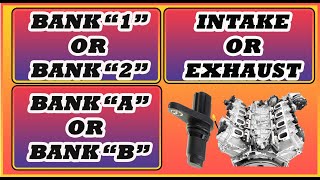
On a 2006-2012 RAV4 V6, code P0341 almost always points to a failing intake camshaft position sensor on Bank 1 (the rear cylinder bank against the firewall). Replacing this sensor is a common 15-minute DIY fix, with an OEM-quality part costing around $45-$75. The diagnostic is simple: swap the suspect sensor with the identical one on the front bank (Bank 2) and see if the code changes to P0346.
- P0341 on the RAV4 V6 almost always means a problem with the intake camshaft position sensor on the rear cylinder bank (Bank 1).
- Before buying parts, confirm the sensor is bad by swapping it with the identical sensor on the front bank (Bank 2). If the code follows the sensor (changing to P0346), you've found the problem.
- Ensure your engine oil is clean and at the proper level, as low or dirty oil can affect the VVT system and trigger timing-related codes.
- Use a quality replacement sensor from a brand like Denso or an OEM Toyota part to ensure reliability.
What's Unique About the 2006-2012 Toyota RAV4
The 2GR-FE is a robust and widely used Toyota engine. For code P0341, the main challenge isn't a platform-specific defect but rather correct diagnosis. Owners must correctly identify Bank 1 as the rear bank (by the firewall) to avoid replacing the wrong sensor. While the intake sensor on Bank 1 is fairly accessible from the top with a 10mm wrench, the exhaust sensor is not, making this identification critical to a simple repair. Unlike some other engines where timing chain issues are a primary cause for this code, on the 2GR-FE, a simple sensor failure is far more probable.
Symptoms You May Notice
- Check Engine Light is on
- VSC and/or TRAC lights may also be on
- Difficulty starting the engine, or extended cranking time
- Engine stalls, especially at low RPM
- Rough idle
- Hesitation or stumbling during acceleration
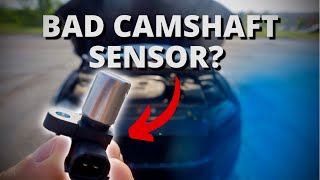
- Reduced fuel efficiency 🎬 Watch: A breakdown of common bad camshaft sensor symptoms.
- Replacing the wrong sensor (e.g., the Bank 2 sensor on the front of the engine, or the exhaust cam sensor which is harder to access).
- Replacing the crankshaft position sensor, which is a different part and would typically set different codes.
Most Likely Causes
- Failing Bank 1 Intake Camshaft Position Sensor 🔴 High Probability → Shop Engine Camshaft Position Sensor Sensors can fail over time due to heat cycles and electronic wear. It's the most common point of failure for this specific code on the 2GR-FE engine across multiple Toyota and Lexus platforms.
How to confirm: The most effective diagnostic is to swap the Bank 1 intake sensor with the Bank 2 (front bank) intake sensor. They are identical parts. Clear the codes. If the code changes to P0346 (Camshaft Position Sensor 'A' Circuit Range/Performance Bank 2), the sensor is confirmed faulty. This is a widely documented and successful diagnostic step in owner forums.
Typical fix: Replace the Bank 1 (rear) intake camshaft position sensor. The repair takes about 15-20 minutes and requires only a 10mm socket or wrench.
Est. part cost: $45-$90 - Wiring or Connector Issue 🟡 Medium Probability The wiring harness in the engine bay is exposed to heat and vibration, which can lead to brittle wires, loose pins in the connector, or corrosion over time. Rodent damage to the harness is also a known cause, as the soy-based wire insulation can attract pests.
How to confirm: Visually inspect the sensor's connector and nearby wiring for any signs of damage, melting, corrosion, or chewing. Unplug the connector and ensure the pins are clean and tight. Use a multimeter to check for 5V reference voltage and a good ground at the connector with the key on.
Typical fix: Repair the damaged section of wiring or clean/replace the connector pigtail.
Est. part cost: $10-$30 - Low or Dirty Engine Oil ⚪ Low Probability The VVT-i system uses oil pressure to adjust cam timing. If the oil is very low or dirty, it can cause the VVT-i phasers to respond slowly or erratically, which the ECM might interpret as a cam/crank correlation error.
How to confirm: Check the engine oil level on the dipstick and note its condition. If the level is low or the oil is far past its change interval, this could be a contributing factor.
Typical fix: Perform an oil and filter change with the correct viscosity oil (5W-30 is specified for the 2GR-FE in this vehicle).
Est. part cost: $40-$80
Rare But Worth Checking
- Stretched Timing Chain or Failed Tensioner: → Shop Engine Timing Chain While the 2GR-FE has a durable timing chain, very high mileage (>150k miles) can lead to stretch. This would cause the camshaft and crankshaft signals to be out of sync. This issue would likely be accompanied by rattling noises from the engine and other timing-related codes (e.g., P0016).
- Failing VVT-i Camshaft Gear (Phaser): → Shop Engine Camshaft A VVT-i gear can get stuck or fail internally. A Toyota TSB for the 2GR-FE mentions VVT-i gear issues causing other timing codes, and forum posts have linked a bad VVT sprocket directly to P0341. This is an expensive, labor-intensive repair.
- Faulty Engine Control Module (ECM): This is extremely rare. The ECM itself could have a faulty driver for the sensor circuit. This should only be considered after all other possibilities have been exhaustively ruled out by a professional.
Diagnosis Steps
- Read the trouble codes with an OBD-II scanner. Confirm P0341 is present and note any other codes.
- Visually inspect the Bank 1 (rear bank, by the firewall) intake camshaft position sensor and its electrical connector for any obvious damage, corrosion, or loose connections. The sensor is black and held in by a single 10mm bolt.
- Check the engine oil level and condition. Top off or change if necessary, using 5W-30 oil.
- For a definitive sensor test, swap the Bank 1 intake cam sensor with the identical Bank 2 intake cam sensor (located on the front of the engine). They are interchangeable.
- Clear the codes using the scanner and drive the vehicle until the check engine light returns.
- Re-scan for codes. If P0346 appears, the sensor you moved to Bank 2 is faulty and needs replacement. If P0341 reappears, the problem is in the wiring, VVT system, or ECM for Bank 1.
- If the sensor is ruled out, use a multimeter to test the Bank 1 sensor connector for the correct voltage (typically 5V reference) and ground signals from the ECM.
- If wiring is confirmed good, the issue is likely mechanical (timing chain, VVT gear) and may require professional diagnosis with advanced tools like an oscilloscope.
Parts You'll Likely Need
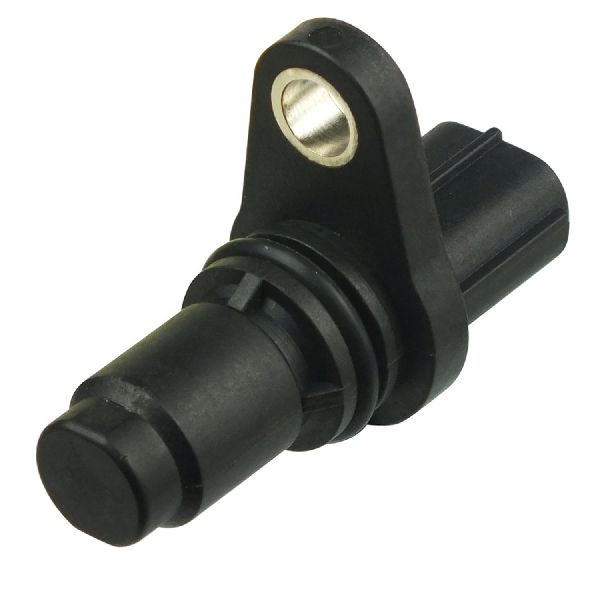
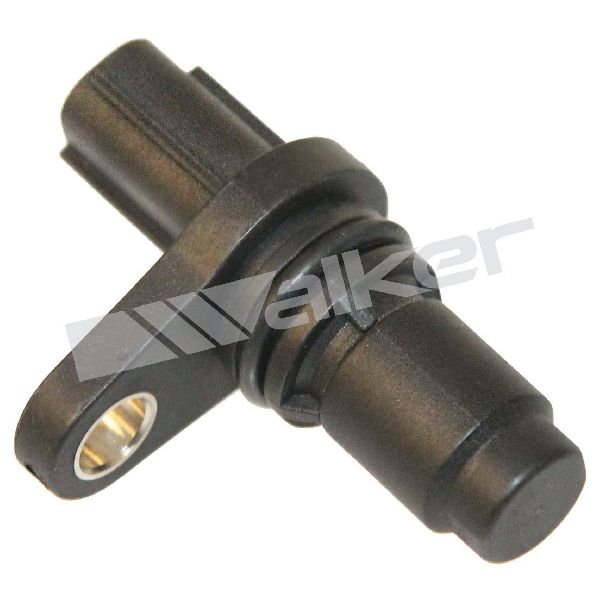
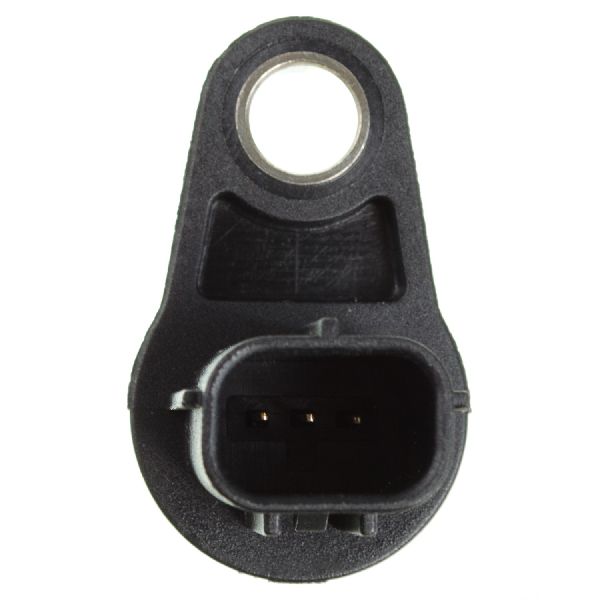
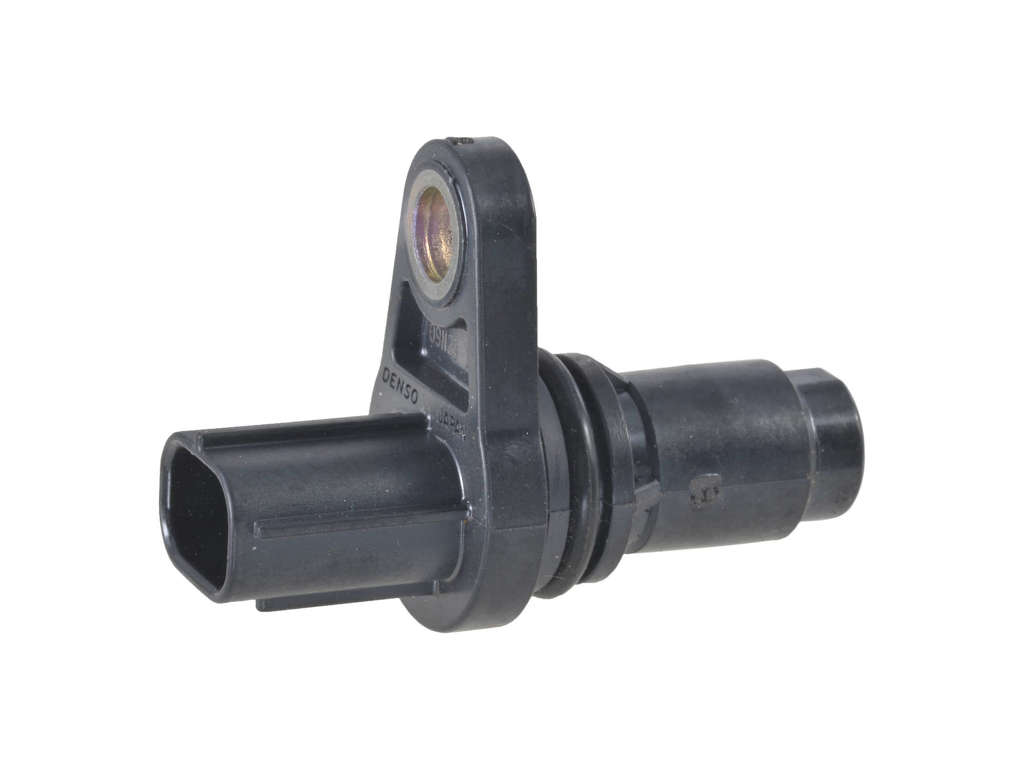
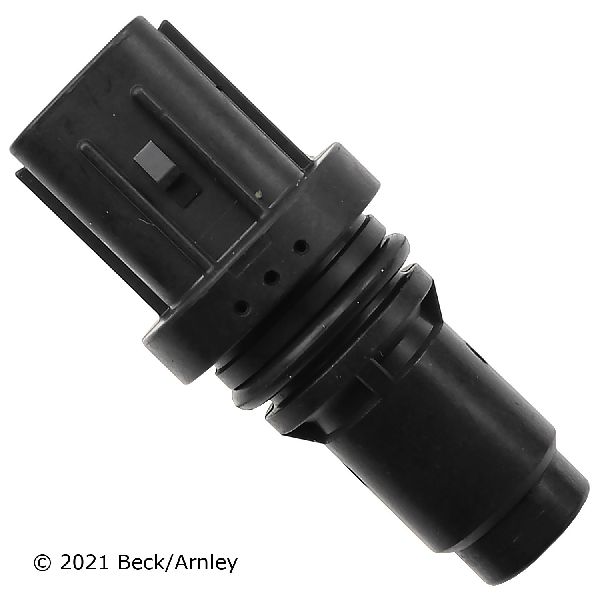
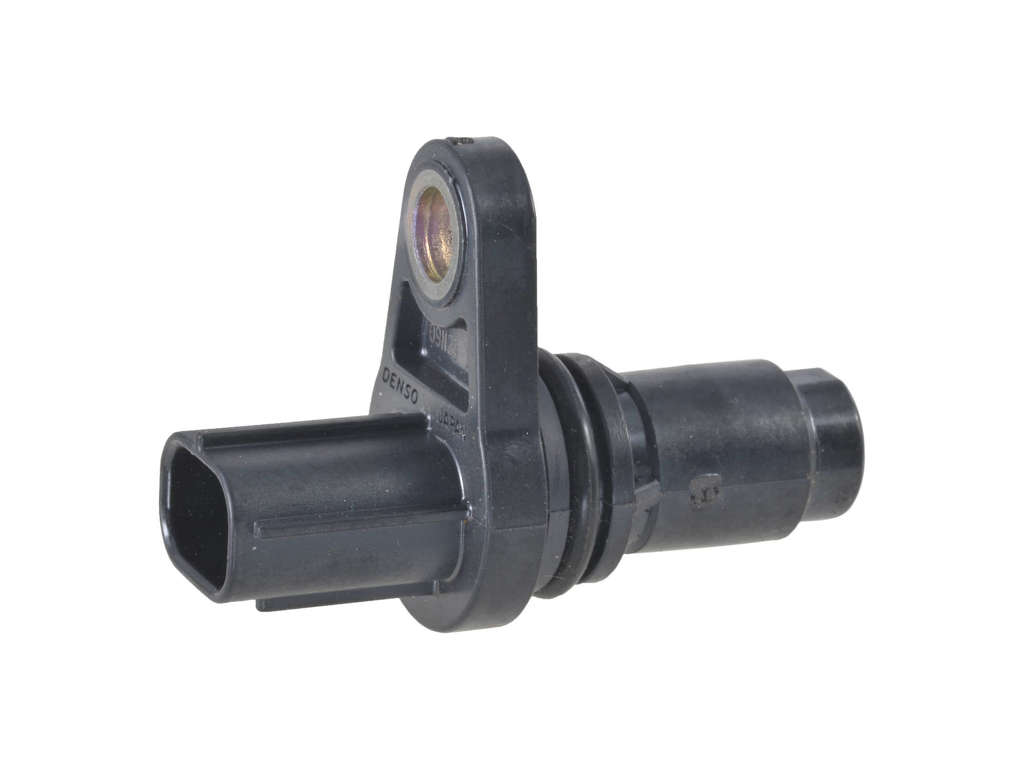
- Camshaft Position Sensor
(OEM #90919-05061)— This is the most common failure point for code P0341. The four camshaft position sensors (Intake/Exhaust for Bank 1/Bank 2) on the 2GR-FE are often the same part number.
Trusted brands: Toyota OE, Denso (196-2011)
OEM price range: $70-$90
Aftermarket price range: $45-$75
Related Codes That Often Appear With This One
- P0340 — P0340 indicates a complete loss of signal from the sensor, while P0341 indicates a performance/range issue. They can appear together if the sensor is failing intermittently.
- P0346 — This is the equivalent code for Bank 2. It would appear after swapping a faulty Bank 1 sensor to Bank 2 for diagnostic purposes.
- P0016, P0017, P0018 — These codes indicate a crank/cam correlation issue. If they appear with P0341, it may point towards a more serious mechanical timing problem like a stretched chain, rather than just a sensor failure.
Technical Service Bulletins (TSBs) & Recalls
- T-SB-0094-09 Rev1: 2GR-FE Engine Ticking Noise and/or MIL "ON" P0014, P0015, P0024, P0025, P0017, or P0018
- T-SB-0318-08 Rev2: '06-'08 RAV4: Steering Intermediate Shaft Noise
Platform-Specific Known Issues
- A known Toyota Technical Service Bulletin (T-SB-0094-09 Rev1) exists for 2006-2009 RAV4 models with the 2GR-FE engine for a ticking noise and other timing codes (P0014, P0015, etc.) related to a faulty exhaust VVT-i gear. While P0341 is not listed, it points to potential VVT system issues on this engine.
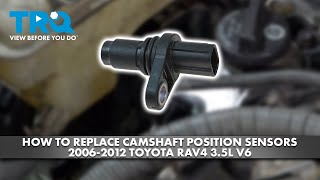
- The Bank 1 (rear) intake sensor is located near the firewall but is accessible from the top of the engine bay without removing the intake manifold, making it a feasible DIY repair. 🎬 Watch: Step-by-step camshaft sensor replacement for your RAV4 V6.
Mechanic-Grade Diagnostic Values
- Camshaft Position Sensor Connector - Power Supply Voltage — expected: 4.5V to 5.0V DC with ignition ON, engine OFF (measured between power wire and chassis ground).. Failure: Voltage below 4.5V or absent voltage indicates a wiring or ECM power supply issue.
- Camshaft Position Sensor Connector - Signal Wire Voltage (Sensor Disconnected) — expected: Approximately 5.0V DC with ignition ON, engine OFF (measured between signal wire and chassis ground).. Failure: No voltage suggests an open or short in the signal wire to the ECM.
- Camshaft Position Sensor Signal Waveform (Oscilloscope) — expected: A clean digital square wave, toggling between approximately 0V and 5V as the engine is running or cranked.. Failure: A missing, noisy, or distorted (not square) waveform indicates a faulty sensor or external interference.
- Alternator AC Ripple Voltage — expected: Less than 100mV AC at idle with electrical loads on.. Failure: Consistent AC voltage over 0.5V or spikes exceeding 1.5V can indicate a failing alternator diode, creating electrical noise that may disrupt the cam sensor signal.
Hidden / Shadow Codes Worth Checking
- Freeze Frame Data: While not a 'hidden code,' professional technicians rely on the Freeze Frame Data stored with P0341. This snapshot shows engine speed, load, temperature, and other key parameters at the exact moment the fault was recorded, providing crucial context for whether the issue occurs during cranking, at idle, or under load. (see via A professional scan tool like Toyota's Techstream or a high-end OBD-II scanner can access and display the Freeze Frame Data associated with the stored DTC.)
Scan Tool Commands That Help
- Toyota Techstream: VVT System Active Test (Control the VVT) — If the sensor and wiring are confirmed good but P0341 persists (especially with other timing codes), a technician can use this function to command the Bank 1 intake Oil Control Valve (OCV). Observing the engine's response and live data for VVT angle changes helps determine if the fault lies with the VVT phaser or the OCV, rather than the sensor circuit.
- High-end Scan Tool / Techstream: Reset Memory / Clear DTCs — This is a required step after any repair. Some Toyota systems may also benefit from a 'Reset Memory' function (if available) which can clear learned values, though a specific 'cam sensor relearn' is not commonly required for a simple sensor swap on this model.
Wiring & Ground Locations
- Engine Harness Ground (General) — Typically a 10mm or 12mm bolt securing one or more ground wires from the main engine harness directly to the engine block or cylinder head, often near a valve cover.. The camshaft position sensor's ground reference is provided by the ECM, which in turn must have a solid ground to the engine block and chassis. A loose or corroded main engine ground can introduce voltage offsets and noise, causing erratic sensor readings.
- Chassis Ground Point (Engine Bay) — On many RAV4s, there is a primary ground point on the left side (driver's side) of the engine compartment, bolted to the inner fender or radiator support.. Ensures a clean ground path between the engine, the ECM, and the vehicle's body. Corrosion at this point, especially in salt-belt regions, can cause a wide range of difficult-to-diagnose electronic issues, including sensor performance codes.
- Sensor Connector B55 (Bank 1 Intake) — On the rear cylinder head (Bank 1), connected to the intake camshaft position sensor. It's a 3-pin connector.. This is the direct connection point for the sensor. The pins are: Pin 1 (Power, ~5V), Pin 2 (Signal), Pin 3 (Ground). All voltage and waveform tests start here.
Real Owner Repair Stories
- AcuraZine / r/AskAMechanic forum user reports (Various vehicles, including Honda/Acura with similar engine architecture) — Engine noise (rattle or chain noise) followed by the appearance of code P0341 immediately after a timing chain or tensioner replacement.
❌ Tried (didn't work) Replacing the camshaft position sensor., Checking the sensor wiring.
✅ What actually fixed it The mechanical timing was incorrect. The timing chain had been installed one tooth off on the camshaft sprocket. The P0341 code was accurately reporting that the camshaft's position was out of range relative to the crankshaft. The fix required disassembling the timing cover and correctly re-timing the engine.
When the Usual Fixes Don't Work
- While the most common fix for P0341 is replacing the sensor, a significant counter-example occurs when the code appears immediately after a timing chain service. In this scenario, the sensor is almost certainly not the problem. The code is a symptom of incorrect mechanical timing (e.g., the chain being off by a tooth). Replacing the sensor again will not fix the issue; the engine timing must be physically re-verified and corrected, which is a much more labor-intensive job.
OEM Part Supersession History
90919-05061→90919-05061 (current)— This part number has remained stable and fits a very wide range of Toyota and Lexus vehicles over many years, indicating no major revisions were needed for this application.
Heads up: Some parts suppliers may incorrectly label this part as a 'Crank Position Sensor'. While it may be used as a crank sensor on other engines, for the 2GR-FE, it is the camshaft position sensor. Always verify fitment by vehicle application.
Diagnostic Flowchart
Other Known Issues on This Vehicle
Issues unrelated to this code that are worth knowing about as an owner of this generation:
- VVT-i Oil Line Rupture 🔴 High — Very common on 2006-2009 models that have not had the updated part installed. Failure can occur at any mileage and leads to rapid, catastrophic oil loss and engine seizure. (Ref: Limited Service Campaign (LSC) announced by Toyota, but expired March 31, 2013. The fix involves replacing the original rubber-and-metal hose (part #15772-31010) with an all-metal line (part #15772-31030).)
- Premature Water Pump Failure 🟠 Medium — Commonly reported between 60,000 and 120,000 miles. Failure often begins as a slow leak from the weep hole or a bearing noise before progressing. If ignored, it can lead to overheating.
- Intermediate Steering Shaft Clunk 🟡 Low — Prevalent on 2006-2008 models, causing a clunking or popping noise when turning the steering wheel at low speeds. It is an annoyance but not typically a safety-critical failure. (Ref: T-SB-0318-08 Rev2)
Used vs. New Parts: Buying Guide for This Vehicle
When a used part is the smart pick: Almost never for this part. Camshaft position sensors are electronic components that live in a high-heat environment. They fail due to internal electronic fatigue over time. A used sensor has unknown remaining life and offers minimal cost savings compared to a quality new aftermarket part.
What to inspect on the donor part:
- Not applicable, as buying a used sensor is not recommended.
OEM-only on this vehicle (don't cheap out):
- For this repair, OEM-only is not a strict requirement. The OEM supplier is available on the aftermarket.
Aftermarket brands forum-validated for this vehicle:
- Denso (This is the Original Equipment Manufacturer for Toyota)
- Standard Motor Products (SMP)
- NTK/NGK
Brands owners have reported issues with on this vehicle:
- Unnamed 'white-box' or suspiciously cheap sensors from online marketplaces are a significant gamble and frequently reported on forums to be dead-on-arrival or fail within a few months.
Real Owner Stories
Aggregated from forums and TSBs cited above. Mileages and costs reflect what owners reported in those sources.
2007 Toyota RAV4 V6 3.5L
Symptoms: The engine was experiencing stalling and the P0341 code was triggered.
What fixed it: Swapping the rear (Bank 1) and front (Bank 2) intake cam sensors confirmed the fault, and replacing the faulty sensor solved the problem.
Source hint: ToyotaNation Forum - '2007 Rav4 V6 P0341'
2006-2012 Toyota RAV4 V6 3.5L
Symptoms: Check engine light with code P0341.
What fixed it: The owner swapped the Bank 1 and Bank 2 sensors; the code followed the sensor and changed to P0346, confirming a single faulty sensor needed replacement.
Source hint: RAV4World Forum - 'P0341 Code'
Related OBD-II Codes
Frequently Asked Questions
Does TSB-0094-09 Rev1 apply to my 2006-2012 RAV4 V6 if I have a P0341 code?
Is there a simple way to test if the Bank 1 intake camshaft sensor is actually bad before I buy a new one?
I have a clunking noise in my steering along with the P0341 code; are they related?
What oil should I use in my 2006-2012 RAV4 3.5L V6 to prevent VVT-i related codes?
Is the Bank 1 sensor accessible on the RAV4 V6 without taking the whole engine apart?
Is there a major engine failure I should be aware of while fixing this code on my 2006-2009 RAV4?
Helpful Videos

We Have This Part in Stock

The information in this article is provided for general reference and educational purposes only. Vehicle specifications, procedures, and part compatibility can vary by production date, trim level, and region. Always consult your vehicle's factory service manual and verify part numbers before purchasing or performing repairs. Safety-critical components such as airbags, seat belts, and braking systems should be installed by a qualified professional.
- Toyota RAV4:
- 🧭 Diagnostic Flowchart
- 🎬 Helpful Videos
- 🛍️ Shop This Part
- What's Unique About the 2006-2012 Toyota RAV4
- Symptoms You May Notice
- Most Likely Causes
- Rare But Worth Checking
- Diagnosis Steps
- Parts You'll Likely Need
- Related Codes That Often Appear With This One
- Technical Service Bulletins (TSBs) & Recalls
- Platform-Specific Known Issues
- Mechanic-Grade Diagnostic Values
- Hidden / Shadow Codes Worth Checking
- Scan Tool Commands That Help
- Wiring & Ground Locations
- Real Owner Repair Stories
- When the Usual Fixes Don't Work
- OEM Part Supersession History
- Other Known Issues on This Vehicle
- Used vs. New Parts: Buying Guide for This Vehicle
- Real Owner Stories
- 2007 Toyota RAV4 V6 3.5L
- 2006-2012 Toyota RAV4 V6 3.5L
- Related OBD-II Codes
- Frequently Asked Questions
- 🎟️ Get 5% Off