

P0341 on 2000-2004 Volvo S40 1.9T: Cam Sensor, VVT, and Timing Belt Fixes
P0341 on a 2000-2004 Volvo S40 usually points to a failing camshaft position sensor, a problem with the VVT system, or a timing belt that has slipped. A complete no-start is a common symptom. Due to the risk of a slipped timing belt causing severe engine damage, diagnosis should be done immediately. The most common cause is an oil-soaked timing belt that has slipped, originating from a leaking VVT gear or camshaft seals.
- P0341 on this Volvo is a serious code that demands immediate attention.
- Before replacing any parts, you MUST verify the engine's mechanical timing. A slipped timing belt is a very common cause.
- Check for oil leaks inside the timing belt cover. A leak from the VVT gear or cam seals is the likely culprit for a slipped belt.
- If mechanical timing is perfect and there are no leaks, the next most likely causes are a faulty Camshaft Position Sensor or VVT Solenoid.
- This is an interference engine. Do not attempt to start or drive the car until the cause is found and fixed to avoid catastrophic engine failure.
What's Unique About the 2000-2004 Volvo S40
On the first-generation Volvo S40 with the 1.9T engine, code P0341 is frequently linked to the platform's known Variable Valve Timing (VVT) system issues. The VVT gear (hub) on the exhaust camshaft is prone to leaking oil from an internal seal or a small plunger on its face, which then contaminates and degrades the timing belt. This oil contamination can cause the timing belt to slip one or more teeth, leading to a mismatch between cam and crank signals that triggers P0341. Because this is an interference engine, a slipped belt can cause catastrophic engine damage, making this code extremely serious on this specific platform.
Symptoms You May Notice
- Engine cranks but will not start
- Hard starting, requiring long cranking times
- Engine starts, runs briefly (a few seconds), then stalls
- Engine stalls when warm or coming to a stop
- Rough idle, may drop to ~500 RPM
- Noticeable loss of power and hesitation during acceleration
- Slapping or ticking noise from the timing belt area, which is the loose belt hitting the plastic cover
- Reduced fuel economy
- Check Engine Light is on
- Replacing only the camshaft position sensor without checking the mechanical timing first. Many owners replace the sensor when the root cause is a slipped timing belt. This is the most common mistake.
- Replacing the crankshaft position sensor. While P0335 often appears with P0341, the issue is more commonly related to the camshaft timing correlation, not the crank sensor itself. The ECM flags both when it can't reconcile their signals.
Most Likely Causes
- Slipped or Incorrectly Installed Timing Belt 🔴 High Probability → Shop Engine Timing Chain The VVT gear and camshaft seals are known to leak oil directly onto the timing belt, causing it to swell, lose tension, and slip teeth. Incorrect installation is also common if special cam-locking tools (like Volvo #9995452) aren't used to hold the cams in place during tensioning, as the exhaust cam gear is not keyed to the camshaft.
How to confirm: Remove the upper timing cover (T30 Torx screws) and carefully inspect the alignment marks on the camshaft gears and the crankshaft pulley. Check the belt for any shininess or wetness from oil contamination, cracking, or missing teeth. A slapping sound from the cover when the engine is running is a tell-tale sign.
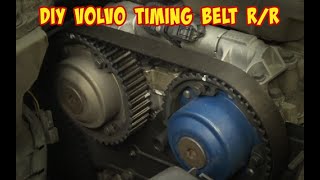
Typical fix: Re-time the engine and replace the timing belt, tensioner, idler pulley, and water pump. 🎬 Watch: Step-by-step guide to replacing your Volvo timing belt. Critically, the source of any oil leak (VVT gear, cam seals) must be fixed at the same time.
Est. part cost: $150-$300 for a complete timing belt kit from a brand like INA or Continental. - Failing Camshaft Position Sensor (CMP) 🟡 Medium Probability → Shop Engine Camshaft Position Sensor The sensor is located on the top of the engine and is exposed to significant heat cycles, which can cause electronics to fail over time. Heat-soak related failure (no-start when warm) is a common symptom.
How to confirm: With a multimeter, check for 5V reference and ground at the sensor connector. An oscilloscope is the best tool to verify a clean, square-wave signal from the sensor while the engine is cranking. Swapping with a known-good sensor is a common diagnostic step, but only after confirming mechanical timing is correct. Forum users strongly recommend using only Genuine Volvo or OEM Bosch sensors, as cheaper aftermarket versions are known to be unreliable.
Typical fix: Replace the camshaft position sensor. The sensor is located on the exhaust camshaft, accessible after removing the plastic engine cover.
Est. part cost: $100-$160 for a Bosch or Genuine Volvo sensor. - Faulty Variable Valve Timing (VVT) Solenoid 🟡 Medium Probability The solenoid can get clogged with oil sludge or fail electrically, causing it to incorrectly advance or retard the cam timing, which the ECM sees as a range/performance fault.
How to confirm: You can test the solenoid by applying 12V to its terminals to see if it actuates; a sluggish click indicates a problem. A scan tool that can command the solenoid on/off is also effective. Check for sludge in the oil passages when removed. Some users attempt to clean the solenoid with brake or carburetor cleaner as a first step. A resistance measurement of around 8.1 Ohms is expected.
Typical fix: Replace the VVT solenoid (also called Camshaft Reset Valve) and its gasket. An oil change with high-quality synthetic oil is highly recommended at the same time.
Est. part cost: $60-$120 - Damaged Wiring or Connector ⚪ Low Probability Engine heat and vibration can make the wiring harness and plastic connector for the CMP sensor brittle and prone to cracking or loose pins. The wiring loom running over the top of the valve cover is particularly susceptible.
How to confirm: Visually inspect the wiring harness for the CMP sensor for any signs of cracking, melting, or chafing. Wiggle the connector while monitoring the sensor signal on a scan tool to check for intermittent connections.
Typical fix: Repair the damaged section of wiring or replace the connector pigtail.
Est. part cost: $15-$40 for a pigtail
Rare But Worth Checking
- Leaking or Failed VVT Hub (Cam Gear): While a major oil leak from the VVT gear is a common cause of belt slippage, the internal mechanism of the gear can also fail without a major leak, causing incorrect cam phasing and triggering P0341. A user on swedespeed.com reported that a failed internal locking pin in the hub was the ultimate cause after all other parts were replaced. This is an expensive part and requires a full timing belt job to replace. 🎬 See this walkthrough on how to replace the VVT gear.
- Low Oil Pressure / Clogged Oil Passages: The VVT system is hydraulically operated by engine oil. Very low oil pressure, or sludge blocking the small passages to the VVT solenoid and gear, can prevent the system from operating correctly and set this code. This can be caused by infrequent oil changes or a failing oil pump.
Diagnosis Steps
- Check for other DTCs. Pay close attention to codes like P0335, P0014, or P0015 as they provide critical context.
- CRITICAL: Inspect Mechanical Timing. Remove the upper timing belt cover (two T30 Torx bolts). Check for oil contamination on the belt and inside the cover. Carefully rotate the engine by hand (using a socket on the crankshaft pulley bolt) to align the timing marks on the cam gears with the notches in the plastic cover. Verify the crankshaft mark is also aligned. If the marks do not align perfectly, the timing has slipped and this is your primary issue.
- Inspect CMP Sensor Wiring. Visually check the sensor's connector and wiring for damage, corrosion, or loose pins. The harness runs over the valve cover and can become brittle.
- Test the CMP Sensor. If timing is confirmed correct, test the sensor. Using a scan tool, check for a changing signal from the sensor while cranking. For a more definitive test, use an oscilloscope to verify a clean square wave signal. A common failure mode is no signal when the engine is hot.
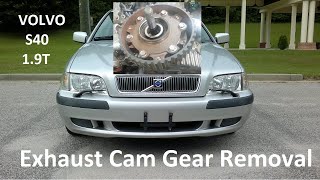
- Inspect the VVT System. Check the VVT solenoid for sludge and test its operation by applying 12V. Inspect the VVT gear for oil leaks from its front face; any leak here warrants a full timing job including gear replacement. 🎬 Watch: How to remove the exhaust cam gear properly.
- Check Engine Oil Level and Condition. Low or dirty oil can affect the VVT system's operation. Ensure the correct oil viscosity is being used.
Parts You'll Likely Need
- Camshaft Position Sensor
(OEM #30713370 (Bosch 0232103037))— This is a common failure point and often the first part replaced. It's the primary suspect if mechanical timing is confirmed to be correct. Owners strongly recommend using OEM/Bosch parts, as aftermarket sensors have a high failure rate.
Trusted brands: Bosch (OEM), Genuine Volvo
Related Codes That Often Appear With This One
- P0335 — Stands for Crankshaft Position Sensor Circuit Malfunction. The ECM compares cam and crank signals. When the cam signal is irrational due to a slipped belt, it can also flag the crank signal as part of the same fault, especially during a no-start.
- P0014 / P0015 — These codes indicate 'Camshaft Position - Timing Over-Advanced or Retarded'. They are more specific VVT codes and often point directly to a problem with the VVT solenoid, VVT gear, or base timing being off.
- P0300, P0301, P0302, P0303, P0304 — Random or specific cylinder misfire codes. Incorrect cam timing leads to inefficient combustion, causing misfires.
Technical Service Bulletins (TSBs) & Recalls
- Volvo Technical Journal TJ 29131 - While not for the S40 specifically, this TSB for later models discusses oil leaks from a plug in the VVT pulley, which is a known failure point on many Volvo VVT systems and relevant to the oil leak issue that causes P0341 on the S40.
Platform-Specific Known Issues
- The exhaust VVT gear is a very common source of oil leaks. The oil drips directly onto the timing belt, causing it to swell, slip, and/or fail prematurely, which can destroy the engine.
- A slapping noise from the timing belt area is a critical warning sign that the belt is loose, often due to oil contamination or a failed tensioner, and should be investigated immediately.
Mechanic-Grade Diagnostic Values
- VVT Solenoid (Camshaft Reset Valve) Resistance — expected: Approximately 8.1 Ohms. Failure: A significantly higher or lower reading, or an open circuit (infinite resistance).
- Camshaft Position Sensor Connector Voltages (Key On, Engine Off) — expected: Pin 1: 12V (Battery Voltage), Pin 2: 5V (Signal), Pin 3: Ground. Failure: Absence of 12V or 5V, or a bad ground reading indicates a wiring or ECM issue, not necessarily a bad sensor.
Hidden / Shadow Codes Worth Checking
- ECM-61: Camshaft control, exhaust - Faulty signal (see via This is a Volvo-specific code that requires a dealer-level scanner like VIDA/DiCE to read. It often accompanies generic codes like P0014, P0015, or P0341 and points more directly to the VVT system.)
- ECM-44: Camshaft position (CMP) sensor, exhaust - Faulty signal (see via This is a Volvo-specific code that requires a dealer-level scanner like VIDA/DiCE to read. It specifically points to a signal integrity problem from the camshaft position sensor itself.)
Wiring & Ground Locations
- Main Engine Ground — A thick cable running from the negative battery terminal down to a bolt on the top of the transmission case, near the battery tray.. A poor engine ground can cause floating voltages and erratic signals for all engine sensors, including the camshaft and crankshaft position sensors, leading to intermittent and hard-to-diagnose codes like P0341.
- 31/6 — This is the ground connection point for the Camshaft Position Sensor (7/27) according to Volvo wiring diagrams.. A specific fault at this ground point would directly affect the CMP sensor's ability to send a clean signal to the ECM, triggering P0341. The physical location is typically on the cylinder head or intake manifold near other sensors.
- CMP Sensor Connector — On top of the engine, at the driver's side end of the exhaust camshaft, connected to the sensor which is inserted into the timing belt cover.. This connector is the most common point of failure for wiring issues. The pins are: Pin 1 (Red wire) - 12V Power from system relay, Pin 2 (Yellow-Red wire) - Signal to ECM, Pin 3 (Green wire) - Sensor Ground.
Real Owner Repair Stories
- VolvoForums user 'pierremcalister' (2002 Volvo S40 1.9T) — Car started, purred for a second, then died. Would crank but not restart. Codes P0335, P0341, P0336 appeared. Owner heard a 'slapping noise' prior to failure, thought it was a loose plastic panel.
❌ Tried (didn't work) Letting the car sit., Clearing codes and attempting to restart.
✅ What actually fixed it The root cause was an oil leak from the VVT gear or cam seals that saturated the timing belt, causing it to loosen and slip. The 'slapping noise' was the loose belt hitting the inside of the plastic timing cover. The fix required a complete timing job and fixing the oil leak, but the engine had already suffered bent valves due to the slipped timing, requiring a cylinder head replacement.
OEM Part Supersession History
9497786→30713370 (Bosch 0232103037)— Part update/revision.
Heads up: While other sensors may fit, owners and technicians strongly report that only the Genuine Volvo or OEM Bosch sensor works reliably on this platform. Aftermarket sensors are a common cause of repeat failures or immediate no-start conditions.
Model Year Variations Within This Range
- 2000-2004: The range received a major facelift in May 2000. While the 1.9T engine was carried over, there were revisions to the VVT system, engine management software, and some electrical components compared to the pre-facelift 1996-1999 models. It's crucial to use parts specified for the 2000-2004 model years.
Diagnostic Flowchart
Real Owner Stories
Aggregated from forums and TSBs cited above. Mileages and costs reflect what owners reported in those sources.
2000-2004 Volvo S40/V40 1.9T
Symptoms: Crank and cam position sensors suddenly died, throwing P0335 and P0341 codes. The owner noted they had missed a warning sign: a slapping noise coming from the timing cover.
What fixed it: Discovered the timing belt had slipped due to oil contamination, which unfortunately led to bent valves.
Source hint: volvoforums.org.uk thread 'Crank/Cam position sensors suddenly dead'
2000 Volvo V40 1.9T
Symptoms: The car would not start when warm, experiencing a classic heat-soak failure. Code P0341 appeared first, followed by P0335 on subsequent restart attempts.
What fixed it: Diagnosed as a failing camshaft position sensor (CMP) due to heat-soak.
Source hint: volvoforums.org.uk thread '2000 v40 wont start when warm'
2000 Volvo S40 1.9T
Symptoms: The engine would crank but refused to start, presenting multiple cam-related codes including P0341.
What fixed it: Diagnosed as suspected jumped mechanical timing.
Source hint: volvoforums.org.uk thread '2000 s-40 1.9t cranks but wont start'
Related OBD-II Codes
Frequently Asked Questions
I hear a slapping noise from the timing belt area on my 2002 Volvo S40 1.9T. Is this related to code P0341?
My 2000 S40 1.9T won't start when the engine is warm, but starts fine cold. Could this be the camshaft position sensor?
Does Volvo Technical Journal TJ 29131 apply to my 2004 S40 1.9T?
What brand of camshaft position sensor should I buy to fix P0341 on my Volvo?
Can a clogged VVT solenoid cause a P0341 code on the 1.9T engine?
Do I need special tools to fix the timing belt if it caused my P0341 code?
Helpful Videos
![How to Fix P0341 Engine Code in 3 Minutes [2 DIY Methods / Only $9.45]](https://img.youtube.com/vi/y3mPQ48c-_Q/mqdefault.jpg)
We Have This Part in Stock


The information in this article is provided for general reference and educational purposes only. Vehicle specifications, procedures, and part compatibility can vary by production date, trim level, and region. Always consult your vehicle's factory service manual and verify part numbers before purchasing or performing repairs. Safety-critical components such as airbags, seat belts, and braking systems should be installed by a qualified professional.
- Volvo S40:
- 🧭 Diagnostic Flowchart
- 🎬 Helpful Videos
- 🛍️ Shop This Part
- What's Unique About the 2000-2004 Volvo S40
- Symptoms You May Notice
- Most Likely Causes
- Rare But Worth Checking
- Diagnosis Steps
- Parts You'll Likely Need
- Related Codes That Often Appear With This One
- Technical Service Bulletins (TSBs) & Recalls
- Platform-Specific Known Issues
- Mechanic-Grade Diagnostic Values
- Hidden / Shadow Codes Worth Checking
- Wiring & Ground Locations
- Real Owner Repair Stories
- OEM Part Supersession History
- Model Year Variations Within This Range
- Real Owner Stories
- 2000-2004 Volvo S40/V40 1.9T
- 2000 Volvo V40 1.9T
- 2000 Volvo S40 1.9T
- Related OBD-II Codes
- Frequently Asked Questions
- 🎟️ Get 5% Off