

P0355 on 2006-2010 Ford Explorer 4.6L V8: Ignition Coil 'E' Circuit Causes and Fixes
P0355 on a 4.6L V8 Explorer means the ignition coil on cylinder #5 has an electrical fault. The most likely fix is replacing the cylinder #5 ignition coil, which is the front-most coil on the driver's side. A Motorcraft coil costs about $40-$70 and is a simple DIY replacement. Also check for water in the spark plug well, a common issue on this truck.
- P0355 points directly to an electrical fault with the ignition coil on cylinder #5, which is the front-most cylinder on the driver's side.
- The fastest way to diagnose this is to swap the cylinder #5 coil with another cylinder's coil and see if the code follows.
- Before replacing the coil, always check the spark plug well for water or coolant, as a leak is a common underlying cause of failure for this specific coil.
- If you need to replace the spark plug on an engine built before late 2007, be aware that the original two-piece plugs are very likely to break during removal. Use the updated one-piece plug (Motorcraft SP-546) for replacement.
What's Unique About the 2006-2010 Ford Explorer
The 4.6L 3V V8 in this Explorer has two well-known issues that relate to this code. First, engines built before November 30, 2007, were fitted with two-piece Motorcraft SP-515 spark plugs that are notorious for breaking off in the cylinder head during removal, a problem documented in Ford TSB 08-7-6. Second, this platform can suffer from water or coolant leaks that pool directly in the spark plug well for cylinder #5. A degraded cowl weatherstripping allows rainwater to drip down, and a leaking intake manifold gasket can cause coolant to fill the well, shorting out the ignition coil and causing this code.
Symptoms You May Notice
- Check Engine Light is on or flashing
- Rough, shaking idle
- Engine hesitates or stumbles during acceleration
- Noticeable loss of engine power
- Bucking or jerking sensation while driving under load (e.g., up a hill)
- Audible ticking or popping sound from the engine bay
- Replacing only the spark plug without checking the coil, which is the more common failure point for a P035x code.
- Replacing the ignition coil without checking the spark plug well for moisture. If a leak is present, the new coil will soon fail as well.
- Assuming the PCM is bad before exhaustively testing the coil, plug, and wiring harness continuity.
Most Likely Causes
- Failed Ignition Coil on Cylinder #5 🔴 High Probability → Shop Ignition Coil Coil-on-plug units are common failure items on Ford's modular V8s due to constant heat cycles and potential moisture exposure. The DG-511 coil for this engine is a very frequent replacement part.
How to confirm: Swap the ignition coil from cylinder #5 (front, driver's side) with the coil from an adjacent cylinder (like #6). Clear the codes. If the code changes to P0356, the coil is bad.
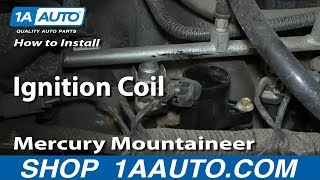
Typical fix: Replace the faulty ignition coil. It is held on by a single 8mm bolt. 🎬 See this walkthrough on how to replace the ignition coil. Many owners recommend using genuine Motorcraft parts to avoid premature failure.
Est. part cost: $40-$70 for a single OEM-quality coil. - Moisture in the Spark Plug Well 🟡 Medium Probability → Shop Spark Plug The location of cylinder #5 (and #8 on the rear driver's side) makes it highly susceptible to water intrusion. A common culprit is the foam seal on the passenger side of the cowl panel degrading, allowing rainwater to run down the firewall and onto the driver's side valve cover, flooding the #5 plug well. A leaking intake manifold gasket can also fill the well with coolant.
How to confirm: When you remove the ignition coil for cylinder #5, visually inspect the spark plug well and the coil boot for any signs of liquid (water or coolant) or white/green corrosion.
Typical fix: Dry the spark plug well completely using compressed air. Replace the contaminated ignition coil and spark plug. Most importantly, identify and repair the source of the leak. For a cowl leak, sealing the cowl seam with RTV silicone is a common fix. For a coolant leak, the intake manifold gasket must be replaced, and the manifold itself inspected for cracks.
Est. part cost: $40-$100 for a new coil and plug. Gasket repair costs can be significantly higher. - Worn or Fouled Spark Plug 🟡 Medium Probability → Shop Spark Plug The original-equipment two-piece spark plugs (Motorcraft SP-515) on engines built before late 2007 are known to accumulate carbon at the tip, which can cause misfires and also makes them prone to breaking during removal. 🎬 Watch: Important tips for replacing these fragile Ford spark plugs.
How to confirm: After confirming the coil is good, the spark plug is the next likely cause. Inspect the plug for wear, carbon tracking, or a cracked insulator. Given the risk, it's often best to replace it if it's old.
Typical fix: Replace the spark plug. It is highly recommended to use the updated one-piece Motorcraft SP-546 plug to prevent future breakage issues. This job carries a high risk of plug breakage on pre-11/30/2007 engines; following the procedure in TSB 08-7-6 (soaking with penetrating oil on a cold engine) is critical.
Est. part cost: $12-$20 for a single spark plug. - Damaged Connector or Wiring ⚪ Low Probability The plastic ignition coil connector can become brittle from engine heat and break when being disconnected, or the wiring can chafe against other components, causing a short or open circuit.
How to confirm: Visually inspect the wiring harness and connector for cylinder #5. Check for cracked plastic, loose pins, or exposed wires. Use a multimeter to check for 12V power at the connector with the key on and check for continuity on the signal wire back to the PCM.
Typical fix: Repair the damaged section of wire or replace the connector pigtail. The Motorcraft pigtail part number is often WPT-1051 (Ford P/N 5U2Z-14S411-ZB).
Est. part cost: $25-$45 for a new OEM connector pigtail.
Rare But Worth Checking
- Failed Powertrain Control Module (PCM): → Shop Engine Control Module (ECM) This is rare, but the internal driver circuit in the PCM that fires the ignition coil can fail. This should only be considered after a bad coil, spark plug, and wiring have all been definitively ruled out. Diagnosis involves using a noid light on the coil connector to see if the PCM is sending a trigger signal. If there is 12V power but no signal from the PCM, and the wiring is confirmed good, the PCM is likely faulty.
Diagnosis Steps
- Read the trouble codes with an OBD-II scanner to confirm P0355 and any related codes like P0305.
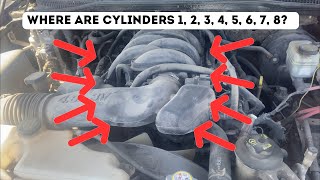
- Locate cylinder #5. 🎬 Watch: How to find cylinder #5 on your 4.6L engine. On the 4.6L V8, it is the front-most cylinder on the driver's side of the engine. The passenger side bank is cylinders 1-4 (front to back) and the driver's side is 5-8 (front to back).
- Swap the ignition coil from cylinder #5 with the coil from cylinder #6 (the one directly behind it). The coil is held by a single 8mm bolt.
- Clear the codes and start the engine. Let it run for a minute or take a short drive.
- Re-scan for codes. If the code has moved to P0356 ('Ignition Coil 'F' Circuit'), the ignition coil you moved is faulty and must be replaced.
- If the code P0355 returns, the coil is not the problem. Remove the coil from cylinder #5 again.
- Thoroughly inspect the spark plug well for any signs of water or engine coolant. If moisture is present, you have a leak that must be addressed (cowl or intake manifold).
- If the well is dry, inspect the electrical connector and wiring for any damage, corrosion, or loose pins. Test for 12V at the connector with the key on.
- If wiring appears intact, the next logical step is to replace the spark plug. BE AWARE: If your engine was built before 11/30/2007, it likely has two-piece plugs that can break. Proceed with extreme caution on a cold engine, following TSB 08-7-6 guidelines.
- If a new coil, new plug, and good wiring do not resolve the code, the final possibility is a fault in the PCM. Professional diagnosis is recommended before replacing the module.
Parts You'll Likely Need
- Ignition Coil (Coil-on-Plug)
(OEM #DG-511)— This is the most frequent cause of a P0355 code due to failure from heat and age.
Trusted brands: Motorcraft, Denso, NGK
OEM price range: $40-$70
Aftermarket price range: $25-$50 - Spark Plug (One-Piece Design Upgrade)
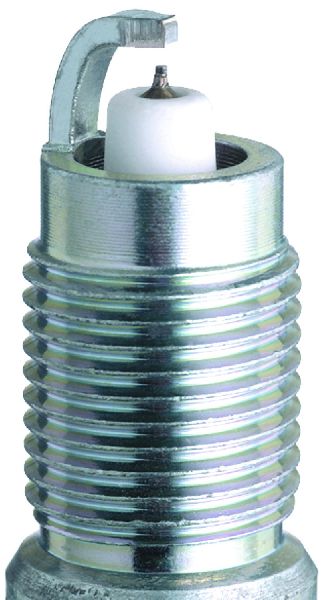
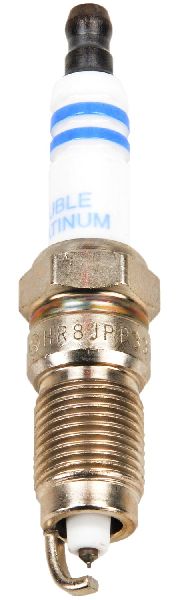
(OEM #SP-546)— Often replaced with the coil. It's critical to use the updated one-piece design (SP-546) to avoid the infamous breakage issue of the original two-piece plugs (SP-515) used in pre-2008 models.
Trusted brands: Motorcraft, Autolite, NGK
OEM price range: $12-$20
Aftermarket price range: $5-$15 - Ignition Coil Connector Pigtail
(OEM #WPT-1051)— Needed if the original plastic connector is cracked, broken, or has corroded terminals, preventing a secure connection to the ignition coil.
Trusted brands: Motorcraft
OEM price range: $25-$45
Aftermarket price range: $10-$20
Related Codes That Often Appear With This One
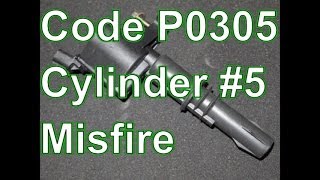
- P0305 — P0305 means 'Cylinder 5 Misfire Detected.' Since P0355 indicates an electrical fault that prevents the coil from firing, a misfire on that cylinder is the direct result. A P0355 will almost always be accompanied by a P0305.
- P0316 — This code means 'Misfire Detected on Startup (First 1000 Revolutions).' It often appears with a specific cylinder misfire code when the component is failing consistently.
- P0171 — P0171 means 'System Too Lean (Bank 1)'. While less common, a persistent misfire can sometimes lead to an incorrect oxygen sensor reading, causing the PCM to register a lean condition on the passenger side bank. One owner reported this code along with P0305 and P0355.
Technical Service Bulletins (TSBs) & Recalls
- TSB 08-7-6: Documents the procedure for removing breakage-prone two-piece spark plugs on 4.6L 3V engines built before 11/30/2007.
- Bulletin #SSM 52455: Notes that various Ford gas engines may exhibit an illuminated MIL with ignition system DTCs including P0355 set in the powertrain control module (PCM).
- Bulletin #TSB 24-2406: Indicates that other Ford platforms equipped with EcoBoost engines may also exhibit an illuminated MIL with ignition system DTC P0355 set in the PCM.
Platform-Specific Known Issues
- Ford TSB 08-7-6: This Technical Service Bulletin details the issue of two-piece spark plugs (SP-515) breaking in the cylinder heads of 4.6L 3V engines built before 11/30/07. It provides a specific procedure for removal: work on a cold engine, break the plug loose 1/8 turn, soak the threads with penetrating oil for at least 15 minutes, then work the plug back and forth to remove.
- Water Intrusion from Cowl: The foam seals on the cowl panel at the base of the windshield are known to degrade. This allows rainwater to drip directly onto the valve cover, where it pools in the spark plug wells for cylinders #5 (front) and #8 (rear), causing the coil to short out.
- Coolant Leak from Intake Manifold: The composite plastic intake manifold is prone to cracking near the coolant crossover passage, or the gasket can fail. This can cause coolant to leak externally and fill the nearby #5 spark plug well, leading to coil failure.
Mechanic-Grade Diagnostic Values
- Ignition Coil Primary Resistance — expected: 0.5 - 0.6 ohms for OEM Motorcraft coils.. Failure: A reading of OL (Open Loop/infinite resistance) or significantly higher resistance indicates a failed primary winding.
- Ignition Coil Secondary Resistance — expected: 5,500 - 6,100 ohms (5.5k - 6.1k Ω) for OEM Motorcraft coils.. Failure: A reading of OL (Open Loop) or a value far outside the expected range indicates a failed secondary winding.
- Ignition Coil Connector Power Supply Voltage — expected: 12V+ on the Red/Light Green wire with Key On, Engine Off (KOEO).. Failure: No voltage or low voltage indicates a problem with the power supply from the fuse box, not the coil or PCM driver.
- Mode $06 Misfire Count — expected: Value should be 0 or very low for a healthy cylinder.. Failure: A high or rapidly increasing count for Test ID $53, Component ID $A5 (for cylinder 5) indicates misfire events are occurring, even if a P0305 code is not yet present.
Hidden / Shadow Codes Worth Checking
- Mode $06, Test ID $53: This is not a trouble code, but a diagnostic monitor for misfire counts per cylinder. On Ford vehicles, Test ID $53 tracks misfire data. The specific component ID for cylinder 5 is typically $A5. (see via A professional scan tool with Mode $06 capabilities. This allows a technician to see which cylinder is misfiring before the PCM has logged enough events to set a P0305 trouble code.)
Scan Tool Commands That Help
- Ford IDS (Integrated Diagnostic System): Power Balance Test — This function graphically displays the power contribution of each cylinder in real-time. For a P0355 fault, the graph for cylinder #5 would show a significant drop compared to the others, confirming a lack of combustion. It helps to instantly verify the location of the dead cylinder.
- Ford IDS (Integrated Diagnostic System): KOER/KOEO Self-Tests — The Key On Engine Running (KOER) or Key On Engine Off (KOEO) self-tests command the PCM to check all its circuits. A P0355 code that appears immediately during a KOEO test strongly suggests a hard electrical fault (open or shorted wire) rather than an intermittent component failure.
Wiring & Ground Locations
- Cylinder 5 Coil Connector — Front-most ignition coil on the driver's side valve cover.. The two pins in this connector provide power and the trigger signal. Pin 1 (Red/Light Green wire) is 12V+ power from the Battery Junction Box. Pin 2 (Tan/Orange wire on some diagrams, Light Green/Yellow on others) is the trigger signal from the PCM.
- PCM Connector C175e, Pin 50 — The Powertrain Control Module (PCM) is typically located in the engine bay, near the firewall on the passenger side. C175e is one of the main harness connectors.. The trigger wire for the cylinder #5 ignition coil originates at Pin 50 of this connector. Checking for continuity between this pin and Pin 2 at the coil connector is the definitive test to rule out a broken wire.
- Ground G101 / G103 — Located on the driver's side inner fender apron in the engine compartment, near the battery.. This is a primary chassis and PCM ground point. A loose or corroded connection here can cause a weak or inconsistent ground reference for the PCM and ignition system, leading to erratic behavior and codes like P0355.
- Ground G102 — Located at the rear of the engine compartment, on the firewall.. This ground is also critical for engine sensors and the PCM. A poor connection can cause a variety of difficult-to-diagnose electrical issues, including ignition circuit faults.
Real Owner Repair Stories
- Auto E Clinic YouTube Channel (2006 Ford Explorer 4.6L V8) — Bucking and jerking under load at 45-50 mph, codes P0305, P0316, and P1285.
❌ Tried (didn't work) The diagnosis immediately pointed to the root cause without showing failed attempts.
✅ What actually fixed it The intake manifold gasket was leaking coolant directly into the #5 spark plug well. This saturated and destroyed the ignition coil. Replacing the coil and fixing the coolant leak resolved all codes. - Ford Truck Enthusiasts Forum User (2001 Expedition 5.4L (similar engine architecture)) — Persistent P0355 code and injector #5 shutting off after 10 seconds of runtime, even after replacing plugs and coils.
❌ Tried (didn't work) Replacing spark plugs, Replacing all ignition coils (COPs), Swapping injectors and coils to other cylinders
✅ What actually fixed it The final diagnosis pointed to a wiring issue between the PCM and the coil, or a faulty PCM driver. The user was advised to check continuity on the trigger wire (Light Green/Yellow) from PCM connector pin #27 back to the coil connector. The PCM intentionally shuts off the injector when it detects a coil circuit fault. - F150online Forums User (1997 F-150 5.4L) — P0355 code returned a day after replacing the ignition coil.
❌ Tried (didn't work) Replacing the ignition coil on cylinder #5 twice.
✅ What actually fixed it The issue was diagnosed as a problem in the circuit, not the coil itself. The user was advised to check the wiring harness for chafing or pinching, and to test for 12V at the coil connector with the key on. - NHTSA ODI #11130559 — An owner reported that their vehicle started to shake and developed a "death rattle" while driving, throwing code P0355. They initially fixed the code by installing new wires, but the issue and code returned two weeks later.
- NHTSA ODI #11429061 — A driver reported that their vehicle shut down on the interstate and would not restart, displaying a series of ignition circuit codes including P0355.
- NHTSA ODI #11131030 — After being towed, a shop diagnosed a vehicle with multiple ignition coil codes (P0351, P0352, P0354, P0355) and a PCM failure.
OEM Part Supersession History
Motorcraft DG-511 (marked 3L3E)→Motorcraft DG-521 (marked 8L3E)— Corresponds to a change in cylinder head and spark plug design around the 2008 model year. The original heads used SP-515 plugs and DG-511 coils (black boots). The revised heads use SP-546 plugs and DG-521 coils (brown boots).
Heads up: The brown boot coils (DG-521) are slightly longer than the black boot coils (DG-511). While they may physically interchange, using the wrong coil for your specific cylinder head/spark plug combination can lead to a poor seal, moisture intrusion, and misfires. For a 2006-2007 Explorer, the correct coil is the DG-511 with the black boot.
Model Year Variations Within This Range
- 2006 - Mid-2008: These models used the original cylinder head design with the problematic two-piece SP-515 spark plugs and the corresponding DG-511 (black boot) ignition coils.
- Mid-2008 - 2010: These later models used a revised cylinder head design with one-piece SP-546 spark plugs and the slightly longer DG-521 (brown boot) ignition coils.
Diagnostic Flowchart
Other Known Issues on This Vehicle
Issues unrelated to this code that are worth knowing about as an owner of this generation:
- Cracked Plastic Intake Manifold 🔴 High — Very common, especially on earlier 4.6L engines. The plastic can crack near the coolant crossover by the thermostat housing, causing a major coolant leak. (Ref: No recall, but a well-documented issue. Aftermarket replacements often feature a more durable aluminum crossover.)
- 5R55S Transmission Failures 🔴 High — Common after 50,000 miles. Symptoms include harsh/delayed shifts (especially reverse), shift flares, and various trouble codes. Often caused by worn servo bores in the aluminum case or a failing solenoid pack.
- Variable Camshaft Timing (VCT) System Problems 🟠 Medium — Frequent issue, often triggered by low or dirty oil. Leads to rough idle, rattling noises ('diesel tick'), and codes like P0012, P0022, or P0017. Common failures are the VCT solenoids and, more seriously, the cam phasers themselves.
- Leaking Thermostat Housing 🟠 Medium — A common source of coolant leaks. The plastic housing can crack or the gasket can fail, leading to coolant loss and potential overheating.
- Cracked Exhaust Manifolds 🟡 Low — Can develop cracks over time, causing an audible ticking noise, especially when the engine is cold. The noise may disappear as the manifold heats up and expands.
Used vs. New Parts: Buying Guide for This Vehicle
When a used part is the smart pick: For this repair, buying a used part is almost never recommended. The primary failure part, the ignition coil, is a common wear-and-tear item that fails due to heat and age. A used coil from a junkyard has an unknown remaining lifespan and is not worth the labor to install.
Donor-vehicle mileage cap: roughly under 15000 miles for the part to have meaningful remaining life.
What to inspect on the donor part:
- If forced to use a used coil, look for one with a clean boot, free of oil, coolant residue, or white corrosion.
- Check the plastic housing for cracks or signs of heat damage.
- Ensure the electrical connector pins are clean and straight.
OEM-only on this vehicle (don't cheap out):
- Ignition Coil: While some aftermarket brands are good, cheap, no-name coils from online marketplaces have a very high failure rate and should be avoided. Sticking with Motorcraft is the safest bet.
- Powertrain Control Module (PCM): If the PCM is the cause, a used module is a viable option but MUST be professionally reprogrammed with the vehicle's specific VIN and calibration data.
Aftermarket brands forum-validated for this vehicle:
- Denso (often the original manufacturer for Motorcraft)
- NGK/NTK
- Delphi
Brands owners have reported issues with on this vehicle:
- Unbranded, low-cost coil sets sold on Amazon or eBay.
- Some forum members advise against store brands like Duralast for ignition components on this engine, citing premature failures.
Real Owner Stories
Aggregated from forums and TSBs cited above. Mileages and costs reflect what owners reported in those sources.
2006-2010 Ford Explorer 4.6L 3v V8
Symptoms: Owner experienced codes P0355 and P0358 simultaneously, indicating issues on both cylinder 5 and cylinder 8.
What fixed it: The issue was traced to water intrusion from the cowl, a common problem that can affect the spark plug wells at both the front (#5) and rear (#8) of the driver's side cylinder head.
Source hint: ExplorerForum.com thread titled 'p0355 and p0358'
2006-2010 Ford Explorer 4.6L 3v V8
Symptoms: Owner had a cluster of codes including P0355 (ignition coil), P0305 (misfire), and P0205 (injector circuit).
What fixed it: After replacing the ignition coil, spark plug, and fuel injector for cylinder #5 did not solve the problem, the issue was ultimately traced to a bad Powertrain Control Module (PCM).
Source hint: Ford-Trucks.com thread titled 'P0305, P0355, and P0205 codes'
2006-2010 Ford Explorer 4.6L 3v V8
Symptoms: The vehicle was showing codes P0305 and P0355.
What fixed it: The owner discovered that the ignition coil connector for cylinder #5 was disconnected and the coil itself was not fully seated, likely due to a previous incorrect service.
Source hint: Good Sam Community forum thread
Related OBD-II Codes
Frequently Asked Questions
Where is cylinder #5 on my 2007 Explorer's 4.6L V8 engine?
My Explorer was built in early 2007. Do I need to worry about the spark plugs breaking when I try to change them?
I found water in the spark plug well for cylinder #5. Where is it coming from?
What is the recommended diagnostic step to confirm a bad ignition coil for code P0355?
What is the updated, one-piece spark plug I should use to avoid future breakage issues?
I need to replace the ignition coil connector for cylinder #5. Is there a specific part number mentioned?
Helpful Videos
We Have This Part in Stock

The information in this article is provided for general reference and educational purposes only. Vehicle specifications, procedures, and part compatibility can vary by production date, trim level, and region. Always consult your vehicle's factory service manual and verify part numbers before purchasing or performing repairs. Safety-critical components such as airbags, seat belts, and braking systems should be installed by a qualified professional.
- Ford Explorer:
- 🧭 Diagnostic Flowchart
- 🎬 Helpful Videos
- 🛍️ Shop This Part
- What's Unique About the 2006-2010 Ford Explorer
- Symptoms You May Notice
- Most Likely Causes
- Rare But Worth Checking
- Diagnosis Steps
- Parts You'll Likely Need
- Related Codes That Often Appear With This One
- Technical Service Bulletins (TSBs) & Recalls
- Platform-Specific Known Issues
- Mechanic-Grade Diagnostic Values
- Hidden / Shadow Codes Worth Checking
- Scan Tool Commands That Help
- Wiring & Ground Locations
- Real Owner Repair Stories
- OEM Part Supersession History
- Model Year Variations Within This Range
- Other Known Issues on This Vehicle
- Used vs. New Parts: Buying Guide for This Vehicle
- Real Owner Stories
- 2006-2010 Ford Explorer 4.6L 3v V8
- 2006-2010 Ford Explorer 4.6L 3v V8
- 2006-2010 Ford Explorer 4.6L 3v V8
- Related OBD-II Codes
- Frequently Asked Questions
- 🎟️ Get 5% Off