

P0365 on 2007-2016 Toyota Sienna 3.5L: Exhaust Cam Sensor Causes and Fixes
P0365 on your Sienna means a fault with the Bank 1 (rear) exhaust camshaft position sensor. The fix is usually replacing the sensor or repairing its wiring, which is often damaged by heat or rodents. The sensor is ~$50-$120, but labor can be significant due to difficult access at the rear of the engine, tucked against the firewall.
- P0365 points specifically to the exhaust camshaft sensor on the rear cylinder bank (Bank 1).
- Before replacing the sensor, carefully inspect the wiring harness and connector for damage, especially from heat or rodents, as this is a common cause.
- Accessing this sensor is difficult due to its location against the firewall. Be prepared for a more involved repair than the front-bank sensors.
- Use a quality replacement sensor from a reputable brand like Denso (the OEM supplier) to avoid premature failure.
- While you have the engine covers off, it's a good time to inspect other items in the area, like the Bank 1 intake sensor and the general condition of hoses and wiring.
What's Unique About the 2007-2016 Toyota Sienna
The 2007-2016 Sienna spans two vehicle generations, but both use the highly reliable 2GR-FE V6 engine, making this code's diagnosis consistent across the range. The key challenge for this specific code on the Sienna is the physical location of the sensor. Bank 1 is tucked against the firewall, making access to the sensor and its wiring extremely difficult, which often leads to higher labor costs for what would otherwise be a simple sensor swap. Rodent damage to the wiring in this hard-to-see area is a surprisingly common cause, with owners on forums frequently discovering chewed wires after investigating the code.
Generation note: The 2007-2016 year range covers the second generation (XL20, 2007-2010) and the third generation (XL30, 2011-2016) of the Toyota Sienna. Both generations in this range used the 2GR-FE 3.5L V6 engine, so the causes, symptoms, and repair procedures for code P0365 are virtually identical.
Symptoms You May Notice
- Check Engine Light is on
- VSC and/or TRAC OFF lights may also illuminate
- Engine is difficult to start or cranks for a long time
- Rough or unstable idle
- Hesitation or stumbling during acceleration
- Reduced engine power and poor performance
- Noticeable decrease in fuel economy
- Engine may stall unexpectedly, especially at low speeds
- Replacing the wrong sensor. The 2GR-FE has four camshaft sensors. P0365 specifically refers to the exhaust sensor on the rear bank (Bank 1). The front bank (Bank 2) is much easier to access, leading some to mistakenly replace a front sensor.
- Replacing the crankshaft position sensor. Some generic repair guides or videos incorrectly conflate camshaft and crankshaft sensors, leading to confusion.
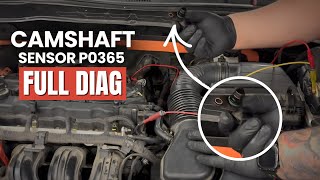
- Replacing the sensor without checking the wiring first. 🎬 Watch how to diagnose the sensor circuit the right way. Many owners and technicians find the problem is a simple wiring break, especially from rodent damage or from stress during other maintenance.
Most Likely Causes
- Failed Bank 1 Exhaust Camshaft Position Sensor 🔴 High Probability → Shop Engine Camshaft Position Sensor Sensors operate in a high-heat environment at the back of the engine bay and their internal electronics (specifically the Magneto-Resistive Element) can fail over time.
How to confirm: After confirming wiring is intact, the most common diagnostic step is to replace the sensor. You can also test its resistance with a multimeter against factory specifications, but replacement is often faster and more definitive given the low cost of the part.
Typical fix: Replace the Bank 1 (rear) exhaust camshaft position sensor.
Est. part cost: $50-$120 - Damaged Wiring or Connector 🟡 Medium Probability The sensor is located at the back of the engine where the harness is exposed to heat and can become brittle. It's also a common spot for rodents to build nests and chew on wires, which often have soy-based insulation that attracts them. Many DIY repairs for other components on the rear bank (like spark plugs) can lead to accidentally pulling or breaking these aged wires.
How to confirm: Visually inspect the wiring harness leading to the sensor for any signs of fraying, melting, or chewing. Check the connector for corrosion, oil contamination, or loose pins. Use a multimeter to test for continuity and check for shorts to ground or power between the sensor connector and the ECM.
Typical fix: Repair the damaged section of wire or replace the connector pigtail. In a forum case on a Lexus ES350 with the same engine, a user broke the wires while changing spark plugs and had to solder them back to the connector pins to resolve the P0365 code.
Est. part cost: $15-$40 - Low or Dirty Engine Oil ⚪ Low Probability The VVT-i system uses oil pressure to adjust cam timing. If oil is low or sludged, the camshaft may not be in the position the ECM expects, which can sometimes trigger a sensor circuit code. While a timing correlation code (like P0016/P0017) is more likely, this is a simple and important first check.
How to confirm: Check the engine oil level and condition on the dipstick. If it's very low or appears to be sludgy, this could be a contributing factor.
Typical fix: Perform an oil and filter change. Address any oil leaks or consumption issues.
Est. part cost: $40-$80
Rare But Worth Checking
- Failed Engine Control Module (ECM): This is very rare. The ECM should only be considered after all other possibilities, including wiring and the sensor itself, have been exhaustively checked and ruled out.
- Timing Chain Issue: → Shop Engine Timing Chain A stretched or jumped timing chain can cause this code, but it is highly unlikely to see P0365 by itself. This issue would almost always be accompanied by other timing correlation codes (P0016, P0017), misfire codes, and significant engine noise.
Diagnosis Steps
- Read the code with an OBD-II scanner and note any other codes present.
- Check engine oil level and condition. Top up or change if necessary.
- Locate the Bank 1 (rear) exhaust camshaft position sensor. It is on the valve cover of the cylinder head closest to the firewall, on the exhaust side.
- Thoroughly inspect the wiring harness and connector leading to the sensor. Use a mirror and flashlight. Look for any signs of damage, melting, or rodent activity (chewed plastic, droppings). Ensure the connector is securely plugged in and free of corrosion or oil.
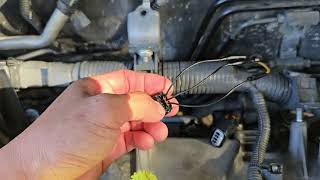
- If wiring looks suspicious, test for power (approx. 4.5V to 5.5V), ground, and signal at the connector using a multimeter. A YouTube video for a Highlander with the same engine shows the wire colors and order (Black, White, Yellow) which can be helpful if the connector is broken. 🎬 See this video showing the exact wire colors and connector fix.
- If wiring appears to be intact, the most common repair is to replace the sensor itself.
- After replacing the sensor or repairing wiring, clear the codes with the scanner and perform a test drive, including idling for at least 10 seconds, to see if the code returns.
Parts You'll Likely Need
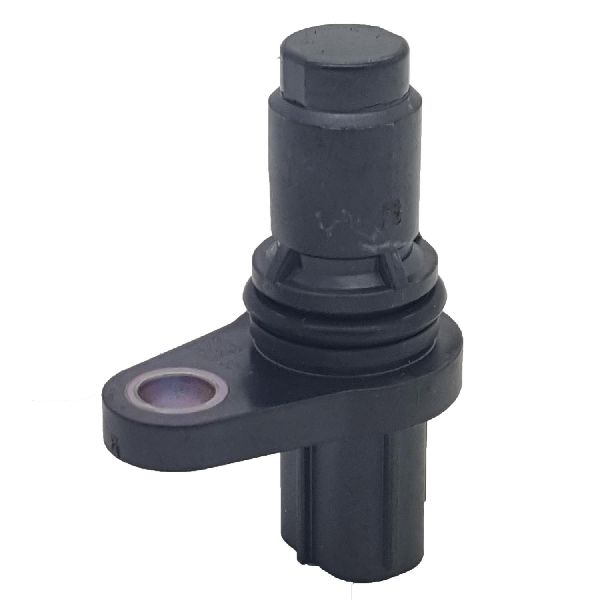
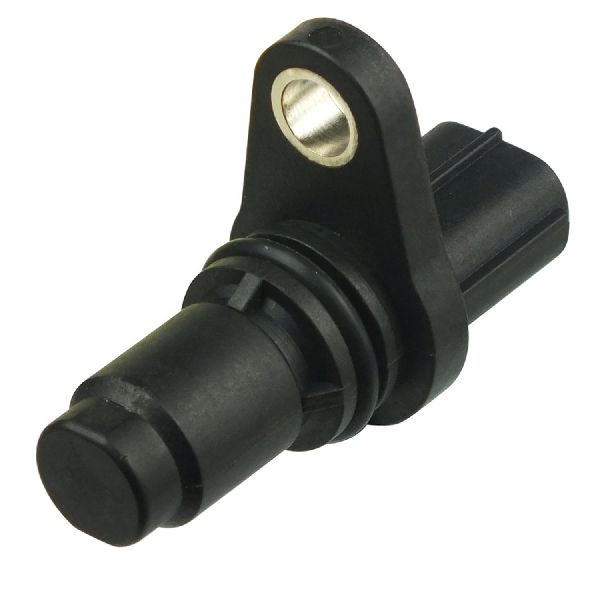
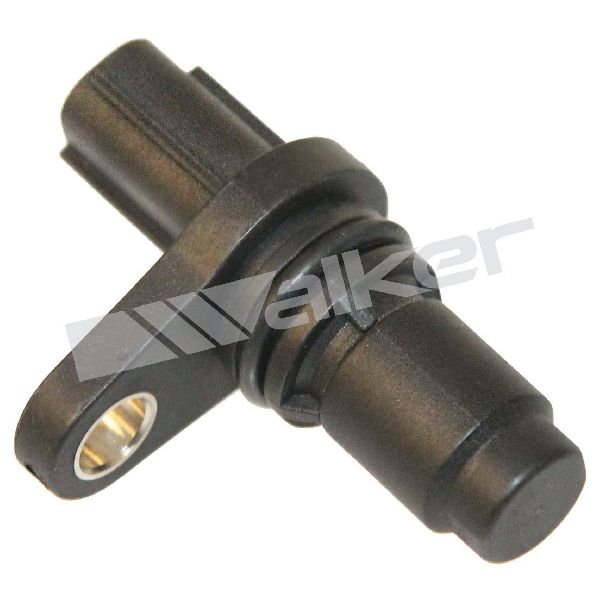
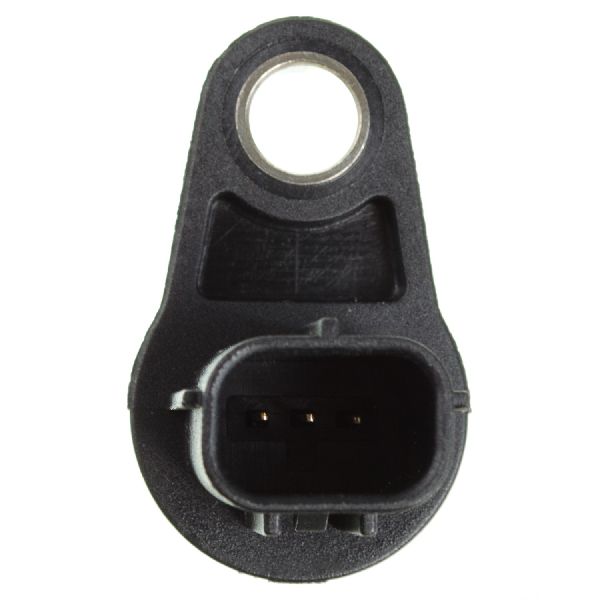
- Engine Camshaft Position Sensor (Bank 1 Exhaust)
(OEM #90919-05060 (may be superseded by 90919-A5003))— This is the sensor that the code directly points to. It is the most common component to fail.
Trusted brands: Denso (OEM supplier), NGK, Bosch, Standard Motor Products
OEM price range: $100-$150
Aftermarket price range: $50-$120 - Camshaft Position Sensor Connector
(OEM #90980-12353 (Connector Housing))— If the wiring is damaged at the connector, or the connector itself is broken, a new pigtail or connector housing with terminals will be needed to repair the circuit.
Trusted brands: Dorman, Standard Motor Products, OEM
OEM price range: $10-$15 (housing only)
Aftermarket price range: $15-$30 (pigtail)
Related Codes That Often Appear With This One
- P0390 — This is the same circuit fault but for Bank 2 (front exhaust). Seeing both P0365 and P0390 could point to a shared power or ground issue or a systemic problem.
- P0340 — This is the code for the intake camshaft sensor on the same bank (Bank 1). If seen together, it could indicate a wiring problem common to that bank or a more serious mechanical timing issue.
- P0367 / P0368 — These codes are for the same sensor circuit but indicate a specific type of electrical fault: P0367 for low input (short to ground) and P0368 for high input (short to power/open circuit). Their presence can help pinpoint the electrical nature of the failure.
Technical Service Bulletins (TSBs) & Recalls
- While no specific TSB for P0365 was found, TSB EG001-08 addresses the related issue of the VVT-i oil line rupture on early 2GR-FE engines, a critical check for any owner of a 2007-2010 model.
Platform-Specific Known Issues
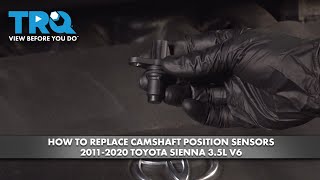
- Access to the Bank 1 (rear) sensors is significantly more difficult than the Bank 2 (front) sensors, requiring removal of the air intake assembly and cowl for better access. 🎬 Watch this step-by-step Sienna camshaft sensor replacement walkthrough. This increases labor time.
- The wiring harness on the back of the engine is a known spot for rodents to build nests, leading to chewed wires that cause this and other sensor codes.
- While unrelated to this code, owners of 2007-2010 models should inspect the Bank 1 VVT-i oil feed line to ensure it is the updated all-metal version (Part No. 15772-31030). The original rubber-and-metal line was prone to rupture, causing catastrophic oil loss and engine seizure.
Mechanic-Grade Diagnostic Values
- Camshaft Position Sensor Resistance — expected: 835 to 1,400 Ω (cold) or 1,060 to 1,645 Ω (hot). Failure: A reading outside of this range indicates a faulty sensor.
- Sensor Power Supply Voltage at Connector (Key On, Engine Off) — expected: 4.5 to 5.5 V between terminal 3 (VC2) and body ground.. Failure: No voltage or voltage outside this range points to a wiring or ECM power supply issue.
- Sensor Signal Voltage at Connector (Key On, Engine Off) — expected: 3.0 to 5.0 V between terminal 1 (VVE+) and body ground.. Failure: A reading outside this range can indicate a sensor or wiring fault.
- Continuity from Sensor Connector to ECM — expected: Below 1 Ω on all three wires between the sensor connector and the corresponding ECM terminals.. Failure: High resistance or an open circuit (OL) indicates a break in the wire.
Hidden / Shadow Codes Worth Checking
- P036531: A sub-code indicating 'No Signal' from the Bank 1 exhaust cam sensor for 5 seconds while engine speed is over 600 RPM. This is more specific than the generic P0365 and strongly points to a complete circuit failure (open wire, dead sensor). (see via Professional scan tools like Toyota Techstream can read these extended DTCs.)
Scan Tool Commands That Help
- Toyota Techstream: Read Freeze Frame Data — This should be the first step. It captures critical engine parameters (speed, load, temperature, etc.) at the exact moment the P0365 code was set, providing clues about the conditions that triggered the fault.
- Toyota Techstream: DTC INFO / PENDING CODES — After clearing codes and performing a test drive (idling for at least 10 seconds), checking for pending codes can confirm if the fault is still present before the MIL illuminates again.
- Oscilloscope: Waveform Analysis — For intermittent issues where resistance and voltage tests are inconclusive, viewing the sensor's square wave signal is the definitive test. A missing, erratic, or misshapen waveform confirms a faulty sensor or wiring issue under dynamic conditions.
Wiring & Ground Locations
- ECM Connector (Bank 1 Exhaust Cam Sensor) — The Bank 1 exhaust cam sensor connects to the E9 ECM connector on some model years.. When testing for continuity, you must probe the correct pins at this connector to verify the integrity of the wiring harness between the sensor and the ECM.
- Ground Point B1 — Located on the rear of the engine.. This is a potential ground point for engine sensors. A loose or corroded ground here can cause various sensor circuit codes, including P0365.
- Sensor Connector C20 / D52 — The connector directly on the Bank 1 (rear) exhaust camshaft position sensor. The identifier may vary by year (e.g., C20, D52).. This is the primary point for visual inspection (rodent damage, broken lock tab) and for performing voltage and resistance tests of the sensor and its immediate circuit.
Real Owner Repair Stories
- YouTube video on a Toyota Camry with 2GR-FE (Toyota Camry with 2GR-FE V6) — Check Engine Light with code P0365.
❌ Tried (didn't work) Replacing the camshaft position sensor.
✅ What actually fixed it The technician found that the wires at the sensor connector had been mixed up during a previous repair. After identifying the correct power, ground, and signal wires and putting them in the correct positions in the connector, the code was resolved.
OEM Part Supersession History
90919-05060→90919-A5003— Standard part update/revision by Toyota.
Heads up: The part number 90919-A5003 is listed as a replacement for 90919-05057, which is also a cam/crank sensor for this platform. While 90919-05060 is the primary number, dealers now often supply 90919-A5003 as the correct service part. It is crucial to verify the correct part with a VIN at the dealer.
Diagnostic Flowchart
Other Known Issues on This Vehicle
Issues unrelated to this code that are worth knowing about as an owner of this generation:
- Rupturing VVT-i Oil Line (Bank 1) 🔴 High — Common on 2007-2010 models with the original rubber/metal hybrid line. Can fail without warning at any mileage, leading to rapid oil loss and engine seizure. (Ref: TSB EG001-08 (Unofficial, widely circulated))
- Power Sliding Door Cable Failure 🟠 Medium — Very common across all model years. The steel cable that pulls the door open and closed is prone to fraying and snapping, making the power function inoperative. (Ref: A warranty extension was issued for some model years, but may now be expired.)
- Melting / Sticky Dashboard 🟡 Low — Common on 2011-2016 models, especially in warmer climates. The dashboard material can degrade under sun/heat, becoming shiny, sticky, and soft. (Ref: Toyota issued a Warranty Enhancement Program (ZLD) to cover replacement, but it has since expired.)
- Transmission Shifting Issues 🟠 Medium — Some complaints exist for the 2007-2010 models regarding rough shifting or hesitation. The 2017+ models with the 8-speed are more known for jerky low-speed behavior, but earlier models are not immune to transmission concerns.
- Coolant Leaks from Water Pump / Valley Plate 🟠 Medium — The 2GR-FE engine can be prone to coolant leaks from the water pump or the coolant valley plate located under the intake manifold as the vehicle ages.
Used vs. New Parts: Buying Guide for This Vehicle
When a used part is the smart pick: A used wiring connector pigtail from a junkyard is a viable option if the original is broken or corroded. It is often cheaper and faster than sourcing a new connector housing and individual pins.
Donor-vehicle mileage cap: roughly under 80000 miles for the part to have meaningful remaining life.
What to inspect on the donor part:
- For a wiring pigtail, ensure the plastic is not brittle or cracked.
- Check that the locking tab on the connector is intact and functional.
- Inspect the wire insulation for at least 6 inches back from the connector for any signs of cracking, melting, or previous repairs.
- Look at the metal terminals inside the connector for any green or white corrosion.
OEM-only on this vehicle (don't cheap out):
- Engine Camshaft Position Sensor
Aftermarket brands forum-validated for this vehicle:
- Denso (OEM supplier)
- NGK/NTK
- Standard Motor Products (SMP)
Brands owners have reported issues with on this vehicle:
- Unbranded, 'white-box' sensors from online marketplaces are a frequent cause of repeat failures or incorrect signal issues right out of the box.
Real Owner Stories
Aggregated from forums and TSBs cited above. Mileages and costs reflect what owners reported in those sources.
2007 Lexus ES350 2GR-FE
Symptoms: The owner accidentally broke the sensor wires while performing a spark plug change, which immediately triggered the P0365 code.
What fixed it: The owner had to solder the broken wires back to the connector pins to restore the circuit connection.
Source hint: ClubLexus.com thread titled 'P0365 - Camshaft Position Sensor Circuit Malfunction'
2008-2019 Toyota Highlander 2GR-FE
Symptoms: P0365 code present with broken connector wires.
What fixed it: Repairing the broken connector wires (identified as Black, White, and Yellow).
Source hint: YouTube video for a Highlander with the same engine
2007-2016 Toyota Sienna 2GR-FE
Symptoms: Check engine light with P0365; owner discovered evidence of rodent activity near the rear of the engine.
What fixed it: Repairing chewed wires on the camshaft position sensor connector.
Source hint: siennachat.com forum threads
2007-2016 Toyota Sienna 2GR-FE
Symptoms: P0365 code; owner struggled with the difficult access to the rear bank of the engine.
What fixed it: Replacement of the Bank 1 Exhaust Camshaft Position Sensor after removing the air intake and cowl for access.
Source hint: siennachat.com forum threads
Related OBD-II Codes
Frequently Asked Questions
I have a 2008 Sienna; should I be worried about the VVT-i oil line mentioned in the TSB?
Why is the labor for P0365 more expensive on my Sienna than on other cars?
Could a recent spark plug change on my 2GR-FE engine have caused this P0365 code?
Is it true that rodents might be the cause of my Check Engine and VSC lights?
Can I just clean the sensor, or does it need to be replaced?
Will low engine oil cause a P0365 code on my Toyota?
Helpful Videos

We Have This Part in Stock


The information in this article is provided for general reference and educational purposes only. Vehicle specifications, procedures, and part compatibility can vary by production date, trim level, and region. Always consult your vehicle's factory service manual and verify part numbers before purchasing or performing repairs. Safety-critical components such as airbags, seat belts, and braking systems should be installed by a qualified professional.
- Toyota Sienna:
- 🧭 Diagnostic Flowchart
- 🎬 Helpful Videos
- 🛍️ Shop This Part
- What's Unique About the 2007-2016 Toyota Sienna
- Symptoms You May Notice
- Most Likely Causes
- Rare But Worth Checking
- Diagnosis Steps
- Parts You'll Likely Need
- Related Codes That Often Appear With This One
- Technical Service Bulletins (TSBs) & Recalls
- Platform-Specific Known Issues
- Mechanic-Grade Diagnostic Values
- Hidden / Shadow Codes Worth Checking
- Scan Tool Commands That Help
- Wiring & Ground Locations
- Real Owner Repair Stories
- OEM Part Supersession History
- Other Known Issues on This Vehicle
- Used vs. New Parts: Buying Guide for This Vehicle
- Real Owner Stories
- 2007 Lexus ES350 2GR-FE
- 2008-2019 Toyota Highlander 2GR-FE
- 2007-2016 Toyota Sienna 2GR-FE
- 2007-2016 Toyota Sienna 2GR-FE
- Related OBD-II Codes
- Frequently Asked Questions
- 🎟️ Get 5% Off