

P0401 on 2005-2007 Ford Five Hundred 3.0L: EGR Insufficient Flow Causes and Fixes
Code P0401 on a Ford Five Hundred most often means the EGR passages are clogged with carbon or the entire EGR valve assembly has failed. On this engine, the MAP sensor is built into the EGR valve, so a failure of either part requires replacing the whole unit. Cleaning the passages is the first step before replacing parts.
- P0401 on this car is most likely caused by either carbon-clogged EGR passages or a failed EGR valve/MAP sensor assembly.
- This engine does NOT use a separate DPFE sensor like many other Fords; the flow is checked using an integrated MAP sensor.
- Before buying parts, remove the EGR valve to inspect and clean the passages in the intake manifold first, as this may solve the problem for free.
- Replacing the EGR valve is a difficult DIY job (4/5 difficulty) due to its location on the back of the engine, requiring significant disassembly for access.
What's Unique About the 2005-2007 Ford Five Hundred
Unlike many other Ford engines from this era that use a separate DPFE sensor with two rubber hoses to measure EGR flow, the 3.0L Duratec in the Five Hundred uses a different design. On this specific platform, the Manifold Absolute Pressure (MAP) sensor is integrated directly into the EGR valve assembly. The computer monitors changes in manifold pressure to verify EGR flow. This means that a failure of either the mechanical EGR valve or the electronic MAP sensor requires the replacement of the entire EGR valve unit, which simplifies diagnosis but can increase part cost.
Symptoms You May Notice
- Check Engine Light is on
- Engine knocking or pinging, especially during acceleration or under load
- Rough or shaky idle
- Hesitation or poor acceleration
- Reduced fuel economy
- Failing a vehicle emissions test
- Replacing a separate DPFE sensor. Many technicians familiar with other Ford models may look for a standalone DPFE sensor and its hoses, but this vehicle does not use that system. The flow is monitored via the MAP sensor integrated into the EGR valve.
Most Likely Causes
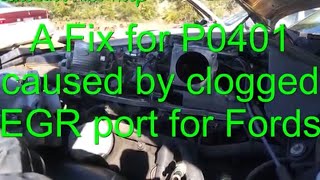
- Clogged EGR Passages in Intake Manifold 🔴 High Probability → Shop Engine Intake Manifold Over time, carbon from the exhaust gas builds up and can completely block the small ports where the gas enters the intake manifold, which is a common failure on many EGR systems. This is the most frequent cause of P0401 across many Ford vehicles.
How to confirm: After removing the EGR valve, inspect the entry ports into the intake manifold. They are often visibly blocked with hard carbon deposits. Probing the passages with a small pick or wire will reveal the blockage. This is best done after removing the throttle body for clear access.
Typical fix: The carbon deposits must be carefully scraped and vacuumed out of the intake manifold passages. This is often done when the EGR valve is removed for replacement.
Est. part cost: $0 (if cleaning only) - Faulty EGR Valve / Integrated MAP Sensor Assembly 🔴 High Probability → Shop Manifold Absolute Pressure Sensor The EGR valve can mechanically stick closed due to carbon buildup, or the integrated MAP sensor can fail electronically, providing incorrect data to the PCM. Since they are one unit, either failure requires replacing the assembly.
How to confirm: After confirming passages are clear, the issue points to the valve/sensor unit. A diagnostic scan tool can monitor MAP sensor voltage; if it doesn't change when the EGR is commanded open (and passages are clear), the unit is faulty. A mechanic can also apply vacuum directly to the valve to see if it opens and affects engine idle.
Typical fix: Replace the entire EGR valve assembly. The repair is difficult due to its location on the rear of the engine, often requiring removal of the throttle body and windshield cowl/strut brace for access.
Est. part cost: $80-$200 - Leaking EGR Valve Gasket ⚪ Low Probability → Shop Exhaust Gas Recirculation (EGR) Valve The gasket between the EGR valve and the intake manifold can fail, creating a vacuum leak. This can throw off the MAP sensor reading, leading the PCM to believe flow is insufficient.
How to confirm: With the engine running, spray a small amount of brake cleaner or starting fluid around the base of the EGR valve. If the engine RPM changes, a leak is present. A smoke test is a more definitive way to find the leak.
Typical fix: Replace the EGR valve gasket. This is always done when replacing the EGR valve itself.
Est. part cost: $5-$15
Rare But Worth Checking
- Cracked EGR Tube: The metal tube running from the exhaust manifold to the EGR valve can crack from heat cycles and vibration, causing an exhaust leak before the gas reaches the valve. This is less common than other causes but should be visually inspected.
- Cracked or Disconnected Vacuum Line: A small vacuum line often actuates the EGR valve. If this line is cracked, brittle, or has fallen off its connection point, the valve will not open when commanded by the solenoid, leading to a P0401 code.
Diagnosis Steps
- Read the code with an OBD-II scanner to confirm P0401 is present. 🎬 Watch: A professional diagnostic walkthrough for the P0401 code.
- With a capable scan tool, monitor the MAP sensor voltage/PID while the engine is running. Command the EGR valve to open and observe if the MAP reading changes. If it does not, it suggests a blockage or a failed valve.
- Visually inspect all vacuum lines connected to the EGR system for cracks, brittleness, or disconnection.
- Perform a smoke test to check for vacuum leaks around the intake manifold and EGR valve gasket area.
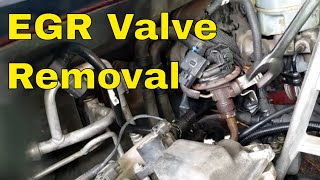
- If no external issues are found, the next step is to access the EGR valve. This is labor-intensive and typically requires removing the upper intake, throttle body, and windshield cowl/strut brace. You will likely need long extensions and swivel sockets.
- Once the EGR valve is removed, thoroughly inspect and clean the EGR passages into the intake manifold. They are likely to be clogged with carbon.
- If cleaning the passages does not resolve the code, the EGR valve/MAP sensor assembly is the most likely culprit and should be replaced.
- Always use a new gasket when installing the new EGR valve.
- After reassembly, clear the trouble codes with the scanner and perform a drive cycle to ensure the repair was successful.
Parts You'll Likely Need
- EGR Valve with Integrated MAP Sensor
(OEM #5F9Z-9D475-BA (replaces 5F9Z-9D475-AA))— This is the primary component that fails, either mechanically (stuck valve) or electrically (bad integrated MAP sensor). On this engine, it is a single assembly.
Trusted brands: Motorcraft, Standard Motor Products, Dorman
OEM price range: $110-$170
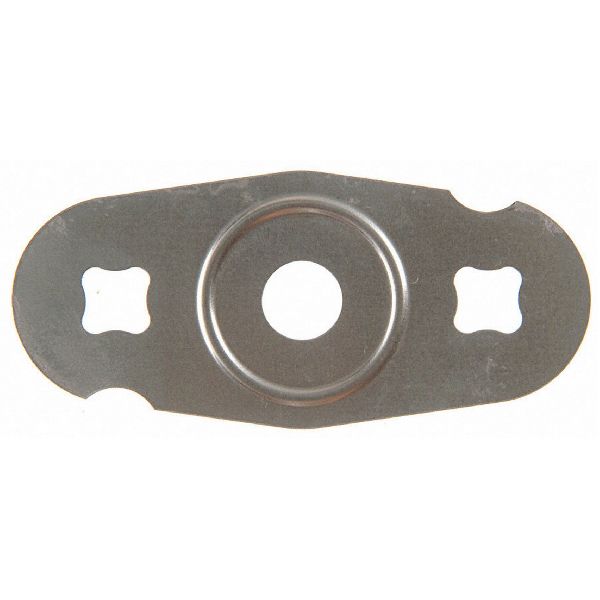
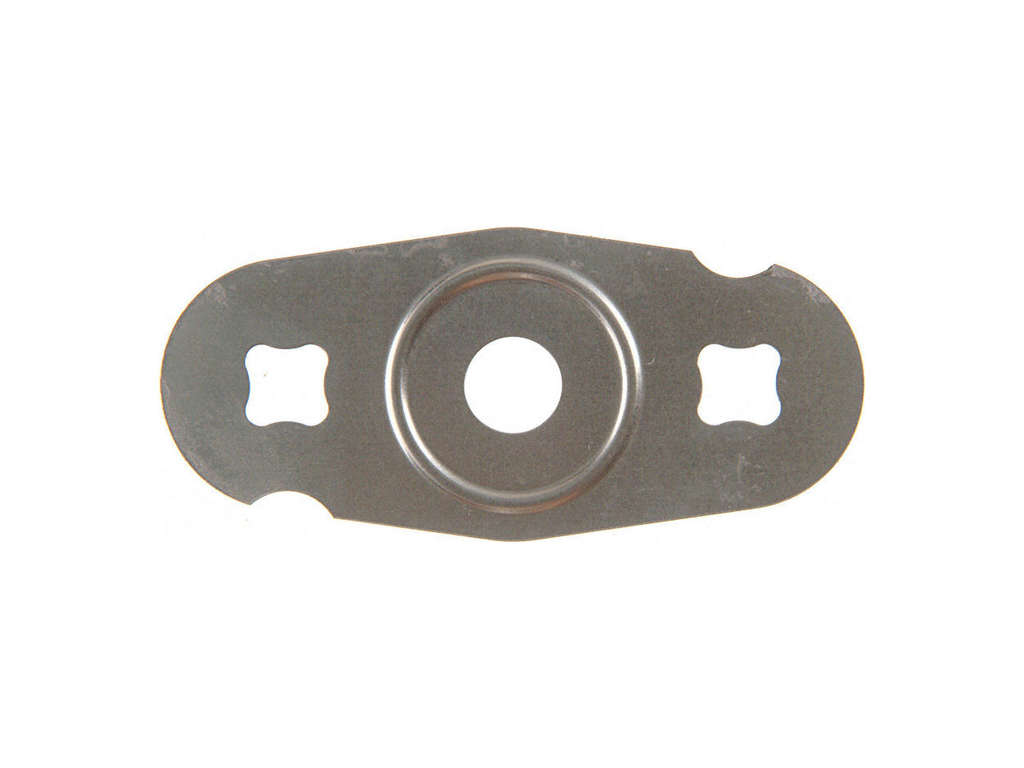
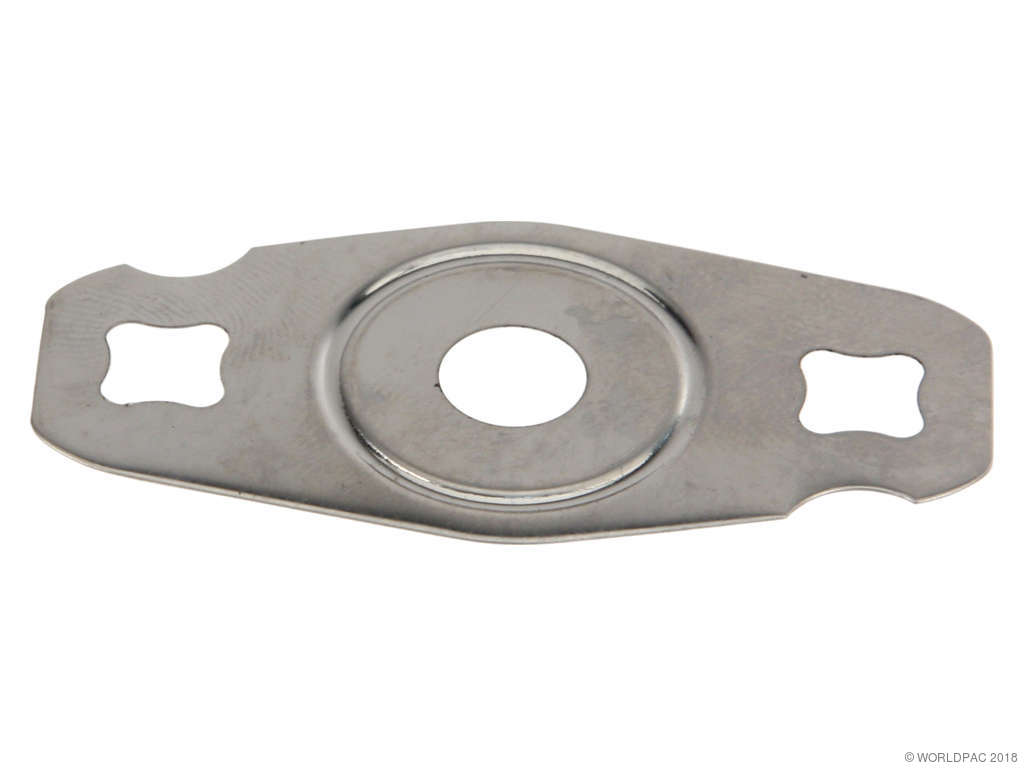
Aftermarket price range: $80-$130 - EGR Valve Gasket
(OEM #YL8Z-9J469-AA)— A new gasket is required to ensure a proper seal when replacing the EGR valve to prevent vacuum leaks.
Trusted brands: Fel-Pro, Motorcraft
OEM price range: $5-$15
Aftermarket price range: $3-$10
Technical Service Bulletins (TSBs) & Recalls
- TSB 07-15-4: While not a direct fix for P0401, this TSB provides updated diagnostic procedures for various engine-related trouble codes and drivability concerns, which can be relevant when troubleshooting complex issues alongside a P0401.
- TSB Bulletin #TSB 19-2343: While issued for different Ford platforms, this bulletin notes that P0401 may be due to various strategies within the powertrain control module (PCM) software, suggesting software updates as a potential correction.
- TSB Bulletin #21M04: A manufacturer service bulletin notes that in some Ford vehicles, the EGR cooler can become plugged, leading to an illuminated malfunction indicator light with DTC P0401.
- TSB Bulletin #SSM 48345: This bulletin describes how an EGR cooler leaking coolant into the engine intake and exhaust systems can trigger P0401 along with over-temperature warnings and white smoke from the tailpipe.
- TSB Bulletin #TSB 24-2263: A manufacturer bulletin indicates that P0401 may be accompanied by engine cooling system symptoms, including internal or external leaks and white smoke.
Platform-Specific Known Issues
- Aftermarket Part Quality Concerns: A user on Reddit with a 2007 Ford 500 reported getting a P0401 code immediately after replacing the EGR valve assembly. The issue was a faulty vacuum line that had broken during the repair. This highlights the need to carefully inspect all related components during this difficult job. Some owners recommend using the OEM Motorcraft part to avoid premature failure of aftermarket units, which would require repeating the labor-intensive replacement process.
Mechanic-Grade Diagnostic Values
- Integrated MAP Sensor Voltage (Key On, Engine Off) — expected: ~4.5 - 5.0 Volts. Failure: Voltage significantly lower than 4.5V or at 0V indicates a sensor or wiring issue.
- Integrated MAP Sensor Voltage (Engine at Idle) — expected: ~1.0 - 1.5 Volts. Failure: Voltage that does not drop from the KOEO reading or is unexpectedly high suggests a vacuum leak or sensor fault.
- Integrated MAP Sensor Voltage Change (During EGR Commanded Open) — expected: A noticeable rise in voltage as exhaust gas displaces vacuum in the manifold.. Failure: No change in voltage when the EGR is commanded open (via scan tool) points to either a clogged passage or a non-functioning EGR valve.
Scan Tool Commands That Help
- Ford IDS / Professional Scan Tool: EGR Valve Duty Cycle Control / EGRVR — This bidirectional control allows a technician to manually command the EGR valve to open by a specific percentage. While monitoring the MAP sensor PID, commanding the valve open should cause the MAP voltage to rise. If it doesn't, it confirms a flow issue (clogged port) or a mechanical valve failure, assuming the valve is receiving the command.
- Ford IDS / Professional Scan Tool: Reset EGR Valve Adaptations — After replacing the EGR valve assembly, it is best practice to use a scan tool to perform an initialization or reset function. This clears the learned values from the old, failing part and allows the PCM to quickly adapt to the new component's flow characteristics.
Wiring & Ground Locations
- G101 — Right front of the engine compartment.. This is a primary engine compartment ground. A poor connection here can cause erratic behavior in various sensors and actuators, including those managed by the PCM.
- G102 / G104 — Right rear of the engine compartment, near the Powertrain Control Module (PCM).. These are critical grounds for the PCM itself. A compromised ground at G102 or G104 can lead to incorrect sensor readings, including the integrated MAP sensor, potentially causing a false P0401 or other engine management faults.
- C175e / C175t — The main electrical connectors for the Powertrain Control Module (PCM), located at the right rear of the engine compartment.. The signal from the integrated MAP sensor and the control signal to the EGR valve actuator travel through these connectors. Corrosion or a pushed-out pin in these connectors can interrupt the signal, leading to a P0401 code. The MAP sensor signal is labeled as 'MAP 1' in wiring diagrams.
Real Owner Repair Stories
- YouTube video 'Ford Five Hundred 2005 ( P0401 code diagnose )' (2005 Ford Five Hundred) — Check Engine Light with code P0401, car losing power and trembling.
❌ Tried (didn't work) The technician first verified the code and observed that the EGR duty cycle was at 0% during a test drive, indicating it was not functioning.
✅ What actually fixed it The technician tested the wiring at the EGR valve connector and confirmed that the 5V reference and ground from the PCM were present. Since the power and ground were good, the conclusion was that the integrated EGR/MAP sensor assembly itself had failed internally and needed replacement.
OEM Part Supersession History
5F9Z-9D475-AA→5F9Z-9D475-BA— Standard part revision by the manufacturer, likely for improved reliability or minor design change.
Heads up: The parts are directly interchangeable. 5F9Z-9D475-BA is the correct service replacement for the original part.
Model Year Variations Within This Range
- 2005-2007: There are no significant documented variations within the 2005-2007 model years for the Ford Five Hundred's 3.0L Duratec engine that would affect the diagnosis or repair of a P0401 code. The engine and emissions system remained consistent.
Diagnostic Flowchart
Other Known Issues on This Vehicle
Issues unrelated to this code that are worth knowing about as an owner of this generation:
- CVT Transmission Failure 🔴 High — Common on AWD models, which were exclusively equipped with the CVT. Failures can occur as early as 80,000 miles, often presenting as shuddering, slipping, or complete loss of reverse.
- Electronic Throttle Body (ETB) Malfunction 🔴 High → Shop Fuel Injection Throttle Body — Widespread issue causing sudden deceleration, stalling, and the vehicle entering 'limp mode' (wrench light). Often requires replacement of the entire throttle body. (Ref: TSB 05-25-13, Customer Satisfaction Program 13N03)
- Aisin 6-Speed Automatic Transmission Harsh Shifting 🟠 Medium — Affects FWD models. Owners report harsh or delayed shifts. Sometimes correctable with a PCM software update from the dealer, but can also indicate internal wear. (Ref: Software updates have been issued by Ford.)
- Difficult Rear Spark Plug Replacement 🟡 Low — Not a failure, but a significant maintenance issue. Accessing the rear bank of three spark plugs requires removing the upper intake manifold, making a routine job very labor-intensive.
- Coolant Leaks from Radiator / Heater Core 🟠 Medium — Some owners report premature failure of the radiator and/or heater core, potentially due to electrolysis in the cooling system.
Used vs. New Parts: Buying Guide for This Vehicle
When a used part is the smart pick: For this specific repair, sourcing a used EGR valve assembly from a junkyard is NOT recommended. The part contains both a mechanical valve prone to carbon buildup and sensitive electronics (the MAP sensor). The labor to access and replace the valve is significant, making the risk of a premature failure on a used part economically unwise.
Donor-vehicle mileage cap: roughly under 60000 miles for the part to have meaningful remaining life.
What to inspect on the donor part:
- If buying used is unavoidable, seek a part from a vehicle with the lowest possible mileage.
- Inspect the electrical connector pins for any signs of corrosion or damage.
- Check the valve's pintle for movement; it should not be seized.
- Avoid parts from vehicles that show signs of engine fire or major front-end collision.
OEM-only on this vehicle (don't cheap out):
- EGR Valve / MAP Sensor Assembly
Aftermarket brands forum-validated for this vehicle:
- Motorcraft (OEM)
- Standard Motor Products (SMP)
Brands owners have reported issues with on this vehicle:
- While Dorman is a common aftermarket brand, some mechanics express concern over potential quality and flow differences compared to OEM parts for emission components. Given the high labor cost for this job, sticking with OEM or a top-tier aftermarket brand like SMP is a safer investment.
Real Owner Stories
Aggregated from forums and TSBs cited above. Mileages and costs reflect what owners reported in those sources.
2007 Ford Five Hundred Limited 3.0L V6
Symptoms: The owner replaced the EGR/MAP assembly due to a bad sensor and immediately received a P0401 code.
What fixed it: Repairing a faulty vacuum line that had broken during the initial EGR valve replacement and cleaning the intake port.
Source hint: Reddit - r/MechanicAdvice thread '2007 ford 500 limited p0401'
2005 Mercury Montego 3.0L V6
Symptoms: Persistent P0401 code and confusion over whether the vehicle used a DPFE sensor for diagnosis.
What fixed it: Identifying that the MAP sensor is integrated into the EGR valve assembly rather than being a standalone DPFE sensor.
Source hint: Reddit - r/MechanicAdvice thread '2005 mercury montego ford five hundred throwing'
Related OBD-II Codes
Frequently Asked Questions
Does my 2005-2007 Ford Five Hundred have a DPFE sensor to check for P0401?
Is there a TSB for diagnostic procedures related to engine codes on my Five Hundred?
Why did my P0401 code return immediately after I replaced the EGR valve?
Can I just clean the EGR system instead of buying a new valve?
Is it true I have to remove the windshield cowl to fix this?
Should I use an aftermarket EGR valve for my 2007 Ford 500?
Helpful Videos
We Have This Part in Stock


The information in this article is provided for general reference and educational purposes only. Vehicle specifications, procedures, and part compatibility can vary by production date, trim level, and region. Always consult your vehicle's factory service manual and verify part numbers before purchasing or performing repairs. Safety-critical components such as airbags, seat belts, and braking systems should be installed by a qualified professional.
- Ford Five Hundred:
- 🧭 Diagnostic Flowchart
- 🎬 Helpful Videos
- 🛍️ Shop This Part
- What's Unique About the 2005-2007 Ford Five Hundred
- Symptoms You May Notice
- Most Likely Causes
- Rare But Worth Checking
- Diagnosis Steps
- Parts You'll Likely Need
- Technical Service Bulletins (TSBs) & Recalls
- Platform-Specific Known Issues
- Mechanic-Grade Diagnostic Values
- Scan Tool Commands That Help
- Wiring & Ground Locations
- Real Owner Repair Stories
- OEM Part Supersession History
- Model Year Variations Within This Range
- Other Known Issues on This Vehicle
- Used vs. New Parts: Buying Guide for This Vehicle
- Real Owner Stories
- 2007 Ford Five Hundred Limited 3.0L V6
- 2005 Mercury Montego 3.0L V6
- Related OBD-II Codes
- Frequently Asked Questions
- 🎟️ Get 5% Off