

P0402 on 2004-2011 Ford Focus: EGR Excessive Flow Causes and Fixes
On a 2004-2011 Ford Focus, code P0402 is most often caused by a faulty Differential Pressure Feedback EGR (DPFE) sensor, not the EGR valve itself. Before replacing the valve, test the DPFE sensor's voltage with the key on, engine off. A healthy sensor should read between 0.5V and 1.1V. A reading outside this range indicates a failed sensor, which is an inexpensive and easy part to replace.
- Always diagnose the DPFE sensor first for a P0402 code on a 2004-2007 Focus. It's the most likely cause and cheaper to replace than the EGR valve.
- Symptoms are most noticeable at idle and low speeds, including rough running, stalling, and hesitation.
- A key-on, engine-off voltage test with a multimeter is the definitive way to confirm a bad DPFE sensor. The target range is 0.5V-1.1V.
- Always replace the small silicone hoses connected to the DPFE sensor when replacing the sensor, as they are a common failure point themselves.
- This is a DIY-friendly repair that typically requires basic hand tools and can be completed in under an hour.
What's Unique About the 2004-2011 Ford Focus
Like many Fords from this era, the Focus uses a Differential Pressure Feedback EGR (DPFE) sensor to monitor EGR flow. This specific type of sensor is a known common failure point and is more likely to be the cause of a P0402 code than the EGR valve itself. The sensor can fail and send incorrect high-flow readings to the computer, even when the actual EGR flow is normal. The PCM interprets the faulty sensor signal and may command the EGR valve to open less, but the code is triggered based on the erroneous sensor reading. Owners often mistakenly replace the EGR valve first when the DPFE sensor is the true culprit.
Generation note: This guide covers the second generation (2004-2007) and the facelifted second generation (2008-2011) of the Ford Focus in North America. However, there is a critical distinction: the 2004-2007 models use the traditional vacuum-operated EGR valve and DPFE sensor setup, which is highly prone to this issue. The 2008-2011 models with the 2.0L Duratec engine typically do not have an external EGR valve and use Variable Camshaft Timing (VCT) for exhaust gas recirculation, making a P0402 code on these later models very rare and pointing to different potential causes.
Symptoms You May Notice
- Rough idle, especially when the engine is warm
- Engine stalling at low speeds or when coming to a stop
- Hesitation or stumbling during acceleration
- Reduced fuel economy
- Check Engine Light is on
- Engine surging or bucking at cruising speeds
- Replacing the EGR valve when the DPFE sensor is the actual cause. This is the most common mistake on this platform.
Most Likely Causes
- Faulty Differential Pressure Feedback EGR (DPFE) Sensor 🔴 High Probability The DPFE sensor used on this generation of Focus is notoriously prone to failure from heat, internal corrosion, and moisture contamination. The original plastic-bodied sensors had a particularly high failure rate, sometimes in as little as 30,000 miles. Manufacturer service bulletin TSB 23-2059 notes that this code may be triggered due to the fault detection ratio threshold of the DPFE sensor.
How to confirm: With the key on and engine off (KOEO), backprobe the DPFE sensor signal wire (often the middle wire) with a multimeter. 🎬 Watch: Quick diagnostic test for DPFE sensor faults A healthy sensor should read between 0.5V and 1.1V. A reading significantly lower (e.g., 0.1V-0.2V) or higher (e.g., 4.8V) often indicates a failed sensor.
Typical fix: Replace the DPFE sensor and its two connected silicone hoses, which often crack from heat or get clogged with carbon.
Est. part cost: $30-$70 - EGR Valve Stuck Open 🟡 Medium Probability → Shop Exhaust Gas Recirculation (EGR) Valve Carbon deposits from exhaust gas can build up over time, preventing the pintle inside the EGR valve from closing completely. This allows exhaust to flow at idle, causing a rough run condition. NHTSA ODI #10573470 describes instances where a rough running condition or power loss is accompanied by EGR-related codes including P0402.
How to confirm: With the engine idling roughly, disconnect the vacuum line to the EGR valve and plug the line. If the idle smooths out, the valve is being held open. This could be due to it being physically stuck or receiving vacuum when it shouldn't. You can also remove the valve for visual inspection and cleaning.
Typical fix: Remove the EGR valve and clean the carbon buildup from the valve and intake manifold passages. If it's heavily worn or damaged, replace the valve and gasket.
Est. part cost: $80-$200 - Faulty EGR Vacuum Solenoid (EVR) ⚪ Low Probability The solenoid that controls the vacuum supply to the EGR valve can fail electrically or mechanically, causing it to apply vacuum at idle when it should be closed.
How to confirm: Check for vacuum at the EGR valve's supply hose at idle; there should be none. With a scan tool, command the EGR solenoid on and off and check if it clicks and allows vacuum to pass through. You can also apply 12V directly to the solenoid to test its function.
Typical fix: Replace the EGR Vacuum Regulator (EVR) solenoid.
Est. part cost: $25-$50
Rare But Worth Checking
- Clogged Catalytic Converter: A partially clogged catalytic converter can create excessive exhaust backpressure, forcing too much gas through the EGR system and triggering a P0402 code. This is less common but worth considering if other fixes fail.
- Cracked or Clogged DPFE Hoses: The two small rubber hoses connecting the EGR tube to the DPFE sensor can become brittle and crack, or get clogged with carbon. This will cause an incorrect pressure reading, leading to the P0402 code. Always inspect and replace these when servicing the DPFE sensor.
- PCM Software Strategies: According to TSB 19-2343, an illuminated MIL with DTC P0402 may sometimes be due to various strategies within the powertrain control module (PCM) software, requiring a software update.
Diagnosis Steps
- Read the code with an OBD-II scanner and check for any other related codes like P0401.
- Crucial Step for Fords: With the Key On, Engine Off (KOEO), use a multimeter to check the voltage of the DPFE sensor's signal wire. It should be between 0.5V and 1.1V. If it's outside this range, the sensor is almost certainly bad and should be replaced.
- Inspect the two small silicone hoses running from the EGR pipe to the DPFE sensor. Check for cracks, brittleness, loose connections, or blockages. Replace them if they are in poor condition; this is a cheap and common fix.
- Start the engine and let it idle. If the idle is rough, disconnect the vacuum line to the EGR valve and plug the line. If the idle smooths out, the EGR valve is being opened incorrectly. This points to either a faulty EGR Vacuum Regulator (EVR) solenoid or a physically stuck-open EGR valve.
- To test the EVR solenoid, check for vacuum at the EGR valve's hose at idle. There should be zero vacuum. If there is vacuum, the EVR solenoid is faulty and needs replacement.
- If the idle is still rough after plugging the vacuum line, the EGR valve itself is likely stuck open internally from carbon buildup. Remove the EGR valve for inspection. Check for carbon chunks holding the pintle open. Clean the valve and passages thoroughly or replace it if cleaning is ineffective.
- If all components seem to be working, check for a restriction in the exhaust system, such as a clogged catalytic converter, which could cause excessive backpressure and force EGR flow.
Parts You'll Likely Need
- Differential Pressure Feedback EGR (DPFE) Sensor
(OEM #4U7Z-9J460-AA (Motorcraft DPFE15). Note: Part numbers may supersede.)— This is the most common failure point for P0402 on this generation of Ford Focus. It frequently fails and sends incorrect flow readings to the PCM.
Trusted brands: Motorcraft, Delphi, Standard Motor Products
OEM price range: $50-$80
Aftermarket price range: $30-$60 - EGR Valve
(OEM #CX-2352 (Motorcraft Number))— Can get stuck open due to carbon buildup, allowing exhaust gas to flow at idle when it should be closed.
Trusted brands: Motorcraft, Standard Motor Products, Delphi, Walker
OEM price range: $150-$220
Aftermarket price range: $80-$150 - EGR Valve Gasket — Should always be replaced whenever the EGR valve is removed to ensure a proper seal.
Trusted brands: Motorcraft, Fel-Pro
OEM price range: $5-$15
Aftermarket price range: $3-$10 - DPFE Sensor Hoses — These small silicone hoses are exposed to intense heat and frequently crack, perish, or get clogged with carbon, leading to incorrect sensor readings.
Trusted brands: Motorcraft, Dorman
OEM price range: $15-$25
Aftermarket price range: $10-$20
Related Codes That Often Appear With This One
- P0401 — If P0401 (Insufficient Flow) and P0402 appear together or intermittently, it strongly points to a faulty DPFE sensor sending erratic and contradictory signals to the computer.
Platform-Specific Known Issues
- Plastic vs. Metal DPFE Sensors: Early models often came with a black plastic-bodied DPFE sensor that was highly prone to failure. The replacement part from Ford/Motorcraft is often an updated metal-bodied sensor which is considered more durable.
- 2008-2011 Models Lack of EGR: It is critical to note that most 2008-2011 North American Focus models with the 2.0L Duratec engine do NOT have a traditional EGR valve or DPFE sensor. They use variable cam timing instead. A P0402 on these models is highly unusual and would point towards issues with the VCT system or other sensors, not the parts listed in this guide.
Technical Service Bulletins (TSBs) & Recalls
- TSB 24-2014: This bulletin addresses an illuminated malfunction indicator lamp with DTC P0402 on 2.0L EcoBoost engines, providing an updated service procedure to correct the condition.
- TSB 23-2059: Notes that an illuminated MIL with P0402 may be stored in the PCM due to the fault detection ratio threshold of the differential pressure feedback exhaust gas recirculation system.
Mechanic-Grade Diagnostic Values
- EGR Vacuum Regulator (EVR) Solenoid Coil Resistance — expected: 20 - 70 Ohms. Failure: A reading outside this range (open circuit or shorted) indicates a failed solenoid coil.
- DPFE Sensor Signal Voltage (Engine Idling, EGR Commanded Open) — expected: Rises to approx. 4.0V - 4.9V DC. Failure: Voltage does not rise when vacuum is manually applied to the EGR valve (with engine running), indicating a faulty DPFE sensor.
- EVR Solenoid Connector Voltage (Key On, Engine Off) — expected: ~12V (Battery Voltage) on both wires. Failure: Lack of voltage on one or both wires indicates a wiring issue. Because it's ground-side switched by the PCM, both wires will show battery voltage until the PCM commands it on.
Scan Tool Commands That Help
- Ford IDS / FORScan: EGRVR Commanded (EGRVR_CMD) PID — Use this to command the EGR Vacuum Regulator solenoid on (typically a percentage) while monitoring the DPFE sensor voltage PID. This allows a technician to test the entire system's response without manually applying vacuum. If the solenoid is commanded on and the DPFE voltage doesn't change, it isolates the problem to the solenoid, the EGR valve, or clogged passages.
Wiring & Ground Locations
- G101 — At the left front of the engine compartment, on the engine block.. This is a primary ground for the Powertrain Control Module (PCM). A poor connection here can cause erratic sensor readings and incorrect PCM behavior, potentially leading to false codes.
- G102 — At the right front of the engine compartment.. Another important chassis ground in the engine bay. Verifying that all engine bay grounds are clean and tight is a crucial step when diagnosing electronic faults that don't resolve with simple part replacement.
- G103 — At the left side of the engine compartment.. This ground point serves multiple components. Ensuring its integrity is part of a thorough electrical diagnosis for any engine management code.
Real Owner Repair Stories
- Ranger-Forums.com user 'andy7' (1995 Ford Ranger 2.3L (Similar EGR/DPFE system)) — P0402 and pending P0401. Also, A/C defaulted to defrost under load, indicating a vacuum leak.
❌ Tried (didn't work) Initially suspected the DPFE sensor itself or the vacuum reservoir check valve.
✅ What actually fixed it The root cause was an open circuit in one of the DPFE sensor wires. The connector had broken previously and was secured with a zip tie, which eventually caused the wire to break internally. Replacing the connector and soldering the wire resolved the codes. - F150online Forums user (2002 Ford F-150 4.6L (Similar EGR/DPFE system)) — Initial P0401 code, followed by a catastrophic crank-no-start condition months later. The vehicle shut down while driving.
❌ Tried (didn't work) Replacing the fuel pump., Replacing the PCM., Reprogramming keys to the new PCM.
✅ What actually fixed it A cheap, generic aftermarket DPFE sensor installed 7 months prior had developed an internal short circuit. This short was so severe it prevented the PCM from communicating with the scan tool and the instrument cluster. Replacing the faulty aftermarket sensor with a quality part resolved the no-start condition and all related issues. - NHTSA ODI #11671585: An owner reported that after being pulled over and towed, an independent mechanic retrieved codes P0402 and P1061, which ultimately led to a diagnosis that the engine required replacement.
OEM Part Supersession History
YS4Z-9J460-AA, 2F1Z-9J460-AA→4U7Z-9J460-AA (Motorcraft DPFE15)— The original plastic-bodied sensors had a high failure rate due to heat and internal corrosion. The superseding part is often a more durable metal-bodied design.
Heads up: While physically interchangeable, always use the latest revision part number for improved durability.
Model Year Variations Within This Range
- 2004-2007: These models use the traditional vacuum-operated EGR valve and a separate DPFE sensor, which is the primary focus of this guide and the source of most P0402 codes.
- 2008-2011: Most North American models with the 2.0L Duratec engine in this range do not have an external EGR valve or DPFE sensor. They use Variable Camshaft Timing (VCT) for recirculation. A P0402 on these later models is rare and points to VCT system problems, not the components listed here.
Diagnostic Flowchart
Other Known Issues on This Vehicle
Issues unrelated to this code that are worth knowing about as an owner of this generation:
- Failed Passenger-Side Hydraulic Motor Mount 🔴 High — Very common, often fails before 100,000 miles. Causes excessive vibration in the cabin at idle, making the car feel rough. OEM Motorcraft part is strongly recommended over aftermarket for longevity.
- Cracked Plastic Thermostat Housing 🟠 Medium — A frequent source of coolant leaks as the vehicle ages. The plastic can develop hairline cracks near the seals.
- Automatic Transmission (4F27E) Issues 🟠 Medium — The 4-speed automatic can develop issues with harsh shifting, slipping, or failure to go into overdrive, sometimes related to failing shift solenoids.
- Premature Rear Wheel Bearing Failure 🟠 Medium — Owners report a high incidence of rear wheel bearing failure, causing a loud humming or growling noise from the rear of the vehicle that changes with speed.
- Failing Instrument Cluster 🟡 Low — The instrument cluster can fail, leading to gauges not working, the odometer displaying dashes, and sometimes even a no-start condition due to anti-theft system integration.
- Intake Manifold Runner Control (IMRC) / Swirl Flap Problems 🟠 Medium → Shop Engine Intake Manifold — The plastic swirl flaps inside the intake manifold can wear out or break, or the actuator can fail, leading to rattling noises, poor performance, and check engine lights.
Used vs. New Parts: Buying Guide for This Vehicle
When a used part is the smart pick: A used EGR valve or EGR Vacuum Regulator (EVR) solenoid from a low-mileage vehicle can be a cost-effective option. These parts are generally robust, and their condition can be visually inspected for excessive carbon or damage.
Donor-vehicle mileage cap: roughly under 80000 miles for the part to have meaningful remaining life.
What to inspect on the donor part:
- For an EGR valve, ensure the pintle moves freely and isn't seized with carbon.
- Check plastic vacuum nipples on the EVR solenoid for brittleness or cracks.
- Inspect electrical connectors for corrosion or damage.
- Source parts from regions with less road salt to minimize corrosion.
OEM-only on this vehicle (don't cheap out):
- Differential Pressure Feedback EGR (DPFE) Sensor
Aftermarket brands forum-validated for this vehicle:
- Delphi
- Standard Motor Products (SMP)
Brands owners have reported issues with on this vehicle:
- Generic, unbranded sensors from online marketplaces like Amazon or eBay. These have a documented history of premature failure and can even cause severe issues like short circuits leading to no-start conditions.
Real Owner Stories
Aggregated from forums and TSBs cited above. Mileages and costs reflect what owners reported in those sources.
2004 Ford Focus — ~30000 miles
Symptoms: The original plastic-bodied sensor failed early, causing the Check Engine Light to illuminate.
What fixed it: Replacement of the plastic DPFE sensor with an updated version and replacing the two connected silicone hoses.
Source hint: Vehicle_specific_issues: Plastic vs. Metal DPFE Sensors
Ford Focus (First Generation)
Symptoms: The car experienced stumbling and hesitation while driving.
What fixed it: Replacing the DPFE sensor, which was tricking the PCM into opening the EGR valve too much and creating a lean condition.
Source hint: Focus Hacks
2005-2008 Ford Escape 2.3L Duratec
Symptoms: Check engine light for P0402 and rough running conditions similar to the Focus.
What fixed it: The issue was traced to the DPFE sensor and EGR valve failures common to the Duratec engine family.
Source hint: Platform_mates: 2005-2008 Ford Escape / Mercury Mariner (2.3L Duratec)
Related OBD-II Codes
Frequently Asked Questions
My 2010 Ford Focus has a P0402 code, but I can't find the EGR valve. Where is it?
Should I replace my black plastic DPFE sensor with the same part?
I'm seeing a P0402 and my Focus is vibrating heavily at idle. Is the EGR valve causing the vibration?
How can I tell if my DPFE sensor is actually bad before buying a new one?
Can I just clean the EGR valve to fix the P0402 code?
Are there specific hoses I should check when diagnosing this code?
Helpful Videos
We Have This Part in Stock

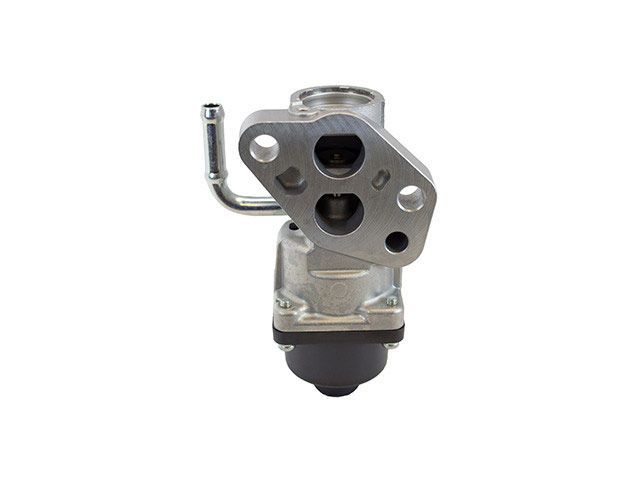

The information in this article is provided for general reference and educational purposes only. Vehicle specifications, procedures, and part compatibility can vary by production date, trim level, and region. Always consult your vehicle's factory service manual and verify part numbers before purchasing or performing repairs. Safety-critical components such as airbags, seat belts, and braking systems should be installed by a qualified professional.
- Ford Focus:
- 🧭 Diagnostic Flowchart
- 🎬 Helpful Videos
- 🛍️ Shop This Part
- What's Unique About the 2004-2011 Ford Focus
- Symptoms You May Notice
- Most Likely Causes
- Rare But Worth Checking
- Diagnosis Steps
- Parts You'll Likely Need
- Related Codes That Often Appear With This One
- Platform-Specific Known Issues
- Technical Service Bulletins (TSBs) & Recalls
- Mechanic-Grade Diagnostic Values
- Scan Tool Commands That Help
- Wiring & Ground Locations
- Real Owner Repair Stories
- OEM Part Supersession History
- Model Year Variations Within This Range
- Other Known Issues on This Vehicle
- Used vs. New Parts: Buying Guide for This Vehicle
- Real Owner Stories
- 2004 Ford Focus — ~30000 miles
- Ford Focus (First Generation)
- 2005-2008 Ford Escape 2.3L Duratec
- Related OBD-II Codes
- Frequently Asked Questions
- 🎟️ Get 5% Off