

P0402 on 2006-2010 Hyundai Sonata 3.3L V6: EGR Excessive Flow Causes and Fixes
P0402 on your Sonata 3.3L V6 almost always means the EGR valve is stuck open due to carbon buildup. This causes a rough idle and stalling. Cleaning the valve is a temporary fix, but replacement is the reliable solution. Expect to pay $60-$150 for a new valve. The OEM part number for the valve is 28410-3C110.
- P0402 means too much exhaust gas is entering your engine, usually at idle.
- This code is most likely to appear on 2006-2009 Sonatas with the 3.3L V6; the 2010 model may not have an EGR valve.
- The most common cause is an EGR valve stuck open with carbon buildup.
- Symptoms are very noticeable: a rough, unstable idle and a tendency to stall when you stop.
- The fix is generally straightforward for a DIYer: remove, inspect, and clean or replace the EGR valve and its gasket.
What's Unique About the 2006-2010 Hyundai Sonata
For the NF generation Sonata, the 3.3L Lambda V6 (engine code G6DB) used an EGR system for most of its run (2006-2009 model years). However, evidence suggests that for the 2010 model year, Hyundai deleted the EGR system, instead relying on advanced Continuously Variable Valve Timing (CVVT) to control emissions. Therefore, this P0402 code is primarily relevant to the 2006-2009 models. If you have a 2010 model, it is highly unlikely to have an EGR valve, and this code would be exceptionally rare.
Symptoms You May Notice
- Rough or surging idle
- Engine stalling, especially when coming to a stop
- Hesitation or stumbling on acceleration
- Check Engine Light is on
- Reduced fuel economy
- Replacing oxygen (O2) sensors. While O2 sensors are part of the emissions system, they only report the results of combustion and do not cause a P0402 code.
- Replacing the Mass Airflow (MAF) sensor. The EGR system's operation is primarily monitored by changes in manifold pressure or EGR temperature, not the MAF sensor on this vehicle.
Most Likely Causes
- EGR Valve Stuck Open 🔴 High Probability → Shop Exhaust Gas Recirculation (EGR) Valve Like many port-injected engines, the Lambda V6 can accumulate carbon deposits in the EGR system over time, causing the valve's pintle to stick. This is the most frequent cause of P0402.
How to confirm: With the engine off and cool, remove the EGR valve (two bolts). Inspect the pintle (the plunger mechanism) for carbon buildup and see if it moves freely. You can also apply vacuum to the port on a vacuum-actuated valve to see if it opens and closes smoothly. If it's stuck open even slightly, it will cause this code.
Typical fix: The valve can be cleaned with carburetor or throttle body cleaner and a brush as a temporary measure. However, if the diaphragm has failed or the valve is heavily caked, replacement is the only reliable fix. Always use a new gasket when reinstalling.
Est. part cost: $60-$150 - Faulty EGR Vacuum Control Solenoid 🟡 Medium Probability The solenoid is an electronic component that can fail with age and heat cycles, causing it to send vacuum to the EGR valve at the wrong times (like at idle).
How to confirm: Check that the vacuum hoses connected to the solenoid are not cracked or leaking. With the engine running at idle, disconnect the vacuum hose leading from the solenoid to the EGR valve. There should be NO vacuum present. If there is vacuum, the solenoid is faulty and stuck open.
Typical fix: Replace the EGR vacuum control solenoid. This part is typically mounted near the intake manifold.
Est. part cost: $30-$70 - Leaking or Clogged EGR Vacuum Hoses ⚪ Low Probability Rubber hoses become brittle and crack with age and exposure to engine heat.
How to confirm: Visually inspect all vacuum lines running to and from the EGR valve and the control solenoid for cracks, splits, or loose connections. A hissing sound near the lines at idle can also indicate a leak. You can also use a smoke machine to find leaks.
Typical fix: Replace the damaged section of vacuum hose. It's often sold by the foot at auto parts stores.
Est. part cost: $5-$15
Rare But Worth Checking
- Clogged Catalytic Converter: A partially clogged catalytic converter can create excessive exhaust backpressure, forcing too much gas through the EGR system when the valve opens. This would typically be accompanied by other codes (like P0420) and a noticeable loss of engine power at higher RPMs.
- Faulty DPFE Sensor: While less common on this specific platform compared to others (e.g., Ford), a faulty Differential Pressure Feedback EGR (DPFE) sensor could theoretically report excessive flow incorrectly. However, diagnosis should focus on the valve and solenoid first.
Diagnosis Steps
- Verify the code with an OBD-II scanner. Note any other codes present and freeze frame data.
- Check for a rough idle or stalling, which are classic symptoms of an EGR valve stuck open.
- Visually inspect the EGR valve (typically located on or near the intake manifold), its vacuum hoses, and the vacuum control solenoid for any obvious damage, cracks, or loose connections.
- With the engine idling, disconnect the vacuum line to the EGR valve. If the idle smooths out, the valve was being held open by incorrect vacuum, pointing to a faulty control solenoid.
- With the engine off, remove the EGR valve. It is usually held on by two bolts. Be prepared to replace the gasket.
- Inspect the valve and the intake manifold ports for heavy carbon buildup. Clean them if necessary.
- Test the EGR valve itself. If it's a vacuum-operated valve, apply vacuum with a hand pump to see if the pintle moves smoothly and holds vacuum. If it's electronic, a scan tool may be able to command it open and closed.
- If the valve appears to be working correctly, the next step is to test the EGR vacuum control solenoid and ensure it is providing vacuum to the valve only when commanded by the ECM (i.e., not at idle).
- If the valve is stuck, cleaning may work temporarily, but replacement is recommended for a long-term fix.
Parts You'll Likely Need
- EGR Valve
(OEM #28410-3C110)— This is the most common failure point. The valve gets stuck open with carbon, causing excessive EGR flow.
Trusted brands: Hyundai/Kia OE, Standard Motor Products (EGV1155), Dorman (911-155)
OEM price range: $120-$200
Aftermarket price range: $60-$150 - EGR Valve Gasket
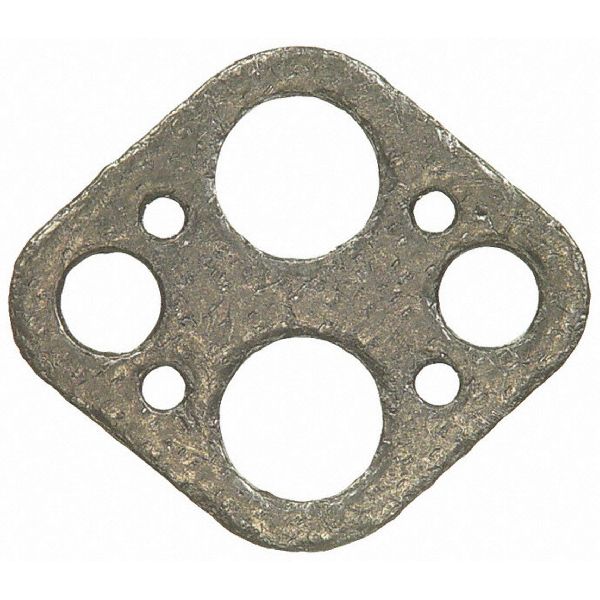
(OEM #28411-3C100 (or included with new valve))— The gasket must be replaced whenever the EGR valve is removed to ensure a proper seal and prevent vacuum leaks.
Trusted brands: Fel-Pro (70152), Mahle, Victor Reinz
OEM price range: $5-$10
Aftermarket price range: $2-$5 - EGR Vacuum Control Solenoid
(OEM #28450-3C100)— If the valve itself is functional, this solenoid that controls its vacuum supply may have failed, causing it to open at the wrong times.
Trusted brands: WVE, Goss, Standard Motor Products (VS228)
OEM price range: $50-$90
Aftermarket price range: $30-$70
Related Codes That Often Appear With This One
- P0401 — If the EGR valve is sticking intermittently, it may get stuck closed (causing P0401 - Insufficient Flow) at times and stuck open (causing P0402 - Excessive Flow) at other times.
- P0404 — This code indicates a problem with the EGR valve's position sensor circuit. If the computer commands a position and the valve gets stuck open, it can set both a performance code (P0404) and an excessive flow code (P0402).
Platform-Specific Known Issues
- The EGR system was likely discontinued for the 2010 model year on the 3.3L V6, with its function being replaced by the CVVT system. This code is primarily applicable to 2006-2009 models.
- Owner experiences on forums like Hyundai-Forums.com frequently cite replacing the EGR valve as the definitive fix for P0402 after cleaning provided only temporary relief.
Mechanic-Grade Diagnostic Values
- EGR Actuator/Solenoid Coil Resistance — expected: 7.3 - 8.8 Ohms at 30°C (86°F). Failure: A reading outside this range, or an open circuit (infinite resistance), indicates a faulty solenoid coil.
- EGR Vacuum Control Solenoid Power Supply — expected: ~12 Volts (Battery Voltage) with Key On, Engine Off. Failure: No voltage at the power supply pin of the solenoid connector indicates a wiring or fuse issue upstream.
Scan Tool Commands That Help
- Hyundai GDS (Global Diagnostic System): Active Test: EGR Gas Circulation / EGR Circulation Valve — This allows a technician to command the EGR valve to open and close while monitoring engine RPM or MAF data. If commanding the valve closed at idle smooths out a rough idle, it confirms the valve was mechanically stuck open. If commanding it open does not cause a change in RPM, it may indicate a blockage.
Wiring & Ground Locations
- Engine Ground Straps — There are three main engine ground points on the 2009 Sonata. Diagrams show locations on the engine block connecting to the chassis. One key ground is often near the alternator and another near the transmission housing.. A poor engine ground can cause incorrect readings and erratic behavior from electronically controlled components like the EGR vacuum control solenoid, leading to improper valve operation.
Real Owner Repair Stories
- Hyundai-Forums.com user (2006 Hyundai Sonata 3.3L V6) — Stalling when coming to a stop, rough idle, P0402 code present.
❌ Tried (didn't work) Initial diagnosis pointed towards the EGR valve.
✅ What actually fixed it The owner replaced the EGR valve, which resolved the stalling and rough idle symptoms and cleared the P0402 code.
Model Year Variations Within This Range
- 2010: The EGR system, including the valve (28410-3C110) and solenoid (28450-3C100), was removed for the 2010 model year on the 3.3L V6. Emission control is managed by the Continuously Variable Valve Timing (CVVT) system instead. Therefore, P0402 is not applicable to the 2010 model.
Diagnostic Flowchart
Other Known Issues on This Vehicle
Issues unrelated to this code that are worth knowing about as an owner of this generation:
- Valve Cover Gasket Leaking Oil onto Alternator 🔴 High — Very common. The front (Bank 2) valve cover gasket is prone to leaking oil directly onto the alternator, causing premature alternator failure. (Ref: Hyundai Service Campaign 936 / TSB 15-01-031 (for Santa Fe, but same issue) addresses this.)
- Timing Chain Tensioner Wear / Startup Rattle 🟠 Medium — Common, especially on higher mileage engines. Hydraulic tensioners can bleed down, causing a 2-5 second rattle on cold startup, leading to premature timing chain stretch.
- Failing Oil Pressure Switch 🟡 Low — A known issue where the oil pressure switch fails, causing a flickering oil light or leaking oil. The leak can sometimes be misdiagnosed as a rear main seal leak. (Ref: Kia issued a warranty extension (ENG237) for this part on similar engines, indicating a known problem.)
- Airbag Control Unit (ACU) Malfunction 🔴 High — Subject to recall. The ACU may fail, preventing airbags from deploying in a crash. This recall primarily affects later Sonata models (2011-2013) but highlights a critical safety concern for the brand in this era. (Ref: NHTSA Recall for 2011-2013 models. Owners of 2006-2010 models should check their VIN for any open recalls, such as NHTSA recall 08V161000 for the Occupant Classification System.)
- Malfunctioning Stop Lamp Switch 🟠 Medium — Widespread issue affecting many Hyundai models of this era. The switch can fail, causing brake lights to not work, stay on, or prevent the vehicle from shifting out of park. (Ref: NHTSA Recall 09V122000.)
Used vs. New Parts: Buying Guide for This Vehicle
When a used part is the smart pick: A used EGR Vacuum Control Solenoid (28450-3C100) from a low-mileage donor vehicle can be a cost-effective option, as it is a simple electronic component less prone to wear than the valve itself. A used EGR valve is generally not recommended.
Donor-vehicle mileage cap: roughly under 80000 miles for the part to have meaningful remaining life.
What to inspect on the donor part:
- For the solenoid, check for cracks in the plastic housing and ensure vacuum ports are clean and unobstructed.
- For the EGR valve (if considering used against advice), inspect the pintle for any signs of carbon buildup or seizure. The diaphragm should hold vacuum when tested with a hand pump.
- Verify the donor vehicle's VIN to ensure it's from a 2006-2009 model, not a 2010.
OEM-only on this vehicle (don't cheap out):
- EGR Valve (28410-3C110) - While quality aftermarket options from brands like Standard Motor Products or Dorman exist, the OEM valve is the most reliable long-term solution to prevent recurring issues from carbon buildup.
Aftermarket brands forum-validated for this vehicle:
- Standard Motor Products (for EGR valve and solenoid)
- Dorman (for EGR valve)
- Fel-Pro (for gaskets)
Brands owners have reported issues with on this vehicle:
- Unbranded, no-name parts from online marketplaces, which often have high failure rates and may not fit correctly.
Real Owner Stories
Aggregated from forums and TSBs cited above. Mileages and costs reflect what owners reported in those sources.
2006 Hyundai Sonata 3.3L V6
Symptoms: The owner described classic P0402 symptoms, specifically stalling the vehicle when coming to stops.
What fixed it: Replacing the EGR valve resolved the stalling and the P0402 code.
Source hint: Hyundai-Forums.com thread titled 'p0402-and-stalling.112101'
Related OBD-II Codes
Frequently Asked Questions
Does my 2010 Hyundai Sonata 3.3L V6 have an EGR valve to replace?
Can I just clean the EGR valve on my Sonata to fix the P0402 code?
Is there a TSB for the oil leak I found while inspecting my EGR system?
How can I tell if the EGR vacuum control solenoid is the problem instead of the valve?
Are there any recalls for the 2006-2010 Sonata I should check while fixing this?
Can I use parts from a Kia Sorento to fix my Sonata's EGR system?
Helpful Videos
We Have This Part in Stock


The information in this article is provided for general reference and educational purposes only. Vehicle specifications, procedures, and part compatibility can vary by production date, trim level, and region. Always consult your vehicle's factory service manual and verify part numbers before purchasing or performing repairs. Safety-critical components such as airbags, seat belts, and braking systems should be installed by a qualified professional.
- Hyundai Sonata:
- 🧭 Diagnostic Flowchart
- 🎬 Helpful Videos
- 🛍️ Shop This Part
- What's Unique About the 2006-2010 Hyundai Sonata
- Symptoms You May Notice
- Most Likely Causes
- Rare But Worth Checking
- Diagnosis Steps
- Parts You'll Likely Need
- Related Codes That Often Appear With This One
- Platform-Specific Known Issues
- Mechanic-Grade Diagnostic Values
- Scan Tool Commands That Help
- Wiring & Ground Locations
- Real Owner Repair Stories
- Model Year Variations Within This Range
- Other Known Issues on This Vehicle
- Used vs. New Parts: Buying Guide for This Vehicle
- Real Owner Stories
- 2006 Hyundai Sonata 3.3L V6
- Related OBD-II Codes
- Frequently Asked Questions
- 🎟️ Get 5% Off