

P0403 on 2014-2016 Ford Transit Connect 2.5L: EGR Circuit Malfunction Causes and Fixes
On this Transit Connect, P0403 often points to a wiring problem covered by a Technical Service Bulletin (TSB 16-0163), not just a bad EGR valve. Before replacing parts, inspect the engine wiring harness where it runs down and around the engine for chafing. Also, check the EGR connector and its pins. A new OEM EGR valve costs approximately $60-$90.
- Do not immediately assume the EGR valve is bad. On this vehicle, the wiring is a more likely culprit.
- Check for Ford TSB 16-0163, as it directly addresses this code and points to a wiring harness problem.
- Thoroughly inspect the EGR valve connector and the surrounding harness for damage before buying any parts.
- If multiple, seemingly unrelated circuit codes appear with P0403, check your fuses before diagnosing individual components.
What's Unique About the 2014-2016 Ford Transit Connect
For the 2014-2016 Transit Connect with the 2.5L engine, this code is specifically called out in Ford's Technical Service Bulletin (TSB) 16-0163. This TSB suggests that a faulty engine wiring harness is a common cause for P0403 and a host of other electrical codes. Owners have reported that replacing the EGR valve alone does not always fix the issue, reinforcing that the root cause is often in the wiring or electrical connector. One owner pinpointed the problem area to the harness that runs down and around the engine.
Symptoms You May Notice
- Check Engine Light is on
- Rough idle or stalling, especially at low speeds
- Reduced engine power or hesitation, particularly during take-off
- Failing an emissions test
- Engine knocking or pinging sounds on acceleration
- Immediately replacing the EGR valve without checking the wiring harness or connector. Many owners replace the valve only to have the P0403 code return because the actual fault is in the wiring, as suggested by TSB 16-0163.
Most Likely Causes
- Engine Wiring Harness Fault 🔴 High Probability Ford issued TSB 16-0163 for the 2014-2016 2.5L model, which directly links various electrical codes, including P0403, to problems within the engine wiring harness. A forum user identified the specific problem location as the harness section that comes down and around the engine. The TSB specifically calls out inspecting the harness 25-30 cm (10-12 inches) below the PCM connector for chafing against the transmission.
How to confirm: Visually inspect the entire engine wiring harness, paying close attention to the area 10-12 inches below the PCM connector where it might rub against the transmission. Check for chafed, broken, or shorted wires. Perform continuity and voltage drop tests on the wires running to the EGR valve connector.
Typical fix: Repair the damaged section of the wiring harness. This may involve soldering the broken wire and protecting it with heat shrink tubing, or replacing a larger section of the harness if damage is widespread. TSB 16-0163 outlines the official inspection and repair procedure.
Est. part cost: $5-$50 for repair materials - Faulty EGR Valve Connector 🟡 Medium Probability → Shop Exhaust Gas Recirculation (EGR) Valve A TSB for the previous generation Transit Connect (12-7-8) identified the EGR connector pigtail as a common failure point, suggesting a potential weakness in the platform's wiring design. Corrosion, moisture, or broken wires right at the connector can cause an open or shorted circuit.
How to confirm: Disconnect the connector and inspect the pins for corrosion, moisture, or damage. With the key on, wiggle the connector and harness to see if the code appears or disappears. Check for correct voltage at the pins; when the solenoid is off, the control circuit should have battery voltage, and near zero when active.
Typical fix: Clean the connector terminals if corrosion is light. If the connector or pins are damaged, replace the pigtail connector, which involves cutting the old one off and splicing the new one in using heat-shrink butt connectors.
Est. part cost: $20-$50 for a new pigtail (e.g., Motorcraft WPT-1145 or similar) - Failed EGR Valve 🟡 Medium Probability → Shop Exhaust Gas Recirculation (EGR) Valve
How to confirm: The internal electronic solenoid of the EGR valve can fail. You can test the resistance of the coils inside the valve using a multimeter. Based on TSB 12-7-8 for a similar Ford system, the resistance between the center pin and the outer pins should be within a specific range, such as 12-24 Ohms. A reading outside this range indicates a faulty valve.
Typical fix: Replace the EGR valve assembly.
Est. part cost: $60-$150
Rare But Worth Checking
- Blown Fuse From an Unrelated Short Circuit: A forum user with a 2015 2.5L model reported that P0403 and other codes were triggered by a blown fuse (F33 in the under-hood fuse box). The fuse was blowing due to a shorted wire on the transmission's turbine speed sensor. This highlights that the EGR circuit can lose power due to a fault in a completely different system that shares the same fuse.
- Powertrain Control Module (PCM) Fault: → Shop Engine Control Module (ECM) While uncommon, the internal driver circuit within the PCM that controls the EGR valve can fail. This should be considered a last resort after all other possibilities (wiring, connector, and EGR valve) have been thoroughly ruled out.
Diagnosis Steps
- Scan for all DTCs. Note if other circuit-related codes (like P0443, P0010, P0351-P0354) are present, which strongly suggests a wiring harness issue per TSB 16-0163.
- Check for Technical Service Bulletins. Specifically, review TSB 16-0163 to understand the scope of the known wiring harness problem.
- Perform a thorough visual inspection of the engine wiring harness. Focus on the section that routes down and around the engine, specifically 25-30 cm (10-12 inches) below the PCM connector, looking for any signs of rubbing, chafing, melting, or rodent damage against the transmission.
- Inspect the EGR valve's electrical connector. Disconnect it and check for green or white corrosion, bent pins, or signs of water intrusion. Wiggle the connector with the engine running to see if it affects idle.
- Test the EGR valve's internal resistance. Using a multimeter, check the resistance between the pins on the valve itself. Based on a similar Ford EGR system, expect readings between 12-24 Ohms between the power and control pins. An open or shorted reading indicates a failed valve.
- Check for power and ground at the EGR connector. With the key on, use a multimeter to verify that the circuit has proper voltage (typically battery voltage on one pin) and a good ground connection.
- If wiring, the connector, and the valve all test good, the final and least likely possibility is a fault within the PCM.
Parts You'll Likely Need
- EGR Valve
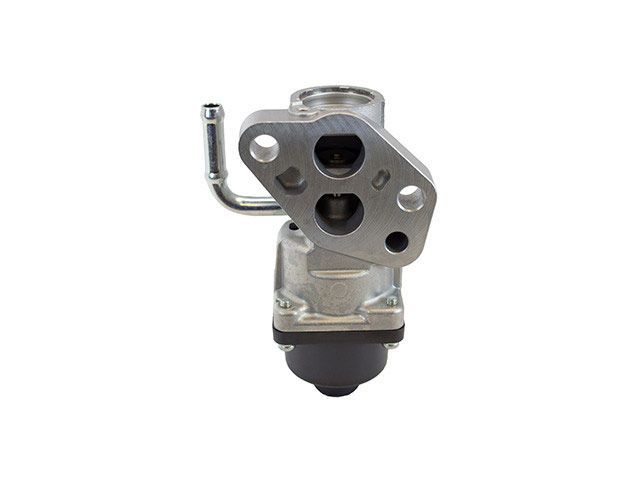
(OEM #JX6Z-9D475-B)— The internal solenoid can fail electrically, creating an open or short in the control circuit. While wiring is a primary suspect, a failed valve is still a common cause. This part number appears to supersede older versions and may also be listed as CX2603.
Trusted brands: Motorcraft (JX6Z-9D475-B / CX2603), Standard Motor Products (EGV1025), Walker, Delphi
OEM price range: $55-$92
Aftermarket price range: $50-$120 - EGR Valve Connector Pigtail
(OEM #WPT-1145 (Verify connector shape))— The connector itself can corrode or have wires break right at the back of the plug, causing an intermittent or constant circuit fault. This is a known issue on the prior generation. The WPT-1145 is a 16-wire pigtail that may be used for this 6-pin connector.
Trusted brands: Motorcraft, Dorman, Standard Motor Products
OEM price range: $30-$50
Aftermarket price range: $20-$40
Related Codes That Often Appear With This One
- P0443 — EVAP Purge Control Valve Circuit. This code can appear with P0403 if they share a common power or ground circuit, or if there is a widespread wiring harness issue as described in TSB 16-0163.
- P0010 — 'A' Camshaft Position Actuator Circuit. Like P0443, this code is also mentioned in TSB 16-0163 and can indicate a shared electrical fault within the engine harness.
- P0400 — EGR Flow Malfunction. While P0403 is an electrical circuit code, an electrical issue could eventually lead to the valve not opening or closing correctly, causing a flow-related code to appear as well.
Technical Service Bulletins (TSBs) & Recalls
- TSB 16-0163: For 2014-2016 Transit Connect 2.5L, notes that an illuminated MIL with DTC P0403 (among many others) may be caused by a fault in the engine wire harness. The TSB provides a detailed procedure for inspection and repair, focusing on a chafe point 10-12 inches below the PCM connector.
- TSB 12-7-8: Pertains to the 2010-2012 Transit Connect, but is relevant as it details a procedure for replacing a faulty EGR connector pigtail and provides resistance specifications (12-24 Ohms) for testing the EGR valve itself, which are likely similar for the 2014-2016 model.
Platform-Specific Known Issues
- TSB 16-0163 indicates a known issue with the engine wiring harness on 2014-2016 2.5L models that can cause P0403 and over 30 other electrical DTCs. The repair involves inspecting the harness for chafing 25-30 cm (10-12”) below the PCM connector and repairing damaged wires.
Mechanic-Grade Diagnostic Values
- EGR Valve Coil Resistance — expected: 12-24 Ohms. Failure: A reading of infinity (open) or zero (short) indicates a failed internal coil.
- EGR Control Circuit Voltage (KOEO) — expected: Approximately 12V (Battery Voltage) on both the power and control wires.. Failure: Lack of voltage on the power feed wire indicates a fuse or wiring issue upstream. The control wire will show battery voltage until the PCM commands the valve to open by grounding the circuit.
Scan Tool Commands That Help
- Ford IDS (Integrated Diagnostic System): EGR System Test — This is the dealer-level tool function. It runs an automated test sequence of the EGR valve, checking for proper electrical response and mechanical movement. It can detect faults that may not be obvious with simple resistance or voltage tests.
- FORScan: EGRVR Commanded (EGRTVCMD) PID & Bidirectional Controls — FORScan is a powerful aftermarket tool for Ford vehicles. A user can monitor the EGRTVCMD PID to see the percentage the PCM is commanding the valve to open. Using bidirectional controls, the technician can manually command the valve to open and close to verify its function without having to drive the vehicle. This is critical for confirming if the valve is mechanically stuck or if the circuit is failing under command.
Wiring & Ground Locations
- Engine Harness Chafe Point — The main engine wiring harness (12A581), specifically 25-30 cm (10-12 inches) below the PCM connector, where it can rub against the transmission housing.. This is the exact location identified in TSB 16-0163 as the cause for P0403 and many other electrical codes. A short at this point can interrupt power or the control signal to the EGR valve.
- PCM Location — Behind the front wheel well liner on the driver's side (for US models).. Knowing the PCM location is the starting point for tracing the harness back to the chafe point identified in TSB 16-0163.
- Main Engine Ground — A primary ground point is typically a large cable from the battery to the engine block itself, often near the starter motor. Additional smaller ground straps connect the engine to the chassis.. A poor engine ground can cause a voltage differential, leading to erratic behavior and fault codes for various electronic components, including the EGR valve. While not the most common cause for a specific circuit code like P0403, it should be checked if multiple, seemingly unrelated electrical codes are present.
Real Owner Repair Stories
- fordtransitconnectforum.com user 'tvrepairbiz' (2014 Ford Transit Connect) — Persistent P0403 code, even after replacing the EGR valve.
❌ Tried (didn't work) Replacing the EGR Valve
✅ What actually fixed it The user found a chafed wire in the wiring harness that runs 'down and around the engine.' Repairing this wire resolved the P0403 code. This aligns perfectly with the issue described in Ford's TSB 16-0163.
OEM Part Supersession History
CX2352→JX6Z-9D475-B (also sold as CX2603)— Standard part lifecycle update by the manufacturer.
Heads up: JX6Z-9D475-B is listed for 2019-2023 models but is also cross-referenced as the correct service part for the 2014-2016 2.5L engine, indicating it is the current replacement. The part EGV1025 from Standard Motor Products is also listed as a compatible cross-reference.
Diagnostic Flowchart
Other Known Issues on This Vehicle
Issues unrelated to this code that are worth knowing about as an owner of this generation:
- 6F35 Transmission Problems 🔴 High — Widespread issue. Can manifest as harsh shifting, slipping, shuddering, delayed engagement, or complete failure, sometimes at relatively low mileage (under 100k miles). (Ref: NHTSA Recall 22V-413 (Shifter Cable Bushing), but multiple TSBs exist for various shift quality issues. A class-action lawsuit was also filed regarding this transmission.)
- Cracked Front Door Latch Pawl 🔴 High — Common enough to trigger a safety recall. The door may not latch properly or could unlatch while driving. (Ref: NHTSA Recall 20V-331)
- Panoramic Roof Panel Separation 🟠 Medium — Affects models with the panoramic glass roof. The adhesive bond can fail, leading to wind noise, water leaks, or in a worst-case scenario, the panel separating from the vehicle. (Ref: NHTSA Recall 20V-293)
- Water Leaks into Passenger Footwell 🟡 Low — A known issue where water can drip into the passenger front footwell, potentially damaging electronics or causing mold. (Ref: TSB 20-2382)
- Inaccurate Ambient Air Temp / Inoperative A/C 🟡 Low — A common failure of the ambient air temperature sensor or its connector causes the A/C compressor to be disabled as a protective measure. (Ref: TSB 16-0054)
Used vs. New Parts: Buying Guide for This Vehicle
When a used part is the smart pick: A used engine wiring harness from a low-mileage, collision-damaged vehicle can be a cost-effective solution if the original harness has widespread, irreparable damage. A used EGR valve is generally not recommended due to the high likelihood of internal carbon buildup or electronic failure.
Donor-vehicle mileage cap: roughly under 60000 miles for the part to have meaningful remaining life.
What to inspect on the donor part:
- For a wiring harness, inspect for any signs of prior repairs, cuts, or abrasion, especially around the area identified in TSB 16-0163.
- Ensure all connector housings are intact, not cracked, and that locking tabs are present.
- Verify the donor vehicle had a lower mileage than the vehicle being repaired.
OEM-only on this vehicle (don't cheap out):
- While not strictly 'OEM-only', using a Motorcraft EGR valve is highly recommended. Forum discussions and mechanic experience often show that complex electronic components like EGR valves have a higher failure rate with budget aftermarket brands.
Aftermarket brands forum-validated for this vehicle:
- Standard Motor Products (SMP) is a reputable aftermarket brand often considered a high-quality alternative to OEM.
Brands owners have reported issues with on this vehicle:
- Avoid unbranded, 'white-box' parts from online marketplaces. While the initial cost is low, they often have poor build quality and short service lives, leading to repeat repairs.
Real Owner Stories
Aggregated from forums and TSBs cited above. Mileages and costs reflect what owners reported in those sources.
2014 Ford Transit Connect 2.5L
Symptoms: Check engine light with P0403 code; replacing the EGR valve did not solve the problem.
What fixed it: The solution was a chafed wire in the harness that runs 'down and around the engine'.
Source hint: fordtransitconnectforum.com thread titled 'P0403 code on 2014 after replacing EGR valve'
2014 Ford Transit Connect 2.5L
Symptoms: P0403 code and other electrical codes appeared simultaneously.
What fixed it: Repaired a short in the transmission speed sensor wiring that had blown a shared fuse.
Source hint: fordtransitconnectforum.com thread titled '2014 Ford transit connect'
2014 Ford Transit Connect 2.5L
Symptoms: Check engine light with P0403 code; reduced engine power or hesitation during take-off.
What fixed it: Identified as a wiring or PCM issue after a new EGR valve failed to clear the code.
Source hint: fordtransit.org thread titled 'P0403 code 2014 Ford Transit Connect'
Related OBD-II Codes
Frequently Asked Questions
Does TSB 16-0163 apply to my 2015 Ford Transit Connect 2.5L?
Where exactly should I look for wiring damage on my 2014 Transit Connect?
I replaced the EGR valve but the P0403 code is still there. What else could it be?
What is the correct resistance for the EGR valve solenoid on this vehicle?
Can a transmission-related electrical issue cause the P0403 code?
Is there a specific replacement part for a damaged EGR connector?
We Have This Part in Stock


The information in this article is provided for general reference and educational purposes only. Vehicle specifications, procedures, and part compatibility can vary by production date, trim level, and region. Always consult your vehicle's factory service manual and verify part numbers before purchasing or performing repairs. Safety-critical components such as airbags, seat belts, and braking systems should be installed by a qualified professional.
- Ford Transit Connect:
- 🧭 Diagnostic Flowchart
- 🛍️ Shop This Part
- What's Unique About the 2014-2016 Ford Transit Connect
- Symptoms You May Notice
- Most Likely Causes
- Rare But Worth Checking
- Diagnosis Steps
- Parts You'll Likely Need
- Related Codes That Often Appear With This One
- Technical Service Bulletins (TSBs) & Recalls
- Platform-Specific Known Issues
- Mechanic-Grade Diagnostic Values
- Scan Tool Commands That Help
- Wiring & Ground Locations
- Real Owner Repair Stories
- OEM Part Supersession History
- Other Known Issues on This Vehicle
- Used vs. New Parts: Buying Guide for This Vehicle
- Real Owner Stories
- 2014 Ford Transit Connect 2.5L
- 2014 Ford Transit Connect 2.5L
- 2014 Ford Transit Connect 2.5L
- Related OBD-II Codes
- Frequently Asked Questions
- 🎟️ Get 5% Off