

P0404 on 2014-2022 Ford Transit Connect 2.5L: EGR Circuit Range/Performance Causes and Fixes
On a 2014-2022 Ford Transit Connect with the 2.5L engine, code P0404 is almost always caused by a carbon-fouled and sticking EGR valve. Cleaning may work temporarily, but replacement is the most reliable fix. Expect to pay ~$80-$150 for a new valve, with a DIY difficulty of 2/5.
- P0404 on the 2.5L Transit Connect almost always points to a problem with the EGR valve itself.
- The most common failure is the valve sticking due to carbon buildup, which can cause a rough idle, hesitation, and stalling.
- The repair is DIY-friendly for those with basic tools. The valve is accessible on top of the engine.
- While cleaning the valve is an option, replacing the entire EGR valve assembly is the most reliable and long-term fix.
- Before buying parts, inspect the valve's electrical connector for obvious damage, as this can be a simple fix.
What's Unique About the 2014-2022 Ford Transit Connect
The 2.5L Duratec engine in the Transit Connect uses a common electronic EGR valve design shared across many Ford models like the Fusion and Escape. There isn't a unique, platform-specific flaw causing P0404. Instead, the issue is typical for this type of EGR system: the valve's pintle and internal mechanism are prone to sticking from carbon buildup, a common occurrence in EGR systems that recirculate exhaust soot. Vehicles that sit for long periods or are used for short trips may be more susceptible, as carbon can harden and seize the valve.
Symptoms You May Notice
- Check Engine Light is on
- Rough or erratic idle
- Engine hesitation or stumbling during acceleration
- Engine stalling, especially at idle
- Pinging or knocking sounds from the engine during acceleration
- Reduced fuel economy
- Replacing oxygen sensors or the catalytic converter. While EGR issues can affect emissions, P0404 points specifically to the EGR valve's circuit and performance, not other exhaust components. 🎬 Watch a quick explanation of the P0404 code.
Most Likely Causes
- Sticking or Clogged EGR Valve 🔴 High Probability → Shop Exhaust Gas Recirculation (EGR) Valve The EGR valve is exposed to constant exhaust soot, which can build up and cause the internal pintle to stick, preventing it from opening or closing correctly. This is the most common failure mode for this part. Owner forums are filled with reports confirming this is the primary cause.
How to confirm: Remove the EGR valve (located on top of the engine, held by two T27 Torx bolts) and visually inspect it for carbon buildup. Attempt to move the internal pintle manually; it should move smoothly and not be seized. If it's stuck, it has failed.
Typical fix: Thoroughly cleaning the valve and its passages with carburetor cleaner may work temporarily, but owner experiences confirm the code often returns within months. Replacement with a new Motorcraft or quality aftermarket valve is the recommended permanent solution.
Est. part cost: $80-$150 - Faulty EGR Valve Position Sensor 🟡 Medium Probability → Shop Exhaust Gas Recirculation (EGR) Valve The position sensor is integrated into the electronic EGR valve assembly. An internal failure of this sensor will cause the PCM to receive incorrect position data, triggering the P0404 code even if the valve itself moves correctly. This failure is not separable from the valve itself.
How to confirm: This is difficult to confirm without a capable scan tool to monitor the EGR position sensor data (PID) in real-time while commanding the valve to move. Since the sensor is part of the valve, a valve replacement addresses this potential cause.
Typical fix: Replace the entire EGR valve assembly.
Est. part cost: $80-$150 - Damaged Wiring or Connector ⚪ Low Probability The wiring harness connector sits on top of the engine and is subject to heat and vibration, which can lead to corrosion or loose pins over time. The plastic locking tab on the connector can also become brittle and break.
How to confirm: Visually inspect the EGR valve's electrical connector and the surrounding wires for any signs of damage, corrosion, backed-out pins, or loose connections. Wiggle the connector with the engine running to see if it affects idle.
Typical fix: Repair the damaged section of wiring or clean the connector terminals. If the connector itself is broken, it may need to be replaced with a pigtail connector.
Est. part cost: $10-$50
Rare But Worth Checking
- Clogged EGR Passages: While the valve itself is more likely to clog, the passages in the intake manifold where the exhaust gas enters can also become restricted with carbon, leading to flow issues that can contribute to performance problems.
- Faulty Powertrain Control Module (PCM): This is extremely rare. The PCM is the last thing to suspect after all other possibilities (valve, wiring, sensors) have been exhaustively ruled out.
Diagnosis Steps
- Scan for Codes: Use an OBD-II scanner to confirm P0404 is the primary code. Note any other codes present.
- Inspect the Connector: Visually inspect the electrical connector on the EGR valve for damage, corrosion, or loose pins. Ensure it is seated firmly.
- Live Data Analysis (Optional): If you have an advanced scan tool, monitor the commanded EGR position vs. the actual EGR position. If the actual value doesn't respond or is erratic, it points to a faulty valve/sensor assembly.
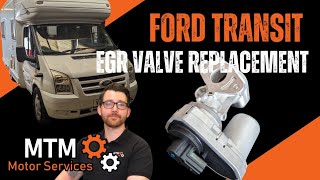
- Remove the EGR Valve: The valve is typically held on by two T27 Torx bolts and is located on the top/front of the engine. Disconnect the electrical connector and remove the bolts. The job usually takes less than 30 minutes. 🎬 Watch this step-by-step EGR valve replacement walkthrough.
- Inspect and Test the Valve: Check the valve and its ports for heavy carbon buildup. Try to manually actuate the pintle inside; it should move without sticking. If it's seized, it's faulty.
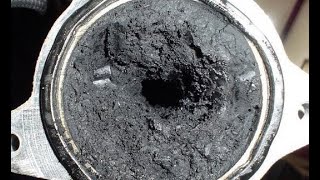
- Clean or Replace: You can attempt to clean the carbon out with a suitable solvent and a brush. However, owner experiences strongly suggest replacement is the only long-term fix. Cleaning is often a temporary measure. 🎬 See how to clean and free up a stuck valve.
- Inspect Passages: While the valve is off, inspect the port on the intake manifold for carbon buildup and clean it out carefully with a small brush or pick, being careful not to drop debris into the manifold.
- Reinstall and Clear Codes: Install the new EGR valve, ensuring the new gasket is properly seated to prevent leaks. Torque the T27 bolts appropriately (typically around 89 lb-in or 10 Nm, but verify spec). Reconnect the electrical connector, clear the trouble codes with your scanner, and perform a test drive to ensure the code does not return.
Parts You'll Likely Need
- EGR Valve
(OEM #9U5Z-9D475-D (Ford Base P/N), Motorcraft CX2411)— This is the component that fails most often due to carbon buildup, causing the P0404 code. The position sensor is integrated into this assembly. Replacement is the most reliable fix.
Trusted brands: Motorcraft, Standard Motor Products, Delphi, Walker
OEM price range: $100-$150
Aftermarket price range: $70-$120 - EGR Valve Gasket
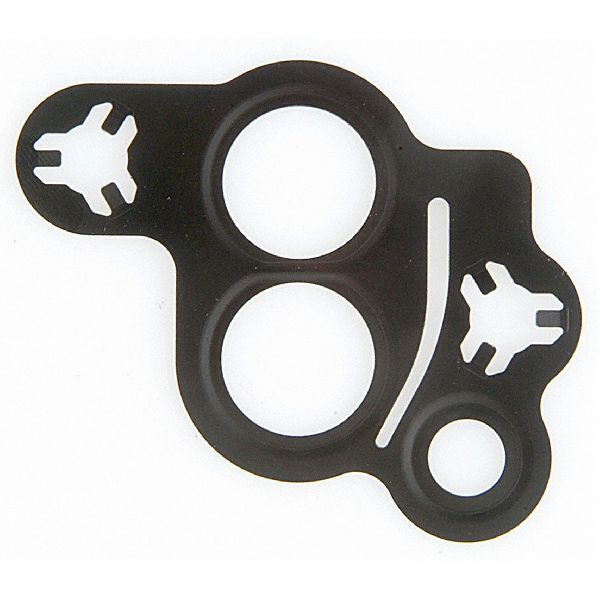
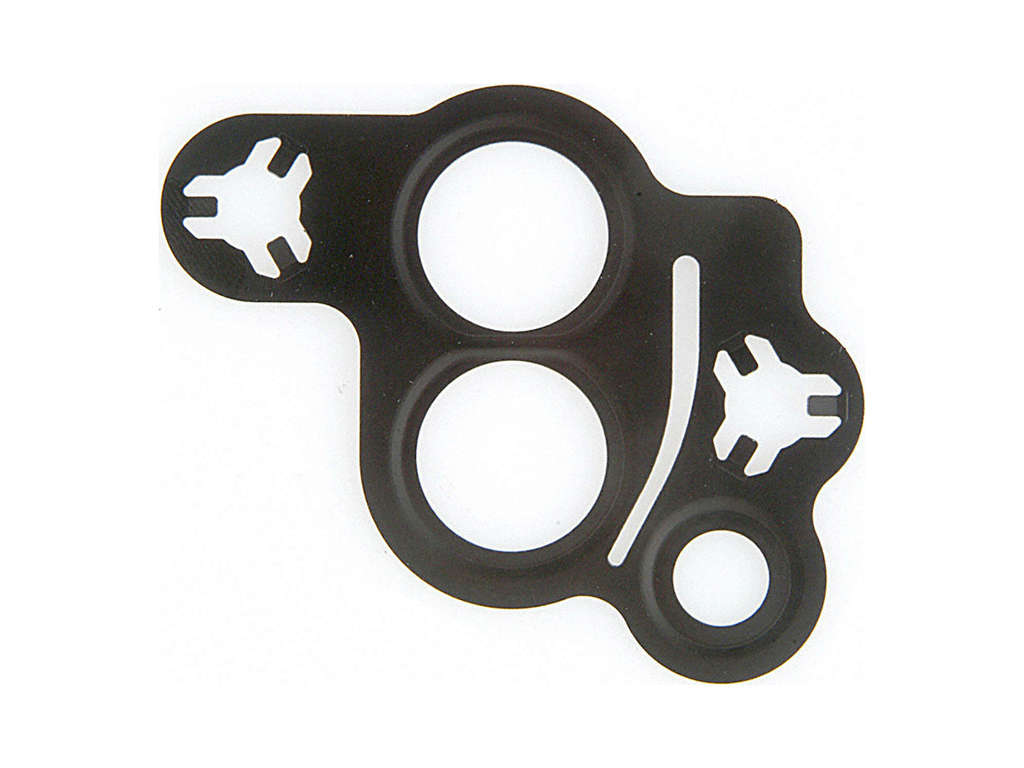
(OEM #Fel-Pro 72511 (Aftermarket example))— The gasket should always be replaced whenever the EGR valve is removed to prevent exhaust leaks. Most new valves include a new gasket in the box.
Trusted brands: Fel-Pro, Motorcraft
OEM price range: $5-$15
Aftermarket price range: $3-$10
Related Codes That Often Appear With This One
- P0401 — P0401 (EGR Flow Insufficient) can appear if the valve is stuck closed or passages are blocked, preventing the required amount of exhaust gas from flowing.
- P0402 — P0402 (EGR Flow Excessive) can appear if the valve is stuck open, allowing too much exhaust gas into the intake at the wrong time.
- P0405/P0406 — These codes indicate a low or high voltage problem in the EGR sensor circuit, pointing directly to an electrical fault within the sensor (part of the valve) or its wiring.
Platform-Specific Known Issues
- Owners on fordtransitusaforum.com note that this issue is particularly common on fleet vehicles that see a lot of idle time, which can accelerate carbon buildup.
Mechanic-Grade Diagnostic Values
- EGR Valve Connector - 5V Reference Voltage — expected: ~5.0 Volts (Key On, Engine Off). Failure: No voltage or significantly low voltage points to a wiring or PCM issue.
- EGR Valve Connector - Power Supply Voltage — expected: ~12.0 Volts (Battery Voltage) on the power feed pin (Key On, Engine Off). Failure: Low or no voltage indicates a problem with the fuse or power supply wire from the Power Distribution Box.
- EGR Valve Motor Coil Resistance — expected: Approximately 20-24 Ohms between pairs of pins for the stepper motor coils (e.g., pins 2&3, 5&6 on similar Ford 6-pin valves).. Failure: A reading that is significantly higher, lower, or open-loop (OL) indicates a failed internal motor winding, requiring valve replacement.
- Live Data - Commanded vs. Actual EGR Position — expected: Using a scan tool, the 'EGR_PCT' (Actual) PID should closely track the 'EGR_CMD' (Commanded) PID when the valve is activated.. Failure: A large discrepancy between the two values, or the actual position not changing when commanded, confirms a sticking valve or faulty position sensor.
Scan Tool Commands That Help
- Ford IDS / FORScan: EGR Valve Control (Active Command) — This bidirectional command allows the technician to manually open and close the EGR valve by a specific percentage while monitoring live data. It is the most effective way to test the valve's mechanical response and the accuracy of the integrated position sensor without removing the part from the vehicle.
- Ford IDS / FORScan: Reset All Adaptations / Clear Transmission Adaptive Tables — While a specific 'EGR relearn' is not typically required for this valve, some technicians recommend performing a full KAM (Keep Alive Memory) reset after replacement. This forces the PCM to relearn all adaptive values, including idle and fuel trims, which may have been skewed by the faulty EGR operation. A simple battery disconnect for 20 minutes can also accomplish this.
Wiring & Ground Locations
- EGR Valve Connector (C417/C130) — Directly on the EGR valve, top front of the engine.. This 6-pin connector is the single interface for power, ground, and PCM control signals. Corrosion or a broken locking tab here is a common point of failure.
- G104 / G105 — Left-hand side of the engine compartment, on the chassis frame rail or inner fender.. These are primary PCM and engine sensor ground points. A loose or corroded connection at these locations can introduce electrical noise or voltage drops, potentially causing the PCM to misinterpret the EGR position sensor's signal and trigger a P0404.
- Engine Compartment Fuse Box — Located in the engine bay.. The fuse for the EGR circuit (often shared with other engine controls) is located here. Specifically, fuse F32 (15A) is listed for the Engine Control Module on the 2.5L engine, which powers the EGR circuit.
Real Owner Repair Stories
- Ford Transit Connect Forum (2014-2022 Ford Transit Connect) — Check Engine Light with P0404 code.
❌ Tried (didn't work) Cleaning the original EGR valve.
✅ What actually fixed it The owner reported that cleaning the EGR valve only resolved the issue temporarily, with the code returning after 10,000 miles. Replacing the EGR valve with a new Motorcraft unit provided a long-term fix that lasted over 50,000 miles. - YouTube - 'Ford transit connect easy Free EGR valve repair' (Ford Transit Connect (specific year not mentioned, but within the generation)) — Engine management light on, P0404 code stored.
❌ Tried (didn't work) Clearing the code with a scanner (it would return immediately after a short drive).
✅ What actually fixed it The mechanic removed the EGR valve and found the internal pintle was seized. After freeing it up with penetrating oil and lubricating it, the valve operated correctly. Reinstalling the cleaned and freed-up valve and clearing the codes resolved the check engine light. This confirms a mechanical seizure is the direct cause.
OEM Part Supersession History
9U5Z-9D475-D→This part number appears to be stable for the specified application. However, other Ford EGR valves for different engines have supersessions, for example, HC3Z-9D475-A was replaced by HC3Z-9D475-D. Always verify the part number with a VIN at the dealer.— N/A
Diagnostic Flowchart
Documented NHTSA Reports
- A manufacturer service bulletin noted that vehicles may exhibit a rough condition or have the Malfunction Indicator Light on with EGR related diagnostic trouble codes including P0401, P0402, P0403, P0404, P0405, or P0406 (NHTSA ODI #10573470).
- An owner reported that a dealership could not find the problem even after a full inspection when codes P0299, P0401, P0404, and P1335 appeared (NHTSA ODI #11065690).
Other Known Issues on This Vehicle
Issues unrelated to this code that are worth knowing about as an owner of this generation:
- Degrading Transmission Shifter Cable Bushing 🔴 High — Widespread enough to trigger a safety recall (21S24). The bushing can detach, causing the vehicle to fail to engage Park, potentially leading to a rollaway. (Ref: Recall 21S24)
- Sliding Door Mechanism Failure 🟠 Medium — Very common complaint on owner forums. The cables, lock actuators, and exterior/interior handles are all frequent points of failure, causing doors to become stuck closed or difficult to open.
- HVAC Blower Motor Resistor Failure 🟡 Low — A common failure part, typically occurring after 50,000 miles. Symptoms include the fan only working on the highest setting or not at all. It's a relatively cheap and easy part to replace.
- Faulty Purge Valve 🟠 Medium — Can cause random stalling at idle, rough running, and difficulty starting after refueling. The valve can stick open or closed, leading to EVAP system codes and drivability problems.
Used vs. New Parts: Buying Guide for This Vehicle
When a used part is the smart pick: Buying a used EGR valve for this vehicle is strongly discouraged. The primary failure mode is internal carbon buildup and mechanical wear/seizure. A used part from a junkyard is highly likely to have the same issue or fail shortly after installation.
What to inspect on the donor part:
- Not applicable, as buying used is not recommended.
OEM-only on this vehicle (don't cheap out):
- EGR Valve: While some aftermarket brands are reputable, forum consensus and mechanic experience suggest that the OEM Motorcraft part (CX2411) has the highest reliability and lowest chance of premature failure or causing recurrent codes. The cost difference is often minimal compared to the labor of doing the job twice.
Aftermarket brands forum-validated for this vehicle:
- Standard Motor Products (SMP)
- Delphi
Brands owners have reported issues with on this vehicle:
- Unbranded, 'white-box' parts from online marketplaces should be avoided, as their internal electronics and mechanical tolerances are often poor, leading to immediate or rapid failure.
Real Owner Stories
Aggregated from forums and TSBs cited above. Mileages and costs reflect what owners reported in those sources.
Ford Transit Connect 2.5L I4 — 85000 miles
Symptoms: Received the P0404 code.
What fixed it: Initially cleaned it out, but the code returned in 10,000 miles. Finally replaced it with a new Motorcraft valve which resolved the issue for over 50,000 miles.
Source hint: fordtransitusaforum.com - Thread: 'P0404 EGR code' user 'Solar-powered'
Ford Transit Connect 2.5L I4
Symptoms: The van drives perfectly but the engine management light is on and diagnostics show an EGR fault; resetting the code results in it coming back on.
What fixed it: The owner noted the EGR fault was present and required mechanical attention despite the vehicle driving well.
Source hint: youtube_comment: 'Reviving Salvage'
Ford Transit Connect 2.5L I4
Symptoms: Valve seized from lack of use or carbon buildup.
What fixed it: Removing the valve and manually freeing up the internal pintle to address mechanical failure.
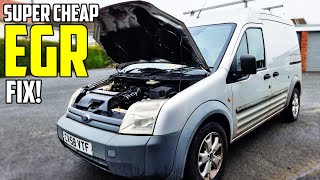
Source hint: YouTube: 'Super Cheap EGR VALVE FIX...Ford Transit Connect'
Related OBD-II Codes
Frequently Asked Questions
Is there a recall for the EGR valve on my 2014-2022 Ford Transit Connect?
Can I just clean the EGR valve on my 2.5L Duratec to save money?
Why is my fleet-used Transit Connect seeing this P0404 code so often?
What tools do I need to replace the EGR valve on the 2.5L engine?
Does the P0404 code mean I only need a new sensor?
Are there other Ford vehicles with the 2.5L engine that have this same EGR problem?
Helpful Videos

We Have This Part in Stock

The information in this article is provided for general reference and educational purposes only. Vehicle specifications, procedures, and part compatibility can vary by production date, trim level, and region. Always consult your vehicle's factory service manual and verify part numbers before purchasing or performing repairs. Safety-critical components such as airbags, seat belts, and braking systems should be installed by a qualified professional.
- Ford Transit Connect:
- 🧭 Diagnostic Flowchart
- 🎬 Helpful Videos
- 🛍️ Shop This Part
- What's Unique About the 2014-2022 Ford Transit Connect
- Symptoms You May Notice
- Most Likely Causes
- Rare But Worth Checking
- Diagnosis Steps
- Parts You'll Likely Need
- Related Codes That Often Appear With This One
- Platform-Specific Known Issues
- Mechanic-Grade Diagnostic Values
- Scan Tool Commands That Help
- Wiring & Ground Locations
- Real Owner Repair Stories
- OEM Part Supersession History
- Documented NHTSA Reports
- Other Known Issues on This Vehicle
- Used vs. New Parts: Buying Guide for This Vehicle
- Real Owner Stories
- Ford Transit Connect 2.5L I4 — 85000 miles
- Ford Transit Connect 2.5L I4
- Ford Transit Connect 2.5L I4
- Related OBD-II Codes
- Frequently Asked Questions
- 🎟️ Get 5% Off