

P0404 on 2000-2006 GMC Yukon: EGR Circuit Range/Performance Causes and Fixes
On a 2000-2006 GMC Yukon, code P0404 is almost always caused by a carbon-fouled or failed EGR valve. The valve's pintle sticks due to carbon chunks, preventing it from moving to the position commanded by the computer. Cleaning may work temporarily, but replacement with a quality part is the most reliable fix. Expect to pay between $120 and $250 for an OEM-quality part.
- P0404 on your Yukon most likely means the EGR valve is clogged with carbon or has failed.
- A simple inspection and cleaning can sometimes fix the issue, but replacement is often required for a permanent solution.
- Symptoms include a rough idle, engine pinging, and a lit Check Engine Light.
- This is a DIY-friendly repair that can be done with basic hand tools in about an hour.
- Always use a new gasket when removing and reinstalling the EGR valve to prevent exhaust leaks.
What's Unique About the 2000-2006 GMC Yukon
For the GMT800 platform trucks like the 2000-2006 Yukon, the Vortec V8 engines (4.8L, 5.3L, 6.0L) are well-known for accumulating significant carbon deposits in the EGR system. This buildup is the primary reason for P0404, often causing the valve's internal pintle to stick. While the code is generic, the cause on these specific trucks is very frequently a mechanical blockage from carbon chunks rather than a complex electrical failure. In many owner experiences, even after cleaning, the code returns, suggesting that wear inside the valve contributes to the problem and makes replacement a more permanent solution.
Symptoms You May Notice
- Illuminated Check Engine Light
- Rough or erratic idle, sometimes stalling at stops
- Engine stalling at low speeds or when returning to idle
- Knocking or pinging sounds during acceleration
- Reduced fuel economy
- Failure to pass an emissions test
- Sluggish acceleration or hesitation
- Replacing oxygen sensors, as poor running can sometimes be mistaken for a fuel/air mixture issue.
- Replacing the Mass Airflow (MAF) sensor, as a dirty MAF can also cause idle issues.
- Assuming a P0404 code after replacing the EGR valve means the new part is bad. It can sometimes indicate clogged intake passages or a persistent wiring issue.
Most Likely Causes
- Carbon Buildup on EGR Valve 🔴 High Probability → Shop Exhaust Gas Recirculation (EGR) Valve The design of the Vortec V8 engines in this generation is susceptible to carbon accumulation in the emissions system over time. Soot from exhaust gas builds up and can cause the valve's pintle to stick.
How to confirm: Remove the EGR valve (typically two 10mm bolts) and visually inspect the pintle and passages for thick, black carbon deposits that restrict movement. Often, a chunk of carbon will be physically jamming the valve.
Typical fix: Thoroughly clean the EGR valve and passages with a dedicated cleaner and a wire brush. Reinstall with a new gasket. If the valve is heavily caked or still sticks after cleaning, replacement is necessary. Many owners report that cleaning is only a temporary fix.
Est. part cost: $10-$20 for cleaning supplies - Failed EGR Valve 🔴 High Probability → Shop Exhaust Gas Recirculation (EGR) Valve The electronic solenoid and internal position sensor of the EGR valve can fail from millions of cycles and extreme heat, independent of carbon buildup. The internal diaphragm can also wear out.
How to confirm: With a scan tool, command the EGR valve to open and close while monitoring its position sensor data (usually a percentage or voltage). If the valve doesn't move or the position doesn't change as commanded, the valve is faulty. This confirms the failure if carbon has already been ruled out.
Typical fix: Replace the EGR valve and gasket. This is the most common permanent fix reported by owners.
Est. part cost: $120-$250 - Damaged Wiring or Connector ⚪ Low Probability The wiring harness to the EGR valve is located in the hot engine bay and can become brittle, melted, or damaged over time. The connector pins can also corrode.
How to confirm: Visually inspect the wiring harness and 5-pin connector for signs of melting, fraying, or corrosion. Check for 5V reference voltage, ground, and signal continuity at the connector using a multimeter and wiring diagram. A bad connection can cause the same symptoms as a failed valve.
Typical fix: Repair the damaged section of the wire or replace the connector pigtail.
Est. part cost: $15-$40
Rare But Worth Checking
- Clogged EGR Passages in Intake Manifold: → Shop Engine Intake Manifold Although less common than the valve itself clogging, the passages in the intake manifold that carry the exhaust gas can also become restricted with carbon, causing similar symptoms and potentially triggering a P0401 code alongside P0404.
- Faulty Powertrain Control Module (PCM): In very rare cases, the PCM itself can fail, sending incorrect commands or misinterpreting the signal from the EGR valve. This should only be considered after all other possibilities (valve, wiring, carbon) have been definitively ruled out.
Diagnosis Steps
- Connect an OBD-II scanner to confirm P0404 is the primary code and check for any other related EGR codes like P0401, P0405, or P1404.
- Use the scanner's freeze-frame data to see the engine conditions (RPM, speed, temperature) when the code was set.
- Visually inspect the EGR valve, located on the front passenger side of the intake manifold, and its 5-pin electrical connector for obvious damage, melting, or corrosion.
- Use a scan tool with live data/bidirectional control to monitor the commanded vs. actual EGR position. Command the valve to open in 10% increments. If the actual position does not change or changes erratically, the valve is likely stuck or has failed.
- Disconnect the battery. Unplug the EGR connector. Remove the two 10mm bolts holding the EGR valve to the engine. A swivel socket may be helpful for the rear bolt.
- Inspect the valve's pintle and the port on the engine for heavy carbon buildup. This is the most common cause.
- If carbon is present, clean the valve and port thoroughly with EGR/intake cleaner and a small wire brush. Ensure the pintle moves freely after cleaning. Reinstall with a new gasket, clear the codes, and test drive.
- If the code returns after cleaning, or if the valve was clean to begin with, the valve has likely failed electronically and needs to be replaced.
- If a new valve does not fix the issue, perform a detailed check of the wiring harness. Using a multimeter, check for a 5-volt reference, a good ground, and a signal wire that changes voltage as the valve is commanded to move.
Parts You'll Likely Need
- Exhaust Gas Recirculation (EGR) Valve
(OEM #12578036)— This is the component that fails most frequently, either by sticking from carbon buildup or through internal electronic failure, directly causing the P0404 code. Part number 12578036 is a common GM replacement that supersedes earlier numbers. Always confirm fitment with your VIN.
Trusted brands: ACDelco (OEM), Delphi (Often the original manufacturer for GM), Standard Motor Products (SMP), Hitachi
OEM price range: $150-$250
Aftermarket price range: $70-$150 - EGR Valve Gasket
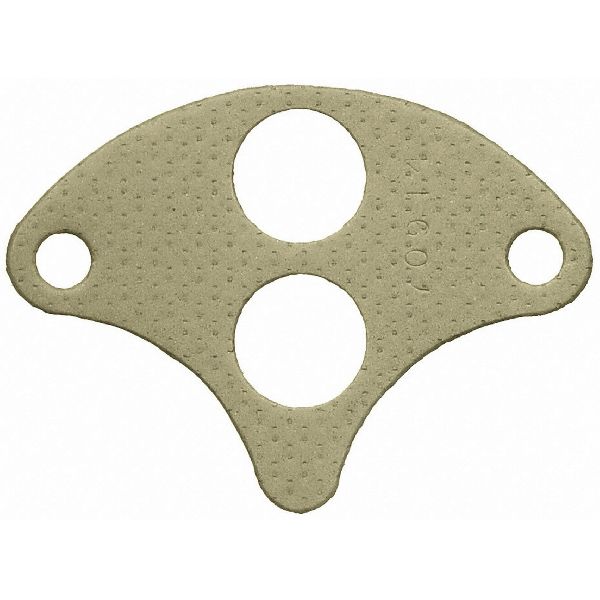
(OEM #Included with most new valves)— A new gasket is required whenever the EGR valve is removed to prevent exhaust leaks. Most new valves include one. If buying separately, a common part is Fel-Pro 70970.
Trusted brands: Fel-Pro, ACDelco
OEM price range: $5-$15
Aftermarket price range: $2-$8
Related Codes That Often Appear With This One
- P0401 — Indicates 'Insufficient EGR Flow,' which can be caused by the same carbon blockage in the valve or intake passages that triggers P0404.
- P0405 — Indicates 'EGR Sensor A Circuit Low,' which can point to a wiring issue or an internal electrical failure within the same EGR valve assembly.
- P1404 — A GM-specific code for 'EGR Valve Closed Pintle Position'. It often appears with P0404 and strongly indicates the valve is stuck closed due to carbon or mechanical failure.
Technical Service Bulletins (TSBs) & Recalls
- While no TSB directly addresses P0404 specifically, TSB 00-06-04-024 discusses issues with the EVAP system on 1999-2000 trucks where water intrusion can cause misfires, which could be tangentially related to emissions system health. Another TSB, 15-06-04-002, addresses other EVAP codes (P0442, P0446, P0455) caused by dust or water intrusion into the vent solenoid on later models, highlighting the sensitivity of the emissions system to environmental factors.
Platform-Specific Known Issues
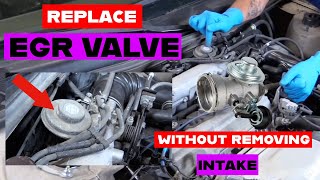
- The rear bolt on the EGR valve can be difficult to access due to its proximity to the firewall and other components. A 10mm ratcheting wrench or a socket with a universal joint is highly recommended. 🎬 Check out this easy hack for replacing your EGR valve.
- Some owners report that even after cleaning the valve and intake port, the code returns quickly. This often indicates internal wear on the valve's sensor or pintle seat that cleaning cannot fix, making replacement the only long-term solution.
Mechanic-Grade Diagnostic Values
- EGR Position Sensor Signal Voltage — expected: Approximately 0.6V - 0.9V with the valve fully closed (at idle) and rising smoothly to 3.4V - 3.9V when commanded fully open.. Failure: Voltage that is stuck, erratic, does not change when the valve is commanded, or is out of range (e.g., over 1.0V at idle) indicates a stuck pintle or a faulty sensor.
- EGR 5-Pin Connector Circuit Test (Key On, Engine Off) — expected: Pin E (Pink wire): 12V+ from fuse. Pin C (Gray wire): 5V reference from PCM. Pin B (Black wire): Sensor ground. Pin A (Brown/White wire): PCM-controlled ground for solenoid. Pin D (Light Blue/Black wire): Signal wire to PCM.. Failure: Missing 12V power, 5V reference, or ground indicates a wiring or PCM issue, not a faulty valve. The signal wire (Pin D) should show the voltage described in the position sensor test.
- P1404 Trigger Condition — expected: The PCM compares the actual EGR position sensor voltage to a 'learned' closed position value. The code sets when the actual position is >0.2V higher than the learned closed position when the valve is commanded to 0%.. Failure: This specific condition points directly to the valve not closing fully, which is almost always due to a carbon chunk jamming the pintle.
Scan Tool Commands That Help
- Tech2 / Professional Bidirectional Scanner: EGR Control or Actuator Test — This is the primary diagnostic step after checking for codes. It allows you to command the EGR valve to open in increments (e.g., 10%, 25%, 50%, 100%) while watching the 'EGR Actual Position' and 'EGR Desired Position' PIDs. If the actual position does not follow the desired command, the valve is either stuck or electrically faulty.
Wiring & Ground Locations
- G102 / G103 — G102 is often cited at the left rear of the engine block. G103 is located on the cowl, above the brake booster, or as part of the main negative battery cable harness attached to the front left of the engine block. Locations can vary slightly by year and specific model.. These are critical engine and body grounds. A poor connection at these points can cause erratic sensor readings, including the 5V reference circuit for the EGR position sensor, leading to a P0404 code even with a good valve.
- Engine Harness Chafe Points — Common areas for harness chafing on GMT800 trucks include the ECM/TCM bracket, the driver's side upper control arm, and the shock tower bolts. Engine vibration can cause the harness to rub through in these locations.. While not specific to the EGR circuit, a short-to-ground or open in the harness from chafing can affect any engine sensor, including the EGR valve's control or sensor circuits, causing a P0404 code.
Real Owner Repair Stories
- Ford Truck Enthusiasts Forum (Ford 6.0L (Concept applies to GM) with new aftermarket EGR) — Persistent P0404 code after installing a new EGR valve from an aftermarket performance brand.
❌ Tried (didn't work) Cleaning the intake manifold, Installing a new aftermarket EGR valve (Sinister Diesel), Cleaning and re-seating the wiring connector
✅ What actually fixed it Replacing the new aftermarket EGR valve with a high-quality OEM (Motorcraft) part finally resolved the code, indicating the aftermarket part was faulty or out of spec.
"I Checked Everything" — The Actual Cause
- A smoke test is not a primary diagnostic for P0404. However, a similar pattern where standard diagnostics fail can occur. A technician may replace the EGR valve multiple times, check wiring, and find no faults, but the code returns. The hidden cause can be a partially clogged catalytic converter. The excessive exhaust backpressure can physically force the EGR pintle off its seat, creating a mismatch between the commanded (0%) and actual position, triggering P0404.
OEM Part Supersession History
12578036 (GM)→ACDelco 214-1080— ACDelco is the GM Original Equipment service part brand. 214-1080 is the service part number corresponding to the original GM production part.
Heads up: While physically interchangeable, some very cheap aftermarket versions may not have the correct internal resistance or sensor calibration, leading to an immediate or recurring P0404 code.
Model Year Variations Within This Range
- 2003-2006: Around 2003, these trucks switched from a mechanical throttle cable to an electronic throttle body (Drive-by-Wire). This involved a different PCM and engine wiring harness. While the EGR valve and its function remained largely the same, diagnostic procedures involving PCM pinouts or wiring harness tracing may differ from the earlier 2000-2002 models.
Diagnostic Flowchart
Other Known Issues on This Vehicle
Issues unrelated to this code that are worth knowing about as an owner of this generation:
- Failing Instrument Cluster Stepper Motors 🟠 Medium — Extremely common, especially on 2003-2006 models. Gauges (speedometer, tachometer, fuel, etc.) will stick, read incorrectly, or stop working entirely. (Ref: While no recall was issued, GM did extend warranty coverage under a special policy for this issue, which has since expired. It's a widely documented failure of the X27.168 stepper motors.)
- Cracked Dashboard 🟡 Low — Very common across all GMT800 trucks, especially in warmer climates. A long crack typically develops on the passenger side above the airbag.
- Failing Fuel Pump 🔴 High — Common failure item, often occurring between 100,000 and 150,000 miles. Symptoms include long crank times, stalling, and a no-start condition. The fuel level sending unit often fails separately, causing an inaccurate fuel gauge.
- Knock Sensor Failure due to Corrosion 🟠 Medium — The two knock sensors are located in the valley of the engine block, under the intake manifold. Water can pool in the sensor cavities, causing corrosion and failure of the sensors and harness.
- Cracked 'Castech' Cylinder Heads 🔴 High — A specific batch of 5.3L cylinder heads made by Castech (casting number 706) are prone to developing cracks that allow coolant to leak into the engine oil, causing a 'milky' appearance on the oil cap. This was most common on 2004-2006 models.
- Clunking Intermediate Steering Shaft 🟡 Low — A common issue where a clunking or popping sound is heard and felt through the steering wheel, especially at low speeds. It's caused by a lack of grease in the splines of the telescoping intermediate shaft. (Ref: GM released TSBs with procedures to lubricate the shaft, though replacement is often a more permanent fix.)
Used vs. New Parts: Buying Guide for This Vehicle
When a used part is the smart pick: Almost never. A used EGR valve carries a high risk of having the same carbon buildup or internal electronic wear as the part being replaced. It should only be considered for temporary, emergency use if a new part is unavailable.
Donor-vehicle mileage cap: roughly under 100000 miles for the part to have meaningful remaining life.
What to inspect on the donor part:
- Visually inspect the pintle and port for heavy, caked-on carbon. Light soot is normal, but thick chunks are a red flag.
- Ensure the electrical connector is not cracked, melted, or corroded.
- If possible, manually press the pintle to feel for smooth movement; any grittiness or sticking is bad.
- Ask for the donor vehicle's mileage; lower is always better.
OEM-only on this vehicle (don't cheap out):
- EGR Valve: Due to sensitive internal electronics and calibration, an OEM (ACDelco) or OEM-supplier (Delphi) part is strongly recommended to avoid persistent codes and repeat repairs.
Aftermarket brands forum-validated for this vehicle:
- Delphi (often the original GM manufacturer)
- Standard Motor Products (SMP)
- Hitachi
Brands owners have reported issues with on this vehicle:
- Unbranded, low-cost parts from online marketplaces.
- Even some 'performance' brands can be problematic if not calibrated exactly to OEM specs.
Real Owner Stories
Aggregated from forums and TSBs cited above. Mileages and costs reflect what owners reported in those sources.
2000 Yukon XL 5.3L
Symptoms: Check Engine Light with code P0404, and the truck stalled.
What fixed it: The owner first attempted to clean the EGR valve of carbon, but this did not solve the issue. The forum discussion demonstrated that replacement of the EGR valve was necessary.
Source hint: Chevy Talk Forum - 'Code P0404 fix???'
2000-2006 GMC Yukon
Symptoms: The P0404 code returned quickly even after a thorough cleaning of the EGR valve and intake port.
What fixed it: This situation indicates internal wear on the valve's sensor that cleaning cannot fix. Replacing the entire EGR valve assembly is the only long-term solution.
Source hint: Vehicle-Specific Issues
Related OBD-II Codes
Frequently Asked Questions
Where is the EGR valve located on my 2000-2006 GMC Yukon?
I heard the rear bolt for the EGR valve is hard to get to. What tools are recommended?
I cleaned the carbon out of my EGR valve, but the P0404 code came back. What should I do now?
Are there any GM Technical Service Bulletins (TSBs) that specifically address code P0404 on this Yukon?
Is it better to just clean the EGR valve or should I replace it?
My Yukon has a P0404 code and the speedometer is also acting up. Could these problems be related?
Helpful Videos
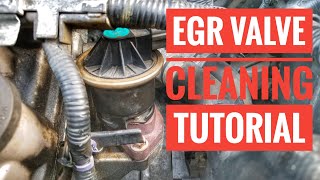
![How to Fix P0404 Engine Code in 3 Minutes [2 DIY Methods / Only $4.37]](https://img.youtube.com/vi/HM24K_W_620/mqdefault.jpg)
We Have This Part in Stock


The information in this article is provided for general reference and educational purposes only. Vehicle specifications, procedures, and part compatibility can vary by production date, trim level, and region. Always consult your vehicle's factory service manual and verify part numbers before purchasing or performing repairs. Safety-critical components such as airbags, seat belts, and braking systems should be installed by a qualified professional.
- GMC Yukon:
- 🧭 Diagnostic Flowchart
- 🎬 Helpful Videos
- 🛍️ Shop This Part
- What's Unique About the 2000-2006 GMC Yukon
- Symptoms You May Notice
- Most Likely Causes
- Rare But Worth Checking
- Diagnosis Steps
- Parts You'll Likely Need
- Related Codes That Often Appear With This One
- Technical Service Bulletins (TSBs) & Recalls
- Platform-Specific Known Issues
- Mechanic-Grade Diagnostic Values
- Scan Tool Commands That Help
- Wiring & Ground Locations
- Real Owner Repair Stories
- "I Checked Everything" — The Actual Cause
- OEM Part Supersession History
- Model Year Variations Within This Range
- Other Known Issues on This Vehicle
- Used vs. New Parts: Buying Guide for This Vehicle
- Real Owner Stories
- 2000 Yukon XL 5.3L
- 2000-2006 GMC Yukon
- Related OBD-II Codes
- Frequently Asked Questions
- 🎟️ Get 5% Off