

P0404 on 2006-2010 Jeep Commander 5.7L HEMI: EGR Valve Causes and Fixes
On a 2006-2010 Jeep Commander with the 5.7L HEMI, code P0404 almost always points to a failing EGR valve that is stuck due to carbon buildup. The repair is complicated by a lower mounting bolt that is blocked by the alternator bracket, often requiring the bracket to be ground down for access. This is a well-documented issue for this engine across multiple Chrysler/Dodge/Jeep platforms.
- P0404 on your HEMI Commander is almost certainly an issue with the EGR valve itself, which gets stuck with carbon.
- The repair is more difficult than on other engines due to the lower bolt being blocked by the alternator bracket. Budget extra time or labor costs for this specific complication.
- Always clean the EGR passages when replacing the valve to prevent the code from returning.
- Replacing the EGR valve and its gaskets is the most common and effective solution.
What's Unique About the 2006-2010 Jeep Commander
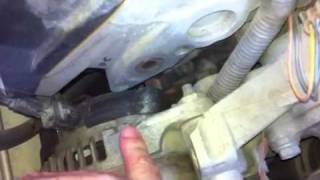
While P0404 is a generic code, the 5.7L HEMI engine in this generation of Jeep, Dodge, and Chrysler vehicles has a well-known and frustrating design challenge. The EGR valve's lower mounting bolt is notoriously difficult to access because it is partially blocked by the alternator bracket. This turns a simple part swap into a more involved job that often requires either loosening the alternator or, more commonly, grinding a small piece of the aluminum bracket to create enough clearance to remove the bolt. Many owners and mechanics recommend covering the alternator with a towel during grinding to prevent metal shavings from getting inside.
Symptoms You May Notice
- Check Engine Light is on
- Rough, unstable, or shaky idle.
- Engine hesitation or surging, especially during light acceleration.
- Engine stalling, particularly at idle.
- Reduced fuel economy.
- Engine knocking or pinging during acceleration.
- Smell of gasoline on a cold start.
- Replacing the EGR valve but not cleaning the clogged passages, causing the code to return.
- Assuming a random misfire code (P0300) is a separate issue, when it is often a symptom caused by the faulty EGR valve being stuck open.
- Replacing the EGR valve when the code returns shortly after, without realizing a PCM software update might be needed on some platforms (though less common for this specific generation vs. newer Jeeps).
Most Likely Causes
- Failing or Sticking EGR Valve 🔴 High Probability → Shop Exhaust Gas Recirculation (EGR) Valve The EGR valve operates in a harsh environment and is prone to heavy carbon buildup from exhaust gases, which causes the internal pintle to stick open or closed. The integrated electronic position sensor can also fail from heat and wear, providing an illogical signal to the PCM.
How to confirm: Use a bidirectional scan tool to command the EGR valve to open and close at idle. If the engine's idle quality does not change, or if the sensor's position percentage does not match the command, the valve is faulty. Visual inspection after removal will almost certainly show heavy carbon deposits.
Typical fix: Replacement of the EGR valve and its gaskets is the most reliable fix. While cleaning with a solvent like WD-40 or carburetor cleaner is possible, it's often a temporary solution as the electronic sensor may have failed internally or the carbon buildup may be too severe.
Est. part cost: $40-$150 - Clogged EGR Passages 🟡 Medium Probability The same carbon that clogs the valve can also build up in the EGR tube and the passages in the intake manifold, restricting exhaust gas flow even if the new valve works perfectly.
How to confirm: When the EGR valve is removed for inspection or replacement, visually inspect the mounting port on the engine and the EGR tube for heavy carbon deposits.
Typical fix: Use a wire brush and carburetor cleaner to thoroughly clean all carbon buildup from the EGR tube and the intake manifold passages before installing the new valve.
Est. part cost: $5-$15 (for cleaning supplies) - Damaged Wiring or Connector ⚪ Low Probability The wiring harness leading to the EGR valve is exposed to high engine temperatures, which can make wires brittle or damage the plastic connector over time. The locking tab on the connector can become brittle and break.
How to confirm: Visually inspect the EGR valve's electrical connector and wiring for any signs of melting, corrosion, or broken wires. Check for 5-volt reference and good ground at the connector with a multimeter.
Typical fix: Repair the damaged section of wiring or replace the connector pigtail.
Est. part cost: $15-$30
Diagnosis Steps
- Read the codes with an OBD-II scanner to confirm P0404 and check for any other related codes like P0406.
- Inspect the electrical connector and wiring going to the EGR valve for any visible damage, melting, or corrosion. Ensure the red locking tab is secure.
- Using a bidirectional scanner, command the EGR valve to open 50-100% at idle. The engine should stumble or run rough. If it doesn't, the valve is likely stuck closed or the passages are clogged.
- While commanding the valve open and closed, monitor the EGR position sensor reading on the scanner. If the percentage doesn't change or doesn't match the command, the valve's internal sensor has failed.
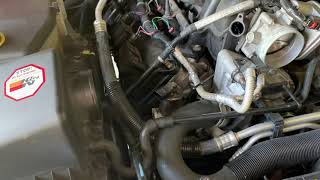
- If the valve seems unresponsive, prepare for removal. This will require removing the air intake tube and engine cover for access.
- Locate the lower 10mm bolt on the EGR valve. Assess the clearance with the alternator bracket. Be prepared to use a Dremel or angle grinder to create a small notch in the aluminum bracket for clearance. Cover the alternator with a towel to protect it from metal shavings.
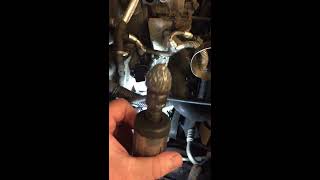
- A 10mm box-end wrench, sometimes aided by a tap from a mallet to break it loose, is often needed 🎬 See this clever hack to remove the lower bolt for the bottom bolt due to tight space.
- Once the valve is removed, inspect it and the engine ports for heavy carbon buildup.
- Clean the EGR passages and the end of the EGR tube thoroughly before installing a new valve and gaskets.
- Install the new valve. Most kits come with a new valve-to-head gasket and a new tube-to-valve gasket. It's often easier to start the bottom bolt by hand first before fully tightening the top one.
- After installation, clear the codes and perform a test drive to ensure the fix was successful.
Parts You'll Likely Need
- EGR Valve
(OEM #53032509AN)— This is the most common failure point. The valve gets clogged with carbon and sticks, or the internal electronics fail, triggering the P0404 code. This part number has superseded many previous versions (53032509AM, 53032509AL, etc.).
Trusted brands: Mopar, Standard Motor Products (SMP), Dorman, Walker
OEM price range: $120-$180
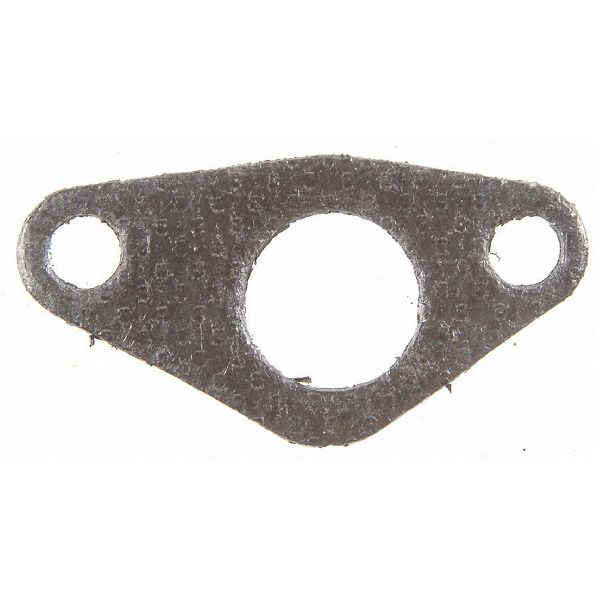
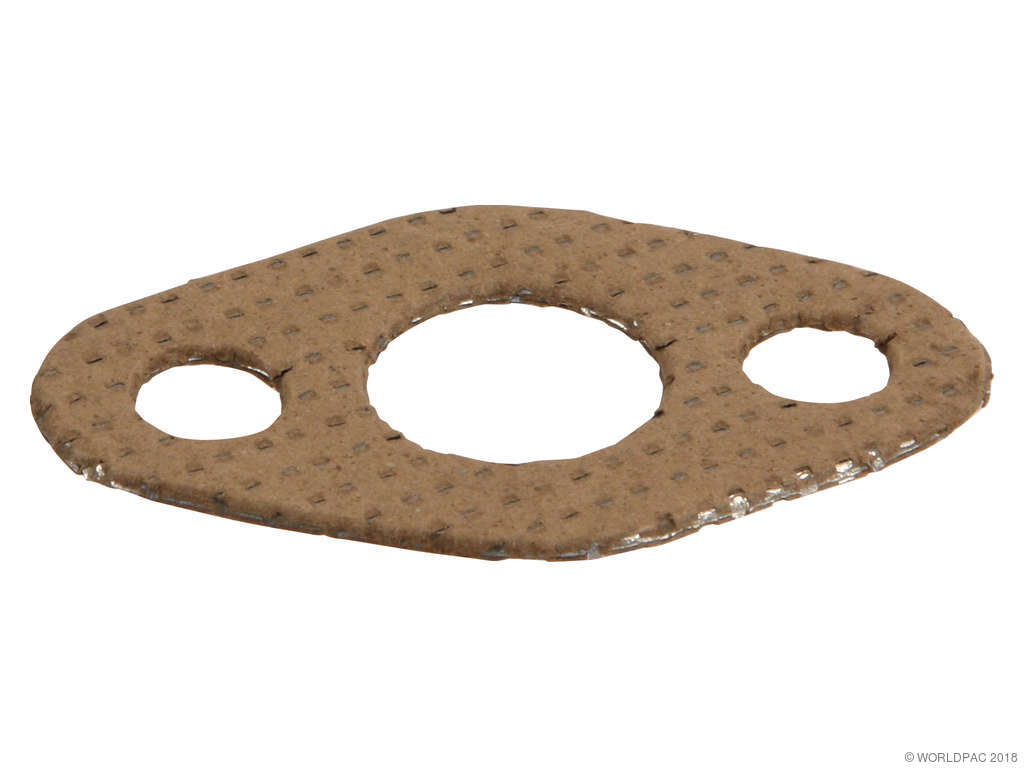
Aftermarket price range: $40-$90 - EGR Valve Gaskets — New gaskets are required to ensure a proper seal and prevent exhaust leaks when replacing the EGR valve. Most quality replacement valves include both the valve-to-head gasket and the tube-to-valve gasket in the kit.
Trusted brands: Mopar, Fel-Pro
OEM price range: $10-$20
Aftermarket price range: $5-$10
Related Codes That Often Appear With This One
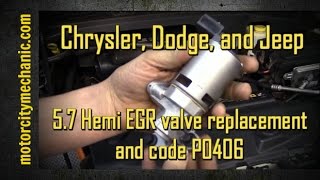
- P0406 — This code for 'EGR Sensor 'A' Circuit High' often appears with P0404, as it points to a failure of the same electronic position sensor inside the EGR valve assembly. 🎬 Watch: Diagnosing and replacing a Hemi P0406 EGR valve
- P0300 — A random misfire code can be triggered if the EGR valve is stuck open, creating a vacuum leak that disrupts the air/fuel mixture at idle.
Technical Service Bulletins (TSBs) & Recalls
- While no specific TSB for P0404 on this exact platform was found, TSB 18-018-08 has been mentioned in forums for similar vehicles, related to PCM updates for emissions components. It's worth checking with a dealer for any applicable software flashes.
Platform-Specific Known Issues
- The most significant issue is the physical access to the lower EGR valve mounting bolt on the 5.7L HEMI. It is obstructed by the alternator bracket, and mechanics and DIYers alike often need to grind the bracket to create clearance for a tool and the bolt itself.
- A YouTube video by 'EGR Valve Repair Jeep Commander GRIND Alternator Bracket HEMI 5.7L 2007 07 Easy Tip' specifically documents this process, showing a user grinding the aluminum bracket with a Dremel-like tool to gain access. 🎬 Watch: How to grind the alternator bracket for easy access
Mechanic-Grade Diagnostic Values
- EGR Valve 5V Reference Circuit — expected: ~5.0 volts. Failure: Voltage significantly lower than 5.0V or 0V indicates an open/short in the supply circuit or a PCM fault.
- EGR Position Sensor Signal Voltage (Key On, Engine Off) — expected: ~0.9V with valve closed, sweeping up to ~3.9V as the valve is commanded open with a scan tool.. Failure: Voltage that is static, erratic, or does not correspond to scan tool commands points to a failed internal position sensor.
- EGR Ground Circuit — expected: Good ground continuity (near 0 ohms to chassis ground).. Failure: High resistance indicates a corroded or broken ground connection, which is a known issue on some 5.7L platforms.
Scan Tool Commands That Help
- WiTech or equivalent bidirectional scanner: EGR System Test / Actuator Test — This is the primary diagnostic step to functionally test the EGR valve. The command will attempt to cycle the valve from 0% to 100% open while the engine is at idle. The technician should monitor the 'EGR Position Sensor' PID to see if it follows the command and listen for a change in idle quality. A healthy engine will stumble or run rough as the valve opens.
Wiring & Ground Locations
- EGR Valve Connector — On top of the EGR valve, located on the front of the passenger-side cylinder head, near the alternator.. This 5-pin connector is the single interface for all power, ground, and signal wires to the valve. The plastic connector and its red locking tab can become brittle from heat cycles, leading to poor connections that trigger P0404.
- Main Engine Block Ground (G02/G03) — A stud on the side of the engine block, behind the passenger-side motor mount and thermostat housing.. This stud serves as a primary ground point for the PCM. A loose or corroded connection here can cause erratic behavior and seemingly unrelated codes, including EGR circuit faults, because it disrupts the sensor ground reference.
Real Owner Repair Stories
- JeepCommander.com Forum (2006 Jeep Commander 5.7L HEMI) — Check engine light with P0404 and P0406, rough idle.
❌ Tried (didn't work) Replaced the EGR valve with an aftermarket part, code returned., Replaced the aftermarket EGR valve with an OEM Mopar valve, code still returned., Cleaned all EGR passages and tube., Checked wiring harness for continuity and shorts, all checked out okay.
✅ What actually fixed it The Powertrain Control Module (PCM) was faulty. After replacing the PCM and having the dealer flash it, the codes were cleared and did not return.
OEM Part Supersession History
53032209AE, 53032509AF, AG, AH, AI, AJ, AL, AM→53032509AN— Progressive design and material improvements by Mopar to increase longevity and resistance to carbon buildup and heat failure.
Heads up: All previous part numbers are superseded by 53032509AN. While older stock might be found, using the latest 'AN' revision is highly recommended for the most updated design.
Diagnostic Flowchart
Other Known Issues on This Vehicle
Issues unrelated to this code that are worth knowing about as an owner of this generation:
- 5.7L HEMI 'Tick' / MDS Lifter Failure 🔴 High — Common, especially on engines with higher mileage, extended oil change intervals, or prolonged idling. Can occur on any cylinder, but often associated with the MDS system. (Ref: While no direct recall exists, FCA has acknowledged issues with lifters from vendors between 2009-2014. TSB 9100229 (from 2023) was issued to prevent misdiagnosis but confirms the complexity of the system.)
- Totally Integrated Power Module (TIPM) Failure 🔴 High — A widespread and well-documented problem across many 2007-2015 Chrysler/Jeep/Dodge vehicles. Can cause a wide range of bizarre electrical issues, from fuel pump problems to random horn activation or engine stalling. (Ref: Several recalls were issued for specific TIPM-related problems (like stalling or airbag issues) on various models, but not a blanket recall for all faulty TIPMs.)
- Front Differential Mount Bushing Failure 🟠 Medium — Very common on the Commander/Grand Cherokee (XK/WK) platform, especially on HEMI models due to higher torque. The rubber bushings degrade, causing a loud 'clunk' or 'thump' when shifting into gear or accelerating.
- Sunroof Drain Leaks 🟠 Medium — Commonly reported issue where the sunroof drain tubes become clogged, causing water to leak into the cabin, often onto the A-pillar or floor, potentially damaging electronics.
- Broken Exhaust Manifold Bolts 🟡 Low — The bolts securing the exhaust manifolds can break, causing an exhaust leak that sounds like a 'tick' noise, especially when the engine is cold. This is often confused with the more serious 'Hemi tick' from lifters.
Used vs. New Parts: Buying Guide for This Vehicle
When a used part is the smart pick: A used OEM Mopar EGR valve from a low-mileage donor vehicle can be a cost-effective alternative to a new aftermarket part, as some aftermarket units have high failure rates. Given the part is electronic and mechanical, this carries some risk.
Donor-vehicle mileage cap: roughly under 60000 miles for the part to have meaningful remaining life.
What to inspect on the donor part:
- Verify the donor vehicle's mileage.
- Inspect the electrical connector pins for corrosion or damage.
- Check the pintle (the moving part inside the valve) for free movement if possible; it should not be seized.
- Look for the Mopar stamp and part number to ensure it is a genuine OEM part.
OEM-only on this vehicle (don't cheap out):
- While not strictly 'OEM-only', many forum users report that if you are not buying an OEM Mopar valve, you should stick to reputable premium aftermarket brands, as cheap, unbranded valves often fail quickly.
Aftermarket brands forum-validated for this vehicle:
- Standard Motor Products (SMP)
- NAPA (often rebranded SMP or other quality manufacturer)
- Walker
Brands owners have reported issues with on this vehicle:
- Dorman (some forum users report premature failure, though experiences vary)
- Unbranded, low-cost parts from online marketplaces.
Real Owner Stories
Aggregated from forums and TSBs cited above. Mileages and costs reflect what owners reported in those sources.
2007 Jeep Commander 5.7L HEMI
Symptoms: The owner had to deal with a difficult EGR valve repair where the alternator bracket blocked access to the lower bolt.
What fixed it: Used a Dremel-like tool to grind a notch into the aluminum alternator bracket to gain access to the 10mm bolt for valve replacement.
Source hint: YouTube video by 'EGR Valve Repair Jeep Commander GRIND Alternator Bracket HEMI 5.7L 2007 07 Easy Tip'
2005-2008 Jeep Grand Cherokee (WK) 5.7L HEMI
Symptoms: The owner experienced a P0404 code, which was defined as the EGR position sensor signal not correlating to the EGR duty cycle.
What fixed it: Identified as a likely EGR valve failure requiring replacement.
Source hint: Jeep-Forum.de - Thread 'WH - Fehlercode P0404'
Jeep Commander 5.7L HEMI
Symptoms: The owner replaced the EGR valve, but the P0404 code returned shortly after.
What fixed it: The discussion suggested checking for wiring issues or ensuring the EGR passages were thoroughly cleaned, as a scan tool command is needed to verify actual flow.
Source hint: Jeeps.net Forum - Thread 'P0404 code'
Related OBD-II Codes
Frequently Asked Questions
Is there a specific TSB for the P0404 code on my 2006-2010 Jeep Commander 5.7L HEMI?
I'm trying to replace the EGR valve on my 5.7L HEMI Commander but can't reach the bottom bolt. Is there a trick?
Can I just clean the EGR valve on my Commander to fix the P0404 code?
What specific EGR valve part number does my Jeep Commander use?
Besides the EGR valve itself, what else should I check on my Commander for a P0404?
Will a P0404 code cause my Jeep to fail an emissions test?
Helpful Videos
We Have This Part in Stock


The information in this article is provided for general reference and educational purposes only. Vehicle specifications, procedures, and part compatibility can vary by production date, trim level, and region. Always consult your vehicle's factory service manual and verify part numbers before purchasing or performing repairs. Safety-critical components such as airbags, seat belts, and braking systems should be installed by a qualified professional.
- Jeep Commander:
- 🧭 Diagnostic Flowchart
- 🎬 Helpful Videos
- 🛍️ Shop This Part
- What's Unique About the 2006-2010 Jeep Commander
- Symptoms You May Notice
- Most Likely Causes
- Diagnosis Steps
- Parts You'll Likely Need
- Related Codes That Often Appear With This One
- Technical Service Bulletins (TSBs) & Recalls
- Platform-Specific Known Issues
- Mechanic-Grade Diagnostic Values
- Scan Tool Commands That Help
- Wiring & Ground Locations
- Real Owner Repair Stories
- OEM Part Supersession History
- Other Known Issues on This Vehicle
- Used vs. New Parts: Buying Guide for This Vehicle
- Real Owner Stories
- 2007 Jeep Commander 5.7L HEMI
- 2005-2008 Jeep Grand Cherokee (WK) 5.7L HEMI
- Jeep Commander 5.7L HEMI
- Related OBD-II Codes
- Frequently Asked Questions
- 🎟️ Get 5% Off