

P0404 on 2007-2011 Jeep Wrangler 3.8L: EGR Range/Performance Causes and Fixes
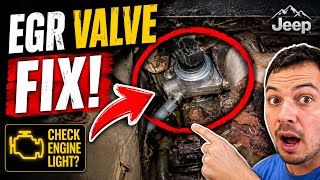
On a 2007-2011 Jeep Wrangler with the 3.8L V6, code P0404 almost always means the EGR valve has failed electronically. The most common fix is replacing the entire EGR valve assembly, which is a difficult DIY job due to its location at the rear of the engine. Expect to pay $120-$250 for an aftermarket part or over $500 for an OEM Mopar part. Accessing the valve through the passenger side front wheel well is the recommended method for replacement.
- For a 2007-2011 Wrangler with a 3.8L engine, P0404 almost always points to a failed EGR valve.
- Before replacing parts on a 2008-2009 model, check if TSB 18-017-09 REV. A (a PCM software update) applies and has been performed.
- The repair is considered difficult for a DIYer due to the valve's location against the firewall. Access is improved by removing the passenger-side inner fender liner.
- Due to the high labor cost and difficulty, using a quality OEM (Mopar) or premium aftermarket (e.g., Standard Motor Products) part is recommended to avoid a repeat repair.
- Cleaning the valve is unlikely to be a permanent fix, as the failure is usually electronic, not just carbon buildup.
What's Unique About the 2007-2011 Jeep Wrangler
The 3.8L V6 engine in the 2007-2011 Wrangler JK, an engine originally from Chrysler's minivan lineup, is notoriously prone to EGR valve failures and high oil consumption. Unlike many vehicles where EGR codes are caused by carbon-clogged passages, the issue on this specific engine is very frequently an internal electronic failure of the EGR valve assembly itself. Because the position sensor and control solenoid are integrated into one unit, a single failure often triggers a cluster of EGR codes (like P0404, P0403, and P0406) and makes replacing the entire valve the only reliable fix. Forum users frequently report that cleaning the valve does not work long-term.
Generation note: This guide covers the 2007-2011 Jeep Wrangler, which is part of the 'JK' generation. These specific years are notable for using the 3.8L EGH V6 engine. The 2012-2018 JK Wranglers use a different engine (3.6L Pentastar) with a different EGR system, so this guide does not apply to them. The 3.8L EGH engine itself was used in a wide variety of Chrysler vehicles from 1991 to 2011.
Symptoms You May Notice
- Check Engine Light is on
- Rough or unstable idle, especially when the engine is warm
- Engine stalling when coming to a stop
- Engine pinging or knocking sounds, especially under load (pre-ignition)
- Reduced fuel economy
- Hesitation or sluggish acceleration
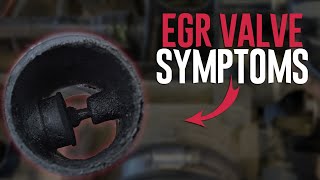
- Failure to pass an emissions test 🎬 Watch: Learn the common symptoms of a bad EGR valve
- Replacing oxygen sensors. O2 sensors are not directly related to the EGR system's position control.
- Replacing the catalytic converter. While EGR issues can affect emissions, P0404 is a specific control circuit code, not a catalyst efficiency code (like P0420).
- Assuming the EGR passages in the intake manifold are clogged. While possible, the primary failure on the 3.8L is almost always the valve assembly itself.
Most Likely Causes
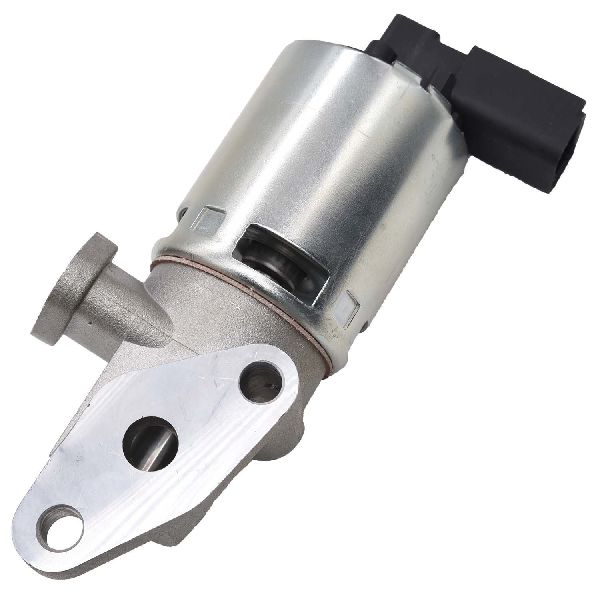
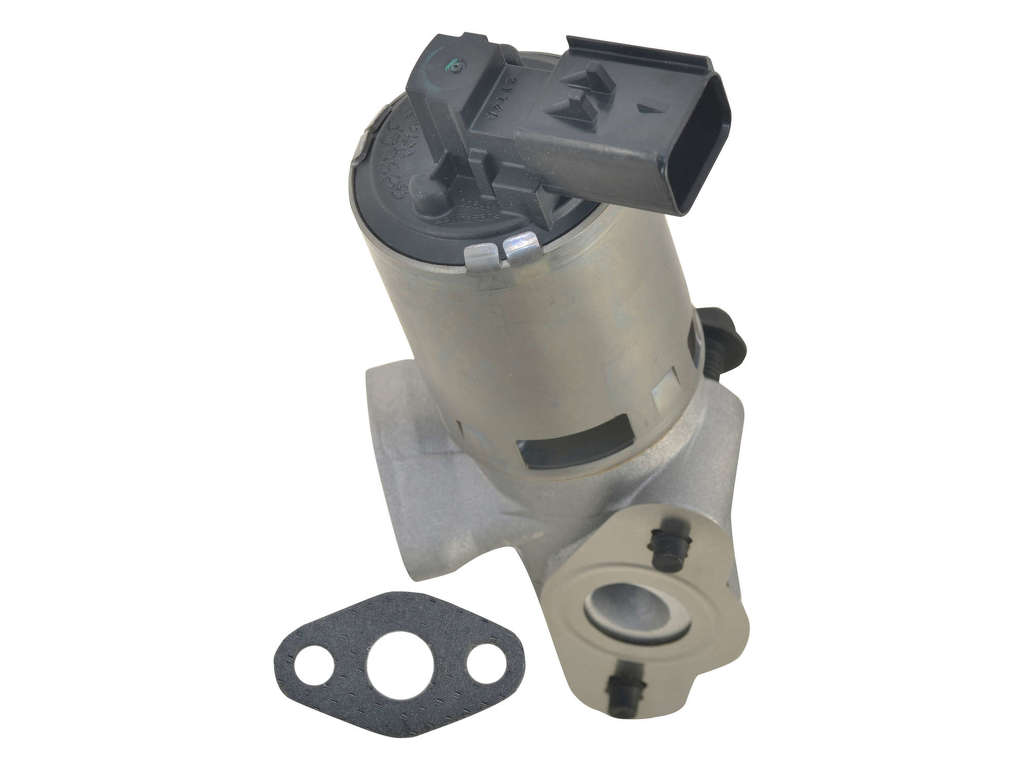
- Failed EGR Valve Assembly 🔴 High Probability → Shop Exhaust Gas Recirculation (EGR) Valve The EGR valve on the 3.8L engine is a well-documented, common failure item. The internal electronics (solenoid and position sensor) are susceptible to failure from heat and vibration, more so than simple carbon clogging. It is located in a very hot, tight area on the rear of the passenger-side cylinder head.
How to confirm: While wiring should be checked, this is the cause in the vast majority of cases. Forum discussions and repair guides for the JK 3.8L consistently point to EGR valve replacement as the definitive fix. A scan tool may show the commanded vs. actual EGR position to confirm the discrepancy. A mechanic reported being unable to actuate a brand new (likely faulty aftermarket) valve with a scan tool, confirming the part was bad.
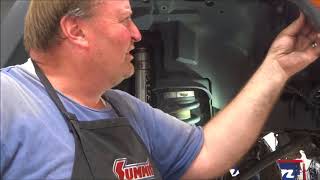
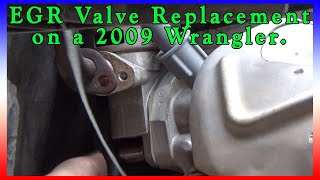
Typical fix: Replace the entire EGR valve assembly. Cleaning is often not a permanent solution because the failure is typically electronic, not mechanical. The job is known to be difficult due to the valve's location on the back of the passenger-side cylinder head against the firewall. The consensus repair method involves removing the passenger front wheel and inner fender liner for access. 🎬 See this step-by-step 3.8L EGR replacement walkthrough
Est. part cost: $120 - $580 - PCM Software Requires Update ⚪ Low Probability A Technical Service Bulletin (TSB 18-017-09 REV. A) was issued for 2008-2009 models with the 3.8L engine for an overly sensitive P0404 diagnostic logic.
How to confirm: A Chrysler/Jeep dealership or a well-equipped independent shop can check your vehicle's current software version against the TSB. This should be considered before replacing parts on a 2008-2009 model built before May 11, 2009, especially if the EGR valve has already been replaced without success.
Typical fix: Reprogram the Powertrain Control Module (PCM) with the updated software. This must be done by a dealer or a shop with a compatible scan tool like wiTECH. Note that this is a TSB, not a recall, so if the vehicle is out of warranty, the owner will likely have to pay for the flash.
Est. part cost: $0 - $150 - Damaged Wiring or Connector ⚪ Low Probability
How to confirm: Visually inspect the 6-wire harness and connector going to the EGR valve. The harness is in a tight, hot area and can become chafed or damaged. Check for 5V reference, ground, and signal continuity at the connector using a multimeter and wiring diagram. Wiggling the harness while monitoring live data on a scan tool can help identify intermittent shorts.
Typical fix: Repair the damaged section of the wiring harness or replace the connector pigtail. A replacement pigtail is available from Standard Motor Products (part number S-1922) and other suppliers.
Est. part cost: $10 - $50
Rare But Worth Checking
- Clogged EGR Tube: While less common than valve failure on this engine, heavy carbon buildup from issues like high oil consumption can clog the tube between the valve and the intake manifold, restricting movement and flow. If replacing the valve, it is wise to inspect and clean this tube at the same time. A small wire brush and carburetor cleaner can be used.
Diagnosis Steps
- Read the codes with an OBD-II scanner. Note any other codes present, especially P0401, P0403, P0406, or P1404.
- For 2008-2009 models built before May 11, 2009, investigate TSB 18-017-09 REV. A. Contact a dealer to see if the PCM software update applies to your VIN and has been performed. This could be the entire fix.
- Visually inspect the EGR valve's electrical connector and nearby wiring for obvious signs of damage, melting, or chafing. The harness is located at the rear of the passenger side of the engine. The red locking tab on the connector must be slid to the side before the release tab can be pressed.
- If you have an advanced scan tool, monitor the commanded EGR position (PID may be
EGR_CMD) versus the actual EGR position (EGR_ACT). A significant, persistent difference between the two values confirms the fault that sets P0404. - Given the extremely high failure rate of the valve itself on this engine, the next logical step is to replace the EGR valve assembly. Use a quality 10mm box-end or ratcheting wrench on the two mounting bolts, as they are notoriously tight and difficult to access. 🎬 Watch: Tips for accessing and removing the EGR valve
- While the valve is removed, inspect the EGR tube for carbon blockage and clean it if necessary.
- After replacement, clear the codes and perform a drive cycle to ensure the code does not return. Be aware that faulty aftermarket EGR valves are a known issue, so if the code returns quickly, the new part may be defective.
Parts You'll Likely Need
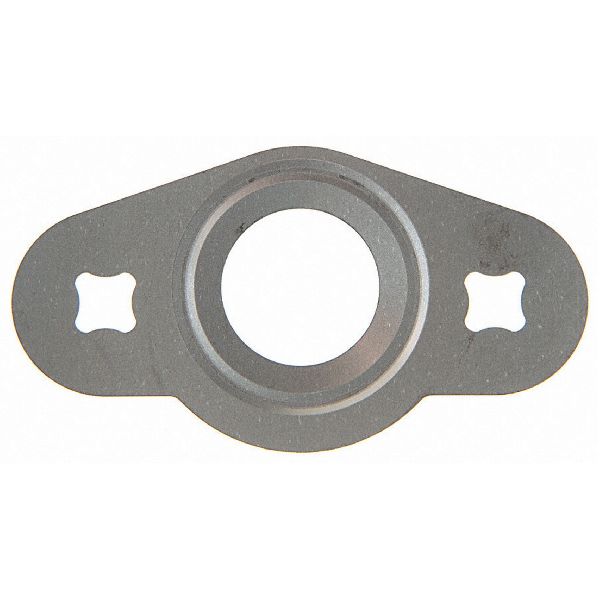
- Exhaust Gas Recirculation (EGR) Valve
(OEM #4593896AD)— This is the most common failure point for code P0404 on the 3.8L V6. The internal electronics fail, requiring replacement of the entire assembly. The OEM Mopar part number 4593896AD supersedes previous versions like 4593896AB, 4861674AB, 4861674AC, and 4861674AD.
Trusted brands: Mopar (OEM), Standard Motor Products (EGV1149), Dorman, NAPA (Part # 2-26809, includes new bolts and gaskets), Omix-ADA
OEM price range: $400-$580
Aftermarket price range: $120-$250
Related Codes That Often Appear With This One
- P0406 — Stands for 'EGR Sensor 'A' Circuit High'. Since the position sensor is integrated into the EGR valve assembly, an internal electronic failure often triggers both the performance code (P0404) and a specific sensor circuit code.
- P0401 — Stands for 'EGR Flow Insufficient Detected'. If the valve is stuck closed or not opening as commanded (the fault P0404 detects), the PCM will also detect that not enough exhaust gas is flowing, triggering P0401.
- P0403 — Stands for 'EGR 'A' Control Circuit Malfunction'. This points to a more direct electrical open or short. It can appear with P0404 if the internal solenoid has failed completely.
- P1404 — This is a Chrysler-specific code that often translates to 'EGR Close Position Performance'. It can appear alongside P0404, indicating the valve is not returning to its fully closed position as expected. One owner reported this code appearing after replacing the original EGR valve, suggesting a faulty new part.
Technical Service Bulletins (TSBs) & Recalls
- TSB 18-017-09 REV. A: For 2008-2009 models with the 3.3L or 3.8L engine built before May 11, 2009, this TSB addresses a PCM software update to correct overly sensitive logic for setting a P0404 code.
- TSB Bulletin #1800122: This manufacturer service bulletin notes that P0404 - EGR "A" Control Circuit Range/Performance can occur in conjunction with other sensor correlation and performance codes.
Platform-Specific Known Issues
- The location of the EGR valve is notoriously difficult to access, tucked between the back of the passenger cylinder head and the firewall. Replacement requires removing the passenger-side inner fender liner for better access from below.
- Bolts securing the EGR valve and tube are prone to seizing and rounding off due to heat and corrosion. Using a high-quality 6-point 10mm wrench is critical.
- For automatic transmission models, the transmission dipstick tube is directly in the way, further complicating access. Some owners use zip ties to pull the tube aside for more clearance.
Mechanic-Grade Diagnostic Values
- EGR Solenoid Coil Resistance — expected: 7.6 to 23.4 Ohms. A common value cited is around 7 Ohms.. Failure: A reading of OL (infinite resistance) indicates an open coil; a reading near 0 Ohms indicates a shorted coil. Either requires valve replacement.
- EGR Position Sensor Signal Voltage (at connector pin 1, K34 circuit) — expected: Approximately 0.7 - 0.8 volts at idle with the valve closed.. Failure: Voltage is stuck at 0V, 5V, or does not sweep smoothly upward when the valve is commanded open with a scan tool.
- EGR Solenoid Control Voltage (at connector pin 3, K35 circuit) — expected: Should be near battery voltage (approx. 12V) with Key On, Engine Off.. Failure: When the valve is commanded ON by a scan tool, the voltage should drop to near zero. If it doesn't change, it points to a wiring issue or a failed PCM driver.
- EGR Power Supply Voltage (at connector pin 5) — expected: Battery voltage (approx. 12V) with Key On, Engine Off.. Failure: Low or no voltage points to an issue with the power supply from the PCM or a wiring fault.
- EGR Ground Circuit (at connector pin 4) — expected: Near 0 volts when tested against a known good ground.. Failure: A reading of more than 0.1V indicates a poor ground connection, which can cause erratic valve operation.
Scan Tool Commands That Help
- wiTECH, Autel, Snap-on (or equivalent bidirectional scanner): EGR Valve Actuation Test / System Test — This is the definitive functional test. It allows the technician to command the EGR valve to open and close while monitoring the position sensor's reported percentage or voltage. A valve that doesn't respond, responds slowly, or whose reported position doesn't match the command confirms the P0404 fault condition.
Wiring & Ground Locations
- EGR Valve Connector (C1) — On top of the EGR valve, at the rear of the passenger-side cylinder head against the firewall. It is a 6-pin connector.. This is the single connection point for the EGR valve's power, ground, control solenoid, and position sensor. All electrical testing for the valve is performed here.
- G104 — Rear of the engine, on the passenger side of the engine block. It is a primary ground stud for several engine components and sensors.. The EGR position sensor relies on a clean ground reference via the (K900) Sensor Ground circuit. While the primary ground path is through the PCM, a corroded or loose main engine ground like G104 can introduce electrical noise and cause erratic sensor readings across the engine, potentially contributing to range/performance codes.
Real Owner Repair Stories
- AutoZone.com Reviewer 'JACK' (2008 Jeep Wrangler) — Check Engine Light with an EGR code.
❌ Tried (didn't work) Installed a brand new Dorman brand EGR valve.
✅ What actually fixed it The code persisted. The owner discovered via forums that the Dorman part was problematic. A scan tool showed the new Dorman valve would only open to 20%. Replacing the new Dorman valve with a Duralast brand EGR valve from AutoZone resolved the issue.
OEM Part Supersession History
4861674AB, 4861674AC, 4861674AD, 4593896AB→4593896AD— Part revision and consolidation by Mopar.
Heads up: While all listed numbers are for the 3.8L engine, there are widespread forum reports of new, out-of-the-box failures from certain aftermarket brands, which may not meet the PCM's strict performance criteria, leading to an immediate return of the P0404 or P1404 code.
Model Year Variations Within This Range
- 2008-2009: A Technical Service Bulletin (TSB 18-017-09 REV. A) was issued for vehicles built before May 11, 2009, for an overly sensitive P0404 diagnostic logic. The fix is a PCM software update, which should be investigated before replacing hardware on these specific models.
Diagnostic Flowchart
Other Known Issues on This Vehicle
Issues unrelated to this code that are worth knowing about as an owner of this generation:
- Excessive Oil Consumption 🔴 High — Very common, especially on 2007-2009 models and engines over 75k miles. Consumption of 1 quart per 1,000-1,500 miles is widely reported. Some attribute this to piston rings. (Ref: TSB 09-008-07 addresses oil seepage from a porous timing cover, a contributing factor. TSB 09-005-08 was also issued for early models to address consumption.)
- Cracked Exhaust Manifolds 🟠 Medium — Common failure due to heat cycles, affecting both driver and passenger sides. Often presents as a ticking noise that is loudest on a cold start and may quiet down as the engine warms.
- Totally Integrated Power Module (TIPM) Failure 🔴 High — Common across 2007-2013 models. Can cause a wide range of bizarre electrical issues, including no-start conditions, fuel pump failure, and horn/lights/wipers activating randomly. (Ref: Subject of a class-action lawsuit.)
- Water Leaks (Hardtop and Soft Top) 🟠 Medium — Very common issue around door seals, A-pillars, and hardtop panels (Freedom Panels). Can be difficult to trace and fix permanently.
- Powertrain Control Module (PCM) Failure 🟠 Medium — The PCM itself can fail, leading to persistent misfire codes (after coils/plugs are replaced) or alternator charging issues (code P0622), as the PCM controls the alternator's voltage regulator.
Used vs. New Parts: Buying Guide for This Vehicle
When a used part is the smart pick: A used EGR valve is NOT recommended for this repair. The part has an extremely high failure rate due to internal electronics failing from heat cycles. A used part from a junkyard has an unknown history and is very likely to either be already faulty or fail shortly after installation, wasting significant labor.
What to inspect on the donor part:
- Not applicable, avoid used parts for this repair.
OEM-only on this vehicle (don't cheap out):
- Exhaust Gas Recirculation (EGR) Valve
Aftermarket brands forum-validated for this vehicle:
- Standard Motor Products (SMP)
- NAPA / Echlin
- Duralast (as reported by one user)
Brands owners have reported issues with on this vehicle:
- Dorman: Multiple forum and user reports mention new Dorman EGR valves being faulty out of the box or failing very quickly, causing the P0404 code to return immediately.
Real Owner Stories
Aggregated from forums and TSBs cited above. Mileages and costs reflect what owners reported in those sources.
2011 Jeep Wrangler JK 3.8L
Symptoms: Check engine light with code P0404.
What fixed it: Replacing the EGR valve by accessing it through the passenger fender well.
Source hint: Reddit (r/Jeep)
2007-2011 Jeep Wrangler JK 3.8L
Symptoms: P0404 code, difficult access to the valve due to the transmission dipstick tube being in the way.
What fixed it: Replacing the EGR valve; used zip ties to pull the transmission dipstick tube aside for more clearance.
Source hint: JK-Forum.com
2008-2010 Dodge Grand Caravan 3.8L V6
Symptoms: P0404 code and symptoms identical to the Jeep Wrangler 3.8L.
What fixed it: Replacing the EGR valve assembly.
Source hint: DodgeForum.com
2007-2011 Jeep Wrangler JK 3.8L
Symptoms: P0404 code; broken plastic clips during the repair process.
What fixed it: Step-by-step replacement of the EGR valve via the fender well.
Source hint: RME4x4.com
Related OBD-II Codes
Frequently Asked Questions
Does TSB 18-017-09 REV. A apply to my 2008 Jeep Wrangler?
Can I just clean the EGR valve on my 3.8L V6 to fix the P0404 code?
Why is the EGR valve replacement so difficult on the JK Wrangler?
Is there a specific wiring harness pigtail available if my EGR connector is damaged?
What tools are recommended to avoid stripping the EGR bolts on this Jeep?
Could my Jeep's high oil consumption be related to the P0404 code?
Helpful Videos

We Have This Part in Stock


The information in this article is provided for general reference and educational purposes only. Vehicle specifications, procedures, and part compatibility can vary by production date, trim level, and region. Always consult your vehicle's factory service manual and verify part numbers before purchasing or performing repairs. Safety-critical components such as airbags, seat belts, and braking systems should be installed by a qualified professional.
- Jeep Wrangler:
- 🧭 Diagnostic Flowchart
- 🎬 Helpful Videos
- 🛍️ Shop This Part
- What's Unique About the 2007-2011 Jeep Wrangler
- Symptoms You May Notice
- Most Likely Causes
- Rare But Worth Checking
- Diagnosis Steps
- Parts You'll Likely Need
- Related Codes That Often Appear With This One
- Technical Service Bulletins (TSBs) & Recalls
- Platform-Specific Known Issues
- Mechanic-Grade Diagnostic Values
- Scan Tool Commands That Help
- Wiring & Ground Locations
- Real Owner Repair Stories
- OEM Part Supersession History
- Model Year Variations Within This Range
- Other Known Issues on This Vehicle
- Used vs. New Parts: Buying Guide for This Vehicle
- Real Owner Stories
- 2011 Jeep Wrangler JK 3.8L
- 2007-2011 Jeep Wrangler JK 3.8L
- 2008-2010 Dodge Grand Caravan 3.8L V6
- 2007-2011 Jeep Wrangler JK 3.8L
- Related OBD-II Codes
- Frequently Asked Questions
- 🎟️ Get 5% Off