

P0404 on 2010-2015 Toyota Prius: EGR Clogging, Rough Idle, and Fixes
On a 2010-2015 Prius, P0404 almost always means the EGR system is severely clogged with carbon. The fix is not just to replace the EGR valve, but to thoroughly clean the EGR valve, cooler, pipe, and intake manifold passages. This is a labor-intensive but critical DIY job to prevent future engine problems, most notably head gasket failure.
- P0404 on a Gen 3 Prius is a serious warning of a clogged emissions system, not just a faulty valve.
- The fix requires cleaning the ENTIRE EGR path: valve, cooler, pipe, and intake manifold passages.
- A loud rattle on cold starts is a classic symptom of this issue, not necessarily a failed engine.
- Performing this cleaning proactively around 100,000 miles can prevent the code and may help prolong the life of the head gasket.
- Do not simply replace the EGR valve; the problem will return if the rest of the system is not cleaned.
What's Unique About the 2010-2015 Toyota Prius
The 2ZR-FXE engine in the third-generation Prius is notoriously prone to developing heavy carbon buildup throughout its entire EGR system. Unlike many vehicles where P0404 might point to a simple valve failure, on this Prius it indicates a systemic clogging issue affecting the EGR valve, the EGR cooler, and the small passages in the intake manifold. This buildup is so common that owners on forums like PriusChat recommend cleaning the entire system as preventative maintenance around 100,000 miles. If ignored, this issue can cause engine knocking, misfires, and is widely considered a leading contributor to head gasket failure on this specific platform due to increased combustion chamber temperatures.
Symptoms You May Notice
- Engine shaking or vibrating, especially at idle
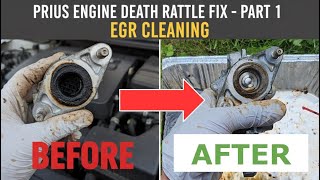
- A loud rattling or knocking sound from the engine bay on a cold start, which can be mistaken for a major mechanical failure. 🎬 Watch: How to fix the Prius engine rattle noise This is often the first and most alarming symptom.
- Rough or unstable idle
- Engine hesitation or stumbling during acceleration
- Reduced fuel economy
- Check Engine Light and/or "Check Hybrid System" warning on the dash
- Replacing only the EGR valve. This fails to address the main restriction in the clogged EGR cooler and intake manifold, leading to the code and symptoms returning quickly.
- Diagnosing the cold start rattle as a failed transaxle damper or internal engine failure. The violent shaking and noise from a clogged EGR system mimics more severe mechanical problems.
- Replacing spark plugs and ignition coils for misfire codes (e.g., P0301) without addressing the root cause in the EGR system. The misfire is often caused by poor combustion from a blocked EGR passage to that cylinder.
Most Likely Causes
- Clogged EGR Cooler, Pipe, and Intake Manifold Passages 🔴 High Probability → Shop Engine Intake Manifold The design of the 2ZR-FXE engine's EGR system, combined with factors like oil consumption from low-tension piston rings, leads to significant carbon accumulation over time. The EGR cooler, with its small internal fins, becomes a bottleneck and can get almost completely blocked with hard carbon deposits.
How to confirm: Visually inspect the EGR components after removal. The EGR pipe and cooler will be visibly coated or plugged with thick, black carbon soot. The small EGR ports on the intake manifold for each cylinder will also be restricted, often looking like pinholes instead of their original diameter.
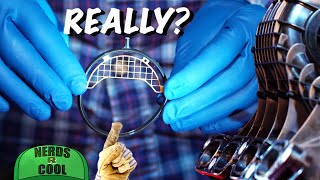
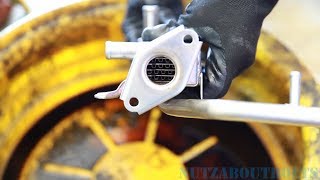
Typical fix: A complete disassembly and thorough cleaning of the EGR valve, EGR cooler, EGR pipe, and intake manifold passages is required. Many owners on forums recommend soaking the cooler in a solution of Oxi-Clean 🎬 See this step-by-step EGR and cooler cleaning walkthrough and hot water or a degreaser like Mean Green for 12+ hours to dissolve the carbon. Replacement is generally not necessary unless a part is damaged.
Est. part cost: $20-$50 for gaskets and cleaning supplies (brake cleaner, Oxi-Clean, brushes). - Sticking EGR Valve 🟡 Medium Probability → Shop Exhaust Gas Recirculation (EGR) Valve The valve itself gets clogged with the same carbon that blocks the rest of the system, causing its pintle to stick. While it's the part that officially throws the code, it's a symptom of the larger system-wide clogging. Oil consumption contributes to the sticky nature of the deposits.
How to confirm: After removing the valve, attempt to move the internal pintle manually. It will feel sticky, rough, or may not move at all. The passages will be full of soot.
Typical fix: The valve can usually be restored by cleaning it thoroughly with carburetor cleaner or a similar solvent until it moves freely. It should be cleaned as part of the complete EGR system service, not as a standalone repair. Avoid using caustic cleaners like Oxi-Clean on the aluminum valve body.
Est. part cost: $0 if cleaned, $150-$250 for a new valve if it's truly failed.
Rare But Worth Checking
- Failed EGR Valve Motor or Position Sensor: → Shop Exhaust Gas Recirculation (EGR) Valve While rare on this platform, an actual electrical failure of the EGR valve's motor or the integrated position sensor can occur. If the entire EGR system is perfectly clean and the code returns immediately, testing the valve's electrical circuit would be the next step. This is highly unlikely compared to the clogging issue.
Diagnosis Steps
- Confirm P0404 is present using an OBD-II scanner. Check for related codes like P0401 or any P030x misfire codes.
- Listen for a distinct engine rattle or shake during a cold start, which is a key symptom.
- The most definitive diagnostic step is to disassemble the EGR system for inspection. This is a labor-intensive process often requiring 4-6 hours.
- Remove the airbox, throttle body, and wiper cowl assembly to gain access to the EGR components.
- Remove the EGR pipe that runs from the EGR valve to the intake manifold. Inspect it for heavy carbon buildup. If this pipe is clogged, the rest of the system is certainly worse.
- Remove the EGR valve assembly. Check for soot and test if the valve moves freely.
- Remove the EGR cooler. This is often the most heavily clogged component. It will likely be completely blocked, preventing any light from passing through.
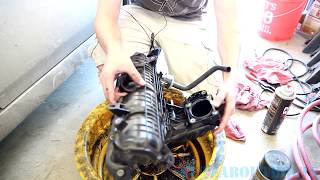
- Remove the intake manifold and inspect the four small EGR ports on the mounting flange. They are often clogged, especially the one for cylinder 1. 🎬 Watch: How to clean the intake manifold
Parts You'll Likely Need
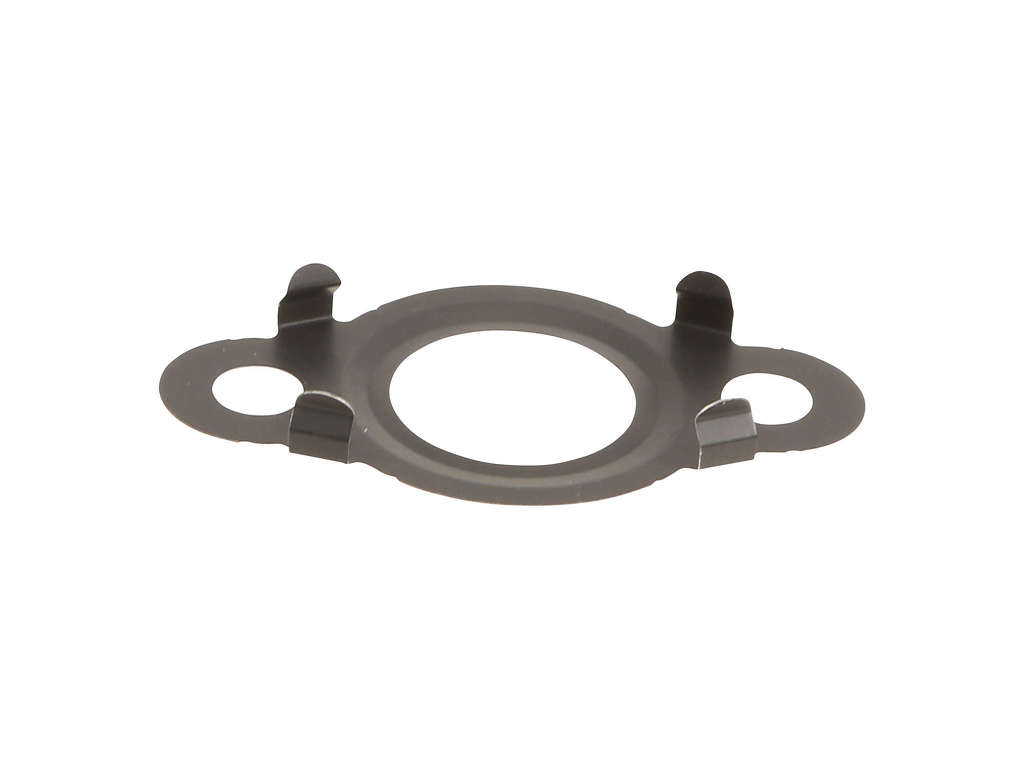
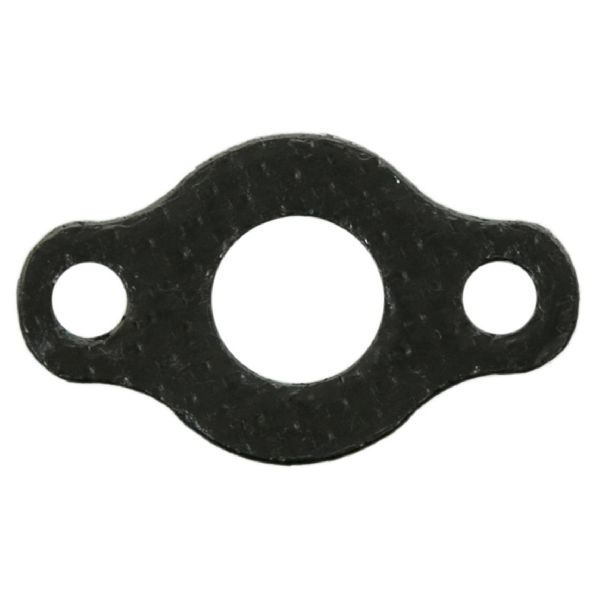
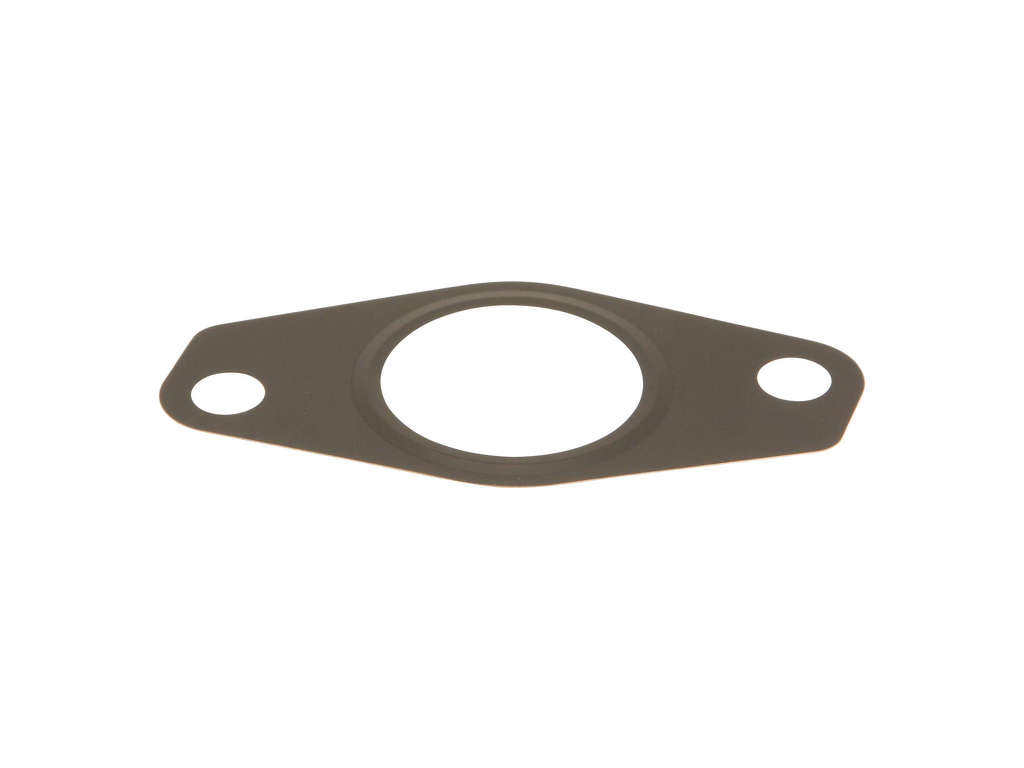
- EGR Valve Gasket Kit — New gaskets are required for the EGR valve, cooler, pipe, and intake manifold to prevent vacuum and exhaust leaks upon reassembly.
Trusted brands: Toyota OEM, Fel-Pro
OEM price range: $30-$50
Aftermarket price range: $15-$30 - PCV Valve
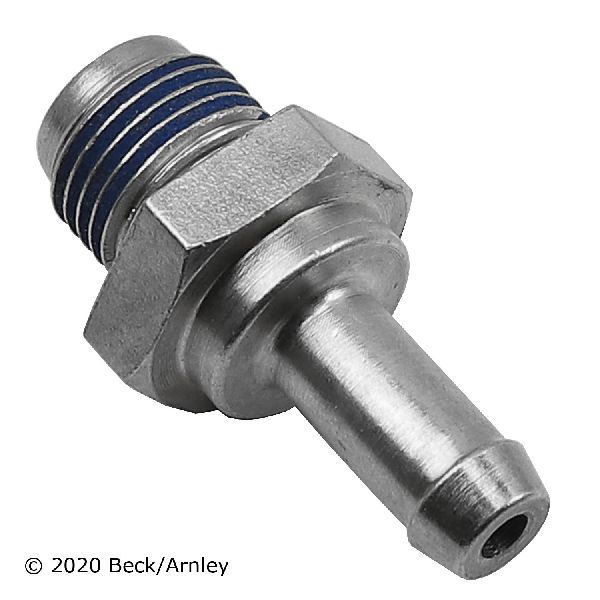
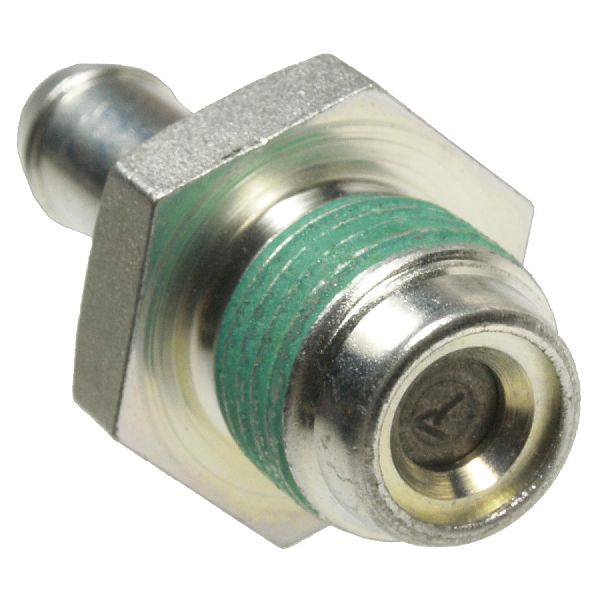
(OEM #12204-37010)— The PCV valve is inexpensive and very easy to replace once the intake manifold is removed. A clogged PCV system can contribute to oil consumption, which accelerates EGR clogging. It is highly recommended to replace it during this service.
Trusted brands: Toyota OEM
OEM price range: $6-$10
Aftermarket price range: $4-$8 - EGR Valve Assembly
(OEM #25620-37120)— Only needed if the original valve is physically damaged or electrically failed, which is rare. Most are just cleaned and reused. This part number supersedes previous versions (e.g., 25620-37110).
Trusted brands: Toyota OEM, Denso, Aisin
OEM price range: $200-$280
Aftermarket price range: $120-$180 - EGR Pipe
(OEM #25601-37010)— Only needed if the original is cracked or damaged during removal. It is a robust metal part that can almost always be cleaned and reused.
Trusted brands: Toyota OEM
OEM price range: $60-$90
Aftermarket price range: $40-$60
Related Codes That Often Appear With This One
- P0401 — P0401 (EGR Flow Insufficient) is very common and points to the same root cause: a clogged system. Toyota even issued a warranty extension (POL16-04 / ZF3) for this code related to a sticking EGR valve causing a rough idle or rattle.
- P0300, P0301, P0302, P0303, P0304 — Misfire codes (P030x) can occur when the EGR passages in the intake manifold become unevenly clogged, leading to an imbalanced air/fuel mixture and incomplete combustion in one or more cylinders. This is also a primary symptom of a failing head gasket, which is the ultimate consequence of an ignored EGR problem.
Technical Service Bulletins (TSBs) & Recalls
- POL16-04 (replaces ZF3) - Warranty Enhancement Program for sticking EGR valve causing rough idle and/or rattle noise, often with DTC P0401. Primary coverage was offered until March 31, 2017, with secondary coverage for 10 years/150,000 miles.
- T-SB-0168-16 - Outlines the official dealer procedure for diagnosing excessive oil consumption on the 2ZR-FXE engine, which is a contributing factor to EGR clogging.
Platform-Specific Known Issues
- A known Warranty Enhancement Program (ZF3 / POL16-04) was issued by Toyota for sticking EGR valves on 2010-2012 models, acknowledging the high failure/clogging rate that causes rough idle and DTC P0401.
- The cold start rattle caused by the clogged EGR system is frequently misdiagnosed as a catastrophic engine or transmission failure by those unfamiliar with the platform.
- Chronic, unaddressed EGR clogging is widely believed to be a primary cause of head gasket failures in the Gen 3 Prius by creating hot spots and uneven pressure in the cylinders. This is the most severe and expensive potential outcome of ignoring P0404.
Mechanic-Grade Diagnostic Values
- EGR Valve Position Sensor Resistance (Pins VC - E1) — expected: 4.5 to 5.5 kΩ at 20°C (68°F). Failure: Reading outside of this range indicates a fault in the position sensor.
- EGR Valve Position Sensor Resistance (Pins E2 - E1) — expected: 2.0 to 3.0 kΩ at 20°C (68°F). Failure: Reading outside of this range indicates a fault in the position sensor.
- EGR Valve Motor Resistance (Pins M+ - M-) — expected: 17 to 19 Ω at 20°C (68°F). Failure: An open or short, or a reading outside this range, indicates a failed valve motor.
Scan Tool Commands That Help
- Toyota Techstream: Active Test for EGR System — After confirming the EGR passages are clean, use this function to command the EGR valve to open and close. This verifies if the valve motor is responding to ECU commands and helps isolate a sticky valve or an electrical circuit problem from a simple clog.
Wiring & Ground Locations
- EGR Valve Connector (E4) — On the EGR valve assembly, located at the rear of the engine below the intake manifold.. This 5-pin connector provides power and ground to the valve motor (pins M+, M-) and contains the position sensor circuit (pins VC, E1, E2). Checking for resistance across these specific pins is the primary way to diagnose an electrical failure of the valve assembly.
- ECM (Engine Control Module) — Located on the left side of the engine compartment.. The ECM sends the command signals to the EGR valve and interprets the feedback from its position sensor. In very rare cases of persistent issues with a known-good valve and wiring, the ECM itself could be the issue.
Real Owner Repair Stories
- PriusChat user 'cdherman' (2014 Toyota Prius, 148,000 miles) — Initially no issues, but after installing a cleaned used EGR cooler, got a check engine light, steam from exhaust, and coolant consumption.
❌ Tried (didn't work) Swapping in a used EGR cooler that had been aggressively cleaned with Drano and a piano wire.
✅ What actually fixed it The aggressive cleaning created a pinhole leak in the EGR cooler's coolant passages, which hydro-locked the engine and caused the head gasket to fail. The ultimate fix became a head gasket replacement. The lesson was to always leak-test a cooler after cleaning and before installation. - Article by 'Pete, The Hybrid Guy' on Torque News (2010 Toyota Prius) — Persistent P0401 code (Insufficient EGR Flow) even after a complete and thorough cleaning of the entire EGR system (cooler, valve, pipe, manifold) during a head gasket replacement.
❌ Tried (didn't work) Assuming the system was fixed because it was perfectly clean.
✅ What actually fixed it Component testing revealed the EGR valve motor was electrically faulty. The fix was to purchase a known-good used EGR valve assembly from eBay for $90 and transfer its motor over to the existing, clean valve body. This resolved the code without buying an expensive new valve.
"I Checked Everything" — The Actual Cause
- The equivalent for this code is 'EGR system fully cleaned, but code remains.' In this scenario, the cause is almost certainly an electrical failure within the EGR valve assembly itself. After a meticulous cleaning, a technician on a 2010 Prius found the P0401 code persisted. A resistance test on the valve's motor confirmed it was faulty. Replacing just the motor from a used assembly fixed the issue, proving the problem was electrical, not a missed carbon deposit.
OEM Part Supersession History
25620-37110 (EGR Valve)→25620-37120 (EGR Valve)— Internal design improvements to reduce sticking and wear.
Heads up: The updated valve is a direct replacement. A pro tip is to purchase the 'EGR Valve Updated Kit' (P/N 04004-58137), which includes the new 25620-37120 valve and gaskets, often for less than the cost of the valve alone.
Model Year Variations Within This Range
- 2015+: While the EGR valve, cooler, and pipe part numbers remained the same through 2015, the engine received redesigned piston rings. This change was intended to reduce oil consumption, a primary contributor to the carbon that clogs the EGR system. Therefore, 2015 and later models may experience a slower rate of EGR clogging compared to 2010-2014 models, but the fundamental system design and failure mode are identical.
Diagnostic Flowchart
Other Known Issues on This Vehicle
Issues unrelated to this code that are worth knowing about as an owner of this generation:
- Excessive Oil Consumption 🔴 High — Becomes common over 100,000 miles. Caused by low-tension piston rings getting stuck with carbon. Contributes directly to EGR clogging. (Ref: T-SB-0168-16 (Inspection) and T-SB-0169-16 (Repair) were issued for this, involving redesigned pistons and rings.)
- Head Gasket Failure 🔴 High — Commonly reported between 150,000-200,000 miles, but can occur earlier. Strongly linked to clogged EGR passages causing engine hot spots.
- Hybrid Inverter (IPM) Failure 🔴 High — A significant number of 2010-2014 models experienced failures of the Intelligent Power Module (IPM) within the inverter, causing the car to enter limp mode or shut down. (Ref: Warranty Enhancement Program ZE3 extended coverage to 15 years/unlimited miles for specific failure codes (P0A94, P324E, P3004, P0A1A).)
- Brake Booster / Accumulator Failure 🔴 High — Failures in the brake booster pump or accumulator can lead to a loss of braking assist. Affects early models most. (Ref: Recall DOH (NHTSA ID 13V-235) for some 2010 models. Warranty Enhancement ZJB covered other 2010-2015 models for post-failure repairs.)
Used vs. New Parts: Buying Guide for This Vehicle
When a used part is the smart pick: For this repair, a used OEM EGR valve or EGR cooler from a low-mileage donor vehicle is a very smart choice. The failure mode is almost always carbon clogging, which is reversible with thorough cleaning. Given the high cost of new OEM parts and reported issues with aftermarket alternatives, a cleaned used part offers the best value.
Donor-vehicle mileage cap: roughly under 75000 miles for the part to have meaningful remaining life.
What to inspect on the donor part:
- CRITICAL: Before installing a used or cleaned EGR cooler, you MUST leak-test it. Plug the exhaust ports and fill the coolant passages with water or pressurized air to check for leaks. An unnoticed leak can destroy the engine.
- For a used EGR valve, manually actuate the pintle to ensure it's not seized beyond recovery.
- Perform the resistance checks on the valve's motor and position sensor pins (M+/M-, VC/E1/E2) to verify it is electrically sound before the labor-intensive installation.
OEM-only on this vehicle (don't cheap out):
- EGR Valve Assembly: Forum consensus strongly advises against non-OEM EGR valves. Many aftermarket versions are reported to stick or fail prematurely, causing the code to return. Stick with genuine Toyota, Aisin, Denso, or a cleaned used OEM part.
Aftermarket brands forum-validated for this vehicle:
- Denso (OEM Supplier)
- Aisin (OEM Supplier)
Brands owners have reported issues with on this vehicle:
- Generic, unbranded EGR valves from online marketplaces are frequently reported to fail on Prius forums.
Real Owner Stories
Aggregated from forums and TSBs cited above. Mileages and costs reflect what owners reported in those sources.
2010-2015 Toyota Prius 1.8L
Symptoms: Engine shaking or vibrating, especially at idle, and a loud rattling or knocking sound from the engine bay on a cold start.
What fixed it: A complete disassembly and thorough cleaning of the EGR valve, EGR cooler, EGR pipe, and intake manifold passages.
Cost: $20-$50
Source hint: PriusChat.com Thread: 'EGR & Intake Manifold Clean Results'
2010-2012 Toyota Prius 1.8L — ~125000 miles
Symptoms: Sticking EGR valve causing rough idle and/or rattle noise.
What fixed it: Replacement or repair under Warranty Enhancement Program POL16-04 (replaces ZF3).
Source hint: POL16-04 (replaces ZF3) - Warranty Enhancement Program
Related OBD-II Codes
Frequently Asked Questions
Is there a Toyota warranty extension that covers the sticking EGR valve on my 2010-2012 Prius?
My 2010 Prius makes a terrifying rattling sound on cold starts; is my engine failing?
Can I just replace the EGR valve to fix the P0404 code?
Is it true that a clogged EGR system can cause a head gasket failure on the Gen 3 Prius?
What is the recommended way to clean the EGR cooler according to other owners?
Does the Lexus CT200h suffer from these same EGR issues?
Helpful Videos
We Have This Part in Stock


The information in this article is provided for general reference and educational purposes only. Vehicle specifications, procedures, and part compatibility can vary by production date, trim level, and region. Always consult your vehicle's factory service manual and verify part numbers before purchasing or performing repairs. Safety-critical components such as airbags, seat belts, and braking systems should be installed by a qualified professional.
- Toyota Prius:
- 🧭 Diagnostic Flowchart
- 🎬 Helpful Videos
- 🛍️ Shop This Part
- What's Unique About the 2010-2015 Toyota Prius
- Symptoms You May Notice
- Most Likely Causes
- Rare But Worth Checking
- Diagnosis Steps
- Parts You'll Likely Need
- Related Codes That Often Appear With This One
- Technical Service Bulletins (TSBs) & Recalls
- Platform-Specific Known Issues
- Mechanic-Grade Diagnostic Values
- Scan Tool Commands That Help
- Wiring & Ground Locations
- Real Owner Repair Stories
- "I Checked Everything" — The Actual Cause
- OEM Part Supersession History
- Model Year Variations Within This Range
- Other Known Issues on This Vehicle
- Used vs. New Parts: Buying Guide for This Vehicle
- Real Owner Stories
- 2010-2015 Toyota Prius 1.8L
- 2010-2012 Toyota Prius 1.8L — ~125000 miles
- Related OBD-II Codes
- Frequently Asked Questions
- 🎟️ Get 5% Off