

P0418 on 2003-2007 Honda Accord: Air Injection Relay Circuit Fixes
For a 2003-2007 Honda Accord, code P0418 almost always points to a failed Secondary Air Injection (SAI) pump relay. This is a simple, inexpensive fix involving a common multi-purpose relay (part #39794-SDA-A05) found in the under-hood fuse box, costing around $20-$35. Swapping the relay with an identical one, like the horn's, is a definitive and free diagnostic step.
- P0418 on a 7th generation Accord is an electrical circuit code, not an airflow code.
- The most likely cause by a wide margin is a bad Secondary Air Injection relay, part number 39794-SDA-A05.
- Always check the fuse and swap the relay with an identical one (like the horn's) to diagnose before buying any parts.
- This is a very simple and inexpensive DIY repair, typically taking less than 15 minutes.
- The vehicle is safe to drive with this code active, but it will not pass an emissions inspection.
What's Unique About the 2003-2007 Honda Accord
On many vehicles, a P0418 code can lead to a complicated diagnosis involving pumps, wiring, and check valves. However, on the 7th generation Honda Accord (and its platform mates), the issue is very commonly isolated to a single, inexpensive part: the air injection pump relay. Honda uses a standard, multi-purpose 'micro ISO' relay for this system that is known to fail over time but is also easy to access in the under-hood fuse box and replace, making this a much simpler fix than on other platforms.
Symptoms You May Notice
- Check Engine Light is on
- Audible noise from the air pump may be absent during the first 30-90 seconds after a cold start
- Slight engine hesitation or rough idle on a cold start (uncommon)
- Air pump runs constantly, even with the engine off (rare, indicates a stuck relay)
- Replacing the air injection pump when only the relay has failed. Always test or swap the relay first, as it is the most likely and cheapest part to fail. 🎬 Watch this before you replace your secondary air injection pump
- Replacing the relay without checking the pump. If a seized pump caused the original relay to fail, it will likely cause the new relay to fail as well.
Most Likely Causes
- Faulty Secondary Air Injection (SAI) Pump Relay 🔴 High Probability → Shop Secondary Air Injection Pump This specific relay is a known failure point on this platform and is the most common trigger for this exact code. It is a mechanical component with a finite lifespan that is subjected to electrical loads on every cold start.
How to confirm: Locate the SAI pump relay in the under-hood fuse box (its position is usually marked on the fuse box lid). Swap it with an identical relay from a non-critical system (like the horn or fan relay). If the horn now fails to work and the code can be cleared, the relay is bad. This is the most definitive test.
Typical fix: Replace the faulty relay with a new one. The OEM part is 39794-SDA-A05.
Est. part cost: $15-$40 - Blown Fuse for the SAI System 🟡 Medium Probability
How to confirm: Inspect the fuses related to the 'AIR' or 'Secondary Air Injection' system in the fuse box. A visual inspection or a multimeter check will confirm if the fuse is blown.
Typical fix: Replace the blown fuse. If the new fuse blows immediately, it indicates a short circuit, most likely from a seized SAI pump motor drawing excessive current.
Est. part cost: $1-$5 - Failed Secondary Air Injection (SAI) Pump ⚪ Low Probability → Shop Secondary Air Injection Pump While less common than the relay, the pump motor can fail or seize due to age or moisture intrusion from a failed one-way check valve. A seized pump will draw excessive current, which can blow the fuse and/or burn out the control relay.
How to confirm: If the relay and fuse are confirmed to be good, apply 12V power and a ground directly to the air pump's electrical connector. If the pump does not run, it has failed. A high-resistance reading across the pump's terminals with a multimeter also indicates failure.
Typical fix: Replace the secondary air injection pump.
Est. part cost: $150-$300 - Damaged Wiring or Connectors ⚪ Low Probability
How to confirm: Visually inspect the wiring harness and connectors for the SAI relay and the SAI pump. Look for any signs of corrosion, burns, chafing, or loose pins. Pay close attention to the relay socket in the fuse box for signs of heat or discoloration.
Typical fix: Repair the damaged section of the wiring harness or replace the faulty connector.
Est. part cost: $10-$50
Rare But Worth Checking
- Powertrain Control Module (PCM) Fault: → Shop Engine Control Module (ECM) This is extremely rare. All other possibilities, including fuses, the relay, the pump, and all wiring, should be exhaustively checked before considering the PCM as the cause.
Diagnosis Steps
- Verify the Check Engine Light is on and code P0418 is present using an OBD-II scanner.
- Open the under-hood fuse and relay box. Consult the diagram on the lid or in the owner's manual to identify the fuse for the Secondary Air Injection system.
- Visually inspect the fuse. If it is blown, replace it. Clear the codes and perform a cold start. If the fuse blows again, suspect a shorted/seized air pump.
- Locate the SAI pump relay (often labeled 'AIR PUMP'). It is typically a black or gray 4-pin relay, identical to the horn or fan relay.
- Swap the SAI relay with the horn relay. Test the horn. If the horn does not work with the suspected bad relay, the relay is confirmed faulty. Purchase and install a new relay.
- If the fuse and relay are good, listen for the air pump to run for 30-90 seconds after a cold start. It sounds like a small vacuum cleaner.
- If the pump does not run, inspect the wiring and connector at the relay socket and at the air pump for any visible damage, corrosion, or looseness.
- If all wiring appears intact, use a multimeter or test light to confirm that the relay is receiving the command signal from the PCM on a cold start.
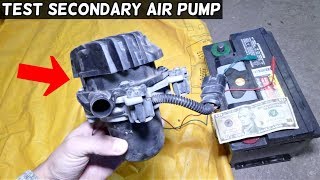
- If the relay is receiving a signal and sending power out, but the pump isn't running, the pump motor has likely failed. Confirm by applying direct 12V power to the pump. 🎬 Watch: How to test the air pump on most cars
Parts You'll Likely Need
- Multi-Purpose Relay (Air Injection Pump Relay)
(OEM #39794-SDA-A05)— This is the most common failure point for code P0418 on this specific vehicle.
Trusted brands: Honda (OEM), Denso, Standard Motor Products (Ryudo), Mitsuba
OEM price range: $25-$40
Aftermarket price range: $15-$30
Platform-Specific Known Issues
- Real-world owner experience: An owner on a forum reported getting a P0418, swapped the AIR PUMP relay with the FAN relay in the under-hood fuse box, and the code was resolved. This confirms the relay swap is a valid and effective diagnostic step.
Mechanic-Grade Diagnostic Values
- Secondary Air Injection (SAI) Pump Motor Resistance — expected: Close to 0 Ohms. Failure: A high resistance reading indicates a faulty pump motor.
Scan Tool Commands That Help
- Honda Diagnostic System (HDS): Secondary Air Injection (AIR) Pump Active Test — After verifying the fuse and relay are good, this command allows a technician to manually activate the AIR pump via the scan tool to confirm if the pump motor, wiring, and PCM driver are functional.
Wiring & Ground Locations
- G101 — On the driver's side of the intake manifold plenum.. This is a main ground point for the engine wiring harness, which includes grounding for the ECU/PCM. A poor connection at G101 can cause a variety of intermittent electrical faults and codes, including P0418, by disrupting the PCM's ability to correctly control and monitor circuits.
- G201 — On the thermostat housing or nearby on the cylinder head/transmission case.. This is another critical engine ground point. While G101 is the primary ECU ground, corrosion or looseness at G201 can also introduce electrical noise and voltage drop issues that may affect sensor and actuator performance.
- Under-hood Fuse/Relay Box — On the driver's side of the engine compartment, near the strut tower.. This box contains both the AIR pump relay and the main fuse for the circuit. The relay socket terminals themselves can become corroded or lose tension, creating a poor connection that mimics a failed relay and triggers P0418.
Real Owner Repair Stories
- Forum discussions and mechanic reports (2004 Honda Accord) — Persistent P0418 code, Check Engine Light on.
❌ Tried (didn't work) Replaced the AIR pump relay (twice)., Replaced the AIR pump fuse., Tested the AIR pump directly and confirmed it worked.
✅ What actually fixed it The under-hood fuse box itself was found to have internal corrosion on the power distribution bus feeding the AIR pump relay socket. This caused a voltage drop sufficient to trigger the circuit code without blowing the fuse. The entire fuse box assembly had to be replaced.
Model Year Variations Within This Range
- 2006-2007: The 2006 model year marked a mid-cycle refresh for the 7th generation Accord. While the V6 models had Drive-by-Wire (DBW) throttle systems from 2003, the 4-cylinder models received DBW starting in 2006. This does not directly affect the P0418 diagnosis, as the SAI system's function and control logic remained consistent, but it is a key electronic difference between the earlier (03-05) and later (06-07) 4-cylinder cars.
Diagnostic Flowchart
Other Known Issues on This Vehicle
Issues unrelated to this code that are worth knowing about as an owner of this generation:
- Automatic Transmission Failure (especially V6) 🔴 High — Very common on 2003-2004 models, less so on later years. Can occur before 100,000 miles. (Ref: Recall for 2003-2004 V6 models for insufficient 2nd gear lubrication (NHTSA ID: 04V176000).)
- Failing Radio/HVAC Display Backlight 🟡 Low — Extremely common across all years. The circuit board for the display fails, causing the backlight to go out.
- Leaking Power Steering Feed Hose (V6 models) 🔴 High — Common enough to warrant a major recall. The hose deteriorates from heat, leaking fluid onto the hot catalytic converter, creating a fire risk. (Ref: Recall #12V468000 covers 2003-2007 Accord V6 models.)
- Excessive Oil Consumption (4-cylinder K24 engine) 🟠 Medium — A known issue, though not universal. Can be caused by sticking piston rings.
- Power Steering Pump Whine 🟡 Low — Common at higher mileage. Often caused by air entering the system through a hardened O-ring on the pump's inlet, rather than pump failure itself.
- Prematurely Failing Starter Motor 🟠 Medium — Reported to fail at higher mileage, sometimes under 100,000 miles.
Used vs. New Parts: Buying Guide for This Vehicle
When a used part is the smart pick: A used Secondary Air Injection (SAI) pump from a reputable auto recycler is a smart choice, as new OEM pumps are expensive and the failure rate is not excessively high. A used relay is generally not recommended as new ones are inexpensive and it's a common failure item.
Donor-vehicle mileage cap: roughly under 100000 miles for the part to have meaningful remaining life.
What to inspect on the donor part:
- For a used SAI pump, inspect the electrical connector for any signs of melting or corrosion.
- Check the air inlet and outlet ports for signs of water, rust, or exhaust soot. Soot indicates a failed check valve, and the pump may have internal damage.
- Ask the recycler if the donor vehicle's history is known (e.g., front-end collision vs. flood vehicle). Avoid parts from flood-damaged cars.
OEM-only on this vehicle (don't cheap out):
- While not a primary cause for P0418, if the one-way check valve for the SAI system needs replacement, using an OEM part is recommended to prevent premature failure and subsequent water damage to the pump.
Aftermarket brands forum-validated for this vehicle:
- Denso (for relays)
- Standard Motor Products (for relays and some sensors)
Brands owners have reported issues with on this vehicle:
- Dorman: While Dorman produces a wide variety of parts, forum discussions and mechanic reviews frequently mention inconsistent quality control, especially for electrical components and emissions parts. It's often recommended to use OEM or a known OE-supplier brand over Dorman for this specific repair.
Real Owner Stories
Aggregated from forums and TSBs cited above. Mileages and costs reflect what owners reported in those sources.
2003-2007 Honda Accord
Symptoms: The owner received a P0418 code, causing the Check Engine Light to illuminate.
What fixed it: The owner swapped the AIR PUMP relay with the FAN relay in the under-hood fuse box, which resolved the code. The fix was to replace the faulty relay.
Source hint: Real-world owner experience from a forum, as cited in vehicle_specific_issues
Related OBD-II Codes
Frequently Asked Questions
What is the first and most common part I should check for a P0418 code on my 2005 Honda Accord?
I've confirmed the SAI relay is bad. What is the OEM part number for the replacement?
I replaced the fuse for the air injection system, but the new one blew immediately. What does this indicate?
How can I tell if my Accord's secondary air pump is working correctly?
My mechanic says the pump itself has failed. How can this be confirmed before I buy an expensive part?
Are other Honda or Acura models known to have this same P0418 relay problem?
Helpful Videos

We Have This Part in Stock


The information in this article is provided for general reference and educational purposes only. Vehicle specifications, procedures, and part compatibility can vary by production date, trim level, and region. Always consult your vehicle's factory service manual and verify part numbers before purchasing or performing repairs. Safety-critical components such as airbags, seat belts, and braking systems should be installed by a qualified professional.
- Honda Accord:
- 🧭 Diagnostic Flowchart
- 🎬 Helpful Videos
- 🛍️ Shop This Part
- What's Unique About the 2003-2007 Honda Accord
- Symptoms You May Notice
- Most Likely Causes
- Rare But Worth Checking
- Diagnosis Steps
- Parts You'll Likely Need
- Platform-Specific Known Issues
- Mechanic-Grade Diagnostic Values
- Scan Tool Commands That Help
- Wiring & Ground Locations
- Real Owner Repair Stories
- Model Year Variations Within This Range
- Other Known Issues on This Vehicle
- Used vs. New Parts: Buying Guide for This Vehicle
- Real Owner Stories
- 2003-2007 Honda Accord
- Related OBD-II Codes
- Frequently Asked Questions
- 🎟️ Get 5% Off