

P0422 on 2007-2017 Jeep Patriot: Main Catalyst Efficiency Causes and Fixes
P0422 on a Jeep Patriot almost always means the catalytic converter is failing. Before replacing it, check for exhaust leaks and verify the downstream oxygen sensor is working correctly. A new converter is a costly repair. Note that vehicles under 8 years/80,000 miles may have catalytic converter replacement covered under the federal emissions warranty.
- P0422 on a Jeep Patriot points directly to a failing main catalytic converter in Bank 1.
- Before replacing the expensive converter, you must rule out exhaust leaks and a faulty downstream oxygen sensor, which can mimic converte
What's Unique About the 2007-2017 Jeep Patriot
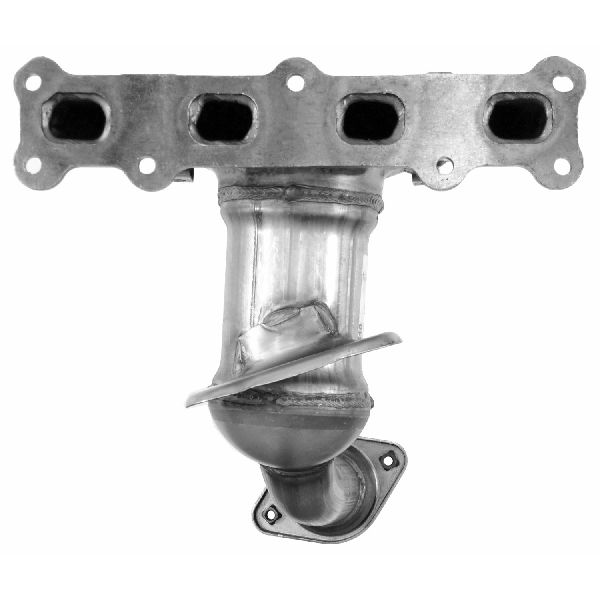
The Jeep Patriot, sharing its Chrysler MK platform with the Dodge Caliber and Jeep Compass, uses a fairly standard emissions setup for its era. The catalytic converter is integrated into the exhaust manifold. There are no widespread, unique design flaws that make it exceptionally prone to P0422. However, like many vehicles from this period, the catalytic converters can degrade over time, especially if underlying engine issues like misfires or oil consumption are not addressed promptly. Short-distance, stop-and-go driving can also contribute to premature failure as the converter may not reach a high enough temperature to burn off carbon deposits. The owner experience is typical: the code often appears on higher-mileage vehicles, leading to a costly but straightforward repair.
Symptoms You May Notice
- Check Engine Light is on
- Reduced engine performance or sluggish acceleration
- Decreased fuel economy
- A sulfur or "rotten egg" smell from the exhaust
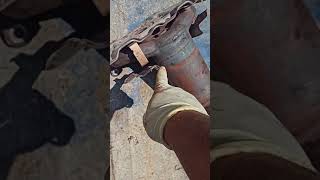
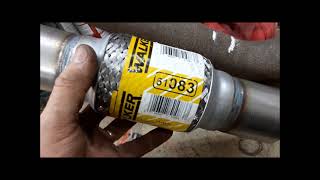
- Rattling noise from underneath the vehicle 🎬 Watch: How to fix a common exhaust rattle on this platform if the converter's internal structure has broken apart
- Hesitation when accelerating, especially uphill
- Engine may stall when coming to a stop
- Replacing oxygen sensors when the catalytic converter is actually the failed component.
- Replacing the catalytic converter without fixing an underlying engine issue (like a misfire or rich fuel condition), which will cause the new converter to fail prematurely.
Most Likely Causes
- Failing Catalytic Converter 🔴 High Probability → Shop Catalytic Converter Converters fail from age, contamination from burning oil, or overheating from engine misfires. This is the most common cause for P0422 once the vehicle has significant mileage (typically over 100,000 miles).
How to confirm: Use a scan tool to monitor oxygen sensor data. The downstream O2 sensor voltage should be steady. If it fluctuates similarly to the upstream sensor, the converter is not working. An infrared thermometer can also check for a temperature increase of about 100°F from the converter inlet to the outlet, which indicates it's working.
Typical fix: Replace the catalytic converter assembly 🎬 Watch: Step-by-step exhaust manifold converter removal guide (which includes the exhaust manifold).
Est. part cost: $400-$900 - Faulty Downstream Oxygen (O2) Sensor 🟡 Medium Probability → Shop Oxygen Sensor Oxygen sensors are wear items and can become 'lazy' or contaminated over time, sending incorrect data to the PCM and falsely triggering a P0422 code.
How to confirm: Test the sensor's response time and voltage output with a scan tool. A lazy or non-responsive sensor should be replaced. A healthy downstream sensor should show a relatively stable voltage, while a sensor that mimics the rapid switching of the upstream sensor points to a bad converter, not a bad sensor.
Typical fix: Replace the downstream (post-catalyst) oxygen sensor.
Est. part cost: $50-$120 - Exhaust System Leak 🟡 Medium Probability Rust and corrosion can cause leaks at gaskets or welds in the exhaust system, especially near the manifold or converter flanges. A common failure point on this platform is the flex pipe. A leak before the downstream O2 sensor can allow oxygen to enter the exhaust, skewing sensor readings and triggering the code.
How to confirm: Visually inspect the exhaust system from the engine to the catalytic converter for black soot, cracks, or holes. Listen for hissing or ticking sounds. A smoke test can pinpoint hard-to-see leaks.
Typical fix: Repair the leak by replacing the gasket, flex pipe, or welding the cracked component.
Est. part cost: $20-$150 - Underlying Engine Problems ⚪ Low Probability Issues like engine misfires, leaking fuel injectors, or excessive oil consumption can send unburned fuel or contaminants into the exhaust, overheating and destroying the catalytic converter.
How to confirm: Check for other trouble codes related to misfires (P030x), fuel trim (P0171, P0172), or sensors. Address these codes before suspecting the converter. A flashing check engine light is a strong indicator of a current misfire.
Typical fix: Repair the root cause, such as replacing spark plugs, ignition coils, fuel injectors, or fixing engine seals/gaskets.
Est. part cost: $50-$500+
Diagnosis Steps
- Check for other DTCs. If any other codes are present, especially for misfires or oxygen sensors, diagnose and repair them first.
- Visually inspect the exhaust system. Look for any signs of leaks, cracks, or damage between the engine's exhaust manifold and the downstream O2 sensor. Pay close attention to the flex pipe section.
- Analyze live data with a scan tool. Observe the voltage readings for the upstream (O2S1/1) and downstream (O2S1/2) oxygen sensors at a steady 2,500 RPM. The upstream sensor should switch rapidly between ~0.1V and ~0.9V. The downstream sensor should remain relatively stable, typically above 0.5V. If the downstream sensor mimics the upstream sensor's activity, the converter has likely failed.
- Check Fuel Trims. Use the scan tool to view long-term and short-term fuel trims. Readings consistently outside of +/- 8% indicate an underlying engine issue that must be fixed before replacing the converter.
- Test the oxygen sensors. 🎬 See how to test and replace a faulty O2 sensor If the downstream O2 sensor appears lazy or stuck at a certain voltage, test it directly to rule it out before condemning the expensive converter.
- Perform an exhaust backpressure test. If you suspect a clogged converter, a backpressure test can confirm a restriction in the exhaust flow.
- If all other components check out, the catalytic converter is the faulty part.
Parts You'll Likely Need
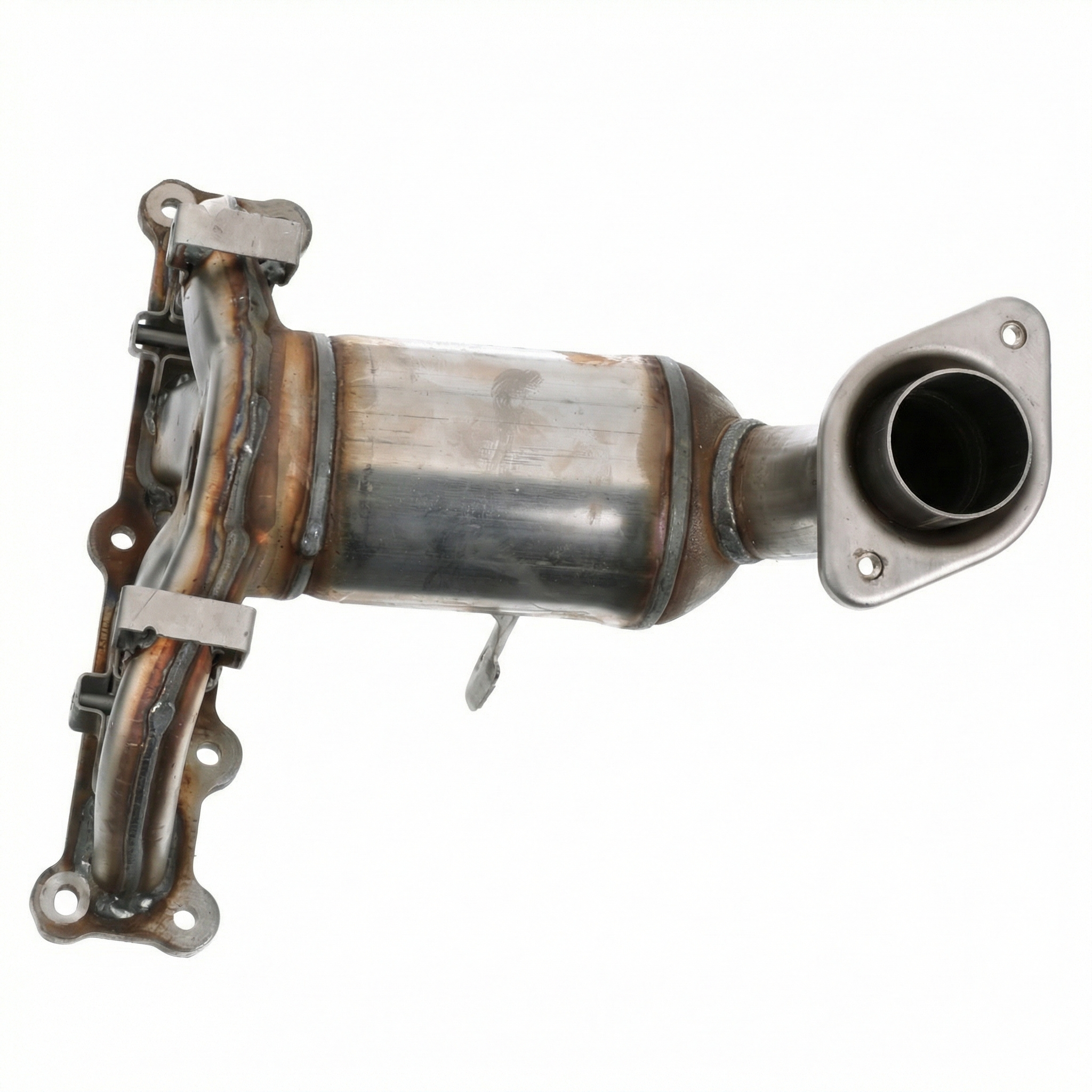
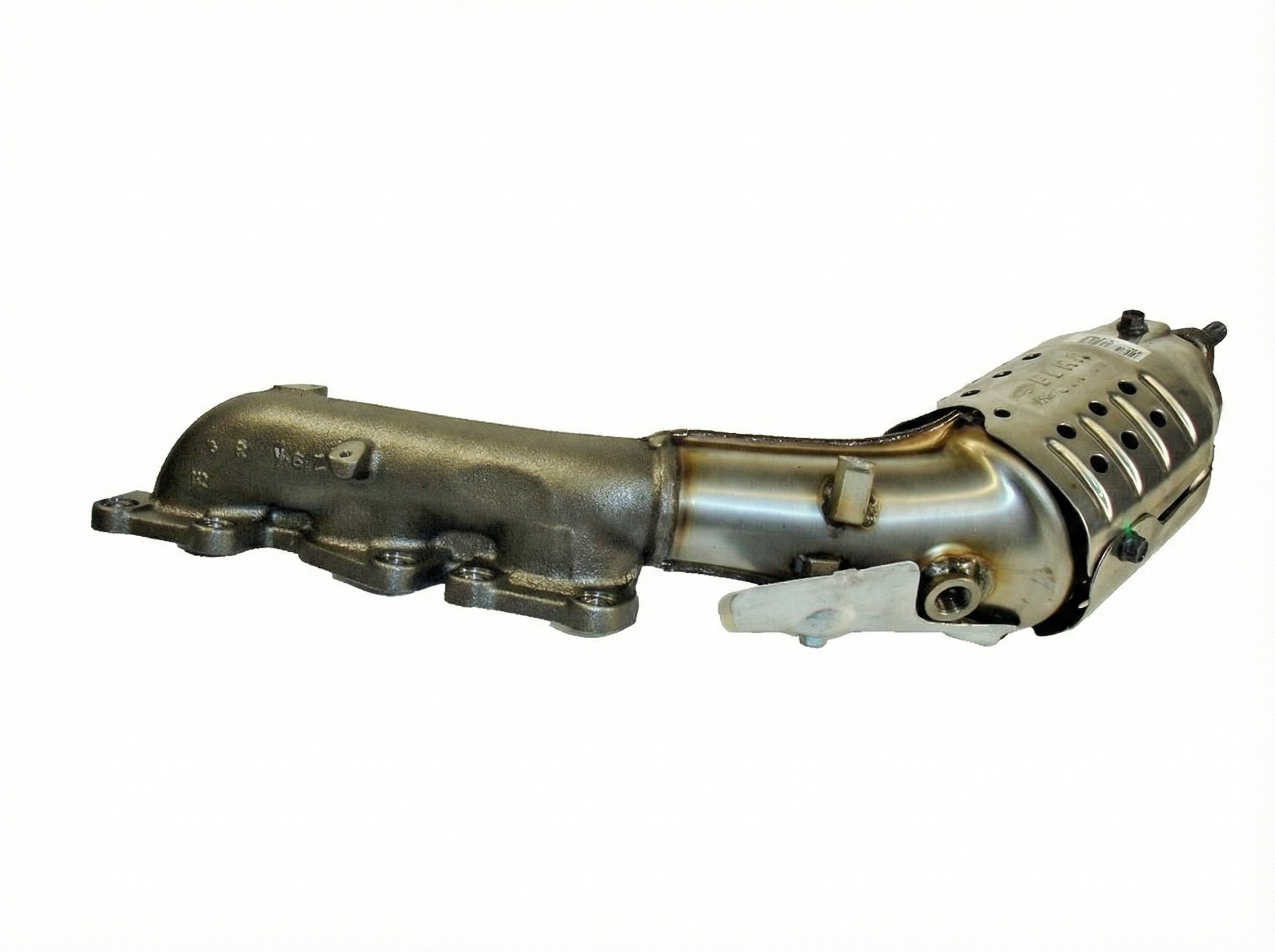
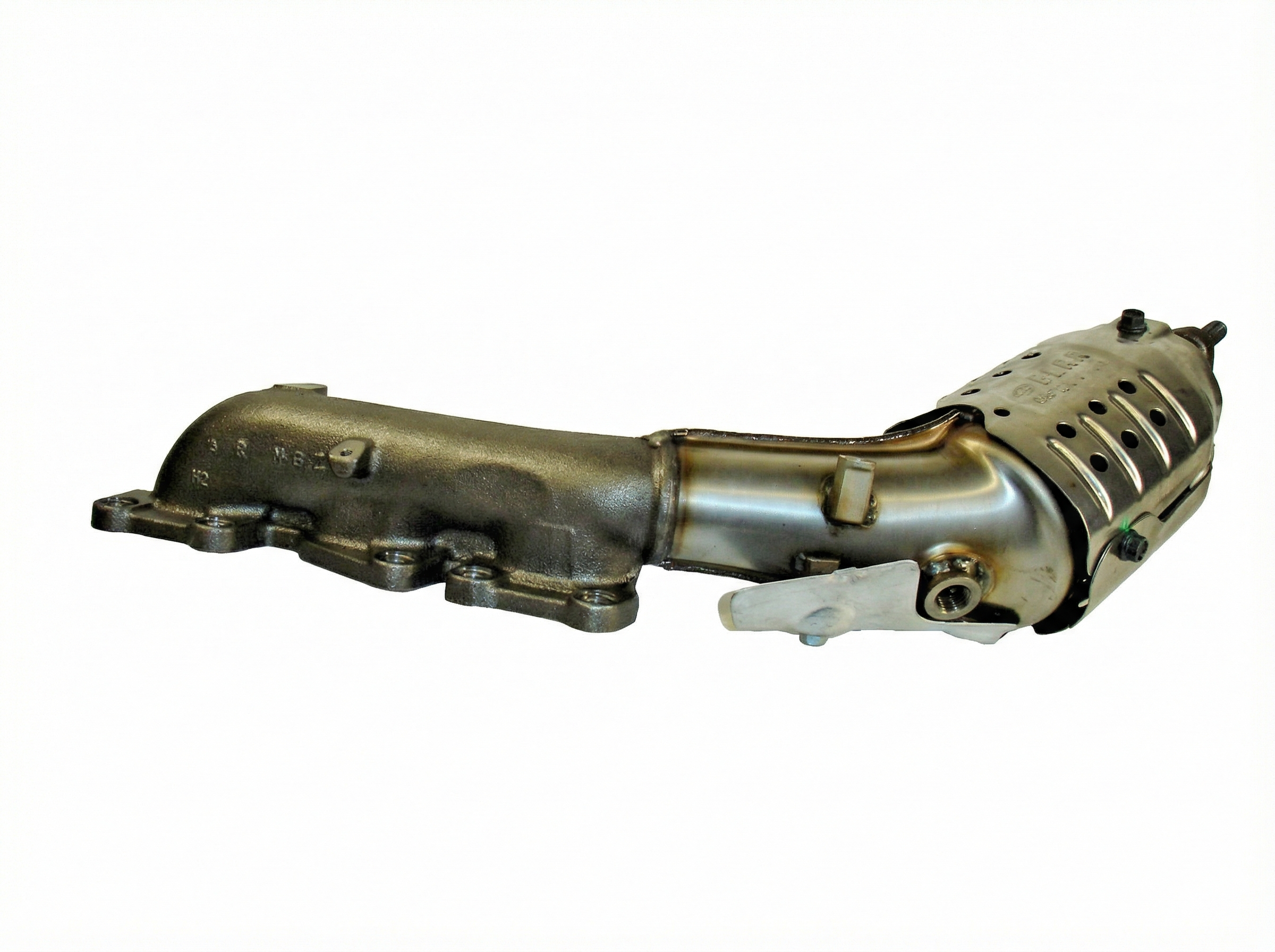
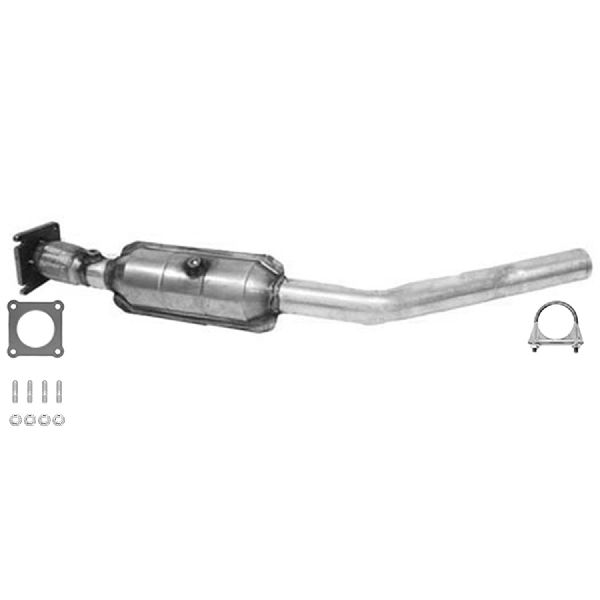
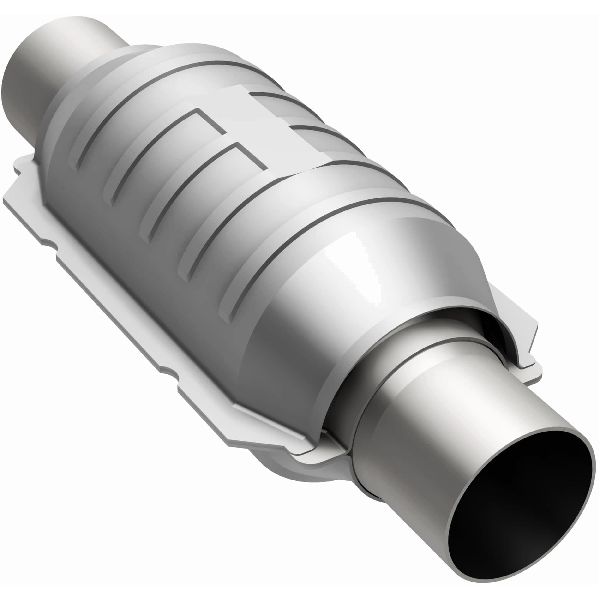
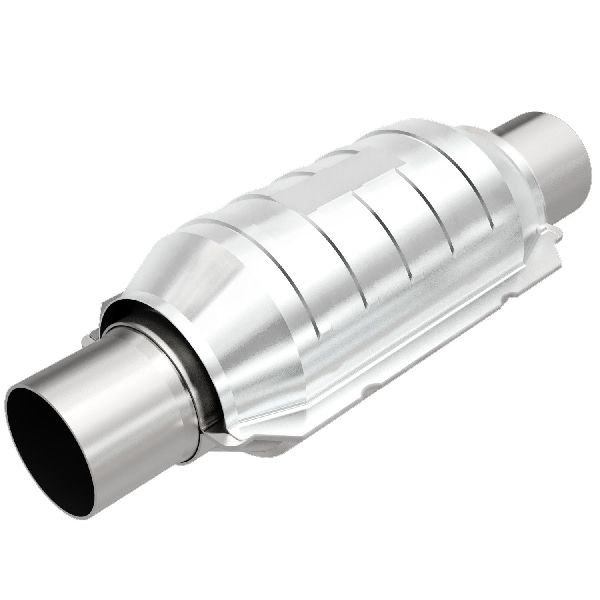
- Catalytic Converter
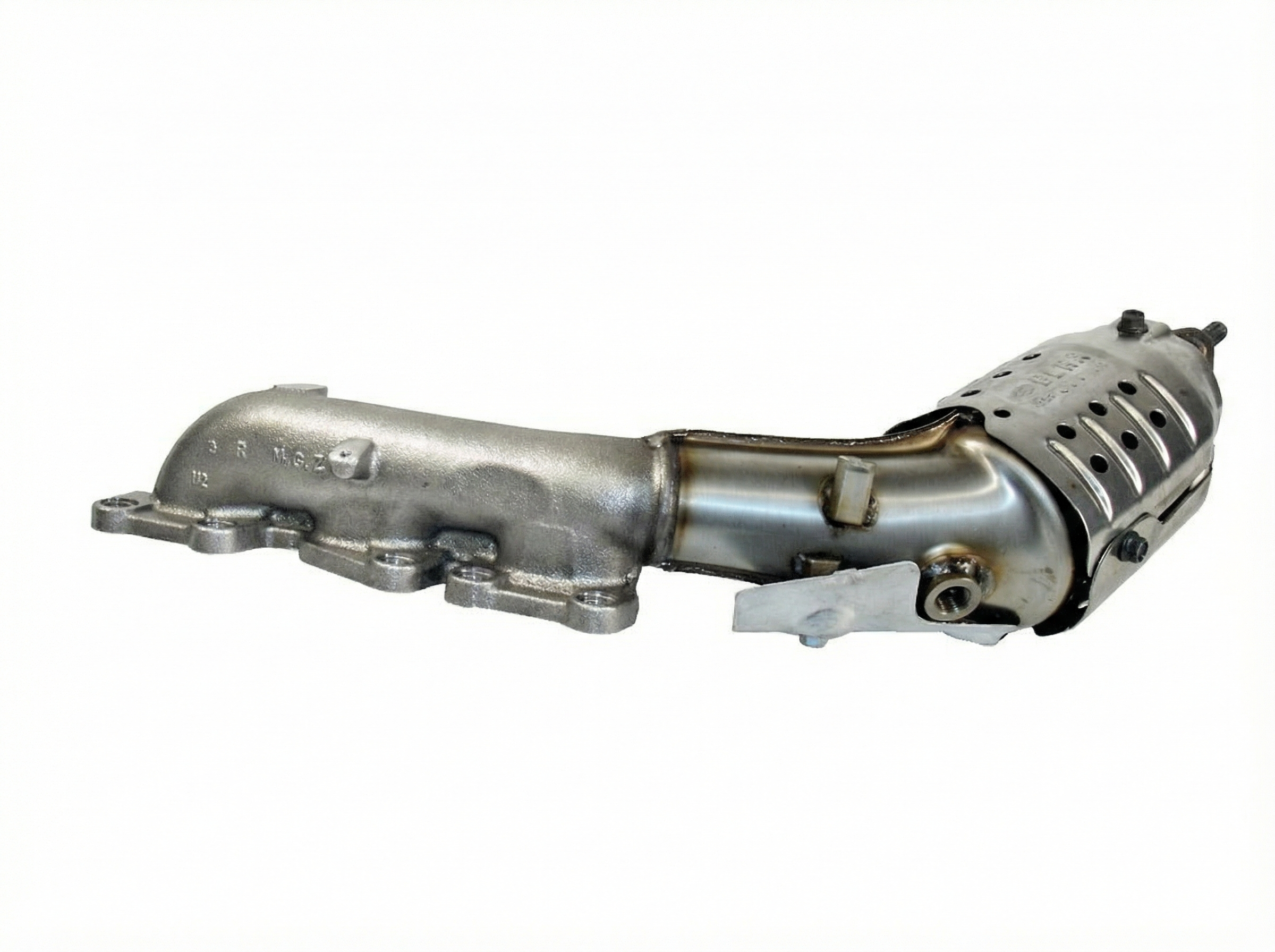
(OEM #68066674AC, 68029398AF, 5105049AB)— This is the most common cause of P0422, as the code directly measures its efficiency. On the Patriot, this part is often integrated with the exhaust manifold.
Trusted brands: Walker, MagnaFlow, AP Exhaust Technologies, Mopar (OEM)
OEM price range: $800-$1500
Aftermarket price range: $400-$900 - Downstream Oxygen Sensor (Bank 1, Sensor 2)
(OEM #5149171AB, 56029084AA)— A faulty sensor can send incorrect data, falsely triggering the P0422 code. It's a common misdiagnosis but should always be checked.
Trusted brands: Denso, NTK, Bosch, Mopar (OEM)
OEM price range: $100-$180
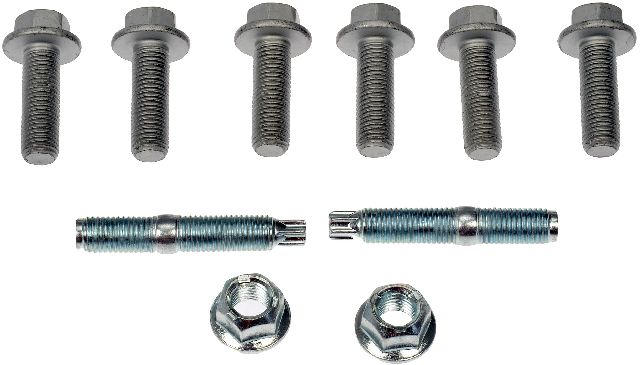
Aftermarket price range: $50-$120 - Exhaust Manifold Gasket / Flange Gasket — If an exhaust leak is found to be the cause, these gaskets are required to seal the system after repair.
Trusted brands: Fel-Pro, Victor Reinz
OEM price range: $20-$50
Aftermarket price range: $10-$30
Related Codes That Often Appear With This One
- P0420 — P0420 is a very similar code, also indicating "Catalyst System Efficiency Below Threshold (Bank 1)". They are often used interchangeably by different scan tools or can appear together, pointing to the same fundamental problem with the catalytic converter.
- P0300-P0304 — Misfire codes (P0300 for random, P0301-P0304 for specific cylinders) indicate that unburned fuel is entering the exhaust. This raw fuel can superheat and destroy the catalytic converter, making a misfire a common root cause of P0422.
Mechanic-Grade Diagnostic Values
- Upstream O2 Sensor (B1S1) Voltage — expected: Rapidly fluctuating between 0.1V and 0.9V at steady RPM on a warm engine.. Failure: Slow response, or voltage stuck high or low, indicates a faulty sensor.
- Downstream O2 Sensor (B1S2) Voltage — expected: Relatively stable voltage, typically between 0.4V and 0.8V at idle/steady cruise on a warm engine with a good converter.. Failure: Voltage fluctuates rapidly, mimicking the upstream sensor's pattern. This strongly suggests the catalytic converter is not storing oxygen and has failed.
- Downstream O2 Sensor (B1S2) Heater Resistance — expected: 2.0 to 30.0 Ohms at 70°F (21°C) across the two heater pins (often same-colored wires).. Failure: A reading of OL (infinite resistance) indicates an open circuit; a reading near 0 Ohms indicates a short. A bad heater can cause incorrect sensor readings, though it usually sets its own code (like P0037).
- Mode $06 Catalyst Monitor Test (TID $01, CID $81) — expected: The test value should be below the maximum threshold specified by the manufacturer's data. A passing value confirms the PCM's self-test has determined the converter is efficient.. Failure: The test value exceeds the maximum limit, indicating the catalyst efficiency test has failed. This is the data the PCM uses to set the P0422 code.
Wiring & Ground Locations
- PCM (Powertrain Control Module) — Located in the engine compartment, on the driver's side, near the firewall. It's a silver or black box with large multi-pin connectors.. The PCM processes the O2 sensor signals to determine catalyst efficiency. Poor connections or ground integrity at the PCM can lead to incorrect calculations and false codes.
- G102 — A primary engine ground point, typically located on the left side of the engine block or cylinder head.. The O2 sensor circuits rely on a clean engine ground. Corrosion or looseness at G102 can introduce voltage offsets and noise into the sensor signals, confusing the PCM.
- G305 — A chassis ground point located under the left side of the dash or in the driver's side kick panel area.. This ground is used by various interior modules and can sometimes share a path with PCM-related grounds. While less direct, ensuring all major chassis grounds are clean is good practice for eliminating electrical gremlins.
- O2 Sensor Connectors — The upstream sensor connector is near the top of the exhaust manifold. The downstream sensor connector is located underneath the vehicle, along the transmission tunnel or firewall area, following the wire from the sensor itself.. These connectors are exposed to heat and road debris. Corrosion, melted plastic, or backed-out pins can cause poor signal quality, leading to P0422 or other O2 sensor codes.
Real Owner Repair Stories
- Jeep Patriot forum user (2014 Jeep Patriot, mileage not specified) — Check Engine Light with P0420/P0422 codes.
❌ Tried (didn't work) Replacing both upstream and downstream oxygen sensors.
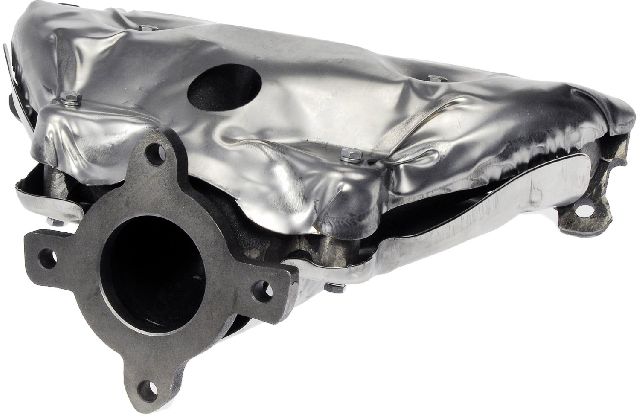
✅ What actually fixed it The owner discovered a significant crack in the exhaust manifold, which is integrated with the catalytic converter. Replacing the entire manifold/converter assembly resolved the code. The crack was acting as an exhaust leak, allowing unmetered oxygen to enter the exhaust stream and skewing the O2 sensor readings.
OEM Part Supersession History
68066674AA, 68066674AB→68066674AC— Standard part revision and improvement by the manufacturer.
Heads up: While the parts may physically interchange, using the incorrect revision for the vehicle's build date could potentially cause issues with fitment or sensor compatibility. Always verify the part number with the vehicle's VIN.
Model Year Variations Within This Range
- 2007-2017: Vehicles sold in California or other states following CARB emissions standards may be equipped with a PZEV (Partial Zero Emission Vehicle) rated catalytic converter, which has a higher loading of precious metals and is more expensive than the standard Federal (ULEV - Ultra Low Emission Vehicle) converter. While they function similarly, they are not interchangeable and using a Federal-spec converter on a PZEV vehicle will likely result in a recurring P0422 code and failed emissions test.
Diagnostic Flowchart
Other Known Issues on This Vehicle
Issues unrelated to this code that are worth knowing about as an owner of this generation:
- Premature CVT Transmission Failure 🔴 High — Common in earlier models (2007-2014), can occur at various mileages. Symptoms include whining, overheating warnings, and loss of acceleration. (Ref: A class-action lawsuit was filed concerning the Jatco JF011E CVT used in these vehicles.)
- Water Leaks into Cabin 🟠 Medium — Widespread across many model years, especially those with a sunroof. Water often leaks through the dome light or A-pillars due to clogged sunroof drains.
- Premature Failure of Lower Ball Joints / Control Arms 🟠 Medium — A very common issue, often requiring replacement every 30,000-40,000 miles. Symptoms include clunking noises and loose steering.
- Failing Throttle Body 🟠 Medium — Common issue causing rough idle, RPM dips, and poor acceleration. Cleaning may provide a temporary fix, but replacement is often necessary.
- Wireless Control Module (WCM) Failure 🔴 High — Can cause a no-start condition where the engine will not crank. The security light may also flash.
Used vs. New Parts: Buying Guide for This Vehicle
When a used part is the smart pick: A used OEM catalytic converter/manifold assembly from a low-mileage, rear-ended donor vehicle can be a cost-effective alternative to a new OEM part. It is generally a better option than a cheap, new aftermarket unit. This only makes sense if the donor vehicle's history is known and mileage is under 80,000 miles.
Donor-vehicle mileage cap: roughly under 80000 miles for the part to have meaningful remaining life.
What to inspect on the donor part:
- Check for any visible cracks on the manifold, especially around the welds and flanges.
- Look down the inlet and outlet; the internal honeycomb structure should be intact, not melted, clogged, or broken apart.
- Ensure the donor vehicle was not scrapped due to engine failure (like a misfire or head gasket leak) which could have contaminated the converter.
- Verify if the donor was a Federal or California emissions vehicle to match your own.
OEM-only on this vehicle (don't cheap out):
- Catalytic Converter: Many mechanics strongly advise using OEM (Mopar) converters for this vehicle. Aftermarket converters, especially budget brands, often lack the necessary amount of precious metals to satisfy the PCM's strict efficiency monitoring, leading to the P0422 code returning within a year or even a few months.
Aftermarket brands forum-validated for this vehicle:
- O2 Sensors: NTK and Denso are widely regarded as OEM suppliers or equivalents for Chrysler/Jeep vehicles. Using these brands is a safe bet to avoid compatibility issues.
- Catalytic Converters (with caution): If OEM is not an option, brands like MagnaFlow and Walker are considered higher-quality aftermarket choices, but success can still be mixed depending on the vehicle's specific calibration.
Brands owners have reported issues with on this vehicle:
- O2 Sensors: Some owners report mixed results and premature failures with Bosch sensors on this platform.
- Catalytic Converters: Unbranded, low-cost converters found on sites like eBay or Amazon are very likely to fail quickly and should be avoided.
Real Owner Stories
Aggregated from forums and TSBs cited above. Mileages and costs reflect what owners reported in those sources.
2014 Jeep Patriot Latitude 2.4
Symptoms: Check engine light on (P0420, P2015), a little lag when accelerating.
What fixed it: Hairline cracks in the maniverter were welded.
Source hint: reddit.com - "Please help?! catalytic converter problems.. maybe."
2017 Jeep Patriot Latitude 4WD 2.4L — 157000 miles
Symptoms: Check engine light came on while driving.
What fixed it: Not specified (thread cut off), but context indicates high-mileage converter failure is the most frequent culprit.
Source hint: reddit.com/r/JeepPatriot
Related OBD-II Codes
Frequently Asked Questions
My 2014 Jeep Patriot 2.4L has a P0422 code and a P2015 code; could they be related?
I'm seeing a P0422 on my Patriot with over 100,000 miles. Is this a common failure point?
Can I just replace the O2 sensors to fix the P0422 code on my Jeep Patriot?
Does the Dodge Caliber or Jeep Compass suffer from the same P0422 issues as the Patriot?
Is there a specific part of the exhaust I should check for leaks on my Patriot?
Could my Patriot's engine misfire be the reason my catalytic converter failed?
Helpful Videos

Used OEM Parts in Stock
New Aftermarket Parts Available

The information in this article is provided for general reference and educational purposes only. Vehicle specifications, procedures, and part compatibility can vary by production date, trim level, and region. Always consult your vehicle's factory service manual and verify part numbers before purchasing or performing repairs. Safety-critical components such as airbags, seat belts, and braking systems should be installed by a qualified professional.
- Jeep Patriot:
- 🧭 Diagnostic Flowchart
- 🎬 Helpful Videos
- 🛍️ Shop This Part
- What's Unique About the 2007-2017 Jeep Patriot
- Symptoms You May Notice
- Most Likely Causes
- Diagnosis Steps
- Parts You'll Likely Need
- Related Codes That Often Appear With This One
- Mechanic-Grade Diagnostic Values
- Wiring & Ground Locations
- Real Owner Repair Stories
- OEM Part Supersession History
- Model Year Variations Within This Range
- Other Known Issues on This Vehicle
- Used vs. New Parts: Buying Guide for This Vehicle
- Real Owner Stories
- 2014 Jeep Patriot Latitude 2.4
- 2017 Jeep Patriot Latitude 4WD 2.4L — 157000 miles
- Related OBD-II Codes
- Frequently Asked Questions
- 🎟️ Get 5% Off