

P0430 on 2008-2014 Mercedes-Benz C-Class: Catalyst Efficiency Bank 2 Causes and Fixes
P0430 on a W204 C-Class with the M272 engine most often means the Bank 2 (driver's side) catalytic converter has failed. While an O2 sensor or exhaust leak is possible, the converter itself is the most common failure point. Expect a high repair cost, from several hundred dollars for an aftermarket part to over a thousand for OEM. Before replacing, it is critical to rule out underlying issues like misfires or intake manifold problems that contaminate new converters.
- P0430 on a 2008-2014 C-Class almost always points to a failed catalytic converter on the driver's side (Bank 2).
- Before replacing the expensive converter, rule out a faulty downstream O2 sensor and check for exhaust leaks.
- Always diagnose and fix any engine misfire (P030x) or fuel mixture (P017x) codes before replacing the catalytic converter, as these issues will destroy the new part.
- Diagnosis involves using a scan tool to watch live O2 sensor data; if the downstream sensor mimics the upstream sensor, the converter is bad.
- This is an expensive repair, but necessary to pass emissions testing and prevent potential long-term engine issues.
What's Unique About the 2008-2014 Mercedes-Benz C-Class
For the W204 C-Class with the M272 engine, the P0430 code (and its Bank 1 counterpart, P0420) has a strong reputation for accurately pointing to a failed catalytic converter. While on many other vehicles a technician might suspect an oxygen sensor first, owner forums for this specific Mercedes model, like MBWorld.org, are filled with threads concluding that the converter is indeed the most frequent culprit. Underlying issues endemic to the M272, like failing ignition coils or a faulty intake manifold causing a rich condition, can lead to premature failure of these converters by sending unburned fuel or oil into the hot exhaust, effectively poisoning the catalyst material.
Symptoms You May Notice
- Check Engine Light is on
- Reduced engine power and sluggish acceleration.
- A sulfur or "rotten egg" smell from the exhaust.
- Rattling noises from underneath the vehicle, indicating the internal structure of the converter has broken apart.
- Increased fuel consumption.
- Failure to pass a vehicle emissions test.
- In some cases, no noticeable symptoms other than the Check Engine Light.
- Replacing the oxygen sensors without performing proper diagnosis. While O2 sensors can fail, on this platform the catalytic converter itself is the more likely culprit for a P0430 code. Many owners on forums report replacing the O2 sensor only to have the code return.
Most Likely Causes
- Failed Catalytic Converter (Bank 2) 🔴 High Probability → Shop Catalytic Converter Catalytic converters have a finite lifespan. On the M272, they are frequently damaged by unresolved engine issues like misfires (bad coils/plugs), intake manifold failures causing rich conditions, or oil consumption from a failing PCV system, all of which are known issues for this engine.
How to confirm: Use a scan tool to monitor live data from the upstream (Sensor 1) and downstream (Sensor 2) O2 sensors on Bank 2. If the downstream sensor's voltage fluctuates rapidly, mirroring the upstream sensor, the converter has failed. 🎬 Watch: A professional guide to diagnosing catalytic converters. An infrared thermometer should show the converter's outlet is at least 100°F hotter than the inlet; if not, it's inactive.
Typical fix: Replace the Bank 2 catalytic converter. It is critical to resolve any other engine issues (like misfires or rich/lean conditions) before replacing the converter, or the new one will also fail prematurely.
Est. part cost: $400-$2000+ - Faulty Downstream Oxygen (O2) Sensor 🟡 Medium Probability → Shop Oxygen Sensor O2 sensors are wear items and can fail over time, sending incorrect readings to the ECU that mimic a bad catalytic converter. However, forum consensus for the W204 is that this is a common misdiagnosis, and the converter is more often the true cause.
How to confirm: The best method is to swap the downstream O2 sensors between Bank 1 and Bank 2. Clear the codes and drive the vehicle. If the code changes to P0420 (Bank 1), the O2 sensor is faulty. If the P0430 code returns, the sensor is likely not the problem. Visually inspect the sensor for contamination.
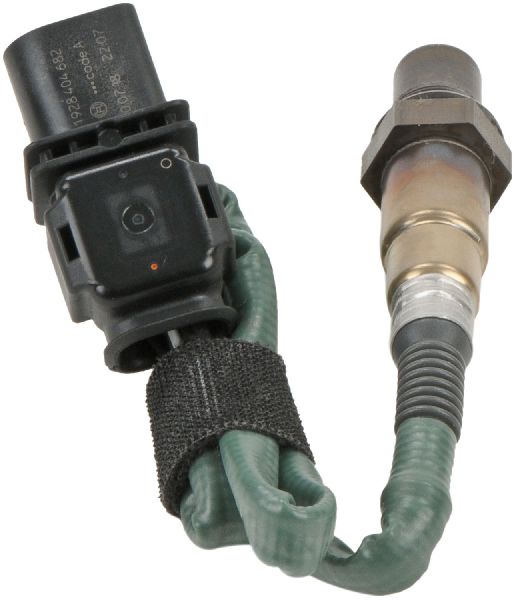
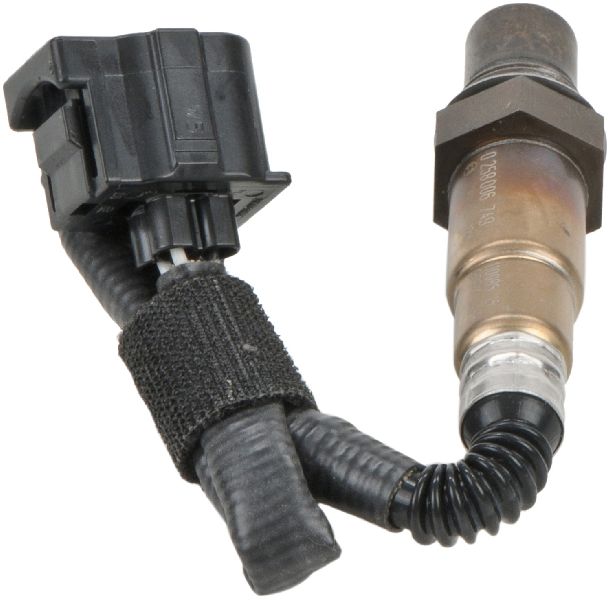
Typical fix: Replace the Bank 2 downstream oxygen sensor. Bosch is the OEM supplier. 🎬 See this walkthrough for replacing your W204 oxygen sensors.
Est. part cost: $80-$200 - Exhaust System Leak ⚪ Low Probability Exhaust components can develop leaks from rust or failed gaskets over time, especially at the manifold or flange connections.
How to confirm: Visually inspect the exhaust system from the engine manifold to the catalytic converter on Bank 2 for any cracks, holes, or black soot marks indicating a leak. A shop can perform a smoke test to find hard-to-see leaks. An audible ticking or hissing sound from the exhaust manifold area is a common sign.
Typical fix: Repair the leak by replacing the damaged pipe section or gasket.
Est. part cost: $20-$200
Rare But Worth Checking
- Engine Misfires or Fuel Mixture Issues: While not the direct cause of the code, unresolved misfires or a persistent rich/lean condition will destroy a new catalytic converter quickly. Always check for and resolve codes like P0300, P0304-P0306, P0172, or P0175 before replacing the converter. On the M272, this can stem from bad coils, plugs, or a faulty intake manifold.
- Engine Control Unit (ECU) Fault: This is extremely rare, but a software glitch or hardware failure in the ECU can theoretically cause a false P0430 code. Some emissions-related ECU software updates exist (e.g., TSB LI49.10-P-052333), which a dealer can check for. This should only be considered after all other possibilities have been exhaustively ruled out.
Diagnosis Steps
- Scan for all stored OBD-II codes. If any other codes are present, especially for misfires (P030x) or fuel trim (P017x), diagnose and repair those first.
- Perform a visual inspection of the Bank 2 (driver's side) exhaust system. Look for any obvious cracks, rust holes, or loose connections between the engine and the downstream O2 sensor. Check for black soot trails 🎬 Watch: How to troubleshoot and fix the P0430 code. indicating a leak.
- With a capable scan tool, view the live data stream for the Bank 2 oxygen sensors (Sensor 1 and Sensor 2).
- Observe the voltage of the upstream sensor (Sensor 1). It should fluctuate rapidly between approximately 0.1 and 0.9 volts.
- Observe the voltage of the downstream sensor (Sensor 2). On a healthy converter, this reading should be relatively stable and steady, typically between 0.5 and 0.8 volts.
- If the downstream sensor's voltage is switching rapidly and mirroring the pattern of the upstream sensor, the catalytic converter is not storing oxygen and has failed.
- If the downstream sensor voltage is stuck high or low, or not responding, the sensor itself may be faulty.
- If possible, use an infrared thermometer to measure the temperature of the pipe entering the catalytic converter and the pipe exiting it. The outlet should be at least 100°F (38°C) hotter than the inlet after the engine is fully warmed up. If the temperatures are similar or the outlet is cooler, the converter is not working.
- If diagnosis is still unclear, consider swapping the downstream O2 sensors between Bank 1 and Bank 2 to see if the fault code follows the sensor.
Parts You'll Likely Need
- Bank 2 Catalytic Converter
(OEM #A204490XXXX (Specific number varies by model year and 4MATIC option, e.g., A2044907636))— This is the most common component to fail and trigger a P0430 code on this vehicle.
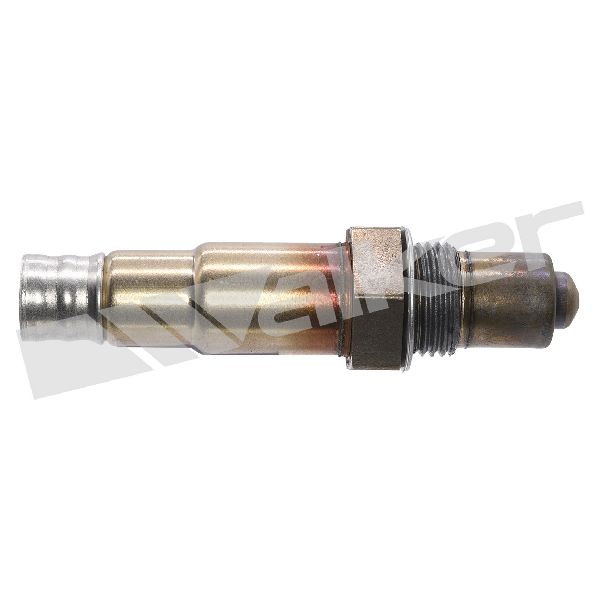
Trusted brands: Walker Exhaust, MagnaFlow, Bosal, Genuine Mercedes-Benz
OEM price range: $1200-$2000+
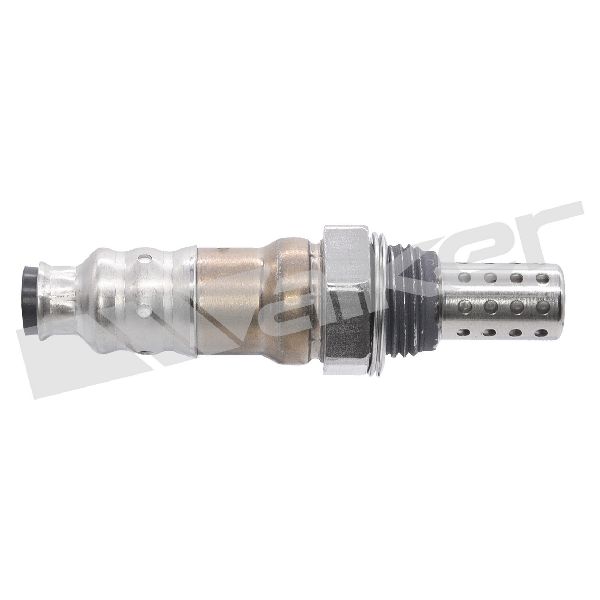
Aftermarket price range: $400-$900 - Downstream Oxygen Sensor (Bank 2, Sensor 2)
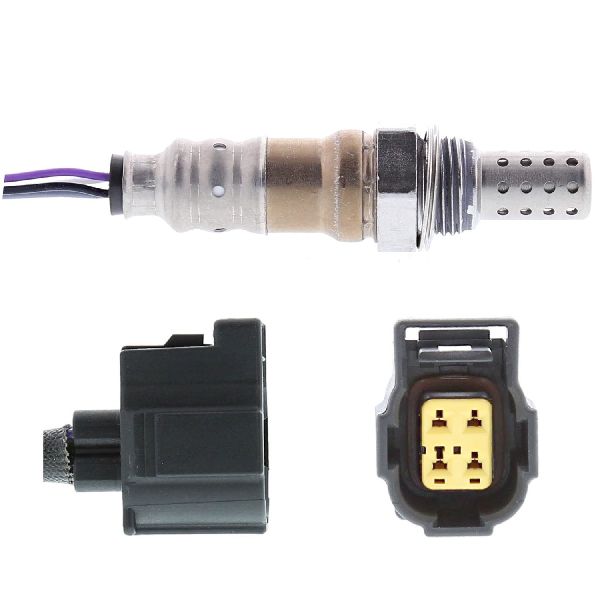
(OEM #Bosch 16272 (or Mercedes OEM A0035428418))— This sensor is the second most likely cause. It can fail and provide false readings that mimic a bad converter. Bosch is the OEM manufacturer.
Trusted brands: Bosch, Denso, NTK
OEM price range: $150-$250
Aftermarket price range: $80-$150 - Exhaust Gaskets — These should always be replaced when exhaust components are removed and reinstalled to prevent leaks.
Trusted brands: Victor Reinz, Elring, Fel-Pro
OEM price range: $15-$30
Aftermarket price range: $10-$20
Related Codes That Often Appear With This One
- P0420 — This is the same efficiency code but for Bank 1 (passenger side). Seeing both P0420 and P0430 simultaneously suggests a systemic issue affecting both banks, such as poor fuel quality, or that both converters have reached the end of their service life.
- P0300, P0304, P0305, P0306 — These are misfire codes for Bank 2 cylinders (4, 5, and 6). Unburned fuel from misfires enters the exhaust and superheats the catalytic converter, destroying it. The misfire must be fixed before replacing the converter.
Technical Service Bulletins (TSBs) & Recalls
- S-B-03.30/08i - Details the M272 balance shaft sprocket issue, a root cause of major engine problems that can precede emissions system failures.
- LI49.10-P-052333 - An example of an emissions-related ECU software update that may be available for these models.
Platform-Specific Known Issues
- Owner Repair Story: Misfire leads to P0430: An owner on MBWorld.org forums with a GLK350 (shared M272 engine) reported getting a P0430 code shortly after fixing a misfire caused by a bad ignition coil on cylinder 5. The unburned fuel from the brief misfire period was enough to contaminate the Bank 2 catalytic converter, requiring its replacement even after the misfire was resolved. This highlights the importance of addressing misfires immediately to prevent costly collateral damage.
Mechanic-Grade Diagnostic Values
- Downstream O2 Sensor (Bank 2 Sensor 2) Voltage at Idle — expected: A stable voltage reading between 0.4V and 0.8V.. Failure: Voltage fluctuates rapidly, mimicking the upstream sensor's 0.1V-0.9V switching pattern. This indicates the catalyst is no longer storing oxygen.
- Short-Term and Long-Term Fuel Trims (Bank 2) — expected: Values should ideally be within +/- 5%.. Failure: Consistently high positive values (e.g., > +10%) suggest a vacuum leak, while high negative values (e.g., < -10%) suggest a rich condition (e.g., leaking injector). Either condition can damage the catalytic converter over time.
Hidden / Shadow Codes Worth Checking
- P043000: This is the Mercedes-specific version of the generic P0430 code. The '00' suffix indicates 'The efficiency of the catalytic converter is not sufficient.' It provides no extra detail over the generic code but confirms the fault in Mercedes diagnostic software. (see via Mercedes-Benz Xentry/DAS diagnostic system.)
Scan Tool Commands That Help
- Xentry Diagnosis: Update engine control unit software — If a Technical Service Bulletin (TSB) exists for the vehicle's VIN that addresses emissions control logic. An outdated ECU software version can have overly sensitive parameters for the catalyst monitor, leading to false P0430 codes. A dealer or specialist shop can check for and perform available updates.
- Xentry Diagnosis: Guided Test: Check of function of catalytic converter — This is the official guided diagnostic procedure within the Mercedes software. It automates the monitoring of O2 sensor signals and other parameters under specific engine conditions to provide a pass/fail result for the catalytic converter, eliminating guesswork.
Wiring & Ground Locations
- Main Engine Ground Strap — Typically a braided copper cable running from the transmission bell housing area on the driver's side to a mounting point on the vehicle's chassis.. A corroded or loose main engine ground can cause a host of intermittent electrical issues, including erratic sensor readings. While not a direct cause of P0430, an unstable ground can affect the O2 sensor signals, potentially leading to an incorrect diagnosis. It should be inspected for corrosion and tightness as part of any electrical diagnosis.
Real Owner Repair Stories
- MBWorld.org & Reddit r/MechanicAdvice general consensus (2008-2012 Mercedes-Benz C300 (W204) with M272 engine, typically over 100,000 miles.) — Persistent Check Engine Light with only code P0430 stored. No other drivability issues.
❌ Tried (didn't work) Replacing the Bank 2 downstream (post-cat) oxygen sensor. The P0430 code returned within a week of driving., Using a fuel system or catalytic converter cleaner additive. The code cleared temporarily but returned.
✅ What actually fixed it Replacing the Bank 2 (driver's side) catalytic converter assembly. On this specific platform, when P0430 appears alone without any accompanying fuel trim, misfire, or O2 sensor circuit codes, the converter itself has almost always reached the end of its service life.
When the Usual Fixes Don't Work
- A prevalent piece of advice for P0430 on many vehicles is to replace the oxygen sensors first, as they are cheaper and a common failure point. However, for the M272-equipped W204 C-Class, experienced technicians and owners on forums frequently report this is a false economy. A master technician on Reddit noted that it takes a *good* O2 sensor to correctly identify a bad catalytic converter. If the O2 sensor itself were faulty, it would typically set its own performance or circuit code. When P0430 appears as the sole code, and no exhaust leaks are present, the evidence overwhelmingly points to the catalytic converter itself being the true culprit.
Model Year Variations Within This Range
- 2008-2011 vs 2012-2014: The W204 C-Class received a significant facelift in 2012. While the 3.0L M272 engine remained, the C350 received the newer M276 engine. For the C300, this means there could be differences in ECU software versions between pre-facelift (2008-2011) and facelift (2012-2014) models. When investigating ECU-related solutions or software updates for P0430, it is critical to use the vehicle's VIN to ensure compatibility, as a software update for one period may not apply to the other.
Diagnostic Flowchart
Other Known Issues on This Vehicle
Issues unrelated to this code that are worth knowing about as an owner of this generation:
- Balance Shaft Sprocket Wear (Early Engines) 🔴 High — Common on M272 engines manufactured before ~2008 (Engine No. up to 2729..30 468993). The gear made of softer metal wears prematurely, causing timing to jump. (Ref: Mercedes Service Bulletin S-B-03.30/08i describes the issue and repair.)
- Intake Manifold Lever/Flap Failure 🟠 Medium — Very common around 80,000+ miles. A plastic lever on the variable intake manifold breaks, causing a loss of power and setting codes like P2004, P2005, or P2006. (Ref: TSB LI49.10-P-052142 addresses this issue.)
- PCV System / Oil Separator Leaks 🟡 Low — The oil separator cover and associated hoses become brittle and crack, leading to vacuum leaks, rough idle, and oil consumption. Often presents as a burning oil smell as oil drips onto the hot exhaust.
Used vs. New Parts: Buying Guide for This Vehicle
When a used part is the smart pick: A used part is almost never a smart choice for this repair. The catalytic converter is a wear item, and a used one from a salvage yard has an unknown history and remaining lifespan. It may fail soon after installation, wasting significant labor costs.
Donor-vehicle mileage cap: roughly under 40000 miles for the part to have meaningful remaining life.
What to inspect on the donor part:
- Verify the donor vehicle's mileage is extremely low.
- Ensure the part is from a vehicle that was not salvaged due to engine fire, flood, or a major collision that could have damaged the exhaust.
- Check for any visible external damage, cracks, or heavy corrosion.
- Ask if the part comes with any warranty (highly unlikely but worth asking).
OEM-only on this vehicle (don't cheap out):
- Catalytic Converter: Strongly recommended to use Genuine Mercedes-Benz or a high-quality, OEM-equivalent brand like MagnaFlow or Walker that specifies CARB or EPA compliance. Cheap, unbranded 'universal' converters often lack the necessary precious metal loading to satisfy the M272's sensitive catalyst monitor, leading to the P0430 code returning within a few hundred miles.
Aftermarket brands forum-validated for this vehicle:
- Oxygen Sensors: Bosch is the original equipment manufacturer (OEM) for Mercedes-Benz. Buying a Bosch-branded sensor from a reputable auto parts store is identical to the dealer part and is a reliable, cost-effective choice. Denso and NTK are also highly regarded alternatives.
Brands owners have reported issues with on this vehicle:
- Unbranded, 'white-box' oxygen sensors and catalytic converters from online marketplaces. These parts are notorious for poor quality control, incorrect fitment, and causing recurring check engine lights.
Real Owner Stories
Aggregated from forums and TSBs cited above. Mileages and costs reflect what owners reported in those sources.
2009 Mercedes-Benz C300 M272
Symptoms: Check engine light with code P0430. Discussion focused on the high cost of California-certified replacements and whether the O2 sensor was the culprit.
What fixed it: Forum members confirmed the catalytic converter was the likely failure rather than the O2 sensor.
Source hint: MBWorld.org - Thread 'Need new catalytic converter? need advice'
2010 Mercedes-Benz GLK350 M272
Symptoms: P0430 code appeared immediately after replacing an ignition coil on cylinder 5 to fix a misfire.
What fixed it: Replacement of the Bank 2 catalytic converter was required because unburned fuel from the misfire contaminated the catalyst.
Source hint: MBWorld.org - Thread 'PO 430 Code, when it rains it pours...'
Related OBD-II Codes
Frequently Asked Questions
Is there a TSB for the M272 engine that might be related to my P0430 code?
My 2009 C300 has a P0430 code; should I just replace the O2 sensors first?
Can a misfire on my Mercedes V6 cause the P0430 code?
What specific O2 sensor brand should I use for my C-Class?
Are there other engine failures on the M272 that lead to catalytic converter damage?
How can I tell if the Bank 2 converter is actually bad using a thermometer?
Helpful Videos
We Have This Part in Stock


The information in this article is provided for general reference and educational purposes only. Vehicle specifications, procedures, and part compatibility can vary by production date, trim level, and region. Always consult your vehicle's factory service manual and verify part numbers before purchasing or performing repairs. Safety-critical components such as airbags, seat belts, and braking systems should be installed by a qualified professional.
- Mercedes-Benz C-Class:
- 🧭 Diagnostic Flowchart
- 🎬 Helpful Videos
- 🛍️ Shop This Part
- What's Unique About the 2008-2014 Mercedes-Benz C-Class
- Symptoms You May Notice
- Most Likely Causes
- Rare But Worth Checking
- Diagnosis Steps
- Parts You'll Likely Need
- Related Codes That Often Appear With This One
- Technical Service Bulletins (TSBs) & Recalls
- Platform-Specific Known Issues
- Mechanic-Grade Diagnostic Values
- Hidden / Shadow Codes Worth Checking
- Scan Tool Commands That Help
- Wiring & Ground Locations
- Real Owner Repair Stories
- When the Usual Fixes Don't Work
- Model Year Variations Within This Range
- Other Known Issues on This Vehicle
- Used vs. New Parts: Buying Guide for This Vehicle
- Real Owner Stories
- 2009 Mercedes-Benz C300 M272
- 2010 Mercedes-Benz GLK350 M272
- Related OBD-II Codes
- Frequently Asked Questions
- 🎟️ Get 5% Off