

P0440 on 2001-2007 Toyota Sequoia: EVAP System Malfunction Causes and Fixes
On a 2001-2007 Toyota Sequoia, code P0440 is most often caused by a loose or faulty gas cap. If that's not the issue, the charcoal canister assembly or an associated vacuum switching valve (VSV) is the next most likely culprit. A new gas cap is under $30, while a canister can be several hundred dollars.
- Start with the simplest fix: check and tighten your gas cap. If it's old, replace it for under $30.
- If the gas cap isn't the problem, the issue is most likely the charcoal canister assembly or one of its valves, located above the spare tire.
- A smoke test is the fastest way to find the exact location of a leak in the EVAP system.
- You can save hundreds of dollars by replacing just the failed vacuum switching valve (VSV) on the canister instead of the entire assembly.
- This code does not affect how the vehicle drives, but it will cause you to fail an emissions inspection.
What's Unique About the 2001-2007 Toyota Sequoia
The first-generation Toyota Sequoia is known for the durability of its core powertrain, but its EVAP components, particularly the charcoal canister located above the spare tire, are a common failure point as the vehicle ages. The plastic canister can develop cracks, and the associated vacuum switching valves (VSVs) can fail, often getting stuck. A popular and cost-saving DIY repair involves replacing a failed valve on the canister with one intended for a Toyota Camry (Part #90910-12271), which is sold separately, unlike the Sequoia's which is typically sold with the entire canister assembly.
Symptoms You May Notice
- Check Engine Light is on.
- A faint to strong fuel smell, particularly around the rear of the vehicle near the gas tank or canister.
- Difficulty fueling (the gas pump nozzle clicks off prematurely).
- Gurgling sound from the gas cap area after shutting off the engine, as reported by some owners.
- Replacing the oxygen (O2) sensors. O2 sensors are not part of the EVAP system and will not cause a P0440 code.
- Replacing the purge valve in the engine bay without testing it first. While it can fail, the canister-mounted valves and the gas cap are more common culprits on this specific vehicle.
Most Likely Causes
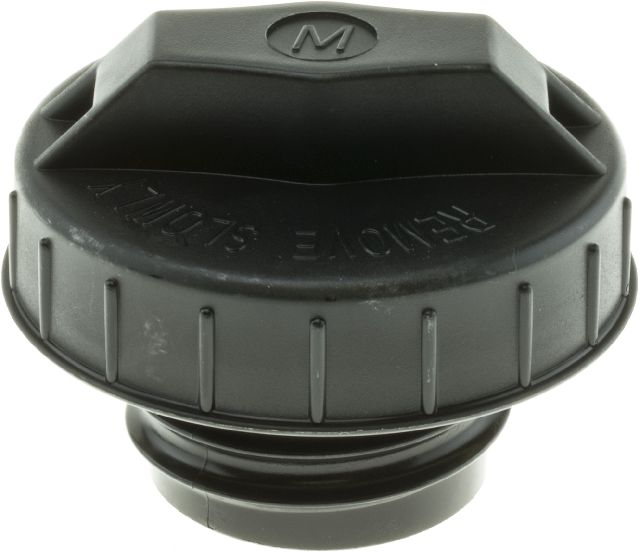
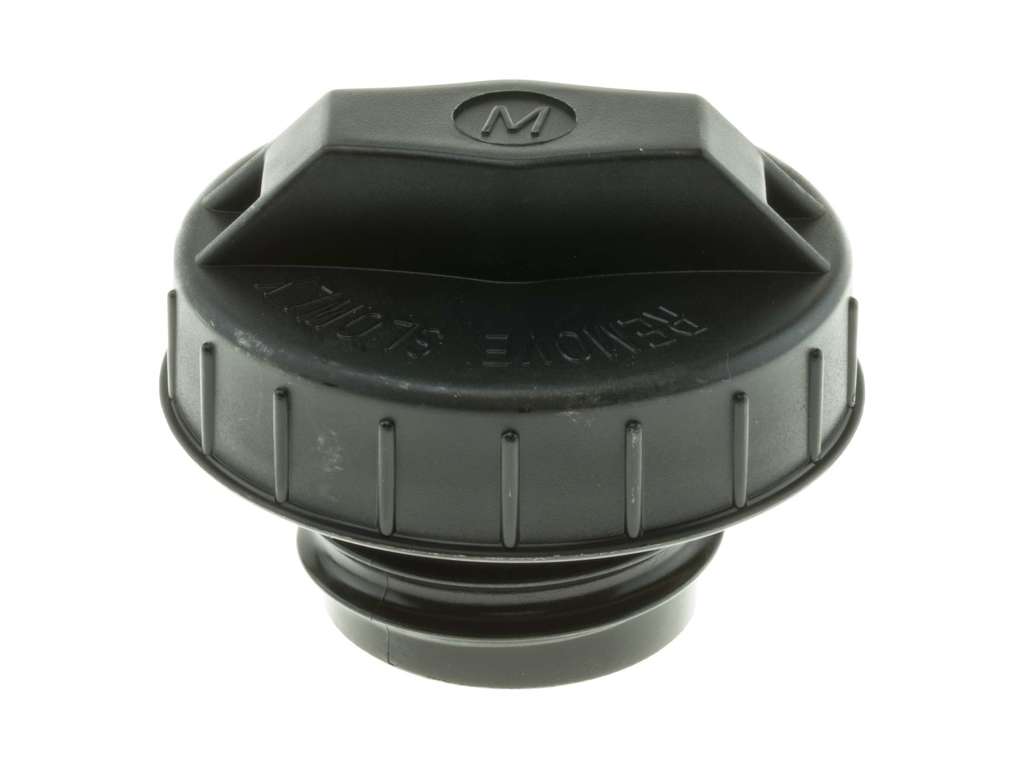
- Loose, Damaged, or Incorrect Gas Cap 🔴 High Probability → Shop Fuel Tank Cap The gas cap seal is made of rubber that degrades over 15-20 years, becoming hard and brittle, leading to a poor seal. It's also easy to forget to tighten it properly after refueling. Using a non-OEM cap can also cause issues.
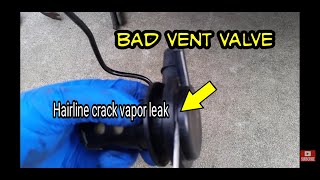
How to confirm: Inspect the gas cap for cracks or a worn, brittle seal. Ensure it is tightened until it clicks at least once. 🎬 Watch: How a bad vent valve causes the P0440 code. If the cap feels loose, the seal is damaged, or it's a cheap aftermarket version, it's the likely cause.
Typical fix: Replace the gas cap with a new OEM or high-quality aftermarket equivalent. This is the cheapest and most common fix.
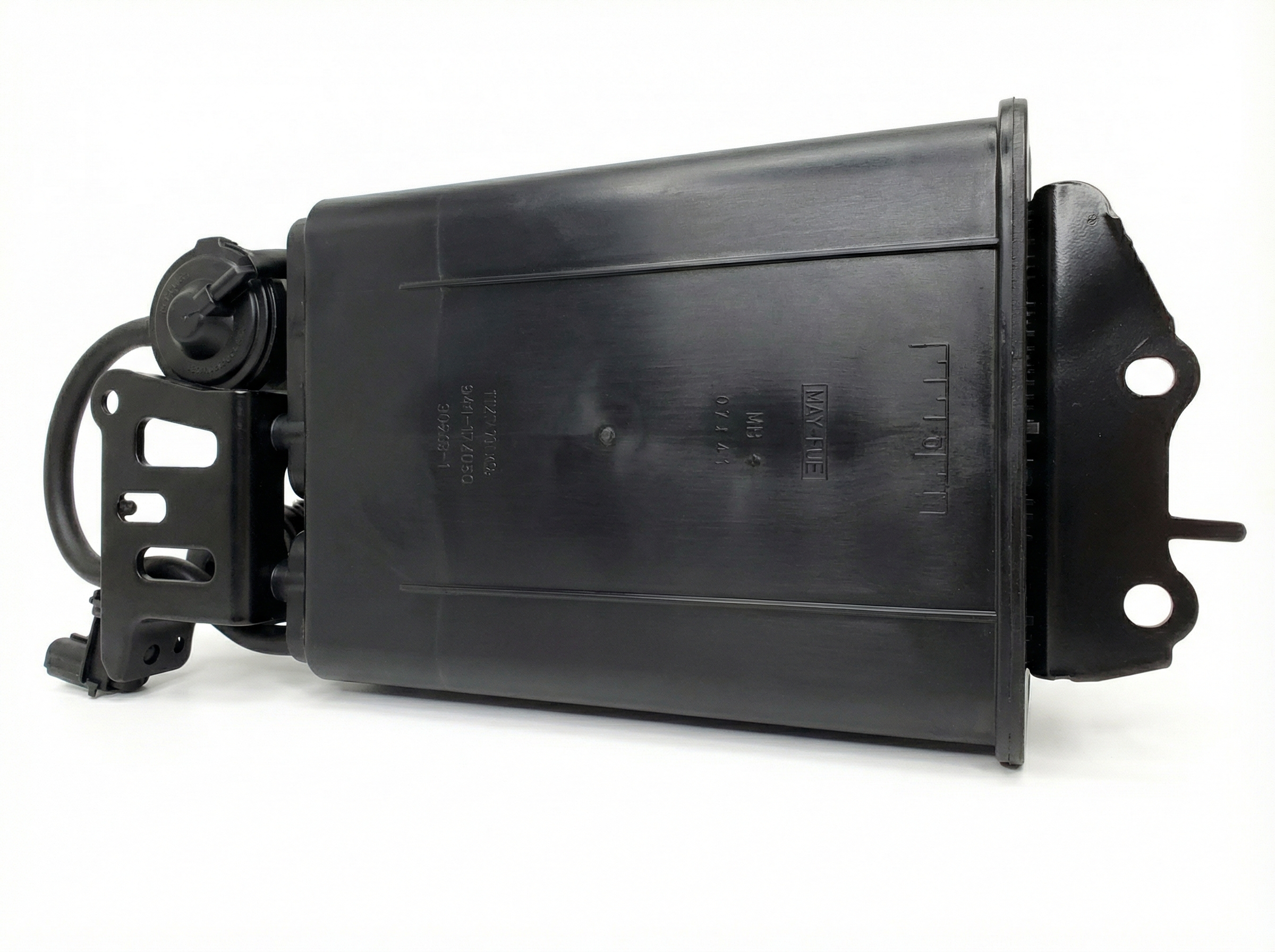
Est. part cost: $15-$40 - Failed Charcoal Canister Assembly 🟡 Medium Probability → Shop Vapor Canister Located above the spare tire, the canister is exposed to road debris and moisture. The plastic housing can develop hairline cracks with age, and the internal valves are a known failure point on these vehicles.
How to confirm: Visually inspect the canister for cracks or physical damage. A professional smoke test is the definitive way to confirm a leak from the canister body or its connections. Overfilling the gas tank repeatedly can saturate the charcoal, causing blockage and failure.
Typical fix: Replace the entire charcoal canister assembly. 🎬 See this walkthrough on replacing the 1st Gen Sequoia canister. This is a common point of failure and often comes with new valves.
Est. part cost: $250-$450 - Failed Vacuum Switching Valve (VSV) 🟡 Medium Probability The valves that control vapor flow, particularly the one on the charcoal canister, can get stuck open or closed due to age and corrosion. This is a very common failure point.
How to confirm: The valve can be tested with a 12V power source to see if it clicks open and closed; a failed valve will not click. You can also test for electrical resistance across its terminals; a healthy valve should have a resistance of around 30-40 ohms. A mechanical test involves applying vacuum with a hand pump; the valve should hold vacuum when de-energized and release it when 12V is applied.
Typical fix: Replace the faulty VSV. On the Sequoia, Toyota often sells this only with the full canister assembly. A common workaround is to purchase the valve for a Toyota Camry or Sienna of a similar year (Part #90910-12271) and adapt it, which is a direct fit in many cases.
Est. part cost: $40-$120 - Cracked or Disconnected EVAP Hoses ⚪ Low Probability Rubber hoses become brittle and crack over 15-20+ years of heat cycles and exposure to the elements, especially at connection points to the canister and purge valve.
How to confirm: Visually inspect all accessible EVAP hoses running from the fuel tank to the canister and up to the engine bay for cracks, splits, or loose connections. A smoke test will quickly reveal the source of any hose leak.
Typical fix: Replace the damaged section of hose with new, correctly-sized vacuum tubing.
Est. part cost: $5-$20
Rare But Worth Checking
- Faulty Fuel Tank Vent Valve: → Shop Fuel Tank A crack in the fuel tank vent valve (also known as a rollover valve), located on top of the fuel tank, can cause a persistent P0440 code. This requires dropping the fuel tank to access and replace.
- Cracked Fuel Filler Neck: → Shop Fuel Filler Neck Rust or physical damage to the metal pipe leading from the gas cap to the fuel tank can cause a leak that is difficult to spot. This is more common on vehicles with significant frame rust.
Diagnosis Steps
- Check the gas cap. Remove it, inspect the seal for damage, and retighten it until it clicks. Clear the code and drive for a few days to see if it returns. This is the most common and cheapest fix.
- If the code returns, perform a thorough visual inspection of all accessible EVAP hoses and lines, especially around the charcoal canister (above the spare tire) and in the engine bay. Look for obvious cracks, damage, or loose connections.
- Inspect the charcoal canister itself for any visible cracks or damage. Pay close attention to the plastic housing.
- Test the Vacuum Switching Valves (VSVs). The most suspect valve is located on the canister. Apply 12V power to its terminals; a healthy valve will make an audible click. 🎬 Watch: How to test the VSV solenoid for a click. If it doesn't, it has likely failed. You can also measure resistance, which should be in the 30-40 ohm range.
- If no obvious faults are found, the most effective next step is a professional smoke test. A machine injects harmless, visible smoke into the EVAP system via the service port. Any leaks will be revealed by smoke exiting the cracked hose, canister, or seal.
- Based on the smoke test results, replace the leaking component. This could be the canister, a hose, a valve, or the gas cap.
Parts You'll Likely Need
- Fuel Cap
(OEM #77300-47010)— This is the most frequent cause of P0440. The seal wears out over time, causing a leak that the system detects. Always try this first.
Trusted brands: Toyota (OEM), Stant
OEM price range: $25-$40
Aftermarket price range: $15-$25 - Charcoal Canister Assembly
(OEM #77740-0C030 (for 2004-2007 models, check VIN for earlier years))— The canister housing can crack, or the integrated valves can fail, making this the second most common fix after the gas cap for resolving persistent P0440, P0441, and P0446 codes.
Trusted brands: Toyota (OEM), Dorman
OEM price range: $370-$500
Aftermarket price range: $200-$350 - Canister Vent / Vacuum Switching Valve (VSV)
(OEM #90910-12271)— This valve, often mounted on the canister, frequently fails by getting stuck. As a workaround to buying the whole canister, many owners buy this valve (listed for a Camry/Sienna) and replace only the failed part.
Trusted brands: Toyota (OEM), Dorman
OEM price range: $80-$120
Aftermarket price range: $30-$60
Related Codes That Often Appear With This One
- P0441 — Indicates incorrect purge flow, often caused by a stuck VSV or a blockage in the system, which are common root causes for P0440 as well.
- P0446 — Points to a fault in the EVAP vent control circuit. This code frequently appears with P0440 and P0441 when the charcoal canister or its associated valves are failing.
Technical Service Bulletins (TSBs) & Recalls
- While no TSB is specific to P0440, Toyota issued a Limited Service Campaign (LSC HOF) and Warranty Enhancement Programs (ZH8, ZH9) for frame corrosion, which can impact EVAP component mounting and integrity.
Platform-Specific Known Issues
- Frame rust is a significant issue on first-generation Sequoias, which can compromise the mounting points for EVAP system components or even damage the fuel filler neck. A thorough underbody inspection is crucial.
- A known cost-saving hack is to use the separately-sold VSV from a Toyota Camry or Sienna (part #90910-12271 or similar) to replace a failed valve on the Sequoia's canister, avoiding the high cost of a full canister assembly. This is widely documented in owner forums.
Mechanic-Grade Diagnostic Values
- Vacuum Switching Valve (VSV) Electrical Resistance — expected: 15 to 40 Ohms at room temperature. The most commonly cited range for the specific VSV used on the canister is 30-40 Ohms.. Failure: A reading of infinite resistance (open circuit) or zero resistance (short circuit) indicates a failed valve coil.
- Vacuum Switching Valve (VSV) Mechanical Seal Test — expected: With no power applied, the valve should be closed and hold vacuum when tested with a hand-held vacuum pump.. Failure: If the valve fails to hold vacuum when de-energized, it is stuck open mechanically and must be replaced.
- Vacuum Switching Valve (VSV) Actuation Test — expected: When 12V power is applied to the terminals, the valve should make an audible 'click' and vacuum applied to the port should immediately drop to zero.. Failure: No click, or failure for the vacuum to release, indicates the valve is seized internally.
Hidden / Shadow Codes Worth Checking
- Mode $06 Data: Mode $06 is not a trouble code, but a diagnostic mode that displays the results of the ECU's self-tests for non-continuous monitors, including the EVAP system leak test. A 'fail' result for an EVAP monitor (e.g., Test ID $39, $3A) can indicate a pending problem before the conditions are met to trigger a P0440 check engine light. (see via A professional scan tool or an advanced consumer OBD-II reader with Mode 6 capability.)
Scan Tool Commands That Help
- Toyota Techstream: Evaporative System Check (Utility) — This bidirectional command forces the vehicle to perform a full EVAP system self-test, also known as a 'cold soak bypass'. It allows a technician to verify a repair or diagnose a leak without waiting the usual 5+ hours for the automatic key-off monitor to run. The tool manually closes the vent valve and activates the pump to check for vacuum decay.
Wiring & Ground Locations
- Ground Point 'Bi' — Located in the left rear wheelwell area of the vehicle.. This is a primary body ground point for components in the rear of the vehicle. Given the charcoal canister and its associated valves are located above the spare tire, corrosion at this ground point can cause intermittent or total failure of the canister's electronic valves, leading to P0440 and related codes like P0446.
- Ground Points 'Eb' and 'Ec' — 'Eb' is at the right rear of the engine; 'Ec' is on the left side of the engine.. These are the main engine harness grounds. A poor connection here can affect the Engine Control Module (ECM) and the engine-bay-mounted purge valve, potentially causing incorrect operation and contributing to EVAP codes.
Real Owner Repair Stories
- YouTube - 'Free easy DIY fix for check engine light with codes P0440, P0441, P0446' (2002 Toyota Highlander (similar EVAP system design)) — Check Engine Light with codes P0440, P0441, and P0446 appeared shortly after an air filter change.
❌ Tried (didn't work) The owner immediately suspected a major issue due to the multiple codes.
✅ What actually fixed it A vacuum hose had been knocked off a pipe for the vacuum switching valve (VSV) located near the engine airbox. Reconnecting the hose and clearing the codes resolved the issue completely. - YouTube - 'P0440 Fixed | Toyota bad vent valve' (Older Toyota sedan (demonstrates a common failure applicable to the Sequoia)) — Persistent P0440 code after replacing other common parts.
❌ Tried (didn't work) Gas cap replacement, Hose inspection
✅ What actually fixed it A hairline crack was found on the fuel tank vent valve (rollover valve) located on top of the fuel tank. The entire fuel tank had to be dropped to access and replace the valve, which finally fixed the code.
"I Checked Everything" — The Actual Cause
- A common scenario where a smoke test shows no leaks is when the fault is not a physical leak but an electronic issue. A faulty Fuel Tank Pressure (FTP) sensor can send incorrect readings to the ECU, causing the computer to believe a leak exists when the system is perfectly sealed.
- Another possibility is a very small, hard-to-see crack in the fuel tank vent/rollover valve on top of the fuel tank. A smoke test may not reveal this leak unless the tank is dropped and the area is inspected very closely, as the smoke may not be visible from underneath.
OEM Part Supersession History
77740-0C011→N/A - This is the correct part for earlier models.— N/A
Heads up: This charcoal canister assembly is specified for 2001-2004 Toyota Sequoias. It is different from the part used on later models.77740-0C030→N/A - This is the correct part for later models.— N/A
Heads up: This charcoal canister assembly is specified for 2004/2005-2007 Toyota Sequoias. There may be an overlap in the 2004-2005 model years, so confirming fitment with a VIN is critical.
Model Year Variations Within This Range
- 2001-2004 vs 2005-2007: The charcoal canister assembly is different between the early and late first-generation models. Part number 77740-0C011 fits 2001-2004 models, while 77740-0C030 is generally for 2005-2007 models (with some overlap possible around the 2004/2005 model year). Additionally, later models (approx. 2005+) may incorporate a more complex key-off vacuum pump leak detection system, slightly altering the diagnostic procedure.
Diagnostic Flowchart
Other Known Issues on This Vehicle
Issues unrelated to this code that are worth knowing about as an owner of this generation:
- Frame Rust/Corrosion 🔴 High — Very common, especially in the 'Salt Belt' states. Led to a class-action lawsuit and a Limited Service Campaign (LSC) by Toyota for frame inspection and replacement. (Ref: Warranty Enhancement Program (ZH8, ZH9), LSC HOF)
- Front Lower Ball Joint Failure 🔴 High — A significant safety issue where the ball joint can separate, causing a loss of steering control. Affects the entire first generation. (Ref: NHTSA Campaign ID: 07V013000, 05V225000)
- Cracked Exhaust Manifolds 🟠 Medium — Extremely common on the 2UZ-FE engine. Presents as a ticking noise, especially when cold, which may disappear as the engine warms up.
- Secondary Air Injection System (SAIS) Failure 🟠 Medium — More common on 2005-2007 models. The air pump or valves fail, causing a check engine light and potentially putting the vehicle into 'limp mode'.
- Seized Front Brake Calipers 🟡 Low — The multi-piston front calipers are prone to seizing, especially the lower pistons, leading to premature and uneven brake pad wear.
Used vs. New Parts: Buying Guide for This Vehicle
When a used part is the smart pick: A used OEM charcoal canister from a junkyard can be a cost-effective option, but it is a gamble as these parts fail with age. It makes the most sense if the budget is tight and you can verify the donor vehicle is low-mileage and from a dry climate to minimize the risk of cracks and corrosion.
Donor-vehicle mileage cap: roughly under 100000 miles for the part to have meaningful remaining life.
What to inspect on the donor part:
- Visually inspect the entire plastic housing for hairline cracks or physical damage.
- Ensure all plastic hose nipples and connector ports are intact and not brittle or broken.
- Gently shake the canister; it should not rattle loudly, which would indicate the internal charcoal bed has broken apart.
OEM-only on this vehicle (don't cheap out):
- Gas Cap - While not strictly 'OEM-only', aftermarket caps are a frequent cause of persistent, hard-to-diagnose EVAP leaks due to poor seal quality. Using an OEM cap is a highly recommended first step.
Aftermarket brands forum-validated for this vehicle:
- Dorman - Offers a widely available aftermarket canister assembly and individual VSVs.
- WVE - This brand is owned by NGK, a known OEM supplier for many Japanese brands, suggesting good quality for electrical components like valves.
Brands owners have reported issues with on this vehicle:
- While no specific brand is universally cited as 'bad', some owners in forums express hesitation to use aftermarket canisters (like Dorman) due to the significant labor involved in replacement, preferring the perceived reliability of an OEM part to avoid doing the job twice.
Real Owner Stories
Aggregated from forums and TSBs cited above. Mileages and costs reflect what owners reported in those sources.
2002 Toyota Sequoia
Symptoms: Persistent P0440, P0441, and P0446 codes; owner expressed frustration over multiple parts being replaced without a permanent fix.
What fixed it: The source highlights the frustration of these codes, often requiring the replacement of the gas cap, canister, or VSV.
Source hint: Car Talk Community: A 2018 thread discusses a 2002 Sequoia with persistent P0440/441/446 codes
2001 Toyota Sequoia
Symptoms: Check engine light on for EVAP system issues.
What fixed it: Replacing the purge valve (VSV).
Source hint: YouTube - 'Vapor Canister Purge Valve - 2001 Toyota Sequoia'
1st Gen Toyota Sequoia
Symptoms: Check engine light with P0440; testing revealed a stuck Vacuum Switching Valve (VSV) that would not click when 12V power was applied.
What fixed it: Replacing the VSV on the canister (often using the Camry/Sienna part #90910-12271 workaround).
Source hint: YouTube - 'P0440 P0441 P0446 first gen Toyota Sequoia? Could be your VSV'
Related OBD-II Codes
Frequently Asked Questions
Is there a TSB for the P0440 code on my 2001-2007 Sequoia?
I was told I need a whole new charcoal canister for my Sequoia, but it's expensive. Is there a cheaper way to fix the VSV?
Why does the gas pump nozzle keep clicking off when I try to fill up my Sequoia?
Could the frame rust on my 2003 Sequoia be causing my Check Engine Light?
What should I check first if I have a P0440 and a fuel smell near the back of my Sequoia?
Helpful Videos
Used OEM Parts in Stock
New Aftermarket Parts Available


The information in this article is provided for general reference and educational purposes only. Vehicle specifications, procedures, and part compatibility can vary by production date, trim level, and region. Always consult your vehicle's factory service manual and verify part numbers before purchasing or performing repairs. Safety-critical components such as airbags, seat belts, and braking systems should be installed by a qualified professional.
- Toyota Sequoia:
- 🧭 Diagnostic Flowchart
- 🎬 Helpful Videos
- 🛍️ Shop This Part
- What's Unique About the 2001-2007 Toyota Sequoia
- Symptoms You May Notice
- Most Likely Causes
- Rare But Worth Checking
- Diagnosis Steps
- Parts You'll Likely Need
- Related Codes That Often Appear With This One
- Technical Service Bulletins (TSBs) & Recalls
- Platform-Specific Known Issues
- Mechanic-Grade Diagnostic Values
- Hidden / Shadow Codes Worth Checking
- Scan Tool Commands That Help
- Wiring & Ground Locations
- Real Owner Repair Stories
- "I Checked Everything" — The Actual Cause
- OEM Part Supersession History
- Model Year Variations Within This Range
- Other Known Issues on This Vehicle
- Used vs. New Parts: Buying Guide for This Vehicle
- Real Owner Stories
- 2002 Toyota Sequoia
- 2001 Toyota Sequoia
- 1st Gen Toyota Sequoia
- Related OBD-II Codes
- Frequently Asked Questions
- 🎟️ Get 5% Off