

P0441 on 2007-2012 Hyundai Santa Fe: Incorrect Purge Flow Causes and Fixes
For a 2007-2012 Hyundai Santa Fe, the P0441 code is most often caused by a faulty canister purge control solenoid valve (PCSV). This part can get stuck open or closed, leading to the error. A classic symptom is difficulty starting after refueling. Replacing the valve is a common, relatively inexpensive DIY fix, with the part costing between $40 and $85.
- P0441 on a 2007-2012 Santa Fe almost always points to a bad purge control solenoid valve (PCSV).
- A key symptom is difficulty starting the vehicle right after you get gas.
- This is a DIY-friendly repair; the purge valve is accessible on top of the engine and costs under $100.
- Do not confuse the purge valve (PCSV) with the PCV valve; they are different parts.
- Always check the simple things first: make sure your gas cap is tight and its seal is not cracked.
What's Unique About the 2007-2012 Hyundai Santa Fe
On the second-generation (CM) Santa Fe, the purge control solenoid valve (PCSV) is a very common failure point leading to code P0441. While some Hyundai models had software updates available to address an overly sensitive ECM setting for this code, the primary culprit for this Santa Fe generation is almost always the valve itself. A classic symptom reported by owners is difficulty starting the engine immediately after refueling, which strongly points to a purge valve that is stuck open, allowing raw fuel vapors to flood the intake manifold.
Generation note: This guide covers the second generation (CM) of the Hyundai Santa Fe. This generation had a facelift for the 2010 model year, which included engine changes (2.7L/3.3L V6s were replaced by a 2.4L I4 and a 3.5L V6). However, the cause and fix for P0441, primarily a faulty purge valve, remain consistent across all engines in this 2007-2012 year range.
Symptoms You May Notice
- Check Engine Light is on.
- Difficulty starting the engine, especially after refueling (long crank time).
- Slightly rough or erratic idle.
- Audible clicking noise from the purge valve if it is attempting to operate but is failing.
- A faint smell of fuel in some cases if the valve is stuck open.
- Decreased fuel economy; as noted in NHTSA ODI #11449571, an incorrect purge flow condition can "eat away at your gas mileage."
- Replacing the PCV (Positive Crankcase Ventilation) valve. This is a completely different system from the EVAP purge valve (PCSV) and will not fix a P0441 code. Forum users frequently have to correct this confusion.
- Replacing oxygen sensors or the mass airflow sensor. While EVAP issues can sometimes affect fuel trims and trigger lean codes (P0171/P0174), these parts are not the root cause of an incorrect purge flow code.
Most Likely Causes
- Faulty Canister Purge Control Solenoid Valve (PCSV) 🔴 High Probability → Shop Vapor Canister Purge Solenoid This specific component is a known high-failure item on this platform and many other Hyundai/Kia vehicles. It can become stuck open, stuck closed, or develop an internal leak, preventing it from holding a vacuum when commanded closed.
How to confirm: With the engine off, disconnect the hose leading from the purge valve to the intake manifold. Use a hand-held vacuum pump to apply vacuum to the valve's intake port (from the canister). It should hold vacuum. If it doesn't, the valve is stuck open and is faulty. Alternatively, some owners report being able to blow through the valve when it's removed; if air passes through, it's bad.
Typical fix: Replace the purge control solenoid valve. It is typically located on or near the intake manifold, sometimes under the plastic engine cover.
Est. part cost: $40-$85 - Cracked or Disconnected EVAP Hoses 🟡 Medium Probability The rubber and plastic hoses in the engine bay and under the vehicle can become brittle and crack over time due to heat and age, causing a vacuum leak that the system detects as incorrect flow.
How to confirm: Visually inspect all accessible EVAP system hoses between the charcoal canister (near the fuel tank), the purge valve, and the intake manifold for any visible cracks, loose connections, or deterioration. A smoke test is the most effective way to find hard-to-see leaks.
Typical fix: Replace the damaged section of hose and secure with new clamps if necessary.
Est. part cost: $10-$30 - Faulty or Loose Gas Cap ⚪ Low Probability → Shop Fuel Tank Cap While a loose or bad gas cap typically causes a P0455 (large leak) or P0457 (fuel cap) code, a worn seal can sometimes contribute to incorrect flow readings. Some owners have replaced the cap as a first step, though it's less commonly the root cause for P0441 specifically.
How to confirm: Ensure the gas cap is tightened until it clicks. Inspect the rubber O-ring on the cap for cracks or damage. If it looks worn, replacement is a cheap and easy first step.
Typical fix: Replace the gas cap.
Est. part cost: $15-$30
Rare But Worth Checking
- Failed Charcoal Canister: → Shop Vapor Canister This can happen if you habitually 'top off' your fuel tank after the pump clicks off. Excess fuel can saturate the canister, causing charcoal pellets to break loose and clog the purge valve or lines. Check the purge line for black charcoal granules to confirm. This will require replacing the canister, the purge valve, and cleaning all associated lines.
- Faulty Canister Close Valve (CCV): → Shop Vapor Canister The CCV is located near the charcoal canister by the fuel tank. If it gets stuck open or closed, it can disrupt the system's ability to seal and test itself, sometimes triggering a P0441, although it more commonly causes other EVAP codes. It can be tested to see if it opens and closes when voltage is applied.
Diagnosis Steps
- Read the code with an OBD-II scanner to confirm P0441 is present.
- Check the gas cap to ensure it is tight and the seal is intact.
- Locate the Purge Control Solenoid Valve (PCSV) on the intake manifold. You may need to remove the plastic engine cover.
- Visually inspect the vacuum hoses connected to the purge valve and surrounding area for any obvious cracks, breaks, or loose connections.
- Test the purge valve. Disconnect it and use a hand vacuum pump on the port coming from the canister. It should hold vacuum when not energized. If it leaks down, it needs to be replaced.
- If the valve holds vacuum, check for voltage at the electrical connector with the engine running. The voltage will pulse as the ECM commands it to open. A test light should flash.
- If the valve and its wiring seem okay, the next step is to perform a smoke test on the entire EVAP system to check for leaks in the lines, the charcoal canister, or the canister close valve.
- If charcoal granules are found in the lines when disconnecting the purge valve, the charcoal canister has failed and will need to be replaced along with cleaning out the lines and replacing the purge valve.
Parts You'll Likely Need
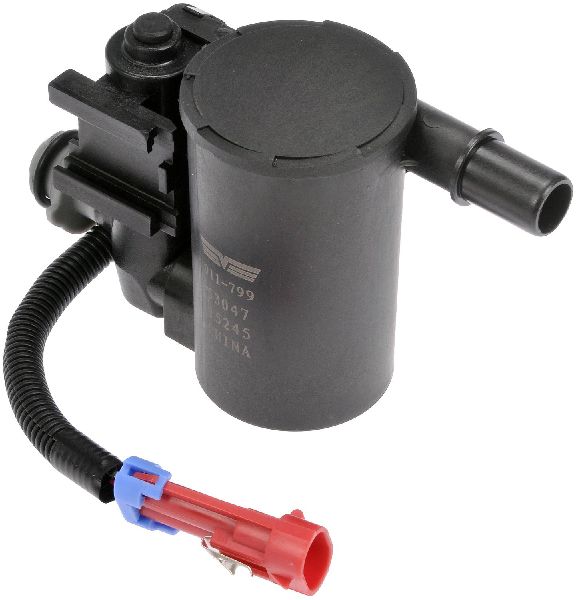
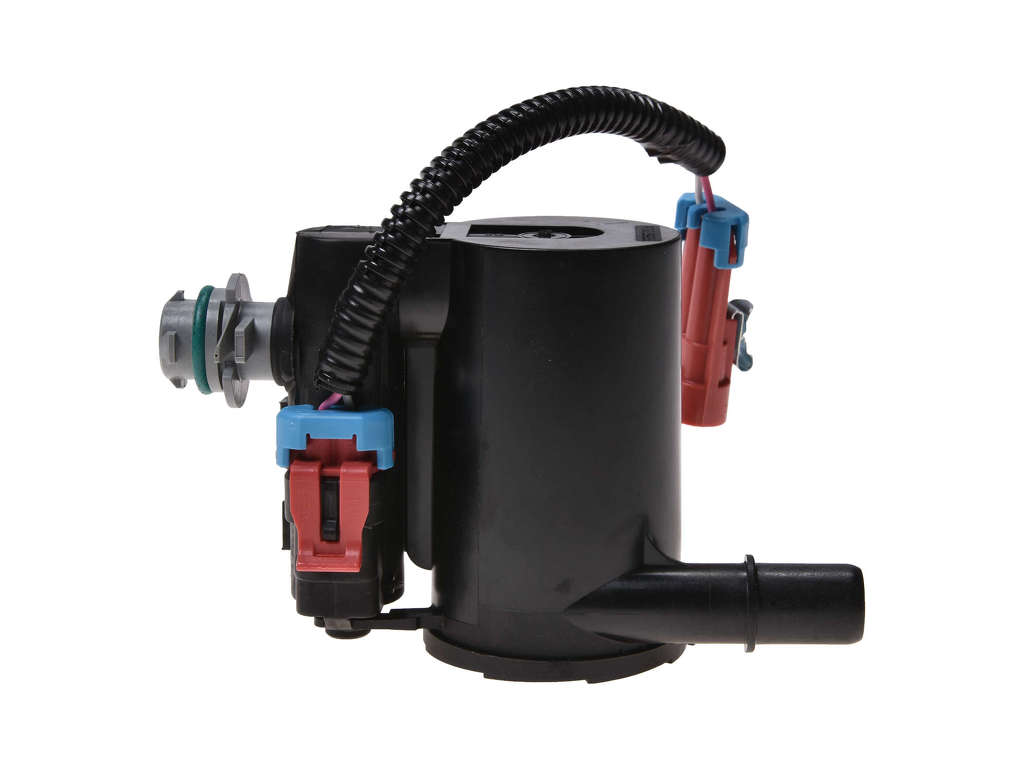
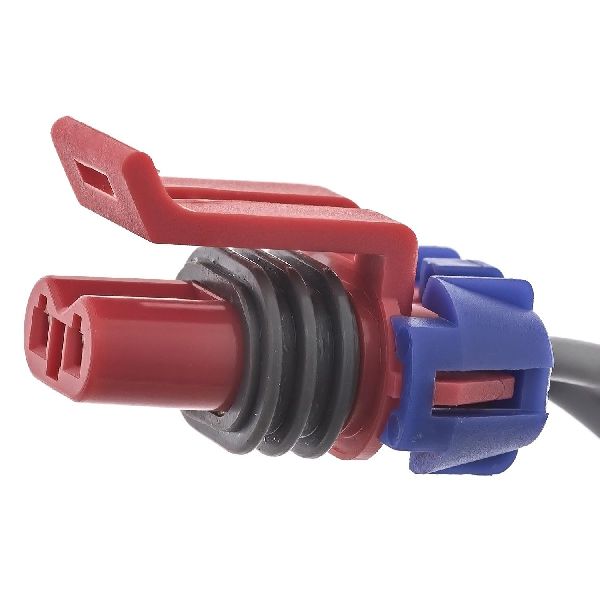
- Canister Purge Control Solenoid Valve (PCSV)
(OEM #28910-26900 (For 2.4L I4 and some V6) / 28910-3E100 (For 3.3L V6))— This is the most common failure point for code P0441 on this vehicle. It gets stuck open or closed, causing the incorrect flow detection.
Trusted brands: Hyundai (Genuine), Bosch, Dorman, Standard Motor Products
OEM price range: $60-$85
Aftermarket price range: $40-$60 - Canister Close Valve (CCV)
(OEM #31453-2H500)— A less common cause, this valve can fail and disrupt the EVAP system's ability to seal, sometimes contributing to a P0441 code.
Trusted brands: Hyundai (Genuine)
OEM price range: $20-$35
Aftermarket price range: $15-$25
Related Codes That Often Appear With This One
- P0171 — System Too Lean (Bank 1) - If the purge valve is stuck open, it creates a vacuum leak by allowing unmetered air (fuel vapor) into the intake manifold, which can cause a lean condition.
- P0174 — System Too Lean (Bank 2) - Same reason as P0171, but for V6 engines which have two cylinder banks.
- P0455 — Evaporative Emission System Leak Detected (large leak) - Can sometimes appear alongside P0441 if the root cause is a major leak or a component that is both leaking and causing incorrect flow, like a stuck-open purge valve.
- P0507 — Idle Control System RPM Higher Than Expected - As noted in NHTSA ODI #11434136, this code can appear alongside P0441, likely due to the unmetered air entering the intake through a faulty purge valve.
- P0420 — Catalyst System Efficiency Below Threshold - This code was also reported in conjunction with P0441 in NHTSA ODI #11434136, suggesting that long-term EVAP issues may eventually impact catalytic converter performance.
Technical Service Bulletins (TSBs) & Recalls
- TSB 09-FL-003-2: Related to ECM updates for other electronic throttle control codes on 2007-2009 models, but indicates a history of logic-related issues that were addressed via software.
- TSB 10-FL-005: Mentioned for other models, this TSB addresses P0441 by recommending an ECM update, showing a pattern of software sensitivity for this code on Hyundai vehicles of this era, though hardware is the primary suspect now.
- Bulletin #5NP-S5Y6V-04: A manufacturer service bulletin for other Hyundai models provides information regarding an ECM software update specifically for DTC P0441, noting that there may be no vehicle performance concern associated with the condition in some software-logic cases.
Platform-Specific Known Issues
- A Technical Service Bulletin (TSB 09-FL-003-2) existed for some 2007-2009 Santa Fe models with the 3.3L engine regarding an ECM update for various codes, and while not directly for P0441, it highlights that ECM logic can be a factor. However, for a vehicle of this age, a hardware failure like the purge valve is the far more likely cause.
- The confusion between the Purge Valve (PCSV) and the PCV valve is a very common point of error for DIYers, as noted in multiple forums.
- In some extreme cases, P0441 has been found alongside severe engine issues; NHTSA ODI #11468646 records a vehicle with P0441 and misfire codes where the owner was eventually informed the engine required replacement.
Mechanic-Grade Diagnostic Values
- Purge Control Solenoid Valve (PCSV) Coil Resistance — expected: 16 ± 2 Ω (at 20°C / 68°F). Failure: A reading significantly outside this range indicates a faulty coil within the solenoid.
- PCSV Electrical Connector Voltage — expected: Approximately 11.4 - 12V with key on, engine off.. Failure: No voltage suggests a wiring issue, fuse problem, or ECM fault.
- PCSV Vacuum Test — expected: The valve should hold vacuum with no bleed-down when de-energized (engine off).. Failure: If a hand-held vacuum pump shows the vacuum level dropping, the valve is leaking internally and is faulty.
Scan Tool Commands That Help
- Hyundai GDS (Global Diagnostic System) or equivalent professional scanner: Active Test -> Canister Purge Solenoid Valve (PCSV) — This bidirectional control allows a technician to manually command the purge valve to open and close while the engine is running. It's used to verify the valve's mechanical operation and the ECM's ability to control it. You can listen for an audible click and monitor changes in engine RPM or fuel trims as the valve is cycled.
- Hyundai GDS (Global Diagnostic System) or equivalent professional scanner: EVAP Leakage Test — This is an automated function that commands the system to seal itself (by closing the canister close valve and purge valve) and then monitors the fuel tank pressure sensor for any pressure decay. It's the next step after a visual inspection and PCSV test to check the integrity of the entire system.
Wiring & Ground Locations
- G01 — Base of the left kick panel.. This is a primary body ground point. While not directly for the PCSV, poor grounding here can cause a variety of electrical issues in the cabin and dash, which could potentially affect modules communicating with the ECM.
- G39 / G52 — Located in the left rear of the engine compartment, near the PCM (Powertrain Control Module).. This is a critical engine ground. The PCM controls the PCSV by grounding its control line. A corroded or loose ground at this location can cause intermittent or failed operation of the purge valve and other engine sensors, leading to a P0441 or other codes.
Real Owner Repair Stories
- 2CarPros Forum User (2007 Hyundai Santa Fe) — P0441 code appeared after replacing the fuel pump.
❌ Tried (didn't work) Replaced the purge valve., Replaced hose clamps on the purge valve lines., Exchanged the new purge valve for another new one, suspecting a defective part., Visually inspected wiring and lines to the fuel tank.
✅ What actually fixed it The user reported the code appeared after a fuel pump replacement. An expert suggested that if the purge valve itself tests good and has voltage (user confirmed 11.4V), the next step is to inspect the charcoal canister for fuel saturation or blockage, as charcoal particles can break loose and clog the new purge valve, causing the code to return. The final fix was not posted, but this highlights a common post-repair scenario. - Reddit r/MechanicAdvice User (Hyundai Santa Fe 2.7 GLS (year not specified, but in P0441 context)) — Persistent P0441 code for over a year.
❌ Tried (didn't work) Replaced the gas cap once., Replaced the EVAP purge valve twice., Checked vacuum lines for leaks (none found visually).
✅ What actually fixed it The user did not post a final fix, but the top-voted expert advice was to stop replacing parts and get a professional smoke test for the entire EVAP system, indicating that after the common parts are replaced, a hard-to-find leak in a hose or the canister itself is the most likely culprit. - NHTSA ODI #10394376 — An owner reported that whenever they added gas to the tank, the car would experience a "hard start and continually stall" after the check engine light produced a P0441 code.
OEM Part Supersession History
28910-26900→This part number is still active and widely used across many Hyundai and Kia models from roughly 2006-2014.— N/A
Heads up: While physically similar, ensure the part number matches your vehicle's specific engine and year. Hyundai and Kia share OEM numbers for this part, so it may come in either a Hyundai or Kia branded box.
Model Year Variations Within This Range
- 2007-2009 vs 2010-2012: The primary difference is the engine offerings. Pre-facelift (2007-2009) models used 2.7L and 3.3L V6 engines. Post-facelift (2010-2012) models switched to a 2.4L I4 and a 3.5L V6. While the P0441 fault is consistently traced to the purge valve across all engines, the exact location and mounting of the valve and its hoses can vary slightly between these different engine designs. For example, on the 2.7L V6, the valve is located behind the throttle body.
Diagnostic Flowchart
Other Known Issues on This Vehicle
Issues unrelated to this code that are worth knowing about as an owner of this generation:
- Faulty Fuel Level Sensor 🟠 Medium — Very common, especially on 2007-2009 models. The fuel gauge becomes erratic or reads empty, often triggering codes like P0463 or P0464.
- Leaking Valve Cover Gasket (Front) 🔴 High — Extremely common on the 3.3L V6. Oil leaks from the front valve cover and drips directly onto the alternator, causing alternator failure, stalling, and battery issues. (Ref: A service campaign was issued by Hyundai to address this, sometimes involving the installation of an oil deflector shield.)
- Transmission Hesitation and Hard Shifting 🟠 Medium — Reported across many model years within this generation, symptoms include sluggish engagement and jerky shifting. (Ref: Software updates for the Transmission Control Module (TCM) were available to address some shift quality issues.)
- Airbag Warning Light / OCS Mat Failure 🔴 High — Common issue where the airbag light illuminates due to a faulty Occupant Classification System (OCS) sensor mat in the passenger seat. (Ref: A recall was issued for 2007-2009 models to update the Airbag Control Unit software to address issues with child seat detection.)
- Engine Failure (2.4L Theta II & 3.3L Lambda II) 🔴 High — While less frequent than other issues, catastrophic engine failures related to bearing wear (similar to the widespread Theta II issue) have been reported for both the 2.4L and 3.3L GDI engines in later models of this generation. (Ref: Related to larger class-action lawsuits and engine replacement programs for Hyundai/Kia, though specific coverage may vary.)
Used vs. New Parts: Buying Guide for This Vehicle
When a used part is the smart pick: A used purge valve (PCSV) is generally not recommended. It is a high-failure item, and a used part from a junkyard carries a high risk of having the same internal failure (stuck open/closed) as the part you are replacing. The cost savings are minimal compared to the labor and frustration of having to do the job twice.
Donor-vehicle mileage cap: roughly under 40000 miles for the part to have meaningful remaining life.
What to inspect on the donor part:
- If you must buy used, try to get it from a vehicle with the lowest possible mileage.
- Inspect the plastic housing for cracks or heat damage.
- Check the electrical connector pins for corrosion.
- Attempt to blow through the valve; if air passes freely, it is already bad (stuck open).
OEM-only on this vehicle (don't cheap out):
- While not strictly 'OEM-only', many forum and user reviews suggest that genuine Hyundai/Kia or reputable OEM-supplier (like Bosch) purge valves have a much higher success rate than cheaper, unbranded aftermarket options.
Aftermarket brands forum-validated for this vehicle:
- Bosch
Brands owners have reported issues with on this vehicle:
- Dorman (Some users have reported premature failure or issues with Dorman purge valves for this application, requiring replacement with an OEM part to resolve the code).
Real Owner Stories
Aggregated from forums and TSBs cited above. Mileages and costs reflect what owners reported in those sources.
2007 Hyundai Santa Fe 2.7L V6
Symptoms: Owner initially confused the PCSV with the PCV valve while trying to diagnose the P0441 code.
What fixed it: Identified the correct Purge Control Solenoid Valve location near the throttle body using diagrams and replaced it.
Source hint: Hyundai-Forums.com: 'Code P0441 2007 Santa Fe 2.7L'
2008 Hyundai Santa Fe
Symptoms: The vehicle stalls and stutters specifically after filling up the gas tank; the owner replaced the purge valve twice but the code persisted.
What fixed it: The story highlights that aftermarket parts can be faulty out of the box or that other issues like a saturated charcoal canister may be present.
Source hint: Reddit r/MechanicAdvice: 'CEL code p0441 on Hyundai Santa fe. Advice???'
Related OBD-II Codes
Frequently Asked Questions
I have a 2007-2009 Santa Fe with the 3.3L engine; is there a software update for EVAP issues?
Why does my Santa Fe have trouble starting only after I fill up the gas tank?
I'm looking for the purge valve on my 2.7L V6 Santa Fe, where is it located?
Could a bad gas cap be causing my P0441 code?
I replaced a valve to fix P0441 but the light is still on. Did I replace the wrong part?
What should I look for if I find black granules inside my EVAP hoses?
Helpful Videos
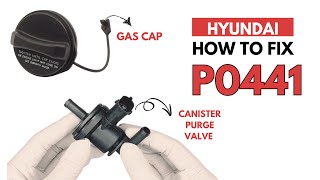
![How to Fix HYUNDAI P0441 Engine Code in 3 Minutes [2 DIY Methods / Only $4.50]](https://img.youtube.com/vi/Pb-LTfC7HpE/mqdefault.jpg)
We Have This Part in Stock


The information in this article is provided for general reference and educational purposes only. Vehicle specifications, procedures, and part compatibility can vary by production date, trim level, and region. Always consult your vehicle's factory service manual and verify part numbers before purchasing or performing repairs. Safety-critical components such as airbags, seat belts, and braking systems should be installed by a qualified professional.
- Hyundai Santa Fe:
- 🧭 Diagnostic Flowchart
- 🎬 Helpful Videos
- 🛍️ Shop This Part
- What's Unique About the 2007-2012 Hyundai Santa Fe
- Symptoms You May Notice
- Most Likely Causes
- Rare But Worth Checking
- Diagnosis Steps
- Parts You'll Likely Need
- Related Codes That Often Appear With This One
- Technical Service Bulletins (TSBs) & Recalls
- Platform-Specific Known Issues
- Mechanic-Grade Diagnostic Values
- Scan Tool Commands That Help
- Wiring & Ground Locations
- Real Owner Repair Stories
- OEM Part Supersession History
- Model Year Variations Within This Range
- Other Known Issues on This Vehicle
- Used vs. New Parts: Buying Guide for This Vehicle
- Real Owner Stories
- 2007 Hyundai Santa Fe 2.7L V6
- 2008 Hyundai Santa Fe
- Related OBD-II Codes
- Frequently Asked Questions
- 🎟️ Get 5% Off