

P0443 on 2005-2013 Chevrolet Corvette: EVAP Purge Solenoid Circuit Causes and Fixes
For a 2005-2013 Corvette, code P0443 is most often caused by a failed EVAP Purge Solenoid Valve located in the engine bay. Replacing this part is a simple DIY fix, with the part costing approximately $25-$50 for an OEM ACDelco replacement. The most common OEM part number is 12597567, which has been superseded by ACDelco part 214-1680.
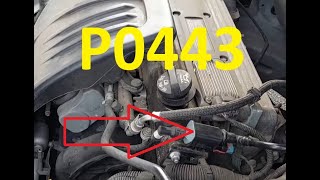
- P0443 is an electrical circuit code for the EVAP Purge Solenoid, which is located in the engine bay on the passenger side fuel rail cover on the C6 Corvette.
- Do NOT confuse the Purge Solenoid (engine bay) with the Vent Solenoid (rear of car), which causes different codes (like P0449).
- The most likely fix is replacing the purge solenoid itself (ACDelco P/N 214-1680), which is an inexpensive part and a very easy DIY job (1/5 difficulty).
- Before replacing the part, always check fuse #19 in the underhood fuse block and inspect the wiring connector for damage, as this can also trigger the code.
What's Unique About the 2005-2013 Chevrolet Corvette
On the C6 Corvette, the most significant issue surrounding code P0443 is the common confusion between two different EVAP system parts: the Purge Solenoid and the Vent Solenoid. The Purge Solenoid, which causes the P0443 circuit code, is located in the engine bay, typically on the passenger side fuel rail cover. The Vent Solenoid is located at the rear of the car near the fuel tank and typically sets other codes like P0449. Many owners mistakenly replace the rear vent solenoid when they should be inspecting the purge solenoid in the engine bay, wasting time and money.
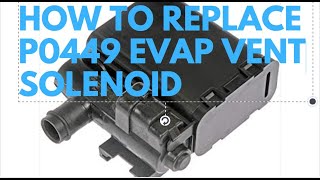
🎬 Watch: How to replace the vent solenoid for code P0449.Symptoms You May Notice
- Check Engine Light is on
- Slightly rough idle or engine stumble
- Difficulty starting the engine immediately after refueling
- Slight decrease in fuel economy
- Audible clicking or buzzing from the solenoid if it's stuck or failing
- Slight engine 'run-on' after shutting the vehicle off
- Replacing the EVAP Vent Solenoid. This part is located at the rear of the car by the fuel tank and is a fix for other codes like P0449, not P0443.
- Replacing the gas cap. A bad gas cap causes a large leak code (like P0455), not a circuit malfunction code like P0443.
Most Likely Causes
- Failed EVAP Purge Solenoid Valve 🔴 High Probability → Shop Vapor Canister The solenoid is an electronic component that is pulse-width modulated by the PCM, operating frequently under engine heat and can fail from age or internal coil failure. It's the most common failure point for P0443 on most GM vehicles, including the Corvette. 🎬 Watch: A breakdown of common P0443 causes and fixes.
How to confirm: With the engine running, use a scan tool to command the purge solenoid ON and OFF. You should hear an audible click from the valve. You can also test the solenoid's coil resistance with a multimeter; it should fall within the manufacturer's specified range (typically 20-40 ohms). An open circuit (infinite resistance) or a short (zero resistance) indicates a bad solenoid.
Typical fix: Replace the EVAP Purge Solenoid Valve.
Est. part cost: $25-$50 - Damaged Wiring or Poor Connection 🟡 Medium Probability The solenoid's wiring harness is located in the engine bay and can be disturbed or disconnected during other engine maintenance, like intake manifold or head work, leading to a loose connection or damaged wires. The connector can also become brittle from heat cycles.
How to confirm: Visually inspect the wiring harness and two-pin connector going to the purge solenoid for any signs of cracking, melting, or corrosion. Use a multimeter to verify that the pink wire (Pin A) has 12V power with the key on. Check for continuity on the ground control wire back to the PCM. A poor connection is a common cause after recent engine work.
Typical fix: Repair the damaged section of the wiring harness or clean/replace the connector.
Est. part cost: $5-$30 - Blown Fuse ⚪ Low Probability The EVAP system is protected by a fuse in the underhood fuse block. While not common, a short in the circuit can cause this fuse to blow, cutting power to the solenoid.
How to confirm: Check the fuse for the emissions system in the underhood fuse block. On C5 and C6 models, this is typically minifuse #19. Verify its integrity visually or with a multimeter.
Typical fix: Replace the blown fuse and investigate the cause of the short circuit.
Est. part cost: $1-$5
Rare But Worth Checking
- Faulty Powertrain Control Module (PCM) Driver: → Shop Engine Control Module (ECM) This is very rare. If the solenoid, wiring, and fuse are all confirmed to be good, the internal switch (driver) inside the PCM that grounds the solenoid's circuit may have failed. This is typically the last thing to check and often requires professional diagnosis.
Diagnosis Steps
- Verify the Code: Use an OBD-II scanner to confirm P0443 is the active code. Clear the code and see if it returns immediately.
- Locate the Purge Solenoid: Find the EVAP purge solenoid in the engine bay. On the C6, it's a small, black, cylindrical valve mounted to a bracket on the passenger's side fuel rail cover. It has a two-wire electrical connector and two hoses attached.
- Check the Fuse: Inspect minifuse #19 in the underhood fuse block to ensure it's not blown.
- Inspect Wiring: Carefully examine the electrical connector and wires going to the solenoid for any damage, corrosion, or loose pins. Ensure the connector is fully seated, especially after recent engine work.
- Test the Circuit: Disconnect the connector. With the ignition ON, use a multimeter to confirm the pink wire (Pin A) has battery voltage (12V). The other wire is the control wire that the PCM grounds to activate the solenoid.
- Command the Solenoid: Use a capable scan tool to command the solenoid on and off. Listen for an audible click from the solenoid each time it's commanded. You can also place a finger on it to feel it pulse.
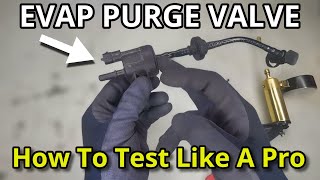
- Test Solenoid Resistance: Disconnect the solenoid and measure the resistance across its two pins with a multimeter. A healthy solenoid will typically read between 20 and 40 ohms. An open circuit (infinite resistance) or a short (zero resistance) means the solenoid is bad. 🎬 See this step-by-step guide for testing your purge solenoid.
- Check for a Stuck Valve: If the electrical tests pass, remove the solenoid and try to blow through it. With no power applied, it should be closed and not allow air to pass. If you can blow through it, it's stuck open and needs replacement.
- Replace the Part: If the solenoid fails any of these tests, replace it. The ACDelco part is recommended.
Parts You'll Likely Need
- EVAP Vapor Canister Purge Solenoid Valve
(OEM #GM 12597567 / ACDelco 214-1680)— This is the electronic valve that the PCM monitors. Its internal coil windings can fail or it can become mechanically stuck, making it the most common cause of a P0443 code. The original GM part 12597567 has been superseded by ACDelco part 214-1680.
Trusted brands: ACDelco (GM Original Equipment), Standard Motor Products, Delphi
OEM price range: $25-$50
Aftermarket price range: $20-$40
Related Codes That Often Appear With This One
- P0496 — P0496 (EVAP Flow During a Non-Purge Condition) often appears with P0443 if the purge valve is electrically faulty AND physically stuck open, causing vapor to flow when it shouldn't.
Technical Service Bulletins (TSBs) & Recalls
- While no TSB is issued specifically for P0443 on the C6, related TSBs for other EVAP codes like P0442 exist (e.g., #PIT4943C), indicating GM's attention to the EVAP system. The most relevant TSBs for C6 owners are for other common issues discovered during diagnosis.
Platform-Specific Known Issues
- The purge solenoid makes an audible ticking/pulsing noise during normal operation. Some owners who relocate the solenoid for a 'cleaner' engine bay look report the noise becomes much more noticeable inside the cabin unless it's mounted on rubber isolators.
- While the part itself is robust, the plastic hoses connected to it can become brittle and crack over time, especially the hose running from the valve towards the firewall. It's wise to inspect these hoses when replacing the solenoid.
Mechanic-Grade Diagnostic Values
- EVAP Purge Solenoid Coil Resistance — expected: 20-40 Ohms. Failure: A reading of infinite resistance (open circuit) or near zero Ohms (short circuit) indicates a failed solenoid.
- Voltage at Purge Solenoid Connector (Pin A, Pink Wire) — expected: Battery Voltage (approx. 12V) with Key On, Engine Off.. Failure: No voltage indicates a blown fuse (Fuse #19) or an open in the power supply wire.
- PCM Control Wire Voltage (Solenoid Connected) — expected: Near battery voltage when commanded OFF; near 0V when commanded ON. The PCM grounds this wire using a PWM signal.. Failure: A constant ground (0V) even when commanded OFF suggests a short to ground in the harness or a failed PCM driver. Constant battery voltage even when commanded ON suggests an open in the control wire or a failed PCM driver.
Scan Tool Commands That Help
- GM Tech 2 / GDS2: Engine Output Controls > EVAP System > Purge Solenoid — This bidirectional command allows a technician to manually cycle the purge solenoid on and off, or command it to a specific duty cycle (e.g., 50%). It is the primary method for verifying if the solenoid clicks audibly and if the PCM is capable of controlling the circuit.
Wiring & Ground Locations
- G107 — Driver's side, rear of the engine, on the bell housing or middle of the block. It serves as a ground for the coil packs and other critical engine sensors.. While not the direct ground for the purge solenoid's control circuit (which is grounded inside the PCM), a poor engine block ground can cause electrical noise and voltage offsets that may lead to erratic behavior of various sensors and actuators, potentially contributing to intermittent circuit codes. Checking major engine grounds is a key step after major engine work if multiple electrical codes appear.
- G102 — Mounted to the driver's side frame rail, below the battery.. This is a primary chassis ground. Poor contact here can cause a wide range of seemingly unrelated electrical issues ('gremlins') across the vehicle. It is a common point of corrosion and should be inspected and cleaned if any electrical diagnostics are being performed.
- PCM Connector — Located in the passenger side front wheel well area, requiring removal of the fender liner for access.. The control wire for the purge solenoid terminates here. In extremely rare cases, a pin can become loose or 'backed out' of the connector, especially after the PCM has been disconnected for tuning or other service, causing an open circuit and a P0443 code.
Real Owner Repair Stories
- CorvetteForum user 'tgcounts' (C6 Corvette (year not specified, but in C6 forum), track car) — Check Engine Light with code P0443.
❌ Tried (didn't work) Replacing the EVAP Purge Valve.
✅ What actually fixed it The user diagnosed a constant ground on the control wire for the solenoid. By unplugging the ECM, the ground was removed, confirming the fault was not a short in the harness but a failed (stuck closed) driver inside the ECM. The final resolution was to either replace the ECM or program it out for a track-only car.
OEM Part Supersession History
GM 12597567→ACDelco 214-1680— Standard part number update and consolidation by the manufacturer.
Model Year Variations Within This Range
- 2005-2013: While the purge solenoid part number and function are consistent across the C6 generation (LS2, LS3, LS7, LS9), the physical routing of the vacuum lines and wiring harness may have minor variations. However, the location on the passenger side fuel rail cover remains the same.
Diagnostic Flowchart
Other Known Issues on This Vehicle
Issues unrelated to this code that are worth knowing about as an owner of this generation:
- Harmonic Balancer Wobble/Failure 🔴 High — Common across all C6 years, but especially noted on 2005 models. The rubber elastomer bonding the inner and outer rings fails, causing a wobble, chirping noises, and potential for the serpentine belt to be thrown. (Ref: TSB #05-06-01-001A for early 2005 models addresses a loose crank bolt, but the delamination issue is more widespread.)
- Fuel Sending Unit Failure 🟠 Medium — Very common issue where the fuel gauge becomes erratic or reads empty, often triggering codes like P2068. The contact fingers on the sender's rheostat wear out. Repair is labor-intensive as it requires dropping the fuel tanks.
- Removable Roof Panel Adhesive Failure 🔴 High — Affects 2005-2007 models. The adhesive bonding the roof panel to its frame can fail, causing noise or complete separation of the panel while driving. (Ref: NHTSA Recalls: 06V313000, 09V432000)
- Low-Beam Headlight Wiring Failure 🟠 Medium — Affects 2005-2007 models. The wiring to the low-beam headlight bulb socket can become brittle and fail, causing the low beams to stop working. (Ref: NHTSA Recall: 10V172000)
- Service Active Handling System Message 🟡 Low — Common on 2005-2006 models. A poor connection at the steering wheel position sensor connector can cause the 'Service Active Handling' message to appear. (Ref: NHTSA Recall: 06V417000)
Used vs. New Parts: Buying Guide for This Vehicle
When a used part is the smart pick: For this specific repair, a used part is NOT recommended. The new OEM ACDelco part is inexpensive (typically under $50) and is a common failure item due to internal wear and heat cycles. A used part carries a high risk of having the same fault or a very short remaining service life.
What to inspect on the donor part:
- Not applicable as a used part is not advised.
OEM-only on this vehicle (don't cheap out):
- While not strictly 'OEM-only', the ACDelco (GM Original Equipment) part is highly recommended over no-name aftermarket brands due to its low cost and proven reliability for this specific application.
Aftermarket brands forum-validated for this vehicle:
- ACDelco (GM Original Equipment)
- Delphi
- Standard Motor Products (SMP)
Brands owners have reported issues with on this vehicle:
- Generic, unbranded parts from online marketplaces should be avoided as their internal coil quality and valve sealing can be inconsistent, potentially causing the code to return quickly.
Real Owner Stories
Aggregated from forums and TSBs cited above. Mileages and costs reflect what owners reported in those sources.
2005-2013 Chevrolet Corvette
Symptoms: A slow stumble in, and upon engine off there is a slight run on.
What fixed it: Replacement of the EVAP purge solenoid.
Source hint: CorvetteForum - P0443 Code pulled (https://www.corvetteforum.com/forums/c6-scan-and-tune/3622152-p0443-code-pulled.html)
2005-2013 Chevrolet Corvette
Symptoms: The PCM sets the code after a 5-second mismatch in the pulse-width modulated ground signal.
What fixed it: Troubleshooting the circuit operation and verifying the pink power wire from minifuse #19.
Source hint: CorvetteForum - Code P0443 (https://www.corvetteforum.com/forums/c5-tech/1563273-code-p0443.html)
2005-2013 Chevrolet Corvette
Symptoms: Constant ground on the control wire.
What fixed it: Diagnosis pointed towards a rare PCM driver failure.
Source hint: CorvetteForum - EVAP Purge Valve Question (PO443 Error) (https://www.corvetteforum.com/forums/c6-tech-performance/3768137-evap-purge-valve-question-po443-error.html)
Related OBD-II Codes
Frequently Asked Questions
Where is the EVAP purge solenoid located on my C6 Corvette?
Which fuse should I check for a P0443 code on my C5 or C6 Corvette?
I hear a clicking sound from my engine bay; is my solenoid failing?
Can I test the solenoid myself with a multimeter?
Why does my Corvette struggle to start only after I fill up the gas tank?
Is there a specific TSB for P0443 on the 2005-2013 Corvette?
Helpful Videos
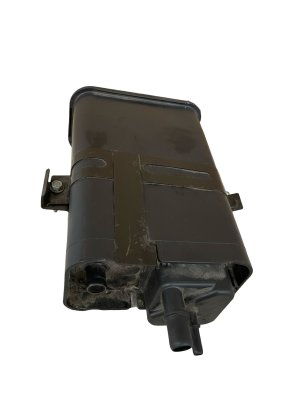
Used OEM Parts in Stock
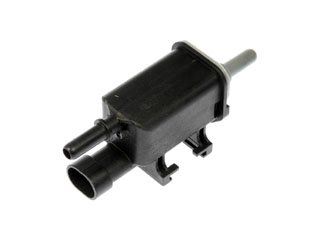
New Aftermarket Parts Available


The information in this article is provided for general reference and educational purposes only. Vehicle specifications, procedures, and part compatibility can vary by production date, trim level, and region. Always consult your vehicle's factory service manual and verify part numbers before purchasing or performing repairs. Safety-critical components such as airbags, seat belts, and braking systems should be installed by a qualified professional.
- Chevrolet Corvette:
- 🧭 Diagnostic Flowchart
- 🎬 Helpful Videos
- 🛍️ Shop This Part
- What's Unique About the 2005-2013 Chevrolet Corvette
- Symptoms You May Notice
- Most Likely Causes
- Rare But Worth Checking
- Diagnosis Steps
- Parts You'll Likely Need
- Related Codes That Often Appear With This One
- Technical Service Bulletins (TSBs) & Recalls
- Platform-Specific Known Issues
- Mechanic-Grade Diagnostic Values
- Scan Tool Commands That Help
- Wiring & Ground Locations
- Real Owner Repair Stories
- OEM Part Supersession History
- Model Year Variations Within This Range
- Other Known Issues on This Vehicle
- Used vs. New Parts: Buying Guide for This Vehicle
- Real Owner Stories
- 2005-2013 Chevrolet Corvette
- 2005-2013 Chevrolet Corvette
- 2005-2013 Chevrolet Corvette
- Related OBD-II Codes
- Frequently Asked Questions
- 🎟️ Get 5% Off