

P0443 on 2013-2016 Dodge Dart 2.4L: EVAP Purge Valve Circuit Causes and Fixes
On a 2013-2016 Dodge Dart with the 2.4L engine, code P0443 is almost always caused by a failed EVAP purge valve solenoid. This is a very common, inexpensive, and DIY-friendly repair, with the part costing between $30 and $85. The valve is located on the rear of the intake manifold and is a known high-failure item across all vehicles using this engine.
- P0443 on a 2.4L Dart almost always means you need a new EVAP purge valve solenoid.
- This is an electrical circuit code; do not waste money replacing the gas cap.
- The repair is straightforward for a DIYer and requires basic tools, with the part located on the back of the engine.
- Symptoms like a rough idle or hard starting after getting gas are strong indicators the purge valve has failed.
- If the valve and wiring test good, ask a dealer about a possible software update before replacing more expensive parts.
What's Unique About the 2013-2016 Dodge Dart
The 2.4L MultiAir 'Tigershark' engine, used in the Dodge Dart and many other Chrysler, Jeep, and Fiat vehicles, is well-known for this specific issue. Unlike many EVAP problems that can be difficult to diagnose, the P0443 code on this platform points with very high probability to the purge valve solenoid itself failing electrically. While the valve is the most common culprit, some early models could have overly sensitive software, making a check for PCM updates a worthwhile step if the valve tests good.
Symptoms You May Notice
- Check Engine Light is on
- Slightly rough or unstable idle
- Difficulty starting the engine, especially right after refueling
- Remote start feature is disabled
- Slight decrease in fuel economy
- Audible clicking noise from the engine bay, even when the car is off (rare, indicates a shorted valve)
- Replacing the gas cap. P0443 is an electrical circuit code, not a system leak code. A bad or loose gas cap will cause different codes (like P0455, P0456, or P0457) and will not fix P0443.
Most Likely Causes
- Faulty EVAP Purge Valve / Solenoid 🔴 High Probability → Shop Vapor Canister This is a very common failure item on the 2.4L MultiAir engine across all platforms it is used in, including the Dodge Dart, Chrysler 200, and Jeep Cherokee/Renegade. The internal electrical coil of the solenoid fails, creating an open or short circuit.
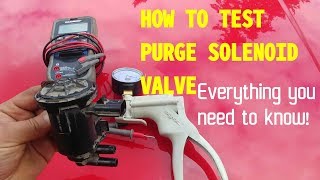
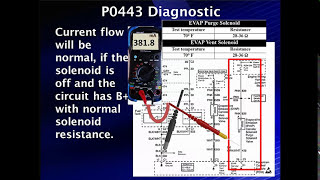
How to confirm: Disconnect the valve and test the resistance across its two electrical pins with a multimeter; a reading of infinite resistance (open) or near-zero resistance (short) indicates a bad coil. A good valve should read approximately 14-30 ohms. Alternatively, remove the valve and try to blow through it; it should be closed when no power is applied. Applying 12V to the pins should cause an audible click and allow air to pass.
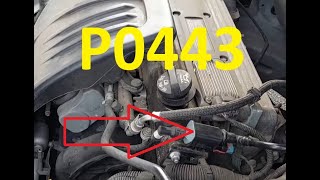
Typical fix: Replace the EVAP purge valve solenoid. It is located on the back of the intake manifold, near the firewall, sometimes under a foam cover.
Est. part cost: $30-$85 - Damaged Wiring or Connector ⚪ Low Probability
How to confirm: Visually inspect the wiring harness and connector going to the purge valve for any signs of chafing, breaks, corrosion, or loose pins. Use a multimeter to check for 12V power on one pin and a ground signal from the PCM on the other with the key on.
Typical fix: Repair the damaged section of the wiring harness or clean/replace the connector.
Est. part cost: $5-$50 - Outdated Powertrain Control Module (PCM) Software ⚪ Low Probability → Shop Engine Control Module (ECM) TSB #18-022-17 REV. A was released for 2013-2015 Darts to address several powertrain diagnostic improvements via a software update, indicating the original logic could be overly sensitive. This is a known issue on other vehicles with the same engine.
How to confirm: This can only be confirmed by a Dodge dealership or a shop with a wiTECH scan tool, which can check your vehicle's VIN against available software updates and TSBs.
Typical fix: Reprogram the PCM with the latest software version. This must be done at a dealership or a properly equipped independent shop.
Est. part cost: $0-$200
Rare But Worth Checking
- Blown Fuse: Always a quick and easy check. On some models, the purge valve is powered by fuse F87 (a 10A red fuse) in the under-hood fuse box next to the battery. On other models, it is powered directly by the PCM, so you would need to check all PCM-related fuses.
- Faulty Powertrain Control Module (PCM): → Shop Engine Control Module (ECM) This is very rare, but if the purge valve, wiring, and fuse are all confirmed to be good, the driver circuit within the PCM may have failed. This should be the last consideration after all other possibilities are exhausted.
Diagnosis Steps
- Read the codes with an OBD-II scanner to confirm P0443 is present and note any other codes.
- Visually inspect the wiring and electrical connector at the EVAP purge solenoid, located on the rear of the intake manifold. Look for any obvious damage, corrosion, or loose connections.
- Check the fuse for the EVAP system. In the fuse box next to the battery, check fuse F87 (10A). If it's blown, replace it. Note that not all Darts use this fuse for the purge valve; some are powered directly by the PCM.
- Test the purge valve itself. Disconnect the electrical connector and hoses. Try to blow through the valve; no air should pass. If it does, the valve is stuck open and needs replacement.
- Using a multimeter, measure the resistance between the two pins on the purge valve. A normal reading is between 14 and 30 ohms. An infinite reading (OL) means the coil is open, and near zero means it's shorted. In either case, it must be replaced.
- If the valve tests good, check for power at the connector. With the ignition on, one pin should have 12 volts. The other pin is the ground-side control from the PCM.
- If the valve and wiring are good, consider checking with a dealer for any available PCM software updates related to TSB #18-022-17 REV. A, especially on 2013-2015 models.
Parts You'll Likely Need
- Vapor Canister Purge Valve / Solenoid
(OEM #04627182AB (or superseded 4627182AA))— This is the most common failure point for code P0443 on the 2.4L MultiAir engine. The internal solenoid coil fails electrically.
Trusted brands: Mopar, Dorman (p/n 994-015), Standard Motor Products (p/n CP813), SKP (p/n SK994015)
OEM price range: $60-$90
Aftermarket price range: $30-$65
Related Codes That Often Appear With This One
- P0444 — This code for 'Purge Control Valve Circuit Open' is often seen with P0443 as they both relate to an electrical failure of the same component. P0443 indicates a general circuit malfunction, while P0444 specifically points to an open circuit.
- P0441 — P0441 indicates 'Incorrect Purge Flow'. If the PCM cannot electrically control the purge valve due to a circuit fault (P0443), it can also lead to an incorrect flow condition being detected by other sensors in the EVAP system.
Technical Service Bulletins (TSBs) & Recalls
- TSB #18-022-17 REV. A: Titled 'Flash: Powertrain Diagnostic and System Improvements', this TSB involves a PCM software update for 2013-2015 Darts with the 2.4L engine. While it addresses a list of DTCs and doesn't explicitly name P0443, it is intended to improve the overall diagnostic logic of the powertrain and is often recommended if the physical parts test good.
Platform-Specific Known Issues
- The 2.4L MultiAir engine platform has a high frequency of purge valve solenoid failures, making it the primary suspect for a P0443 code.
- Some 2013-2015 models may have overly sensitive PCM software that can contribute to EVAP system codes, per TSB #18-022-17 REV. A.
- Owner Experience: Easy DIY Fix: Multiple owners on forums like dodge-dart.org report that replacing the purge valve for a P0443 code is one of the easiest repairs on the car. One user noted, 'Got the P0443, ordered the part for $40, and swapped it in 15 minutes in the AutoZone parking lot. Light gone.' This sentiment is common, highlighting the simplicity of the fix.
Mechanic-Grade Diagnostic Values
- EVAP Purge Solenoid Coil Resistance — expected: 14 - 30 Ohms. Failure: A reading of infinite Ohms (OL - open circuit) or near-zero Ohms (short circuit).
- EVAP Purge Solenoid Connector Power Supply Voltage — expected: Approximately 12V (Battery Voltage) with Key On, Engine Off.. Failure: Voltage significantly below 10.0V indicates a problem with the power supply circuit (fuse F87 or wiring).
- EVAP Purge Solenoid Connector Control Circuit Voltage — expected: Should be near battery voltage when inactive, and drop to near 0V when the PCM commands the valve ON (ground-side switched).. Failure: Voltage does not drop when commanded ON by a scan tool, indicating a wiring fault or a bad PCM driver.
Scan Tool Commands That Help
- wiTECH or equivalent professional scan tool: EVAP Purge Solenoid Duty Cycle / EVAP System Test — This bidirectional control allows a technician to command the purge valve to open at varying percentages (0-100%). It is used to verify that the PCM driver is functional and that the wiring to the valve is intact. While monitoring the control wire voltage, a technician can see if the PCM is capable of grounding the circuit, confirming the electrical integrity from the PCM to the connector.
Wiring & Ground Locations
- Purge Valve Connector C1 — On the purge valve solenoid, located at the rear of the 2.4L engine near the intake manifold.. This is the primary point for testing. Pin 1 is the control circuit (typically Dark Blue/White) from the PCM. Pin 2 is the power supply (typically Red) from the fuse box (F87).
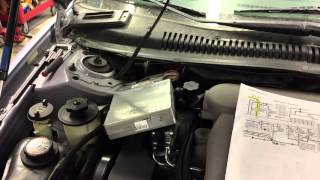
- PCM Connector C1 Pin 56 — On the Powertrain Control Module, which is located in the left front of the engine compartment.. This is the specific pin on the PCM that controls the ground for the purge valve solenoid. A continuity test between this pin and Pin 1 of the valve connector can identify a broken wire.
- Ground G108 — On the right side of the engine compartment, on the front wheel well cover.. While the purge valve is controlled directly by the PCM, this is a major engine compartment ground. A poor connection here can cause a variety of electrical issues and intermittent faults for multiple components controlled by the PCM.
- Main Chassis Ground — Behind the driver's side wheel well liner, where the negative battery cable grounds to the frame.. Multiple owners report that this ground point is highly susceptible to corrosion, leading to a wide range of electrical problems including no-start conditions and intermittent circuit faults. Cleaning this ground point is a common fix for many Dart electrical issues.
Real Owner Repair Stories
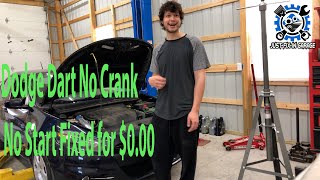
- YouTube channel 'FixItAll' (2013 Dodge Dart 2.0L) — No crank, no start. All electronics dead.
❌ Tried (didn't work) Replacing the starter
✅ What actually fixed it The car had a severely corroded main ground connection on the chassis, located behind the driver-side wheel well liner. After removing the 13mm and 10mm bolts, cleaning the terminals and frame with a wire brush, and reassembling, the car started immediately. This highlights the importance of checking major ground points for any electrical fault code.
OEM Part Supersession History
4627182AA→04627182AB— Standard part revision by the manufacturer. The parts are interchangeable.
Heads up: The part number in Pass 2 was listed as 04627182AB superseding 4627182AA. However, many sources list 4627182AA as the primary and current part number, with 04627182AB being an acceptable alternative or revision. Both are functionally identical for this application.
Model Year Variations Within This Range
- 2013-2015: These model years are specifically mentioned in TSB #18-022-17 REV. A for a PCM software update that addresses overly sensitive diagnostic logic for multiple powertrain codes. While P0443 is not explicitly listed, the TSB is for general 'Powertrain Diagnostic and System Improvements,' making a software update a more probable fix on these earlier models if the physical parts test good.
Diagnostic Flowchart
Other Known Issues on This Vehicle
Issues unrelated to this code that are worth knowing about as an owner of this generation:
- Excessive Oil Consumption 🔴 High — Very common across all model years. Can start as early as 30,000-50,000 miles. Many owners report consuming a quart of oil every 1,000-2,000 miles. (Ref: TSB 09-006-20 REV. B details the oil consumption test procedure. A class-action lawsuit (Wood, et al. v. FCA US, LLC) also addressed this issue.)
- MultiAir Actuator ('Brick') Failure 🔴 High — A significant, but less common, failure than oil consumption. Often occurs between 60,000 and 120,000 miles. Extremely sensitive to oil level and quality; low oil can cause failure. (Ref: No specific recall, but codes like P1067 are common. Failure requires replacement of the entire MultiAir actuator assembly, which is expensive.)
- Shifter Cable Bushing Failure (Automatic Transmission) 🔴 High — Common enough to warrant multiple recalls. The plastic bushing degrades, causing the shifter cable to detach from the transmission, potentially leading to a rollaway risk. (Ref: NHTSA Recall 19V-293 (FCA V34) and a subsequent 2025 recall for the same issue, as the initial fix was insufficient.)
- Faulty Thermostat 🟡 Low — A frequently reported issue causing a Check Engine Light with code P0128, especially in colder weather.
- Manual Transmission Clutch/Slave Cylinder Issues 🟠 Medium — Owners of manual transmission Darts have reported issues with the clutch master/slave cylinder system, sometimes leading to clutch pedal failure. (Ref: An extended warranty (X62) was issued for the clutch pedal operation on some models.)
Used vs. New Parts: Buying Guide for This Vehicle
When a used part is the smart pick: For this specific repair, a used part from a junkyard is NOT recommended. The EVAP purge solenoid is a known high-failure item with a limited lifespan. The low cost of a new aftermarket part (as low as $30) makes the risk and labor of installing a used part with unknown history a poor value proposition.
What to inspect on the donor part:
- Not applicable, as buying used is not advised.
OEM-only on this vehicle (don't cheap out):
- No parts for this specific P0443 repair require OEM-only sourcing. The purge valve is a simple solenoid where quality aftermarket options are widely available and effective.
Aftermarket brands forum-validated for this vehicle:
- Dorman (p/n 994-015)
- Standard Motor Products (SMP) (p/n CP813)
- SKP
Brands owners have reported issues with on this vehicle:
- No-name, unbranded parts from online marketplaces should be avoided due to inconsistent quality control, even if they are cheaper.
Real Owner Stories
Aggregated from forums and TSBs cited above. Mileages and costs reflect what owners reported in those sources.
2013-2015 Dodge Dart 2.4L
Symptoms: Got the P0443 code.
What fixed it: Ordered the part for $40 and swapped it in 15 minutes in the AutoZone parking lot.
Cost: $40-$40
Source hint: Owner Experience: Easy DIY Fix (dodge-dart.org)
2013-2016 Dodge Dart 2.4L
Symptoms: Check Engine Light on; searched online for the code and found it was a common issue.
What fixed it: Purchased the purge valve for under $50 and replaced it in under 30 minutes using basic tools.
Cost: $0-$50
Source hint: dodge-dart.org / Reddit r/DodgeDart
Related OBD-II Codes
Frequently Asked Questions
Does TSB #18-022-17 REV. A apply to my 2016 Dodge Dart 2.4L?
Where is the EVAP purge valve located on the 2.4L MultiAir engine?
Can I test the purge valve myself with a multimeter?
Is there a specific fuse I should check for the P0443 code on my Dart?
Why does my Dart have trouble starting specifically after I fill up the gas tank?
Will a bad purge valve disable my remote start feature?
Helpful Videos


Used OEM Parts in Stock
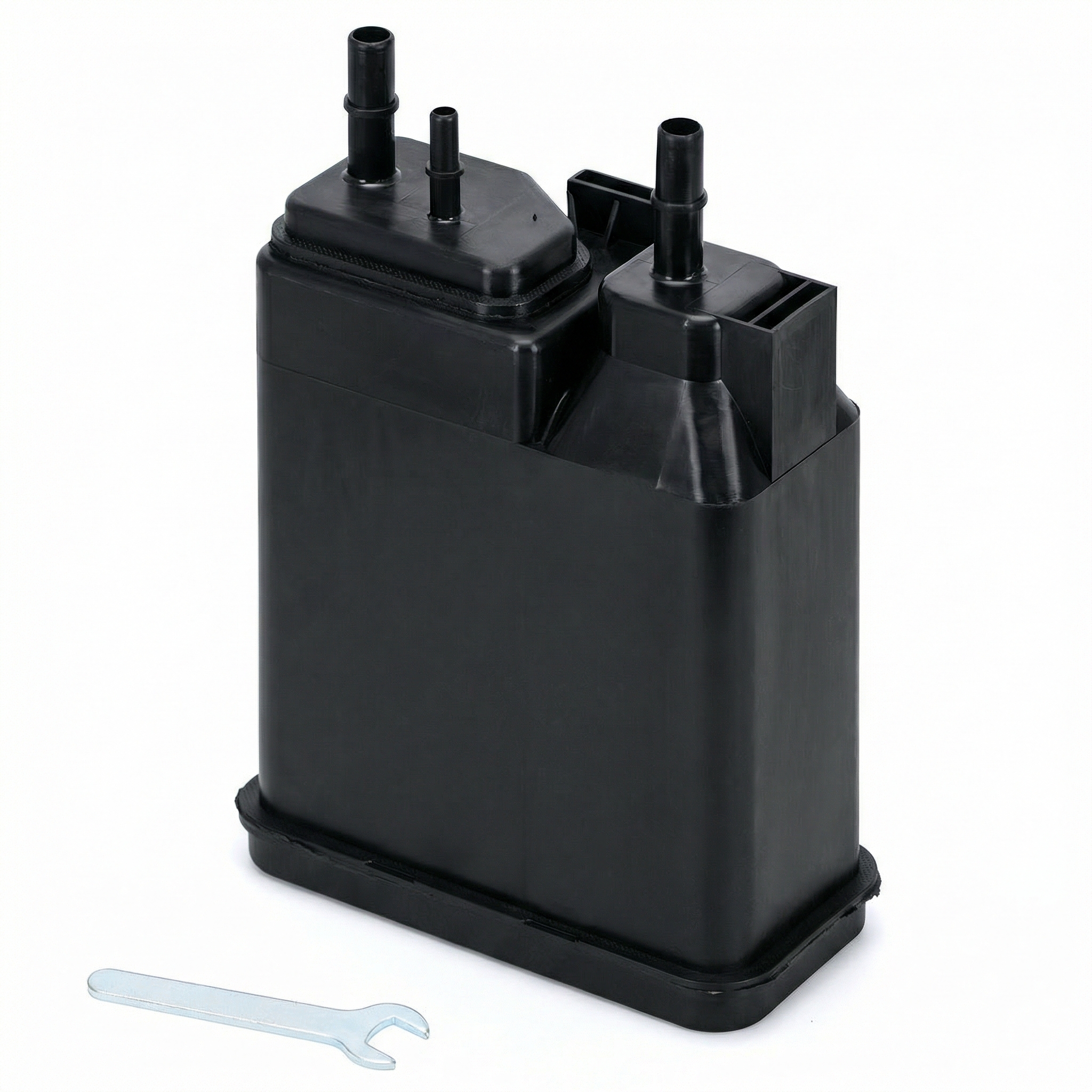

New Aftermarket Parts Available


The information in this article is provided for general reference and educational purposes only. Vehicle specifications, procedures, and part compatibility can vary by production date, trim level, and region. Always consult your vehicle's factory service manual and verify part numbers before purchasing or performing repairs. Safety-critical components such as airbags, seat belts, and braking systems should be installed by a qualified professional.
- Dodge Dart:
- 🧭 Diagnostic Flowchart
- 🎬 Helpful Videos
- 🛍️ Shop This Part
- What's Unique About the 2013-2016 Dodge Dart
- Symptoms You May Notice
- Most Likely Causes
- Rare But Worth Checking
- Diagnosis Steps
- Parts You'll Likely Need
- Related Codes That Often Appear With This One
- Technical Service Bulletins (TSBs) & Recalls
- Platform-Specific Known Issues
- Mechanic-Grade Diagnostic Values
- Scan Tool Commands That Help
- Wiring & Ground Locations
- Real Owner Repair Stories
- OEM Part Supersession History
- Model Year Variations Within This Range
- Other Known Issues on This Vehicle
- Used vs. New Parts: Buying Guide for This Vehicle
- Real Owner Stories
- 2013-2015 Dodge Dart 2.4L
- 2013-2016 Dodge Dart 2.4L
- Related OBD-II Codes
- Frequently Asked Questions
- 🎟️ Get 5% Off