

P0446 on 2001-2007 Toyota Sequoia: EVAP Vent Control Circuit Causes and Fixes
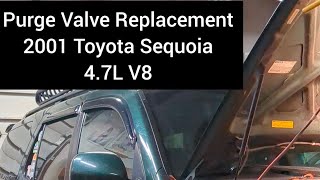
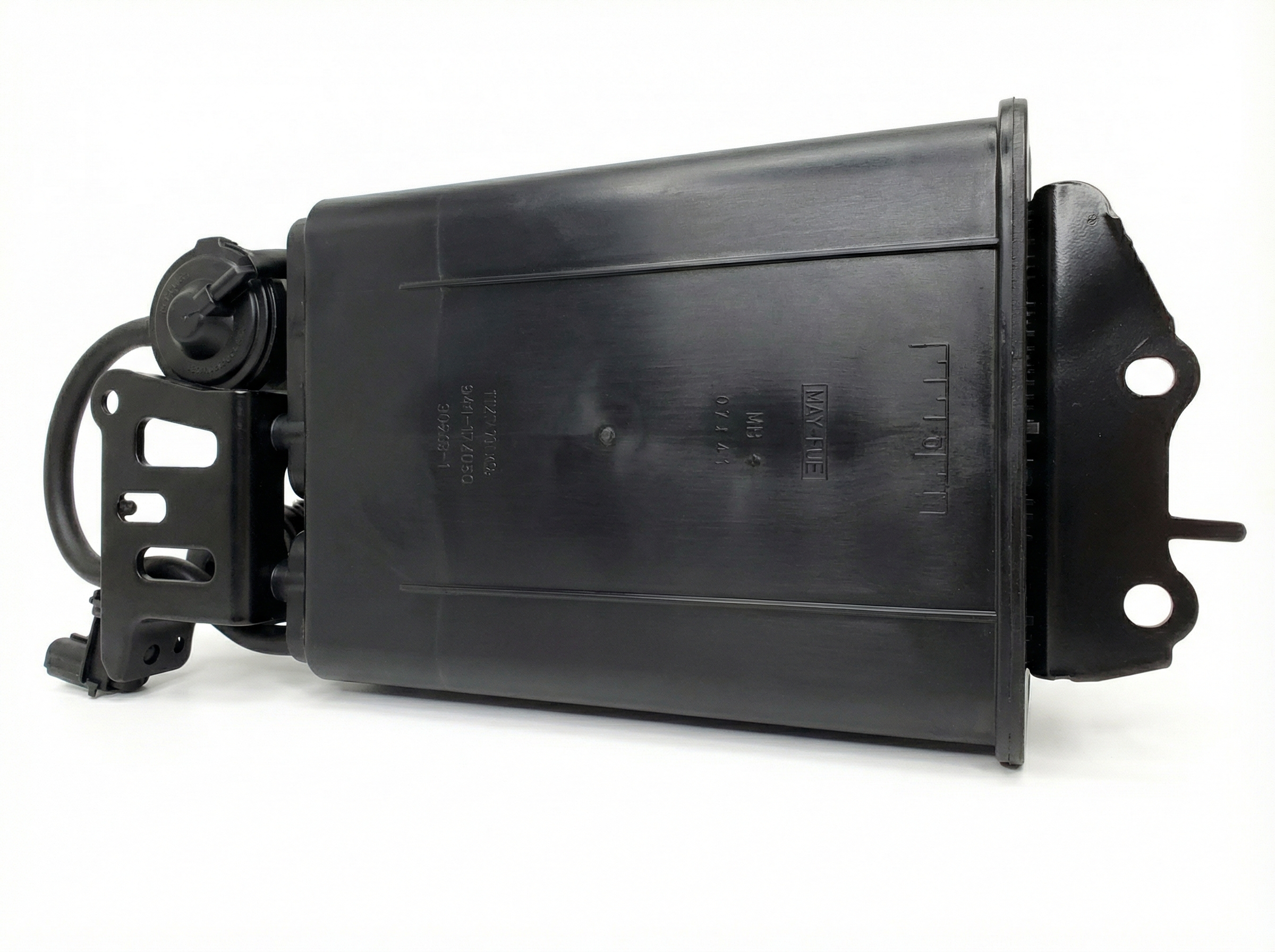
On a 2001-2007 Sequoia with the 4.7L V8, code P0446 is almost always caused by a faulty valve on the charcoal canister assembly, located above the spare tire. The most common fix is replacing the entire canister assembly. A well-known money-saving tip is to replace just the failed Vacuum Switching Valve (VSV) with an identical, less expensive one, such as Toyota part #90910-12276 (or its successor 90910-TC001), which is often sold for other models like the Camry.
- P0446 on your Sequoia points directly to a problem with the EVAP vent system, most likely the valve on the charcoal canister.
- Before buying parts, check that the gas cap is tight and inspect the visible EVAP hoses for cracks.
- The most common fix is replacing the charcoal canister assembly, which is located above the spare tire.
- To save significant money, consider buying only the Vacuum Switching Valve (VSV) and swapping it onto your existing canister. A part for a Toyota Camry may fit.
- This is a DIY-friendly repair with a difficulty of 2/5; the main challenge is working underneath the vehicle.
What's Unique About the 2001-2007 Toyota Sequoia
For the first-generation Sequoia and its platform-mate, the Toyota Tundra, the P0446 code is notoriously linked to the charcoal canister assembly located above the spare tire. The key issue is that Toyota often sells this as a complete, expensive unit. However, owners and mechanics have found that the individual Vacuum Switching Valve (VSV) on the canister is the typical failure point. An identical, much cheaper VSV, such as part number 90910-12276 (superseded by 90910-TC001), can be used as a direct replacement, saving hundreds of dollars.
Symptoms You May Notice
- Check Engine Light is on
- Slight decrease in fuel efficiency
- Difficulty refueling (gas pump clicks off before the tank is full), which can be a sign the canister is saturated, sometimes from habitually overfilling the tank.
- A faint fuel smell near the rear of the vehicle
- Gurgling sound from the gas cap area after shutting the engine off
- Replacing the gas cap alone when the true fault is the canister vent valve.
- Replacing the purge valve in the engine bay when the problem is the vent valve/canister assembly at the rear of the vehicle.
Most Likely Causes
- Faulty Charcoal Canister / Vacuum Switching Valve (VSV) Assembly 🔴 High Probability → Shop Vapor Canister The vent valve (VSV) on the canister assembly is exposed to the elements under the vehicle and is a known failure point. The valve can stick closed, fail to hold a vacuum, or fail electrically.
How to confirm: Locate the canister above the spare tire. With a scan tool, command the vent valve to open and close; you should hear a click. Alternatively, you can apply 12V directly to the valve's terminals to test for a click. You can also test the valve to see if it holds air when de-energized, as it should be normally closed. A healthy valve should have a resistance between 30-40 ohms.
Typical fix: Replace the entire charcoal canister assembly (OEM Part #77740-0C011 for 2001-2004, #77740-0C030 for 2005-2007). A popular and cost-effective alternative is to replace only the failed VSV on the canister with a compatible part like Toyota #90910-12276 or #90910-TC001. A manufacturer service record for a similar Toyota EVAP system (NHTSA ODI #10735783) confirms that a clogged canister and leaking VSV/purge valves are primary culprits for this code.
Est. part cost: $250-$550 for the full assembly, $40-$120 for just the VSV. - Cracked or Disconnected EVAP Hoses 🟡 Medium Probability The rubber hoses become brittle over time due to age and heat cycles, leading to cracks, especially at connection points near the canister or in the engine bay.
How to confirm: Visually inspect all accessible EVAP hoses running from the gas tank, to the canister, and to the engine bay. Pay close attention to the ends of the hoses for cracks or loose connections. A smoke test is the definitive way to find hard-to-see leaks.
Typical fix: Replace the cracked section of hose. In some cases, trimming the end of the hose and re-clamping it can provide a temporary seal.
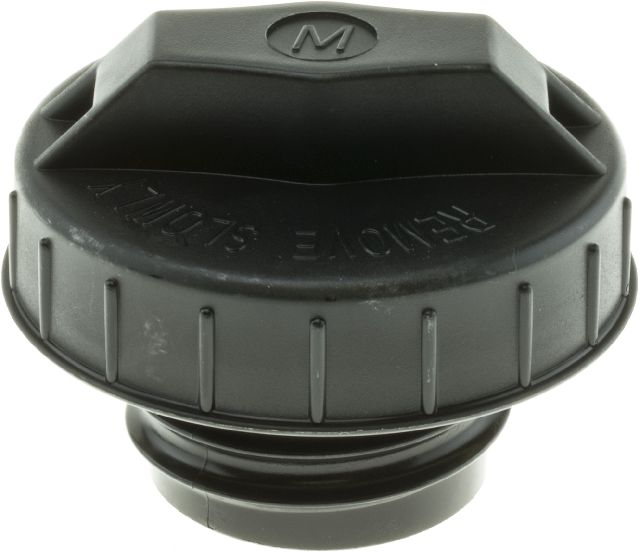
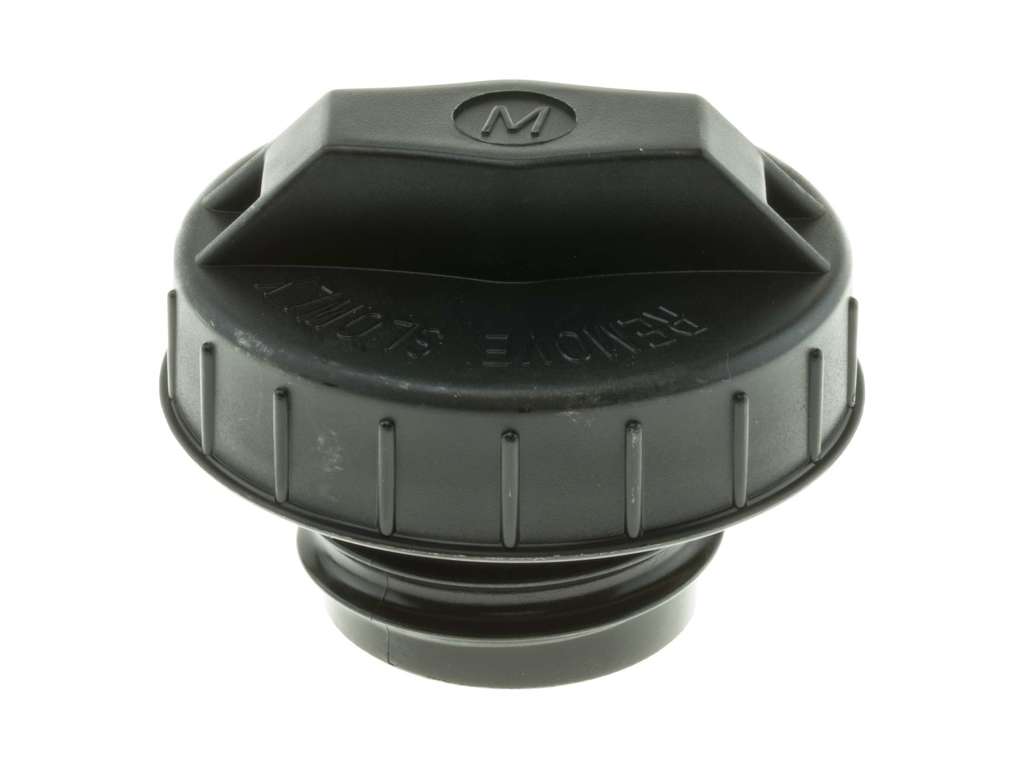
Est. part cost: $10-$50 for vacuum hoses. - Loose or Defective Gas Cap ⚪ Low Probability → Shop Fuel Tank Cap While more commonly associated with large leak codes (P0455), a failing gas cap seal can contribute to EVAP system faults.
How to confirm: Ensure the gas cap is tightened until it clicks. Inspect the rubber gasket on the cap for cracks, stiffness, or damage. If it looks worn, it's best to replace it.
Typical fix: Replace the gas cap with a new, OEM-quality part. Aftermarket caps can sometimes cause issues.
Est. part cost: $20-$40
Rare But Worth Checking
- Faulty Purge Valve/Solenoid: → Shop Vapor Canister This valve is located in the engine bay and is part of the EVAP system. While it can fail, it typically throws other codes like P0441 (Incorrect Purge Flow) along with P0446. NHTSA ODI #10086188 notes an instance where the diagnosis for P0446 was traced specifically to a vent control malfunction requiring a VSV control replacement.
- Clogged EVAP Vent Hose: In dusty environments or from sitting, it's possible for the vent tube's filter to become clogged with dirt, debris, or even spider webs and egg sacs, restricting airflow and triggering P0446.
- Faulty EVAP System Wiring: An open or short in the wiring harness between the ECM and the vent valve can cause a P0446 code. This would typically be discovered after testing the valve itself and finding it functional.
Diagnosis Steps
- Read the codes with an OBD-II scanner to confirm P0446 and check for any other related codes like P0440 or P0441. An owner reported in NHTSA ODI #11190106 that the check engine light appeared during normal driving, specifically identifying the EVAP vent control circuit.
- Inspect the gas cap. Ensure it is tight and the seal is in good condition. If in doubt, replace it with an OEM part.
- Visually inspect all EVAP hoses between the engine, canister, and fuel tank for obvious cracks, disconnections, or brittleness.
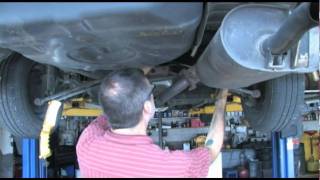
- Lower the spare tire to gain full access to the charcoal canister assembly.
- Test the vent valve (VSV) on the canister. Use a scan tool's bidirectional controls to command the valve on and off, listening for a click. If a scan tool isn't available, disconnect the valve and apply 12V power and a ground to its pins to check if it actuates.
- If the valve does not click, test its resistance with a multimeter. A reading outside the 30-40 ohm range indicates an electrical failure. If it fails either test, it needs replacement. You can choose to replace the entire canister assembly or just the valve itself.
- If the valve works, check for power (12V) and ground at the valve's electrical connector with the key on to rule out a wiring issue.
- Inspect the vent hose and filter port for any blockages, such as dirt, debris, or even spider webs.
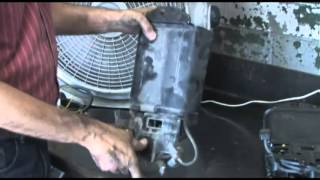
- If all components seem to work, the final step is to perform a smoke test on the EVAP system 🎬 Watch: Professional EVAP diagnostics and vacuum switching valve testing to identify any hard-to-find leaks in the lines or canister body.
Parts You'll Likely Need
- Vapor Canister Assembly
(OEM #77740-0C011 (2001-2004), 77740-0C030 (2005-2007))— This is the most common failure. The assembly includes the charcoal canister and the failure-prone vent valve (VSV) and is the official Toyota-recommended repair.
Trusted brands: Toyota (Genuine OEM), Standard Motor Products, Dorman
OEM price range: $275-$550
Aftermarket price range: $200-$350 - Vacuum Switching Valve (VSV)
(OEM #90910-12276 (superseded by 90910-TC001))— This is the specific valve on the canister that usually fails. Replacing just this valve is a significant cost-saving measure. This part number, often listed for a Camry, is a widely reported direct fit.
Trusted brands: Toyota (Genuine OEM), Denso, Dorman
OEM price range: $80-$120
Aftermarket price range: $40-$70 - Fuel Cap
(OEM #77300-47010 (example, verify by VIN))— A simple and inexpensive part to rule out as a cause, though it's less likely to be the sole reason for a P0446 code.
Trusted brands: Toyota (Genuine OEM)
OEM price range: $25-$40
Aftermarket price range: $15-$30
Related Codes That Often Appear With This One
- P0440 — This is a general EVAP System Malfunction code that often appears with more specific codes like P0446.
- P0441 — This code indicates Incorrect Purge Flow and often points to a problem with either the purge valve or the vent valve's operation, causing them to be triggered together. NHTSA ODI #10125378 describes a case where P0446 and P0441 appeared together at approximately 36,000 miles, with the light notably disappearing in winter and reappearing in summer.
- P0442 — This code for a small EVAP leak can sometimes accompany P0446 if the vent valve is not sealing correctly or if there is a small crack in a hose.
Platform-Specific Known Issues
- A well-documented 'hack' in the owner community is to purchase the EVAP vent valve (VSV), Toyota part #90910-12276 or its successor #90910-TC001, and install it on the Sequoia's canister assembly. The part is often identical but sold for a fraction of the price of the complete Sequoia canister.
- The first-generation Toyota Tundra (2000-2006) shares this exact P0446 problem and repair procedure, making Tundra forums a valuable resource for Sequoia owners.
Documented NHTSA Reports
- NHTSA ODI #11133326 highlights that the P0446 check engine light is a recurring issue across several Toyota models of this era, with owners frequently turning to community forums like TundraSolutions to resolve the vent control malfunction.
Mechanic-Grade Diagnostic Values
- EVAP Canister Vent Valve (VSV) Solenoid Resistance — expected: 30 - 40 ohms. Failure: A reading significantly outside this range, or an open circuit (OL), indicates a failed solenoid coil.
- Voltage at Vent Valve Harness Connector — expected: 12V (Battery Voltage) with key on, engine off. Failure: No voltage indicates a wiring issue, blown fuse, or problem with the power supply circuit from the ECM.
Hidden / Shadow Codes Worth Checking
- Mode 6, Test ID (TID): Toyota's ECU assigns a Test ID to each emissions-related component monitor. After a drive cycle, viewing Mode 6 data can show if the EVAP system self-test passed or failed, helping to confirm a fix without waiting for the check engine light. (see via Advanced OBD-II scanner with Mode 6 functionality.)
- Techstream Test Result "TBP" Fail: In the Techstream diagnostic software, a failed result for "TBP" (Tank Bypass) during the automated EVAP system check points towards a fault with the purge flow valve or its associated circuit. (see via Toyota Techstream software during an "Evaporative System Check" utility.)
Scan Tool Commands That Help
- Toyota Techstream: Evaporative System Check (Utility) — This is a guided, automated test that forces the EVAP system through its self-test monitor. It can confirm a malfunction and verify a repair without waiting for the system to run its monitor naturally, which can take several drive cycles.
- Toyota Techstream: Active Test: Control the VSV for Canister Closed Valve (CCV) (ON/OFF) — This is a direct bidirectional command to manually open and close the vent valve on the charcoal canister. It allows a technician to listen for the valve's 'click' to confirm it is mechanically actuating, isolating a failed valve from a wiring problem.
- Toyota Techstream: Active Test: Control the VSV for Pressure Switching Valve (ON/OFF) — This command tests the bypass valve that separates the fuel tank side of the system from the canister side. It is used to isolate a leak to one half of the EVAP system, which is critical for advanced diagnosis.
Wiring & Ground Locations
- Vent Valve Connector — On the charcoal canister assembly, located above the spare tire at the rear of the vehicle.. This is the primary connector to test for 12V power and ground signal from the ECM. Corrosion or damage here is common due to its exposed location.
- Engine Room R/B No. 2 & No. 3 — On the left side of the engine compartment.. These relay and fuse blocks contain fuses and relays critical to the engine management and emissions systems. A blown fuse (e.g., EFI fuse) could cut power to the EVAP system components.
- E-Brake Spring Assembly — Near the rear axle, close to the charcoal canister.. This serves as a convenient and reliable ground point for a multimeter when testing for voltage at the nearby vent valve connector.
Real Owner Repair Stories
- TundraSolutions.com forum user 'Galvetraz_4X4' (2001 Toyota Sequoia 4x4) — Check Engine Light with codes P0440 and P0446.
❌ Tried (didn't work) Ordered a new gas cap to rule it out.
✅ What actually fixed it Replaced the canister purge valve/solenoid. - Reddit user 'SimplyFUBAR' (2002 Toyota Sequoia) — P0446, with a warning that P0441 might follow.
✅ What actually fixed it Replaced the entire charcoal canister assembly. The user noted that habitually overfilling the fuel tank likely caused the original valve to fail.
OEM Part Supersession History
90910-12276→90910-TC001— Standard part update/revision by Toyota.
Heads up: None. 90910-TC001 is a direct, compatible replacement for 90910-12276.
Model Year Variations Within This Range
- 2001-2004: Uses charcoal canister assembly part number 77740-0C011.
- 2005-2007: Uses charcoal canister assembly part number 77740-0C030. This corresponds with the mid-generation refresh that included an engine update to VVT-i.
Diagnostic Flowchart
Other Known Issues on This Vehicle
Issues unrelated to this code that are worth knowing about as an owner of this generation:
- Frame Rust Perforation 🔴 High — Widespread, especially in 'cold climate' states where road salt is used. Can affect the main frame rails and rear crossmember where the spare tire and fuel tank mount. (Ref: Toyota issued multiple warranty enhancement programs and a class-action settlement (e.g., ZH6) to inspect and, if criteria were met, replace frames or apply a corrosion-resistant compound.)
- Premature Lower Ball Joint Failure 🔴 High — Common enough to prompt multiple safety recalls covering all first-generation model years. Failure can lead to the wheel separating from the suspension, causing a loss of steering control. (Ref: Safety Recalls 50J (for 2002-2004 models) and 70B (for 2004-2007 models) were issued to replace the front lower ball joints.)
- Secondary Air Injection (SAI) System Failure 🟠 Medium — Primarily affects 2005-2007 models with the updated 2UZ-FE engine (with VVT-i). The air pump fails, sending debris into the switching valves, causing them to seize. Triggers codes like P1441, P1442, P2440, P2445. (Ref: Toyota TSB T-SB-0230-12 acknowledges the issue, which is caused by moisture and debris from the air pump contaminating the system.)
- Cracked Exhaust Manifolds 🟡 Low — A ticking noise from the engine bay, especially when cold, often indicates a cracked exhaust manifold, a common issue on the 4.7L V8.
Used vs. New Parts: Buying Guide for This Vehicle
When a used part is the smart pick: A complete, used OEM charcoal canister assembly from a junkyard can be a smart choice, especially if the failure is the canister body itself and not just the replaceable valve. It offers OEM quality for significantly less than a new assembly.
Donor-vehicle mileage cap: roughly under 120000 miles for the part to have meaningful remaining life.
What to inspect on the donor part:
- Check for cracks in the plastic housing, especially around hose connections and mounting tabs.
- Ensure none of the hose nipples are broken or brittle.
- Gently shake the canister; a rattling sound indicates the internal charcoal bed has broken down and the part is bad.
- If possible, find out the mileage and history of the donor vehicle to avoid parts from high-mileage or flood-damaged cars.
OEM-only on this vehicle (don't cheap out):
- Gas Cap - While inexpensive, aftermarket gas caps are a frequent source of EVAP codes; using a genuine Toyota cap is highly recommended to avoid misdiagnosis.
Aftermarket brands forum-validated for this vehicle:
- Denso (for the VSV, as they are often the original equipment manufacturer for Toyota)
- Standard Motor Products (SMP)
- Dorman
Real Owner Stories
Aggregated from forums and TSBs cited above. Mileages and costs reflect what owners reported in those sources.
2001 Toyota Sequoia 4x4
Symptoms: Check engine light with codes P0440 and P0446, smell of fuel inside the cab after filling up.
What fixed it: The user was advised to check for loose fuel hoses behind the battery and to try a new gas cap.
Source hint: TundraSolutions.com thread titled '2001 Sequoia EVAP problem'
2001 Toyota Sequoia
Symptoms: A strong fuel smell accompanying the P0446 code.
What fixed it: The report points toward a significant EVAP system fault, often requiring inspection of the canister and valves.
Source hint: YotaTech Forums
2000 Toyota Tundra 4.7L V8
Symptoms: P0441 and P0446 codes appearing together.
What fixed it: Troubleshooting started with replacing rotted vacuum lines and then moving on to the valves.
Source hint: TundraSolutions.com thread titled 'P0441 and P0446 Codes'
2001-2007 Toyota Sequoia
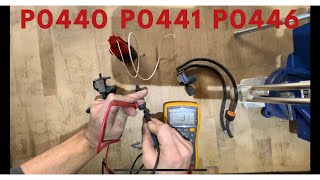
Symptoms: P0440, P0441, or P0446 codes; owner demonstrated testing the VSV.
What fixed it: Testing and replacing the VSV (Vacuum Switching Valve) on the charcoal canister.
Source hint: YouTube/The Fab Forums: 'P0440 P0441 P0446 first gen Toyota Sequoia? Could be your VSV Vacuum Switching Valve. Test it!'
Related OBD-II Codes
Frequently Asked Questions
I'm seeing P0446 on my 2005 Sequoia; do I have to buy the expensive charcoal canister assembly?
Why does the gas pump click off early when I try to fill up my Sequoia?
Where is the charcoal canister located on the 2001-2007 Sequoia?
Are there any safety recalls I should know about while I'm under my Sequoia fixing EVAP codes?
My 2006 Sequoia has a ticking noise and P0446; are they related?
Can I use parts from a Toyota Tundra to fix my Sequoia's P0446 code?
Helpful Videos

Used OEM Parts in Stock
New Aftermarket Parts Available


The information in this article is provided for general reference and educational purposes only. Vehicle specifications, procedures, and part compatibility can vary by production date, trim level, and region. Always consult your vehicle's factory service manual and verify part numbers before purchasing or performing repairs. Safety-critical components such as airbags, seat belts, and braking systems should be installed by a qualified professional.
- Toyota Sequoia:
- 🧭 Diagnostic Flowchart
- 🎬 Helpful Videos
- 🛍️ Shop This Part
- What's Unique About the 2001-2007 Toyota Sequoia
- Symptoms You May Notice
- Most Likely Causes
- Rare But Worth Checking
- Diagnosis Steps
- Parts You'll Likely Need
- Related Codes That Often Appear With This One
- Platform-Specific Known Issues
- Documented NHTSA Reports
- Mechanic-Grade Diagnostic Values
- Hidden / Shadow Codes Worth Checking
- Scan Tool Commands That Help
- Wiring & Ground Locations
- Real Owner Repair Stories
- OEM Part Supersession History
- Model Year Variations Within This Range
- Other Known Issues on This Vehicle
- Used vs. New Parts: Buying Guide for This Vehicle
- Real Owner Stories
- 2001 Toyota Sequoia 4x4
- 2001 Toyota Sequoia
- 2000 Toyota Tundra 4.7L V8
- 2001-2007 Toyota Sequoia
- Related OBD-II Codes
- Frequently Asked Questions
- 🎟️ Get 5% Off