

P0460 on 2011-2023 Chrysler 300: Fuel Level Sensor Circuit Malfunction Causes and Fixes
On a 2011-2023 Chrysler 300, code P0460 is almost always caused by a failed fuel level sending unit located in the fuel tank. This results in an erratic or non-working fuel gauge. The fix is to replace the sending unit, which is often part of the fuel pump module, costing around $100-$150 for an aftermarket part and 2-3 hours of labor.
- P0460 on your Chrysler 300 means the computer can't trust the fuel gauge reading, almost always due to a bad fuel level sending unit on the driver's side of the tank.
- You can still drive the car, but keep track of your mileage to avoid running out of gas, as the gauge will be unreliable.
- The most probable fix is replacing the primary (driver's side) fuel pump and sending unit assembly, which is located in the fuel tank and accessed from under the rear seat.
- You can save significant money by using an aftermarket part ($85-$250) versus an OEM part from a dealer (often over $400).
- Before buying parts, inspect the wiring and connector on top of the fuel tank for corrosion or damage, as this can sometimes be a simple fix.
What's Unique About the 2011-2023 Chrysler 300
The Chrysler 300 (and its platform mates, the Dodge Charger and Challenger) uses a saddle-style fuel tank that straddles the driveshaft. This design necessitates two separate sending units to measure the fuel level accurately across both lobes of the tank. Code P0460 specifically refers to a malfunction in the 'A' circuit, which is the primary sending unit located on the driver's side with the main fuel pump. The secondary unit is on the passenger side. The resistive strip on the primary sending unit is a very common failure point, leading to the erratic readings that trigger the code. While some manufacturers sell the sensor separately, on the 300 it is most commonly replaced as part of the entire fuel pump module assembly.
Generation note: The 2011-2023 model years cover the entire second generation (LD) of the Chrysler 300. There was a significant mid-cycle refresh for the 2015 model year with updated styling and technology (including the Uconnect system), but the underlying fuel system architecture related to this code remained consistent across all years and engine types. However, a TSB indicates that replacement fuel pumps for 2010-2016 models may come with an updated connector that requires re-pinning the vehicle's harness.
Symptoms You May Notice
- Check Engine Light is on
- Fuel gauge is inaccurate, erratic, or stuck on full or empty
- Fuel gauge drops to empty immediately after filling the tank, then may or may not return to a reading later
- Distance-to-empty calculation is incorrect or shows dashes
- Low fuel warning light may illuminate at incorrect times or not at all
- Replacing the instrument cluster, as the fuel gauge is part of it. The gauge itself is rarely the problem; it simply displays the faulty information sent to it.
- Replacing the secondary (passenger side) fuel sending unit. While it can also fail, it will typically set a different code and does not correspond to the 'A' circuit of P0460.
Most Likely Causes
- Failed Fuel Level Sending Unit 🔴 High Probability → Shop Fuel Tank Sending Unit The resistive strip on the sending unit's circuit board wears out from the constant movement of the float arm's contact. This wear creates open spots or areas of high resistance, causing the signal to become erratic. This is the most common failure point for P0460 on this platform.
How to confirm: Access the top of the fuel pump module and test the resistance of the sending unit with a multimeter while manually moving the float arm. For most Chrysler vehicles, the resistance should change smoothly from approximately 70-73 ohms (Empty) to 9-10 ohms (Full). Any erratic jumps, or readings of infinite resistance (open circuit), confirm the unit is bad.
Typical fix: Replace the fuel level sending unit. On the Chrysler 300, this is typically done by replacing the entire driver's side fuel pump module it is attached to. Access is under the rear seat cushion.
Est. part cost: $80-$200 - Damaged Wiring or Corroded Connector 🟡 Medium Probability The wiring and connector are located on top of the fuel tank, under the rear seat. Spills, moisture in the cabin, or road salt spray (especially on AWD models) can potentially lead to corrosion over time, interrupting the signal. The connector pins for the fuel pump power and ground are known to sometimes overheat and burn.
How to confirm: Visually inspect the wiring harness and connector going to the fuel pump module for any signs of corrosion (green or white powder), physical damage, or loose pins. Perform a continuity test on the signal, ground, and power wires between the PCM and the fuel pump connector to check for breaks in the wire.
Typical fix: Repair the damaged section of wiring or clean/replace the corroded connector. Dielectric grease should be applied to the new connection to prevent future corrosion. Some replacement fuel pump kits come with a new pigtail connector that must be spliced in.
Est. part cost: $10-$50
Rare But Worth Checking
- Powertrain Control Module (PCM) Failure: → Shop Engine Control Module (ECM) This is very rare. The PCM should only be considered after thoroughly testing the sending unit and its entire circuit and finding no faults.
- Stuck or Damaged Float Arm: It is possible, though uncommon, for the float arm to become physically stuck or bent due to debris in the tank or improper installation of the fuel pump module. This would cause the gauge to be stuck at one level.
Diagnosis Steps
- Scan for Codes: Use an OBD-II scanner to confirm P0460 and check for any other related codes like P0462 or P0463. Troubleshoot P0462/P0463 first if present.
- Check Freeze Frame Data: Review the freeze frame data to see the vehicle conditions (speed, RPM, fuel level) when the code was set.
- Inspect Wiring and Connector: Remove the rear seat cushion (driver's side) to access the fuel pump module cover. Inspect the electrical connector and wiring for any visible damage, corrosion, or loose connections.
- Test the Circuit: Using a multimeter and a wiring diagram, check for proper voltage and ground at the fuel pump connector. Check for continuity on the signal wire between the pump connector and the PCM connector. A voltage drop of more than 1V across the circuit indicates a problem.
- Test the Sending Unit: If the wiring is okay, test the fuel level sending unit itself. Disconnect the connector and measure the resistance across the sender pins. The resistance for most Chryslers should be around 70-73 Ohms at Empty and 9-10 Ohms at Full. Move the float arm (if the unit is removed) or watch the reading change as fuel is consumed. Any sudden jumps to infinity (open) or zero indicate a faulty sender.
- Confirm the Fix: If the sending unit is faulty, replace the driver's side fuel pump assembly. If the wiring is faulty, repair it. Clear the codes, drive the vehicle, and perform a fill-up to ensure the fuel gauge reads correctly and the code does not return.
Parts You'll Likely Need
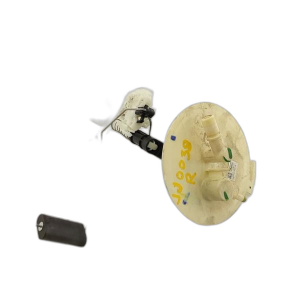
- Fuel Pump and Sending Unit Assembly (Primary/Driver's Side)
(OEM #Various, e.g., 68234609AB, 68102525AE (Varies by year/engine/AWD, must verify with VIN))— This is the most common cause of P0460. The sending unit wears out and is integrated into the primary fuel pump module, making a complete assembly replacement the standard repair. This assembly is on the driver's side.
Trusted brands: Mopar, Delphi, Spectra Premium, Carter, Dorman
OEM price range: $400-$600
Aftermarket price range: $85-$250
Related Codes That Often Appear With This One
- P0462 — Indicates the Fuel Level Sensor 'A' Circuit signal is too low (short to ground), often caused by the same failing sensor or wiring.
- P0463 — Indicates the Fuel Level Sensor 'A' Circuit signal is too high (open circuit), which is another common failure mode of the same sensor or its wiring. This is the most common companion code.
- U1403 — A generic code for 'Implausible Fuel Level Signal Received,' which can be set by the Body Control Module (BCM) when the fuel level data from the PCM is deemed unreliable.
Technical Service Bulletins (TSBs) & Recalls
- TSB 08-152-23 (supersedes 08-032-17) was issued for 2010-2016 models, indicating that when replacing the fuel pump module, the new part may come with an updated harness connector that MUST be installed. The pin locations for the fuel pump ground and fuel level sensor signal are different on the new pumps, and failure to use the new pigtail will result in a no-start or incorrect gauge reading.
Platform-Specific Known Issues
- The dual-sender system in the saddle tank is key. P0460 always points to the driver's side ('A' circuit). Do not replace the passenger side ('B' circuit) unit for this code.
- A Reddit user who replaced both fuel pumps still had an incorrect gauge reading, asking if calibration was needed. The community response focused on verifying correct resistance (ohms) during installation and ensuring the float arms were not bent or obstructed, as there is no electronic calibration process for the user.
Mechanic-Grade Diagnostic Values
- Fuel Level Sending Unit Resistance — expected: Smoothly sweeps from ~70-73 Ohms (Empty) to ~9-10 Ohms (Full).. Failure: Readings are erratic, jump to infinite (open circuit), or do not change when the float arm is moved.
- Fuel Pump Relay Control (via Scan Tool) — expected: Fuel pressure should be 59 psi +/- 5 psi (407 KPa +/- 34 KPa) when the pump is actuated.. Failure: Pressure is low, zero, or does not build when the relay is commanded on, indicating a pump or circuit issue.
- Voltage at Fuel Pump Connector (Signal Wire) — expected: Varies based on fuel level, typically between 0.5V (empty) and 4.5V (full) on many systems.. Failure: Voltage is stuck at 0V, 5V, or does not change with fuel level, indicating a wiring or sensor fault.
Scan Tool Commands That Help
- wiTECH (or equivalent professional scan tool): Fuel Pump Relay Actuation Test — To command the fuel pump on, bypassing the ignition switch and PCM's timed prime. This allows a technician to verify the integrity of the power and ground circuit to the pump and test for fuel pressure, helping to isolate a bad pump from a control-side problem.
- wiTECH (or equivalent professional scan tool): Read Fuel Level Sensor Voltage/Resistance — To view the raw data the PCM is receiving from the fuel level sensor. This helps determine if the signal is erratic, stuck high/low, or rational without having to immediately access the sensor with a multimeter. A wiggle test on the harness can be performed while watching this data.
Wiring & Ground Locations
- Fuel Pump Module Connector (Driver's Side) — Under the driver's side rear seat cushion, on top of the fuel tank, beneath a black access cover.. This is the main connection point for the primary fuel level sensor ('A' circuit). Corrosion or damage here directly causes P0460. The two thicker wires are for the pump motor, while the three thinner wires are for the level sensor.
- G304 — Located near the base of the B-pillar.. This is a major body ground point. While not exclusively for the fuel pump, a poor connection here can cause a host of electrical issues, potentially including erratic sensor readings.
- G120 — Under the driver's seat.. This is another ground point referenced in wiring diagrams for various interior components and harnesses that run to the rear of the vehicle.
- Fuel Pump Connector Pinout (New Style per TSB 08-152-23) — At the driver's side fuel pump module.. Pin 3: Fuel Pump Ground (-), Pin 4: Fuel Level Sensor Signal, Pin 5: Fuel Pump Control (+). The TSB notes that on updated pumps, the ground and signal pins are swapped. Failure to re-pin the harness using the supplied pigtail will cause this code and/or a no-start.
Real Owner Repair Stories
- 2CarPros Forum User (2012 Chrysler 300) — Car would not start after installing a new fuel pump. After manually grounding a wire, the car started but the fuel gauge read empty and set a code.
❌ Tried (didn't work) Installing a new fuel pump module out of the box.
✅ What actually fixed it The aftermarket fuel pump module was wired incorrectly from the manufacturer. The fuel pump ground was incorrectly pinned to the location for the fuel level sensor signal (Pin 3). The user had to either re-wire the connector on the new pump or return it for a correctly wired unit. The final fix was to ensure the vehicle harness ground wire correctly corresponded to the pump's actual ground pin.
OEM Part Supersession History
e.g., 05136022AI, 68102700AB, 68103913AC→e.g., 05136022AJ, 68102700AC, 68103913AD— Internal design change.
Heads up: The new part numbers require the vehicle's wiring harness connector to be replaced with a new pigtail (included with the pump kit). The pin locations for the fuel pump ground and fuel level sensor signal are swapped on the new design. Failure to change the connector will lead to a no-start condition or a P0460 code.
Model Year Variations Within This Range
- 2010-2016: Replacement OEM fuel pump modules for these years have an updated internal wiring design. This necessitates cutting the factory connector off and splicing in a new pigtail connector (which comes with the new pump) to match the new pinout. Older and newer years outside this range may not be affected.
Diagnostic Flowchart
Other Known Issues on This Vehicle
Issues unrelated to this code that are worth knowing about as an owner of this generation:
- Hemi Lifter/Camshaft Failure ('Hemi Tick') 🔴 High — Common on 5.7L and 6.4L Hemi engines, often appearing between 40,000-80,000 miles. Can lead to misfire codes (e.g., P0300) and catastrophic engine damage if ignored. (Ref: S1709000010RevB (describes inspection process for cam/lifter wear))
- Uconnect 8.4" Screen Delamination 🟠 Medium — Widespread on 2017+ models. The screen's top layer bubbles and separates, causing 'ghost touches,' unresponsiveness, and loss of function for climate, radio, and backup camera. (Ref: No recall, but subject of class-action lawsuits. A 2020 recall addressed a different software issue causing the backup camera image to linger.)
- Alternator Failure 🔴 High — A known issue, particularly on 2011-2014 models, which were subject to a recall for diode thermal failure. Failure can cause the vehicle to stall while driving. (Ref: Recall on 2011-2014 models for alternator diode failure.)
- Transmission Shifting Issues (ZF 8-Speed) 🟠 Medium — Owners report rough shifting, shuddering, or hesitation. Often can be improved with a software update to the PCM/TCM, but can sometimes indicate internal transmission problems. (Ref: Software updates are a common dealer fix.)
Used vs. New Parts: Buying Guide for This Vehicle
When a used part is the smart pick: Given the high failure rate of the sending unit's resistive strip due to wear, buying a used fuel pump assembly is generally a poor choice. The labor to access the pump (dropping the tank or removing the rear interior) is significant, and installing a used part with unknown remaining life carries a high risk of having to do the job twice. A used part should only be considered in a budget-critical situation where the donor vehicle's mileage is confirmed to be very low.
Donor-vehicle mileage cap: roughly under 40000 miles for the part to have meaningful remaining life.
What to inspect on the donor part:
- Check electrical connections for any signs of corrosion, melting, or frayed wires.
- If possible, test the resistance (ohms) of the sending unit before purchase to ensure it sweeps smoothly within the 10-73 ohm range.
- Inspect the float arm to ensure it moves freely and is not bent or damaged.
- Avoid parts from vehicles that show signs of sitting for a long time with old fuel, which can damage the components.
Aftermarket brands forum-validated for this vehicle:
- Delphi
- Spectra Premium
- Carter
Brands owners have reported issues with on this vehicle:
- Unbranded, 'white-box' parts from online marketplaces should be avoided due to inconsistent quality control. One user reported a brand new Delphi pump failing within a few months, highlighting that even reputable brands can have defects, but the warranty process is more reliable than with no-name parts.
Real Owner Stories
Aggregated from forums and TSBs cited above. Mileages and costs reflect what owners reported in those sources.
2011-2023 Chrysler 300
Symptoms: The fuel gauge was erratic and the user was asking if a calibration was needed because the gauge still read incorrectly after replacing both fuel pumps.
What fixed it: The community recommendation was to verify the float arms were not bent or obstructed and to ensure the correct resistance range was verified before closing the tank.
Source hint: Reddit: Fuel level sender calibration???
2010-2016 Chrysler 300
Symptoms: Incorrect gauge reading or a no-start condition after installing a replacement fuel pump module.
What fixed it: Installing the updated harness connector included with the new pump to account for changed pin locations for the fuel pump ground and fuel level sensor signal.
Source hint: TSB 08-152-23 (supersedes 08-032-17)
Related OBD-II Codes
Frequently Asked Questions
I'm replacing the fuel pump on my 2014 Chrysler 300; do I need to use the new wiring pigtail included in the kit?
My fuel gauge is erratic on my AWD Chrysler 300. Could road salt be the cause of P0460?
Is there a way to calibrate the fuel level sender on a Chrysler 300 after replacement?
Which fuel pump should I replace for a P0460 code on my Chrysler 300?
Can I just buy a used fuel pump from a salvage yard to fix my P0460 code?
My 2018 Chrysler 300 has a bubbling screen and the fuel gauge is acting up. Are they related?
Helpful Videos
![Vintage Fuel Gauge/Sending Unit Testing [Dodge Pickup]](https://img.youtube.com/vi/pONgMGw87Aw/mqdefault.jpg)

Used OEM Parts in Stock
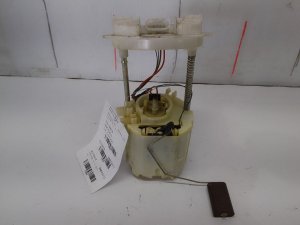
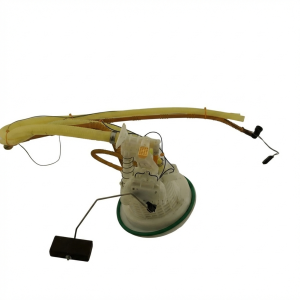
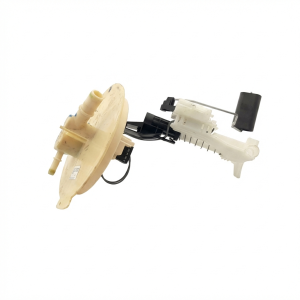
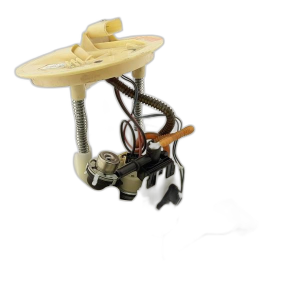
New Aftermarket Parts Available


The information in this article is provided for general reference and educational purposes only. Vehicle specifications, procedures, and part compatibility can vary by production date, trim level, and region. Always consult your vehicle's factory service manual and verify part numbers before purchasing or performing repairs. Safety-critical components such as airbags, seat belts, and braking systems should be installed by a qualified professional.
- Chrysler 300:
- 🧭 Diagnostic Flowchart
- 🎬 Helpful Videos
- 🛍️ Shop This Part
- What's Unique About the 2011-2023 Chrysler 300
- Symptoms You May Notice
- Most Likely Causes
- Rare But Worth Checking
- Diagnosis Steps
- Parts You'll Likely Need
- Related Codes That Often Appear With This One
- Technical Service Bulletins (TSBs) & Recalls
- Platform-Specific Known Issues
- Mechanic-Grade Diagnostic Values
- Scan Tool Commands That Help
- Wiring & Ground Locations
- Real Owner Repair Stories
- OEM Part Supersession History
- Model Year Variations Within This Range
- Other Known Issues on This Vehicle
- Used vs. New Parts: Buying Guide for This Vehicle
- Real Owner Stories
- 2011-2023 Chrysler 300
- 2010-2016 Chrysler 300
- Related OBD-II Codes
- Frequently Asked Questions
- 🎟️ Get 5% Off