

P0460 on 2003-2014 GMC Sierra: Fuel Level Sensor vs. Cluster Failure Guide
On 2003-2014 GMC Sierra, P0460 is most often a failed fuel level sending unit in the gas tank or a bad stepper motor in the instrument cluster. A gauge sweep test can tell which is bad. Replacing the fuel pump module costs ~$200-400 in parts; repairing the cluster is ~$150.
- P0460 on a 2003-2014 Sierra points to a problem with either the fuel level sensor in the tank or the gauge in the dashboard.
- For 2003-2007 models, a faulty instrument cluster stepper motor is just as likely, if not more so, than a bad fuel sending unit.
- A proper diagnosis using a scan tool to perform a 'gauge sweep' is critical to avoid replacing the wrong, expensive part.
- If replacing the fuel sending unit, it is recommended to replace the entire fuel pump module with a quality brand like ACDelco or Delphi.
- If the gauge itself is faulty, you can replace just the small stepper motor on the circuit board, which is a cost-effective DIY repair.
What's Unique About the 2003-2014 GMC Sierra
On these GMC Sierra trucks, especially the 2003-2007 'Classic' (GMT800) generation, P0460 is not always a bad fuel level sensor in the tank. These models are notorious for failed stepper motors inside the instrument cluster that physically move the gauge needles. This creates a common misdiagnosis trap where owners replace the fuel pump assembly in the tank when the actual problem is a much simpler and cheaper repair on the dashboard cluster itself. Distinguishing between these two common failures is the key to fixing this code correctly.
Generation note: This range covers two generations: the GMT800 (2003-2007 Classic) and the GMT900 (2007-2014). The GMT800 models are exceptionally prone to instrument cluster stepper motor failure causing this code and other gauge issues. While the GMT900 can also have this issue, a faulty fuel level sending unit in the tank is a more common starting point for diagnosis on the newer generation.
Symptoms You May Notice
- Check Engine Light is on
- Fuel gauge is inaccurate (reads full, empty, or fluctuates wildly)
- Fuel gauge is stuck in one position
- Low fuel warning light comes on at the wrong time or not at all
- Engine may hesitate or stall in rare cases if the issue affects fuel pump operation
- Replacing the fuel pump/sending unit when the actual fault is the instrument cluster stepper motor, especially on 2003-2007 models.
- Replacing the instrument cluster when the actual fault is the fuel level sending unit in the tank.
Most Likely Causes
- Faulty Fuel Level Sending Unit 🔴 High Probability → Shop Fuel Tank Sending Unit The sensor's resistive contacts wear out over time or become contaminated by sulfur in the fuel, causing incorrect readings. This is a common wear item on high-mileage trucks. The float arm can also get stuck or bent.
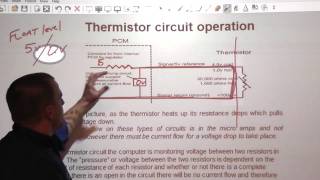
How to confirm: Use a scan tool to monitor the fuel level sensor's live data (voltage or percentage). If the data is erratic, stuck, or doesn't change when fuel is added, the sending unit or its wiring is faulty. The sensor is part of the fuel pump module. Resistance can also be checked with a multimeter; specs are typically around 40 ohms at empty and 250 ohms at full, but vary by model.
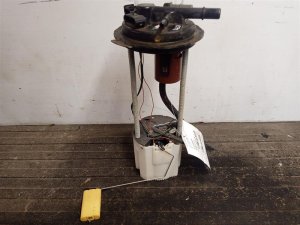
Typical fix: Replace the entire fuel pump module assembly inside the fuel tank. This requires either dropping the tank or lifting the truck bed for access. 🎬 Watch: How to replace the fuel pump by lifting the bed
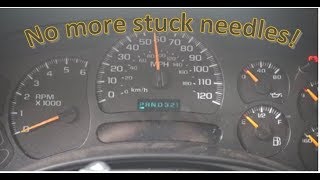
Est. part cost: $150-$450 - Failed Instrument Cluster Stepper Motor 🔴 High Probability → Shop Instrument Cluster Extremely common on the GMT800 (2003-2007) platform. The small electric motors (part number X27.168) that drive the gauge needles fail, causing them to stick, sweep incorrectly, or give false readings. Often, other gauges like the speedometer or oil pressure gauge will fail simultaneously or intermittently.
How to confirm: Perform a gauge sweep test using a capable scan tool. If the fuel gauge needle fails to sweep smoothly from empty to full and back, the stepper motor is bad. Another sign is if the scan tool shows a correct fuel level percentage from the PCM, but the physical gauge on the dash reads incorrectly.
Typical fix: Remove the instrument cluster, disassemble it, and desolder the old stepper motor(s) from the circuit board, then solder in new ones. It is best practice to replace all stepper motors at once, 🎬 See this step-by-step guide to replacing cluster stepper motors as they tend to fail around the same time.
Est. part cost: $10-$50 for a set of motors - Damaged or Corroded Wiring ⚪ Low Probability The wiring harness running along the frame rail to the fuel tank can be damaged by road debris, corrosion (especially in rust-belt states), or rodents. The ground wire connection at the frame is a common point of failure.
How to confirm: Visually inspect the wiring harness from the fuel tank to the engine bay. Check for continuity and voltage at the fuel pump connector (typically a purple signal wire and a black ground wire). A voltage drop test can identify high resistance from corrosion.
Typical fix: Repair or replace the damaged section of the wiring harness. Clean and secure the ground connection point on the frame.
Est. part cost: $10-$100
Rare But Worth Checking
- Faulty Powertrain Control Module (PCM): → Shop Engine Control Module (ECM) This is extremely rare. The PCM should only be considered as a cause after all other possibilities, including the sending unit, cluster, and wiring, have been definitively ruled out.
- Faulty Fuel Pump Driver Module (FPDM): → Shop Fuel Pump On some newer GMT900 models, a separate Fuel Pump Driver Module controls the fuel pump and communicates level information. A failure in this module can trigger P0460. These modules are often mounted on the frame rail and are susceptible to corrosion.
Diagnosis Steps
- Connect a scan tool and confirm P0460 is the primary code. Note any other codes, especially P0461-P0464.
- Using the scan tool, observe the live data for 'Fuel Level Sensor' (usually displayed as a percentage or voltage). Compare this reading to your best guess of the fuel in the tank.
- If the scan tool data seems plausible and matches the fuel level, but the gauge on the dash is wrong, the instrument cluster is the likely problem. Proceed to step 4.
- If the scan tool data is erratic, stuck (e.g., at 0% or 100%), or doesn't change when you rock the vehicle or add fuel, the sending unit or wiring is the likely problem. Proceed to step 5.
- (Cluster Diagnosis) Use the scan tool's bidirectional controls to perform an 'Instrument Cluster Gauge Sweep'. Watch the fuel gauge. If it stutters, sticks, or doesn't move correctly, the stepper motor is bad and needs to be replaced. If other gauges also fail the sweep, this further confirms a cluster issue.
- (Sending Unit/Wiring Diagnosis) If the gauge sweep passes, the problem is in the tank or wiring. Gain access to the fuel pump electrical connector on top of the tank.
- Inspect the connector for corrosion or damage. Check for proper voltage and ground at the connector according to a service manual (typically a 4-wire connector with power, ground, and two signal wires for the sensor). The signal wire is often purple.
- If wiring is confirmed good (no opens, shorts, or high resistance), the fuel level sending unit has failed. It is part of the fuel pump module and should be replaced.
Parts You'll Likely Need
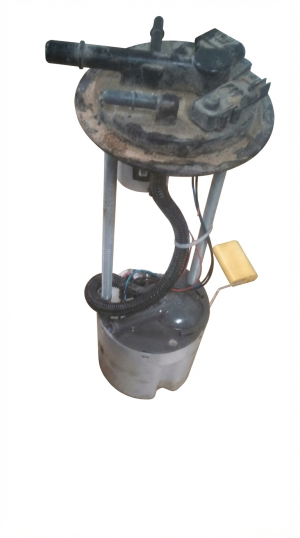
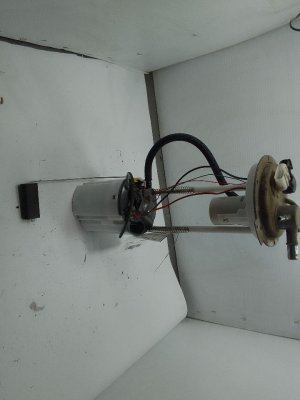
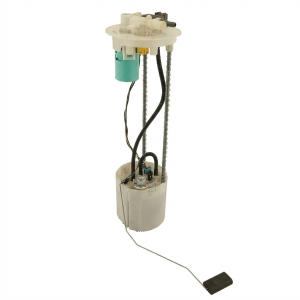
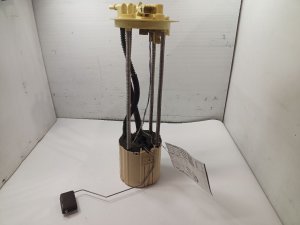
- Fuel Pump Module Assembly
(OEM #ACDelco MU1614, MU1772, M100264 (Varies by year/tank size))— This is the most common cause of a P0460 when the instrument cluster is working correctly. The sending unit fails, and it is integrated into this module. Replacing the whole assembly is best practice.
Trusted brands: ACDelco, Delphi
OEM price range: $250-$450
Aftermarket price range: $150-$300 - Instrument Cluster Stepper Motor Kit
(OEM #X27.168)— This is the specific motor that fails in the instrument cluster, particularly on 2003-2007 models, causing the gauge to malfunction. They are typically sold in kits to replace all gauges at once, which is highly recommended.
Trusted brands: Juken/Switec
OEM price range: $20-$50
Aftermarket price range: $10-$30
Related Codes That Often Appear With This One
- P0461 (Fuel Level Sensor Circuit Range/Performance)
- P0462 (Fuel Level Sensor Circuit Low Input)
- P0463 (Fuel Level Sensor Circuit High Input)
- P0464 (Fuel Level Sensor Circuit Intermittent)
Technical Service Bulletins (TSBs) & Recalls
- GM TSB 07-08-47-004: Addresses erratic fuel gauge readings on some 2004-2007 models, recommending a software update for the instrument panel cluster (IPC) in some cases before hardware replacement.
- GM TSB 05-06-04-041: Details issues with fuel sulfur contamination affecting the fuel level sensor and causing erratic readings, leading to codes like P0460. The fix involves replacing the fuel sender.
Platform-Specific Known Issues
- A recall (GM #13420) was issued for some 2012-2013 Sierra HD models with 6.6L diesel engines and dual fuel tanks for a faulty transfer pump that could cause inaccurate fuel gauge readings.
- On GMT800 (2003-2007) models, GM had a special policy (07187) that extended the warranty for instrument cluster gauge failures, but this has long since expired. It acknowledged the widespread stepper motor issue.
Mechanic-Grade Diagnostic Values
- Fuel Level Sensor Resistance — expected: Approximately 40 Ohms when the tank is empty and 250 Ohms when the tank is full. Varies slightly by specific part.. Failure: An open circuit (infinite resistance) or a reading that is stuck and does not change as the fuel level changes.
- Fuel Level Sensor Signal Wire Voltage — expected: Approximately 0.5V when empty to 4.5V when full, with a 5V reference from the PCM.. Failure: Voltage is stuck at 0V (short to ground), 5V (open circuit), or does not change when rocking the vehicle to slosh fuel.
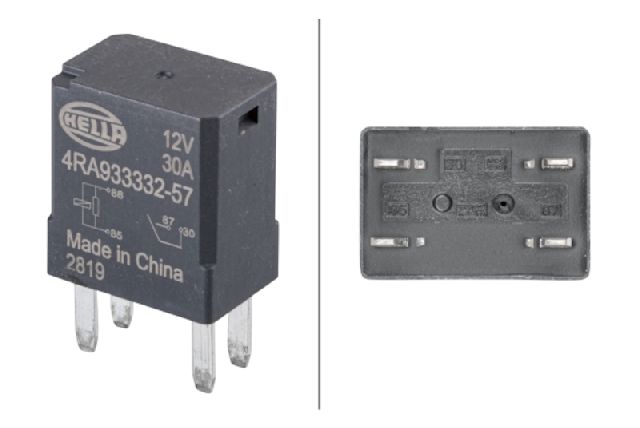
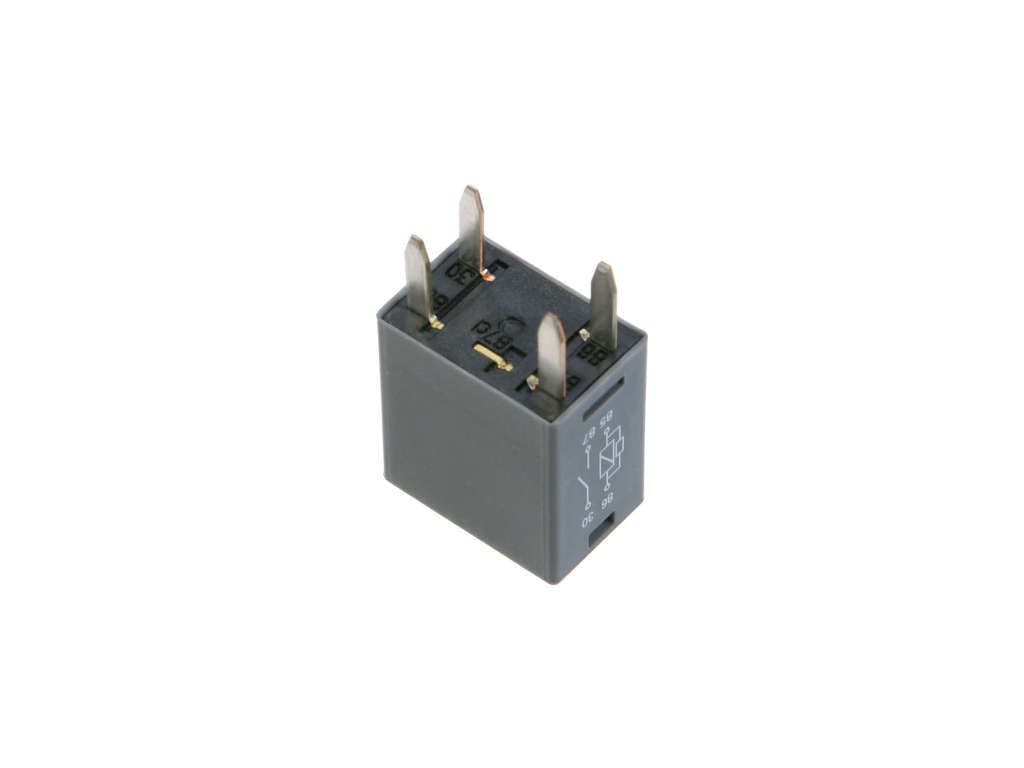
- Fuel Pump Connector - Pump Power Wire — expected: A thick gauge gray wire should have battery voltage for a few seconds at key-on, and while the engine is running.. Failure: Low or no voltage indicates a problem with the fuel pump relay, fuse, or wiring from the front of the vehicle.
- Fuel Pump Connector - Sender Signal Wire — expected: A thin gauge purple wire (sometimes with a white stripe) should show voltage between 0.5V and 4.5V.. Failure: Incorrect or static voltage points to a sender or wiring issue.
Scan Tool Commands That Help
- GM Tech 2 / GDS2: Instrument Panel Cluster > Special Functions > Gauge Sweep — This is the definitive test to confirm a faulty stepper motor. If the scan tool shows a valid fuel level percentage from the PCM, but the physical gauge fails to sweep correctly during this test, the cluster is the fault.
- GM Tech 2 / GDS2: Diagnostics > [Vehicle Year/Model] > Powertrain > [Engine] > Data Display — Used to monitor the live 'Fuel Level Sensor' voltage or percentage reported to the PCM. This data should be compared against the physical gauge's reading to differentiate between a sender/wiring issue and a cluster issue.
Wiring & Ground Locations
- Fuel Pump Ground — On the driver's side frame rail, typically near the driver's side tire or just forward of the fuel tank.. This is the primary ground for both the fuel pump motor and the fuel level sending unit. Corrosion or a loose connection here can cause erratic voltage, leading to P0460 and/or fuel pump failure.
- G401 — On the spare tire hoist crossmember/bracket at the rear of the frame.. This is a major chassis ground point for the rear body harness, which includes wiring for the fuel tank. A bad connection here can affect multiple systems, including the fuel level signal.
- Fuel Pump Module Connector (at tank) — Top of the fuel pump module, accessible by dropping the tank or lifting the bed.. This 4-pin connector is a common failure point. The purple wire is the level sensor signal, and a thin black wire is the sensor ground. The thicker gray wire is pump power, and the thicker black wire is the pump ground. Heat from high resistance can melt the connector, causing an open or short.
Real Owner Repair Stories
- Multiple forum threads (e.g., silveradosierra.com, gm-trucks.com) (Commonly reported on 2003-2006 GMC Sierra & Chevy Silverado 1500) — Fuel gauge reads empty with a full tank and Check Engine Light with code P0460 or P0463.
❌ Tried (didn't work) Replacing the entire fuel pump/sending unit assembly in the tank.
✅ What actually fixed it The problem persisted until the instrument cluster was either repaired or replaced. The root cause was a failed stepper motor (X27.168) for the fuel gauge needle, not the sending unit in the tank. This is a very common misdiagnosis.
OEM Part Supersession History
XC5.168, X15.168→X27.168— The original stepper motors used in 2003-2006 GM instrument clusters were prone to premature failure. The X27.168 is an updated, more robust OEM design.
Heads up: The new X27.168 motors are a direct replacement for the old ones and should be used for all repairs.Varies→ACDelco MU1614 / GM 19369916— Part consolidation and design updates.
Heads up: MU1614 is a widely used replacement for many 1999-2003 trucks. Always verify fitment with VIN, as tank size and model year can affect which module is correct.
Model Year Variations Within This Range
- 2003-2007 vs 1999-2002: The instrument cluster communication protocol changed in 2003 to a CAN bus system. Therefore, instrument clusters from 1999-2002 models are not electrically compatible with 2003-2007 models, even if they physically fit.
- 2003-2006: These specific years are the most likely to experience the instrument cluster stepper motor failure. While it can happen on other years, the failure rate was highest in this range, leading to a special warranty policy from GM that has since expired.
Diagnostic Flowchart
Other Known Issues on This Vehicle
Issues unrelated to this code that are worth knowing about as an owner of this generation:
- Rusted Brake Lines 🔴 High — Extremely common on GMT800 (1999-2007) trucks, especially in the rust belt. Lines can fail without warning. (Ref: NHTSA Investigation PE10009 (2010), but no full recall was issued.)
- 4L60-E Transmission Failure 🔴 High — Common on GMT800 models. The 3-4 clutch pack, sun shell, and shift solenoids are frequent failure points, often occurring between 100k-150k miles.
- Active Fuel Management (AFM) Lifter Failure 🔴 High — Common on GMT900 (2007-2014) V8 engines (5.3L L83, 6.2L L86). Can cause misfires (P0300), ticking noises, and eventually require engine top-end rebuild. (Ref: GM TSB 15-06-01-002 (multiple revisions))
- Intermediate Steering Shaft (ISS) Clunk 🟡 Low — Very common on both GMT800 and GMT900 platforms. A clunking or popping noise is felt in the steering wheel, especially at low speeds. Caused by poor lubrication from the factory. (Ref: Multiple TSBs exist, recommending lubrication or replacement of the shaft.)
- Cracked Dashboard (GMT900) 🟡 Low — Very common on 2007-2014 models. The plastic dashboard develops cracks, typically near the passenger airbag and instrument cluster bezel, due to sun exposure and material defects.
Used vs. New Parts: Buying Guide for This Vehicle
When a used part is the smart pick: A used instrument cluster can be a budget-friendly option, but it's a gamble as it may have the same stepper motor issue. A professionally rebuilt cluster with a warranty is a safer choice. A used fuel pump is strongly discouraged due to it being a primary wear item.
Donor-vehicle mileage cap: roughly under 80000 miles for the part to have meaningful remaining life.
What to inspect on the donor part:
- For a used cluster, ensure it's from the correct year range (2003-2007 for GMT800) to ensure CAN bus compatibility.
- Check the cluster lens for deep scratches or cracks.
- For any part, prefer donors from dry, southern/western climates to minimize corrosion on electrical connectors and grounds.
OEM-only on this vehicle (don't cheap out):
- Fuel Pump Module Assembly
Aftermarket brands forum-validated for this vehicle:
- Fuel Pumps: ACDelco (OEM), Delphi (often considered OEM equivalent).
- Cluster Stepper Motors: Switec / Juken (OEM supplier for the X27.168 motors).
Brands owners have reported issues with on this vehicle:
- Generic, unbranded, or 'white-box' fuel pump assemblies are frequently reported on forums to have very short service lives, sometimes failing within a year.
Real Owner Stories
Aggregated from forums and TSBs cited above. Mileages and costs reflect what owners reported in those sources.
2005 GMC Sierra — ~165000 miles
Symptoms: The check engine light came on for P0460 and the fuel gauge was reading incorrectly. It would fluctuate or get stuck.
What fixed it: Initially replaced the fuel sending unit in the tank, but the problem continued. The actual cause was a failed stepper motor in the instrument cluster, which had to be replaced to fix the gauge.
Source hint: silveradosierra.com thread titled 'P0463 and P0460 Fuel Level Sensor Circuit High and Malfunction'
2004 GMC Sierra — ~140000 miles
Symptoms: Fuel gauge was stuck on empty, triggering the check engine light. A few weeks later, the speedometer started sweeping incorrectly as well.
What fixed it: Removed the instrument cluster, desoldered all of the original stepper motors from the circuit board, and soldered in a new set. This fixed all the gauges.
Source hint: reddit.com/r/GMT800
Related OBD-II Codes
Frequently Asked Questions
How do I know if the P0460 code on my Sierra is caused by the fuel sending unit or the instrument cluster?
My 2005 Sierra's fuel gauge is bad. Is this covered by GM's special policy for cluster failures?
I have a 2013 Sierra HD with a 6.6L diesel and my fuel gauge is wrong. Does the recall (GM #13420) apply?
What does TSB 05-06-04-041 say about the P0460 code on these trucks?
If I'm replacing the fuel gauge stepper motor (part X27.168), should I replace the others too?
How do I access the fuel level sending unit to replace it?
Could a software update fix my erratic fuel gauge on my 2006 Sierra?
Helpful Videos


Used OEM Parts in Stock
New Aftermarket Parts Available

The information in this article is provided for general reference and educational purposes only. Vehicle specifications, procedures, and part compatibility can vary by production date, trim level, and region. Always consult your vehicle's factory service manual and verify part numbers before purchasing or performing repairs. Safety-critical components such as airbags, seat belts, and braking systems should be installed by a qualified professional.
- GMC Sierra:
- 🧭 Diagnostic Flowchart
- 🎬 Helpful Videos
- 🛍️ Shop This Part
- What's Unique About the 2003-2014 GMC Sierra
- Symptoms You May Notice
- Most Likely Causes
- Rare But Worth Checking
- Diagnosis Steps
- Parts You'll Likely Need
- Related Codes That Often Appear With This One
- Technical Service Bulletins (TSBs) & Recalls
- Platform-Specific Known Issues
- Mechanic-Grade Diagnostic Values
- Scan Tool Commands That Help
- Wiring & Ground Locations
- Real Owner Repair Stories
- OEM Part Supersession History
- Model Year Variations Within This Range
- Other Known Issues on This Vehicle
- Used vs. New Parts: Buying Guide for This Vehicle
- Real Owner Stories
- 2005 GMC Sierra — ~165000 miles
- 2004 GMC Sierra — ~140000 miles
- Related OBD-II Codes
- Frequently Asked Questions
- 🎟️ Get 5% Off