

P0461 on 2009-2019 Ford Flex: Fuel Level Sensor Fault Causes and Fixes
The P0461 code on a 2009-2019 Ford Flex indicates a problem with the fuel level sensor's signal, typically from the primary sensor located in the right side of the fuel tank. This results in an erratic or inaccurate fuel gauge. The most common fix is to replace the fuel level sending unit, which is part of the fuel pump assembly. Due to the need to drop the fuel tank for access, a professional repair is estimated to cost between $753 and $932.
- P0461 on a Ford Flex almost always points to a bad fuel level sending unit in the gas tank, specifically the primary 'A' sensor on the right side.
- The primary symptom will be an unreliable fuel gauge, which can be a significant inconvenience and leave you stranded.
- The repair requires dropping the fuel tank, which is labor-intensive and rated as difficult for a DIYer.
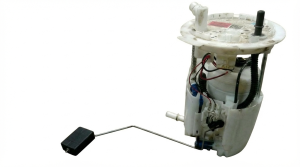
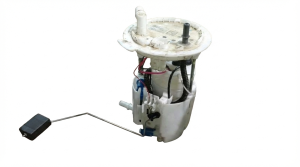
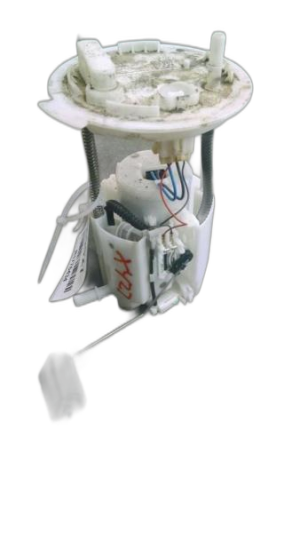
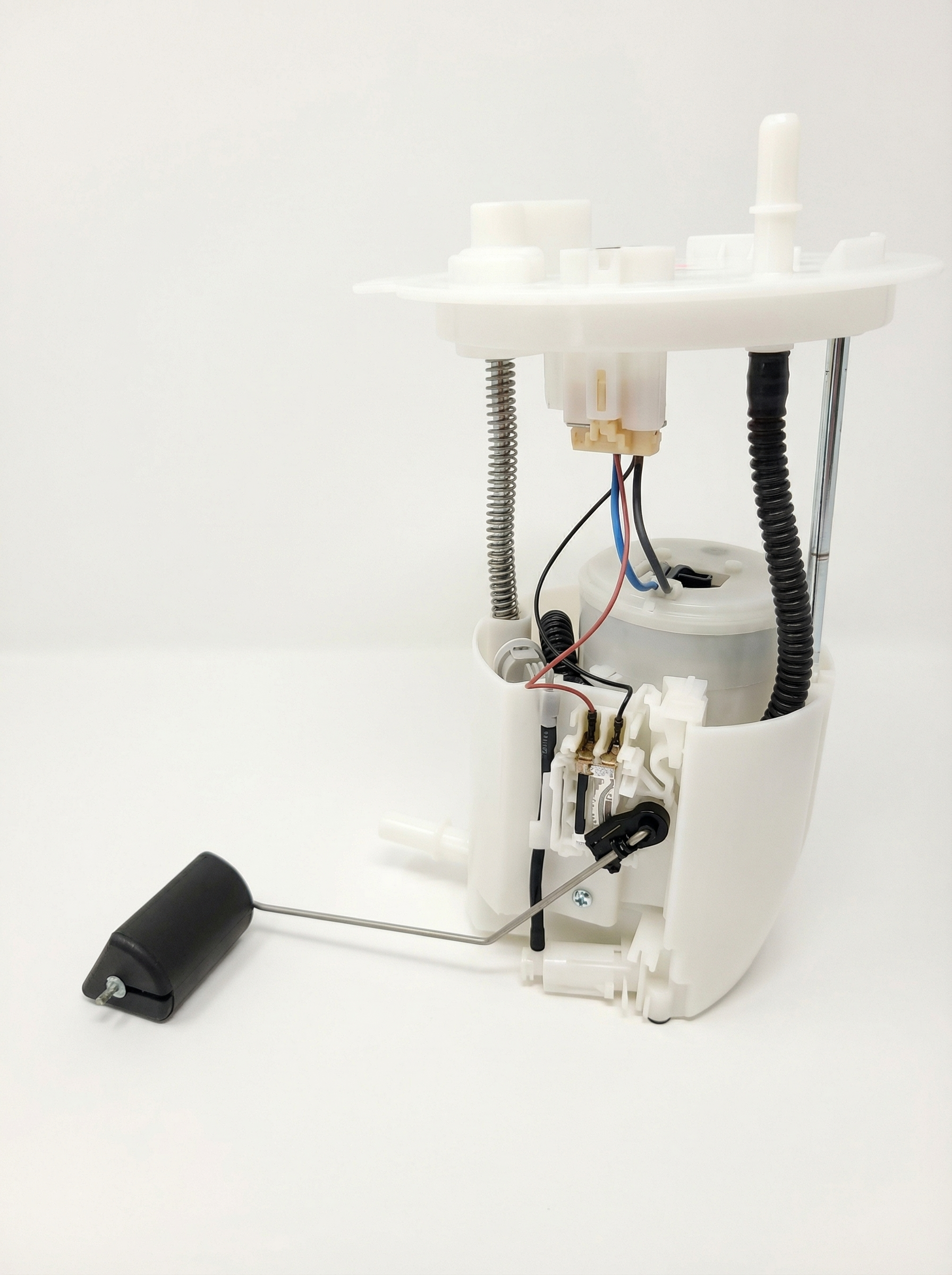
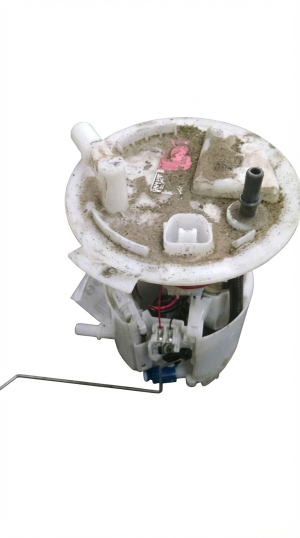
- The most common and recommended repair is to replace the entire fuel pump and sender assembly (e.g., Motorcraft PFS-1028).
- Always diagnose the wiring and connectors thoroughly before condemning the sending unit to avoid unnecessary parts replacement, as corrosion or damage to the harness
What's Unique About the 2009-2019 Ford Flex
The Ford Flex, like many of its platform mates, uses a saddle-style fuel tank to accommodate the driveshaft for all-wheel-drive models. This design necessitates two fuel level sending units. Sensor 'A', which triggers the P0461 code, is the primary sender located on the right (passenger) side of the tank and is integrated into the main fuel pump module. A secondary sender is located on the left side. While the sensor itself is the point of failure, the entire fuel pump assembly is often replaced as a single unit. Failures are typically due to normal wear on the sensor's resistive strip rather than a specific, widespread design flaw unique to the Flex.
Symptoms You May Notice
- Inaccurate or wildly fluctuating fuel gauge
- Fuel gauge stuck on empty or full
- Check Engine Light is on
- Low fuel warning light may stay on or flash, even with a full tank
- Distance-to-empty calculation is incorrect or erratic
- Replacing the instrument cluster when the sending unit or wiring is the actual problem.
- Replacing the entire fuel pump assembly when only a wiring issue at the connector was present.
- Replacing the wrong sending unit (the secondary, left-side unit instead of the primary 'A' unit on the right).
Most Likely Causes
- Faulty Fuel Level Sending Unit 🔴 High Probability → Shop Fuel Tank Sending Unit The resistive strip on the sensor can wear out over time from the float arm constantly moving across its surface. Fuel additives and contaminants, particularly sulfur, can also degrade the contacts, leading to incorrect readings. This is a common failure on many vehicles as they age.
How to confirm: Test the resistance (ohms) of the sending unit with a multimeter while manually moving the float arm. The resistance should change smoothly without any dropouts. Compare the readings at empty and full to the manufacturer's specifications. This requires removing the unit from the fuel tank.
Typical fix: Replace the fuel level sending unit. On the Ford Flex, this is most often done by replacing the complete fuel pump module assembly (Motorcraft PFS-1028 for 2013-2019 EcoBoost models, PFS-1042 for 2013-2019 NA models).
Est. part cost: $427-$453 for the complete fuel pump module assembly. - Wiring or Connector Issues 🟡 Medium Probability The wiring harness leading to the fuel tank is located under the vehicle and is exposed to road debris, moisture, and salt, which can cause corrosion on connectors or breaks in the wires. The connector on top of the fuel pump module is a common place for issues to develop.
How to confirm: Visually inspect the wiring harness and connectors for damage, corrosion, or loose connections from the PCM to the fuel tank. Perform a voltage and ground check at the fuel pump connector. Check for continuity and resistance on the signal wire back to the PCM.
Typical fix: Repair the damaged section of the wiring harness or clean/replace the corroded connector. Ensure the ground connection for the fuel pump assembly is clean and tight.
Est. part cost: $10-$50 for wiring repair supplies.
Rare But Worth Checking
- Faulty Instrument Cluster: If the fuel gauge doesn't respond at all during diagnostic tests (e.g., using a scan tool to command a gauge sweep), the gauge cluster itself could be the problem. This is uncommon and should be diagnosed last.
- Powertrain Control Module (PCM) Fault: → Shop Engine Control Module (ECM) A failure within the PCM's internal circuitry for the fuel level sensor is very rare. This should only be considered after all other possibilities, including the sensor, wiring, and instrument cluster, have been thoroughly ruled out with professional diagnostic tools.
Diagnosis Steps
- Scan the vehicle's computer to confirm the P0461 code and check for any other related fuel system codes.
- Observe the fuel gauge behavior while driving. Note if it's stuck, erratic, or reads inaccurately (e.g., shows half when full).
- Use a scan tool with live data capability to monitor the fuel level sensor voltage (FLS-A). Observe if the voltage reading is stuck or changes erratically as the vehicle moves and fuel sloshes.
- Gain access to the top of the fuel tank. On the Ford Flex, this requires lowering the fuel tank from the vehicle. There is typically no access panel under the rear seats.
- Inspect the electrical connector on top of the fuel pump module for any signs of corrosion, melted pins, or loose wires.
- With the key on, check for the correct reference voltage and a good ground at the connector using a multimeter, following the vehicle's wiring diagram.
- If power and ground are good, disconnect the sensor and measure its resistance (ohms). Compare this reading to a chart of fuel level vs. resistance for the Ford Flex. Rocking the vehicle to slosh fuel should cause the resistance to change.
- If the resistance is out of specification, doesn't change, or shows an open circuit, the sending unit is faulty and the fuel pump module should be replaced.
- If the sensor and wiring test good, the issue may lie with the instrument cluster or PCM, which requires more advanced diagnostics.
Parts You'll Likely Need
- Fuel Pump and Sender Assembly
(OEM #PFS-1028 (Example for 2013-2019 3.5L EcoBoost models))— This is the most common cause of P0461. The sending unit ('Sensor A') is integrated with the fuel pump in a single module for the Ford Flex, located on the right side of the tank.
Trusted brands: Motorcraft, Delphi, Carter
OEM price range: $290-$455
Aftermarket price range: $200-$350 - Fuel Tank Sending Unit (Standalone)
(OEM #PS-937 (Example for 2013-2019, right side sender without pump))— In some cases, the sender can be purchased separately from the pump. However, given the labor involved in dropping the tank, replacing the entire module with the pump is often recommended for longevity.
Trusted brands: Motorcraft
OEM price range: $32-$65
Aftermarket price range: $25-$50
Related Codes That Often Appear With This One
- P0460: Fuel Level Sensor "A" Circuit
- P0462: Fuel Level Sensor "A" Circuit Low
- P0463: Fuel Level Sensor "A" Circuit High
Platform-Specific Known Issues
- Recall 16S31: For 2013-2015 🎬 Watch: How to replace the fuel pump control module Ford Flex with the 3.5L GTDI engine, a recall was issued for the fuel pump electric module (PEM), which could overheat and cause the engine to stall. While not directly for code P0461, a failing module could potentially cause erratic fuel system signals and is a known issue on these vehicles.
Mechanic-Grade Diagnostic Values
- Fuel Level Sending Unit Resistance (2009-2019 models) — expected: Approximately 16 Ohms (± 2 Ohms) at Full and 158-160 Ohms (± 4 Ohms) at Empty.. Failure: Readings are infinite (open circuit), zero (short circuit), or do not change smoothly as the float arm is moved.
- Fuel Level Sensor Circuit Voltage (Live Data) — expected: Approximately 0.5V (Full) to 4.5V (Empty). Note that some Ford systems are inverted, but this is the typical range.. Failure: Voltage is stuck at 0V or 5V, does not change with fuel level, or is erratic.
- PCM Logic for P0461 Trigger — expected: The PCM expects to see a rational change in fuel level over a set distance.. Failure: The code may be set if the change in the fuel level sensor output is 3.5% or less after the vehicle has been driven for approximately 124 miles (200 km).
Scan Tool Commands That Help
- Ford IDS / FORScan: Instrument Panel Cluster (IPC) Self-Test — This command initiates a gauge sweep, moving all instrument needles (including the fuel gauge) through their full range of motion. If the fuel gauge needle moves correctly during the test, it confirms the gauge motor itself is functional, pointing the diagnosis towards the sensor, wiring, or PCM.
Wiring & Ground Locations
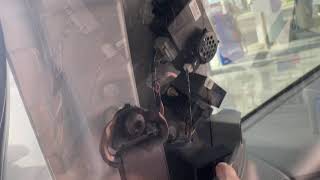
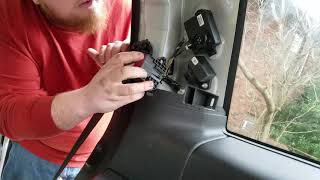
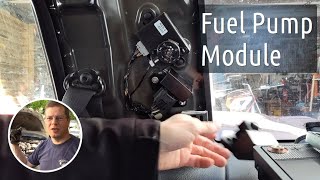
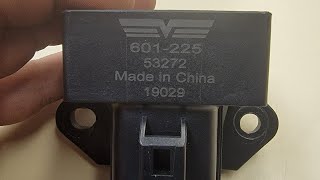
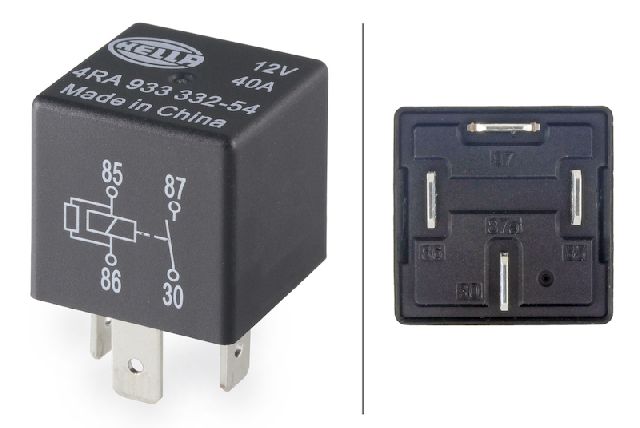
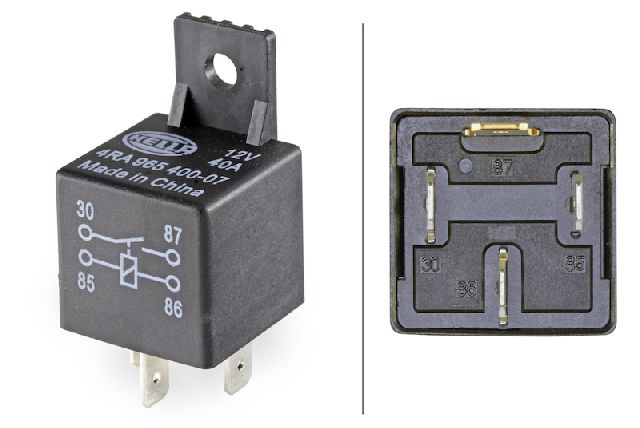
- Fuel Pump Driver Module (FPDM) / Fuel Pump Control Module (FPCM) — Located inside the vehicle, behind the passenger side C-pillar trim panel (the panel behind the rear passenger door).. While not directly setting the P0461 code, a failing FPDM is a very common issue on the Ford Flex that can cause a range of fuel system problems, including stalling or no-start conditions. Technicians often inspect this module during any fuel system diagnosis on this platform due to its high failure rate and the recall on 2013-2015 models.
- Fuel Tank Grounding Strap — A metal strap connecting the fuel tank to the vehicle's chassis/frame.. Corrosion on this grounding strap can create resistance in the fuel level sensor circuit, leading to incorrect readings and potentially triggering a P0461 code. It's a simple but crucial point to inspect for corrosion or looseness.
Real Owner Repair Stories
- YouTube user 'Ford Boss Me - Auto / Politics / Family' (Ford Flex (year not specified, but within the 2009-2019 range)) — Vehicle would start, run for a few seconds, then stumble and die. It would rev up initially but then lose power as if the fuel pump was shutting off.
❌ Tried (didn't work) Initial diagnosis confirmed power was getting TO the Fuel Pump Driver Module (FPDM).
✅ What actually fixed it The aftermarket (Dorman) Fuel Pump Driver Module was failing. It would supply power to the fuel pump for a few seconds on startup but then stop, killing the engine. Replacing the faulty Dorman FPDM with a new module resolved the start-and-stall issue. This highlights how FPDM failure can present as a fuel delivery problem. - YouTube user 'TomsFoolery' (Ford Flex (year not specified)) — Crank no-start condition. The engine would turn over but would not fire, indicating a fuel delivery issue.
❌ Tried (didn't work) Checking for fuel pressure at the fuel rail revealed no pressure.
✅ What actually fixed it The Fuel Pump Driver Module (also called fuel pump relay module) located behind the C-pillar trim was faulty. Replacing this module restored power to the fuel pump and fixed the no-start condition. The video emphasizes this is the most common cause for a no-start on the Flex, more so than the in-tank pump itself.
OEM Part Supersession History
8U5Z-9345-B, 8U5Z-9345-C, 8U5Z-9345-D, AA8Z-9D370-A, AA8Z-9D370-B, AA8Z-9D370-D→GA8Z-9D370-A— Part consolidation and potential design updates by Ford over the vehicle's production run.
Heads up: The latest part number, GA8Z-9D370-A, is the current service replacement for the numerous previous versions of the Fuel Pump Driver Module.
Model Year Variations Within This Range
- 2009-present (General Ford): Ford changed their fuel level sensor resistance standard around 1987. Vehicles from 1987 and newer, including the 2009-2019 Flex, use a 16 Ohm (Full) to 158 Ohm (Empty) range. Older Fords used a 73-10 Ohm range. Using a sensor with the wrong Ohm range will result in incorrect gauge readings.
Diagnostic Flowchart
Other Known Issues on This Vehicle
Issues unrelated to this code that are worth knowing about as an owner of this generation:
- Internal Water Pump Failure (3.5L V6) 🔴 High — Commonly occurs between 80,000 and 120,000 miles. Failure can cause coolant to mix with engine oil, leading to catastrophic engine damage.
- Power Transfer Unit (PTU) Fluid Leak/Failure (AWD Models) 🔴 High — The PTU can overheat due to a small fluid capacity and no drain plug on some early models, leading to seal failure and fluid leaks. If run dry, the unit fails, resulting in loss of AWD and expensive replacement. (Ref: TSB 09-25-7)
- Faulty Door Latches 🟠 Medium — Widespread issue where a component within the door latch breaks, preventing the door from latching securely or causing a 'door ajar' light to stay on. (Ref: Recall 16S30, Customer Satisfaction Program 19N09)
- Electronic Power Steering (EPAS) Failure 🔴 High — Some owners report sudden loss of power steering assist while driving, making the vehicle difficult to steer. This is a significant safety concern.
- Cracked Rear Toe Link (Suspension) 🔴 High — A recall was issued for fractured rear toe links on 2013-2018 models, which can result in a loss of steering control. (Ref: Recall 19S17)
Used vs. New Parts: Buying Guide for This Vehicle
When a used part is the smart pick: A used Fuel Pump Driver Module (FPDM) from a reputable salvage yard can be a cost-effective option, as it is an electronic module that either works or doesn't. However, given the high failure rate and the availability of new aftermarket units, buying new is often preferred.
Donor-vehicle mileage cap: roughly under 100000 miles for the part to have meaningful remaining life.
What to inspect on the donor part:
- Ensure the donor vehicle was not in a collision near the C-pillar where the module is located.
- Check the electrical connector pins on the used module for any signs of corrosion, melting, or damage.
- If possible, choose a part from a later model year donor vehicle to get a potentially revised part.
OEM-only on this vehicle (don't cheap out):
- While not strictly required, using an OEM Motorcraft fuel pump assembly is highly recommended. The labor to drop the fuel tank is significant, and using a high-quality pump ensures longevity and avoids repeat repairs.
Aftermarket brands forum-validated for this vehicle:
- Motorcraft (OEM)
- Delphi
Brands owners have reported issues with on this vehicle:
- Some forum and video reports indicate issues with Dorman Fuel Pump Driver Modules failing prematurely, causing start-and-stall conditions.
Real Owner Stories
Aggregated from forums and TSBs cited above. Mileages and costs reflect what owners reported in those sources.
2007 Ford F-150
Symptoms: The P0461 code was present and the fuel gauge was reading half-full even when the tank was completely full.
What fixed it: The dealer initially replaced the sensor, but the problem persisted; the issue was finally resolved by replacing the wiring harness for the sensor.
Source hint: f150online.com - 'code p0461'
2006 Ford F-150
Symptoms: Experienced a P0461 code accompanied by a fuel gauge that was very slow to rise after refueling.
What fixed it: The discussion identified the cause as a wiring/connection issue or an intermittent open circuit.
Source hint: ford-trucks.com - 'P0461 code what does it mean?'
Related OBD-II Codes
Frequently Asked Questions
Is there a recall for the fuel system on my 2013-2015 Ford Flex with the 3.5L EcoBoost engine?
Can I access the fuel level sending unit through a panel under the rear seats of my Flex?
What specific part number should I use for a 2013-2019 Ford Flex fuel pump assembly?
Are there any other major mechanical issues I should watch for on a high-mileage Ford Flex?
Should I use an aftermarket Fuel Pump Driver Module (FPDM) if mine is failing?
Does the Lincoln MKT suffer from the same P0461 fuel gauge issues as the Flex?
Helpful Videos
Used OEM Parts in Stock
New Aftermarket Parts Available


The information in this article is provided for general reference and educational purposes only. Vehicle specifications, procedures, and part compatibility can vary by production date, trim level, and region. Always consult your vehicle's factory service manual and verify part numbers before purchasing or performing repairs. Safety-critical components such as airbags, seat belts, and braking systems should be installed by a qualified professional.
- Ford Flex:
- 🧭 Diagnostic Flowchart
- 🎬 Helpful Videos
- 🛍️ Shop This Part
- What's Unique About the 2009-2019 Ford Flex
- Symptoms You May Notice
- Most Likely Causes
- Rare But Worth Checking
- Diagnosis Steps
- Parts You'll Likely Need
- Related Codes That Often Appear With This One
- Platform-Specific Known Issues
- Mechanic-Grade Diagnostic Values
- Scan Tool Commands That Help
- Wiring & Ground Locations
- Real Owner Repair Stories
- OEM Part Supersession History
- Model Year Variations Within This Range
- Other Known Issues on This Vehicle
- Used vs. New Parts: Buying Guide for This Vehicle
- Real Owner Stories
- 2007 Ford F-150
- 2006 Ford F-150
- Related OBD-II Codes
- Frequently Asked Questions
- 🎟️ Get 5% Off