

P0462 on 2004-2014 Audi TT: Fuel Level Sensor Circuit Low Causes and Fixes
On a 2004-2014 Audi TT, code P0462 is most often caused by a failed fuel level sending unit in the gas tank. On Quattro models, there are two senders, and either can be the cause. Expect to pay $70-$200 for a replacement sender and 1.5-2.5 hours of labor. For Mk1 models, a faulty instrument cluster is also a very common cause.
- P0462 on an Audi TT means the fuel gauge will likely read empty due to a fault in the fuel level sender's circuit.
- Before buying parts, especially on a 2004-2006 (Mk1) model, use a scan tool to test the instrument cluster; it's a very common failure point that mimics a bad sender.
- If you have a Quattro model, remember there are TWO fuel level senders in the tank that need to be considered during diagnosis.
- The most probable fix is replacing the faulty fuel level sender(s), which are located under the rear seat.
What's Unique About the 2004-2014 Audi TT
The 2004-2014 Audi TT spans two generations, the Mk1 (to 2006, platform PQ34) and Mk2 (2006-2014, platform PQ35). The most significant platform-specific detail is that Quattro (all-wheel-drive) models have a saddle-shaped fuel tank with two separate fuel level senders; one on the main fuel pump and a second on the other side of the tank. The instrument cluster averages the readings from both, so a failure of either one can cause this code. Additionally, the Mk1 TT is notorious for instrument cluster failures, where the gauge's internal stepper motor or processing board can fail, perfectly mimicking the symptoms of a bad sender.
Generation note: This range covers the late Mk1 (2004-2006) and the full Mk2 (2006-2014) generations. Mk1 models are particularly susceptible to instrument cluster failures that can cause identical symptoms to a P0462 code. Quattro models in both generations use two fuel level senders, doubling the potential points of failure compared to front-wheel-drive models.
Symptoms You May Notice
- Check Engine Light is illuminated
- Fuel gauge is stuck on empty
- Low fuel warning light stays on
- Digital 'miles to empty' display is inaccurate or shows zero
- Fuel gauge needle fluctuates erratically or drops to zero intermittently
- Replacing the fuel pump when only the sender has failed. While they are often in the same assembly, the pump motor is a separate component.
- Replacing the fuel sender(s) on a Mk1 TT when the actual problem is a faulty instrument cluster. Always perform a cluster output test first. 🎬 Watch: How to perform a gauge output test using VCDS.
- On Quattro models, only inspecting or replacing one of the two fuel senders.
Most Likely Causes
- Faulty Fuel Level Sending Unit 🔴 High Probability → Shop Fuel Tank Sending Unit The variable resistor contacts on the sender wear out over time from the float arm constantly moving across them. On Quattro models, there are two senders, increasing the likelihood of a failure. The materials can also degrade from fuel additives over many years.
How to confirm: Access the sender(s) by removing the rear seat. Disconnect the connector and measure resistance with a multimeter while moving the float arm. The resistance should change smoothly. For VAG vehicles, the range is typically around 40-50 ohms (empty) to 250-280 ohms (full). A reading near zero or infinite ohms (open circuit) indicates failure. For Quattro models, you must test both senders.
Typical fix: Replace the faulty fuel level sending unit. It is often sold as part of the complete fuel pump assembly, but can sometimes be purchased separately.
Est. part cost: $70-$250 - Instrument Cluster Failure (Especially Mk1) 🟡 Medium Probability → Shop Instrument Cluster The Mk1 TT (up to 2006) has a well-documented history of instrument cluster problems due to failing microprocessors and stepper motors for the gauges. This can cause the fuel gauge (and others) to read incorrectly or not at all.
How to confirm: Use a VAG-COM/VCDS or other advanced scan tool to run an 'Output Test' on the instrument cluster (Address 17). The test commands the gauge needles to sweep through their full range. If the fuel gauge needle does not move or acts erratically during the test while other gauges work, the cluster is the likely culprit.
Typical fix: The instrument cluster must be removed and sent to a specialist for repair and rebuilding. This is not a typical DIY part replacement. Services are available online that offer this.
Est. part cost: $200-$600 for a rebuild service. - Wiring Harness or Connector Issue ⚪ Low Probability The connector for the fuel sender is located under the rear seat and can be susceptible to corrosion from moisture or damage from items placed on the seat. Wires can also chafe where they pass through the body.
How to confirm: Visually inspect the electrical connector on top of the fuel tank access panel for green or white corrosion, pushed-out pins, or broken wires. Test the signal wire for continuity to ground; a short circuit will cause a P0462 code.
Typical fix: Clean the connector terminals with electrical contact cleaner or repair the damaged section of the wiring harness. Apply dielectric grease to the connector to prevent future corrosion.
Est. part cost: $5-$50
Rare But Worth Checking
- Stuck Fuel Sender Float Arm:
Diagnosis Steps
- Read the fault codes with an OBD-II scanner to confirm P0462 is present.
- (Crucial for Mk1) Use a scan tool like VCDS to connect to the Instrument Cluster (Address 17) and run the 'Output Diagnostic Test Mode (DTM)'. Observe if the fuel gauge needle sweeps correctly. If it fails to move, the cluster is the primary suspect.
- Remove the rear seat bottom to access the fuel pump/sender cover plate(s). There will be one on the passenger side for the main pump/sender and a second on the driver's side for the secondary sender on Quattro models.
- Disconnect the electrical connector(s) and inspect for any signs of corrosion, moisture, or damage.
- With the key on, check for reference voltage at the harness connector. Then, check the signal wire for a short to ground using a multimeter.
- With the key off, measure the resistance across the sender's pins. A normal reading for a VAG sender is typically between 40-50 ohms (empty) and 250-280 ohms (full). A reading near zero suggests a shorted sender, which directly causes P0462.
- If the sender is accessible, manually move the float arm while measuring resistance. The reading should change smoothly without any dropouts or spikes. If it does, the sender is faulty.
- If the sender tests bad, replace it. For Quattro models, be prepared to test and replace either the primary or secondary sender.
- If the sender(s) test good and the cluster passes its output test, the fault lies in the wiring harness between the tank and the instrument cluster. Check for a short to ground on the signal wire.
Parts You'll Likely Need
- Fuel Level Sending Unit (Secondary, Mk1 Quattro)
(OEM #8L9919673J)— This is the secondary sender for the Mk1 Quattro, a common failure point.
Trusted brands: Genuine Audi/VW, VDO
OEM price range: $150-$250
Aftermarket price range: $70-$150 - Fuel Pump and Sender Assembly (Primary, Mk1 Quattro)
(OEM #8L9919051J)— For the main (right side) sender on a Mk1 Quattro, it is often integrated with the fuel pump. 🎬 Watch: A complete walkthrough of the Mk2 Quattro fuel pump replacement.
Trusted brands: Genuine Audi/VW, VDO, Bosch
OEM price range: $250-$450
Aftermarket price range: $150-$300 - Fuel Level Sending Unit (Secondary, Mk2 Quattro)
(OEM #1K0919673AK)— This is the secondary (left side) sender for the Mk2 Quattro saddle tank.
Trusted brands: Genuine Audi/VW, VDO
OEM price range: $100-$180
Aftermarket price range: $60-$120
Related Codes That Often Appear With This One
- P0461 — This code indicates a 'Range/Performance' issue with the fuel level sensor circuit. It can appear alongside P0462 if the signal is erratic before failing completely low.
- P0463 — This code for 'Circuit High' is the opposite fault but can appear intermittently if the wiring is severely damaged, causing both shorts and open circuits.
Platform-Specific Known Issues
- Mk1 Instrument Cluster Failure: → Shop Instrument Cluster On Mk1 TT models, instrument cluster failure is a very common issue that can cause the fuel gauge to fail, which may be misdiagnosed as a P0462-related sender fault. An output test with VCDS is the definitive diagnostic step.
- Quattro Dual Sender System: Quattro models utilize a dual-sender system to read fuel level from both sides of the saddle tank. A P0462 code points to sender 'A' (primary, right side), but it's wise to inspect both as a failure in one can affect the averaged reading shown on the gauge. A common DIY mistake is only checking one of the two senders.
Mechanic-Grade Diagnostic Values
- Mk1 Fuel Level Sender Resistance (pre-05/2002) — expected: Approx. 50 Ohms (Empty) to 280 Ohms (Full). Failure: A reading near 0 Ohms (short) for P0462, or an open circuit (infinite resistance). Values are inverted compared to later models.
- Mk1 Fuel Level Sender Resistance (post-05/2002) — expected: Approx. 280 Ohms (Empty) to 50 Ohms (Full). Failure: A reading that doesn't correspond to the known fuel level, or a value that is shorted to ground (near 0 Ohms).
- Mk2 Fuel Level Sender 1 (G - Primary/Right Side) Resistance — expected: 56-68 Ohms (Full) to 295-305 Ohms (Empty). Failure: A reading outside this range, or a reading near 0 Ohms which would indicate a short.
- Mk2 Fuel Level Sender 2 (G169 - Secondary/Left Side) Resistance — expected: 47-65 Ohms (Full) to 275-296 Ohms (Empty). Failure: A reading outside this range, or a reading near 0 Ohms which would indicate a short.
- VCDS Live Data - Instrument Cluster (Address 17) — expected: Measuring Block Group 004 will show readings for both fuel senders on Quattro models. Field 2 shows resistance for Sender 1; Field 4 shows resistance for Sender 2.. Failure: A resistance value that is illogical (e.g., 0 Ohms) or does not change when fuel is added points to a faulty sender or circuit.
Scan Tool Commands That Help
- VCDS (VAG-COM): Instrument Cluster (Address 17) -> Output Test (03) — This is a critical first step on Mk1 models to rule out a faulty fuel gauge stepper motor in the instrument cluster. The test will command a full sweep of all gauges. If the fuel gauge fails to move correctly while others do, the cluster is likely the problem, not the sender.
- VCDS (VAG-COM): Instrument Cluster (Address 17) -> Adaptation (10) -> Channel 50 — When replacing a used instrument cluster, this function is used to adapt the immobilizer. It requires the PIN codes from both the original and replacement clusters. Failure to do this will result in a no-start condition.
- VCDS (VAG-COM): Instrument Cluster (Address 17) -> Adaptation (10) -> Channel 30 — This allows for fine-tuning the fuel gauge calibration. It can be used to correct minor inaccuracies but will not fix a major fault like a P0462. The adjustment range is typically -2L to +2L.
- VCDS (VAG-COM): ABS Brakes (Address 03) -> Coding II / Long Coding — On Mk2 models, if converting from FWD to AWD (or vice-versa), the ABS module and Instrument cluster must be re-coded to recognize the change from a single-sender to a dual-sender fuel tank system for the gauge to read correctly.
Wiring & Ground Locations
- Instrument Cluster Connector T32 (Blue) — On the back of the instrument cluster on Mk1 models.. This is the most effective place to test the sender circuit without accessing the tank. Pin 5 is the fuel level signal wire, and Pin 7 is the signal ground. Measuring resistance between these two pins on the harness side (with cluster disconnected) tests the entire circuit back to the tank.
- Main Cluster Ground Point — On Mk1 models, a primary ground point for the cluster and other dash components is located behind the lower dash cover, near the A-pillar.. A corroded or loose ground here can cause a variety of strange electrical issues in the instrument cluster, including erratic gauge behavior that could be misdiagnosed as a sender or cluster hardware failure.
- Fuel Pump Relay (J17) — Located in the Micro Central Electric Panel under the driver's side dashboard.. While not a direct cause of a P0462 circuit code, issues with the fuel pump relay can sometimes be investigated alongside fuel system faults. The sender circuit is separate but related in function.
- Ground Point Under Battery Tray — Located under the battery box, beneath the plastic wiper plenum cover on Mk1 models.. This is a major chassis ground point. Corrosion here is common and can cause widespread, difficult-to-diagnose electrical problems, potentially affecting the stability of the instrument cluster's power and ground reference.
Real Owner Repair Stories
- YouTube user 'Dave Jenkins' (Mk1 Audi TT 225 Quattro) — Fuel gauge would read zero, then pop up to a reading, then drop back to zero intermittently.
❌ Tried (didn't work) Initially suspected the instrument cluster stepper motor, but decided to test the senders first.
✅ What actually fixed it The user accessed both fuel sending units (Quattro model) under the rear seat, disconnected them, and sprayed the variable resistor tracks with electrical contact cleaner. After reassembly, the fuel gauge provided a proper, stable reading. This resolved the issue without replacing any parts. - AudiWorld Forums user 'Woodsie3' (2001 Audi TT 225hp, 158,000 miles) — Fuel gauge was stuck on full for a year. VCDS showed fuel sender resistance at 290 ohms, which is an 'empty' reading for his model year, even though the tank was nearly full. This indicated an inverted reading.
❌ Tried (didn't work) Pulling fuses to reset electronics., Cleaning the sender contacts with a pencil eraser.
✅ What actually fixed it The user discovered through VCDS that the cluster was showing a resistance of 290 ohms (empty) when the tank was full. This suggests a mismatch between the instrument cluster's expected resistance range and the actual senders installed, a known issue where clusters for different model year splits (with inverted resistance scales) are incorrectly swapped. The final fix would be to install a cluster compatible with the sender's resistance range.
OEM Part Supersession History
1K0919673AH→1K0919673AK— Part revision/update by the manufacturer.8L9919673J→No longer available from some suppliers.— Part has been discontinued by the manufacturer.
Heads up: This Mk1 Quattro secondary sender is becoming difficult to source new from OEM channels. Aftermarket alternatives (e.g., VDO) are the primary option.
Model Year Variations Within This Range
- 2004-2006 (Mk1): A critical change occurred around 05/2002. Pre-change models used senders with a resistance of ~50 Ohms (Empty) to ~280 Ohms (Full). Post-change models used senders with an inverted range of ~280 Ohms (Empty) to ~50 Ohms (Full). Installing a cluster from the wrong date range will cause the fuel gauge to read backwards.
- 2006-2014 (Mk2): The instrument cluster is tied to the vehicle's immobilizer system more complexly than the Mk1. Replacing a cluster, even with a new one, requires online coding by a dealer or specialist to adapt the immobilizer and vehicle VIN. A used cluster cannot be easily adapted.
Diagnostic Flowchart
Other Known Issues on This Vehicle
Issues unrelated to this code that are worth knowing about as an owner of this generation:
- Mk1 (1.8T): Timing Belt Failure 🔴 High — The recommended replacement interval is 75,000 miles or 6-8 years, whichever comes first. Failure is catastrophic for the engine. (Ref: A class-action lawsuit for 2000-2003 models resulted in a temporary warranty extension to 105,000 miles, which has since expired.)
- Mk2 (2.0T TSI): Timing Chain Tensioner Failure 🔴 High — Primarily affects 2008.5-2012 models with an early tensioner design. Failure can occur without warning, causing catastrophic engine damage. (Ref: No recall, but multiple part revisions were issued. Visual inspection or checking measuring blocks with a scan tool is required to verify if the updated tensioner is installed.)
- Mk2: DSG/S-Tronic Mechatronic Unit Failure 🔴 High — Common across 6-speed (DQ250) and 7-speed wet-clutch gearboxes. Symptoms include harsh shifting, flashing 'PRNDS' indicator, and loss of gears.
- Mk1: Instrument Cluster Failure 🟠 Medium → Shop Instrument Cluster — Extremely common. Symptoms include dead or erratic gauges, failing center LCD display, and intermittent power loss to the entire cluster.
- Mk1 (Quattro): Haldex Controller/Pump Failure 🟠 Medium — The Gen 1 Haldex unit can suffer from electronic controller failure or pump failure, leading to loss of AWD. Controllers are no longer produced new.
Used vs. New Parts: Buying Guide for This Vehicle
When a used part is the smart pick: A used fuel level sender from a low-mileage donor car is a reasonable choice, as it is a relatively simple electro-mechanical part. Cleaning the contacts of a used unit with electrical cleaner before installation is highly recommended. A used instrument cluster is NOT recommended due to immobilizer complications.
Donor-vehicle mileage cap: roughly under 80000 miles for the part to have meaningful remaining life.
What to inspect on the donor part:
- For fuel senders, ensure the float arm moves freely without binding.
- Check that the electrical connector pins are clean, straight, and free of corrosion.
- If possible, test the resistance with a multimeter to ensure it sweeps smoothly through its range without dropouts.
OEM-only on this vehicle (don't cheap out):
- Instrument Cluster: Due to the immobilizer integration, especially on the Mk2, a new cluster from the dealer is the only plug-and-play (with coding) solution. Used clusters are extremely difficult to adapt to a different car.
Aftermarket brands forum-validated for this vehicle:
- VDO (often the original OEM supplier)
- Bosch
Brands owners have reported issues with on this vehicle:
- Unbranded, no-name senders from online marketplaces may have incorrect resistance ranges or poor-quality resistor strips that fail prematurely.
Real Owner Stories
Aggregated from forums and TSBs cited above. Mileages and costs reflect what owners reported in those sources.
2005 Audi TT Mk1
Symptoms: The fuel gauge was reading empty even after filling up, and the Check Engine Light came on. The issue was initially thought to be a bad fuel sender.
What fixed it: After a diagnostic test, it was determined that the instrument cluster had failed, which is a common problem on the Mk1. The cluster was sent out to a specialist for a rebuild.
Cost: $200-$600
Source hint: AudiWorld Forums (Mk1)
2010 Audi TT Quattro
Symptoms: Fuel gauge was stuck on E and the low fuel warning light was constantly on, with a P0462 code stored.
What fixed it: Following a DIY guide, both fuel senders were accessed under the rear seat. The primary sender on the right side tested bad with a multimeter and was replaced, which solved the problem.
Cost: $70-$250
Source hint: TT-Forum.co.uk
2011 Audi TT Mk2
Symptoms: The Check Engine Light was on for P0462, the fuel gauge needle dropped to zero intermittently, and the 'miles to empty' display was completely wrong.
What fixed it: The diagnosis pointed directly to the right-side (primary) fuel level sending unit. Replacing this component cleared the code and restored normal gauge function.
Cost: $70-$250
Source hint: AudiWorld Forums (Mk2)
Related OBD-II Codes
Frequently Asked Questions
My fuel gauge on my 2005 Mk1 TT is stuck on empty with a P0462 code. Is it definitely the fuel sender?
I have a Quattro model. Does that change how I diagnose P0462?
How can I test the fuel level sending unit myself on my Audi TT?
A mechanic said my instrument cluster needs to be replaced. Can I just buy a used one and install it?
I found some green corrosion on the fuel pump connector under the back seat. Could this cause the P0462 code?
My car is a 2009 Mk2 TT. Is the instrument cluster still a likely cause for my P0462 code?
Helpful Videos

![Testing Audi TT gauges [with VCDS] Part3/3](https://img.youtube.com/vi/F9iCTKUn9ks/mqdefault.jpg)

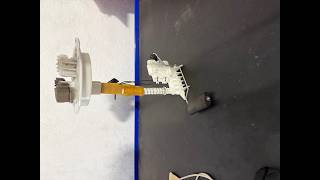
Used OEM Parts in Stock
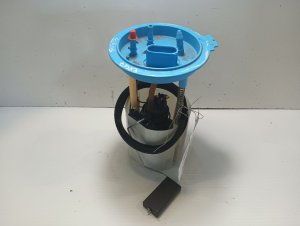
New Aftermarket Parts Available



The information in this article is provided for general reference and educational purposes only. Vehicle specifications, procedures, and part compatibility can vary by production date, trim level, and region. Always consult your vehicle's factory service manual and verify part numbers before purchasing or performing repairs. Safety-critical components such as airbags, seat belts, and braking systems should be installed by a qualified professional.
- Audi TT:
- 🧭 Diagnostic Flowchart
- 🎬 Helpful Videos
- 🛍️ Shop This Part
- What's Unique About the 2004-2014 Audi TT
- Symptoms You May Notice
- Most Likely Causes
- Rare But Worth Checking
- Diagnosis Steps
- Parts You'll Likely Need
- Related Codes That Often Appear With This One
- Platform-Specific Known Issues
- Mechanic-Grade Diagnostic Values
- Scan Tool Commands That Help
- Wiring & Ground Locations
- Real Owner Repair Stories
- OEM Part Supersession History
- Model Year Variations Within This Range
- Other Known Issues on This Vehicle
- Used vs. New Parts: Buying Guide for This Vehicle
- Real Owner Stories
- 2005 Audi TT Mk1
- 2010 Audi TT Quattro
- 2011 Audi TT Mk2
- Related OBD-II Codes
- Frequently Asked Questions
- 🎟️ Get 5% Off