

P0462 on 2012-2017 Honda Accord: Fuel Level Sensor Circuit Low Causes and Fixes
On a 2012-2017 Honda Accord, code P0462 almost always points to a failed fuel level sending unit, which is part of the in-tank fuel pump assembly. This causes an inaccurate or empty fuel gauge. Replacing the sending unit or the entire fuel pump module is the most common fix.
- P0462 means the fuel level sensor is sending a persistently low voltage signal, making your fuel gauge unreliable.
- The most likely cause on a 2012-2017 Accord is a worn-out fuel level sending unit, which is part of the fuel pump assembly.
- Diagnosis involves checking the sensor's voltage and resistance, and inspecting the wiring for shorts.
- The standard repair is to replace the entire fuel pump module, which is accessible from under the rear seat.
What's Unique About the 2012-2017 Honda Accord
The 2012-2017 Honda Accord spans two different generations (8th and 9th), but the principle behind the P0462 code is the same for both. The fuel level sensor, also called the sending unit, is a common failure point. It is integrated into the fuel pump module located inside the fuel tank. While some manufacturers allow for separate replacement of the sensor, on the Accord, it is common practice to replace the entire fuel pump assembly, which includes the pump, filter, pressure regulator, and sending unit. A recall for defective fuel pump impellers on 2013-2017 L4 models highlights potential quality issues with the overall assembly from this period.
Generation note: This range covers the end of the 8th generation (2012) and the entire 9th generation (2013-2017) Honda Accord. The causes and repair procedures for code P0462 are consistent across these two generations, as they both utilize a similar in-tank fuel pump and sending unit design. However, the specific part numbers for the fuel pump module differ between the 8th gen (2012) and 9th gen (2013-2017). Additionally, a major fuel pump recall for swelling impellers affects 2013-2017 4-cylinder models, but not the 2012 model.
Symptoms You May Notice
- Check Engine Light is on (though on some Hondas, this specific code may not illuminate the light).
- Fuel gauge reads empty or is stuck in one position, regardless of the actual fuel level.
- Fuel gauge reading is erratic, fluctuating wildly.
- Low fuel warning light stays on even with a full tank.
- Inaccurate or blank 'Range' or 'Miles to Empty' display on the trip computer.
- Replacing the instrument cluster before thoroughly testing the sending unit and wiring.
- Assuming the fuel pump is bad when only the sending unit has failed (though they are often replaced as one assembly).
- Replacing the fuel pump assembly without first checking for a simple wiring short to ground.
Most Likely Causes
- Faulty Fuel Level Sending Unit 🔴 High Probability → Shop Fuel Tank Sending Unit The variable resistor on the sending unit can wear out or become contaminated over time, causing it to send an incorrect, low voltage signal. This is a common failure item on many vehicles after 100,000 miles. Contamination from sulfur in gasoline can also form corrosive deposits on the silver-based resistor contacts, disrupting the signal.
How to confirm: Access the fuel pump assembly and test the resistance of the sending unit with a multimeter while moving the float arm. The resistance should change smoothly. If the reading is erratic, infinite (open circuit), or near zero (shorted), the unit is bad. Note that Honda resistance ranges can vary and may be inverted compared to other brands; one source cites a range of 2-5 Ohms at Full and 105-110 Ohms at Empty.
Typical fix: Replace the fuel level sending unit. This is often only sold as part of the complete fuel pump module assembly.
Est. part cost: $75-$250 - Wiring Issue (Short to Ground) 🟡 Medium Probability Wires in the harness leading to the fuel tank can become damaged, corroded, or pinched, causing a short circuit that pulls the signal voltage low. This can happen near the connector on top of the tank or anywhere along the chassis.
How to confirm: Inspect the wiring harness running to the fuel pump module for any visible damage, corrosion, or loose connectors. Use a multimeter to check for continuity to ground on the signal wire between the PCM and the sensor connector. There should be no continuity to ground (reading should be Over Limit or infinite resistance).
Typical fix: Repair or replace the damaged section of the wiring harness and protect it from future damage.
Est. part cost: $10-$50
Rare But Worth Checking
- Faulty Instrument Cluster: → Shop Instrument Cluster The gauge control module within the instrument cluster processes the signal from the fuel level sensor. While rare, an internal failure, such as a bad solder joint on the circuit board, can cause this code and an incorrect gauge reading.
- Faulty Powertrain Control Module (PCM): A failure within the PCM is the least likely cause but is a possibility if all other components and wiring have been ruled out. This would typically be accompanied by other codes and symptoms.
Diagnosis Steps
- Scan the vehicle for any other stored trouble codes. Note that for P0462, the Malfunction Indicator Lamp (MIL) may not always be illuminated.
- Use a scan tool with live data to observe the voltage from the Fuel Level Sensor 'A'. A reading consistently below 0.5 volts, and especially at or below 0.1V, points to a problem.
- Use the scan tool's bidirectional function to perform an instrument cluster self-test or gauge sweep. If the gauge moves through its full range correctly, the cluster is likely not the problem.
- Visually inspect the wiring harness and connector at the top of the fuel tank for any signs of damage, corrosion, or loose connections.
- Gain access to the fuel pump module, typically located under the rear seat cushion.
- Disconnect the fuel tank unit connector. Turn the ignition ON and check for DTCs. If P0463 (Circuit High) now appears, it strongly suggests the sending unit is shorted and at fault.
- With the connector still disconnected, use a multimeter set to Ohms to measure the resistance across the sensor's terminals on the pump assembly while manually moving the float arm up and down.
- The resistance should change smoothly throughout the float's range of motion. Confirm the correct resistance range for your specific model, as it can vary. A common Honda range is inverted, reading low ohms (e.g., 2-5 Ω) when full and high ohms (e.g., 105-110 Ω) when empty. If the reading is erratic, infinite (open), or near zero (shorted), the sending unit has failed.
- If the sending unit tests good, check the signal wire for a short to ground. Disconnect the harness at both the PCM and the fuel pump and check for continuity between the signal wire and a known good ground. There should be infinite resistance (an open circuit).
- If wiring and the sending unit are confirmed to be good, the issue may lie with the instrument cluster or, rarely, the PCM.
Parts You'll Likely Need
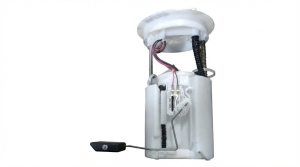
- Fuel Pump and Sender Assembly
(OEM #2012 (8th Gen): 17045-TA0-A00 | 2013-2017 (9th Gen): 17045-T2A-A00 (superseded by 17045-T2A-A01, 17045-T2A-A02))— This is the most common cause of P0462. The fuel level sending unit wears out and is integrated into the main fuel pump module. Replacing the entire assembly is standard practice and also renews the fuel pump and filter. The 9th gen part was subject to a recall for a separate impeller issue, making replacement with a new, updated part advisable.
Trusted brands: Honda (OEM), Denso, Bosch, Spectra Premium, Delphi
OEM price range: $300-$450
Aftermarket price range: $150-$250
Technical Service Bulletins (TSBs) & Recalls
- 24-072: Safety Recall for 2013-17 Accord L4 Fuel Pump Module Replacement due to defective impellers that can cause the pump to seize. While this typically causes a P0087 code, it relates to the same assembly that houses the fuel level sender.
Platform-Specific Known Issues
- Access Under Rear Seat: To access the fuel pump module, the rear seat bottom cushion must be removed. On each side of the seat, there is a clip that must be pulled to release the cushion before it can be lifted out.
- Fuel Pump Lock Ring: → Shop Fuel Pump A special lock ring holds the fuel pump module in the tank. While a special tool is recommended, it can often be removed by carefully tapping it counter-clockwise with a flathead screwdriver and a hammer. Be sure to clean the area thoroughly before removal to prevent debris from falling into the fuel tank.
Mechanic-Grade Diagnostic Values
- Fuel Level Sensor 'A' Voltage (Live Data) — expected: 0.5V - 4.5V. Failure: Consistently < 0.5V, especially at or below 0.1V for more than 5 seconds.
- Fuel Level Sending Unit Resistance (Honda-specific) — expected: Resistance changes smoothly. Varies by model, but can be inverted: Full ≈ 2-5 Ω, Half ≈ 25-40 Ω, Empty ≈ 105-110 Ω.. Failure: Reading is near zero (short), infinite/OL (open), or jumps erratically while moving the float arm.
- Signal Wire to Chassis Ground Resistance — expected: Infinite resistance (Open Line / OL). Failure: Near-zero resistance (<1 Ω), indicating a short to ground.
Scan Tool Commands That Help
- Professional Scan Tool (e.g., Honda HDS, Autel, FOXWELL): Instrument Cluster Self-Test / Gauge Sweep Test — Use this to rule out a faulty instrument cluster. If the gauge needle sweeps its full range during the test, the gauge itself is functional, and the problem is likely in the wiring or the sending unit.
- Professional Scan Tool: Signal Simulation / Special Functions — Some advanced tools can send a simulated voltage signal to the gauge control module. If you command a 2.5V signal and the gauge moves to half-full, it confirms the gauge and its control module are working, pointing back to the sensor/wiring.
Wiring & Ground Locations
- Fuel Pump / Sender Ground — The fuel pump assembly is grounded through its wiring harness. A common Honda chassis ground point (e.g., G403 on some models) is located behind the driver's side kick panel near the fuse box. A poor ground at this location can cause various electrical issues.. While the sender has a dedicated ground wire in the harness, the entire circuit relies on a solid chassis ground. A corroded or loose main ground can introduce resistance and voltage drops, potentially affecting the sensor's reading, though a direct short is more common for P0462.
- Fuel Tank Unit 5P Connector — On top of the fuel pump assembly, accessible after removing the rear seat bottom and the access panel.. This is the primary connection point for testing the sending unit and the harness. Disconnecting it allows you to isolate the sending unit for resistance tests and check the harness for shorts.
OEM Part Supersession History
17045-T2A-A00→17045-T2A-A01, then 17045-T2A-A02— Likely related to the fuel pump impeller recall. The recall (24-072) was issued for defective impellers that could swell and seize the pump. Part number 17045-T2A-A01 is listed in related recall documents, suggesting the updates were to address this manufacturing defect.
Model Year Variations Within This Range
- 2013-2017 (L4 engines): These models were subject to Safety Recall 24-072 for defective fuel pump impellers. While the primary symptom is often a no-start or stall (P0087), it involves the entire fuel pump module that houses the P0462-related sending unit. The 2012 model uses a different assembly and is not part of this recall.
Diagnostic Flowchart
Used vs. New Parts: Buying Guide for This Vehicle
When a used part is the smart pick: For this specific repair, buying a used fuel pump assembly is NOT recommended. The fuel level sender is a wear item and the primary cause of the P0462 code; a used unit may have similar wear. Furthermore, the pump motor itself is a wear item and subject to a safety recall on 2013-2017 models, making a used part a significant reliability and safety risk.
Donor-vehicle mileage cap: roughly under 30000 miles for the part to have meaningful remaining life.
What to inspect on the donor part:
- Verify the donor vehicle's VIN is not part of the outstanding fuel pump recall.
- Inspect the electrical connector pins for any signs of corrosion or heat damage.
- If possible, test the resistance of the sending unit on the donor part before purchasing.
OEM-only on this vehicle (don't cheap out):
- While not strictly OEM-only, using an OEM (Honda) or a reputable OEM-supplier part (Denso, Bosch) is highly recommended for longevity and to avoid repeat failures.
Aftermarket brands forum-validated for this vehicle:
- Denso (often the original OEM supplier)
- Bosch
Brands owners have reported issues with on this vehicle:
- Some forum users have reported premature failures with lower-cost brands like Carter. Unbranded, generic parts from online marketplaces are also a significant gamble.
Real Owner Stories
Aggregated from forums and TSBs cited above. Mileages and costs reflect what owners reported in those sources.
2015 Honda Accord — ~110000 miles
Symptoms: The fuel gauge was reading erratically and the Check Engine Light came on for code P0462.
What fixed it: Replacing the entire fuel pump and sending unit assembly resolved the issue. A dealer confirmed the sending unit had failed.
Source hint: DriveAccord.net thread titled 'Fuel Gauge Problem'
Related OBD-II Codes
Frequently Asked Questions
My 2015 Accord has a P0462 code. Is this related to the fuel pump recall?
Where is the fuel pump located on my 2012-2017 Honda Accord?
Do I need a special tool to remove the fuel pump from the tank?
What resistance values should I expect when testing the fuel level sensor on my Accord?
Can I just replace the fuel level sending unit, or do I need the whole assembly?
Is it a good idea to buy a used fuel pump assembly from a junkyard?
What are the best aftermarket brands for a replacement fuel pump assembly?
Used OEM Parts in Stock
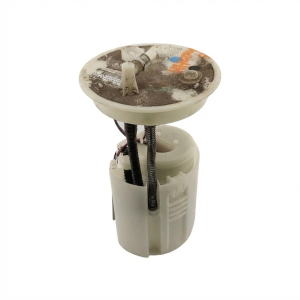
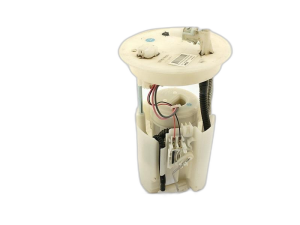
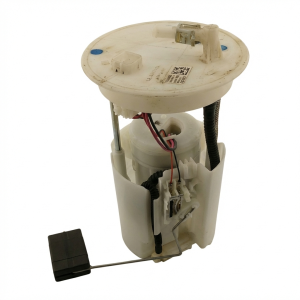
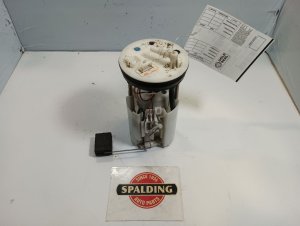
New Aftermarket Parts Available


The information in this article is provided for general reference and educational purposes only. Vehicle specifications, procedures, and part compatibility can vary by production date, trim level, and region. Always consult your vehicle's factory service manual and verify part numbers before purchasing or performing repairs. Safety-critical components such as airbags, seat belts, and braking systems should be installed by a qualified professional.
- Honda Accord:
- 🧭 Diagnostic Flowchart
- 🛍️ Shop This Part
- What's Unique About the 2012-2017 Honda Accord
- Symptoms You May Notice
- Most Likely Causes
- Rare But Worth Checking
- Diagnosis Steps
- Parts You'll Likely Need
- Technical Service Bulletins (TSBs) & Recalls
- Platform-Specific Known Issues
- Mechanic-Grade Diagnostic Values
- Scan Tool Commands That Help
- Wiring & Ground Locations
- OEM Part Supersession History
- Model Year Variations Within This Range
- Used vs. New Parts: Buying Guide for This Vehicle
- Real Owner Stories
- 2015 Honda Accord — ~110000 miles
- Related OBD-II Codes
- Frequently Asked Questions
- 🎟️ Get 5% Off