

P0462 on 2005-2009 Saab 9-7X: Fuel Level Sensor Circuit Low Causes and Fixes
On a 2005-2009 Saab 9-7X, code P0462 almost always means the fuel level sensor has failed. This sensor is part of the fuel pump module inside the gas tank. The most common fix is to replace the entire fuel pump module assembly. This is a very common failure on the GM GMT360 platform on which the 9-7X is based.
- P0462 on a Saab 9-7X points directly to a problem with the fuel level sending unit.
- You can continue driving, but you must use your trip odometer to track fuel usage to avoid running out of gas.
- The most probable cause is a failed fuel level sensor, which is part of the fuel pump module. This is a known weak point on the entire GM GMT360 platform.
- The standard repair is to replace the entire fuel pump module assembly. This job typically requires dropping the fuel tank, but a well-documented DIY shortcut involves cutting an access panel under the rear seat.
What's Unique About the 2005-2009 Saab 9-7X
The Saab 9-7X is based on the General Motors GMT360 platform, sharing its chassis and powertrain with vehicles like the Chevrolet Trailblazer, GMC Envoy, Buick Rainier, Oldsmobile Bravada, and Isuzu Ascender. Therefore, issues common to these GM trucks are also common on the 9-7X. For the P0462 code, this means the failure is almost always due to a worn-out or faulty fuel level sending unit, which is a well-documented weak point on this GM platform. The sensor's silver-based contacts wear out or corrode due to sulfur in gasoline, causing erratic or failed readings. Newer replacement sensors often use more durable materials to combat this.
Symptoms You May Notice
- Check Engine Light is on
- Fuel gauge reads empty or is stuck in one position, regardless of the actual fuel level.
- Fuel gauge behaves erratically, fluctuating wildly.
- The 'distance to empty' calculation on the trip computer is inaccurate or displays dashes.
- Low Fuel warning light is on constantly.
- Replacing the instrument cluster when the fault is in the sending unit.
- Replacing the fuel pump when only the level sensor has failed (though they are typically replaced as a single assembly for reliability).
Most Likely Causes
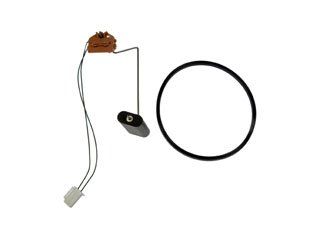
- Failed Fuel Level Sensor (Sending Unit) 🔴 High Probability → Shop Fuel Tank Sending Unit The fuel level sensor is a known high-failure item on the GM GMT360 platform. The resistive contacts on the sensor wear out over time from the float arm moving across them. Contamination from sulfur in fuel can also corrode the contacts, leading to an open or shorted circuit which results in the low voltage reading.
How to confirm: Use a scan tool to monitor the fuel level sensor voltage in live data; if it's stuck at a very low voltage (e.g., under 0.5V) regardless of fuel level, the sensor has likely failed. You can also test the sensor's resistance with a multimeter at the fuel pump connector; it should change as the float arm moves. A common test is to rock the vehicle side-to-side 🎬 Watch: How to diagnose and test the fuel level sensor to slosh fuel and see if the resistance reading changes at all.
Typical fix: Replace the fuel level sensor. Since the sensor is integrated into the fuel pump module, the most common and reliable repair is to replace the entire fuel pump module assembly.
Est. part cost: $150-$400 - Wiring or Connector Issues 🟡 Medium Probability The main wiring harness connector on top of the fuel tank is exposed to the elements, making it susceptible to corrosion, moisture intrusion, and damage, especially in regions that use road salt. In some cases, the connector pins can overheat and melt the plastic housing, causing a poor connection.
How to confirm: After dropping the tank or accessing it through a service panel, visually inspect the main electrical connector on top of the fuel pump module for corrosion (green or white powder), moisture, melted plastic, or backed-out pins. Test for 5V reference and a good ground at the connector.
Typical fix: Clean the corroded terminals with a contact cleaner and a small brush. If the connector or wiring is melted or severely damaged, it will need to be replaced with a new pigtail connector.
Est. part cost: $20-$100
Rare But Worth Checking
- Faulty Instrument Cluster: → Shop Instrument Cluster While rare, a failure within the instrument cluster itself can cause incorrect fuel gauge readings. This is a known issue on the GMT360 platform, but it is less likely if the P0462 code is present, as the code originates from the PCM's reading, not the gauge's display. A gauge sweep test can confirm cluster functionality.
- Faulty Powertrain Control Module (PCM): This is very rare. The PCM should only be considered a potential cause after all other possibilities, including the sensor and wiring, have been thoroughly ruled out.
Diagnosis Steps
- Connect an OBD-II scanner to verify the P0462 code is present and check for any other related codes.
- Use the scanner's live data function to observe the 'Fuel Level' percentage and/or 'Fuel Level Sensor Voltage'. Note if the reading is stuck low (e.g., 0% or <0.5V).
- Add a known quantity of fuel (e.g., 5 gallons) to the tank and observe the live data again. If the reading does not change, it further points to a sensor or wiring issue.
- A popular DIY shortcut is to cut an access hole in the floor pan under the rear seats to access the fuel pump module without dropping the tank. This is a modification and should be done with extreme care. Search forums like TrailVoy.com for guides.
- If accessing the pump conventionally, lower the fuel tank to get to the top of the fuel pump module.
- Disconnect the battery. Disconnect the main electrical connector on top of the fuel pump module. Inspect it thoroughly for any signs of corrosion, moisture, or melted plastic.
- If the connector looks good, use a multimeter to test the wiring. Check for a proper reference voltage (usually 5V) and a solid ground at the connector harness-side.
- If wiring is confirmed to be good, the fault is inside the fuel tank with the fuel level sensor itself. The standard repair is to replace the entire fuel pump module assembly.
- After replacement, clear the code with the scanner, and turn the key to the 'On' position to verify that the fuel gauge now reads correctly before starting the vehicle.
Parts You'll Likely Need
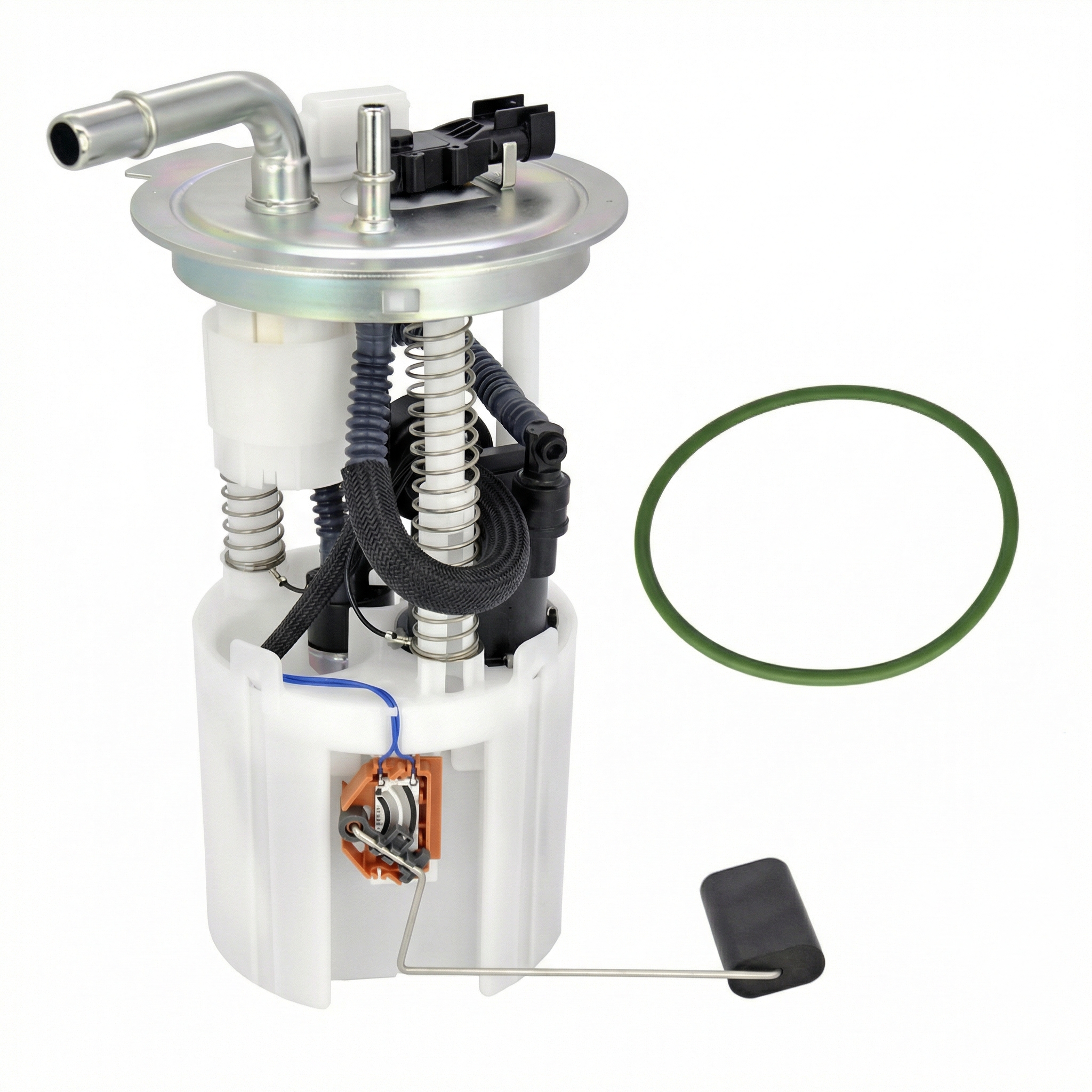
- Fuel Pump Module Assembly
(OEM #ACDelco MU1448 (For 4.2L & 5.3L), Delphi FG0386)— This is the most common cause of failure. The assembly includes the fuel pump, fuel level sensor (sending unit), and float. Replacing the entire module is the standard repair procedure and ensures all related components are new.
Trusted brands: ACDelco, Delphi, Bosch, DriveBolt
OEM price range: $250-$400
Aftermarket price range: $150-$250 - Fuel Level Sensor
(OEM #19256264)— If you want to replace only the sensor itself, it is available separately. However, given the labor involved in accessing the module, most technicians recommend replacing the entire assembly.
Trusted brands: ACDelco, Standard Motor Products
OEM price range: $70-$120
Aftermarket price range: $40-$80
Related Codes That Often Appear With This One
- P0463 (Fuel Level Sensor 'A' Circuit High Input)
- P0461 (Fuel Level Sensor 'A' Circuit Range/Performance)
Technical Service Bulletins (TSBs) & Recalls
- While no TSB is specific to P0462 on the 9-7X, GM has issued bulletins for other vehicles regarding erratic fuel gauges and related codes (like P0461, P0463) caused by sulfur contamination on the sending unit contacts or faulty level senders. An example is GM bulletin 17-NA-204 for some trucks, which mentions inaccurate fuel gauge readings and codes P0462/P0463 due to a failed level sender.
Platform-Specific Known Issues
- DIY Access Panel: A very common practice in the GMT360 community (Trailblazer, Envoy, 9-7X) is to cut an access panel under the rear driver's side seat to access the fuel pump without dropping the fuel tank. Numerous guides and videos can be found 🎬 See how to cut an access panel for the pump on forums like TrailVoy.com.
Mechanic-Grade Diagnostic Values
- Fuel Level Sensor Resistance — expected: Approximately 40 Ohms (Empty) to 250 Ohms (Full).. Failure: A reading of OL (Open Loop/infinite resistance) or 0 Ohms that does not change when the float arm is moved indicates a failed sensor.
- Fuel Level Sensor Signal Voltage (at PCM) — expected: 0.5V (Empty) to 4.5V (Full) on a 5V reference circuit.. Failure: A voltage reading consistently below 0.4V - 0.5V will trigger code P0462.
- Fuel Pump Circuit Fuel Pressure (Key On, Engine Running) — expected: 50 - 57 PSI.. Failure: Low pressure indicates a weak fuel pump, but does not directly cause P0462. This is a general health check for the module being replaced.
Scan Tool Commands That Help
- GM Tech 2 / GDS2: IPC Gauge Sweep Test — Use this to rule out a faulty instrument cluster. If the fuel gauge correctly sweeps from empty to full and back when commanded by the scan tool, the gauge and its stepper motor are working. This points the diagnosis back to the sending unit, wiring, or PCM. The path is typically Body > Instrument Panel Cluster > Special Functions > IPC Gauge Sweep Test.
Wiring & Ground Locations
- Fuel Pump Module Connector (at tank) — On top of the fuel pump module, accessible after lowering the fuel tank or cutting an access panel under the rear seat.. This is the most common location for wiring faults. The Purple wire is the fuel level signal, and the Orange/Black wire is the sensor ground. The main power (Gray) and ground (Black) pins can overheat and melt the connector, causing intermittent connection issues for the sensor circuit as well.
- PCM Connector Pins — At the Powertrain Control Module (PCM) in the engine bay.. The fuel level signal wire (Purple) goes to Pin 54, and the sensor ground (Orange/Black) goes to Pin 60. Testing for voltage here can confirm if the signal from the tank is reaching the PCM, bypassing all the vehicle wiring.
- Ground G107 — On the left side frame rail in the engine compartment area.. While not the direct ground for the sensor (which grounds through the PCM), G107 is a shared ground for several components, including the fuel pump relay. Corrosion or a loose connection here can cause a voltage drop across multiple systems, potentially creating erratic behavior that could be misdiagnosed.
Real Owner Repair Stories
- TrailVoy.com / GMTNation.com forum user reports (synthesized) (2006 GMC Envoy (GMT360 platform)) — Check Engine Light with code P0462, fuel gauge stuck on Empty.
❌ Tried (didn't work) Replaced the entire fuel pump module assembly with a new one.
✅ What actually fixed it The code returned immediately. A closer inspection of the vehicle's main harness connector that plugs into the new fuel pump revealed that the ground pin socket was blackened and the plastic housing was slightly melted. Replacing the harness connector with a new pigtail (spliced into the existing wires) permanently resolved the P0462 code. - Car Talk Community / Reddit user reports (synthesized) (2005 Chevrolet Trailblazer) — P0462 and erratic fuel gauge a few months after having the fuel pump replaced.
❌ Tried (didn't work) Checking wiring for obvious damage., Clearing the code, which would return quickly.
✅ What actually fixed it The owner discovered the shop had used a cheap, unbranded aftermarket fuel pump assembly. Testing the sending unit's resistance showed it had an open circuit. The premature failure of the low-quality sending unit was the cause. Replacing the cheap assembly with a Bosch-branded unit (an OEM supplier for GM) fixed the problem.
OEM Part Supersession History
ACDelco MU1448 (or similar GM PNs)→Bosch 67415 (or equivalent)— Bosch is the Original Equipment Manufacturer (OEM) for many AC Delco fuel pumps on the GMT360 platform. Forum members report buying ACDelco parts and finding Bosch part numbers stamped on the unit.
Heads up: The Bosch unit is a direct, OEM-equivalent replacement. Be aware that some Delphi units, while also an OEM supplier for other parts, have had higher reported failure rates for this specific application according to owner forums.
Model Year Variations Within This Range
- 2005-2007 vs 2008-2009: The fuel pump module design changed for some models within this range, specifically regarding an integrated fuel pressure sensor. Some 2005-2007 vehicles use a module with this sensor, while later models may not. Ordering the wrong module can result in a no-start condition or other fuel system codes. It is critical to visually verify the electrical connections on the top of the existing pump module before ordering a replacement.
Diagnostic Flowchart
Other Known Issues on This Vehicle
Issues unrelated to this code that are worth knowing about as an owner of this generation:
- Failing Rear Air Suspension 🔴 High — Very common. The rubber air springs develop dry rot and leak, causing the rear of the vehicle to sag, especially overnight. The air compressor can also fail from overuse trying to compensate for leaks.
- Faulty Instrument Cluster 🟠 Medium → Shop Instrument Cluster — Common for gauges (speedometer, tachometer, etc.) to become erratic or stop working due to failed stepper motors on the cluster's circuit board. This was a widespread GM issue in this era.
- Failing Fan Clutch 🟠 Medium — The electronically controlled fan clutch is a frequent failure point, especially on the 4.2L I6. Symptoms include a loud roaring fan noise, a clicking sound at idle, or engine overheating in traffic.
- Cracked Exhaust Manifold 🟠 Medium — The exhaust manifolds, particularly on the 4.2L I6 engine, are prone to cracking, which causes a ticking or exhaust leak sound that is most noticeable on a cold start and may quiet down as the engine warms up.
- Water Leaks into Cabin 🟡 Low — Owners report water leaking into the front footwells, often due to clogged sunroof drains or a poorly sealed seam in the engine bay near the firewall.
Used vs. New Parts: Buying Guide for This Vehicle
When a used part is the smart pick: Buying a used fuel pump module assembly is STRONGLY DISCOURAGED for this vehicle. The fuel level sending unit is a known high-wear component, and the labor involved in replacement is significant. A used part carries a very high risk of premature failure, making it a poor economic choice.
Donor-vehicle mileage cap: roughly under 20000 miles for the part to have meaningful remaining life.
What to inspect on the donor part:
- Must be from a low-mileage, non-rust-belt donor vehicle.
- Visually inspect the electrical connector pins on the module for any signs of heat damage, melting, or corrosion (green/white powder).
- The top 'hat' of the pump module should be clean and free of heavy rust.
OEM-only on this vehicle (don't cheap out):
- Fuel Pump Module Assembly
Aftermarket brands forum-validated for this vehicle:
- ACDelco (GM's official brand)
- Bosch (Confirmed OEM supplier for this part)
Brands owners have reported issues with on this vehicle:
- Unbranded 'white box' parts from online marketplaces.
- Some owner forums report higher failure rates with Delphi units for this specific platform compared to Bosch or ACDelco.
Real Owner Stories
Aggregated from forums and TSBs cited above. Mileages and costs reflect what owners reported in those sources.
2007 Saab 9-7X 5.3i
Symptoms: The fuel gauge quit working and the Check Engine Light came on with a P0462 code.
What fixed it: The owner confirmed the fix was a new fuel pump/sending unit assembly, and noted that many owners perform the repair by cutting a DIY access panel under the rear seat.
Source hint: TrailVoy.com thread titled 'Fuel gauge quit working'
2008 Saab 9-7X 4.2i
Symptoms: Owner was researching common failures for the platform and learned that the fuel sending unit is a frequent problem, causing the fuel gauge to fail.
What fixed it: The confirmed common failure is the fuel sending unit, which requires replacement of the fuel pump module.
Source hint: Reddit r/saab thread titled 'Is it a bad idea to buy a used Chevrolet Trailblazer GMT360?'
2006 Saab 9-7X
Symptoms: While discussing other common issues like the air suspension, an owner mentioned that fuel pump issues are also very common and that the sending unit is the specific cause for the P0462 code.
What fixed it: Replacing the fuel sending unit, which is part of the complete fuel pump module, resolves the code.
Source hint: GMTNation.com discussion about 'Saab 9.7x air suspension problem'
Related OBD-II Codes
Frequently Asked Questions
Is it true I can cut a hole in the floor to replace the fuel pump on my 9-7X instead of dropping the tank?
Why does the fuel sending unit fail so often on the 2005-2009 Saab 9-7X?
Do I have to replace the entire fuel pump assembly, or can I just replace the level sensor?
Is this P0462 code just a Saab problem, or do Trailblazers and Envoys get it too?
Are there any GM Technical Service Bulletins (TSBs) for the P0462 code on my 9-7X?
My fuel gauge is acting up. Could it be the common instrument cluster failure instead of the fuel sensor?
Helpful Videos
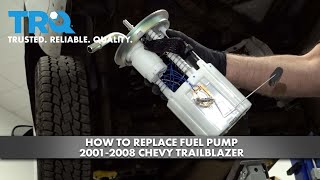
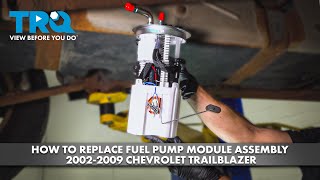
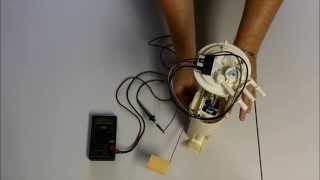

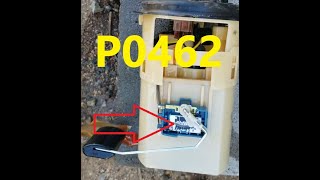
![What is P0462 Engine Code [Quick Guide]](https://img.youtube.com/vi/rtI_Wsf2Vl4/mqdefault.jpg)
Used OEM Parts in Stock
New Aftermarket Parts Available


The information in this article is provided for general reference and educational purposes only. Vehicle specifications, procedures, and part compatibility can vary by production date, trim level, and region. Always consult your vehicle's factory service manual and verify part numbers before purchasing or performing repairs. Safety-critical components such as airbags, seat belts, and braking systems should be installed by a qualified professional.
- Saab 9-7X:
- 🧭 Diagnostic Flowchart
- 🎬 Helpful Videos
- 🛍️ Shop This Part
- What's Unique About the 2005-2009 Saab 9-7X
- Symptoms You May Notice
- Most Likely Causes
- Rare But Worth Checking
- Diagnosis Steps
- Parts You'll Likely Need
- Related Codes That Often Appear With This One
- Technical Service Bulletins (TSBs) & Recalls
- Platform-Specific Known Issues
- Mechanic-Grade Diagnostic Values
- Scan Tool Commands That Help
- Wiring & Ground Locations
- Real Owner Repair Stories
- OEM Part Supersession History
- Model Year Variations Within This Range
- Other Known Issues on This Vehicle
- Used vs. New Parts: Buying Guide for This Vehicle
- Real Owner Stories
- 2007 Saab 9-7X 5.3i
- 2008 Saab 9-7X 4.2i
- 2006 Saab 9-7X
- Related OBD-II Codes
- Frequently Asked Questions
- 🎟️ Get 5% Off