

P0463 on 2006-2010 Jeep Commander: Fuel Level Sensor Circuit High Input Causes and Fixes
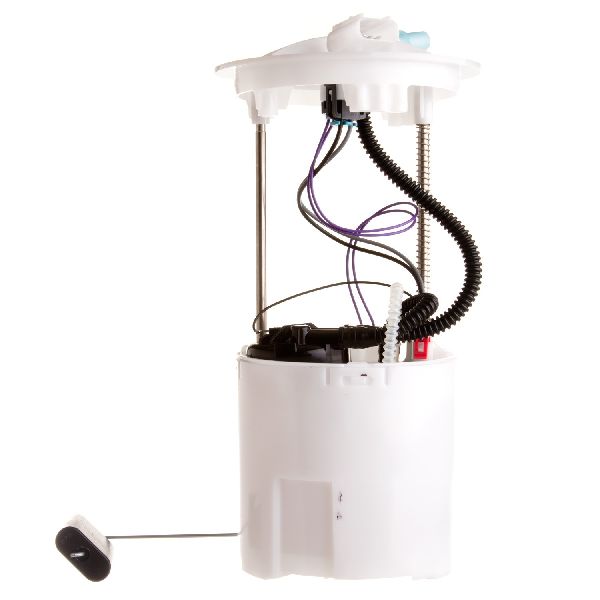
On a 2006-2010 Jeep Commander, code P0463 almost always means the fuel level sending unit has failed. Since the sensor is part of the complete fuel pump module, the fix is to replace the entire assembly. Expect to pay $150-$400 for the part and budget for a few hours of labor, as the fuel tank must be dropped for access.
- P0463 on a Jeep Commander points directly to a problem in the fuel level sensor circuit, most often the sensor itself.
- The most common cause is a failed fuel level sending unit, which is part of the fuel pump module.
- The repair requires replacing the entire fuel pump module, a job that involves dropping the fuel tank.
- Before buying parts, perform a quick visual check of the wiring leading to the fuel tank for any obvious damage, as this could be a simpler, cheaper fix.
- Driving with this code won't harm the engine, but you risk running out of fuel unexpectedly.
What's Unique About the 2006-2010 Jeep Commander
The Jeep Commander (XK) shares its platform and many components with the Grand Cherokee (WK), including the fuel system design. For this vehicle, the fuel level sensor is not sold as a separate component but is integrated into the fuel pump module. This design means that a failure of the relatively small sensor requires the replacement of the entire fuel pump assembly, making the repair more involved and costly than on older vehicles where the sender could be replaced independently. The Commander uses a saddle-style tank which may house two sending units on some models, though P0463 refers to the primary sensor 'A'.
Symptoms You May Notice
- Check Engine Light is on
- Fuel gauge is stuck on full or empty
- Fuel gauge behaves erratically, fluctuating wildly
- Low fuel warning light stays on constantly
- Fuel gauge reads full regardless of the actual fuel level.
- Replacing only the fuel pump itself without the entire module, not realizing the sending unit is the cause of the code.
- Replacing the instrument cluster before thoroughly testing the sending unit and its wiring.
Most Likely Causes
- Failed Fuel Level Sending Unit 🔴 High Probability → Shop Fuel Tank Sending Unit The resistive strip on the sensor's variable resistor wears out over time from the float arm's constant movement. This wear creates an open circuit that the PCM reads as high voltage. This is a very common wear-and-tear item.
How to confirm: Access the fuel pump module connector. Use a multimeter set to Ohms to test the resistance across the two fuel level sensor pins. Rocking the vehicle to slosh fuel in the tank should cause a smooth change in resistance. A reading of infinity or 'OL' (Open Loop) indicates a failed sending unit. One owner confirmed failure this way; after getting an initial reading, shaking the vehicle caused the reading to become erratic and go to an open circuit.
Typical fix: Replace the entire fuel pump module assembly, as the sending unit is integrated into it. This requires dropping the fuel tank for access.
Est. part cost: $150-$400 - Damaged Wiring or Corroded Connector 🟡 Medium Probability The wiring harness to the fuel tank is exposed to road debris, moisture, and corrosion, which can damage the wires or the connector pins on top of the fuel pump module. The ground strap for the fuel tank is also a common point of failure due to rust and corrosion.
How to confirm: Visually inspect the wiring harness leading to the fuel tank for any signs of chafing, breaks, or corrosion. Disconnect the main connector at the fuel pump module and check for corroded, bent, or backed-out pins. Also, locate and thoroughly inspect the fuel tank's grounding strap.
Typical fix: Repair the damaged section of wiring or clean/replace the connector. If the ground strap is corroded, clean the contact points to bare metal or replace the strap.
Est. part cost: $10-$50
Rare But Worth Checking
- Faulty Instrument Cluster: → Shop Instrument Cluster While rare, the instrument cluster itself can fail, causing incorrect gauge readings. This is usually accompanied by other gauge or display problems and is less likely than a sensor or wiring issue.
- Faulty Powertrain Control Module (PCM): A failure within the PCM is very unlikely but possible. This should only be considered after all other possibilities, including wiring and the sensor itself, have been exhaustively ruled out.
Diagnosis Steps
- Use an OBD-II scanner to confirm P0463 is the primary code. Note any other fuel-related codes like P0461, P0462, or P2068.
- Visually inspect the wiring harness that runs to the fuel tank. Look for obvious signs of damage, such as chafing against the frame or heat shields. Pay close attention to the ground strap on the fuel tank for corrosion.
- Locate the fuel pump module connector on top of the fuel tank. Disconnect it and inspect for corrosion, moisture, or damaged pins.
- With the key on, use a multimeter to check for the correct reference voltage and a good ground at the connector (refer to a service manual for pinout details). A healthy sensor circuit should read between 0.5V (empty) and 4.5V (full). A reading consistently above 4.8V points to a high-circuit condition.
- Using a multimeter set to Ohms, measure the resistance between the fuel level sensor signal and ground pins on the fuel pump module side of the connector. The reading should be within the manufacturer's specified range (e.g., full is around 20 ohms, empty is higher). Gently rock the vehicle to slosh fuel; the resistance should change smoothly.
- If the resistance reads as an open circuit (OL), is out of specification, or jumps erratically when the vehicle is shaken, the fuel level sending unit is bad.
- If the wiring and sensor resistance test good, the problem may lie with the instrument cluster or the PCM, which requires more advanced diagnostics.
Parts You'll Likely Need
- Fuel Pump Module Assembly
(OEM #5143579AJ (superseded by 5143579AQ))— The fuel level sending unit that causes code P0463 is integrated into the fuel pump module. Therefore, the entire assembly must be replaced to fix the faulty sensor.
Trusted brands: Mopar, Delphi, Bosch, Carter
OEM price range: $250-$400
Aftermarket price range: $150-$250
Related Codes That Often Appear With This One
- P0462 — This code means 'Fuel Level Sensor Circuit Low Input'. Seeing it alongside P0463 could indicate an intermittent wiring short or a failing sensor that is fluctuating between open and shorted states.
- P0461 — This code means 'Fuel Level Sensor Circuit Range/Performance'. It can be set if the PCM sees erratic or irrational signals from the sensor, which is common as the sending unit begins to fail.
- P2068 — This code is for 'Fuel Level Sensor 'B' Circuit High'. On vehicles with dual sensors in a saddle tank, it's common to see this code appear with P0463, indicating a problem with the secondary sensor as well.
Platform-Specific Known Issues
- The Jeep Commander (XK) and its platform-mate Grand Cherokee (WK) have a known issue where the resistive material on the fuel level sender wears out, causing an open circuit and triggering P0463. This is considered a common failure as the vehicles age.
Mechanic-Grade Diagnostic Values
- Fuel Level Sensor 'A' Resistance — expected: Approximately 20 Ohms at Full, and 281 Ohms at Half Tank, up to ~1100 Ohms at Empty. Chrysler systems of this era typically use a 73-10 Ohm or similar range, but reversed (higher resistance = empty). A common range is ~20-30 Ohms full and ~1000-1100 Ohms empty.. Failure: A reading of 'OL' (Open Loop/infinity) or a resistance that jumps erratically when the vehicle is rocked indicates a worn-out or broken resistive strip.
- Fuel Level Sensor Signal Voltage at PCM — expected: Between 0.5V (Empty) and 4.5V (Full).. Failure: A reading consistently above 4.8V indicates a high-circuit condition, which triggers P0463.
- Ground Circuit Resistance — expected: Less than 5.0 Ohms.. Failure: Resistance values above 5.0 Ohms between the sensor ground terminal and a known good chassis ground suggest a poor ground connection, which can cause this code.
Scan Tool Commands That Help
- Instrument Cluster Self-Test (Manual): → Shop Instrument Cluster Instrument Cluster Actuator Test / Gauge Sweep — To quickly verify if the fuel gauge itself is physically capable of moving through its full range. This helps rule out a physically stuck or failed gauge motor in the cluster. The procedure typically involves holding the trip/odometer reset button while turning the ignition to the 'ON' position.
Wiring & Ground Locations
- Fuel Pump Module Connector — On top of the fuel tank, accessible after dropping the tank.. This is the primary connection point for testing the fuel level sender's resistance and checking for power/ground signals from the vehicle's wiring harness.
- G302 — Below the left rear seat.. Wiring diagrams indicate G302 is a primary ground point for components in the rear of the vehicle, including the fuel pump module. A corroded or loose G302 can cause an open in the ground side of the circuit, leading to a high voltage reading and a P0463 code.
- Fuel Pump Module Connector Pinout (Typical) — At the fuel pump module.. For accurate testing, knowing the pin functions is critical. On many Chrysler/Jeep models of this era, the connector pins are: Pin 1 - Fuel Pump Motor (+), Pin 2 - Fuel Level Sensor Signal, Pin 3 - Sensor Ground, Pin 4 - Fuel Pump Motor (-). Always verify with a vehicle-specific diagram.
Real Owner Repair Stories
- CherokeeForum user (Jeep (model not specified, but same P0463 issue)) — Intermittent P0463 code, fuel gauge would sometimes drop to empty when fuel was in the tank.
❌ Tried (didn't work) Adding Sea Foam to the fuel tank in an attempt to clean the resistor contacts.
✅ What actually fixed it The owner measured the resistance at the fuel pump connector and found it was initially normal (~52Ω). However, when they shook the vehicle, the reading became erratic and would show an open circuit. Replacing the entire fuel pump module (with a Carter brand unit) permanently fixed the problem.
OEM Part Supersession History
5143579AJ→5143579AQ— Likely an internal revision to improve reliability of the pump motor or, more relevant to P0463, the fuel level sending unit's resistive material.
Diagnostic Flowchart
Other Known Issues on This Vehicle
Issues unrelated to this code that are worth knowing about as an owner of this generation:
- Sunroof Drain Leaks 🟠 Medium — Very common. The drain tubes clog or the grommet at the floor fails, causing water to leak into the cabin, typically onto the front floorboards.
- Front Differential Bushing Failure 🟠 Medium — Common, especially on 4WD models around 70,000-100,000 miles. Worn bushings cause a 'clunk' or 'thump' noise from the front end during acceleration or when shifting into gear.
- Engine Stalling (4.7L V8) 🔴 High — Affected a significant number of early 2006 models with the 4.7L engine, leading to a recall. (Ref: NHTSA Recall 08V059000)
- Transmission Issues (545RFE) 🟠 Medium — Owners report issues like harsh shifting, getting stuck in gear (limp mode), and a 'transmission over-temp' warning, sometimes traced to electrical issues or the PCM/TCM rather than the transmission itself.
- Broken Exhaust Manifold Bolts 🟡 Low — Common on the 3.7L V6 and 4.7L V8 engines. Results in a ticking noise from the engine bay, especially when cold.
- 5.7L HEMI 'Tick' / Dropped Valve Seats 🔴 High — The 5.7L HEMI can develop a ticking noise due to lifter/camshaft failure. A more catastrophic, though less frequent, failure is dropping a valve seat, which can destroy the engine.
Used vs. New Parts: Buying Guide for This Vehicle
When a used part is the smart pick: For this specific repair, a used part is almost never a smart choice. The fuel level sending unit is a known wear item. A used fuel pump module from a junkyard likely has a sending unit that is already partially worn out and could fail soon after installation, forcing you to do the labor-intensive job of dropping the fuel tank again.
Donor-vehicle mileage cap: roughly under 20000 miles for the part to have meaningful remaining life.
What to inspect on the donor part:
- If forced to use a used part, source it from a very low-mileage wreck.
- Visually inspect the connector pins for any signs of corrosion or overheating (discoloration).
- Test the resistance of the sending unit on the bench before purchase, moving the float arm through its full range to check for smooth, consistent resistance changes without dropouts or spikes.
OEM-only on this vehicle (don't cheap out):
- While not strictly OEM-only, the fuel pump module is a critical component where quality matters. Mopar (OEM) is the safest bet for longevity and compatibility.
Aftermarket brands forum-validated for this vehicle:
- Bosch
- Delphi
Brands owners have reported issues with on this vehicle:
- Airtex
- Carter (some forum users report success, but general sentiment is mixed)
- Unbranded or 'white box' parts store brands have a high reported failure rate, often within months.
Real Owner Stories
Aggregated from forums and TSBs cited above. Mileages and costs reflect what owners reported in those sources.
Jeep Commander/Grand Cherokee Platform
Symptoms: Intermittent P0463 code; fuel gauge sometimes goes to empty when there is fuel in the tank. If scanned while the gauge is empty, P0463 is present; if scanned while reading normally, no codes appear.
What fixed it: Replaced the fuel pump module with a Carter brand pump. The owner confirmed the failure by measuring resistance while shaking the vehicle, which caused the reading to become erratic and show an open circuit.
Source hint: cherokeeforum.com - Thread: 'Intermittent P0463'
2006-2010 Jeep Commander
Symptoms: Fuel gauge failing, often with the low fuel warning light staying on constantly.
What fixed it: Replacing the entire fuel pump assembly is the standard fix confirmed by multiple owners.
Source hint: JeepCommander.com / Reddit r/JEEPCOMMANDER
Related OBD-II Codes
Frequently Asked Questions
Is there a recall for the fuel level sensor issue on my 2006 Jeep Commander?
Can I just replace the fuel level sending unit, or do I need the whole pump assembly?
Why does my fuel gauge read full even when I know the tank is not full?
Does the Jeep Grand Cherokee suffer from this same P0463 issue?
Could a bad ground cause the P0463 code on my Jeep?
Will cleaning the fuel system with Sea Foam fix my erratic fuel gauge?
Helpful Videos

We Have This Part in Stock


The information in this article is provided for general reference and educational purposes only. Vehicle specifications, procedures, and part compatibility can vary by production date, trim level, and region. Always consult your vehicle's factory service manual and verify part numbers before purchasing or performing repairs. Safety-critical components such as airbags, seat belts, and braking systems should be installed by a qualified professional.
- Jeep Commander:
- 🧭 Diagnostic Flowchart
- 🎬 Helpful Videos
- 🛍️ Shop This Part
- What's Unique About the 2006-2010 Jeep Commander
- Symptoms You May Notice
- Most Likely Causes
- Rare But Worth Checking
- Diagnosis Steps
- Parts You'll Likely Need
- Related Codes That Often Appear With This One
- Platform-Specific Known Issues
- Mechanic-Grade Diagnostic Values
- Scan Tool Commands That Help
- Wiring & Ground Locations
- Real Owner Repair Stories
- OEM Part Supersession History
- Other Known Issues on This Vehicle
- Used vs. New Parts: Buying Guide for This Vehicle
- Real Owner Stories
- Jeep Commander/Grand Cherokee Platform
- 2006-2010 Jeep Commander
- Related OBD-II Codes
- Frequently Asked Questions
- 🎟️ Get 5% Off