

P0463 on 2005-2009 Land Rover LR3: Fuel Level Sensor 'A' Circuit High Causes and Fixes
This code means the fuel gauge is unreliable. On the LR3, it's almost always caused by a faulty fuel level sending unit inside the gas tank. Because the LR3 has two senders in its saddle tank, diagnosis is key to see which one failed. P0463 points to a high voltage/resistance reading, often from an open circuit in the sender. The fix requires dropping the tank to replace the failed unit, a labor-intensive job.
- P0463 on an LR3 means your fuel gauge is not working correctly due to a high voltage reading from a fuel level sensor.
- The most likely cause is a failed fuel level sending unit inside the fuel tank. The LR3 has two senders; a scan tool is needed to see which one failed.
- Diagnosis requires a scan tool that can read live data for both senders to pinpoint the one with a stuck, high resistance reading (often 1023 ohms).
- The repair is labor-intensive (DIY Difficulty 5/5) as it requires dropping the fuel tank. Replacing the front sender is particularly challenging.
- It is highly recommended to replace both senders and the tank gasket at the same time to prevent having to do the job twice.
What's Unique About the 2005-2009 Land Rover LR3
The Land Rover LR3 uses a large, saddle-style fuel tank that straddles the driveshaft. This design necessitates two separate fuel level sending units to accurately measure the fuel on each side of the tank. This complicates diagnosis, as a generic P0463 code needs to be correlated to the specific Land Rover sender. Forum and owner experiences have confirmed that on the LR3, 'Fuel Sender 1' is the rear unit (part of the fuel pump assembly) and 'Fuel Sender 2' is the front unit (standalone). The P0463 code is for 'Sensor A', but the specific sender it refers to can be ambiguous without a Land Rover-specific scan tool. However, the diagnostic approach is the same: read the live data for both senders to see which is providing an out-of-range reading. The repair is known to be difficult, especially for the front sender ('Sender 2'), as it requires reaching deep inside the fuel tank through a small access port after the tank has been dropped.
Symptoms You May Notice
- Inaccurate or fluctuating fuel gauge (often stuck on empty or full).
- Check Engine Light is on.
- Low fuel warning light flashes or stays on, even with fuel in the tank.
- Inability to pass an emissions test because the system reports as "not ready".
- Running out of fuel unexpectedly despite the gauge showing a reading above empty.
- Replacing the fuel pump when only the sender has failed. While the rear sender ('Sender 1') is part of the fuel pump assembly, the front sender ('Sender 2') is a separate component. It's important to diagnose which sender is faulty before replacing parts.
- Assuming the issue is a software glitch. While some Land Rover electrical issues can be software-related, P0463 on the LR3 is almost always a hardware failure of the sender or wiring. Some TSBs for other models mention software updates for gauge calibration, but this is not the primary fix for a 'Circuit High' fault on an LR3.
Most Likely Causes
- Faulty Fuel Level Sending Unit 🔴 High Probability → Shop Fuel Tank Sending Unit The sending units are submerged in fuel and the internal variable resistor contacts can wear or fail, creating an open circuit. The LR3 has two of them, doubling the chance of a failure. This is the most common cause reported by owners.
How to confirm: Use a capable scan tool (like an iCarsoft LRII or GAP IIDTool) to read the live resistance (ohms) from both 'Fuel Sender 1' and 'Fuel Sender 2'. A healthy sender's resistance should fluctuate when the vehicle is rocked. A faulty sender will often be stuck at a fixed high value, such as 1023 ohms, indicating an open circuit. You can also test the sender's resistance directly with a multimeter after removing it from the tank; a healthy unit should show changing resistance as the float arm is moved.
Typical fix: Replace the faulty sending unit. This requires dropping the fuel tank for access. It is often recommended to replace both senders and the tank gasket at the same time to avoid future failures. The front sender is notoriously difficult to reach inside the tank.
Est. part cost: $40-$120 per sender - Damaged Wiring or Corroded Connector 🟡 Medium Probability The main wiring harness connector is located on top of the fuel tank, where it is exposed to moisture and road debris, leading to potential corrosion of the pins. Rodent damage to wiring under the vehicle is also a known, though less common, issue. Technical Service Bulletin LTB00566v6 addresses fretting corrosion on the internal sender harness pins for similar Land Rover models, suggesting this is a known failure pattern.
How to confirm: After dropping the tank, visually inspect the main electrical connector on top of the fuel pump module for any signs of corrosion, loose pins, or physical damage. Check for continuity on the sender circuit wires from the connector back to the PCM and test for a proper ground circuit with a multimeter.
Typical fix: Clean corroded connectors using an electrical contact cleaner. If the wiring is damaged, repair or replace the affected section. Land Rover issued a specific splice connector (LR050538) for repairing this harness internally.
Est. part cost: $10-$50 for connectors and wiring supplies
Rare But Worth Checking
- Faulty Instrument Cluster: → Shop Instrument Cluster This is very uncommon. Before suspecting the cluster, all possibilities with the fuel senders and wiring should be thoroughly ruled out. A cluster issue would likely present with other gauge problems or DTCs as well. A scan tool can often perform a 'gauge sweep' test to confirm the physical gauge is working.
- Faulty Powertrain Control Module (PCM): A PCM failure is extremely rare for this code. It should only be considered if all other diagnostic steps have failed to find a fault in the sensors or wiring. This is almost never the cause.
Diagnosis Steps
- Connect an OBD-II scanner to confirm the P0463 code and check for any other related codes, such as the Land Rover-specific B1A75.
- Use a scan tool with live data capability to monitor the resistance (Ohm) readings from 'Fuel Sender 1' and 'Fuel Sender 2'.
- Observe the readings while gently rocking the vehicle. A healthy sender's resistance should fluctuate. A faulty sender will often be stuck at a fixed high value (e.g., 1023 ohms) or show as 'not available'.
- If a faulty sender is identified, the next step is gaining access. It is highly recommended to run the fuel tank as empty as possible to reduce its weight.
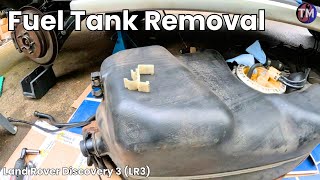
- Raise the vehicle and support the fuel tank with a transmission jack. 🎬 Watch: Step-by-step guide to safely dropping the fuel tank. Disconnect the battery.
- Disconnect fuel lines (be prepared for minor fuel spillage), electrical connectors, and the filler/vent hoses from the tank.
- Carefully lower the fuel tank to access the top-mounted fuel pump assembly and sender units.
- Visually inspect the wiring and connectors on top of the tank for corrosion or damage before opening the tank.
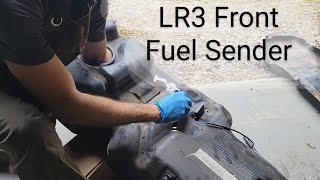
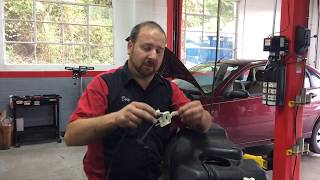
- If wiring looks good, open the fuel pump access flange. The front sender is notoriously difficult to reach inside the tank, requiring you to work by feel through the main opening. 🎬 See how to reach and replace the internal fuel senders. Take pictures of the hose and wire routing inside before removal.
- Replace the identified faulty sending unit(s). It is best practice to also replace the large O-ring gasket for the fuel pump flange.
Parts You'll Likely Need
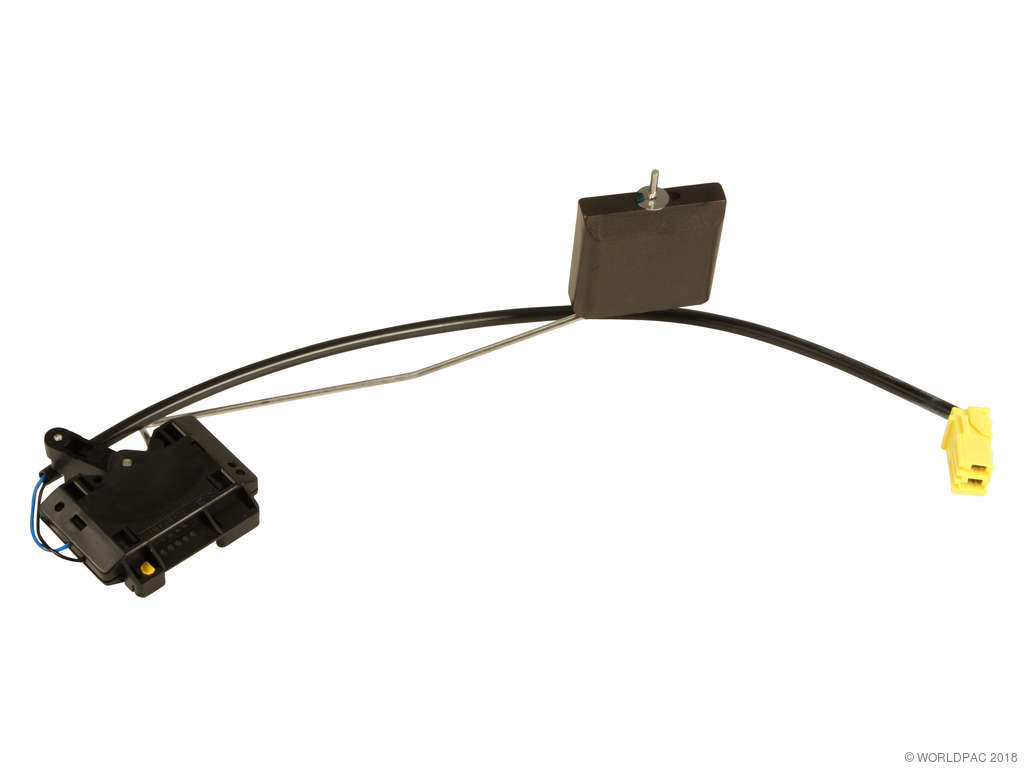
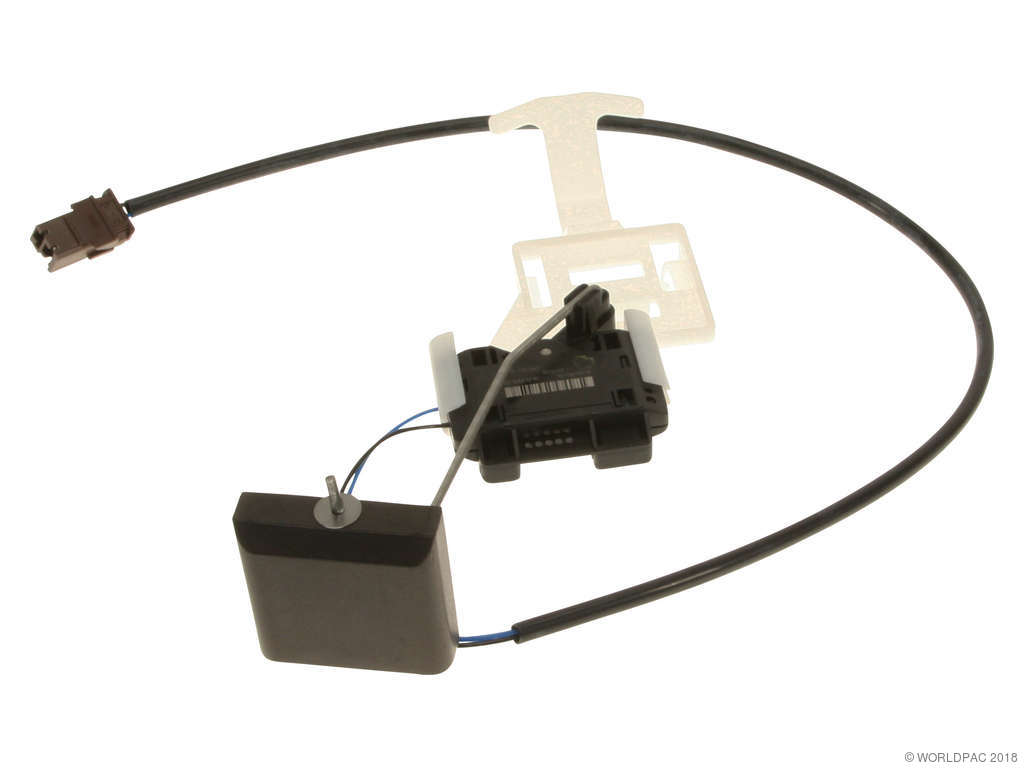
- Front Fuel Tank Sending Unit ('Sender 2')
(OEM #WGS500051)— This is a very common failure point for fuel gauge issues on an LR3. It is a standalone sender located in the front portion of the saddle tank.
Trusted brands: Land Rover (Genuine), VDO, Britpart
OEM price range: $100-$150
Aftermarket price range: $40-$80 - Rear Fuel Tank Sending Unit ('Sender 1')
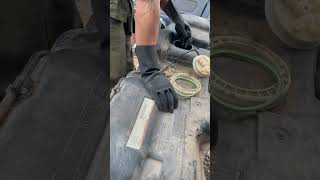
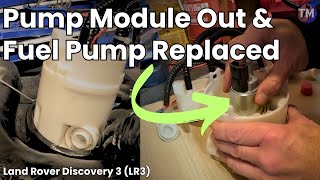
(OEM #WGI500070)— Often replaced preventatively when the tank is dropped, or if codes for the first sender are also present. This sender is attached to the fuel pump module. 🎬 Watch: How to remove the fuel pump and rear sender.
Trusted brands: Land Rover (Genuine), VDO, Britpart
OEM price range: $100-$130
Aftermarket price range: $50-$90 - Fuel Tank Gasket / O-Ring Seal
(OEM #LR000966)— This seal for the fuel pump access flange should always be replaced whenever the tank is opened to prevent fuel leaks and fumes.
Trusted brands: Land Rover (Genuine), Allmakes 4x4
OEM price range: $20-$30
Aftermarket price range: $10-$15
Related Codes That Often Appear With This One
- B1A75-92 — This is a Land Rover-specific body control module code for 'Fuel sender 2 circuit'. It often appears alongside P0463, indicating a fault in the second sending unit (the front one) and confirming the issue is within the tank.
Technical Service Bulletins (TSBs) & Recalls
- LTB00566v6: Addresses inaccurate fuel gauge operation due to fretting corrosion on in-tank harness connectors for the LR4 and RRS, a highly relevant issue.
Platform-Specific Known Issues
- Recall B016 was issued for some 2005 models for a faulty internal breather tube that could detach, leading to fuel smells and potential leaks, though not directly related to the P0463 electrical fault.
- A later recall (N489) for 2010-2016 LR4 models (the successor to the LR3) addressed a cracking fuel tank flange, causing fuel leaks. While outside the 2005-2009 range, it highlights a history of fuel tank component issues.
- Technical Service Bulletin LTB00566v6 was issued for the LR4 and Range Rover Sport (2010-2013) for inaccurate fuel gauges caused by fretting corrosion on the in-tank sender wiring harness pins. While not officially for the LR3, it describes the exact same failure mechanism.
Mechanic-Grade Diagnostic Values
- Fuel Sender Resistance (General Land Rover) — expected: Approximately 20-30 Ohms when full, and 245-270 Ohms when empty. The resistance decreases as the fuel level rises.. Failure: A reading of 1023 Ohms or 'Open Loop' on a scan tool indicates a failed sender or an open circuit. No change in resistance when the vehicle is rocked also indicates a stuck or failed sender.
- Live Data - Fuel Sender 2 (Front Sender) Resistance — expected: A user reported a reading of exactly 798 ohms on a full tank with an iCarsoft LRII scanner. This value appears anomalous compared to general specs but was observed on a working new sensor.. Failure: A reading stuck at 1,023 ohms.
Scan Tool Commands That Help
- GAP IIDTool or iCarsoft LR-series: Live Values > Fuel System > Fuel Sender 1 (Ohm) & Fuel Sender 2 (Ohm) — This is the primary diagnostic step to determine which of the two senders has failed without first dropping the tank. It allows you to see the raw resistance reading from each sender, making it obvious which one is stuck or providing an out-of-range signal.
- Land Rover SDD (Symptom Driven Diagnostics): Service Functions > Configure existing module - Instrument cluster control module — This is typically used for gauge calibration issues, as noted in TSBs for later models. While not a primary fix for a P0463 hardware fault on an LR3, it could be a final step after hardware replacement if the gauge still reads incorrectly, though this is unlikely to be necessary.
Wiring & Ground Locations
- Fuel Pump/Sender Ground — The main ground point for the fuel pump and sender assembly is located in the left rear of the vehicle, just in front of the tail light assembly, behind the interior trim panel.. While a bad ground typically causes a no-start condition by disabling the fuel pump, intermittent or high-resistance ground connections can cause erratic voltage signals from the sender, potentially contributing to a P0463 code. This ground point should be inspected for corrosion and tightness if direct sender tests are inconclusive.
- Main Fuel Tank Connector — Located on top of the fuel tank, accessible after the tank is lowered. It's a multi-pin connector that carries signals for both senders and power for the fuel pump.. This connector is a common point for corrosion and damage due to its exposed location. The pins for the fuel level sender circuit should be inspected for corrosion ('green death') or fretting, which can cause the high resistance fault of P0463.
Real Owner Repair Stories
- landroverforums.com user (2006 Land Rover LR3) — Fuel gauge always reads empty, Check Engine Light on with P0463.
❌ Tried (didn't work) Replaced both front and rear fuel sending units with new parts., After replacement, the gauge still read empty and a scan tool showed the new rear sender ('Sender 1') was stuck at 1,023 ohms.
✅ What actually fixed it The problem was a broken wire in the harness leading to the main fuel tank connector. The owner found a damaged green wire, spliced it back together, and the fuel gauge began working correctly. The issue was wiring damage, not the sender components themselves, despite the scan tool pointing to a faulty sender.
OEM Part Supersession History
WGS500020→WGS500050, then WGS500051— Standard part evolution, likely for improved reliability or manufacturing changes.
Heads up: All versions (WGS500020, WGS500050, WGS500051) are considered interchangeable for the 2005-2009 LR3.
Diagnostic Flowchart
Other Known Issues on This Vehicle
Issues unrelated to this code that are worth knowing about as an owner of this generation:
- Air Suspension Failure 🔴 High — Very common. Air springs develop leaks, and the compressor wears out, typically after 80,000-120,000 miles. Valve blocks can also fail.
- Electronic Parking Brake (EPB) Failure 🔴 High — Common. The actuator module can fail, often making a loud screeching noise. The issue can sometimes be caused by improperly adjusted brake shoes or require a recalibration procedure.
- Water Ingress (Sunroof Drains / A-Pillar) 🟠 Medium — Very common. The front sunroof drain tube nipples degrade and break, allowing water to leak into the front footwells, potentially damaging sensitive electronics like the Central Junction Box (fuse box).
- Lower Control Arm Bushing Wear 🟠 Medium — Considered a regular wear item. The large, heavy vehicle causes the front and rear lower control arm bushings to wear out, leading to clunking noises, poor alignment, and uneven tire wear. Typically requires replacement every 60,000-100,000 miles.
- Cracked Dashboard Top 🟡 Low — Extremely common, especially in warmer climates. The top surface of the dashboard develops cracks from sun exposure over time.
- Faulty Tailgate Actuators 🟠 Medium — Common. The upper or lower tailgate latch actuators can fail, preventing the tailgate from opening. The lower latch failure is particularly problematic as it can require cutting an access hole in the interior trim to manually release it.
Used vs. New Parts: Buying Guide for This Vehicle
When a used part is the smart pick: For this repair, using a used part is generally NOT recommended. The fuel senders are known high-failure items due to wear and fuel exposure. A used sender from a junkyard has unknown remaining life and carries a high risk of failing shortly after the labor-intensive installation. The only scenario where a used part might be considered is for the plastic fuel tank housing itself if it were damaged, but not for the electronic components within.
Donor-vehicle mileage cap: roughly under 30000 miles for the part to have meaningful remaining life.
What to inspect on the donor part:
- Not applicable for electronic sender units. Do not buy used.
OEM-only on this vehicle (don't cheap out):
- While not strictly 'OEM-only', using a known quality brand is critical. The labor to drop the tank is too high to risk a cheap, unproven aftermarket part failing prematurely.
Aftermarket brands forum-validated for this vehicle:
- VDO (often the Original Equipment Supplier)
- Delphi
Brands owners have reported issues with on this vehicle:
- Unbranded, 'white-box' parts from online marketplaces with no warranty or brand reputation. Forum users often report these failing within a year.
Real Owner Stories
Aggregated from forums and TSBs cited above. Mileages and costs reflect what owners reported in those sources.
2005-2009 Land Rover LR3
Symptoms: The fuel gauge suddenly dropped to empty, triggering the low fuel warning and Check Engine Light.
What fixed it: The owner confirmed the fix was to drop the fuel tank and replace both fuel level sending units.
Source hint: landroverworld.org - Thread 'Fuel tank issues'
2005-2009 Land Rover LR3
Symptoms: Ran out of fuel unexpectedly even though the gauge was still reading half a tank.
What fixed it: The owner diagnosed that one sender had failed in a high-reading position, causing the gauge to average incorrectly. The implied fix is replacing the faulty sender.
Source hint: AULRO.com - 'Fuel level sensors'
Related OBD-II Codes
Frequently Asked Questions
On my LR3, which sender is 'Fuel Sender 1' and which is 'Fuel Sender 2' when I'm looking at live data?
My scan tool shows a resistance of 1,023 ohms for one of the senders. What does that mean?
Is it necessary to replace both fuel senders if only one has failed?
I saw TSB LTB00566v6 mentioned for fuel gauge issues. Does it apply to my 2008 LR3?
How can I test the fuel level senders without dropping the fuel tank first?
Why is the front fuel sender so difficult to replace on the LR3?
Helpful Videos
We Have This Part in Stock


The information in this article is provided for general reference and educational purposes only. Vehicle specifications, procedures, and part compatibility can vary by production date, trim level, and region. Always consult your vehicle's factory service manual and verify part numbers before purchasing or performing repairs. Safety-critical components such as airbags, seat belts, and braking systems should be installed by a qualified professional.
- Land Rover LR3:
- 🧭 Diagnostic Flowchart
- 🎬 Helpful Videos
- 🛍️ Shop This Part
- What's Unique About the 2005-2009 Land Rover LR3
- Symptoms You May Notice
- Most Likely Causes
- Rare But Worth Checking
- Diagnosis Steps
- Parts You'll Likely Need
- Related Codes That Often Appear With This One
- Technical Service Bulletins (TSBs) & Recalls
- Platform-Specific Known Issues
- Mechanic-Grade Diagnostic Values
- Scan Tool Commands That Help
- Wiring & Ground Locations
- Real Owner Repair Stories
- OEM Part Supersession History
- Other Known Issues on This Vehicle
- Used vs. New Parts: Buying Guide for This Vehicle
- Real Owner Stories
- 2005-2009 Land Rover LR3
- 2005-2009 Land Rover LR3
- Related OBD-II Codes
- Frequently Asked Questions
- 🎟️ Get 5% Off