

P0463 on 2004-2009 Mazda 3: Fuel Level Sensor Circuit High Input Causes and Fixes
This code almost always points to a failed fuel level sending unit on a 2004-2009 Mazda 3. The sensor is integrated into the fuel pump module, so the entire assembly must be replaced. Expect to pay between $100 and $250 for an aftermarket part and tackle the job in an afternoon. Before replacing, check the connector on top of the tank for corrosion.
- P0463 on a 2004-2009 Mazda 3 means the fuel level sensor circuit is sending a signal that's too high, usually over 5 volts.
- The most common symptom is a fuel gauge that is stuck on 'Full' and a lit Check Engine Light.
- The fix is almost always to replace the entire fuel pump module, as the sensor is built into it. The OEM part number is LF67-13-35XE.
- Before buying parts, check the wiring and connector at the top of the fuel tank (under the rear seat) for corrosion or damage, as this can sometimes be the cause.
- This is a manageable DIY job for those comfortable with working around gasoline; access is conveniently located under the rear seat, so the fuel tank does not need to be dropped.
What's Unique About the 2004-2009 Mazda 3
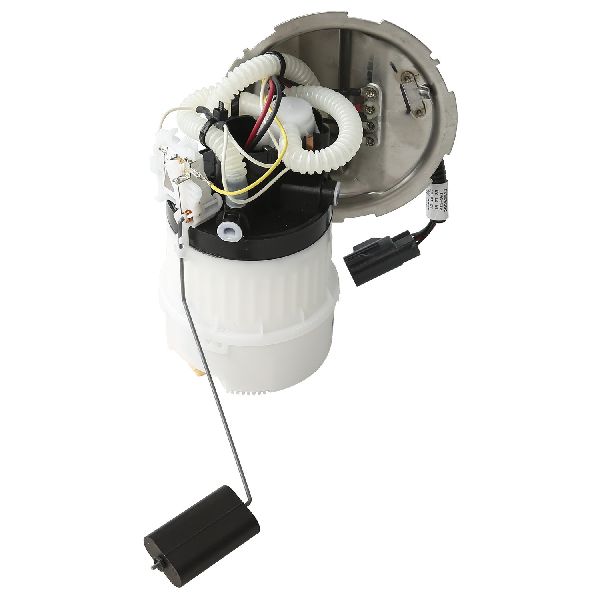
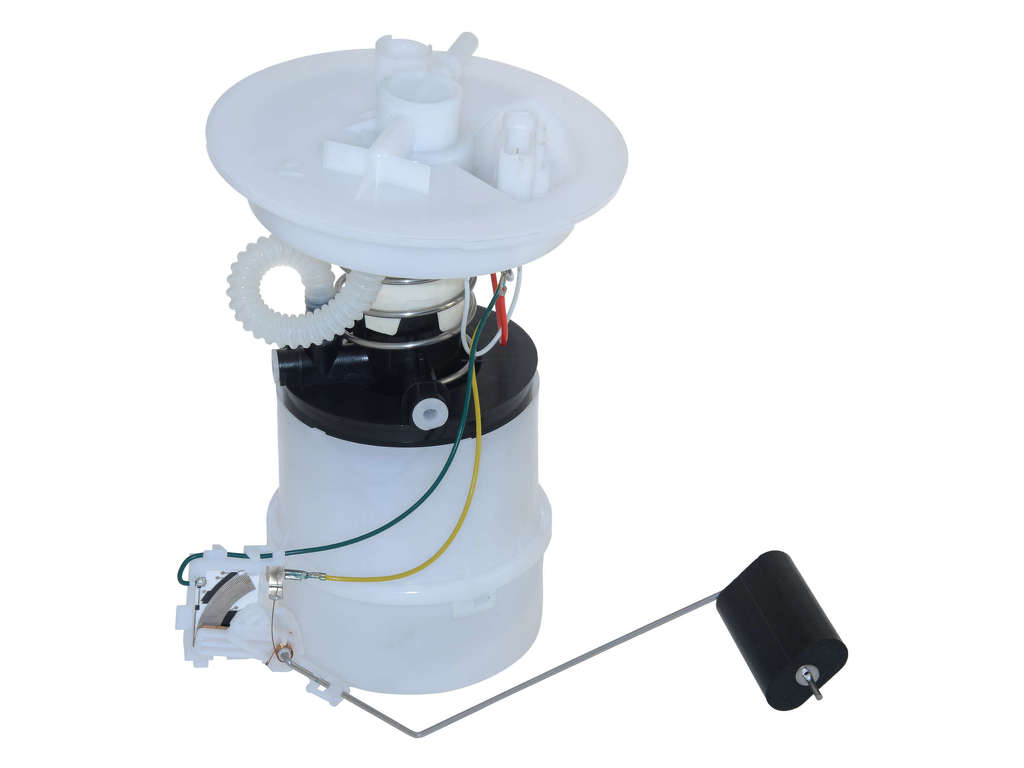
For the first-generation Mazda 3 (2004-2009), the fuel level sensor is not sold as a separate component. It is integrated into the fuel pump module located inside the fuel tank. This design means that a simple sensor failure requires the replacement of the entire fuel pump assembly, which is a more involved and expensive repair than replacing just the sensor. Access is conveniently located under the rear passenger-side seat, making it a feasible DIY job without needing to drop the fuel tank.
Symptoms You May Notice
- Check Engine Light is on
- Fuel gauge is inaccurate, stuck on full, or fluctuates wildly.
- Low fuel warning light may be on constantly, even with a full tank.
- The vehicle's distance-to-empty calculation will be incorrect.
- In some cases, the gauge may read empty or fluctuate erratically, but being stuck on 'Full' is the most common symptom for a 'High Input' code.
- Replacing only the fuel gauge in the instrument cluster without testing the sending unit and wiring first.
- Replacing the fuel pump itself when the issue is only with the integrated sending unit's circuit.
- Assuming the fuel pump is bad without first checking the connector on top of the tank for corrosion, which is a simpler fix.
Most Likely Causes
- Faulty Fuel Level Sending Unit 🔴 High Probability → Shop Fuel Tank Sending Unit The sending unit is a moving part (a float on an arm connected to a variable resistor) that wears out over time. The resistor track can develop worn or corroded spots, causing the signal to become an open circuit, which the PCM interprets as maximum voltage (high input). The high sulfur content in some fuels can also contribute to the contamination and failure of the sending unit's contact card over time.
How to confirm: Access the fuel pump module connector under the rear seat. Use a multimeter to measure the resistance of the sending unit circuit. The resistance should change smoothly as the fuel level changes. An infinite (open) or erratic reading indicates a bad sensor. For this generation Mazda 3, the resistance range is approximately 10 ohms (full) to 205 ohms (empty). An open circuit (infinite resistance) will cause a P0463.
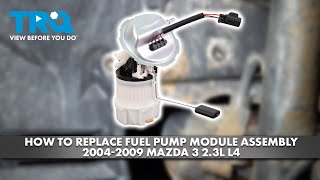
Typical fix: Replace the entire fuel pump module, as the sending unit is integrated. 🎬 Watch: Step-by-step guide to replacing the fuel pump module assembly. On the Mazda 3, this is accessed via a panel under the rear seat. Remember to also purchase a new fuel pump lock ring and gasket, as they are often not included with the new pump assembly and the old ones can be brittle or damaged during removal.
Est. part cost: $100-$250 - Damaged Wiring or Corroded Connector 🟡 Medium Probability The wiring harness connector sits on top of the fuel tank, where it can be exposed to moisture and dirt, leading to corrosion of the pins. A short to power in the signal wire can also cause a high voltage reading. This is a common point of failure and should be inspected before ordering a new pump.
How to confirm: Visually inspect the wiring harness and connector leading to the fuel pump module for any signs of corrosion (green or white powder), frayed wires, or loose pins. Check for voltage on the signal wire; it should be within the manufacturer's specified range (typically under 5 volts).
Typical fix: Clean the connector terminals with electrical contact cleaner or repair the damaged section of the wiring harness. Apply dielectric grease to the connector to prevent future corrosion.
Est. part cost: $5-$20
Rare But Worth Checking
- Faulty Instrument Cluster: → Shop Instrument Cluster While rare, the gauge cluster itself can fail, leading to incorrect readings even with a good signal from the sensor. This is usually suspected only after the sensor and wiring have been confirmed to be good.
- Faulty Powertrain Control Module (PCM): This is extremely unlikely. The PCM is the last component to suspect. A failure in the PCM's internal circuit that reads the fuel level sensor voltage can trigger P0463. This should only be considered after all other possibilities are exhausted.
- Stuck Float Arm: It is possible, though less common, for the float arm itself to become mechanically stuck in the 'full' position due to debris in the tank or a bent arm. This would cause the gauge to read full, but diagnosis would show correct resistance for that position.
Diagnosis Steps
- Verify the P0463 code is present using an OBD-II scanner.
- Observe the fuel gauge behavior. Is it stuck on full, empty, or moving erratically? For P0463, it is almost always stuck on 'Full'.
- Use a scanner with live data capability to view the fuel level sensor voltage. A reading that is stuck high (often near 5 volts) regardless of the actual fuel level points towards a circuit high fault.
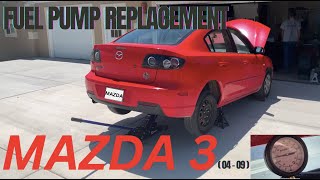
- Gain access to the fuel pump module, which is located under the rear passenger-side seat in a Mazda 3. Remove the seat bottom cushion and then the black metal access panel. 🎬 See this walkthrough for accessing and removing the fuel pump.
- Disconnect the electrical connector. Inspect the connector and wiring harness for any visible damage, corrosion, or loose pins. Clean as necessary.
- Using a multimeter and a wiring diagram, test the resistance of the fuel level sensor at the connector. Compare the reading to the manufacturer's specifications. For this generation Mazda 3, the resistance range is approximately 10 ohms (full) to 205 ohms (empty). An open circuit (infinite resistance) will cause a P0463.
- If the sensor resistance is out of spec or shows an open circuit, the fuel pump module needs to be replaced.
- If the sensor tests good, check the wiring between the fuel pump module and the PCM for shorts to power or open circuits.
Parts You'll Likely Need
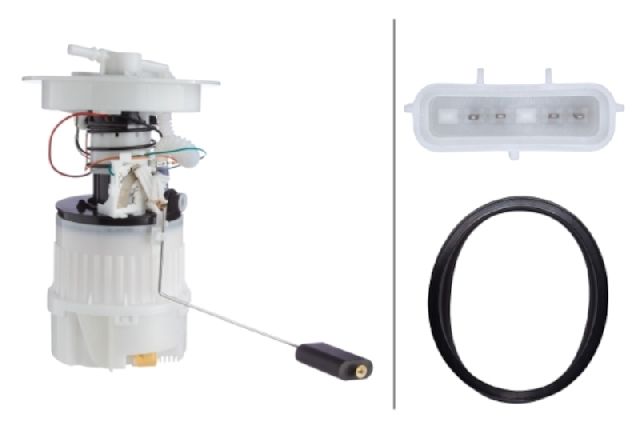
- Fuel Pump Module Assembly
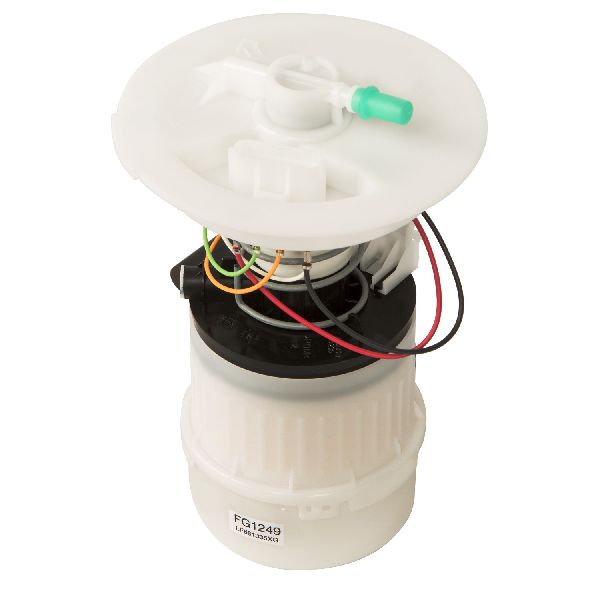
(OEM #LF67-13-35XE (supersedes multiple previous part numbers like LF661335XA, etc.))— This is the most common cause of P0463, as the fuel level sending unit fails and is integrated into the module.
Trusted brands: Bosch, Denso, TYC, Delphi (FG1249)
OEM price range: $400-$825
Aftermarket price range: $100-$250 - Fuel Pump Tank Seal / Gasket — The original seal is often brittle and can be damaged during removal. It is rarely included with a new pump assembly and should be purchased separately to ensure a proper seal and prevent fuel vapor leaks.
Trusted brands: Genuine Mazda, Fel-Pro
OEM price range: $15-$30
Aftermarket price range: $5-$15
Platform-Specific Known Issues
- Owner Experience: Stuck on Full: A user on Reddit with a 2006 Mazda 3 hatch reported a P0463 code and a non-working fuel gauge. This is a very common story for this vehicle, with the fix almost always being a new fuel pump assembly. Access is confirmed to be under the rear seat.
Mechanic-Grade Diagnostic Values
- Fuel Level Sender Resistance — expected: Approximately 10 Ω when full to 205 Ω when empty. The reading should change smoothly when moving the float arm.. Failure: An infinite resistance (O.L.) reading indicates an open circuit in the sender, which is the direct cause of a P0463 code.
- Fuel Level Sensor Signal Voltage (at PCM) — expected: A variable voltage, typically between 0.5V (empty) and 4.5V (full).. Failure: A reading stuck at or near 5.0V indicates a high input fault.
Scan Tool Commands That Help
- Manual Procedure: Instrument Cluster Diagnostic Mode / Gauge Sweep Test — To verify that the fuel gauge needle and its stepper motor in the instrument cluster are physically working. This helps rule out a faulty gauge before replacing the fuel pump assembly. 🎬 Watch: Three proven methods to reset and test your fuel gauge. It is activated by holding the trip reset button while turning the ignition to the ON position until 'test' appears on the odometer display.
- Advanced Scan Tool (e.g., FORScan, Mazda IDS): Fuel Pump Active Test — While this command tests the fuel pump motor and not the sender, it can be used to verify power and ground are being supplied to the fuel pump module assembly while diagnosing the overall system.
Wiring & Ground Locations
- Fuel Pump Module Connector — On top of the fuel pump assembly, accessed by removing the rear passenger-side seat cushion and a metal access panel.. This is the primary connection point for testing the fuel level sender. It is prone to corrosion from moisture and dirt.
- Sender Unit Test Terminals — On the fuel pump module itself, after removal from the tank. The Mazda service manual specifies checking resistance between terminals A and C (or B and D on some diagrams).. These are the specific pins to probe with a multimeter to directly measure the resistance of the sender's variable resistor to confirm if it is faulty.
- Chassis Ground Points — Primary chassis grounds for the first-gen Mazda 3 are located on the strut towers, on the transmission housing, and near the passenger motor mount.. A poor ground for the fuel pump module or the PCM can cause a floating voltage and incorrect sensor readings. While less common than a failed sender, checking major ground points is a valid step if a new pump doesn't fix the issue.
Real Owner Repair Stories
- Reddit user in r/mazda3 (2006 Mazda 3 Hatchback) — Check Engine Light with code P0463, fuel gauge not working.
❌ Tried (didn't work) Replacing the entire fuel pump and sending unit assembly.
✅ What actually fixed it The user's story ended with the new pump not fixing the problem, strongly indicating the actual fault was in the wiring harness between the pump connector and the PCM, or a bad ground. The resolution was not posted, but the diagnostic value is in the failure of the common fix.
When the Usual Fixes Don't Work
- While the overwhelming majority of P0463 codes on this vehicle are fixed by replacing the fuel pump module, there are documented cases where this does not solve the problem. One owner replaced the pump assembly only to have the code and symptoms remain, pointing to a less common but critical wiring issue between the fuel tank and the PCM. This underscores the importance of testing the circuit if the initial, most probable fix fails.
OEM Part Supersession History
lf671335x, lf671335xa, lf671335xb, lf671335xc, lf671335xd, lf671335xf→LF67-13-35XE— Standard part revisions and updates by the manufacturer over the vehicle's production run.
Heads up: All previous part numbers are replaced by LF67-13-35XE, which is the current correct OEM part for all 2004-2009 2.0L and 2.3L non-turbo models.LF66-13-35X (and variants)→LF67-13-35XE— Part update.
Heads up: Aftermarket manufacturer Delphi lists their FG1249 pump as an interchange for multiple LF66-13-35X series part numbers, indicating these were also likely superseded by the LF67 series.
Model Year Variations Within This Range
- 2006-2009: Starting in 2006, the 2.3L engine became PZEV-certified in certain states. While the final OEM fuel pump part number (LF67-13-35XE) is listed for all models including 'California emissions', be aware that PZEV vehicles can sometimes have unique fuel system components. However, for this generation, the pump module appears to be universal.
Diagnostic Flowchart
Other Known Issues on This Vehicle
Issues unrelated to this code that are worth knowing about as an owner of this generation:
- Failed Passenger-Side Engine Mount 🔴 High — Extremely common. The hydraulic mount fails, leaks fluid, and causes excessive vibration at idle and clunking noises. Often fails between 30,000 and 90,000 miles.
- Rear Quarter Panel and Wheel Well Rust 🔴 High — A notorious issue for this generation, especially in regions that use road salt. Rust bubbles form around the rear wheel arches and can lead to significant body rot if not addressed early.
- Cracked/Leaking Plastic Thermostat Housing 🟠 Medium — The plastic thermostat housing can become brittle over time and develop cracks, leading to coolant leaks. This is a common failure point as the car ages.
- Failing Automatic Transmission Control Module (TCM) 🔴 High — Can cause harsh shifting, jerking, and the 'AT' light to illuminate. It's an expensive part to replace.
- Worn Rear Sway Bar Links and Bushings 🟡 Low — The original bushings and links can wear out, causing rattling or clunking noises from the rear suspension over bumps. Mazda later revised the parts.
Used vs. New Parts: Buying Guide for This Vehicle
When a used part is the smart pick: Purchasing a used fuel pump module is highly risky and generally not recommended. The failure part (the level sender) is a wear item, and the fuel pump motor also has a finite lifespan. A used part could fail quickly. It should only be considered as a temporary, budget-constrained fix from a very low-mileage donor vehicle.
Donor-vehicle mileage cap: roughly under 60000 miles for the part to have meaningful remaining life.
What to inspect on the donor part:
- Verify the donor vehicle's mileage is low.
- Inspect the electrical connector on top of the module for any signs of corrosion, melting, or pin damage.
- Ensure the float arm is present and moves freely without binding.
- Check for cracks or damage to the plastic housing.
Aftermarket brands forum-validated for this vehicle:
- Delphi (often an OE supplier)
- Denso (often an OE supplier)
- Bosch
Brands owners have reported issues with on this vehicle:
- No-name, unbranded units from online marketplaces should be avoided due to potential quality control issues and premature failure, even if the price is tempting.
Real Owner Stories
Aggregated from forums and TSBs cited above. Mileages and costs reflect what owners reported in those sources.
2006 Mazda 3 hatch
Symptoms: Check Engine Light on with a P0463 code and a non-working fuel gauge.
What fixed it: The issue was resolved by replacing the entire fuel pump assembly.
Source hint: Reddit r/mazda3 - 'Need help! code P0463'
Related OBD-II Codes
Frequently Asked Questions
On my 2004-2009 Mazda 3, where is the fuel level sending unit located?
My fuel gauge is stuck on 'Full'. Is this the correct symptom for a P0463 code on this car?
Can I just replace the fuel level sensor, or do I need the whole fuel pump assembly?
What resistance reading should I get when testing the fuel level sensor on my Mazda 3?
Are there any other parts I should buy when replacing the fuel pump module?
Is there anything I should check before ordering a new fuel pump for a P0463 code?
Helpful Videos
We Have This Part in Stock


The information in this article is provided for general reference and educational purposes only. Vehicle specifications, procedures, and part compatibility can vary by production date, trim level, and region. Always consult your vehicle's factory service manual and verify part numbers before purchasing or performing repairs. Safety-critical components such as airbags, seat belts, and braking systems should be installed by a qualified professional.
- Mazda 3:
- 🧭 Diagnostic Flowchart
- 🎬 Helpful Videos
- 🛍️ Shop This Part
- What's Unique About the 2004-2009 Mazda 3
- Symptoms You May Notice
- Most Likely Causes
- Rare But Worth Checking
- Diagnosis Steps
- Parts You'll Likely Need
- Platform-Specific Known Issues
- Mechanic-Grade Diagnostic Values
- Scan Tool Commands That Help
- Wiring & Ground Locations
- Real Owner Repair Stories
- When the Usual Fixes Don't Work
- OEM Part Supersession History
- Model Year Variations Within This Range
- Other Known Issues on This Vehicle
- Used vs. New Parts: Buying Guide for This Vehicle
- Real Owner Stories
- 2006 Mazda 3 hatch
- Related OBD-II Codes
- Frequently Asked Questions
- 🎟️ Get 5% Off