

P0463 on 1997-2004 Oldsmobile Silhouette: Fuel Level Sensor Causes and Fixes
This code means the fuel level sensor has failed. On the Oldsmobile Silhouette, this is almost always due to a worn-out sensor inside the fuel tank. The fix requires replacing the entire fuel pump module assembly, which includes the sensor. Expect to pay $150-$300 for an aftermarket part and $350+ for an OEM part.
- P0463 on a Silhouette means the fuel level sensor circuit is open, usually due to a failed sensor.
- The most common symptom is a fuel gauge that is stuck on full or empty.
- The fix is to replace the entire fuel pump module, which is located inside the fuel tank.
- While you can drive with this issue, you risk running out of gas unexpectedly.
- This repair requires dropping the fuel tank, which is a difficult and potentially hazardous DIY job.
What's Unique About the 1997-2004 Oldsmobile Silhouette
The 1997-2004 Oldsmobile Silhouette is part of the GM U-body platform, which also includes the Chevrolet Venture and Pontiac Montana/Trans Sport. These minivans are well-known for fuel level sensor failures. The sensor, which is part of the fuel pump module, uses a resistor strip and a wiper arm that can wear out or become damaged by high sulfur content in gasoline, leading to corrosion. While some GM service bulletins for other vehicles have suggested using fuel system cleaners like Chevron Techron or GM's own Fuel System Treatment Plus (Part #88861011) to resolve intermittent issues by cleaning sulfur deposits, a persistent P0463 code on these vans almost always points to a permanent open circuit in the sending unit requiring replacement.
Symptoms You May Notice
- Check Engine Light is on
- Fuel gauge reads full (most common for P0463)
- Fuel gauge reads empty
- Fuel gauge fluctuates erratically
- Low fuel warning light may be on constantly
- Replacing the instrument cluster or fuel gauge. The gauge itself is rarely the problem; it simply displays the faulty information sent from the PCM, which is reacting to the bad sensor signal.
Most Likely Causes
- Failed Fuel Level Sensor (Sending Unit) 🔴 High Probability → Shop Fuel Tank Sending Unit The fuel level sensor is integrated into the fuel pump module. The sensor's resistor contacts are known to wear out, break, or corrode over time, creating an open circuit that triggers the P0463 code. This is a very common failure on GM U-body vans of this era due to material wear and sensitivity to sulfur in fuel.
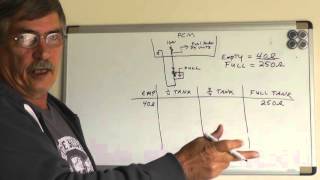
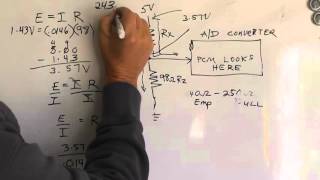
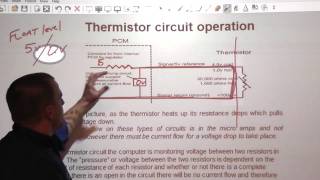
How to confirm: Use a scan tool to observe the fuel level sensor voltage; a steady, high reading (typically near 5 volts) points to an open circuit. The definitive test is to remove the fuel pump module and test the sensor's resistance with a multimeter while moving the float arm. 🎬 Watch: How to test the sending unit with a multimeter. An infinite resistance (OL) reading confirms failure. The expected resistance range is typically 40 ohms at empty and 250 ohms at full.
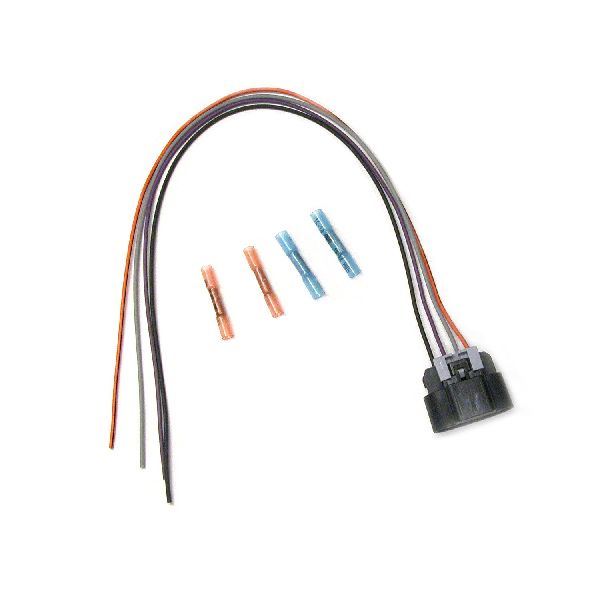
Typical fix: Replace the entire fuel pump module assembly. The fuel level sensor is not sold as a separate part for this vehicle and is integrated into the module.
Est. part cost: $150-$450 - Damaged Wiring or Connector 🟡 Medium Probability The wiring harness that runs along the frame rail to the fuel tank is exposed to the elements, making it susceptible to corrosion, chafing, or physical damage from road debris. The connector on top of the fuel pump module is also a common point for corrosion to develop.
How to confirm: Visually inspect the wiring harness from the PCM to the fuel tank connector for any breaks, corrosion, or loose pins. Pay close attention to the main connector on top of the tank. Test for 5-volt reference and ground at the fuel pump module connector.
Typical fix: Repair the damaged section of the wire or clean/replace the corroded connector.
Est. part cost: $5-$50
Rare But Worth Checking
- Faulty Powertrain Control Module (PCM): This is extremely rare. The PCM should only be considered after all other possibilities, including the sensor and wiring, have been exhaustively tested and ruled out.
- Faulty Instrument Cluster: → Shop Instrument Cluster It is more likely for the signal to be bad from the source (the sender) than for the gauge itself to fail in a way that generates a P0463 code. This is an uncommon cause.
Diagnosis Steps
- Connect an OBD-II scanner and confirm the P0463 code is present.
- Observe the fuel gauge. Note if it is stuck on Full, Empty, or behaving erratically.
- Use the scanner's live data function to monitor the 'Fuel Level Sensor' voltage. A reading that is stuck high (e.g., 4.9-5.0 volts) strongly suggests an open circuit.
- Visually inspect the wiring harness and connectors between the main vehicle body and the fuel tank. Look for any signs of corrosion, breaks, or loose connections, especially at the large connector on top of the tank.
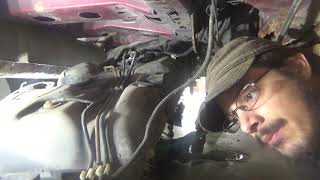
- If wiring appears intact, the next step is to access the fuel pump module. This requires safely lifting the vehicle and lowering the fuel tank. 🎬 See this shortcut for accessing the pump through the floor.
- Disconnect the electrical connector at the fuel pump module. With the key on, use a multimeter to verify you have a 5-volt reference signal and a good ground on the appropriate pins (refer to a vehicle-specific wiring diagram).
- If power and ground are present at the connector, the fault is almost certainly the fuel level sensor itself.
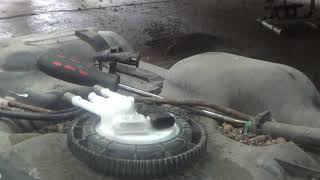
- Replace the fuel pump module assembly. It is highly recommended to clean the inside of the fuel tank while it is removed to get rid of any sediment that could damage the new pump. 🎬 Watch: Step-by-step guide to replacing the fuel pump module.
- After replacement, clear the code with the scanner and verify the fuel gauge reads correctly.
Parts You'll Likely Need
- Fuel Pump Module Assembly
(OEM #ACDelco MU1738 (Note: This part number fits many GM trucks and may not be correct for the Silhouette, verify application. A more likely aftermarket part is Delphi FG0125, but always confirm fitment.))— This is the most common cause of P0463. The fuel level sensor is integrated into this assembly and typically fails, requiring the replacement of the entire unit.
Trusted brands: ACDelco, Delphi, Spectra Premium
OEM price range: $350-$500
Aftermarket price range: $150-$300
Technical Service Bulletins (TSBs) & Recalls
- GM TSB #06-00-89-07BB: While not specific to the Silhouette, this bulletin addresses the widespread issue of sulfur corrosion on fuel sending units across many GM vehicles and recommends using GM Fuel System Treatment Plus (P/N 88861011) as a cleaning and preventative measure.
Platform-Specific Known Issues
- Owners have reported that using a fuel system cleaner with PEA (polyetheramine), such as Chevron Techron Concentrate Plus, can sometimes temporarily resolve an erratic fuel gauge, but it is not a permanent fix for a failed sensor causing a P0463 code.
- The failure is so common on GM vehicles of this era that GM issued a Technical Service Bulletin blaming high sulfur content in gasoline for corroding the sender contacts and recommended a fuel additive (GM P/N 88861011) as a preventative measure.
Mechanic-Grade Diagnostic Values
- Fuel Level Sensor Resistance Range — expected: Approximately 40 Ohms (Empty) to 250 Ohms (Full).. Failure: An infinite (OL) reading indicates an open circuit/failed sensor. A reading that does not change smoothly as the float arm is moved indicates a worn or dead spot.
- Fuel Level Sensor Signal Voltage (at PCM) — expected: A variable voltage, typically low (under 1V) when empty and high (under 5V) when full.. Failure: A steady 5.0 volts indicates an open in the signal or ground circuit, or a failed sensor.
- Sensor Ground Voltage (at pump connector, backprobed) — expected: Near 0.0 volts (less than 0.1V).. Failure: Voltage reading higher than 0.1V, or equal to the reference voltage (5V), indicates a bad ground connection between the pump and the chassis.
Scan Tool Commands That Help
- Tech 2 / GDS2: Live Data - Fuel Tank Level Sensor Voltage — This is the primary data PID to monitor. A persistent 5.0V reading with the P0463 code strongly points to an open circuit, which is the most common failure mode.
Wiring & Ground Locations
- Fuel Level Signal Wire — Purple wire at the fuel pump module connector. This corresponds to Pin 69 in the C2 connector at the PCM.. This is the wire that carries the variable voltage signal from the sender to the PCM. An open or short-to-voltage on this wire will cause a P0463.
- Sensor Ground Wire — Black wire at the fuel pump module connector. This corresponds to Pin 35 in the C2 connector at the PCM.. This provides the ground reference for the sensor. A break in this wire will cause the signal voltage to float high, triggering a P0463.
- G401 — On the outer side of the left-hand (driver's side) frame rail, in the rear of the vehicle, often inboard of the rear tire.. This is a primary rear chassis ground. While multiple components ground here, corrosion or a loose connection at G401 can cause a high-resistance ground path for the fuel pump module, leading to erratic sensor readings and other fuel system issues.
- C305 Connector — On the floor pan to the rear of the driver's seat, under the vehicle.. GM TSB #01-08-45-005E identifies this unsealed connector as a common source of water intrusion and corrosion on U-body vans. Corrosion here can interrupt the fuel level sensor signal, causing fluctuating gauge readings and potentially a P0463 code.
Real Owner Repair Stories
- Car Talk Community Forum (2002 Pontiac Montana (U-body platform mate)) — Fuel gauge was erratic, then became stuck on full.
❌ Tried (didn't work) Owner disconnected the sending unit connectors under the vehicle, but the gauge remained stuck on full, leading them to believe the sender was not at fault.
✅ What actually fixed it A forum member cited GM Technical Service Bulletin #01-08-45-005E, which points to corrosion in the unsealed C305 connector located on the floor pan behind the driver's seat. The problem was identified as water intrusion into this connector, causing the erratic gauge behavior. - YouTube user 'Fix it Angel' (2004 Oldsmobile Silhouette) — Crank, no start.
❌ Tried (didn't work) Checked fuel pump relay and fuse, which were both good.
✅ What actually fixed it Upon inspecting the wiring under the van, the owner found the main connector that passes through the floor to the fuel pump was melted and had broken pins. Bypassing the damaged connector and hard-wiring the connections restored power to the fuel pump and fixed the no-start condition. While this was a no-start and not a P0463, it highlights a known failure point in the harness that could also cause an open circuit for the fuel level sender.
Model Year Variations Within This Range
- 1997-2005: The second generation GM U-body platform (GMT200) used for these vans was a significant redesign from the first generation, featuring a steel unibody construction. However, within the 1997-2004 model years, the core fuel system design and the common failure points of the fuel level sender remained consistent.
Diagnostic Flowchart
Other Known Issues on This Vehicle
Issues unrelated to this code that are worth knowing about as an owner of this generation:
- Leaking Lower Intake Manifold Gaskets 🔴 High — Extremely common, often occurring between 80,000 and 120,000 miles. Failure allows coolant and oil to mix, which can lead to catastrophic engine damage if not repaired.
- Power Sliding Door Malfunctions 🟠 Medium — Common failure of the door's cables, motors, or rollers, causing the door to get stuck, open while driving, or fail to operate electronically. (Ref: Recalls were issued for some models where the door could open while in motion.)
- Premature Wheel Bearing Failure 🟠 Medium — Front wheel bearing/hub assemblies are a frequent replacement item, often failing before 100,000 miles, causing a loud humming or grinding noise that changes with speed.
- Cracked Plastic Intake Manifold 🟠 Medium — The upper intake manifold (plenum) is made of plastic and can crack, leading to vacuum leaks, poor idle, and sometimes coolant leaks depending on the location of the crack.
- Automatic Transmission Failure 🔴 High — The 4T65-E transmission used in these vans, particularly in earlier years (1997-2000), was prone to failure, often requiring a rebuild or replacement.
Used vs. New Parts: Buying Guide for This Vehicle
When a used part is the smart pick: A used fuel pump module is generally NOT recommended for this repair. The fuel level sensor is a high-failure wear item. A used part from a junkyard has unknown remaining life and is very likely to fail in the same manner as the original, requiring the labor-intensive job of dropping the fuel tank to be repeated.
Donor-vehicle mileage cap: roughly under 50000 miles for the part to have meaningful remaining life.
What to inspect on the donor part:
- If a used part must be considered, source it from the lowest-mileage donor vehicle possible.
- Inspect the electrical connector pins on the used module for any signs of heat, melting, or corrosion.
- Test the resistance of the used sender across its range (40-250 ohms) with a multimeter before installation to ensure it's not already faulty.
Aftermarket brands forum-validated for this vehicle:
- Delphi: Delphi was an original equipment manufacturer for GM, and their aftermarket parts are often considered equivalent to OEM quality.
- ACDelco: This is GM's own parts brand and is the direct OEM replacement.
- Spectra Premium
Brands owners have reported issues with on this vehicle:
- Avoid unbranded, 'white-box' parts from online marketplaces. While significantly cheaper, they have a high reported failure rate, often within the first year. The labor involved in replacing the part a second time negates any initial cost savings.
Real Owner Stories
Aggregated from forums and TSBs cited above. Mileages and costs reflect what owners reported in those sources.
2001 Oldsmobile Silhouette 3.4L V6
Symptoms: The fuel gauge was fluctuating wildly and the Check Engine Light came on with a P0463 code. The gauge would often get stuck on full.
What fixed it: The root cause was confirmed to be the fuel level sensor contacts being corroded by sulfur in the fuel. The entire fuel pump module had to be replaced to correct the issue.
Source hint: Car Talk Community - 'Does Sulfer in Gasoline corrode sending units?'
2002 Oldsmobile Silhouette 3.4L V6
Symptoms: The fuel gauge was erratic and a P0463 code was stored.
What fixed it: Tried using a fuel system cleaner with PEA, which seemed to help for a short time, but the problem returned. This was not a permanent fix for the failed sensor.
Source hint: vehicle_specific_issues
1999 Oldsmobile Silhouette 3.4L V6
Symptoms: The fuel gauge was fluctuating and the vehicle set a P0463 trouble code.
What fixed it: The problem was diagnosed as a common failure of the fuel level sensor. The fix required replacing the complete fuel pump module assembly.
Source hint: RepairPal
Related OBD-II Codes
Frequently Asked Questions
My fuel gauge is stuck on Full. Is this a common problem on the 1997-2004 Silhouette?
Can I just replace the fuel level sensor, or do I have to buy the whole fuel pump assembly?
I heard that sulfur in gasoline can cause this issue. Is that true?
Will using a fuel system cleaner like Techron fix my P0463 code?
Do I have to drop the fuel tank to fix this?
My friend's Chevy Venture has the same problem. Is it the same part?
Helpful Videos
We Have This Part in Stock


The information in this article is provided for general reference and educational purposes only. Vehicle specifications, procedures, and part compatibility can vary by production date, trim level, and region. Always consult your vehicle's factory service manual and verify part numbers before purchasing or performing repairs. Safety-critical components such as airbags, seat belts, and braking systems should be installed by a qualified professional.
- Oldsmobile Silhouette:
- 🧭 Diagnostic Flowchart
- 🎬 Helpful Videos
- 🛍️ Shop This Part
- What's Unique About the 1997-2004 Oldsmobile Silhouette
- Symptoms You May Notice
- Most Likely Causes
- Rare But Worth Checking
- Diagnosis Steps
- Parts You'll Likely Need
- Technical Service Bulletins (TSBs) & Recalls
- Platform-Specific Known Issues
- Mechanic-Grade Diagnostic Values
- Scan Tool Commands That Help
- Wiring & Ground Locations
- Real Owner Repair Stories
- Model Year Variations Within This Range
- Other Known Issues on This Vehicle
- Used vs. New Parts: Buying Guide for This Vehicle
- Real Owner Stories
- 2001 Oldsmobile Silhouette 3.4L V6
- 2002 Oldsmobile Silhouette 3.4L V6
- 1999 Oldsmobile Silhouette 3.4L V6
- Related OBD-II Codes
- Frequently Asked Questions
- 🎟️ Get 5% Off