

P0480 on 2010-2013 Hyundai Santa Fe: Cooling Fan Circuit Causes and Fixes
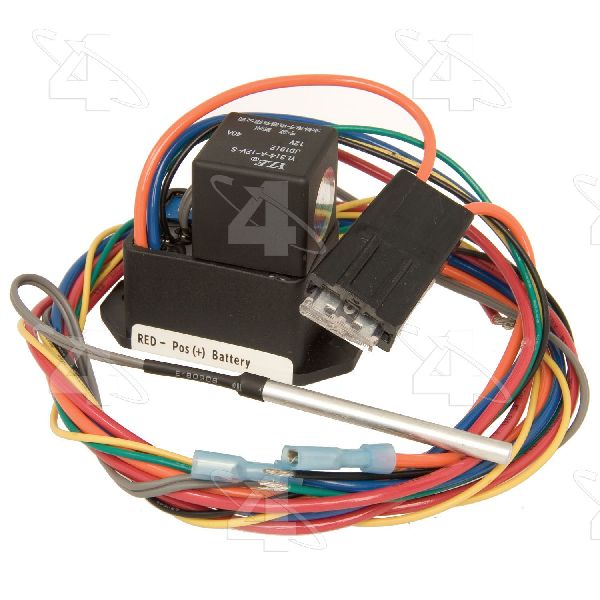
For 2010-2012 models, P0480 is often a bad cooling fan relay in the fuse box. For 2013 models, it's almost always a failed fan control module/resistor with a melted connector, caused by a failing fan motor. Expect to replace the fan assembly and the control module on 2013 models.
- The fix for P0480 on a 2010-2013 Santa Fe depends entirely on the model year.
- For 2010-2012 models, start by checking the cooling fan relays in the engine bay fuse box.
- For 2013 models, the fan control module/resistor and its connector are the most likely culprits, but the fan motor itself should also be replaced to prevent a repeat failure.
- Ignoring this code will lead to engine overheating, especially in traffic, which can cause catastrophic engine damage.
- A simple test is to see if the fan spins freely by hand (with the engine off); if it's stiff or stuck, the fan motor is definitely bad.
What's Unique About the 2010-2013 Hyundai Santa Fe
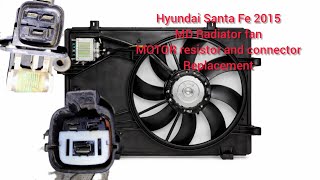
The 2010-2013 year range covers two different Santa Fe generations with distinct cooling fan designs. The 2010-2012 (CM generation) uses a traditional multi-speed fan relay system. The redesigned 2013 (DM generation) uses a separate fan control module, also called a resistor, which is a very common failure point. This module and its connector are known to overheat and melt, frequently triggered by an aging fan motor drawing too much current. 🎬 See how to replace a melted cooling fan module This issue is shared with platform mates like the Kia Sorento.
Generation note: This guide covers two generations: the 2nd generation (CM, 2010-2012) and the 3rd generation (DM, 2013). The causes and required parts are different. The 2010-2012 models use fan relays, while the 2013 model uses a fan control module/resistor that is a frequent point of failure.
Symptoms You May Notice
- Engine overheating, especially at idle or in stop-and-go traffic.
- Check Engine Light is on.
- A/C performance is poor or blows warm air when the vehicle is not moving.
- Cooling fan does not turn on when the engine is hot or when the A/C is activated.
- Cooling fan runs continuously, even when the engine is off (less common).
- Steam coming from the engine bay.
- Temperature warning light illuminated on the dashboard.
- On 2013 models, replacing only the fan control module/resistor without replacing the failing fan motor. The new module will likely fail again quickly because the root cause (high current draw from the motor) was not addressed.
Most Likely Causes
- Failed Fan Control Module/Resistor (2013 models) 🔴 High Probability A very common issue on the 2013 (DM) platform where the module, which controls fan speed, overheats and fails. This often melts the electrical connector as well. The failure is typically caused by an old fan motor drawing too much amperage.
How to confirm: Visually inspect the fan control module, which is typically mounted on the fan shroud. Look for signs of melting, charring, or corrosion on the module and its electrical connector. The connector pins are often visibly burned.
Typical fix: Replace the fan control module, the fan motor assembly (as it's the likely root cause), and the connector pigtail if it is damaged. It is critical to replace the fan motor to prevent repeat failure of the new module.
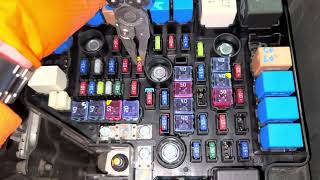
Est. part cost: $150-$300 - Failed Cooling Fan Relay (2010-2012 models) 🔴 High Probability → Shop Engine Cooling Fan Blade Relays are electro-mechanical switches that wear out over time. The 2010-2012 (CM) models use these in the engine bay fuse box to control high and low fan speeds. 🎬 Watch: Locate and test 2012 Santa Fe fan fuses and relays
How to confirm: Locate the fan relays in the engine compartment fuse box. You can test a relay by swapping it with an identical one from a non-critical circuit (like the horn) and seeing if the fan then operates. A multimeter can also be used to test the relay's coil resistance and switch function.
Typical fix: Replace the faulty relay with a new one.
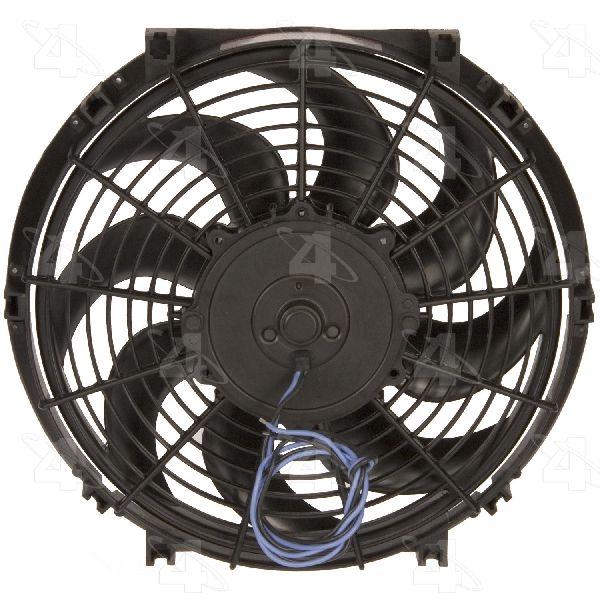
Est. part cost: $15-$40 - Failing Cooling Fan Motor Assembly 🟡 Medium Probability → Shop Engine Cooling Fan Blade The electric motor wears out over time. On 2013 models, a failing motor draws excessive current, which is the primary cause of the fan control module failure. On all models, a seized or shorted motor will blow fuses or burn out relays.
How to confirm: With the engine off, try to spin the fan blades by hand. If they are stiff or seized, the motor is bad. You can also apply 12V power directly to the fan motor terminals using jumper wires to see if it spins. A healthy motor should draw between 15-25 amps; a significantly higher draw indicates a failing motor even if it spins.
Typical fix: Replace the entire cooling fan assembly (motor, shroud, and blades).
Est. part cost: $150-$350 - Blown Fuse ⚪ Low Probability A fuse will blow if there is an electrical short or if the fan motor is drawing too much current. It's often a symptom of a larger problem, like a failing fan motor.
How to confirm: Inspect the main fan fuses (typically 40A, 50A, or 60A) in the engine compartment fuse box. A visual inspection will show a broken filament inside the fuse.
Typical fix: Replace the fuse, but investigate the root cause (usually a bad fan motor or shorted wiring) as the new fuse will likely blow again.
Est. part cost: $1-$5 - Damaged Wiring or Connector ⚪ Low Probability On 2013 models, the fan control module connector is prone to melting due to high current draw from a failing fan motor. On all models, the main connector to the fan assembly can become corroded or damaged from heat and vibration.
How to confirm: Visually inspect all wiring and connectors between the fuse box, relays/module, and the fan motor for signs of corrosion, melting, or broken wires. Pay special attention to the connector at the fan control module on 2013 models.
Typical fix: Repair the damaged section of wiring or replace the connector pigtail.
Est. part cost: $20-$50
Rare But Worth Checking
- Faulty Engine Coolant Temperature (ECT) Sensor: While a faulty ECT sensor can prevent the fan from being commanded on, it usually presents with other codes (like P0117/P0118) and drivability issues beyond just the fan circuit.
- Faulty Powertrain Control Module (PCM): This is extremely rare. The PCM is the last component to suspect after all other parts of the circuit have been thoroughly tested and confirmed to be working.
Diagnosis Steps
- Identify Vehicle Generation: Determine if you have a 2010-2012 (CM) or a 2013 (DM) model, as the diagnostics differ significantly.
- Visual Inspection: Open the hood and inspect the cooling fan, wiring, and connectors for any obvious damage, melting, or corrosion. Pay close attention to the fan control module and its connector on 2013 models, looking for burn marks.
- Check Fuses: Inspect the main cooling fan fuses (typically 40A, 50A or 60A) in the engine bay fuse box. A blown fuse often points to a seized or shorted fan motor.
- Test Relays (2010-2012 models): Locate the fan relays in the fuse box. Swap the fan relay with an identical relay from a different circuit (e.g., the horn) to see if the fan starts working.
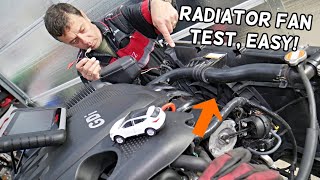
- Test Fan Motor: With the vehicle off, carefully try to spin the fan blades by hand. They should spin freely. If not, the motor is seized. To test electrically, disconnect the fan and use jumper wires to apply 12V directly from the battery to the motor terminals. 🎬 Watch: Step-by-step guide to testing your radiator fan If it doesn't spin, the motor is bad. For 2013 models, use an ammeter to check current draw; a healthy motor should be around 15-20A on low speed and 30-40A on high. Higher readings indicate a failing motor.
- Check for Power at Connector: Use a multimeter to check for 12V at the fan connector when the engine is hot or the A/C is commanded on. No voltage points to a problem upstream (relay, module, fuse, wiring).
- Inspect Fan Control Module (2013 models): If fuses are good and the fan motor tests okay (including amperage draw), the fan control module is the most likely culprit. Inspect its connector for melting or burn marks, which is a very common failure signature.
Parts You'll Likely Need
- Cooling Fan Control Module / Resistor (2013 Models)
(OEM #25385-4Z000)— This is the most common failure point for the P0480 code on the 2013 Santa Fe, often melting due to a worn fan motor. This part is also used on the Kia Sorento and Optima.
Trusted brands: Hyundai/Kia (OEM), Dorman, Four Seasons
OEM price range: $70-$120
Aftermarket price range: $40-$80 - Cooling Fan Assembly — The fan motor wears out, drawing too much current and causing other components to fail. It's the root cause of module failure on 2013 models and a common failure on all years. Replacement as a full assembly is often easier and more reliable.
Trusted brands: TYC, Four Seasons, Koyo, Hyundai/Kia (OEM)
OEM price range: $250-$400
Aftermarket price range: $150-$250 - Cooling Fan Relay (2010-2012 Models) — A common failure for the 2010-2012 models which use a relay-based system. It's an inexpensive and easy part to replace as a first step.
Trusted brands: Hyundai/Kia (OEM), Standard Motor Products, Bosch
OEM price range: $20-$40
Aftermarket price range: $10-$25
Technical Service Bulletins (TSBs) & Recalls
- TSB #14-01-054 (Service Campaign TVS): Mentions an ECM software update for 2010-12 Santa Fe 3.5L models. While not directly for P0480, ensuring the ECM software is current is a good practice during diagnosis.
Platform-Specific Known Issues
- On 2013 Santa Fe (DM) models, the fan control module/resistor is known to fail, causing the connector to melt. This is a very widely documented issue in owner forums and repair videos.
- The root cause for the 2013 model's fan control module failure is almost always an aging fan motor drawing excessive current. Simply replacing the module will lead to a repeat failure.
Mechanic-Grade Diagnostic Values
- Cooling Fan Motor Current Draw (2013+ models) — expected: Low Speed: ~15-20 Amps. High Speed: ~30-40 Amps.. Failure: Significantly higher amperage draw at either speed indicates a worn or failing motor, which will cause the control module to overheat.
- Fan Control Module Output Voltage (2013+ models) — expected: Variable voltage based on PWM signal. At 30% duty cycle, expect 4.1V ± 0.65V. At 60% duty cycle, expect 8.2V.. Failure: No voltage or incorrect voltage corresponding to the PCM's commanded duty cycle points to a failed module.
- Fan Control Module Input Signal (2013+ models) — expected: A 300Hz Pulse-Width Modulated (PWM) signal from the ECM.. Failure: Absence of this signal when the fan should be on (high temp or A/C on) points to a problem with the ECM or the wiring from the ECM.
- Cooling Fan Relay Coil Resistance (2010-2012 models) — expected: 70 - 100 Ohms.. Failure: A reading of infinite resistance (open circuit) or zero resistance (short circuit) indicates a failed relay coil.
Scan Tool Commands That Help
- Hyundai GDS or equivalent professional scan tool (e.g., Autel): Cooling Fan Actuation Test / Bidirectional Control — Use this to command the fan ON at various speeds (e.g., 30%, 60%, 100%). If the fan runs correctly with the scan tool but not during normal operation, the problem is likely with an input sensor (like the ECT) or the PCM logic. If the fan does not run with the scan tool, the problem is in the fan circuit itself (module, motor, wiring, fuse).
Wiring & Ground Locations
- Fan Control Module (2013+) — Mounted on the front of the left frame rail, near the radiator.. This is the primary failure point for P0480 on 2013 models. Its connector is known to melt.
- Cooling Fan Relays (2010-2012) — Located in the main engine compartment fuse & relay box, typically labeled 'COOLING FAN LOW' and 'COOLING FAN HIGH'.. These relays are the primary control components and a common failure point for P0480 on 2010-2012 models.
- C/FAN Fuse (2013+) — A large 60A cartridge fuse located in the engine compartment fuse box.. This is the main power supply for the entire fan control module and motor circuit.
- Fan Motor Ground — A common ground point for Hyundai cooling systems is on the radiator support frame or an inner fender panel near the front of the engine bay (e.g., G05 or G109 on similar models).. A poor or corroded ground connection can cause high resistance, leading to intermittent fan operation or module overheating.
Real Owner Repair Stories
- YouTube channel 'Electrical Car Repair LIVE' (2013 Hyundai Santa Fe) — Overheating, radiator fan not working.
❌ Tried (didn't work) The video focuses on correct diagnosis, warning against just replacing one part. It implies that simply replacing the fan resistor/module is a common mistake.
✅ What actually fixed it The video identifies the root cause in 80% of cases as a failing fan motor drawing excessive current. The correct, complete repair is to replace the fan motor assembly, the fan control module (resistor), and the melted connector pigtail all at once to prevent repeat failure.
"I Checked Everything" — The Actual Cause
- The electrical equivalent of this pattern is when the fan motor passes a basic 12V jump test (it spins), but the P0480 code and module failure persist. The actual cause is that the motor, while functional, is worn and drawing excessive amperage (e.g., over 25A). This high current overheats and destroys the fan control module on 2013 models without blowing the main 60A fuse. A simple 'spin test' is misleading; an in-line ammeter test is required to find the true root cause.
OEM Part Supersession History
25385-4Z000→25385-4Z000 (no known supersession)— This part number appears to be consistent for the 2013-2018 Santa Fe Sport.
Heads up: While there is no known supersession, it is critical to use the OEM part. Aftermarket versions are widely reported to have a very short service life in this specific application.
Model Year Variations Within This Range
- 2010-2012 (CM Generation): Uses a simpler system with two separate relays (low and high speed) in the engine bay fuse box. Diagnosis focuses on testing/swapping these relays and checking the main 50A fuse.
- 2013 (DM Generation): Uses a Pulse-Width Modulated (PWM) Fan Control Module (part #25385-4Z000) to achieve variable fan speed. The module and its connector are the most common failure points, usually caused by a failing fan motor drawing too much current.
Diagnostic Flowchart
Other Known Issues on This Vehicle
Issues unrelated to this code that are worth knowing about as an owner of this generation:
- Theta II Engine Failure 🔴 High — Widespread across multiple model years, including 2013. Failures can occur under 100,000 miles. Caused by manufacturing debris leading to bearing wear. (Ref: Multiple recalls and a major class-action lawsuit settlement (e.g., NHTSA Campaign 14V434000) led to extended 'lifetime' warranties on the engine short block for affected vehicles.)
- Faulty Fuel Level Sensor 🟠 Medium — Common issue where the fuel gauge becomes erratic or reads empty after a fill-up. Often occurs around 80,000-100,000 miles.
- Crankshaft Position Sensor Failure 🟠 Medium — Can cause intermittent stalling or no-start conditions. A known issue on many Hyundai models from this era.
- Automatic Transmission Shift Cable Detachment 🔴 High — A recall was issued for the shift cable potentially detaching from the shift lever, causing a rollaway risk as the gear selection may not match the indicator. (Ref: Recall 123 (NHTSA Campaign 14V434000))
- Peeling Paint 🟡 Low — Particularly common on white-painted vehicles, where the paint can delaminate and peel off in large sections.
Used vs. New Parts: Buying Guide for This Vehicle
When a used part is the smart pick: For 2010-2012 models, a used cooling fan relay from a junkyard is a very low-risk and cost-effective part. They are standardized and easy to test by swapping.
Donor-vehicle mileage cap: roughly under 80000 miles for the part to have meaningful remaining life.
What to inspect on the donor part:
- For a used fan assembly (all years): Manually spin the fan blades. They must spin smoothly with no noise, wobble, or stiffness.
- For a used fan assembly (all years): Inspect the fan motor's electrical connector for any signs of melting, charring, or discoloration. Do not buy if any heat damage is visible.
- For a used 2013 fan control module: Meticulously inspect the connector pins. If they are not perfectly clean and silver, do not buy it. Any sign of heat damage means it is already failing.
OEM-only on this vehicle (don't cheap out):
- Fan Control Module / Resistor (2013 models): Aftermarket modules are widely reported to fail very quickly. Given that the OEM part is already a weak point, using a genuine Hyundai/Kia part (25385-4Z000) is strongly recommended to avoid a repeat repair.
Brands owners have reported issues with on this vehicle:
- Generic/unbranded fan control modules for the 2013 model should be avoided. While no specific brand is cited, the consensus from technician reports is that non-OEM parts for this specific component have a high failure rate.
Real Owner Stories
Aggregated from forums and TSBs cited above. Mileages and costs reflect what owners reported in those sources.
2013 Hyundai Santa Fe (DM)
Symptoms: The fan control module/resistor failed, and upon inspection, the electrical connector was found to be melted.
What fixed it: Replacement of the fan control module, the fan motor assembly (to prevent high current draw), and the damaged connector pigtail.
Source hint: vehicle_specific_issues section regarding 2013 Santa Fe (DM) models and fan control module failure
2010-2012 Hyundai Santa Fe (CM)
Symptoms: Engine overheating and the cooling fan failing to activate when the engine is hot or the A/C is turned on.
What fixed it: Replacing the faulty cooling fan relay located in the engine compartment fuse box.
Source hint: common_causes for 2010-2012 models
2013 Hyundai Santa Fe (DM) — ~95000 miles
Symptoms: The engine experienced failure due to bearing wear from manufacturing debris.
What fixed it: Engine short block replacement under the extended 'lifetime' warranty provided by the class-action settlement and NHTSA Campaign 14V434000.
Source hint: known_issues section regarding Theta II Engine Failure
Related OBD-II Codes
Frequently Asked Questions
I have a 2013 Santa Fe with P0480; can I just replace the fan control module?
Does TSB #14-01-054 apply to my 2010-2012 Santa Fe P0480 issue?
How can I tell if my 2010 Santa Fe fan issue is just a relay?
Why is the electrical connector on my 2013 Santa Fe fan module melted?
Is there a recall for the engine in my 2013 Santa Fe?
Helpful Videos
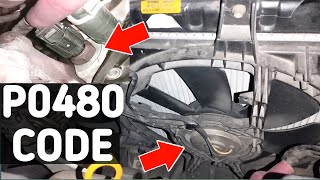
We Have This Part in Stock
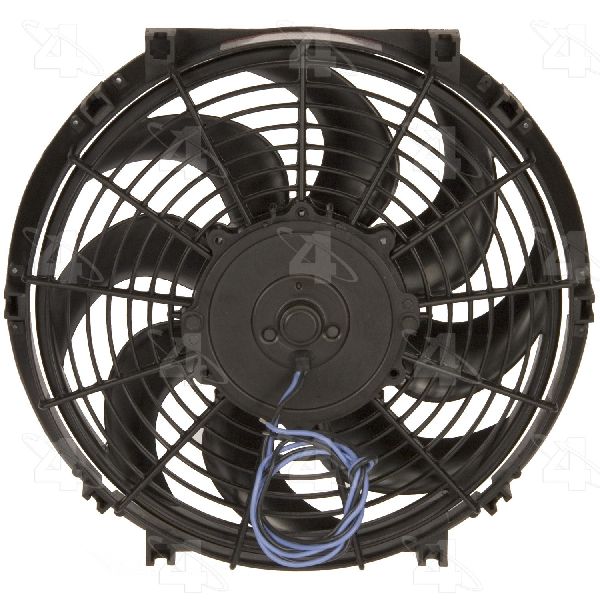
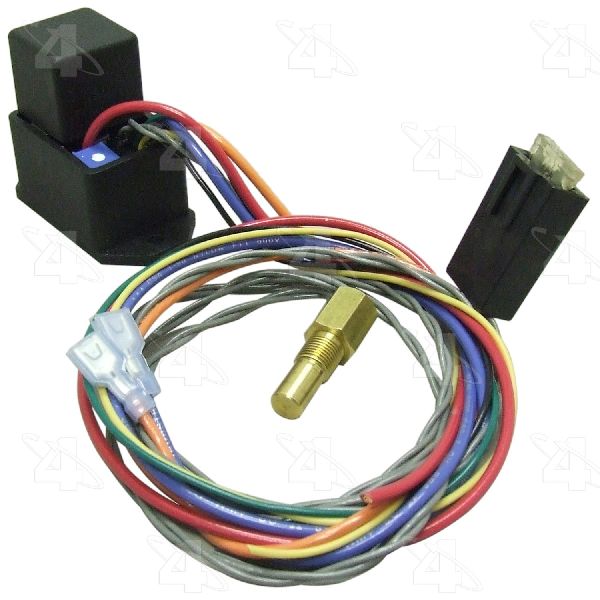
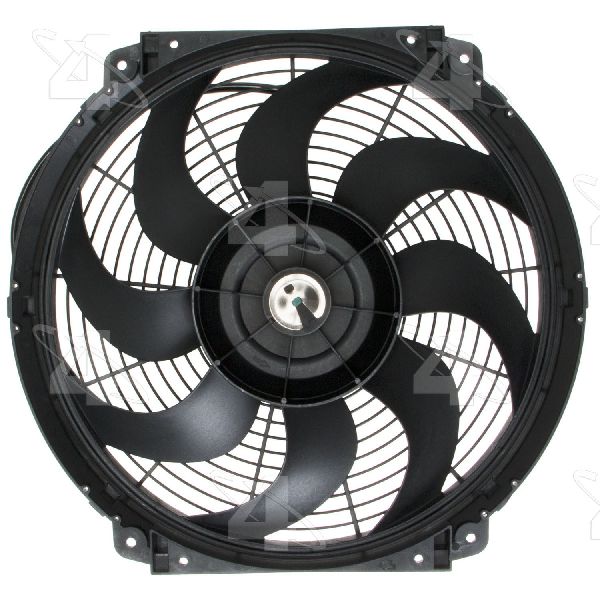

The information in this article is provided for general reference and educational purposes only. Vehicle specifications, procedures, and part compatibility can vary by production date, trim level, and region. Always consult your vehicle's factory service manual and verify part numbers before purchasing or performing repairs. Safety-critical components such as airbags, seat belts, and braking systems should be installed by a qualified professional.
- Hyundai Santa Fe:
- 🧭 Diagnostic Flowchart
- 🎬 Helpful Videos
- 🛍️ Shop This Part
- What's Unique About the 2010-2013 Hyundai Santa Fe
- Symptoms You May Notice
- Most Likely Causes
- Rare But Worth Checking
- Diagnosis Steps
- Parts You'll Likely Need
- Technical Service Bulletins (TSBs) & Recalls
- Platform-Specific Known Issues
- Mechanic-Grade Diagnostic Values
- Scan Tool Commands That Help
- Wiring & Ground Locations
- Real Owner Repair Stories
- "I Checked Everything" — The Actual Cause
- OEM Part Supersession History
- Model Year Variations Within This Range
- Other Known Issues on This Vehicle
- Used vs. New Parts: Buying Guide for This Vehicle
- Real Owner Stories
- 2013 Hyundai Santa Fe (DM)
- 2010-2012 Hyundai Santa Fe (CM)
- 2013 Hyundai Santa Fe (DM) — ~95000 miles
- Related OBD-II Codes
- Frequently Asked Questions
- 🎟️ Get 5% Off