

P0500 on 2007-2013 Mitsubishi Outlander: Causes and Fixes for Vehicle Speed Signal Fault
On a 2007-2013 Outlander, P0500 almost always means one of the four ABS wheel speed sensors has failed. This will also trigger ABS, ASC, and sometimes 4WD warning lights. Expect to pay $25-$75 for an aftermarket sensor, and diagnosis requires a scanner that can read ABS codes to know which wheel to fix. The magnetic tone ring is integrated into the wheel hub/bearing assembly, which can also be a point of failure.
- P0500 on a 2007-2013 Outlander is a vehicle speed signal issue that originates from the ABS system, not the transmission.
- The most likely cause is a single failed ABS wheel speed sensor at one of the four wheels.
- You MUST use a scanner that can read ABS codes to determine which of the four sensors has failed. A basic engine code reader is not enough.
- Expect to see the ABS and ASC lights on along with the Check Engine Light. This is normal for this specific failure.
- Do not replace the transmission speed sensors; they are not the cause of a P0500 code on this vehicle.
What's Unique About the 2007-2013 Mitsubishi Outlander
Unlike older vehicles that use a single Vehicle Speed Sensor (VSS) on the transmission, the second-generation Outlander relies on a more modern setup. It integrates the vehicle speed signal with its safety systems. The speed signal originates from the four wheel speed sensors, is processed by the ABS/ASC control module, and then sent to the engine computer. This is why a P0500 engine code is almost always accompanied by ABS and ASC warning lights and is fixed by addressing a chassis fault (like a wheel speed sensor), not a transmission sensor.
Generation note: The 2007-2013 model years cover the entire second generation (CW/ZG/ZH) of the Mitsubishi Outlander. The information in this guide is applicable to all vehicles within this range, as they share the same fundamental ABS-based speed sensing system.
Symptoms You May Notice
- Check Engine Light (MIL) illuminated
- Anti-lock Brake System (ABS) warning light illuminated
- Active Stability Control (ASC) warning light illuminated
- 4WD system warning light may be illuminated
- Inoperative or erratic speedometer
- Cruise control will not engage
- Possible harsh or improper shifting from the CVT or automatic transmission
- Odometer may not advance
- Replacing the transmission speed sensors. The Outlander has input/output speed sensors for its transmission, but these are for internal transmission control and do not provide the vehicle speed signal to the ECM for the purpose of the speedometer or setting a P0500 code. The P0500 code on this vehicle points to the signal derived from the ABS wheel speed sensors.
Most Likely Causes
- Failed ABS Wheel Speed Sensor 🔴 High Probability → Shop ABS Wheel Speed Sensor The sensors are exposed to the elements at the wheel hubs, making them susceptible to damage from water, road debris, and corrosion over time. This is the most frequent point of failure for the vehicle speed signal system on this platform. Corrosion can cause the sensor to become seized in the wheel hub, making removal difficult.
How to confirm: Use an OBD-II scanner capable of reading ABS system codes (e.g., C100A, C1015, C1020, C102B) to identify which specific wheel sensor is reporting a fault. Live data on the scanner should show one wheel speed reading that is erratic or zero while the vehicle is moving, compared to the other three.
Typical fix: Replace the faulty ABS wheel speed sensor. The sensor is typically held by a single 10mm or 12mm bolt on the wheel hub. 🎬 See this step-by-step ABS wheel speed sensor replacement Applying penetrating oil is often necessary to free a corroded sensor.
Est. part cost: $25 - $75 - Damaged or Corroded Wheel Speed Sensor Wiring/Connector 🟡 Medium Probability → Shop ABS Wheel Speed Sensor The wiring harness leading to the wheel speed sensor is subject to damage from road debris, ice buildup, and repeated suspension movement, which can cause wires to break or chafe. Connectors can also suffer from corrosion. One owner found two of four wires severed inside the harness wrap near the passenger side inner fender.
How to confirm: Visually inspect the wiring from the sensor to the main harness for any signs of breaks, chafing, or corrosion. Perform a 'wiggle test' on the harness and connector while monitoring the sensor's output on a scan tool to see if the signal drops out.
Typical fix: Repair the broken wire(s) by soldering and heat-shrinking, or replace the damaged connector pigtail.
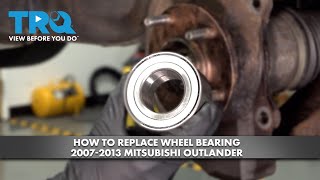
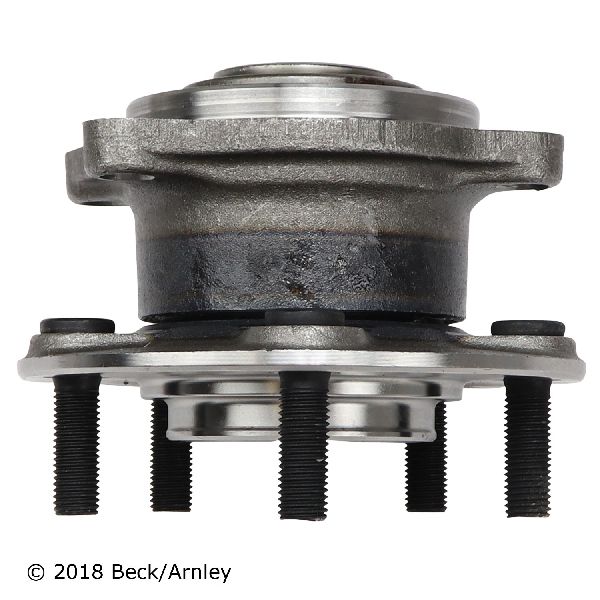
Est. part cost: $5 - $50 - Damaged or Failed Wheel Bearing Hub Assembly 🟡 Medium Probability On this platform, the magnetic encoder (tone ring) that the ABS sensor reads is integrated into the wheel bearing/hub assembly. If the bearing fails, or if the magnetic ring becomes cracked, damaged, or contaminated with metallic debris, it will produce an erratic or nonexistent signal, triggering a P0500 code. This is often accompanied by a grinding or humming noise from the wheel that changes with speed.
How to confirm: After ruling out the sensor and wiring, inspect the wheel bearing for play or noise. While monitoring live data, if the speed signal is erratic even with a new sensor, the issue likely lies with the bearing's integrated tone ring. A visual inspection of the ring (if accessible after removing the hub) may show damage or contamination.
Typical fix: Replace the entire wheel bearing and hub assembly. This is a more involved repair than replacing just the sensor.
Est. part cost: $60 - $150
Rare But Worth Checking
- Failed ABS/ASC Control Module: While rare, the module that processes the signals from the wheel speed sensors can fail internally. This should only be considered after confirming all four wheel speed sensors, their wiring, and the wheel bearing tone rings are in good condition. This is an expensive part and often requires programming. Common fault codes associated with a failing module include C2116 (pump motor power supply) and C2200 (internal error).
- Faulty ETACS ECU: The Electronic Time and Alarm Control System (ETACS) is a body control module in Mitsubishi vehicles that can, in rare cases, cause widespread electronic issues. A failing ETACS can sometimes manifest with CAN bus communication errors (like U0121) that could theoretically interrupt the speed signal, but it is not a primary cause for an isolated P0500 code.
- Faulty Engine Control Module (ECM): This is extremely rare. The ECM is the last component to suspect. It's more likely that the signal is lost before it ever reaches the ECM.
Diagnosis Steps
- Connect an OBD-II scanner to the data link connector.
- Confirm the presence of the P0500 code in the Engine Control Module (ECM). Note any other codes present.
- Use a scanner with ABS/chassis capabilities to scan the ABS/ASC control module for trouble codes. This is the most critical step.
- The ABS code will identify the specific wheel sensor or circuit that has failed (e.g., 'Right Rear Wheel Speed Sensor Circuit Fault').
- Using the live data function on the scan tool, monitor the speed of all four wheels while driving slowly or spinning the wheels by hand. The faulty sensor will show a speed of 0 or a reading that is erratic compared to the others.
- Once the faulty wheel is identified, raise and secure the vehicle.
- Visually inspect the identified sensor and its wiring harness for any obvious damage, corrosion, or breaks. Pay close attention to where the harness flexes with suspension travel.
- If the wiring appears intact, the most common fix is to replace the wheel speed sensor. They are typically held in by a single 10mm or 12mm bolt. Be prepared for the sensor to be seized by rust; liberal use of penetrating oil may be required.
- If a new sensor does not fix the issue, inspect the wheel bearing for excessive play or noise, which would indicate a failure of the bearing and its integrated magnetic tone ring.
- After replacing the faulty component, clear the codes from both the ECM and the ABS module.
- Test drive the vehicle to ensure the speedometer is working and that no warning lights or codes return. The ABS light may turn off on its own after a short drive.
Parts You'll Likely Need
- ABS Wheel Speed Sensor
(OEM #Front Left: 4670A575 (replaces 4670A031), Front Right: 4670A576 (replaces 4670A032), Rear Left (AWD): 4670A583 (replaces 4670A157), Rear Right (AWD): 4670A584 (replaces 4670A158))— This is the primary component that fails, causing the P0500 code on this vehicle. One of the four sensors will be responsible. Part numbers differ for Front/Rear and Left/Right.
Trusted brands: Holstein, Beck Arnley, SKP, Standard Motor Products (SMP), NTK
OEM price range: $90-$150
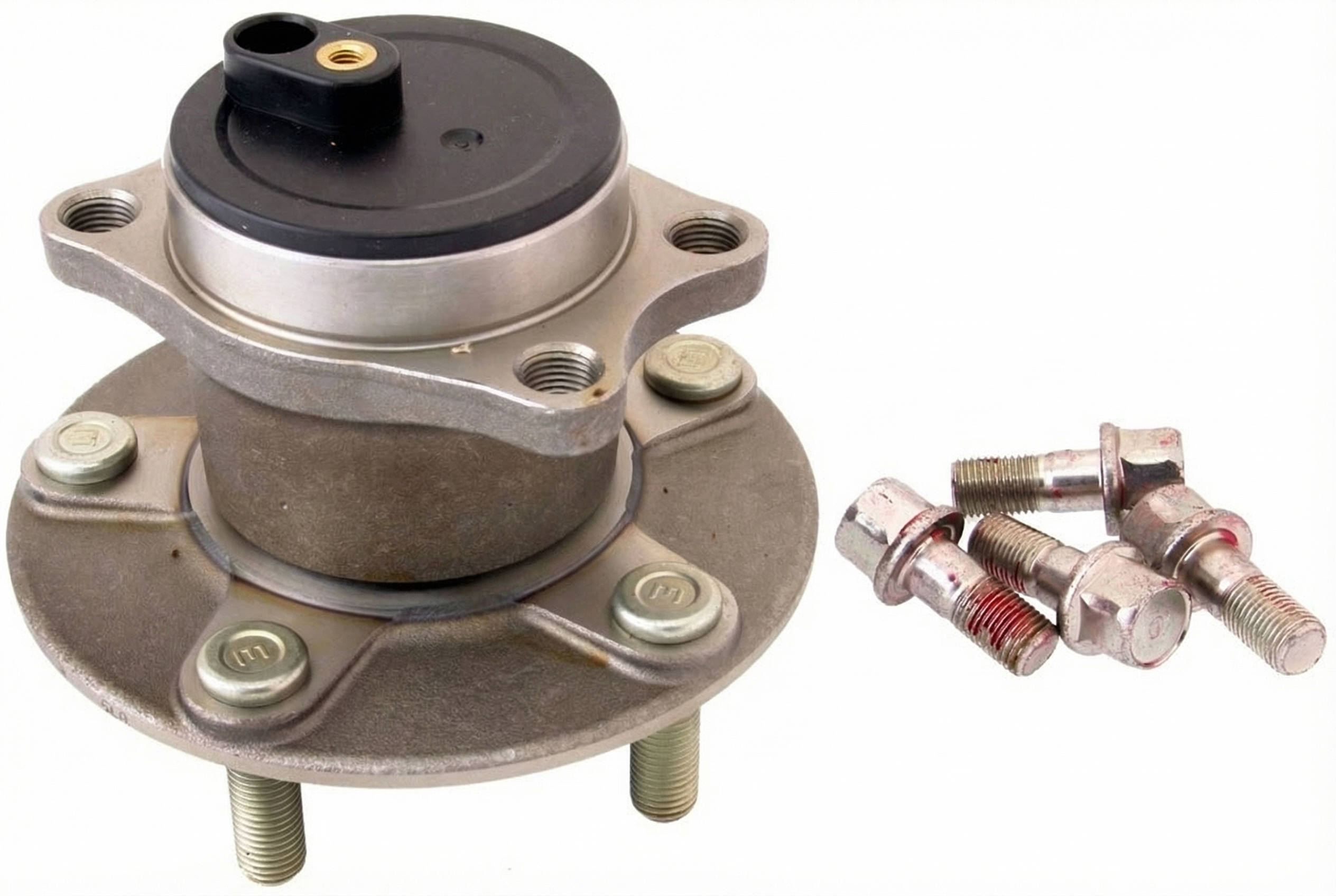
Aftermarket price range: $25-$75 - Rear Wheel Bearing and Hub Assembly
(OEM #3785A018)— The magnetic tone ring is integrated into the hub assembly. If the bearing fails or the ring is damaged, it will cause the same symptoms as a bad sensor. This is the next most likely part to fail after the sensor itself.
Trusted brands: Timken, MOOG, GMB, WJB
OEM price range: $200-$300
Aftermarket price range: $60-$150
Related Codes That Often Appear With This One
- C100A, C1015, C1020, C102B — These are Mitsubishi-specific ABS codes that point to faults with the left-front, right-front, left-rear, or right-rear wheel speed sensors, respectively. A scanner that can read ABS codes is needed to see these. TSB-13-35-003 was issued to correct diagnostic procedures for these codes.
- U0121 — This code indicates a loss of communication with the ABS control module. If this code is present with P0500, it could point to a problem with the ABS module itself or a CAN bus wiring issue between the ABS module and the ECM.
Technical Service Bulletins (TSBs) & Recalls
- TSB-13-35-003: Issued in May 2013, this bulletin corrects the diagnostic procedures in the service manual for various wheel speed sensor-related ABS/ASC trouble codes (C1011, C1014, C1041, C1046, etc.) on 2007-2010 Outlanders. It does not indicate a part defect but rather an error in the original diagnostic documentation.
- TSB-19-54-008: Updates diagnostics for ETACS-ECU related codes, including U0141 (CAN timeout), which can sometimes appear alongside a P0500 if there is a broader communication issue.
- TSB-18-54-003: Addresses a dome light flicker by reprogramming the ETACS ECU on 2007-2013 Outlanders, showing the ETACS module can have software-related issues, though not directly tied to P0500.
Platform-Specific Known Issues
- It is very common for the ABS, ASC, and 4WD warning lights to all illuminate simultaneously with the Check Engine
Mechanic-Grade Diagnostic Values
- ABS Wheel Speed Sensor Resistance — expected: 800 - 2,000 Ohms (Ω) at room temperature. Some sources suggest a tighter range of 2.0-2.3 kOhms for a good sensor.. Failure: A reading of 'OL' (Open Loop/infinite resistance) or near 0 Ω indicates a failed sensor. A reading significantly outside the expected range (e.g., 450 Ohms) also indicates failure.
- Voltage at ABS-ECU connector, wheel speed sensor power supply pin — expected: Approximately system voltage (Battery Voltage). Failure: Significantly lower or no voltage indicates a wiring problem between the ECU and the sensor.
- Voltage at ABS-ECU connector, ground pin — expected: 1 V or less. Failure: Voltage higher than 1V suggests a poor ground connection.
Scan Tool Commands That Help
- Mitsubishi M.U.T.-III or equivalent (Autel, Snap-on): Read DTC from ASC/ABS Module — This is the primary and most critical diagnostic step. The P0500 code in the ECM is generic; the specific 'C' code (e.g., C102A for rear left sensor) stored in the ABS module is required to know which wheel circuit is faulty.
- Mitsubishi M.U.T.-III or equivalent (Autel, Snap-on): Live Data > Wheel Speed Sensors — Used to confirm the fault after reading the code. While driving slowly, the live data stream will show the speed reading from all four wheels. The faulty sensor will read 0 kph/mph or have an erratic signal while the other three read correctly.
Wiring & Ground Locations
- G12 — Left front of engine compartment.. This is a major chassis ground point in the engine bay that serves multiple systems, including potentially the ABS module. A corroded or loose ground here can cause various difficult-to-diagnose electrical issues.
- G17 — Behind the left kick panel, inside the cabin.. This is an interior ground point. The ABS/ASC-ECU and ETACS-ECU are located behind the dash, and this ground serves components in that area.
- ABS-ECU Connector — The ABS/ASC module is located at the rear of the engine bay on the driver's side (LHD).. This is the central point for testing the entire wheel speed sensor circuit without having to access each wheel. The service manual provides pinout charts for testing power, ground, and sensor signals directly at this connector.
- Rear Sensor Connector — The electrical connector for the rear wheel speed sensors is located inside the vehicle, behind the cargo area side trim panels.. Unlike the front sensors which connect in the wheel well, the rear sensor harness passes through the floor into the cabin. To replace or test the rear sensor at its connector, interior trim must be removed.
Real Owner Repair Stories
- Mitsubishi Forum user (2010 Mitsubishi Outlander FWD) — ABS and ASC warning lights on.
❌ Tried (didn't work) Purchased a used ABS pump/ECU from a 2011 AWD Outlander and had it installed., Took the vehicle to a dealer for programming, but they stated the part was incorrect for the vehicle.
✅ What actually fixed it The owner sent the original ABS ECU out for repair, where it was found to have a software corruption and was reprogrammed. The key takeaway is that ABS modules from different drivetrain configurations (FWD vs. AWD) are not interchangeable, even if they appear physically identical.
OEM Part Supersession History
4670A031→4670A575, 4670A823— Standard part revision and consolidation over the model years.
Heads up: This is the Front Left sensor. Always verify fitment with VIN as there can be variations.4670A157→4670A583— Standard part revision for the rear left AWD sensor.
Heads up: This is the Rear Left sensor for AWD models. It is also used on some Lancer models.
Diagnostic Flowchart
Other Known Issues on This Vehicle
Issues unrelated to this code that are worth knowing about as an owner of this generation:
- CVT Transmission Maintenance Sensitivity 🔴 High → Shop Transmission Assembly — Becomes a risk factor after 60,000 miles, especially if fluid has not been changed. Dealerships sometimes incorrectly claim it's a 'lifetime' fluid.
- A/C Compressor Clutch Failure 🟠 Medium — Commonly reported between 70,000 and 120,000 miles. The clutch coil can fail, preventing the compressor from engaging. Often, the whole compressor is replaced.
- Front Lower Control Arm Bushing Wear 🟠 Medium — Bushings, particularly the rear bushing on the front control arm, tend to wear out, causing clunking noises over bumps and potential alignment issues. Onset can be as early as 50,000 miles.
- ETACS ECU Malfunctions 🟡 Low — Can occur at various mileages. Symptoms are varied, including flickering lights or communication errors. Not widespread but difficult to diagnose. Several TSBs exist for reprogramming. (Ref: TSB-18-54-003, TSB-19-54-008)
- Corroding/Breaking TPMS Valve Stems 🟡 Low — Primarily on 2007-2009 models, the metal valve stems for the TPMS sensors were prone to corrosion and could break off when checking tire pressure or adding air.
Used vs. New Parts: Buying Guide for This Vehicle
When a used part is the smart pick: A used ABS/ASC module can be a cost-effective option if the original is confirmed faulty, but it MUST come from a donor vehicle with the exact same drivetrain (FWD/AWD) and options to avoid incompatibility. Even then, it may require programming by a dealer. A used wiring harness pigtail is also a good option for repairing a damaged connector.
Donor-vehicle mileage cap: roughly under 80000 miles for the part to have meaningful remaining life.
What to inspect on the donor part:
- For a used ABS module, ensure the part number matches exactly and get the VIN of the donor car to verify its configuration.
- For a wheel bearing/hub assembly, check for any play or roughness when spinning by hand. Ensure the magnetic encoder ring is clean and free of cracks or damage.
- For wiring, inspect for any brittleness, cuts, or corrosion on the pins.
OEM-only on this vehicle (don't cheap out):
- ABS/ASC Control Module: While aftermarket repair services exist, a direct replacement part should ideally be OEM to ensure software compatibility. Using a used OEM part from an identical vehicle is a viable, though risky, alternative.
Aftermarket brands forum-validated for this vehicle:
- Wheel Speed Sensors: NTK, Standard Motor Products (SMP), Holstein, and Dorman are widely available and considered reliable replacements.
- Wheel Bearing/Hub Assembly: Timken, MOOG, SKF, and GMB are reputable brands for bearing assemblies.
Brands owners have reported issues with on this vehicle:
- Unbranded, 'white box' sensors from online marketplaces can have high failure rates, poor connector quality, and incorrect internal resistance, leading to a repeat repair.
Real Owner Stories
Aggregated from forums and TSBs cited above. Mileages and costs reflect what owners reported in those sources.
2007-2013 Mitsubishi Outlander
Symptoms: P0500 code present; found two of four wires severed inside the harness wrap near the passenger side inner fender. Restored cruise control function after repair.
What fixed it: Repairing the broken wires by soldering and heat-shrinking the damaged section of the wiring harness.
Source hint: https://www.mitsubishi-forums.com/threads/p0500-fixed-without-changing-vehicle-speed-sensor.59321/
2014 Mitsubishi Outlander
Symptoms: Faulty rear speed signal; required accessing the sensor connector from inside the cabin.
What fixed it: Replacement of the rear hub bearing and speed sensor, involving removal of interior trunk trim panels.
Source hint: https://www.youtube.com/watch?v=s-y-y_gGZ_A - 'KG auto repair'
Related OBD-II Codes
Frequently Asked Questions
Why are my ABS, ASC, and 4WD lights all on at the same time as the Check Engine light?
Does TSB-13-35-003 mean there is a defect in my 2007-2010 Outlander's wheel sensors?
Can a bad wheel bearing cause a P0500 code on this vehicle?
Where is the rear wheel speed sensor connector located on the Outlander?
Is there a specific TSB for communication codes like U0141 appearing with my speed sensor issues?
Can I just replace the magnetic tone ring if it's damaged?
Helpful Videos

Used OEM Parts in Stock
New Aftermarket Parts Available



The information in this article is provided for general reference and educational purposes only. Vehicle specifications, procedures, and part compatibility can vary by production date, trim level, and region. Always consult your vehicle's factory service manual and verify part numbers before purchasing or performing repairs. Safety-critical components such as airbags, seat belts, and braking systems should be installed by a qualified professional.
- Mitsubishi Outlander:
- 🧭 Diagnostic Flowchart
- 🎬 Helpful Videos
- 🛍️ Shop This Part
- What's Unique About the 2007-2013 Mitsubishi Outlander
- Symptoms You May Notice
- Most Likely Causes
- Rare But Worth Checking
- Diagnosis Steps
- Parts You'll Likely Need
- Related Codes That Often Appear With This One
- Technical Service Bulletins (TSBs) & Recalls
- Platform-Specific Known Issues
- Mechanic-Grade Diagnostic Values
- Scan Tool Commands That Help
- Wiring & Ground Locations
- Real Owner Repair Stories
- OEM Part Supersession History
- Other Known Issues on This Vehicle
- Used vs. New Parts: Buying Guide for This Vehicle
- Real Owner Stories
- 2007-2013 Mitsubishi Outlander
- 2014 Mitsubishi Outlander
- Related OBD-II Codes
- Frequently Asked Questions
- 🎟️ Get 5% Off