

P0500 on 2014-2018 Subaru Forester: Vehicle Speed Sensor 'A' Causes and Fixes
On a 2014-2018 Forester, P0500 is almost always caused by a faulty wheel speed sensor. The car uses the ABS sensors for speed data, not a transmission sensor. Expect to pay $40-$90 for an aftermarket sensor and diagnose by checking for specific ABS codes ('C' codes) with a capable scanner.
- Do not waste time looking for a speed sensor on the transmission; the problem is with one of the four wheel speed sensors.
- A basic code reader will only show P0500. You need a scanner that can read ABS codes (C-codes) to find out which wheel sensor is at fault.
- The most likely cause is a single failed wheel speed sensor, which is a straightforward and affordable DIY replacement.
- Check the wiring to the sensor for damage before replacing the part, as this is another common point of failure.
- After replacing the part, you must clear the codes from both the engine and ABS computers.
What's Unique About the 2014-2018 Subaru Forester
It is critical to understand that you should not look for a traditional speed sensor on the transmission for this vehicle. The P0500 code on a 2014-2018 Forester is a secondary code triggered by the ABS/VDC (Vehicle Dynamics Control) system. The actual problem lies within the ABS system, usually a specific wheel speed sensor that has failed. A basic OBD-II scanner will only show P0500; a more advanced scanner is needed to read the 'C' codes (chassis codes) that will pinpoint which wheel sensor is causing the fault.
Symptoms You May Notice
- Check Engine Light is on
- ABS warning light is on
- Vehicle Dynamics Control (VDC) or Traction Control warning light is on
- Hill Start Assist warning light is on
- Cruise control is inoperative
- Speedometer may work intermittently or not at all (though often it continues to work by using the remaining sensor signals)
- In rare cases, erratic shifting from the CVT as it may use speed data for its logic
- Replacing the Vehicle Speed Sensor on the transmission. This part does not exist on this vehicle for this purpose; the signal comes from the ABS system.
Most Likely Causes
- Faulty Wheel Speed Sensor 🔴 High Probability → Shop ABS Wheel Speed Sensor Wheel speed sensors are exposed to harsh conditions in the wheel wells (water, salt, dirt, vibration) and can fail over time. The front-right sensor is a particularly common point of failure according to owner forums.
How to confirm: Use an OBD-II scanner capable of reading ABS/Chassis 'C' codes. The code will point to a specific wheel (e.g., 'C0042 Front Left Wheel Speed Sensor Circuit'). Alternatively, use the scanner's live data function to monitor all four wheel speeds while driving; the faulty sensor will show a reading of 0 or a value that doesn't match the others. A multimeter can also be used to check the sensor's resistance; an open circuit (infinite resistance) indicates a failed sensor.
Typical fix: Replace the failed wheel speed sensor. The sensor is typically held in by a single 10mm or 12mm bolt. This bolt is prone to seizing, so applying penetrating oil beforehand is highly recommended.
Est. part cost: $40-$90 - Damaged Wheel Speed Sensor Wiring or Connector 🟡 Medium Probability → Shop ABS Wheel Speed Sensor The wiring harness runs down the suspension components and can be damaged by road debris or improper servicing. Rodents are also notoriously attracted to the soy-based insulation on Subaru wiring, often chewing through the sensor wires in the engine bay or wheel wells.
How to confirm: After identifying the problematic wheel from the ABS code, perform a close visual inspection of the wiring from the sensor back to the main harness. Look for breaks, chafing, chew marks, or corrosion at the connector plug.
Typical fix: Repair the damaged section of wire or replace the pigtail connector. In severe cases of rodent damage, a larger section of the body harness may need to be professionally repaired or replaced.
Est. part cost: $10-$50 - Dirty or Damaged Tone Ring ⚪ Low Probability The tone ring, which the sensor reads, is integrated into the wheel bearing/hub assembly on this model. While durable, severe corrosion or damage from a failing wheel bearing can cause issues with the sensor reading.
How to confirm: Visually inspect the tone ring area after removing the wheel speed sensor. Look for heavy rust buildup, physical damage, or excessive runout if the wheel bearing is failing.
Typical fix: Because the tone ring is integrated, the entire wheel bearing and hub assembly must be replaced.
Est. part cost: $150-$300
Rare But Worth Checking
- Faulty ABS Control Module: → Shop ABS Control Module This is very rare and should only be considered after all sensors and wiring have been thoroughly tested and ruled out. A failure here would likely present with additional communication-related trouble codes (U-codes).
- Out-of-tolerance aftermarket steering knuckle/hub: One owner reported that an aftermarket steering knuckle had the mounting hole for the wheel speed sensor in the wrong position, creating too large of a gap for the sensor to read the tone ring correctly. This highlights the importance of using quality OEM or equivalent parts.
Diagnosis Steps
- Connect an OBD-II scanner that can read ABS/Chassis codes.
- Read codes from both the Engine (ECM) and ABS control modules.
- Note the P0500 code in the ECM and look for a more specific 'C' code in the ABS module (e.g., C0042), which will identify the faulty wheel circuit.
- If no 'C' code is present but P0500 persists, use the scanner's live data feature to monitor the speed of all four wheels while driving slowly.
- Identify the sensor that reads 0 mph or has an erratic signal compared to the others. This is the suspect sensor.
- Raise and secure the vehicle. Visually inspect the suspect sensor and its wiring harness for any obvious damage, rodent chew marks, corrosion, or loose connections.
- If the wiring looks good, apply penetrating oil to the sensor's retaining bolt before attempting removal. Remove the sensor (usually one bolt) and inspect it and the tone ring area for debris or damage.
- Optional: Test the resistance of the suspect sensor with a multimeter. Compare the reading to a known good sensor; an open or shorted reading confirms failure.
- If no visual faults are found, the most common and effective next step is to replace the suspect wheel speed sensor.
- After replacement, clear all codes from the ECM and ABS modules. Test drive to confirm the fix and ensure no warning lights return.
Parts You'll Likely Need
- Front Wheel Speed Sensor
(OEM #27540SG001 (Example, verify with VIN))— This is the most common failure point for a P0500 code on this vehicle. The front sensors are often different from the rear. VIN verification is critical as part numbers can vary.
Trusted brands: Subaru (OEM), NTK, Denso, Standard Motor Products (SMP)
OEM price range: $100-$150
Aftermarket price range: $40-$90 - Rear Wheel Speed Sensor
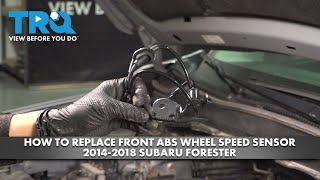
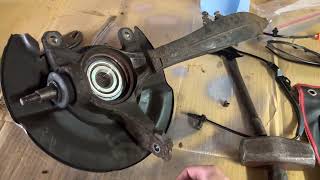
(OEM #27540FJ000 (Example, verify with VIN))— If diagnosis points to a rear wheel, this sensor will be needed. It is often a different part than the front and may differ between left and right sides. Always verify with your VIN. 🎬 Watch: Step-by-step Subaru Forester wheel speed sensor replacement
Trusted brands: Subaru (OEM), NTK, Denso, Standard Motor Products (SMP)
OEM price range: $110-$160
Aftermarket price range: $45-$100
Related Codes That Often Appear With This One
- C-codes (e.g., C0042, C0047, C0052, C0057) — The P0500 is a generic code. The specific problem is stored as a chassis (C) code in the ABS module. A capable scanner is required to read these and they are essential for a correct diagnosis.
Technical Service Bulletins (TSBs) & Recalls
- No specific Technical Service Bulletins (TSBs) have been issued by Subaru for the P0500 code on this vehicle. The diagnosis is considered a standard procedure.
Platform-Specific Known Issues
- A temporary P0500 can be set under conditions of extreme wheel spin (e.g., stuck in snow or mud), where one wheel spins much faster than the others. The code may clear itself after a few drive cycles if there is no underlying hardware fault.
Mechanic-Grade Diagnostic Values
- Wheel Speed Sensor Internal Resistance — expected: 800 - 2,000 Ω (Ohms). Some sources suggest a tighter range of 800-1,700 Ω. The key is to compare the suspect sensor to a known-good one on the same vehicle.. Failure: A reading of 'OL' (Open Loop / infinite resistance) or near 0 Ω (short circuit) indicates a failed sensor.
- Voltage Supply at Sensor Connector — expected: 4.5 - 5.5 V DC (with key on, engine off, measured at the harness-side of the connector).. Failure: A reading below 4.0 V DC points to a problem in the wiring harness or the ABS control module, not the sensor itself.
- Sensor AC Voltage Output (Passive Sensor Test) — expected: Voltage should generate and increase smoothly from ~0.2V AC as the wheel is spun by hand.. Failure: No AC voltage generated, or an erratic/jumpy signal while spinning the wheel at a steady speed, indicates a failed sensor or a damaged tone ring.
Scan Tool Commands That Help
- Subaru Select Monitor (SSM) or equivalent professional scanner: Current Data Display / Live Data — To monitor the output of all four wheel speed sensors simultaneously (FR wheel speed, FL wheel speed, RR wheel speed, RL wheel speed) while driving or spinning the wheels by hand. This is the most effective way to identify a sensor that is reading 0 or has an erratic signal compared to the others.
- Subaru Select Monitor (SSM) or equivalent professional scanner: Read/Clear Diagnostic Trouble Code(s) from {Brake Control} system — This is essential for retrieving the specific 'C' code from the ABS module that accompanies the generic P0500 engine code. After repairs, this function must be used to clear the code from the ABS module specifically.
- Subaru Select Monitor (SSM): ABS Sequence Control — This is a dealer-level function used to cycle the ABS pump and valves. It is primarily used for bleeding the brake system after hydraulic component replacement but can also be used to verify the function of the ABS pump motor if a module-related fault is suspected.
Wiring & Ground Locations
- Interior Connector Block (Driver's Side) — Behind the driver's side kick panel, under the dash. There are two large multi-pin connectors through which the ABS wiring passes.. These connectors can become wet, especially from car wash activities, leading to corrosion. This corrosion can cause high resistance in a wheel speed sensor circuit, triggering a code (e.g., C1241 for rear left) even if the sensor and its pigtail are new. Unplugging, cleaning with electrical cleaner, and applying dielectric grease can resolve the issue.
- ABSCM&H/U Connector (B301) — On the ABS Control Module & Hydraulic Unit, located in the engine bay.. This is the main connector for the entire ABS system. All wheel speed sensor signals terminate here. Probing specific pins at this connector (e.g., pins 14 & 15 for Rear LH sensor) is the final step in diagnosing a wiring break between the sensor and the module.
- Main Chassis Ground — The primary ground point where the negative battery cable connects to the chassis, often on the fender or strut tower.. A poor main ground can cause a host of floating voltage issues and unpredictable electronic behavior across all modules, including the ABS/VDC unit. While not a direct cause of a single sensor code, ensuring this point is clean and tight is a fundamental step in diagnosing any electronic issue.
Real Owner Repair Stories
- YouTube user 'Murf' (2018 Subaru Forester (also seen on a 2015 model)) — ABS, traction control, and hill assist lights on. Code C1241 (Rear Left ABS sensor) would not clear.
❌ Tried (didn't work) Replacing the rear left ABS sensor with a new part., Replacing the wheel bearing/hub assembly.
✅ What actually fixed it The user found two large electrical connectors behind the driver's side kick panel. After unplugging them, spraying them with electrical contact cleaner, and applying dielectric grease, the lights went out and the code was resolved. The theory was that water from car washes had caused corrosion inside the plugs. - Reddit user 'C_Creepio' (2018 Subaru Forester XT, 40k miles) — Check Engine Light, ABS, VDC lights came on after severe wheel spin while trying to climb a steep, snowy driveway.
✅ What actually fixed it The lights and the stored P0500 code cleared on their own after about 24 hours and a few drive cycles. This confirmed the fault was temporary, triggered by the extreme difference in wheel speeds, and not a hardware failure. - Reddit user 'mk2rocco' (2014-2018 generation (inferred from context)) — P0500 code with associated warning lights.
✅ What actually fixed it A rodent had chewed through the wire for the front left ABS sensor right at the connector. Repairing the wire resolved the issue. This highlights the common issue of rodent damage to Subaru's soy-based wiring insulation. - NHTSA ODI #11724365 — An owner of a similar Subaru platform reported the vehicle entered a limp mode while driving. After shutting the vehicle off and waiting five minutes, it restarted and functioned normally, though an associated P0500 code was present.
Diagnostic Flowchart
Other Known Issues on This Vehicle
Issues unrelated to this code that are worth knowing about as an owner of this generation:
- Excessive Oil Consumption 🔴 High — Most common on 2014-2015 models with the 2.5L FB25 engine. Subaru considers consumption under 1 quart per 1,200 miles 'acceptable', but many owners experience issues. (Ref: TSB 02-157-14R led to a class-action lawsuit and an extended warranty to 8 years/100,000 miles for affected vehicles.)
- CVT Transmission Warranty Extension 🔴 High → Shop Transmission Assembly — Applies to all 2014-2018 models. Issues include shuddering, hesitation, or outright failure. While not a recall, it's a very common concern. (Ref: TSB 16-102-16R and 16-107-17R extended the CVT warranty to 10 years/100,000 miles due to reliability concerns.)
- A/C Condenser Failure 🟠 Medium — The condenser is mounted at the front and is susceptible to punctures from road debris or internal corrosion, leading to loss of A/C. (Ref: A service program (WRB-21) was initiated for 2017-2018 models to inspect and replace certain faulty condensers.)
- Parasitic Battery Drain from DCM 🟠 Medium — The Data Communication Module (DCM) for the Starlink/SOS system can fail to shut down, causing a persistent drain that kills the battery, especially if the car sits for a few days. (Ref: Multiple TSBs exist, including 15-205-16R. The common fix is to physically disconnect the DCM module.)
- Rear Coil Spring Fracture 🟠 Medium — Rear coil springs can corrode and break, particularly in regions that use road salt. (Ref: Subaru issued recall WTY-84 for this issue.)
- Lower Control Arm Bushing Failure 🟡 Low — The front forward bushing on the front lower control arms can degrade, causing a clunking noise or vibration in the steering wheel. (Ref: TSB 05-63-18R addresses this with a redesigned, more durable bushing.)
Used vs. New Parts: Buying Guide for This Vehicle
When a used part is the smart pick: A used wheel speed sensor from a reputable auto recycler can be a cost-effective option, especially if you can verify the donor vehicle's low mileage. It is a simple electronic component without complex mechanical wear parts. A used wiring harness pigtail is also a viable option if yours is damaged by rodents or corrosion.
Donor-vehicle mileage cap: roughly under 80000 miles for the part to have meaningful remaining life.
What to inspect on the donor part:
- Check for any visible damage to the sensor wire insulation; avoid any with cracks, brittleness, or signs of being chewed.
- Ensure the connector pins are clean, straight, and free of corrosion.
- If possible, test the resistance of the used sensor with a multimeter before purchase; it should fall within the 800-2000 Ohm range.
- Ask for the VIN of the donor car to ensure part number compatibility.
OEM-only on this vehicle (don't cheap out):
- ABS Control Module. Used modules may have VIN-locking or calibration issues, and aftermarket units are not widely available or trusted. This part should only be replaced with a new OEM unit as a last resort.
Aftermarket brands forum-validated for this vehicle:
- NTK
- Denso
- Standard Motor Products (SMP)
- Bosch
Brands owners have reported issues with on this vehicle:
- Unbranded, 'white-box' sensors from online marketplaces have a high rate of being out-of-spec, leading to the code returning immediately after installation. One forum user noted that low-quality brand sensors can fail to clear codes over 50% of the time.
Real Owner Stories
Aggregated from forums and TSBs cited above. Mileages and costs reflect what owners reported in those sources.
2014-2018 Subaru Forester
Symptoms: Check Engine Light, ABS, and VDC lights all came on simultaneously; P0500 code present.
What fixed it: Used a scanner to find a related C-code in the ABS module and replaced the identified wheel speed sensor.
Source hint: https://www.subaruforester.org/threads/cel-abs-vdc-lights-on-p0500-code.642193/
2014-2018 Subaru Forester
Symptoms: P0500 code triggered after the vehicle was operated in heavy snow.
What fixed it: The code was caused by excessive wheel spin and cleared on its own without repairs.
Source hint: https://www.reddit.com/r/MechanicAdvice/comments/l5j90r/subaru_forester_p0500_speed_sensor/
2016 Subaru Crosstrek
Symptoms: P0500 code with multiple dashboard warning lights.
What fixed it: Repair of wiring damage caused by rodents chewing through the sensor harness.
Source hint: https://www.reddit.com/r/subaru/comments/w839hf/2016_subaru_crosstrek_is_throwing_a_p0500_code/
Related OBD-II Codes
Frequently Asked Questions
My 2014 Forester has a P0500 and the Hill Start Assist light is on. Are these related?
Is there a specific wheel sensor that fails most often on this model?
Could my P0500 code be caused by rodents?
I got a P0500 after getting stuck in deep snow; do I need to replace parts?
Can I just replace the tone ring if it's damaged?
Will a standard OBD-II scanner tell me which sensor is bad?
Helpful Videos
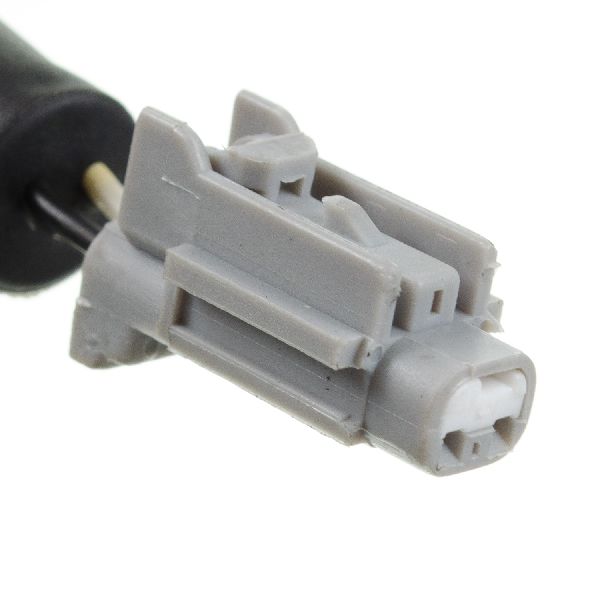
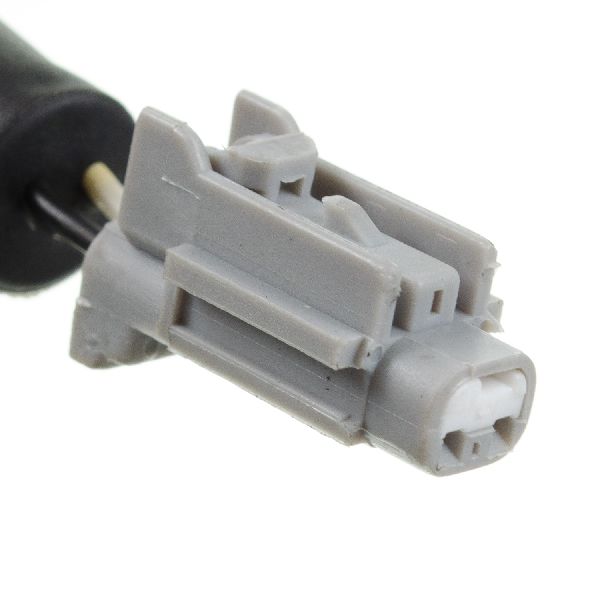
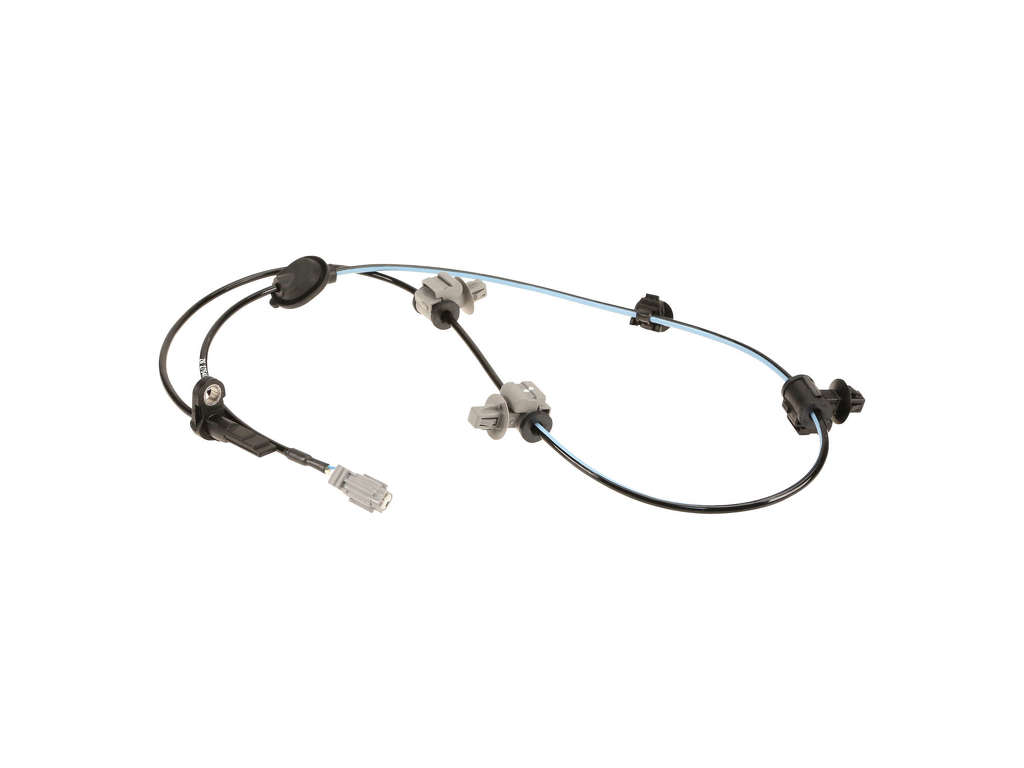
We Have This Part in Stock


The information in this article is provided for general reference and educational purposes only. Vehicle specifications, procedures, and part compatibility can vary by production date, trim level, and region. Always consult your vehicle's factory service manual and verify part numbers before purchasing or performing repairs. Safety-critical components such as airbags, seat belts, and braking systems should be installed by a qualified professional.
- Subaru Forester:
- 🧭 Diagnostic Flowchart
- 🎬 Helpful Videos
- 🛍️ Shop This Part
- What's Unique About the 2014-2018 Subaru Forester
- Symptoms You May Notice
- Most Likely Causes
- Rare But Worth Checking
- Diagnosis Steps
- Parts You'll Likely Need
- Related Codes That Often Appear With This One
- Technical Service Bulletins (TSBs) & Recalls
- Platform-Specific Known Issues
- Mechanic-Grade Diagnostic Values
- Scan Tool Commands That Help
- Wiring & Ground Locations
- Real Owner Repair Stories
- Other Known Issues on This Vehicle
- Used vs. New Parts: Buying Guide for This Vehicle
- Real Owner Stories
- 2014-2018 Subaru Forester
- 2014-2018 Subaru Forester
- 2016 Subaru Crosstrek
- Related OBD-II Codes
- Frequently Asked Questions
- 🎟️ Get 5% Off