

P0500 on 2005-2014 Volkswagen Golf: Vehicle Speed Sensor Fault Causes and Fixes
On a 2005-2014 VW Golf, P0500 is almost always caused by a faulty ABS wheel speed sensor, not a transmission sensor. Expect ABS and traction control lights to be on. The most likely fix is replacing a single wheel speed sensor, which costs about $25-$75 for an aftermarket part. Diagnosis requires a VW-compatible scanner to read codes from the ABS module to identify the specific failed sensor.
- P0500 on a 2005-2014 Golf means there's a problem in your ABS system, not a separate speed sensor.
- The most important diagnostic step is to scan the ABS module for codes, which will usually pinpoint the exact failed component.
- The most common fix is replacing a single faulty ABS wheel speed sensor.
- Always check for and clean out any corrosion in the sensor's mounting hole before installing a new part.
- If sensors and wiring are good, consider having the ABS module professionally repaired instead of buying a costly new one.
What's Unique About the 2005-2014 Volkswagen Golf
Unlike older vehicles with a single speed sensor on the transmission, the Mk5 and Mk6 Golf (and other vehicles on the PQ35 platform) rely entirely on the ABS wheel speed sensors for vehicle speed data. This means a P0500 code is almost never a standalone issue; it's a symptom of an underlying fault in the ABS system. The root cause is typically a specific wheel speed sensor failure or a problem with the ABS module itself, which will almost always trigger the ABS and traction control (ESP/ASR) warning lights on your dashboard.
Generation note: This guide covers the Volkswagen Golf Mk5 (approx. 2005-2009) and Mk6 (approx. 2010-2014). Both generations use the PQ35 platform and a similar ATE Mk60/Mk61 ABS system where vehicle speed is derived from the wheel speed sensors, so the causes, symptoms, and diagnostic procedures are virtually identical. The earlier Mk60 modules had more known failure issues than the later Mk60EC1.
Symptoms You May Notice
- Check Engine Light is on
- ABS warning light is on
- Traction Control (ESP/ASR) light is on
- Speedometer is inoperative or works erratically
- Cruise control does not work
- Harsh or unusual shifting with an automatic transmission (DSG)
- Brake pedal may feel different or pulsate during normal braking
- Hill-start assist is disabled
- Replacing the Vehicle Speed Sensor on the transmission. This vehicle does not use one for the primary speed signal, so this part does not exist or is not the cause.
- Replacing the ECM. A P0500 code is almost always caused by a bad input signal from the ABS system, not a bad engine computer.
Most Likely Causes
- Faulty ABS Wheel Speed Sensor 🔴 High Probability → Shop ABS Wheel Speed Sensor Corrosion can build up in the sensor's mounting bore in the wheel hub, physically stressing and cracking the plastic sensor housing over time. Internal electronic failure of these active Hall-effect sensors is also common with age and exposure to the elements.
How to confirm: Scan the ABS control module for fault codes with a VW-specific tool like VCDS. A code such as '00287 - ABS Wheel Speed Sensor; Rear Right (G44)' will identify the exact sensor. You can also use the scan tool to monitor live data from all four sensors 🎬 Watch: How to view live wheel speed data on your VW. while driving; the faulty one will show a zero, erratic, or non-matching reading compared to the other three.
Typical fix: Replace the faulty wheel speed sensor. It is held in by a single 5mm Allen bolt. It is critical to thoroughly clean any corrosion from the mounting hole in the hub before installing the new sensor to prevent premature failure of the new part. Applying a thin coat of high-temp grease to the sensor body can aid future removal.
Est. part cost: $25-$75 - Damaged Wheel Speed Sensor Wiring or Connector 🟡 Medium Probability → Shop ABS Wheel Speed Sensor The wiring harness leading to the wheel hub is exposed to road debris, water, and ice, which can cause chafing, breaks, or corrosion in the connector pins. The harness can also be damaged by improper routing after previous suspension work.
How to confirm: After identifying the suspect sensor via a scan, visually inspect its wiring harness from the wheel well back. Check the connector for green corrosion, backed-out pins, or a loose fit. A multimeter can be used to check for ~12V power at the connector with the ignition on. Wiggling the harness while monitoring live data can also reveal intermittent connection issues.
Typical fix: Repair the broken wire or replace the connector pigtail. In some cases, a section of the harness may need to be replaced.
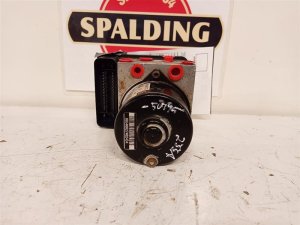
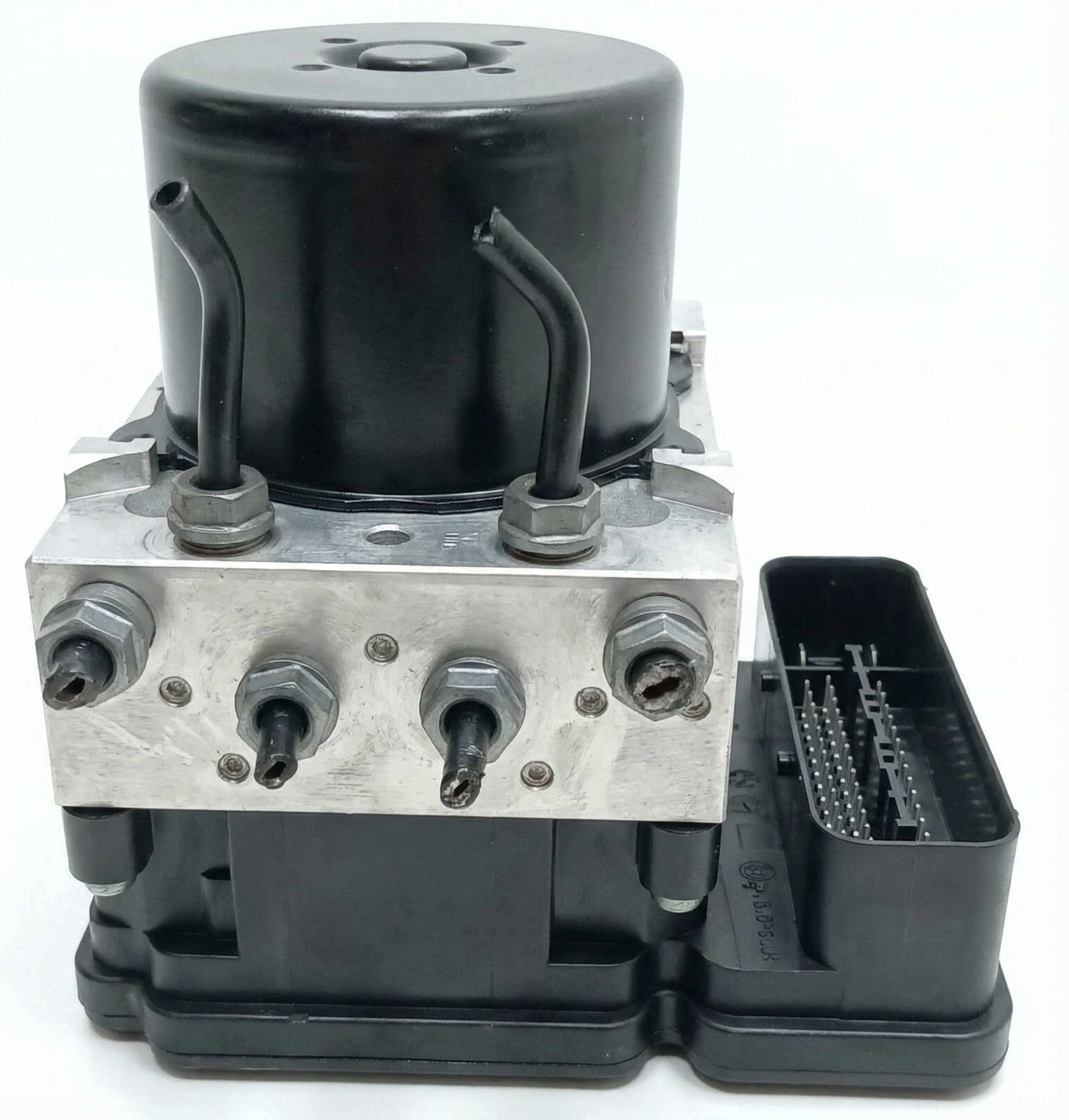
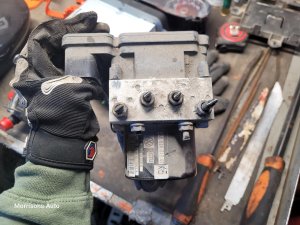
Est. part cost: $15-$40 - Faulty ABS Control Module ⚪ Low Probability → Shop ABS Control Module The ATE Mk60/Mk61 ABS modules used in these cars are known for internal failures. This can be due to failed solder joints on the circuit board or, more commonly, failure of the internal brake pressure sensor (G201). This failure is common enough that multiple companies specialize in its repair.
How to confirm: If you have a 'No Communication' code with the ABS module, or codes like 01130 (ABS Operation Implausible Signal) or 01435 (Brake Pressure Sensor 1 (G201)) that persist after confirming sensors and wiring are good, the module itself is the likely culprit. This diagnosis is best made after ruling out all other possibilities.
Typical fix: The module can be replaced and coded by a dealer or specialist, or the original module can be sent to a specialist repair service (like XeMODeX, ECU Testing, or ACTRONICS) for rebuilding, which is often more cost-effective and avoids the need for coding.
Est. part cost: $200-$500 (for repair service), $800-$1500 (for a new unit)
Rare But Worth Checking
- Damaged ABS Reluctor Ring: The reluctor ring (or tone ring) is what the sensor reads. If it's cracked, heavily rusted, or has debris on it, it can cause an incorrect signal. On this platform, the ring is integrated into the wheel bearing/hub assembly. 🎬 Watch: Replacing the wheel bearing and ABS reluctor ring. Before replacing a sensor, it's wise to visually inspect the ring through the sensor hole for obvious damage like missing teeth or severe corrosion.
Diagnosis Steps
- Scan the ABS control module (Address 03) with a VW-compatible scan tool (like VCDS). Do not rely on a generic OBD-II reader. Document any codes found in the ABS module; this is your primary clue.
- Use the scan tool to view live data for all four wheel speed sensors (usually in Measuring Blocks). Drive the vehicle slowly (above 5 mph) and watch the readings. All four should read the same speed. The one that is erratic, reads 0, or lags behind is the faulty circuit.
- Visually inspect the sensor, connector, and wiring for the identified faulty wheel. Look for cracks in the sensor body, corrosion in the connector, or any visible wire damage.
- Check for voltage at the sensor connector. With the ignition on, you should see approximately 11-12 volts being supplied from the ABS module to the active sensor. A reading of 2-3V or 0V indicates a wiring or module problem.
- If the wiring and sensor appear intact, remove the sensor (one 5mm Allen bolt) and inspect the ABS reluctor ring on the wheel hub/axle for cracks, heavy rust, or debris.
- If a sensor is confirmed bad, replace it. Clear codes from both the ABS and Engine modules and perform a test drive.
- If all sensors and wiring are confirmed to be good but codes for module faults (like 01130 or 01435) persist, the ABS control module is the most likely point of failure.
Parts You'll Likely Need
- ABS Wheel Speed Sensor
(OEM #WHT003858 (Rear Right), WHT003859 (Rear Left), WHT003856 (Front Right), WHT003857 (Front Left). Note: WHT003858 and WHT003859 are often functionally identical and sold interchangeably for rear applications. The front sensors WHT003856/WHT003857 are also often sold as a pair.)— This is the most common failure point that causes a P0500 code on this platform.
Trusted brands: Bosch, ATE, Hella, Delphi
OEM price range: $60-$100
Aftermarket price range: $25-$75 - ABS Control Module Repair Service
(OEM #e.g., 1K0907379AC, 1K0614517BE, 1K0907379AD)— If the module itself fails, having it rebuilt is a reliable and cost-effective alternative to buying a new one, and it avoids the need for recoding the module to the car.
Trusted brands: XeMODeX, ECU Testing, ACTRONICS
OEM price range: $800-$1500 (New Part)
Aftermarket price range: $200-$500 (Repair Service)
Related Codes That Often Appear With This One
- Any ABS code (e.g., 00285, 00287, 00290, 01130) — P0500 is a result of the ABS system failing. The specific ABS code will tell you the true root cause, such as which wheel speed sensor has failed or if there's an internal module fault.
- U0121 — This code means 'Lost Communication With ABS Control Module'. If the ABS module fails completely and cannot communicate on the CAN bus, the ECM will log both U0121 and P0500.
- 01435 (G201) — This VAG-specific code points to a failure of the internal brake pressure sensor inside the ATE Mk60 ABS module. It's a very common failure mode for the module and will be accompanied by P0500.
Platform-Specific Known Issues
- A user on GOLFMKV.com described the classic symptoms of ABS, ESC, and brake lights illuminating, which were traced back to fault codes 01130 and 01276, pointing to a failure of the ATE Mk60e ABS module, a known issue on these cars.
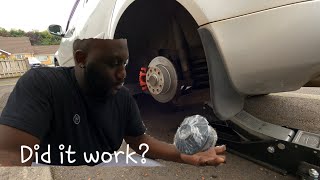
- A video guide for a Golf Mk6 demonstrates the diagnostic process, showing how a faulty rear wheel speed sensor disables not only ABS and ESC but also the hill-start assist feature.
- Owners on Reddit confirm that a cascade of warning lights (ABS, traction control, tire pressure monitor) on an Audi A3 (a platform mate) is almost always a failed ABS wheel speed sensor.
Mechanic-Grade Diagnostic Values
- ABS Wheel Speed Sensor Supply Voltage — expected: ~11-12.5 Volts DC. Failure: A reading of 0V or a significantly lower voltage (e.g., 2-3V) at the sensor connector (with ignition on) points to a wiring fault or a problem with the ABS module's power output.
- ABS Wheel Speed Sensor Resistance (Passive Type - older vehicles) — expected: 1.1 - 1.7 kΩ. Failure: An open circuit (infinite resistance) or a resistance value that climbs continuously indicates a failed sensor. Note: The active Hall-effect sensors on the Mk5/Mk6 Golf cannot be reliably tested with a simple resistance check.
Scan Tool Commands That Help
- VCDS (VAG-COM): Clear All DTCs — After replacing a faulty sensor, a 'Clear All DTCs' function from the main screen should be used to erase faults from the engine, ABS, and other affected modules simultaneously. Cycling the ignition may not clear all codes.
- VCDS (VAG-COM): ABS Module Coding — If the entire ABS module is replaced, the new unit must be 'coded' with the vehicle's original coding string to ensure all features (like ESP, TPMS, XDS) work correctly. The old coding can be retrieved from an auto-scan log file before the original module fails completely.
- VCDS (VAG-COM): Basic Settings / Adaptation — After replacing and coding a new ABS module, certain sensors like the Steering Angle Sensor (G85) and Brake Pressure Sensor (G201) may need to be calibrated through the Basic Settings or Adaptation functions in the ABS controller.
Wiring & Ground Locations
- J104 — The ABS control module (J104) is located in the engine compartment, typically on the right side (passenger side in LHD vehicles) near the firewall.. This is the central unit that receives all wheel speed signals and sends the vehicle speed data to the ECM. All wiring for the sensors converges here.
- T47c Connector — This is the large 47-pin electrical connector that plugs into the ABS control module (J104).. Faults are often caused by wiring issues. Knowing the main connector is crucial for advanced diagnostics, such as checking for power, ground, and signal continuity between the module and the individual sensors.
- Ground Connection 638 — A key ground point for the ABS system is located on the right A-pillar.. A corroded or loose ground connection can cause intermittent and difficult-to-diagnose electrical problems for the ABS module, leading to communication errors and fault codes like P0500.
Real Owner Repair Stories
- Reddit user on r/jetta (2012 Jetta 2.5SE, 130,000 miles) — ABS lights on, dealer quoted $4,200 for ABS module replacement.
❌ Tried (didn't work) An attempt to have the original module repaired failed because the internal computer chip was dead. During DIY replacement, the user cross-threaded a brake line port on the replacement module.
✅ What actually fixed it After getting the cross-threaded port repaired at a machine shop, the user successfully installed a used ABS module and had it re-coded. The total cost for tools, parts, and the machine shop work was approximately $1,500, saving significantly over the dealer quote.
OEM Part Supersession History
1K0907379AD→1K0907379AE, 1K0907379AN, 1K0907379BJ, 1K0907379BL, etc.— Revisions to the ATE Mk60 ABS/ESP module to fix bugs, improve performance, or change internal components.
Heads up: Extreme caution is required. While many part numbers supersede others, they are not always backwards compatible without issue. For example, replacing an 'AD' module with a 'BL' module can lead to coding failure. It is critical to match the part number exactly or consult a dealer's ETKA parts catalog with the vehicle's VIN to find the correct compatible replacement.7H0927804 / 7H0927803→WHT003856 / WHT003857— Part number rationalization across the VW/Audi platform.
Heads up: The newer WHT-prefix sensors are generally backwards compatible with vehicles that originally used the 7H0-prefix sensors. They are physically and electrically identical for this platform.
Model Year Variations Within This Range
- Approx. 2005-2009 (Mk5): Primarily used the ATE Mk60 ABS module. Some early versions of this module are widely reported to have higher failure rates for the internal pressure sensor (G201) and general communication faults.
- Approx. 2010-2014 (Mk6): Transitioned to the ATE Mk60EC1 ABS module. While still susceptible to failure, these units are generally considered more reliable than the earlier Mk60. The physical mounting bracket and electrical connector may differ between the Mk60 and Mk60EC1, requiring a bracket swap if upgrading.
Diagnostic Flowchart
Other Known Issues on This Vehicle
Issues unrelated to this code that are worth knowing about as an owner of this generation:
- Timing Chain Tensioner Failure (2.0T TSI Engine) 🔴 High — Common on 2008-2012 models with early tensioner designs. Failure can occur without warning, often between 60k-100k miles, leading to catastrophic engine damage. (Ref: VW TSB 15-12-01 was issued for some models.)
- DSG Mechatronic Unit Failure 🔴 High — Prevalent in both 6-speed (DQ250) and 7-speed dry clutch (DQ200) gearboxes. Symptoms include harsh/jerky shifting, flashing 'PRNDS' light, and loss of drive. (Ref: Recalls were issued in some markets for specific mechatronic issues.)
- HPFP Cam Follower Wear (2.0T FSI Engine) 🔴 High — A critical wear item on early direct-injection FSI engines (e.g., BPY code, ~2006-2008). The follower can wear through, destroying the high-pressure fuel pump and camshaft. Recommended inspection every 10k-20k miles.
- Intake Manifold Runner Flap Fault (P2015) 🟠 Medium — Common on both TDI and TSI engines. The plastic actuator linkage wears, causing the position sensor to report an 'implausible signal'. Often fixed with an inexpensive repair bracket rather than full manifold replacement.
- Water Pump / Thermostat Housing Leak 🟠 Medium — The integrated plastic water pump and thermostat housing assembly is prone to cracking and leaking coolant, typically between 40,000 and 100,000 km. (Ref: Part has been revised multiple times by VW.)
- Carbon Buildup on Intake Valves 🟠 Medium — A systemic issue for all direct-injection engines (FSI/TSI). Fuel is injected past the valves, so they are not cleaned by gasoline detergents, leading to carbon deposits that restrict airflow, causing misfires and power loss over time. Typically requires manual cleaning every 60k-100k miles.
Used vs. New Parts: Buying Guide for This Vehicle
When a used part is the smart pick: A used ABS control module from a verified low-mileage donor car can be a smart choice, saving hundreds or thousands over a new OEM part. Given the high cost of new units, this is a common repair strategy.
Donor-vehicle mileage cap: roughly under 80000 miles for the part to have meaningful remaining life.
What to inspect on the donor part:
- CRITICAL: The part number, including the two-letter suffix (e.g., 1K0907379AD), MUST be an exact match to the original part or a confirmed compatible supersession from a dealer parts catalog.
- Inspect the aluminum block for any signs of corrosion, especially around the brake line fittings.
- Ensure the electrical connector pins are straight, clean, and free of any green or white corrosion.
- Ask the seller for the VIN of the donor car to help verify compatibility and features.
OEM-only on this vehicle (don't cheap out):
- ABS Control Module: While repair services are a good option, if buying a replacement part, a used OEM unit is often safer than a new, unbranded aftermarket module due to the complex software coding required.
Aftermarket brands forum-validated for this vehicle:
- For ABS Wheel Speed Sensors: Bosch, ATE, Hella, and Delphi are all OEM suppliers or have a strong reputation for quality and are considered safe replacements.
Brands owners have reported issues with on this vehicle:
- For ABS Wheel Speed Sensors: Unbranded, no-name sensors from online marketplaces can have high failure rates or produce noisy signals, causing the fault to return. While cheap, they may not be worth the labor to install.
- For ABS Control Modules: Avoid 'rebuilt' modules from unknown vendors without a solid warranty and a good reputation. A faulty rebuild can introduce new problems.
Real Owner Stories
Aggregated from forums and TSBs cited above. Mileages and costs reflect what owners reported in those sources.
Volkswagen Golf Mk6
Symptoms: ABS, ESC, and brake lights illuminated; hill-start assist feature was disabled.
What fixed it: Replacement of a faulty rear wheel speed sensor.
Source hint: Video guide for a Golf Mk6
Volkswagen Golf Mk5
Symptoms: ABS, ESC, and brake lights illuminating; fault codes 01130 and 01276 present.
What fixed it: Repair or replacement of the ATE Mk60e ABS module.
Source hint: GOLFMKV.com thread titled 'mk60e-abs-module-failure-diy-and-or-cheap-repair-options.191180/'
Audi A3 (Platform Mate)
Symptoms: A cascade of warning lights including ABS, traction control, and tire pressure monitor.
What fixed it: Replacement of a failed ABS wheel speed sensor.
Source hint: Reddit r/Audi thread 'all_sensor_malfunctions'
Related OBD-II Codes
Frequently Asked Questions
Why is my Hill-start assist disabled along with the ABS and Traction Control lights on my Mk6 Golf?
Can I use a generic OBD-II reader to find out which wheel speed sensor is bad on my 2005-2014 Golf?
My speedometer is working erratically and my DSG transmission is shifting harshly. Are these related?
Is there a known issue with the ABS module itself on the 2005-2014 Golf platform?
What should I check if I see corrosion on the wheel speed sensor connector?
Helpful Videos
We Have This Part in Stock

The information in this article is provided for general reference and educational purposes only. Vehicle specifications, procedures, and part compatibility can vary by production date, trim level, and region. Always consult your vehicle's factory service manual and verify part numbers before purchasing or performing repairs. Safety-critical components such as airbags, seat belts, and braking systems should be installed by a qualified professional.
- Volkswagen Golf:
- 🧭 Diagnostic Flowchart
- 🎬 Helpful Videos
- 🛍️ Shop This Part
- What's Unique About the 2005-2014 Volkswagen Golf
- Symptoms You May Notice
- Most Likely Causes
- Rare But Worth Checking
- Diagnosis Steps
- Parts You'll Likely Need
- Related Codes That Often Appear With This One
- Platform-Specific Known Issues
- Mechanic-Grade Diagnostic Values
- Scan Tool Commands That Help
- Wiring & Ground Locations
- Real Owner Repair Stories
- OEM Part Supersession History
- Model Year Variations Within This Range
- Other Known Issues on This Vehicle
- Used vs. New Parts: Buying Guide for This Vehicle
- Real Owner Stories
- Volkswagen Golf Mk6
- Volkswagen Golf Mk5
- Audi A3 (Platform Mate)
- Related OBD-II Codes
- Frequently Asked Questions
- 🎟️ Get 5% Off