

P0501 on 2007-2014 Ford Edge 3.5L: Causes for Erratic Speedometer and Fixes
On a 2007-2014 Ford Edge, code P0501 is most often caused by a faulty ABS wheel speed sensor or, on 2007-2010 models, a failing internal transmission speed sensor. Expect to pay $25-$60 for an aftermarket wheel speed sensor, which is a straightforward DIY fix. The internal transmission sensor is a more complex job.
- P0501 on a Ford Edge means there's a conflict between the speed sensors.
- Your first diagnostic step should be to scan the ABS module for codes, as this can pinpoint a specific faulty wheel speed sensor.
- For 2007-2010 models, be aware of the common internal transmission speed sensor failure, which is a more difficult repair.
- Symptoms include an erratic speedometer, harsh shifting, and ABS/Traction Control lights.
- Do not drive extensively with this issue, as the disabled safety systems and unpredictable shifting pose a risk.
What's Unique About the 2007-2014 Ford Edge
The Ford Edge from this era has two distinct, common failure points that can cause a P0501 code, and the likelihood depends on the model year. Early first-generation models (2007-2010) are known for the failure of the Turbine Shaft Speed (TSS) and Output Shaft Speed (OSS) sensors located inside the 6F50 transmission, which is a complex repair. On later models (2011-2014), the issue is more commonly an external, easier-to-replace ABS wheel speed sensor. It's critical to diagnose which sensor is at fault before buying parts, as the labor involved is vastly different.
Generation note: This range covers the first generation Ford Edge (2007-2010) and its facelift (2011-2014). The most likely cause differs between them. Early models (2007-2010) are prone to internal transmission speed sensor failure within the 6F50 transmission, while all years can suffer from ABS wheel speed sensor faults.
Symptoms You May Notice
- Erratic, jumping, or dead speedometer and odometer.
- Harsh, delayed, or incorrect gear shifts.
- ABS and/or Traction Control warning light illuminated on the dashboard.
- Cruise control is inoperative.
- A 'wrench' icon may appear on the dash, indicating a powertrain fault.
- Vehicle may feel low on power due to erratic shifting.
- Replacing the instrument cluster. While a faulty cluster can cause a dead speedometer, it's rarely the cause of a P0501 code, which is an input signal problem.
- Assuming the problem is a major transmission failure. The harsh shifting is a symptom of the bad speed data, not necessarily a sign that the transmission's internal mechanical components are failing.
- Replacing a wheel speed sensor without checking the wiring. The fault often lies in the exposed wiring harness leading to the sensor, not the sensor itself.
Most Likely Causes
- Faulty ABS Wheel Speed Sensor 🔴 High Probability → Shop ABS Wheel Speed Sensor These sensors are exposed to weather, road debris, and heat at the wheel hubs, making them a common failure point on most modern vehicles. The wiring leading to them is also vulnerable.
How to confirm: Use a scan tool that can read live data from the ABS module. Drive the vehicle and watch the speed readings from all four wheel sensors. The sensor that reads erratically, drops to zero, or differs from the others is the faulty one. Also, check for ABS-specific codes (e.g., C0035-C0050) which will point to a specific wheel.
Typical fix: Replace the faulty wheel speed sensor. It is typically held in by a single bolt at the wheel hub. The wiring harness is then unplugged from inside the wheel well. 🎬 Watch: How to replace the front ABS wheel speed sensor
Est. part cost: $25-$75 - Failing Internal Transmission Speed Sensor (OSS/TSS) 🔴 High Probability → Shop Transmission Assembly A widely documented issue specifically on 2007-2010 models with the 6F50 transmission. The internal electronics of the Output Shaft Speed (OSS) and/or Turbine Shaft Speed (TSS) sensors fail over time due to heat and vibration inside the transmission.
How to confirm: If a scan tool shows all four ABS wheel speed sensors are reading correctly but the main vehicle speed signal (VSS) is still erratic, the internal transmission sensors are the prime suspects. This is often accompanied by code P0720 (OSS Circuit Malfunction).
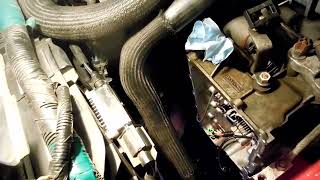
Typical fix: This requires draining some transmission fluid, removing the driver-side front wheel, and taking off the side cover of the transmission to access and replace the sensor(s). It is highly recommended to replace both the TSS and OSS sensors as a kit while the transmission is open. This is an advanced DIY or professional job. 🎬 See this step-by-step TSS and OSS replacement walkthrough
Est. part cost: $40-$100 for the sensor kit - Damaged Wiring or Connector 🟡 Medium Probability The wiring harness leading to the ABS wheel speed sensors is exposed and can be damaged by road debris, ice buildup, suspension movement, or improper servicing. A known chafe point exists on the driver's side where the engine harness can rub against the ECM/TCM bracket, upper control arm, or shock tower.
How to confirm: Visually inspect the full length of the wiring for the suspect sensor. Look for chafed insulation, broken wires, or corrosion inside the connector plug. Wiggle the harness while monitoring live data to see if the signal cuts out.
Typical fix: Repair the damaged section of wire or replace the connector pigtail. Ensure the repair is sealed with heat-shrink tubing to prevent moisture intrusion.
Est. part cost: $10-$30 for a connector pigtail
Rare But Worth Checking
- Cracked or Damaged ABS Tone Ring: The toothed ring (reluctor) that the ABS sensor reads can crack due to corrosion underneath it, get covered in rust/debris, or have a missing tooth, causing an erratic signal. This is a known issue on the Edge. A visual inspection is needed to confirm; if the ring can be moved by hand, it is cracked.
- Faulty Powertrain Control Module (PCM) or Instrument Cluster: → Shop Engine Control Module (ECM) This is very rare. All sensors and wiring should be confirmed to be in perfect working order before considering that the vehicle's computer is the problem. A bad ground or low battery voltage can also cause modules to act erratically.
Diagnosis Steps
- Connect an OBD-II scanner and check for all codes in both the PCM (Engine) and ABS modules.
- If any 'C' codes are present (e.g., C0035), they will point you toward a specific wheel speed sensor. Prioritize diagnosing that circuit.
- Access the live data stream on your scanner. Monitor the vehicle speed (VSS) and the speeds of all four individual wheels (LF, RF, LR, RR) while driving slowly in a straight line.
- Look for a wheel speed reading that is erratic, drops to zero, or is clearly different from the others. This identifies the faulty sensor's location.
- If all four wheel speed sensors read consistently and match each other, but the main VSS reading is erratic, the problem is more likely the Output Shaft Speed (OSS) sensor in the transmission (especially on 2007-2010 models). Check for a P0720 code to help confirm.
- Perform a thorough visual inspection of the suspect sensor's wiring harness and connector for any signs of physical damage, melting, corrosion, or loose pins. Pay close attention to the known harness chafe points near the driver's side shock tower.
- If a wheel speed sensor is suspected, remove the wheel and inspect the sensor and the tone ring on the axle for physical damage, heavy rust, or cracks. Try to move the tone ring by hand; any movement indicates it has cracked.
- If the transmission sensors are suspected, research the specific procedure for accessing the 6F50 transmission's side cover, as it is a labor-intensive job. 🎬 Watch: 6F50 transmission TSS and OSS failure explained
Parts You'll Likely Need
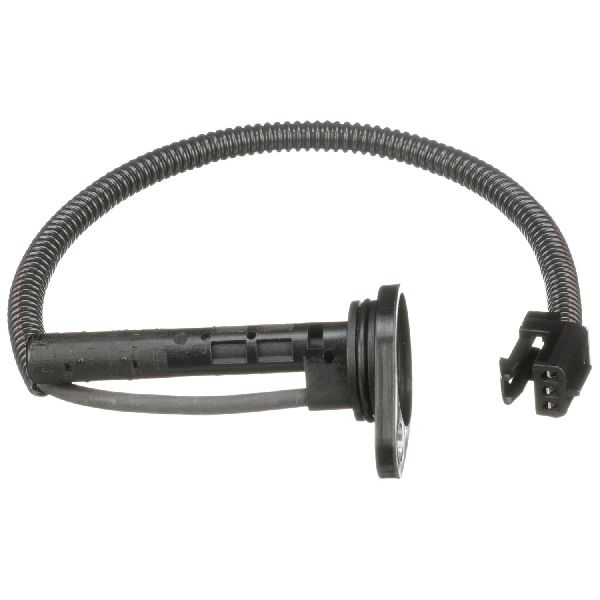
- ABS Wheel Speed Sensor
(OEM #DT4Z-2C204-AB (Example, Front Right))— This is the most common cause across all model years. It's an exposed sensor that frequently fails, causing erratic speed readings and ABS/Traction Control lights.
Trusted brands: Motorcraft, Dorman, Bosch, Standard Motor Products (SMP), Delphi
OEM price range: $70-$120
Aftermarket price range: $25-$75 - Transmission Speed Sensor (TSS/OSS Kit)
(OEM #AA5Z-7H103-A (OSS), AA5Z-7M101-B (TSS))— This is a very common failure specifically on 2007-2010 models that causes erratic shifting and speedometer behavior. It's a more involved repair but often necessary for these years. It is recommended to replace both sensors at the same time.
Trusted brands: Motorcraft, ATP Automotive, Stellar Automotive Group
OEM price range: $60-$100
Aftermarket price range: $40-$80
Related Codes That Often Appear With This One
- C0035 to C0050 — These are ABS codes that point directly to a specific wheel speed sensor circuit (e.g., C0035 for Left Front). If you have one of these alongside P0501, it's a very strong indicator of which sensor or circuit has failed.
- P0720 — This code specifically indicates a fault with the Output Shaft Speed (OSS) sensor circuit. If seen with P0501, it strongly confirms the problem is likely inside the transmission, not at a wheel.
- P0500 — This code indicates a complete loss of signal from the VSS, whereas P0501 indicates an irrational or out-of-range signal. Seeing either points to the same set of potential culprits.
Technical Service Bulletins (TSBs) & Recalls
- While no TSB is specific to P0501, a GM service bulletin for a different vehicle identifies a common engine harness chafing issue near the driver's side shock tower, ECM bracket, and upper control arm which can cause similar electrical faults and is a valuable inspection point on the Edge.
Platform-Specific Known Issues
- A well-known issue on 2007-2010 Ford Edge models is the failure of the Turbine Shaft Speed (TSS) and Output Shaft Speed (OSS) sensors within the 6F50 transmission, leading to symptoms identical to a P0501 fault. Many owners on forums recommend replacing both sensors at the same time to avoid a repeat repair.
Mechanic-Grade Diagnostic Values
- ABS Wheel Speed Sensor Resistance — expected: 800 - 1,700 Ohms (check service manual for exact spec). Failure: An open circuit (infinite resistance) or a reading far outside the expected range indicates a failed sensor. Comparing the reading to a known-good sensor on the same axle is a reliable method.
- ABS Wheel Speed Sensor AC Voltage Output — expected: Greater than 100 millivolts (0.1V AC) when the wheel is spun by hand.. Failure: No AC voltage or very low voltage when the wheel is spinning indicates a dead sensor or a problem with the tone ring.
- Quick Sensor Magnetism Check — expected: The tip of the sensor should have enough magnetism to hold a small screwdriver or paperclip.. Failure: If there is no magnetism, the sensor's ability to generate a signal is compromised, even if resistance tests are normal.
Scan Tool Commands That Help
- Ford IDS / FORScan: ABS Module Self-Test — After a repair or during initial diagnosis, this command forces the ABS module to check all its inputs and outputs, which can help confirm if a fault is still present.
- Ford IDS: Rotunda Active Wheel Speed Sensor Tester — This is a specific Ford diagnostic tool that connects directly to the wheel speed sensor harness to verify sensor operation and circuit integrity without needing to spin the wheel.
Wiring & Ground Locations
- G103 / G104 / G105 — Located in the left front of the engine compartment, near the battery junction box and headlight area.. These are primary chassis grounds for the engine bay. A corroded or loose ground here can cause erratic behavior in multiple systems, including the ABS module and PCM.
- G201 / G205 — G201 is in the left kick panel area; G205 is on the left side of the dash.. These are key interior grounds. A fault here could affect the instrument cluster, Body Control Module, or PCM, potentially causing communication errors related to vehicle speed.
- Driver-Side Harness Chafe Points — The engine wiring harness where it passes the driver's side shock tower, the upper control arm, and the bracket for the ECM/TCM.. This harness contains wires for various sensors. Vibration and engine movement can cause the harness to rub through, creating an intermittent short to ground for a wheel speed sensor or other critical circuit, which is very difficult to diagnose without a targeted visual inspection.
Real Owner Repair Stories
- Ford Edge Forum user post (First Generation Ford Edge (2007-2014)) — ABS light on, fault code C0226 (Left Front Wheel Speed Signal Missing), which is a companion code to P0501.
❌ Tried (didn't work) Initial assumption was a bad wheel speed sensor.
✅ What actually fixed it The ABS tone ring on the CV axle had cracked due to corrosion building up underneath it. The crack was not easily visible. The user confirmed the issue by prying lightly on the ring and seeing it move. As Ford does not sell the tone ring separately, the user performed a temporary repair by welding the crack. A common permanent fix is to replace the entire CV axle. - YouTube video by 'arejay' (2008-2014 Ford Edge) — ABS light on intermittently, hard slipping/grabbing sensation from brakes at low speeds.
❌ Tried (didn't work) Diagnosing only the sensor.
✅ What actually fixed it The ABS tone ring was found to be cracked. The video documents replacing the entire passenger side CV axle, as it was more cost and time-effective ($96 for a new axle) than attempting to find and replace only the tone ring, which would require extensive cleaning of the old axle shaft. - NHTSA ODI #11449362 — An owner of a related Ford model reported that their transmission slammed really hard and the check engine light came on with code P0501. In this instance, attempting to reprogram the PCM did nothing to resolve the fault.
"I Checked Everything" — The Actual Cause
- A technician tests the wheel speed sensor with a multimeter at the connector and it reads good. They may even swap sensors between wheels with no change. The actual cause was a wiring harness chafing against the shock tower, creating an intermittent short only when the vehicle was in motion.
- The wheel speed sensor tests perfectly for resistance and AC voltage output, but the code persists. The actual cause was a minutely cracked ABS tone ring that was visually intact but would shift slightly at speed, corrupting the signal read by the perfectly good sensor.
OEM Part Supersession History
7T4Z-7H103-B, 8A8Z-7H103-A, AA5Z-7H103-A→AA5Z-7H103-B (Motorcraft P/N DY1221)— This is the part number progression for the 6F50 transmission's Output Shaft Speed (OSS) sensor, a common failure on 2007-2010 models. Using the latest revision is recommended.
Model Year Variations Within This Range
- 2010: There was a change in ground point locations during the 2010 model year. Early production used ground G104 in the left front engine compartment, while late production used G105 in a similar area.
Diagnostic Flowchart
Other Known Issues on This Vehicle
Issues unrelated to this code that are worth knowing about as an owner of this generation:
- Internal Water Pump Failure 🔴 High — Common after 80,000-120,000 miles. Failure allows coolant to mix with engine oil, leading to catastrophic engine damage if not caught early.
- Power Transfer Unit (PTU) Failure (AWD Models) 🔴 High — Widespread issue due to the 'lifetime' fluid being cooked by the adjacent exhaust, leading to lubrication breakdown. Symptoms include a burning gear oil/propane smell and grinding noises. Preventative fluid changes every 30,000 miles are recommended.
- Faulty Brake Booster 🟠 Medium — Common across 2007-2015 models. A tear in the booster diaphragm causes a hissing noise when braking and a hard or spongy pedal feel. (Ref: Customer Satisfaction Program 13N02 (extends warranty to 10 years/150,000 miles).)
- Door Ajar Warning Light Stays On 🟡 Low — Very common issue caused by a faulty switch inside the door latch assembly. Can prevent doors from locking and may drain the battery.
- Cabin Water Leaks 🟠 Medium — Leaks have been reported around the A-pillars, doors, and sunroofs, potentially causing water damage to interior components and electronics. (Ref: Field Service Action 15B21 for A-Pillar leaks on some models.)
Used vs. New Parts: Buying Guide for This Vehicle
When a used part is the smart pick: A complete, low-mileage wheel hub/knuckle assembly from a salvage yard can be a good value, as it includes the hub, bearing, and the critical ABS tone ring which is often the point of failure and not sold separately. A standalone used sensor is generally not recommended due to the low cost of new aftermarket units.
Donor-vehicle mileage cap: roughly under 75000 miles for the part to have meaningful remaining life.
What to inspect on the donor part:
- Visually inspect the ABS tone ring for cracks, heavy rust, or missing teeth.
- Ensure the wiring pigtail on the sensor is not cut, frayed, or brittle.
- Check for signs of water intrusion or heavy corrosion on the connector pins.
- Spin the hub to feel for roughness in the bearing, as a bad bearing can cause wobble that affects the sensor reading.
OEM-only on this vehicle (don't cheap out):
- Internal Transmission Speed Sensors (TSS/OSS). The labor required to access these sensors is significant, making it unwise to risk a part with questionable reliability. Stick with Motorcraft parts to ensure you only have to do the job once.
Aftermarket brands forum-validated for this vehicle:
- Bosch
- Delphi
- Standard Motor Products (SMP)
- Dorman (for wheel speed sensors and connector pigtails)
Brands owners have reported issues with on this vehicle:
- No-name, unbranded sensors from online marketplaces. While cheap, they have a high failure rate and may not have the correct resistance or magnetic properties, leading to an immediate return of the P0501 code.
Real Owner Stories
Aggregated from forums and TSBs cited above. Mileages and costs reflect what owners reported in those sources.
2007-2010 Ford Edge 3.5L V6
Symptoms: Erratic shifting and symptoms identical to a P0501 fault; the internal electronics of the speed sensors failed due to heat and vibration.
What fixed it: Replacement of both the Turbine Shaft Speed (TSS) and Output Shaft Speed (OSS) sensors as a kit while the transmission side cover was removed.
Cost: $40-$100 for the sensor kit
Source hint: vehicle_specific_issues
Ford F-150 (Cross-Manufacturer Reference)
Symptoms: Transmission slammed really hard and check engine light came on with code P0501.
What fixed it: Reprogramming the PCM was attempted but did nothing to resolve the issue.
Source hint: NHTSA ODI #11449362
Related OBD-II Codes
Frequently Asked Questions
My 2008 Ford Edge has a dead speedometer and a wrench icon. Could this be the internal transmission sensors mentioned for 2007-2010 models?
Is there a specific wiring issue on the Ford Edge I should check before replacing sensors?
My ABS and Traction Control lights are on along with the P0501 code. Does this point to a specific part?
I'm seeing a 'C' code like C0035 alongside P0501. Which should I fix first?
Does the Ford Edge have a common issue with water leaks affecting electronics?
Can a cracked tone ring cause the erratic speedometer symptoms on my Edge?
Helpful Videos
We Have This Part in Stock

The information in this article is provided for general reference and educational purposes only. Vehicle specifications, procedures, and part compatibility can vary by production date, trim level, and region. Always consult your vehicle's factory service manual and verify part numbers before purchasing or performing repairs. Safety-critical components such as airbags, seat belts, and braking systems should be installed by a qualified professional.
- Ford Edge:
- 🧭 Diagnostic Flowchart
- 🎬 Helpful Videos
- 🛍️ Shop This Part
- What's Unique About the 2007-2014 Ford Edge
- Symptoms You May Notice
- Most Likely Causes
- Rare But Worth Checking
- Diagnosis Steps
- Parts You'll Likely Need
- Related Codes That Often Appear With This One
- Technical Service Bulletins (TSBs) & Recalls
- Platform-Specific Known Issues
- Mechanic-Grade Diagnostic Values
- Scan Tool Commands That Help
- Wiring & Ground Locations
- Real Owner Repair Stories
- "I Checked Everything" — The Actual Cause
- OEM Part Supersession History
- Model Year Variations Within This Range
- Other Known Issues on This Vehicle
- Used vs. New Parts: Buying Guide for This Vehicle
- Real Owner Stories
- 2007-2010 Ford Edge 3.5L V6
- Ford F-150 (Cross-Manufacturer Reference)
- Related OBD-II Codes
- Frequently Asked Questions
- 🎟️ Get 5% Off