

P0501 on 2017-2022 Honda CR-V: Causes and Fixes for Vehicle Speed Sensor Faults
On a 2017-2022 CR-V, P0501 is almost always caused by a single faulty wheel speed sensor (ABS sensor), not a transmission sensor. This triggers a 'Christmas tree' of multiple dashboard warning lights. The fix is to identify the bad sensor with an ABS-capable scanner and replace it, costing about $30-$80 for the part.
- P0501 on a 2017-2022 CR-V means there's a problem with a wheel speed (ABS) sensor, not a transmission sensor.
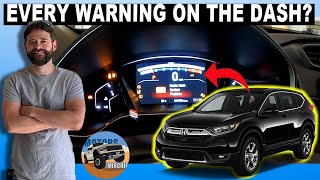
- A 'Christmas tree' of dashboard lights (ABS, VSA, Brake, etc.) is the most common symptom and usually points to just one bad sensor.
- You need an ABS-capable scan tool to diagnose the problem; a basic code reader is not enough to identify which of the four sensors has failed.
- The most likely fix is replacing one of the four wheel speed sensors, which is a manageable DIY job, but be prepared for the possibility of the old sensor being seized in the hub.
What's Unique About the 2017-2022 Honda CR-V
The fifth-generation CR-V is known for a single faulty wheel speed sensor causing a cascade of warning lights for seemingly unrelated systems like adaptive cruise control, collision mitigation, and lane keeping assist. Owners often suspect a major electrical failure, a bad battery, or even faulty fuel injectors when, in reality, the root cause is typically just one of the four ABS sensors providing bad data to the entire network. The P0501 code in the engine computer is a secondary fault triggered by the primary issue in the ABS system, which will have its own specific code (e.g., C0037).
Symptoms You May Notice
- Multiple warning lights on the dashboard simultaneously (Check Engine, ABS, VSA, Brake System, All-Wheel Drive, etc.) - often called the 'Christmas tree' effect.
- Warning messages for driver-assist systems (Collision Mitigation Braking System, Adaptive Cruise Control, Lane Keeping Assist).
- Speedometer works erratically or not at all.
- Cruise control is disabled.
- Harsh or erratic transmission shifting.
- ABS system does not function during hard braking.
- AWD system may be disabled, with a corresponding warning light.
- Vehicle requires pushing the start/stop button twice to turn off the engine.
- Replacing the battery. While a weak battery can cause various electrical issues, a recurring P0501 with ABS lights that returns after a reset points directly to the speed sensing system.
- Assuming a transmission failure. The code mentions 'Vehicle Speed Sensor', leading some to suspect a transmission-mounted sensor, but this vehicle uses the four ABS sensors for primary speed reporting.
- Replacing parts without a proper scan. A basic code reader will only show P0501. You MUST use an ABS-capable scanner to know which of the four wheel sensors is the culprit. Guessing is a waste of time and money.
- Blaming the fuel injectors. While faulty injectors can also cause a 'Christmas tree' of lights on this CR-V, the accompanying codes will be different (e.g., misfire codes) and symptoms will include rough running, which is not typical for a P0501 fault.
Most Likely Causes
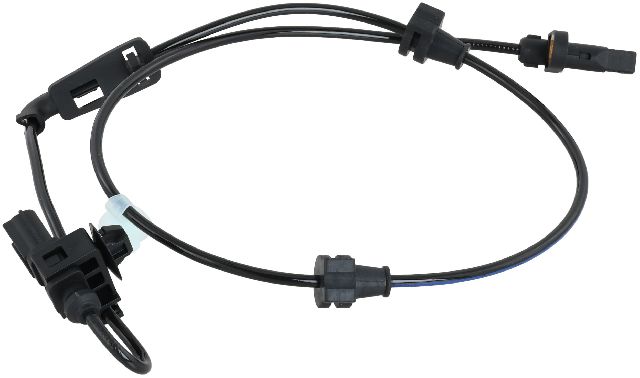
- Faulty Wheel Speed Sensor (ABS Sensor) 🔴 High Probability → Shop ABS Wheel Speed Sensor These sensors are exposed to the elements at the wheels and can fail due to moisture, corrosion, or internal electronics failure. It is a very common failure point on this platform, with the rear sensors failing slightly more often according to technician accounts.
How to confirm: Use an OBD-II scanner capable of reading ABS codes and live data. Monitor the speed of all four wheels while driving. 🎬 Watch: How a single bad sensor triggers a mess of warning codes The faulty sensor will show a speed of 0 mph, an erratic reading, or a speed that doesn't match the others. The ABS module will also store a specific code pointing to the failed sensor (e.g., 'Right Rear Wheel Speed Sensor Circuit'). You can also test the sensor circuit for proper voltage (4.5-5.5V) at the connector with the ignition on.
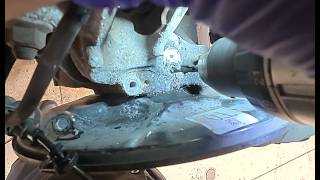
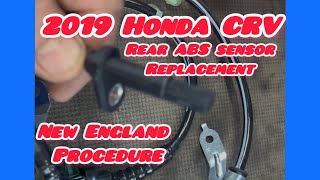
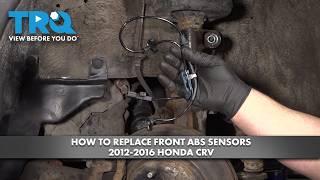
Typical fix: Replace the faulty wheel speed sensor. The sensor is held in by a single 10mm bolt but can be seized in the wheel hub due to rust, requiring careful extraction. Soaking with penetrating oil is recommended. 🎬 Watch: Step-by-step rear ABS sensor replacement in rusty conditions In severe cases, the old sensor breaks off and must be carefully drilled out.
Est. part cost: $30 - $80 - Damaged Wiring or Connector 🟡 Medium Probability The wiring harness for each sensor runs down to the wheel and is susceptible to damage from road debris, improper service (like a clutch job), or corrosion in salt-belt regions. Animals chewing on soy-based wire insulation is also a known, albeit less common, issue.
How to confirm: Visually inspect the wiring leading to the suspect wheel speed sensor (identified via scanner) for any breaks, chafing, or corrosion in the connector pins. Perform a continuity test on the wires from the sensor connector to the ABS module connector if no visible damage is found. A good sensor might show correct resistance at its own connector, but an open circuit when tested from the ABS module connector, indicating a wire break.
Typical fix: Repair the damaged section of the wire or replace the pigtail connector. In severe cases, the entire sensor harness may need replacement.
Est. part cost: $15 - $50
Rare But Worth Checking
- Damaged or Debris-Covered Tone Ring: The sensor reads a toothed or magnetic ring (tone ring) on the axle or wheel bearing. If this ring is cracked, damaged, or covered in heavy rust/debris, it can cause an erratic signal. This should be inspected when the sensor is replaced. Damage can occur if a seized sensor is drilled out carelessly. On this CR-V, the magnetic encoder is integrated into the wheel bearing seal, so damage often requires replacing the entire wheel bearing/hub assembly.
- Faulty ABS Control Module: While rare, the ABS control module itself can fail. This is usually diagnosed only after confirming the sensors, wiring, and tone rings are all in good condition. This would typically present with more complex communication error codes and likely affect more than one sensor circuit. A replacement module must be programmed to the vehicle's VIN.
Diagnosis Steps
- Connect an OBD-II scanner that can access the ABS control module.
- Read fault codes from both the Engine Control Module (ECM) and the ABS module.
- Note any 'C' codes, as they will point to the specific wheel causing the issue (e.g., C0037: Right Rear Wheel Speed Sensor).
- Navigate to the live data stream for the ABS module.
- Monitor the data for all four wheel speed sensors while driving slowly (or spinning the wheels by hand if the vehicle is safely on jack stands).
- Identify the sensor that reads 0 MPH, is erratic, or does not match the other three sensors.
- Visually inspect the identified sensor, its wiring, and connector for any obvious damage, corrosion, or debris.
- If wiring is intact, the most likely cause is the sensor itself. Replace the faulty wheel speed sensor.
- If the sensor is seized, apply penetrating oil and allow it to soak. If it breaks, it must be carefully drilled out, taking care not to damage the tone ring inside the hub. A technician-proven method is to drill carefully to thin the sensor wall, then use a pick to hook and pull the remaining piece out.
- Clear all fault codes from the ECM and ABS modules and perform a test drive. Note that some driver-assist system lights may take a few minutes of driving to clear as they re-calibrate.
Parts You'll Likely Need
- Wheel Speed Sensor (ABS Sensor)
(OEM #Front Left: 57455-TLA-A02, Front Right: 57450-TLA-A02, Rear Left: 57475-TLA-A02 or 47560-TLA-A03, Rear Right: 57470-TLA-A02 or 47510-TLA-A03)— This is the most common failure point for a P0501 code on this vehicle, causing a cascade of warning lights.
Trusted brands: Honda (OEM), NTK, Standard Motor Products (SMP), Delphi, WVE
OEM price range: $45-$80
Aftermarket price range: $30-$60
Related Codes That Often Appear With This One
- C0031 to C003A — A 'C' (Chassis) code will be stored in the ABS module, indicating the specific wheel sensor that has a fault. For example, C0034 for Right Front, C0037 for Right Rear, etc. The P0501 in the engine module is a result of this primary ABS fault.
- U-codes (e.g., U0401, U0415) — Communication ('U') codes may be present, indicating that other modules (like the EPS or VSA) have lost valid communication with the ABS module due to the faulty speed signal.
Platform-Specific Known Issues
- It is very common for a single failed wheel speed sensor to illuminate the entire dashboard with warnings for ABS, VSA, brake system, and all Honda Sensing driver-assist features.
- Sensors, particularly in rust-belt states, can become seized in the wheel hub due to galvanic corrosion between the plastic sensor body and the metal knuckle. Drilling out the old sensor is sometimes necessary but must be done carefully to avoid damaging the hub or the tone ring.
- A Reddit user on r/crv documented their experience: after confirming a bad right rear sensor with a scanner, they spent 2-3 hours carefully removing the old, seized sensor before successfully replacing it and clearing the codes.
Mechanic-Grade Diagnostic Values
- Wheel Speed Sensor Supply Voltage — expected: 4.5 - 5.5 Volts DC (measured at the sensor harness connector with ignition ON). Failure: A reading below 4.0V suggests a problem with the power supply from the VSA/ABS module or the wiring harness.
- Wheel Speed Sensor Internal Resistance — expected: No official OEM spec is published, but a typical range is 1000-2000 Ohms. The key is comparing the reading to the sensor on the opposite side; they should be nearly identical.. Failure: An open circuit (infinite resistance) or a reading significantly different from the known-good sensor indicates a failed sensor.
Scan Tool Commands That Help
- Honda Diagnostic System (HDS): ABS/VSA Data List — This function is the dealer-level method for viewing the live data stream of all four wheel speed sensors simultaneously to identify the one that is malfunctioning. It is the most reliable way to begin diagnosis.
- Honda Diagnostic System (HDS): Clear All DTCs — After replacing the faulty sensor, this function in the HDS (or a capable aftermarket scanner) is used to erase the stored P0501 and related 'C' and 'U' codes from all modules. A test drive is required afterward to confirm the fix.
Wiring & Ground Locations
- Wheel Speed Sensor Connector — In the wheel well, attached to the chassis, connecting the sensor pigtail to the main body harness.. This is the primary point for testing sensor supply voltage and checking for corrosion or damage. A poor connection here will mimic a failed sensor.
- VSA/ABS Control Module Connector — Typically located in the engine bay, near the brake fluid reservoir, as part of the ABS hydraulic unit.. This is the endpoint for the sensor wiring. Performing a continuity test between this connector and the wheel sensor connector can definitively rule out a wiring break in the harness.
Real Owner Repair Stories
- YouTube channel 'The Offroading Mechanic' (2017 Honda CR-V) — All warning lights on the dash, but no check engine light initially. Also set codes for differential overheat and vehicle spin, and required pressing the start/stop button twice to shut off the engine.
❌ Tried (didn't work) Clearing codes initially did not turn off all lights until after a longer test drive.
✅ What actually fixed it The root cause was a failed left rear wheel speed sensor. The technician had to carefully drill out the old, seized sensor, then replaced it. After clearing codes and a test drive, all warning lights went out as the various modules re-calibrated.
OEM Part Supersession History
57475-TLA-A01 (example)→57475-TLA-A02 / 47560-TLA-A03 (example)— Part revisions for improved durability or supplier changes.
Heads up: For this generation CR-V, part numbers can differ based on FWD vs AWD. Always verify the correct part number using the vehicle's VIN. While a superseded part is generally an improvement, using the wrong part for the drivetrain type can cause immediate faults.
Model Year Variations Within This Range
- 2017-2019 vs 2020-2022: The CR-V received a facelift for the 2020 model year which included making the 1.5L turbo engine and Honda Sensing suite standard on all trims. However, the fundamental design of the ABS system, including the use of four wheel speed sensors that are prone to this failure, remained consistent across the entire 2017-2022 generation.
Diagnostic Flowchart
Other Known Issues on This Vehicle
Issues unrelated to this code that are worth knowing about as an owner of this generation:
- 1.5L Turbo Engine Oil Dilution 🔴 High — More common on 2017-2018 models, especially in cold climates and with frequent short trips. Can lead to a strong fuel smell in the cabin, rising oil levels, and potential long-term engine wear. (Ref: Honda issued software updates and extended warranties for affected vehicles to help the engine warm up faster.)
- Sticky Steering 🔴 High — Affects 2023-2025 models primarily. Owners report a 'notchy' or 'sticky' feeling in the steering at highway speeds, which can increase steering effort unexpectedly. (Ref: Honda issued a recall (NHTSA Campaign Number pending, announced Oct 2024) to replace components within the steering gearbox.)
- Weak/Premature Battery Failure 🟠 Medium — Commonly reported on 2017-2019 models. The battery may drain unexpectedly, sometimes caused by software glitches or parasitic draws, leading to no-start conditions. (Ref: Various software updates were released to address related control unit behavior, but no single recall covers the battery itself.)
- Fuel Injector Failures 🟠 Medium — Can occur on 1.5T engines, sometimes related to the oil dilution issue. Symptoms include rough cold starts, misfires, and a 'Christmas tree' of dash lights that can be confused with a wheel speed sensor failure. (Ref: No specific recall, but injector replacement is a known repair. Some owners had this covered under the powertrain warranty extension for the oil dilution problem.)
Used vs. New Parts: Buying Guide for This Vehicle
When a used part is the smart pick: A used part is generally NOT recommended for the wheel speed sensor itself, as its failure is due to age and exposure, and a used part has unknown remaining life. However, sourcing a used wiring harness pigtail from a junkyard is a smart choice if only the connector is damaged, as it's an inexpensive way to get an OEM-quality connector.
Donor-vehicle mileage cap: roughly under 50000 miles for the part to have meaningful remaining life.
What to inspect on the donor part:
- For a wiring pigtail, inspect for any signs of cracking, brittleness, or corrosion on the pins.
- Ensure the locking tab on the connector is intact and clicks firmly.
- Avoid parts from vehicles with obvious signs of major collision or flood damage.
OEM-only on this vehicle (don't cheap out):
- ABS Control Module/VSA Modulator - Due to the required VIN programming and safety-critical nature, a new or remanufactured OEM unit is the only reliable option.
Aftermarket brands forum-validated for this vehicle:
- NTK
- Standard Motor Products (SMP)
- Delphi
- WVE
Brands owners have reported issues with on this vehicle:
- Ultra-cheap, unbranded sensors from online marketplaces should be avoided. Forum and technician consensus suggests they have a high failure rate, sometimes failing immediately or shortly after installation, wasting time and labor.
Real Owner Stories
Aggregated from forums and TSBs cited above. Mileages and costs reflect what owners reported in those sources.
2017 Honda CR-V AWD Touring
Symptoms: Multiple dashboard lights illuminated and a confirmed bad right rear sensor via scanner.
What fixed it: Replacement of the seized right rear speed sensor after 2-3 hours of careful removal.
Source hint: reddit.com/r/crv thread titled '2017 AWD Touring - Dash Lights & Speed Sensor'
2017-2022 Honda CR-V
Symptoms: ABS not working properly after attempting to replace a wheel speed sensor.
What fixed it: The old sensor had to be drilled out of the hub due to being seized.
Source hint: reddit.com/r/crv thread titled 'ABS not working properly after replacing wheel speed sensor'
Related OBD-II Codes
Frequently Asked Questions
Why is my 2017-2022 Honda CR-V dashboard lighting up like a 'Christmas tree' with ABS, VSA, and AWD warnings all at once?
I'm having trouble turning off my CR-V engine; I have to hit the button twice. Is this related to P0501?
Could my 'Christmas tree' dash lights be caused by fuel injectors instead of a speed sensor?
Is there a specific wheel sensor that fails more often on the 2017-2022 CR-V?
The mechanic says my sensor is seized in the wheel hub. Is this common for the CR-V?
Will my Adaptive Cruise Control and Lane Keeping Assist stop working if I have a P0501 code?
Helpful Videos
We Have This Part in Stock


The information in this article is provided for general reference and educational purposes only. Vehicle specifications, procedures, and part compatibility can vary by production date, trim level, and region. Always consult your vehicle's factory service manual and verify part numbers before purchasing or performing repairs. Safety-critical components such as airbags, seat belts, and braking systems should be installed by a qualified professional.
- Honda CR-V:
- 🧭 Diagnostic Flowchart
- 🎬 Helpful Videos
- 🛍️ Shop This Part
- What's Unique About the 2017-2022 Honda CR-V
- Symptoms You May Notice
- Most Likely Causes
- Rare But Worth Checking
- Diagnosis Steps
- Parts You'll Likely Need
- Related Codes That Often Appear With This One
- Platform-Specific Known Issues
- Mechanic-Grade Diagnostic Values
- Scan Tool Commands That Help
- Wiring & Ground Locations
- Real Owner Repair Stories
- OEM Part Supersession History
- Model Year Variations Within This Range
- Other Known Issues on This Vehicle
- Used vs. New Parts: Buying Guide for This Vehicle
- Real Owner Stories
- 2017 Honda CR-V AWD Touring
- 2017-2022 Honda CR-V
- Related OBD-II Codes
- Frequently Asked Questions
- 🎟️ Get 5% Off