

P0502 on 2015-2020 Ford F-150: Causes and Fixes for Vehicle Speed Sensor 'A' Circuit Low
On a 2015-2020 F-150, code P0502 is most often caused by a faulty ABS wheel speed sensor or damaged wiring to that sensor. Expect to pay $30-$120 for a new sensor, and the repair is DIY-friendly (2/5 difficulty) if you can pinpoint the correct corner. In some cases, a faulty transmission OSS sensor can trigger this code and may cause dangerous, sudden downshifts.
- P0502 on a 2015-2020 F-150 almost always points to an issue in the ABS system, not a single, old-style speed sensor.
- The most likely causes are a bad wheel speed sensor or damaged wiring leading to it.
- Always use a scan tool that can read ABS codes and live data. This is the fastest way to find which of the four-wheel sensors is causing the problem.
- If you also have harsh shifting and transmission-specific codes (P0720/P0722), suspect the Output Shaft Speed (OSS) sensor on the transmission.
- Before replacing any parts, perform a thorough visual inspection of the wiring and connectors for the suspect sensor, as a simple wiring repair is often the fix.
What's Unique About the 2015-2020 Ford F-150
Unlike older trucks that used a single Vehicle Speed Sensor (VSS) on the transmission or rear axle, the 2015-2020 F-150 primarily relies on the four ABS wheel speed sensors for its data. The PCM interprets the signals from the ABS module to determine vehicle speed. This means a P0502 code is often accompanied by ABS or traction control warning lights and requires checking the entire ABS sensor system, not just one part. A faulty Transmission Output Shaft Speed (OSS) sensor can also be a cause, particularly if severe shifting issues are present or if accompanied by transmission-specific codes.
Symptoms You May Notice
- Check Engine Light is on
- ABS and/or Traction Control warning lights are illuminated
- Speedometer reads 0 MPH or is erratic
- Harsh, late, or incorrect automatic transmission shifts
- Cruise control is inoperative
- Odometer may not accumulate mileage
- Hill Descent Control Fault warning may appear
- Replacing the instrument cluster. While a faulty cluster can cause a dead speedometer, it's rarely the cause of a P0502 code.
- Replacing the wrong sensor. Without using a scan tool to identify the specific failing sensor or circuit, owners may replace a perfectly good part. This is a common theme in owner forums.
Most Likely Causes
- Damaged Wiring or Corroded Connector for a Wheel Speed Sensor 🔴 High Probability → Shop ABS Wheel Speed Sensor The wiring harnesses for the front and rear ABS sensors are exposed to road debris, moisture, and suspension movement, making them susceptible to chafing, breaks, and corrosion. The rear harness, in particular, is often cited by owners for being damaged along the axle.
How to confirm: Visually inspect the full length of the wiring harness for each wheel speed sensor, paying close attention to where it's clipped to the frame and near the wheel. Unplug the connector and check for green or white corrosion on the pins. A multimeter can be used to check for continuity from the sensor connector to the main harness.
Typical fix: Repair the broken wire section with a weatherproof butt connector or replace the entire connector pigtail if it is corroded. In some cases, the entire rear ABS harness (Part # ML3Z-2C190-A for some configurations) may need replacement if damage is extensive.
Est. part cost: $15-$150 - Faulty Wheel Speed (ABS) Sensor 🔴 High Probability → Shop ABS Wheel Speed Sensor These sensors are located at the wheel hubs and are exposed to harsh conditions like water, salt, and heat, leading to internal failure over time. A fault in one sensor will cause the ABS module to send bad data to the PCM.
How to confirm: Use an OBD-II scanner with live data capability to monitor the speed from all four wheels while driving. The sensor that reads 0 MPH or has an erratic signal while the others read correctly is the faulty one. ABS-specific codes (like C0031 for front left) can also pinpoint the location.
Typical fix: Replace the faulty wheel speed sensor. It is typically held in by a single 8mm or 10mm bolt at the wheel hub.
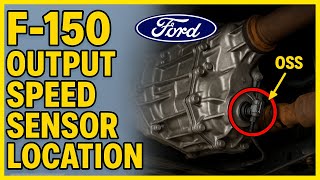
Est. part cost: $30-$120 - Faulty Transmission Output Shaft Speed (OSS) Sensor 🟡 Medium Probability → Shop Transmission Assembly The OSS sensor, located on the driver's side of the transmission, is a known failure point that can cause both P0502 and specific transmission codes (e.g., P0720, P0722). A failure of this sensor is linked to the dangerous sudden downshift issue.
How to confirm: Scan for transmission-specific trouble codes. Use a scan tool to monitor the OSS PID while driving to see if the signal drops out. The sensor is external and can be accessed from under the truck.
Typical fix: Replace the OSS sensor. It is externally mounted on the transmission case and held by a single 8mm bolt.
Est. part cost: $25-$100
Rare But Worth Checking
- Faulty ABS Control Module: → Shop ABS Control Module If all sensors and wiring test good, the module that processes their signals could be at fault. This is an expensive part and should be the last consideration.
- Faulty Powertrain Control Module (PCM): → Shop Engine Control Module (ECM) Extremely rare, but the PCM's internal circuit for receiving the speed signal could fail. This requires professional diagnosis to confirm and often requires programming upon replacement.
- Damaged ABS Tone Ring: The toothed ring that the ABS sensor reads can become damaged, cracked, or covered in heavy rust or debris, preventing an accurate signal. This is less common on the F-150 as the ring is well-integrated into the hub assembly.
Diagnosis Steps
- Scan for Codes: Use an OBD-II scanner capable of reading ABS and TCM modules. Prioritize diagnosing any ABS (C-codes) or transmission (P07xx codes) first.
- Analyze Live Data: With the scanner, monitor the live data stream for all four wheel speed sensors and the transmission output shaft speed (OSS). Drive the vehicle slowly and watch for a sensor that reads 0 MPH or differs significantly from the others.
- Visual Inspection: Based on the data from step 2, locate the suspect sensor. Thoroughly inspect its wiring harness and connector for any signs of physical damage, chafing, melting, or corrosion. Pay special attention to the harness routing along the rear axle and near the front suspension.
- Test the Circuit: If the wiring appears intact, disconnect the sensor. Use a multimeter to check for the correct reference voltage and ground at the connector (refer to a service manual for specs). Check for continuity on the signal wire back to the control module.
- Test the Sensor: If the circuit has power and ground, test the sensor itself. For an ABS sensor, you can check its internal resistance or connect a multimeter set to AC volts and spin the wheel to check for a generated signal.
- Inspect Tone Ring: If the sensor and wiring are good, visually inspect the tone ring for damage or debris through the sensor mounting hole.
- Isolate and Repair: Once the faulty component (sensor, wiring, or tone ring/hub) is identified, replace or repair it.
- Clear Codes and Test Drive: After the repair, clear all codes from the PCM, ABS, and TCM. Perform a test drive to ensure the speedometer works, the transmission shifts correctly, and no codes return.
Parts You'll Likely Need
- Front Wheel Speed Sensor
(OEM #Motorcraft BRAB514 (FL3Z-2C204-A))— The front sensors and their wiring are common failure points due to steering and suspension movement. A faulty sensor or wiring will trigger P0502.
Trusted brands: Motorcraft, Holstein, Standard Motor Products
OEM price range: $70-$120
Aftermarket price range: $30-$60 - Rear Wheel Speed Sensor
(OEM #Motorcraft BRAB455 (GL3Z-2C190-A))— The rear sensors or their harness routed along the axle can be damaged by road debris or corrosion.
Trusted brands: Motorcraft, Dorman, Bosch
OEM price range: $60-$100
Aftermarket price range: $30-$50 - Transmission Output Shaft Speed (OSS) Sensor
(OEM #Motorcraft DY1285 (7L1Z-7H557-A) for 6R80; AL3Z-7H557-A for some 10R80)— A known failure point on the 6R80 and 10R80 transmissions that directly impacts speed readings and shifting, causing P0502 and potentially dangerous downshifts.
Trusted brands: Motorcraft, NGK/NTK
OEM price range: $60-$100
Aftermarket price range: $25-$50
Related Codes That Often Appear With This One
- C0031, C0034, C0037, C003A — These are ABS-specific codes that point directly to a fault in the circuit for the front-left, front-right, rear-left, or rear-right wheel speed sensor, respectively. They are the root cause of the P0502.
- P0720, P0722 — These codes point to a fault with the transmission's Output Shaft Speed (OSS) sensor circuit. If these are present with P0502, the OSS sensor is the most likely culprit.
Platform-Specific Known Issues
- Sudden Unintended Downshift to 1st Gear: A critical issue tied to the loss of the OSS sensor signal can cause the transmission to suddenly downshift to 1st gear, even at highway speeds. This results in a violent deceleration and potential loss of vehicle control. While a formal recall (NHTSA 24V-430) was issued for 2014 models, owners of 2015+ trucks report identical experiences in forums. The root cause is often an intermittent signal loss from the OSS sensor or its wiring, which can also log codes P0720, P0722, and P0502.
- Rear ABS Harness Damage: Owners on forums frequently report finding the rear ABS wheel speed sensor harness chafed, chewed by rodents, or broken where it runs along the rear axle. This directly causes a P0502 and related ABS codes. One owner on Reddit noted a cut wire leading from the connector to the main harness. Another on F150forum.com reported a dealer quoting $600 to repair rodent damage to this specific harness.
Mechanic-Grade Diagnostic Values
- Wheel Speed Sensor Circuit Current — expected: 6.3 - 15.4 mA. Failure: A reading outside this range points to a fault in the sensor or its wiring.
- Wheel Speed Sensor AC Voltage Output (while spinning wheel) — expected: Starts near 100mV AC and increases steadily with wheel speed.. Failure: No voltage or an erratic reading indicates a bad sensor or tone ring issue.
- 6R80 Transmission OSS Sensor Resistance — expected: 400 - 700 Ohms. Failure: A reading outside this range, or Over Limit (OL), indicates a failed sensor.
- Continuity Check on VSS Circuit Wires — expected: < 5.0 Ohms. Failure: Resistance greater than 5.0 ohms or an open circuit (OL) indicates a break in the wire.
Scan Tool Commands That Help
- Ford IDS or FORScan: ABS Module Self-Test — To command the ABS module to check its own internal circuits and the integrity of the sensor inputs. This can help confirm if the module itself is faulty after sensors and wiring have been verified.
- Ford IDS or FORScan: PCM/TCM Adaptive Tables Reset — After replacing a transmission sensor like the OSS, or if addressing shift quality complaints alongside the P0502 code. This forces the transmission to re-learn shift points with the new sensor data.
- FORScan: ABS Module Configuration (As-Built Data) — If the ABS module is replaced with a used unit, FORScan can be used to write the vehicle's original As-Built data to the replacement module to ensure compatibility and clear VIN mismatch errors.
Wiring & Ground Locations
- Front ABS Sensor Connector (Engine Bay) — Located directly behind the battery. It has a distinctive red locking tab that must be pulled back to release the connector.. This is the main connection point for the front wheel speed sensor harness. It's a common point to check for corrosion or a poor connection when diagnosing front sensor-related C-codes that accompany P0502.
- OSS Sensor Connector (10R80) — On the driver's side of the 10-speed (10R80) transmission housing, externally mounted.. This is the connector to inspect, test, and disconnect when replacing the OSS sensor on 10-speed models, which is a common cause of P0502 with shifting issues.
- PCM Connector C1551E (3.5L EcoBoost) — This is one of the main connectors at the Powertrain Control Module.. Pin 12 (YE/OG wire) is the OSS signal return circuit. A continuity test from the transmission harness to this pin is required for advanced diagnosis of an open or shorted wire.
Real Owner Repair Stories
- F150forum.com user (2015-2020 F-150) — ABS light, AdvanceTrac warning, and C0050 code.
❌ Tried (didn't work) Replacing the rear wheel speed sensor.
✅ What actually fixed it The dealership found a broken wire in the harness near the rear axle. Repairing the wire resolved all symptoms and codes.
OEM Part Supersession History
GL3Z-2C190-A→HL3Z-2C190-A— Part revision/update for the rear ABS wheel speed sensor.
Heads up: HL3Z-2C190-A is specified for vehicles with an electric parking brake. Using the wrong part may result in fitment or signal issues.HL3P-7H103-BA→LP5Z-7H103-A— Part revision for the 10R80 transmission Output Shaft Speed (OSS) sensor.
Heads up: Multiple part numbers exist for the 10R80 OSS sensor (e.g., LP5P-7H103-AD). Always verify the correct part number with the vehicle's VIN, as there are differences in connectors and internal specifications.
Model Year Variations Within This Range
- 2015-2017 (primarily): Many trucks in this range used the 6-speed 6R80 transmission. On this transmission, the Output Shaft Speed (OSS) sensor is part of the internal molded lead frame. Replacing it is a complex job requiring removal of the transmission pan and valve body.
- 2017-2020 (primarily): Most trucks in this range use the 10-speed 10R80 transmission. On this transmission, the Output Shaft Speed (OSS) sensor is an externally mounted component on the driver's side of the case, making it much easier to access and replace.
- 2018: Some 2018 F-150s with the 10R80 transmission were subject to recall 18S10 for a shift cable clip that may not be fully seated, and TSB 18-2274 for harsh shifting that can be corrected with a PCM reflash.
Diagnostic Flowchart
Other Known Issues on This Vehicle
Issues unrelated to this code that are worth knowing about as an owner of this generation:
- 10R80 Transmission Harsh/Delayed Shifting 🔴 High → Shop Transmission Assembly — Widespread on 2017-2020 models. Can occur at any mileage but often noted within the first 50,000 miles. Less frequent but still present on later models. (Ref: TSB 23-2123, TSB 24-2046, TSB 18-2274)
- Warping Dashboard 🟠 Medium — Very common on XL and XLT trims, especially in warmer climates. Warping near the defrost vents can start within a few years of ownership. (Ref: TSB 20-2268 (supersedes TSB 19-2041))
- Frozen Door Latches 🔴 High — Common on 2015-2017 models in cold climates. Water intrusion causes latches to freeze, preventing doors from opening or, more dangerously, latching closed. (Ref: Recall 17S33 (NHTSA 17V652))
- 5.0L V8 Excessive Oil Consumption 🟠 Medium — A known issue for the 5.0L Coyote engine in this generation, where oil is consumed between changes with no visible leaks or smoke. Onset can be as early as 30,000-60,000 miles.
- Panoramic Sunroof Drain Tube Leaks 🟠 Medium — Clogged front drain tubes cause water to leak into the cab via the headliner and A-pillars, potentially damaging electronics. Occurs on trucks equipped with the panoramic sunroof.
Used vs. New Parts: Buying Guide for This Vehicle
When a used part is the smart pick: A complete wiring harness from a junkyard can be a cost-effective solution if the original is extensively damaged by rodents or corrosion, provided the donor harness is inspected thoroughly for cuts or brittle insulation.
Donor-vehicle mileage cap: roughly under 80000 miles for the part to have meaningful remaining life.
What to inspect on the donor part:
- For wiring harnesses, check for any signs of rodent damage (chewed sections), brittleness, or previous repairs (splices).
- Ensure all connector locking tabs are intact and not broken.
- Verify the donor vehicle was not involved in a front-end or rear-end collision that could have stressed the harness.
- If buying a used ABS module, get the VIN of the donor vehicle to help with reprogramming.
OEM-only on this vehicle (don't cheap out):
- Transmission Output Shaft Speed (OSS) Sensor
- ABS Control Module
Aftermarket brands forum-validated for this vehicle:
- Motorcraft (OEM)
- Standard Motor Products (SMP)
- Bosch
- NTK
Brands owners have reported issues with on this vehicle:
- No-name, unbranded sensors from online marketplaces should be avoided, as their signal quality and longevity are often poor, leading to a repeat failure.
Real Owner Stories
Aggregated from forums and TSBs cited above. Mileages and costs reflect what owners reported in those sources.
2015 Ford F-150
Symptoms: Check engine light on with ABS and Traction Control lights; speedometer was erratic and the transmission was shifting harshly.
What fixed it: Repaired a cut wire leading from the wheel speed sensor connector to the main harness.
Source hint: Reddit r/MechanicAdvice via vehicle_specific_issues
2016 Ford F-150
Symptoms: ABS wheel sensor wire was broken.
What fixed it: Repair of the broken ABS wheel sensor wiring harness.
Source hint: f150forum.com thread 'I need repair broken ABS wheel sensor'
2017 Ford F-150
Symptoms: P0502 and related ABS codes; dealer found damage to the rear ABS harness caused by rodents.
What fixed it: Replacement or repair of the rear ABS wheel speed sensor harness.
Cost: $600-$600
Source hint: F150forum.com via vehicle_specific_issues
Related OBD-II Codes
Frequently Asked Questions
Can a bad wheel speed sensor cause my F-150 to downshift suddenly?
Is there a specific harness I should check for damage on my 2015-2020 F-150?
Why is my speedometer reading 0 MPH and showing a Hill Descent Control Fault?
Does the 10R80 transmission in my 2017-2020 F-150 have any TSBs related to shifting issues?
Can I use a used wiring harness to fix this code?
Helpful Videos
We Have This Part in Stock



The information in this article is provided for general reference and educational purposes only. Vehicle specifications, procedures, and part compatibility can vary by production date, trim level, and region. Always consult your vehicle's factory service manual and verify part numbers before purchasing or performing repairs. Safety-critical components such as airbags, seat belts, and braking systems should be installed by a qualified professional.
- Ford F-150:
- 🧭 Diagnostic Flowchart
- 🎬 Helpful Videos
- 🛍️ Shop This Part
- What's Unique About the 2015-2020 Ford F-150
- Symptoms You May Notice
- Most Likely Causes
- Rare But Worth Checking
- Diagnosis Steps
- Parts You'll Likely Need
- Related Codes That Often Appear With This One
- Platform-Specific Known Issues
- Mechanic-Grade Diagnostic Values
- Scan Tool Commands That Help
- Wiring & Ground Locations
- Real Owner Repair Stories
- OEM Part Supersession History
- Model Year Variations Within This Range
- Other Known Issues on This Vehicle
- Used vs. New Parts: Buying Guide for This Vehicle
- Real Owner Stories
- 2015 Ford F-150
- 2016 Ford F-150
- 2017 Ford F-150
- Related OBD-II Codes
- Frequently Asked Questions
- 🎟️ Get 5% Off