

P0502 on 1998-2003 Saab 9-3: Vehicle Speed Signal Fault Causes and Fixes
On a 1998-2003 Saab 9-3, code P0502 is almost always caused by a faulty ABS control module that has stopped sending the speed signal to the engine computer. This is a very common failure of the Bosch 5.3 ABS module used on these cars. A rebuilt module costs around $150-$300, while a used one can be found for about $100. Diagnosis involves confirming wheel speed sensors are reporting to the ABS module, but the ECU is not receiving the signal.
- P0502 on a 1998-2003 Saab 9-3 points to a loss of speed signal from the ABS module, not a sensor on the transmission.
- The most common cause is a failed Bosch 5.3 ABS control module, a known issue on these cars due to internal solder joint failure.
- Symptoms include an inoperative speedometer, disabled cruise control, and ABS/TCS warning lights.
- Diagnosis should focus on the ABS module, its sensors, and the specific signal wire between ABS pin 26 and ECU pin 64.
- Do not waste money replacing transmission sensors; the fix is almost always a rebuilt ABS module or wiring repair.
What's Unique About the 1998-2003 Saab 9-3
Unlike many cars from this era that use a dedicated vehicle speed sensor (VSS) on the gearbox, the first-generation Saab 9-3 relies on its ABS system to generate the speed signal for the engine computer. The ABS module, typically a Bosch 5.3 or 5.4 unit, reads the signals from the individual wheel speed sensors, processes them, and then sends a consolidated speed signal to the Trionic ECU. This design means that a fault within the ABS module itself—often due to internal solder joint failure—is the most common cause for this engine code, which can be confusing for those accustomed to traditional VSS setups.
Symptoms You May Notice
- Check Engine Light is on.
- ABS and/or Traction Control (TCS) warning lights are on.
- Brake warning light may be illuminated.
- Inoperative cruise control.
- Speedometer reads zero or behaves erratically.
- Reduced engine boost pressure in higher gears (manual transmission).
- SHIFT-UP indicator light may not function (manual transmission).
- Engine may run rough or stall when coming to a stop.
- Automatic transmission may exhibit harsh or irregular shifting.
- Replacing the input or output speed sensors on the transmission. The 1998-2003 Saab 9-3 does not use these sensors to provide the speed signal to the engine computer; it uses the ABS system.
Most Likely Causes
- Faulty ABS Control Module 🔴 High Probability → Shop ABS Control Module The internal circuitry of the Bosch 5.3 ABS modules used in these cars is known to fail over time due to cracked solder joints, specifically affecting the circuit that outputs the speed signal to the ECU. This is a widely documented failure point.
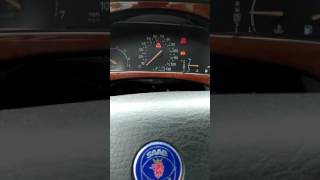
How to confirm: Using a Saab-specific scan tool (like a Tech 2), verify that the individual wheel speed sensors are reporting speed to the ABS module. Then, check if the engine ECU is receiving a vehicle speed signal. If the ABS module sees wheel speed but the ECU shows 0 mph, the ABS module is faulty. A simpler test is to unplug the ABS module with the key off; if communication with the ECU is then restored, the ABS module has failed internally. 🎬 Watch: How a faulty ABS module causes communication issues
Typical fix: The ABS module must be removed and sent to a specialist for rebuilding, or replaced with a known-good used or remanufactured unit. Rebuilding is often preferred as it corrects the original design flaw.
Est. part cost: $100-$300 - Wiring Harness or Connector Fault 🟡 Medium Probability Vibration and age can cause wires to chafe or connector pins to corrode, especially on the large connectors for the ABS module and ECU. The signal wire between the ABS module (pin 26) and the ECU (pin 64) is the primary point of interest.
How to confirm: Perform a continuity and resistance check on the wire that carries the speed signal between the ABS module and the ECU. While testing, wiggle the harness to see if the reading changes, which would indicate an intermittent break.
Typical fix: Repair the damaged section of wire or clean/replace the faulty connector.
Est. part cost: $5-$25 - Faulty Wheel Speed Sensor ⚪ Low Probability → Shop ABS Wheel Speed Sensor While the sensors themselves can fail, this will typically also log a specific ABS code related to that sensor (e.g., C1233). It's a less common cause for an isolated P0502 code, but a failing sensor can sometimes cause communication issues.
How to confirm: Use a scan tool to monitor the live data from all four wheel speed sensors while driving. A sensor that reads 0 mph or has an erratic signal is faulty.
Typical fix: Replace the faulty wheel speed sensor and inspect the tone ring for damage or debris. Tapping the hub with a mallet has been reported to temporarily resolve issues caused by dust buildup.
Est. part cost: $40-$100
Rare But Worth Checking
- Faulty Engine Control Unit (ECU/Trionic): It is very rare for the ECU's input circuit to fail, but possible. This should only be considered after the ABS module and wiring have been definitively ruled out as the cause.
Diagnosis Steps
- Connect an OBD-II scanner and confirm P0502 is present. 🎬 Watch: A quick overview of diagnosing code P0502 Use a more advanced scanner (like a Tech 2) to check for any other codes, especially in the ABS/TCS module.
- Using a capable scan tool, access the live data for the ABS module. Monitor the speed readings from all four wheel speed sensors while driving to ensure they are all working and reading consistently.
- Access the live data for the Engine Control Module (ECU). Check the 'Vehicle Speed' parameter. If the wheel sensors are reading correctly in the ABS module but the ECU shows 0 mph, the problem is likely the ABS module or the wiring between it and the ECU.
- Visually inspect the wiring harness and connectors at the ABS module and the ECU for any signs of damage, corrosion, or loose connections.
- If wiring looks good, perform a continuity test on the signal wire between the ABS module connector (pin 26) and the ECU connector (pin 64) to rule out an open circuit. Wiggle the harness during the test to check for intermittent faults.
- If the wiring is confirmed to be good and the ECU is not receiving a speed signal, the ABS module is the most likely culprit and should be replaced or sent for rebuild.
Parts You'll Likely Need
- ABS Control Module
(OEM #Bosch Part Numbers: 0273004223, 0273004352, 0273004451, 0273004578)— This is the most frequent point of failure for this code on this vehicle. The internal circuit that sends the speed signal to the ECU fails due to cracked solder joints.
Trusted brands: Bosch (OEM), Cardone (Remanufactured), XeMODeX (Repair Service), Module Master (Repair Service)
OEM price range: $500-$800 (New, if available)
Aftermarket price range: $120-$350 (Remanufactured or Repair Service)
Related Codes That Often Appear With This One
- ABS/TCS Codes — Since the P0502 code is related to a signal from the ABS module, it's common to see other codes stored in the ABS system, such as for wheel speed sensors or internal module faults (e.g., U0121 - Lost Communication with ABS Module).
Platform-Specific Known Issues
- The Bosch 5.3 and 5.4 ABS modules used on these cars are known to develop internal solder joint failures, leading to a loss of communication or signal output, which directly causes the P0502 code.
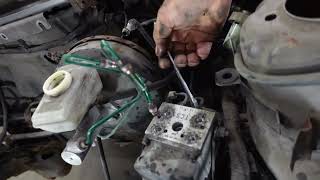
- The electronic portion of the ABS module can be removed from the hydraulic block in the car, allowing it to be sent for repair without needing to open the brake hydraulic system 🎬 See how to remove the ABS control unit yourself or bleed the brakes upon reinstallation.
Mechanic-Grade Diagnostic Values
- Wheel Speed Sensor Resistance — expected: 800 - 2,500 Ohms. Readings should be consistent between left and right side sensors.. Failure: A reading of OL (open circuit), near 0 Ohms (short circuit), or a value significantly different from the sensor on the opposite side of the axle.
- ABS Module Speed Signal Output Voltage — expected: A square wave alternating between approx. 0.5V and 5V as the wheel is turned.. Failure: A constant voltage near 0V on the signal wire (pin 26) while wheel speed is detected by the ABS module via scan tool.
Scan Tool Commands That Help
- Saab Tech 2 or equivalent: Live Data > ECU > 'Vehicle Speed (Wire from ABS)' — Use this to confirm if the Engine Control Unit is receiving a speed signal. If wheel speeds are showing correctly in the ABS module live data, but this parameter reads 0, it confirms the signal is lost between the ABS module and the ECU, or the ABS module is not sending it.
Wiring & Ground Locations
- G2 — In the engine bay, on the side panel in front of the left-hand wheel housing.. This is the main grounding point for the ABS control module (component 547). A poor connection here can cause low voltage, signal loss, and communication issues, directly leading to a P0502 'Circuit Low Input' code.
- ABS Connector Pin 26 — The main electrical connector on the ABS control module.. This pin is the specific output for the vehicle speed signal that is sent to the ECU. Testing for voltage or signal at this pin is a key diagnostic step.
- ECU Connector Pin 64 — The main electrical connector on the Trionic Engine Control Unit.. This pin is the specific input where the ECU receives the vehicle speed signal from the ABS module. A continuity check between this pin and ABS pin 26 verifies the integrity of the signal wire.
Real Owner Repair Stories
- YouTube user 'The Sobster' (HARLEM MACHINES) (2000 Saab 9-3 Coupe) — ABS, Brake, and TCS warning lights were all on. Check Engine Light with code P0502.
❌ Tried (didn't work) Replaced the two front wheel speed sensors., Checked wiring connections visually.
✅ What actually fixed it Replaced the ABS control module with a used unit purchased from eBay for $100. This immediately cleared all the warning lights and fixed the code. - saabclub.fi forum user 'Pasi_He' (Saab 9-3 (assumed 1998-2003)) — P0502 code, inoperative speedometer, ABS light on.
✅ What actually fixed it Diagnosed as a broken solder joint inside the ABS module. The user ordered a used ABS pump assembly and swapped only the electronic control unit onto their existing hydraulic block, which resolved the issue without requiring brake bleeding.
OEM Part Supersession History
Various Bosch 5.3 / 5.4→N/A (Repair or Used)— The Bosch 5.3 and 5.4 modules used in this generation are prone to internal solder joint failure. There is no single supersession; instead, a wide range of part numbers (e.g., 0273004223, 0273004451, 0273004578) were used and are considered interchangeable for repair/replacement purposes.
Heads up: While many modules are interchangeable or repairable, it is critical to match the module type (Bosch 5.3/5.4). Modules from the next generation Saab 9-3 (2003+) or different vehicle makes are not compatible.
Model Year Variations Within This Range
- 1998-2003: The engine management system changed from Trionic 5 (T5) to Trionic 7 (T7) around the 2000 model year. However, this did not change the fundamental cause of P0502. Both T5 and T7 systems rely on the Bosch ABS module for the vehicle speed signal, and the failure of this module is common across the entire generation. Some very early cars (e.g. 1999) may have a Bosch 5.4 module instead of a 5.3, but the failure mode is identical.
Diagnostic Flowchart
Other Known Issues on This Vehicle
Issues unrelated to this code that are worth knowing about as an owner of this generation:
- Saab Information Display (SID) Pixel Failure 🟡 Low — Extremely common on all 1998-2003 9-3 and 1998-2004 9-5 models. The ribbon cable connecting the LCD to the main board delaminates over time.
- Engine Oil Sludge (B205/B235 Engines) 🔴 High — A significant issue on 2000-2003 models with the B205 engine. Caused by an inadequate PCV (crankcase ventilation) system design, leading to oil breakdown and sludge formation that can clog the oil pickup screen and cause catastrophic engine failure. (Ref: Saab issued an updated PCV kit (Part #55561200) and an 8-year engine warranty to address this.)
- Bulkhead/Firewall Cracking 🔴 High — Common on manual transmission cars. The area where the steering rack and clutch master cylinder mount to the firewall can develop cracks over time, leading to a clicking noise during steering, vague steering feel, and eventually clutch failure.
- Convertible Top Malfunctions 🟠 Medium — Fairly common. Issues can range from hydraulic fluid leaks from the pump or rams, to sensor failures, to the 'tonneau cover not locked' message preventing operation.
- Direct Ignition Cassette (DIC) Failure 🟠 Medium — The DIC is a consumable item with a finite lifespan, typically 60,000-100,000 miles. Failure can cause misfires, rough running, and a no-start condition. It's recommended to use only genuine SEM or Saab-branded replacements.
Used vs. New Parts: Buying Guide for This Vehicle
When a used part is the smart pick: A used ABS module is a cost-effective and viable option for a DIY repair, often costing around $100. Since these modules are not typically VIN-locked on this specific vehicle generation, a direct swap is usually successful.
Donor-vehicle mileage cap: roughly under 150000 miles for the part to have meaningful remaining life.
What to inspect on the donor part:
- Verify the part number on the used module is on the known compatible list for Bosch 5.3/5.4 units.
- Purchase from a reputable auto recycler or eBay seller with a warranty (30-90 days) and good reviews.
- Visually inspect the connector pins for corrosion or damage before purchasing.
- The failure is age/thermal cycle related, not mileage. A used part carries the same inherent risk of future failure as the original.
OEM-only on this vehicle (don't cheap out):
- No parts for this specific repair are 'OEM-only' as new OEM modules are generally unavailable. The choice is between used OEM or rebuilding the original OEM module.
Aftermarket brands forum-validated for this vehicle:
- Module Master (Rebuild Service)
- BBA Reman (Rebuild Service)
- XeMODeX (Rebuild Service)
Brands owners have reported issues with on this vehicle:
- Unknown sellers of used modules with no warranty or return policy.
Real Owner Stories
Aggregated from forums and TSBs cited above. Mileages and costs reflect what owners reported in those sources.
2000 Saab 9-3
Symptoms: The ABS, Brake, and TCS warning lights were all illuminated on the dashboard.
What fixed it: Replacing the ABS module with a used unit purchased from eBay resolved the P0502 code and the warning lights.
Cost: $100-$100
Source hint: YouTube: A video titled 'Code p0502 2000 Saab 93' by user 'The Sobster'
1998-2003 Saab 9-3
Symptoms: Check Engine Light was on with code P0502, accompanied by ABS and TCS warning lights.
What fixed it: The owner removed the electronic portion of the ABS module and sent it to a specialist rebuilder (like BBA Reman or Module Master) for repair. Reinstalling the rebuilt module cleared the codes.
Cost: $100-$300
Source hint: saabnet.com: Multiple threads
1998-2003 Saab 9-3
Symptoms: Inoperative speedometer and an illuminated ABS light.
What fixed it: The problem was diagnosed as an electrical fault in the ABS module. The suggested fix was to either repair the module or check the signal wire from pin 26 on the ABS unit to pin 64 on the ECU for continuity.
Source hint: saabclub.fi: A Finnish Saab forum thread titled 'P0502'
Related OBD-II Codes
Frequently Asked Questions
Do I have to bleed my brakes after replacing the ABS module to fix a P0502 code on my 9-3?
Why are my ABS and TCS lights on along with the Check Engine Light for P0502?
Should I buy a used ABS module or have my original one rebuilt?
My speedometer works, but cruise control is dead and I have a P0502 code. Is it still the ABS module?
My manual transmission 9-3 feels sluggish and the 'SHIFT-UP' light doesn't work. Is this related to the P0502 code?
Is there a quick way to confirm my ABS module has failed?
Helpful Videos


The information in this article is provided for general reference and educational purposes only. Vehicle specifications, procedures, and part compatibility can vary by production date, trim level, and region. Always consult your vehicle's factory service manual and verify part numbers before purchasing or performing repairs. Safety-critical components such as airbags, seat belts, and braking systems should be installed by a qualified professional.
- Saab 9-3:
- 🧭 Diagnostic Flowchart
- 🎬 Helpful Videos
- What's Unique About the 1998-2003 Saab 9-3
- Symptoms You May Notice
- Most Likely Causes
- Rare But Worth Checking
- Diagnosis Steps
- Parts You'll Likely Need
- Related Codes That Often Appear With This One
- Platform-Specific Known Issues
- Mechanic-Grade Diagnostic Values
- Scan Tool Commands That Help
- Wiring & Ground Locations
- Real Owner Repair Stories
- OEM Part Supersession History
- Model Year Variations Within This Range
- Other Known Issues on This Vehicle
- Used vs. New Parts: Buying Guide for This Vehicle
- Real Owner Stories
- 2000 Saab 9-3
- 1998-2003 Saab 9-3
- 1998-2003 Saab 9-3
- Related OBD-II Codes
- Frequently Asked Questions
- 🎟️ Get 5% Off