

P0502 on 2006-2012 Toyota RAV4: Causes and Fixes for Vehicle Speed Sensor Fault
On a 2006-2012 RAV4, code P0502 is almost always caused by a faulty wheel speed sensor or its wiring, not a sensor on the transmission. The fix is to scan the ABS module for a specific 'C' code to identify the failed sensor and replace it. Expect to pay $40-$90 for an aftermarket sensor and $250-$400 for an OEM part.
- P0502 on a 2006-2012 RAV4 almost always means you have a bad wheel speed sensor, not a transmission sensor.
- You must use a scanner that can read ABS codes to find out which of the four wheel sensors is at fault. This is the most important diagnostic step.
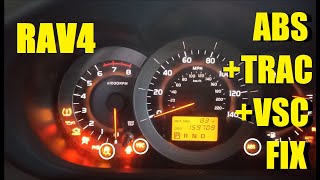
- Symptoms include an inoperative speedometer and multiple warning lights (Check Engine, ABS, VSC, TRAC).
- The rear sensor wires run inside the vehicle, requiring removal of interior trim for replacement.
- In rust-prone areas, sensors can be difficult to remove without breaking.
What's Unique About the 2006-2012 Toyota RAV4
Unlike older vehicles that use a single speed sensor on the transmission, the 2006-2012 RAV4 (XA30 platform) relies on its four-wheel speed sensors for the speedometer, cruise control, and other systems. The P0502 code is a 'secondary' fault logged by the engine computer; the 'primary' fault is almost always stored in the ABS computer as a more specific 'C' code (e.g., C1225 for the front left sensor). Diagnosing this code effectively requires a scanner that can read ABS codes to pinpoint which wheel sensor has the issue. Ignoring the ABS codes and replacing the transmission speed sensor is a common misdiagnosis.
Symptoms You May Notice
- Check Engine Light is on
- ABS, VSC, and/or TRAC warning lights are on
- Speedometer reads 0 mph or behaves erratically.
- Automatic transmission shifts harshly or at the wrong times.
- Cruise control will not engage.
- AWD system may be disabled.
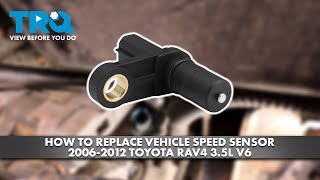
- Replacing the Vehicle Speed Sensor (VSS) on the transmission. On this RAV4, the transmission VSS primarily controls shifting and is not usually the cause of a P0502 code related to the speedometer. 🎬 See how to replace the transmission speed sensor
Most Likely Causes
- Faulty Wheel Speed Sensor 🔴 High Probability → Shop ABS Wheel Speed Sensor These sensors are exposed to road debris, water, and heat at the wheel hubs, leading to internal failure over time. Forum users on BobIsTheOilGuy note that the sensor wires on Toyotas of this era can become brittle and fail internally from simple flexing, even if they look fine externally.
How to confirm: Scan the ABS control module for codes. A code like C1225 (Front Left), C1226 (Front Right), etc., will point to a specific wheel sensor. You can also use a scanner's live data to watch all four wheel speeds while driving; the one that reads zero or erratically is the culprit. Resistance testing with a multimeter can also confirm an open or shorted sensor.
Typical fix: Replace the failed wheel speed sensor. The sensors are specific to each corner of the vehicle (Front Left, Front Right, etc.) and sometimes differ between FWD and AWD models.
Est. part cost: $40-$90 aftermarket, $250-$400 OEM - Damaged Wheel Speed Sensor Wiring or Connector 🟡 Medium Probability → Shop ABS Wheel Speed Sensor The wiring harness runs down to the wheels and can be damaged by road debris, improper servicing, corrosion from road salt, or animal chewing. The rear sensor harnesses, in particular, pass through the vehicle floor into the cabin, and the grommet area can be a point of water intrusion or wire chafing.
How to confirm: Visually inspect the wiring harness from the sensor to where it enters the vehicle body for any breaks, chafing, or corrosion in the connector pins. Perform a continuity test on the wires with a multimeter from the sensor connector to the ABS module connector.
Typical fix: Repair the broken section of wire or replace the connector pigtail. In severe cases, the entire sensor and wire assembly (harness) may need to be replaced.
Est. part cost: $10-$30 for repair materials, or the cost of a new sensor assembly. - Damaged or Debris-Covered Tone Ring ⚪ Low Probability The tone ring, which the sensor reads, is part of the wheel hub/bearing assembly. In areas with road salt, rust buildup or packed-in debris can obstruct the sensor's reading or damage the ring.
How to confirm: After removing the wheel speed sensor, visually inspect the tone ring through the sensor mounting hole using a light. Check for heavy rust scale, missing teeth, or packed-in dirt or mud.
Typical fix: Clean the tone ring with a brush and brake cleaner. If the ring is physically damaged, cracked, or broken, the entire wheel hub and bearing assembly must be replaced.
Est. part cost: $0 for cleaning, $150-$300 for a new wheel hub assembly.
Rare But Worth Checking
- Faulty Instrument Cluster: → Shop Instrument Cluster In some Toyota systems, the instrument cluster is involved in processing the speed signal before sending it to the ECM. A failure here is uncommon but can cause a P0502 code. Diagnosis would involve checking if other cluster functions are erratic and verifying signal input/output at the cluster.
- Faulty ABS Control Module or ECM: → Shop ABS Control Module A failure of the ABS module or the main engine computer (ECM) is very rare but can be the cause if all sensors and wiring have been proven to be good. This is usually suspected only when multiple, seemingly unrelated sensor codes appear simultaneously or if communication with the module is lost.
Diagnosis Steps
- Connect an OBD-II scanner capable of reading ABS codes.
- Scan for codes in both the Engine (ECM) and ABS control modules.
- If a 'C' code (e.g., C1225) is present in the ABS module, this identifies the specific wheel sensor that is failing. Proceed to inspect that sensor and its wiring.
- If no 'C' codes are present, use the scanner's live data function to monitor the speed of all four wheels while driving. The wheel that reads 0 mph or has an erratic signal is the source of the problem.
- Raise and safely support the vehicle. Remove the wheel corresponding to the faulty sensor.
- Visually inspect the sensor and its wiring harness for any obvious damage, corrosion, or loose connections. Pay special attention to the harness routing and any points where it might rub or get pinched.
- If the visual inspection is inconclusive, disconnect the sensor and test its internal resistance with a multimeter. Compare the reading to the manufacturer's specification. An open circuit (infinite resistance) or a short (zero resistance) indicates a bad sensor.
- If the sensor tests good, test the wiring harness for continuity and for shorts to ground between the sensor connector and the ABS module.
- Inspect the tone ring for rust, debris, or damage through the sensor mounting hole.
- After repairing the faulty component, clear all codes from the ECM and ABS module and perform a test drive to confirm the fix.
Parts You'll Likely Need
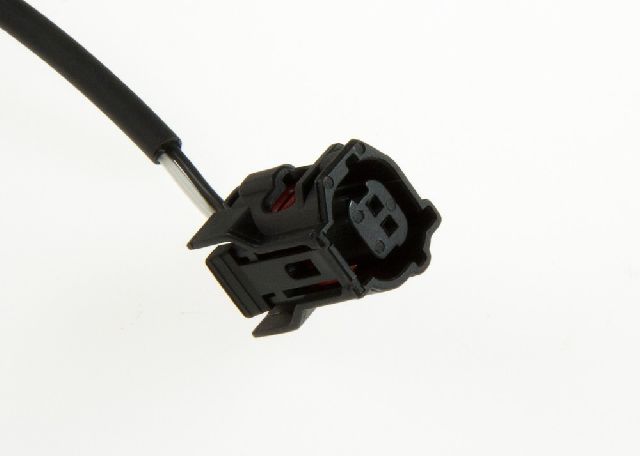
- ABS Wheel Speed Sensor
(OEM #89543-0R010 (Front Left, replaces 89543-42050), 89542-0R010 (Front Right), 89546-42040 (Rear Left), 89545-42040 (Rear Right))— This is the most common failure point for a P0502 code on this vehicle, as the ECM relies on these sensors for the vehicle speed signal.
Trusted brands: Denso, NTK, Standard Motor Products (SMP), Delphi, SKP
OEM price range: $250-$400
Aftermarket price range: $40-$120
Related Codes That Often Appear With This One
- C1225-C1228 — These are ABS codes that correspond to a fault in the circuit for the front-left, front-right, rear-left, or rear-right wheel speed sensor, respectively. They directly identify the root cause of the P0502.
- P0500 — This is a more generic 'Vehicle Speed Sensor Malfunction' code. P0502 is a more specific version indicating a low input signal, and they often appear for the same root causes.
Platform-Specific Known Issues
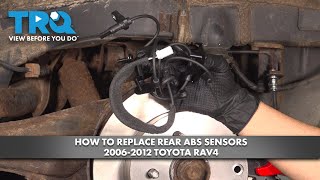
- Rear Sensor Wire Routing: The rear wheel speed sensor wires are routed through the cabin floor behind the rear seats. To replace a rear sensor, interior trim panels must be removed to access the final connector, which can add time to the repair. 🎬 Watch: Step-by-step rear ABS sensor replacement guide
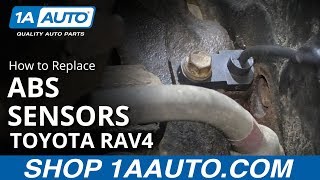
- Sensor Seizure: In regions with rust, the 10mm bolt holding the sensor can seize, and the sensor body itself can get stuck in the steering knuckle. Using rust penetrant generously before attempting removal is highly recommended. Sometimes the sensor breaks during removal, requiring careful extraction of the remaining plastic piece.
Mechanic-Grade Diagnostic Values
- Wheel Speed Sensor Internal Resistance — expected: 800 - 2,500 Ω. Failure: A reading of infinite resistance (open circuit) or near-zero resistance (short circuit).
- Wheel Speed Sensor AC Voltage Output (Passive Sensor) — expected: > 0.1V AC (100mV). Failure: No voltage produced when spinning the wheel hub by hand.
- ABS Module Power Supply at Connector A19 — expected: 10 - 14 V. Failure: Voltage significantly lower than 10V or no voltage with ignition ON.
- ABS Module Ground at Connector A19 — expected: < 1.0 Ω. Failure: Resistance reading higher than 1.0 Ω, indicating a poor ground connection.
- CAN Bus Resistance at ABS Module Connector A19 — expected: 54 - 69 Ω. Failure: Resistance outside this range indicates a problem on the CAN communication network.
Hidden / Shadow Codes Worth Checking
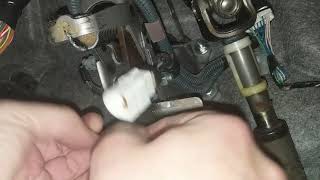
- C1223, C1241, C1249: A combination of codes often seen together. C1223 is a generic ABS malfunction, C1241 indicates low/high voltage, and C1249 points to an open circuit in the stop lamp switch. This combination often indicates a faulty brake light switch, not a wheel speed sensor. (see via OBD-II scanner with the ability to read Chassis ('C') codes from the ABS control module.)
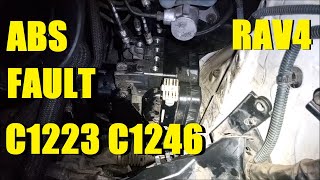
- C1223, C1246: A combination pointing to an ABS system malfunction (C1223) and a fault with the Master Cylinder Pressure Sensor (C1246). This strongly suggests a failure within the ABS actuator/module assembly itself. (see via OBD-II scanner with the ability to read Chassis ('C') codes from the ABS control module.)
Scan Tool Commands That Help
- Toyota Techstream or equivalent bidirectional scanner: Zero Point Calibration — This is mandatory after replacing the ABS/VSC control module. The procedure calibrates the steering angle sensor and yaw rate sensor so the Vehicle Stability Control system can function correctly. Failure to perform this will leave the VSC/TRAC lights on.
- Toyota Techstream or equivalent bidirectional scanner: ABS Brake Bleeding / Air Bleeding Utility — This function is required after replacing the ABS module or if air has entered the hydraulic unit. The command cycles the internal pump and solenoids to purge trapped air from the actuator, which cannot be removed with a traditional brake bleed.
Wiring & Ground Locations
- Skid Control ECU (ABS Module) — In the engine compartment, typically mounted on the passenger side against the firewall, as part of the hydraulic actuator assembly.. This is the module that receives signals from all four wheel speed sensors and sends the calculated vehicle speed to the ECM. P0502 is triggered when the ECM's input from this module is faulty.
- Connector A19 — The main electrical connector on the Skid Control ECU/ABS Module.. This is the primary test point for power (Pin 46), ground (Pins 1, 32), and CAN communication (Pins 11, 25) for the entire ABS system.
- Rear Wheel Speed Sensor Connector — Inside the vehicle's rear cargo area, behind the plastic trim panels near the floor.. Unlike front sensors whose connectors are in the wheel well, diagnosing or replacing a rear sensor requires removing interior trim to access the final connection point.
Real Owner Repair Stories
- YouTube - 'Merry Frankster' (Toyota RAV4 (model year not specified, but applies to generation)) — ABS, TRAC, and VSC warning lights came on simultaneously. Scan tool revealed codes C1223, C1241, and C1249.
❌ Tried (didn't work) The owner did not report trying other fixes first; they diagnosed based on the specific C1249 code.
✅ What actually fixed it Replacing the stop lamp switch (brake light switch) located on the brake pedal. The C1249 code, 'Stop Lamp Switch Circuit Open', was the key to the diagnosis. - YouTube - 'Merry Frankster' (Toyota RAV4 (model year not specified, but applies to generation)) — ABS fault causing all four wheels to lock up or drag heavily. Scan tool showed codes C1223 (ABS Fault) and C1246 (Master Cylinder Pressure Sensor).
❌ Tried (didn't work) The diagnosis pointed directly to the ABS module based on live data showing the pressure sensor voltage was stuck high even with the brake pedal released.
✅ What actually fixed it Replacing the entire ABS Control Module/Actuator assembly. After replacement and bleeding, the live data for the pressure sensor returned to normal.
OEM Part Supersession History
89543-42050→89543-0R010, then 89543-0R020— Standard part revision and updates by the manufacturer.N/A→N/A— N/A
Heads up: A front wheel speed sensor (e.g., 89543-42050) and a rear wheel speed sensor (e.g., 89545-42040) are not interchangeable, even if they physically fit. Installing the wrong sensor will provide incorrect RPM data to the ABS module, potentially causing dangerous and unpredictable ABS activation.
Model Year Variations Within This Range
- 2009-2012: For the 2009 model year, Toyota made Vehicle Stability Control (VSC) and Traction Control (TRC) standard equipment across all RAV4 models. While this doesn't change the diagnostic process for P0502, it guarantees that models from this year forward have the integrated ABS/VSC/TRAC system, making accurate wheel speed sensor data even more critical.
Diagnostic Flowchart
Other Known Issues on This Vehicle
Issues unrelated to this code that are worth knowing about as an owner of this generation:
- Excessive Oil Consumption (2.4L 2AZ-FE Engine) 🔴 High — Very common on 2006-2008 models with the 2.4L engine. Caused by a faulty piston and ring design. (Ref: T-SB-0094-11 outlines the repair, which involves replacing pistons and rings. Toyota also had a warranty enhancement program for this issue.)
- Steering Intermediate Shaft Clunk 🟠 Medium — Common on 2006-2008 models. A clunking or popping noise is heard and felt in the steering wheel at low speeds, caused by wear in the intermediate shaft's U-joint. (Ref: T-SB-0318-08 and T-SB-0033-11 describe the issue and the fix, which is to replace the shaft with an updated part.)
- Rear Differential Coupling Growl (4WD Models) 🟠 Medium — Affects 2006-2012 4WD models, causing a growling noise from the rear due to contamination of the front bearing in the coupling. (Ref: T-SB-0080-13 Rev addresses this with a repair procedure. Toyota also offered a warranty enhancement (POL15-04).)
- Water Leaks into Cabin 🟡 Low — Some owners report water leaks into the driver or passenger footwells, often traced back to clogged sunroof drains, cowl drains, or improperly sealed body seams.
- VVT-i Oil Line Rupture (3.5L 2GR-FE V6) 🔴 High — Early V6 models (2007-2008) used a rubber section in the VVT-i oil supply line that could rupture, causing rapid and catastrophic oil loss. Most have been replaced under a recall. (Ref: A recall was issued to replace the rubber hose with an all-metal line.)
Used vs. New Parts: Buying Guide for This Vehicle
When a used part is the smart pick: For the expensive ABS Control Module/Actuator, a used OEM part from a reputable salvage yard is a practical alternative to a new unit, provided the part number is an exact match. For the wheel speed sensors themselves, new aftermarket parts are generally a better value than used ones.
Donor-vehicle mileage cap: roughly under 100000 miles for the part to have meaningful remaining life.
What to inspect on the donor part:
- For a used ABS module, inspect the electrical connector for any signs of green corrosion, moisture, or bent pins.
- Verify the part number on the used module is an EXACT match to your original part.
- Ensure the donor vehicle was not a flood or major front-end collision vehicle.
OEM-only on this vehicle (don't cheap out):
- ABS Control Module/Actuator - While a used OEM part is acceptable, an aftermarket module is not recommended due to the complexity of part number matching and system calibration.
Aftermarket brands forum-validated for this vehicle:
- Denso (often the OEM supplier)
- NTK
- Beck/Arnley
- Standard Motor Products (SMP)
- A-Premium
Brands owners have reported issues with on this vehicle:
- Unbranded, low-cost sensors from online marketplaces like eBay or Amazon are a gamble and may have a short service life or poor signal quality.
Real Owner Stories
Aggregated from forums and TSBs cited above. Mileages and costs reflect what owners reported in those sources.
2008 Toyota RAV4
Symptoms: Intermittent ABS and traction control lights appearing on the dashboard.
What fixed it: Replacement of the wheel speed sensor; the failure was attributed to the sensor cables failing internally from flexing over time.
Source hint: BobIsTheOilGuy.com - Thread 'RAV4 Wheel Speed Sensor'
Related OBD-II Codes
Frequently Asked Questions
Why is my 2006-2012 RAV4 speedometer reading 0 mph even though I am driving?
Can a bad wheel speed sensor on my RAV4 cause the AWD system to stop working?
I have a 2008 RAV4 with intermittent ABS lights; could it be the wiring even if it looks okay?
Is there a specific TSB for the growling noise in my 2012 4WD RAV4 rear end?
Why is my RAV4 automatic transmission shifting harshly after the Check Engine Light came on?
What should I check if the 10mm sensor bolt is seized on my RAV4 steering knuckle?
Helpful Videos
We Have This Part in Stock


The information in this article is provided for general reference and educational purposes only. Vehicle specifications, procedures, and part compatibility can vary by production date, trim level, and region. Always consult your vehicle's factory service manual and verify part numbers before purchasing or performing repairs. Safety-critical components such as airbags, seat belts, and braking systems should be installed by a qualified professional.
- Toyota RAV4:
- 🧭 Diagnostic Flowchart
- 🎬 Helpful Videos
- 🛍️ Shop This Part
- What's Unique About the 2006-2012 Toyota RAV4
- Symptoms You May Notice
- Most Likely Causes
- Rare But Worth Checking
- Diagnosis Steps
- Parts You'll Likely Need
- Related Codes That Often Appear With This One
- Platform-Specific Known Issues
- Mechanic-Grade Diagnostic Values
- Hidden / Shadow Codes Worth Checking
- Scan Tool Commands That Help
- Wiring & Ground Locations
- Real Owner Repair Stories
- OEM Part Supersession History
- Model Year Variations Within This Range
- Other Known Issues on This Vehicle
- Used vs. New Parts: Buying Guide for This Vehicle
- Real Owner Stories
- 2008 Toyota RAV4
- Related OBD-II Codes
- Frequently Asked Questions
- 🎟️ Get 5% Off