

P0506 on 2004-2012 Chevrolet Colorado: Low Idle Causes and Fixes
On a 2004-2012 Colorado, P0506 is almost always caused by a dirty electronic throttle body. Carbon buildup from the PCV system restricts airflow at idle, causing the RPM to drop below the target, often into the 500s. The fix is to clean the throttle body and perform an idle relearn procedure, which is a low-cost, high-success DIY job.
- P0506 on a 2004-2012 Colorado means the idle is too low, not that a specific part has failed.
- The most common cause by far is a dirty electronic throttle body restricting airflow, a known issue on this platform.
- The fix is a simple cleaning procedure that costs very little and can be done with basic tools (10mm socket, screwdriver) in about an hour.
- An idle relearn procedure (3 min on, 1 min off, 3 min on) MUST be performed after cleaning the throttle body for the fix to be effective.
- Do not replace any parts until you have first thoroughly cleaned the throttle body and replaced the gasket.
What's Unique About the 2004-2012 Chevrolet Colorado
The first-generation Chevrolet Colorado (2004-2012) and its platform mates (GMC Canyon, Hummer H3) rely on an electronic throttle body for idle control across all engine options (I4, I5, and V8). These systems are known to accumulate carbon and oil deposits from the PCV (Positive Crankcase Ventilation) system over time. This buildup is the number one cause of P0506 on this platform, as it physically restricts the small amount of air needed to maintain a stable idle. Unlike some other vehicles that might have complex vacuum leak issues or faulty sensors as a primary cause, the fix for the Colorado is very frequently a simple, mechanical cleaning.
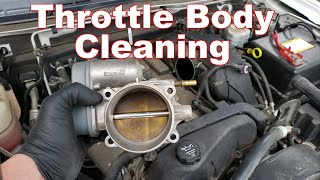
🎬 Watch this step-by-step guide on cleaning the throttle body.Symptoms You May Notice
- Check Engine Light is on
- Engine idle is lower than normal (e.g., dipping to ~500 RPM).
- Rough or unstable idle, sometimes described as the engine 'trembling'.
- Engine stalls when coming to a stop or while idling, especially with A/C on.
- Slight hesitation or stumble when accelerating from a stop.
- In some cases, no noticeable symptoms other than the Check Engine Light.
- As noted in NHTSA ODI #10822698, a service advisor may be able to read the P0506 error code even if the Check Engine Light is not currently illuminated.
- Replacing the Mass Airflow (MAF) sensor. A dirty MAF sensor can cause performance issues, but it is not a common cause for P0506 on its own.
- Replacing spark plugs and coils. While necessary for maintenance, worn plugs or coils typically cause a misfire code (P030x) and a more noticeable engine shake, not just a low idle.
- Looking for a separate Idle Air Control (IAC) Valve. This vehicle does not have one; the function is integrated into the electronic throttle body.
Most Likely Causes
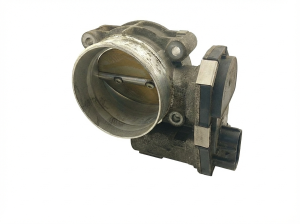
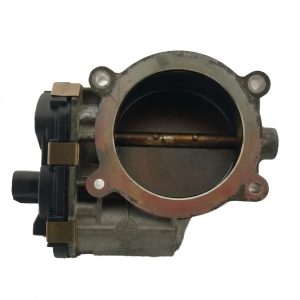
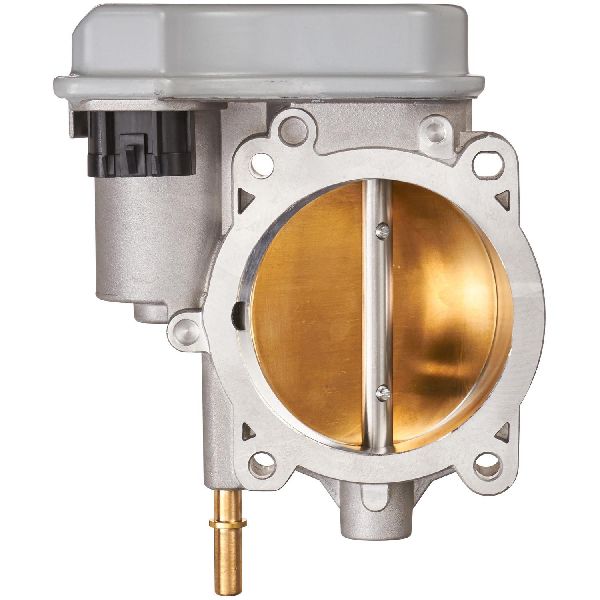
- Dirty Throttle Body 🔴 High Probability → Shop Fuel Injection Throttle Body The PCV system routes crankcase vapors containing oil and fuel residue into the intake, right before the throttle body. Over many miles, these deposits bake onto the throttle plate and bore, restricting the tiny air gap needed for idle. Even a small amount of buildup can be enough to trigger the code.
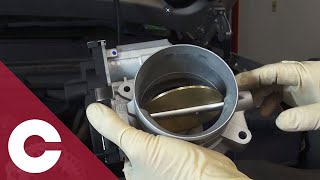
How to confirm: Remove the air intake tube from the throttle body. Visually inspect the throttle plate and the inside of the throttle body bore for a thick, black layer of carbon buildup, especially around the edges where the plate seats. The plate may also feel sticky when moved by hand (with the engine off).
Typical fix: Remove the throttle body (four 10mm bolts) from the vehicle for a thorough cleaning. Use a dedicated throttle body cleaner and a soft brush or microfiber cloth to remove all deposits. Reinstall with a new gasket if the old one is flattened or damaged. Perform a throttle body idle relearn procedure.
Est. part cost: $10-$25
Rare But Worth Checking
- Vacuum Leak: While less common than a dirty throttle body for this specific code (which causes low idle, whereas vacuum leaks often cause high idle), a significant, unmetered air leak from a cracked hose (like the PCV hose) or bad intake manifold gasket can disrupt the air-fuel mixture and cause various idle problems. A smoke test is the most effective way to find a vacuum leak.
- Failing Electronic Throttle Body: → Shop Fuel Injection Throttle Body In rare cases, the electronic motor or position sensor within the throttle body assembly can fail. This usually happens at higher mileage and would typically be accompanied by other throttle-related codes (like P2119 or P2135). If a thorough cleaning and idle relearn doesn't resolve the issue, and there are no vacuum leaks, the unit itself may be faulty. Replacement part numbers include 12568580.
Diagnosis Steps
- Confirm the code P0506 is present using an OBD-II scanner.
- Check for any other accompanying codes. A GM technical document notes that P0105 and P0106 can sometimes appear with P0506, also pointing to a dirty throttle body. Address those first if they seem unrelated.
- Turn the engine off. Remove the plastic engine cover and the air intake ducting between the air filter box and the throttle body using a flat-blade screwdriver for the clamps.
- Visually inspect the inside of the throttle body and the edges of the throttle plate for black carbon buildup. This is the most likely cause.
- If significant buildup is found, the next step is to clean it. It is recommended to disconnect the battery's negative terminal first.
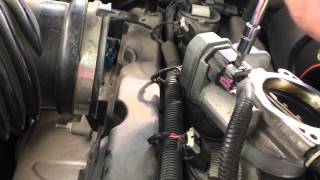
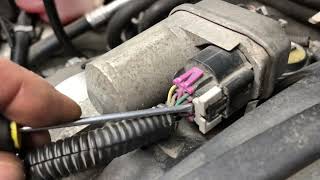
- Disconnect the throttle body's electrical connector (slide back the gray lock clip first) and any attached hoses (press the white clip on the plastic hose to release). 🎬 See how to safely disconnect the electrical and gas lines.
- Remove the four 10mm bolts holding the throttle body to the intake manifold.
- Thoroughly clean the throttle body bore and plate using throttle body cleaner and a soft, non-abrasive brush or rag. Do not use harsh abrasives like steel wool. A gray Scotch-Brite pad can be used gently for stubborn deposits. Ensure the area where the plate seats at idle is perfectly clean.
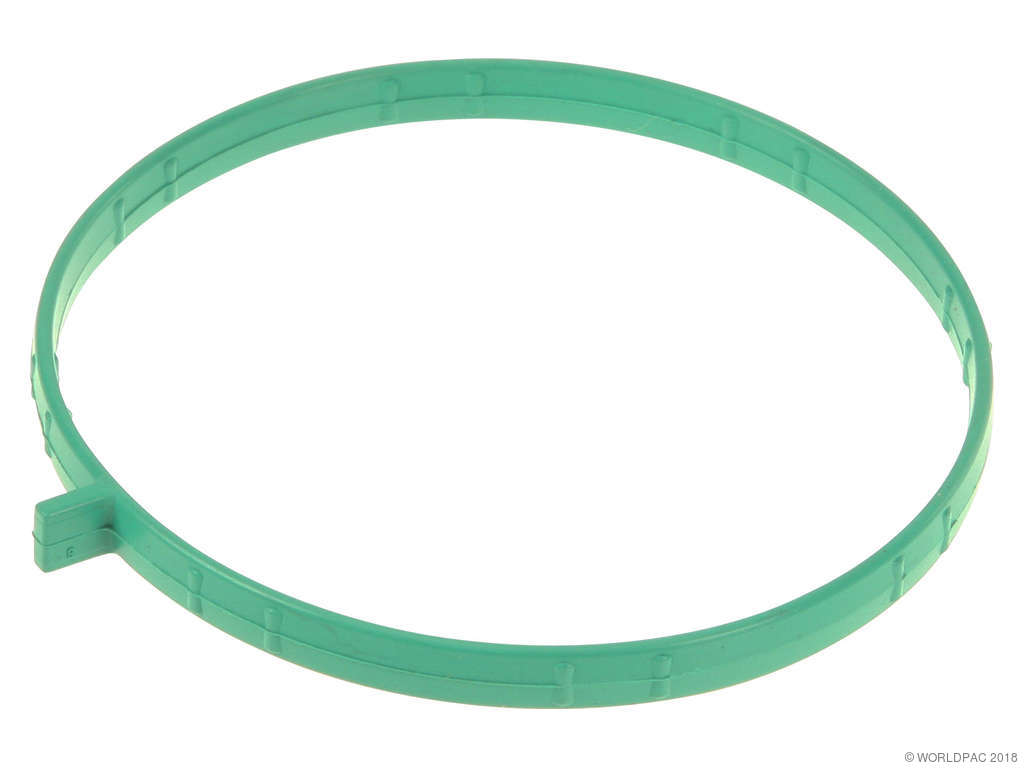
- Inspect the throttle body gasket/O-ring. Replace it if it appears cracked, stretched, or flattened to prevent a future vacuum leak.
- Reinstall the clean throttle body and reconnect all hoses, the electrical connector, and the intake ducting. Torque bolts evenly.
- Reconnect the battery's negative terminal.
- Perform the Idle Relearn Procedure: Start the engine and let it idle in Park with all accessories (A/C, radio) off for 3 minutes. Turn the engine off and wait for at least 60 seconds. Restart the engine and let it idle again in Park for another 3 minutes. The relearn is now complete. A short drive cycle with varied speeds may also be required for the PCM to fully adjust. 🎬 Watch a demonstration of the electronic throttle body relearn procedure.
- Clear the P0506 code with the scanner and take the vehicle for a test drive to confirm the fix.
Parts You'll Likely Need
- Throttle Body Cleaner — This is the required solvent to safely break down the carbon buildup without damaging the electronic components or special coatings on the throttle plate.
Trusted brands: CRC, ACDelco, Gumout
OEM price range: $10-$15
Aftermarket price range: $8-$12 - Throttle Body Gasket
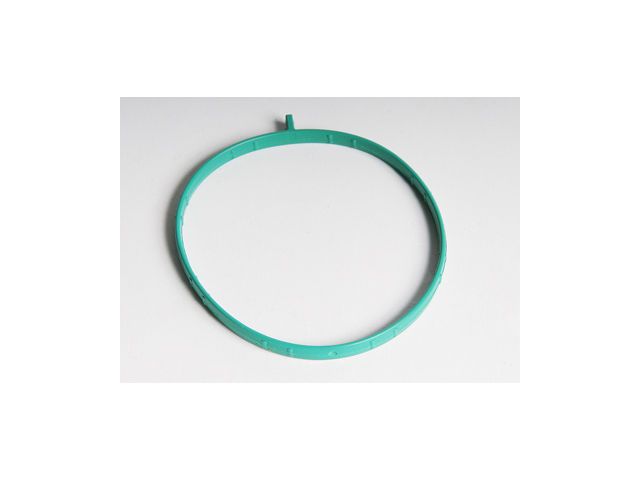
(OEM #GM 12575463 (For 2.8L, 2.9L, 3.5L, 3.7L engines))— It is best practice to replace the gasket when removing the throttle body to prevent a future vacuum leak. The original may be brittle or flattened. This part number fits the I4 and I5 engines.
Trusted brands: ACDelco, Fel-Pro (PN: 61337), Mahle
OEM price range: $5-$10
Aftermarket price range: $3-$7
Related Codes That Often Appear With This One
- P0105 (Manifold Absolute Pressure/Barometric Pressure Circuit)
- P0106 (Manifold Absolute Pressure/Barometric Pressure Circuit Range/Performance Problem)
- P0068 (MAP/MAF - Throttle Position Correlation)
- P0101 (Mass or Volume Air Flow Circuit Range/Performance)
- P0171 (System Too Lean)
Technical Service Bulletins (TSBs) & Recalls
- While no TSB is exclusively for P0506, a GM document for 2004-2007 models acknowledges that codes P0105, P0106, and/or P0506 can be caused by excessive carbon buildup in the throttle body and recommends cleaning as the corrective action.
- Manufacturer Bulletin #PIP5529B notes that a malfunction indicator lamp illumination can occur due to any combination of diagnostic trouble codes including P0506, P0106, P0101, and P0068.
- An earlier version of this technical guidance, Bulletin #PIP5529A, also identifies P0506 as part of a cluster of codes that may trigger the check engine light in relation to electrical system and engine performance monitoring.
Platform-Specific Known Issues
- V8 Engine (5.3L) Considerations: While the cause is the same (dirty throttle body), the location and access may differ slightly due to the larger engine. The 5.3L V8 shares its throttle body design with many other GM trucks and SUVs, making this a common issue across multiple platforms.
Mechanic-Grade Diagnostic Values
- Desired vs. Actual Idle RPM — expected: Actual RPM should be within 25 RPM of the Desired RPM shown on the scan tool. Target idle is typically around 650-750 RPM when warm.. Failure: If Actual RPM is consistently 100+ RPM below Desired RPM, it confirms the condition for setting P0506.
- Throttle Position Sensor (TPS) Voltage at Idle — expected: Approximately 0.4-0.8 volts with the throttle closed (Key On, Engine Off).. Failure: A reading of 0.0V or over 1.0V at closed throttle can indicate a faulty sensor or wiring issue, though this would more commonly set other codes like P0122 or P0123.
Scan Tool Commands That Help
- Tech 2: Idle Learn Reset / Reset Idle Learn — This function, found under 'Module Set Up' or 'Special Functions/TAC System', should be used after cleaning or replacing the throttle body to erase the old learned airflow values and force the ECM to relearn the new idle position. This is more reliable than the manual relearn and can prevent the code from returning.
Wiring & Ground Locations
- Throttle Body Connector — The 6-pin connector plugs directly into the electronic throttle body.. The connector provides power, ground, and signal wires for the throttle actuator motor and the two internal throttle position sensors. A loose crimp, corrosion, or damaged wire in this connector can cause erratic throttle behavior, leading to various throttle-related codes, including P0506.
- G103 & G104 — G103 is on the front of the passenger side cylinder head. G104 is on the rear of the driver's side cylinder head.. These are critical engine ground points. A poor connection at G104, in particular, has been noted to cause various throttle-related DTCs. The ECM and other modules rely on these grounds for accurate sensor readings.
- Splice Packs SP-105 & SP-106 — Under the hood. SP-105 is on the driver's side near the battery/ABS module. SP-106 is on the passenger side, behind the engine airbox.. These are notorious failure points on first-gen Colorados. They are unsealed ground splice packs that corrode internally, causing a wide range of bizarre electrical issues. While not a direct cause of P0506, a failing splice pack can create unstable voltages for modules that influence idle control, complicating diagnosis.
Real Owner Repair Stories
- ColoradoFans.com forum user (2005 Chevrolet Colorado, 3.5L I5) — P0506 code, rough idle, and stalling. Idle would drop to 400-500 RPM.
❌ Tried (didn't work) Thoroughly cleaned the throttle body twice., Performed the idle relearn procedure multiple times., Checked for vacuum leaks with a smoke machine (none found).
✅ What actually fixed it Replaced the entire electronic throttle body assembly with a new unit. The internal motor or sensor of the original throttle body was failing in a way that cleaning could not fix. After replacement and one final idle relearn, the idle held steady and the code did not return. - Reddit r/chevycolorado user (2005 Chevrolet Colorado, 5-cylinder, manual transmission) — Intermittent P0506 code.
❌ Tried (didn't work) Clearing the code with a scanner.
✅ What actually fixed it The user noted the code only appeared after shifting into second gear at too low of an RPM, causing the engine to bog down. This indicates the PCM correctly identified an idle speed lower than expected due to driver input with a manual transmission, not a mechanical fault. - NHTSA ODI #10822698 — An owner reported that while driving, the vehicle was taken to a service center where a technician was able to read an error code P0506 even though the check engine light was not illuminated at that moment.
OEM Part Supersession History
12568580→This part number remains the primary OEM number for many applications within this generation but may be sold under ACDelco number 217-2296.— Standard part lifecycle and branding.
Heads up: This throttle body is used across multiple GM platforms (Impala, Grand Prix, Hummer H3) with different engines (3.5L, 3.7L, 5.3L). Always verify fitment with the vehicle's VIN, as there can be subtle calibration differences even if the part physically fits.
Model Year Variations Within This Range
- 2007-2012: In 2007, the engines were updated. The 2.8L I4 became the 2.9L, and the 3.5L I5 became the 3.7L. While the P0506 cause (dirty throttle body) remains the same, part numbers for gaskets or the throttle body itself may differ. The 5.3L V8 was also introduced in 2009. Always verify parts for your specific model year and engine.
- 2008-2012: Certain models in this range were covered by a Special Coverage Adjustment (GM Bulletin No. 11273) for the throttle position sensor (TPS) for 10 years/120,000 miles. While this coverage is likely expired for most owners now, it confirms GM's acknowledgement of throttle-related electronic issues in these later model years.
Diagnostic Flowchart
Used vs. New Parts: Buying Guide for This Vehicle
When a used part is the smart pick: A used throttle body from a junkyard is a risky choice for this repair. Because the failure mode is often electronic or wear-related after a thorough cleaning fails, a used part may have the same issue or fail shortly after installation. Given the relatively low cost of a new, reliable aftermarket unit, a used part is not recommended.
Donor-vehicle mileage cap: roughly under 60000 miles for the part to have meaningful remaining life.
What to inspect on the donor part:
- Look for a vehicle with a documented low mileage.
- Inspect the connector pins for any signs of corrosion or damage.
- Avoid parts from vehicles that show signs of a major front-end collision or engine fire.
Aftermarket brands forum-validated for this vehicle:
- ACDelco (OEM)
- Standard Motor Products (SMP)
- Dorman
- SKP
Brands owners have reported issues with on this vehicle:
- No-name, unbranded parts from online marketplaces should be avoided due to potential issues with sensor calibration and longevity.
Real Owner Stories
Aggregated from forums and TSBs cited above. Mileages and costs reflect what owners reported in those sources.
2005 Chevrolet Colorado — 184396 miles
Symptoms: The truck threw code P0506 and smelled like it was running rich.
What fixed it: The owner replaced the original throttle body after 185,000 miles. They noted that the computer reset itself and did not require special programming.
Source hint: Owner report from 'CarKiller' (url_hint: '2005 Chevy Colorado P0506 – Submit Your Question HERE - CarKiller')
2005 Chevrolet Colorado 5 cyl — 60000 miles
Symptoms: The check engine light came on with a P0506 code.
What fixed it: A certified expert, referencing a GM service bulletin for 2004-2007 models, advised the owner that the solution was to 'clean the throttle body bore and plate' to remove excessive carbon buildup.
Source hint: Owner report from '2CarPros' (url_hint: '2005 Chevy Colorado P0506 code - Idle air control lower tha')
Related OBD-II Codes
Frequently Asked Questions
Is cleaning the throttle body the most common fix for P0506 on my 2004-2012 Colorado?
Do I have to perform an 'idle relearn' procedure after cleaning the throttle body?
Are there any other codes that might show up with P0506?
Does this P0506 issue also affect the GMC Canyon or Hummer H3?
What tools are needed to clean the throttle body on my Colorado?
My Colorado has the 5.3L V8. Is the cause of P0506 the same?
Helpful Videos
Used OEM Parts in Stock
New Aftermarket Parts Available



The information in this article is provided for general reference and educational purposes only. Vehicle specifications, procedures, and part compatibility can vary by production date, trim level, and region. Always consult your vehicle's factory service manual and verify part numbers before purchasing or performing repairs. Safety-critical components such as airbags, seat belts, and braking systems should be installed by a qualified professional.
- Chevrolet Colorado:
- 🧭 Diagnostic Flowchart
- 🎬 Helpful Videos
- 🛍️ Shop This Part
- What's Unique About the 2004-2012 Chevrolet Colorado
- Symptoms You May Notice
- Most Likely Causes
- Rare But Worth Checking
- Diagnosis Steps
- Parts You'll Likely Need
- Related Codes That Often Appear With This One
- Technical Service Bulletins (TSBs) & Recalls
- Platform-Specific Known Issues
- Mechanic-Grade Diagnostic Values
- Scan Tool Commands That Help
- Wiring & Ground Locations
- Real Owner Repair Stories
- OEM Part Supersession History
- Model Year Variations Within This Range
- Used vs. New Parts: Buying Guide for This Vehicle
- Real Owner Stories
- 2005 Chevrolet Colorado — 184396 miles
- 2005 Chevrolet Colorado 5 cyl — 60000 miles
- Related OBD-II Codes
- Frequently Asked Questions
- 🎟️ Get 5% Off