

P0506 on 2012-2018 Ford Focus 2.0L GDI: Causes and Fixes for Low Idle
On a 2012-2018 Ford Focus, P0506 is almost always caused by a dirty electronic throttle body restricting airflow at idle. The fix is often a simple and inexpensive cleaning, which costs under $20 for a can of cleaner and is a 1/5 DIY difficulty. If cleaning doesn't work, a vacuum leak is the next suspect. In some cases, the entire throttle body assembly may have failed electronically, a known weak point on this platform.
- Start by cleaning the throttle body. This is the most likely fix and is very inexpensive.
- After cleaning or disconnecting the battery, you must perform an idle relearn procedure for the fix to be effective.
- If cleaning doesn't work, check for vacuum leaks before buying expensive parts.
- The electronic throttle body on this car is a known weak point; if other diagnostics fail, replacing it is a probable solution, as acknowledged by Ford's own warranty extension program 13N03.
What's Unique About the 2012-2018 Ford Focus
The third-generation Ford Focus (Mk3) is known for issues related to its electronic throttle body. While P0506 is often just a matter of carbon buildup preventing the throttle plate from opening correctly at idle, the throttle body assembly itself is a documented weak point. Ford issued a Customer Satisfaction Program (13N03) extending the warranty on this part to 10 years or 150,000 miles due to high failure rates caused by contamination of internal motor contacts. Though this program has expired for most owners, it highlights the component's vulnerability. Therefore, while you should always start with cleaning, a complete throttle body failure is a more common diagnosis on this car than on many others.
Symptoms You May Notice
- Engine idles roughly or shakes
- Engine stalls when coming to a stop, in neutral, or immediately after starting
- Check Engine Light is on
- Slight hesitation when accelerating from a stop
- Difficulty starting the engine, may require multiple cranks
- Engine may idle erratically or surge in some cases
- Replacing the throttle body before cleaning it. Cleaning is a very common fix and should always be the first step.
- Replacing spark plugs or ignition coils. While these can cause a rough idle, they don't typically cause the specific P0506 code in isolation.
- Confusing P0506 (idle too low) with P0507 (idle too high). While both relate to idle control, their causes are often different.
Most Likely Causes
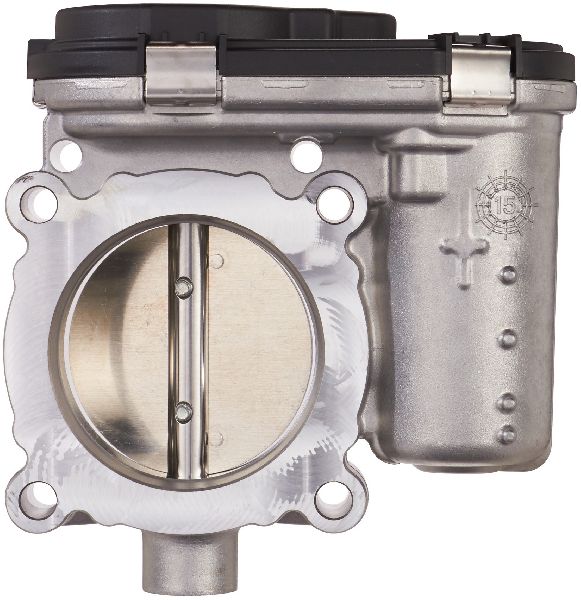
- Dirty Electronic Throttle Body 🔴 High Probability → Shop Fuel Injection Throttle Body The 2.0L GDI engine's crankcase ventilation system can deposit oil and fuel vapors inside the intake, which bake into carbon on the throttle plate and bore. This buildup restricts the tiny gap needed for idle airflow, causing the throttle plate to stick or not open sufficiently for the PCM's commanded idle speed.
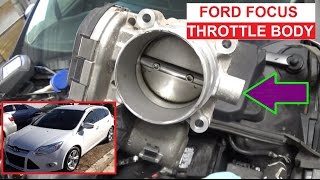
How to confirm: Remove the intake air duct from the throttle body and visually inspect for a black, sticky layer of carbon around the throttle plate and the bore where it closes. The inside will often be significantly dirtier than the side facing the air filter.
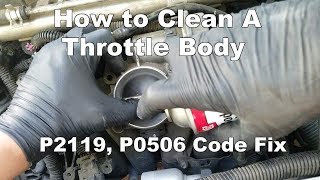
Typical fix: Clean the throttle body using a dedicated throttle body cleaner and a soft cloth or toothbrush. The part should be removed for thorough cleaning. 🎬 Watch: How to clean your throttle body to fix P0506. Do not spray cleaner directly into the electronic components.
Est. part cost: $10-$20 - Vacuum Leak 🟡 Medium Probability Vacuum hoses and intake gaskets can become brittle and crack over time with exposure to heat and age. A common, though less related, issue on this platform is a faulty canister purge valve which can sometimes cause similar stalling symptoms.
How to confirm: Listen for a distinct hissing sound from the engine bay at idle. A more reliable method is to use a smoke machine, which forces smoke into the intake system to reveal the exact location of any leaks. A DIY method involves spraying carburetor cleaner around suspected leak points; a change in idle RPM indicates a leak.
Typical fix: Replace the cracked hose or faulty gasket that is causing the leak.
Est. part cost: $5-$100
Rare But Worth Checking
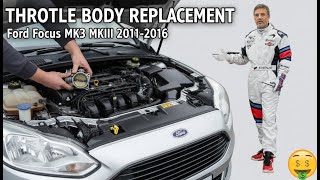
- Failed Electronic Throttle Body Assembly: → Shop Fuel Injection Throttle Body While cleaning often fixes the issue, the throttle body on this platform has a known history of electronic failure due to contamination of internal contacts. If cleaning, checking for vacuum leaks, and performing an idle relearn do not solve the problem, the unit itself has likely failed and requires replacement. This was the subject of Ford's Customer Satisfaction Program 13N03.
- PCM Software Issue: Ford issued TSB 12-7-4 for some vehicles, which included reprogramming the PCM with an updated calibration to address idle fluctuation issues. The TSB directs technicians to check a specific PID value (ETC_TRIM) and clean the throttle body if the value is 3.0 degrees or greater.
- Poor Battery/Ground Connection: Some owners have reported that a poor ground connection, specifically the main battery ground to the chassis, can cause a variety of electrical issues, including erratic idle and transmission behavior. Cleaning the paint from the chassis grounding point is a known fix.
Diagnosis Steps
- Scan for other codes. Address any other codes first, as they may be the root cause.
- Inspect the air intake system. Check the air filter and the intake tube for any blockages or restrictions.
- Visually inspect the throttle body. Remove the air duct and check for heavy carbon buildup around the throttle plate.
- Clean the throttle body. For best results, remove the throttle body from the vehicle. Use dedicated throttle body cleaner and a soft cloth or toothbrush to remove all carbon from the plate and bore. Do not use sharp metal tools or aggressive solvents.
- Inspect for vacuum leaks. Listen for hissing noises at idle. For a definitive diagnosis, perform a smoke test to identify any leaks from hoses, the intake manifold gasket, or other seals.
- Check main ground connections. Inspect the battery negative cable where it connects to the chassis. Ensure the connection is clean and tight. Some owners have found it necessary to sand paint off the connection point for a better ground.
- Perform an idle relearn procedure. After cleaning or replacing the throttle body or disconnecting the battery, the PCM must relearn the idle strategy. A common procedure is to let the engine idle for several minutes with no accessories on, then several minutes with the A/C on, then in drive with the brake held to allow the PCM to adapt. 🎬 Watch this guide on performing an electronic throttle calibration.
- If the code returns, consider throttle body replacement. If all other steps fail, the electronic throttle body assembly is the most likely remaining point of failure, given its known issues on this platform.
Parts You'll Likely Need
- Electronic Throttle Body Assembly
(OEM #CM5Z-9E926-D)— This is the most likely part to be replaced if cleaning the original unit does not resolve the P0506 code, due to a known high rate of electronic failure on this platform. This part number supersedes CM5Z-9E926-A and CM5Z-9E926-B.
Trusted brands: Motorcraft, Bosch, Cardone, Dorman
OEM price range: $180-$250
Aftermarket price range: $100-$180 - Throttle Body Cleaner — Required for the most common fix: cleaning carbon buildup from the throttle plate and bore.
Trusted brands: CRC, Berryman, WD-40 Specialist
OEM price range: $10-$20
Aftermarket price range: $10-$20
Technical Service Bulletins (TSBs) & Recalls
- TSB 12-7-4: Addresses idle RPM fluctuations and codes P0505/P0506 on various Ford models. It details a diagnostic procedure involving checking the ETC_TRIM PID value with a scan tool. If the value is 3.0 degrees or more, it indicates excessive throttle body deposits, and the prescribed fix is to remove and clean the throttle body. If the value is less than 3.0 but issues persist, it directs to normal diagnostics.
- TSB 11-10-21: A manufacturer bulletin noted by an owner in NHTSA ODI #11052150 as including an updated powertrain control calibration to address symptoms such as the check engine light and diagnostic codes P0505, P0506, or P061B.
Platform-Specific Known Issues
- Customer Satisfaction Program 13N03: Ford issued this program to extend the warranty on the electronic throttle body to 10 years or 150,000 miles due to a high number of failures from internal contamination. While this program has likely expired for most vehicles, it confirms the part is a common failure point. The program covered multiple vehicles, including some Focus models, and authorized a free replacement if diagnosis pointed to a faulty ETB.
- Real Owner Experience: A Reddit user with a P0506 code reported rough idle and stalling. After asking about the likelihood of a cleaning fixing the issue, they later updated their post with a simple "Update: it worked." This highlights how often cleaning is the correct and sufficient solution.
Documented NHTSA Reports
- NHTSA ODI Investigation #PE11018 describes how Ford attributed surge conditions and DTCs P0505, P0506, or P061B to changes in idle air flow resulting from the progressive buildup of deposits, a condition that may also trigger the Check Engine lamp.
- An owner report filed as NHTSA ODI #11052150 mentions that symptoms associated with the P0506 condition may include the check engine light and specific diagnostic codes, noting that Ford issued updated powertrain calibrations to address these issues.
Mechanic-Grade Diagnostic Values
- Scan Tool PID: ETC_TRIM (Throttle Angle Correction) — expected: Close to 0 degrees on a clean, functioning throttle body.. Failure: A value of 3.0 degrees or greater indicates the PCM is compensating for significant carbon buildup, per Ford TSB 12-7-4.
- Throttle Position Sensor (TPS) Voltage at Closed Throttle — expected: Approximately 0.5V to 1.0V with key on, engine off.. Failure: Voltage is outside the expected range, jumpy, or does not change smoothly when opening the throttle.
- Throttle Position Sensor (TPS) Voltage at Wide-Open Throttle (WOT) — expected: Approximately 4.5V to 5.0V.. Failure: Voltage does not reach the expected level or shows spikes/drops during throttle movement.
- Throttle Actuator Control (TAC) Motor Resistance — expected: Between 3 and 20 ohms when measured across the two motor pins on the throttle body.. Failure: A reading of infinity (open circuit) or near-zero (short circuit) indicates a failed motor.
- DTC Set Condition — expected: Engine idle RPM should match the PCM's target RPM (typically 750-1000 RPM).. Failure: The P0506 code is set when the actual engine speed is lower than the target engine speed by 100 RPM for over 10 seconds.
Scan Tool Commands That Help
- Ford IDS (or compatible high-end scanner): Reset All Adaptations / Throttle Body Relearn — This function should be used after cleaning or replacing the electronic throttle body, or after disconnecting the battery. It forces the PCM to erase old learned values and begin a new learning process for the throttle plate's closed and open positions.
Wiring & Ground Locations
- Main Chassis Ground — A post on the driver's side strut tower area, under the hood. This is the primary ground point from the battery negative terminal to the chassis.. A poor connection here, often due to paint on the chassis, can cause widespread electrical issues, including erratic PCM behavior and idle control problems. Cleaning the paint to ensure a bare metal connection is a common fix.
- G100 / G102 / G105 — Under the airbox in the engine compartment. G100 and G102 are on the left front, while G105 is on the left side of the motor compartment.. These are critical engine and PCM ground points. Corrosion or looseness at these locations can directly impact sensor readings and actuator commands, including those for the electronic throttle body.
- Transmission Ground — A threaded bolt hole on the transmission bell housing where a ground strap from the chassis connects.. This ground is essential for the proper operation of the transmission and engine control systems. A missing or corroded connection here is known to cause no-start or severe drivability issues that can mimic other component failures.
- Engine Harness Chafe Point — The engine wiring harness may rub against the intake manifold, near the throttle body.. Chafing can damage the insulation on wires for the throttle body, MAF sensor, or other critical components, causing shorts or open circuits that lead to P0506 and other codes. Ford TSB 18-2062 addresses this specific issue.
Real Owner Repair Stories
- Reddit user on r/FordFocus (2017 Ford Focus EcoBoost) — Car would not start after replacing the slave cylinder.
❌ Tried (didn't work) Retracing steps of the slave cylinder replacement.
✅ What actually fixed it The user found a disconnected ground wire. One end was on the chassis, and they discovered the other end was supposed to be bolted to a threaded hole on the transmission bell housing. Reconnecting this ground wire resolved the no-start condition. - YouTube video by Mike Potts (2012 Ford Focus with DCT Transmission) — Transmission failure warnings, limp mode, erratic shifting, and general electrical flakiness.
❌ Tried (didn't work) The owner was anticipating having to replace the Transmission Control Module (TCM).
✅ What actually fixed it The owner performed a "ground mod" by cleaning the paint off the main chassis ground points under the airbox and on the strut tower to ensure a bare-metal connection. A commenter on the video with a 2012 Focus reported this fixed their transmission jerking and corrected a low voltage reading (13.4V jumped to a normal 14.2V).
OEM Part Supersession History
CM5Z-9E926-A, CM5Z-9E926-B→CM5Z-9E926-D— The original throttle bodies were prone to premature failure due to contamination of internal electrical contacts, leading to Ford's Customer Satisfaction Program 13N03. The later revisions are presumed to have design improvements to mitigate this issue.
Model Year Variations Within This Range
- 2012-2014: A wiring harness chafe issue against the intake manifold was identified as common enough for Ford to issue TSB 18-2062. While this could potentially affect later models, the TSB specifically calls out 2012-2014 Focus vehicles.
Diagnostic Flowchart
Other Known Issues on This Vehicle
Issues unrelated to this code that are worth knowing about as an owner of this generation:
- PowerShift (DPS6) Automatic Transmission Failure 🔴 High — Extremely common on 2012-2016 models. Issues include shuddering, hesitation, delayed engagement, and complete failure of clutches or the Transmission Control Module (TCM). (Ref: Multiple lawsuits, recalls (e.g., 14M01, 14M02), and warranty extensions were issued.)
- Electronic Power Steering (EPAS) Failure 🔴 High — Common, especially on earlier 2012-2014 models. Can result in a sudden loss of power steering assist, making the vehicle very difficult to steer, often accompanied by a 'Steering Assist Fault' warning. (Ref: Ford issued TSBs and some models were subject to recalls or customer satisfaction programs to address the issue, often requiring a software update or full steering rack replacement.)
- Faulty Canister Purge Valve 🟠 Medium → Shop Vapor Canister — Widespread across 2012-2018 models. A stuck-open valve can cause rough idle, stalling after refueling, difficulty starting, and a deformed fuel tank. (Ref: Subject of NHTSA recall 18S32 (Ford recall 19V-633), which involved reprogramming the PCM and potentially replacing the valve and/or fuel tank.)
- Engine Mount Failure 🟠 Medium — The passenger-side hydraulic engine mount is known to collapse or leak fluid, typically after 60,000-100,000 miles, leading to excessive engine vibration and noise in the cabin.
Used vs. New Parts: Buying Guide for This Vehicle
When a used part is the smart pick: A used throttle body is a high-risk purchase for this vehicle due to the well-documented high failure rate of the original part. It should only be considered as a last resort or for temporary troubleshooting. If a used part is acquired, it should be thoroughly cleaned before installation.
Donor-vehicle mileage cap: roughly under 60000 miles for the part to have meaningful remaining life.
What to inspect on the donor part:
- Verify the part number is the latest revision (CM5Z-9E926-D) if possible.
- Inspect the connector pins for any signs of corrosion or damage.
- Manually move the throttle plate (if possible) to feel for any binding or grittiness.
- Ask for the donor vehicle's history if available; a part from a low-mileage, rear-ended car is ideal.
OEM-only on this vehicle (don't cheap out):
- Electronic Throttle Body
Aftermarket brands forum-validated for this vehicle:
- Motorcraft (OEM)
- Bosch
Brands owners have reported issues with on this vehicle:
- Unbranded or 'white-box' parts from online marketplaces. While brands like Dorman offer a cost-effective alternative, some sources suggest potential quality differences compared to the OEM part, so OEM is the safest bet for this specific high-failure component.
Real Owner Stories
Aggregated from forums and TSBs cited above. Mileages and costs reflect what owners reported in those sources.
2012-2018 Ford Focus 2.0L GDI
Symptoms: Rough idle and stalling when coming to a stop or in neutral.
What fixed it: Cleaning the original electronic throttle body.
Source hint: Reddit - r/askcarguys - 'Got a P0506 code -"idle control system RPM lower than expected"?'
2012-2018 Ford Focus 2.0L GDI
Symptoms: Idle issues and P0506 code.
What fixed it: Cleaning a used replacement throttle body before installation.
Source hint: Reddit - r/askcarguys - 'Got a P0506 code -"idle control system RPM lower than expected"?'
Related OBD-II Codes
Frequently Asked Questions
Is there a Ford warranty extension for the throttle body on my Focus?
Does TSB 12-7-4 apply to the P0506 code on my vehicle?
Could my stalling and P0506 code actually be caused by the fuel system recall?
How do I perform the idle relearn procedure after cleaning the throttle body?
Can I just spray cleaner into the intake to fix the P0506 code?
Is the P0506 code related to the common ground connection issues on the Focus?
Helpful Videos


Used OEM Parts in Stock
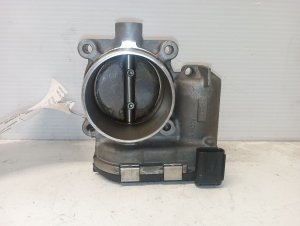
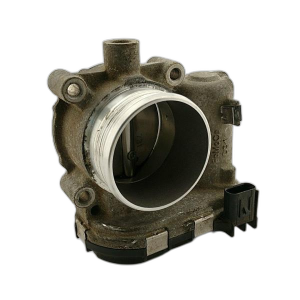
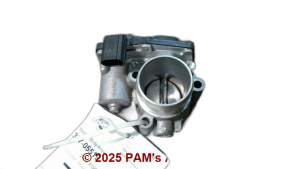
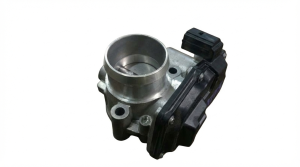
New Aftermarket Parts Available


The information in this article is provided for general reference and educational purposes only. Vehicle specifications, procedures, and part compatibility can vary by production date, trim level, and region. Always consult your vehicle's factory service manual and verify part numbers before purchasing or performing repairs. Safety-critical components such as airbags, seat belts, and braking systems should be installed by a qualified professional.
- Ford Focus:
- 🧭 Diagnostic Flowchart
- 🎬 Helpful Videos
- 🛍️ Shop This Part
- What's Unique About the 2012-2018 Ford Focus
- Symptoms You May Notice
- Most Likely Causes
- Rare But Worth Checking
- Diagnosis Steps
- Parts You'll Likely Need
- Technical Service Bulletins (TSBs) & Recalls
- Platform-Specific Known Issues
- Documented NHTSA Reports
- Mechanic-Grade Diagnostic Values
- Scan Tool Commands That Help
- Wiring & Ground Locations
- Real Owner Repair Stories
- OEM Part Supersession History
- Model Year Variations Within This Range
- Other Known Issues on This Vehicle
- Used vs. New Parts: Buying Guide for This Vehicle
- Real Owner Stories
- 2012-2018 Ford Focus 2.0L GDI
- 2012-2018 Ford Focus 2.0L GDI
- Related OBD-II Codes
- Frequently Asked Questions
- 🎟️ Get 5% Off