

P0506 on 2004-2012 GMC Canyon: Causes and Fixes for Low Idle Speed
On a 2004-2012 GMC Canyon, code P0506 is almost always caused by a dirty electronic throttle body. The most common and effective fix is to remove, clean, and reinstall the throttle body, which is a low-cost, high-success DIY repair.
- P0506 on a 2004-2012 Canyon almost always means the throttle body is dirty.
- The fix is simple and cheap: clean the throttle body and replace the gasket. Do not buy a new throttle body until you have tried cleaning the original.
- An idle relearn procedure is mandatory after cleaning the throttle body to allow the computer to adapt.
- This is a very common, well-documented issue for this truck platform and its twins, the Chevy Colorado and Hummer H3.
What's Unique About the 2004-2012 GMC Canyon
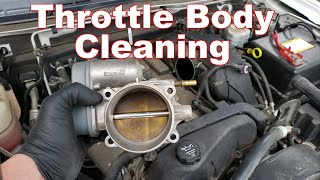
The first-generation GMC Canyon and its platform mates (Chevrolet Colorado, Hummer H3) are highly prone to this specific code due to their electronic throttle body design and PCV system routing. The Positive Crankcase Ventilation (PCV) system routes oil, fuel, and carbon vapors from the crankcase directly into the intake airstream just ahead of the throttle body. Over time, these vapors bake onto the back of the throttle plate and the throttle bore, creating a sticky, thick layer of carbon. This accumulation physically restricts the tiny air gap the PCM relies on to maintain a stable idle, causing the RPMs to drop. A GM document for 2004-2007 models confirms that cleaning the throttle body is the recommended action 🎬 See a real-world demonstration of cleaning a 2004 Canyon throttle body. for this code when seen with P0105 or P0106.
Symptoms You May Notice
- Engine idle speed is lower than normal (e.g., dipping below 600 RPM, sometimes into the 500s).
- Rough, vibrating, or stumbling idle.
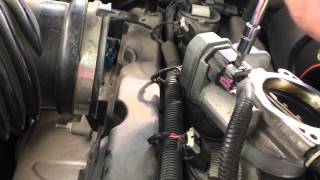
- Engine stalling when coming to a stop, shifting to park, 🎬 Check out this DIY fix for bad idle on the 2.9L engine. or when electrical loads (like A/C) are high.
- Difficulty starting the engine.
- Illuminated Check Engine Light.
- Replacing the throttle body assembly when it only needed cleaning.
- Replacing the accelerator pedal position (APP) sensor.
- Replacing spark plugs or ignition coils, which are unlikely to cause a P0506 code without other misfire-related codes (like P0300-P0305).
Most Likely Causes
- Dirty Electronic Throttle Body 🔴 High Probability → Shop Fuel Injection Throttle Body The PCV system deposits oil and carbon directly into the throttle body, which restricts the small amount of air needed to maintain a proper idle as it accumulates. This is the number one cause for P0506 on this platform. 🎬 Watch this step-by-step guide on cleaning the throttle body to fix P0506.
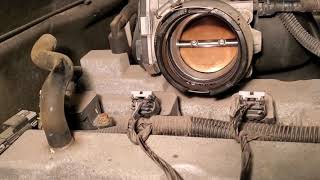
How to confirm: Remove the air intake duct and visually inspect the inside of the throttle body and the edges of the throttle plate for a thick, black, sticky layer of carbon buildup. The buildup is often worst on the back side of the plate and in the lower part of the bore. The plate may feel sticky when moved by hand (with the engine off).
Typical fix: Remove the throttle body (four 10mm bolts), thoroughly clean the bore and both sides of the plate with a dedicated throttle body cleaner and a soft brush or cloth. Reinstall with a new gasket and perform an idle relearn procedure.
Est. part cost: $10-$25 - Vacuum Leak ⚪ Low Probability While less common for this specific code, vacuum lines can become brittle and crack over time. A vacuum leak typically causes a high idle (P0507), but a small, intermittent leak could confuse the PCM.
How to confirm: Listen for hissing sounds around the engine bay at idle. A more definitive method is to use a smoke machine to feed smoke into the intake system and observe where it escapes. You can also carefully spray short bursts of brake cleaner or starter fluid around suspected leak points (gaskets, vacuum hoses); a change in engine idle indicates a leak.
Typical fix: Replace the cracked vacuum hose, faulty PCV valve, or leaking intake manifold gasket.
Est. part cost: $5-$150
Rare But Worth Checking
- Faulty Electronic Throttle Body: → Shop Fuel Injection Throttle Body While rare, the internal motor or position sensor within the throttle body can fail. This should only be considered after a thorough cleaning does not resolve the issue. If replacing, an OEM or high-quality aftermarket part is recommended.
- Wiring Issue at IP-to-Body Connector: GM TSB #07-06-04-019 details an issue where water intrusion into the main harness connector in the driver's side kick panel causes corrosion and erratic signals for the accelerator pedal (P2138). While this TSB is for a different code, damage to this connector can cause a variety of electronic throttle control issues and is worth noting as a potential, though rare, cause for strange idle behavior.
Diagnosis Steps
- Check for other stored DTCs. If codes like P0105 or P0106 are present, it further points to a dirty throttle body.
- Disconnect the negative battery terminal.
- Remove the engine cover and air intake resonator box/ducting to access the throttle body.
- Disconnect the throttle body's electrical connector (slide back the gray lock clip first) and the PCV hose.
- Remove the four 10mm bolts holding the throttle body to the intake manifold.
- Thoroughly clean the throttle body bore and plate with a dedicated throttle body cleaner and a soft brush or microfiber cloth. Do not use abrasive materials like a wire brush. Pay special attention to the edges of the plate and where it seats in the bore.
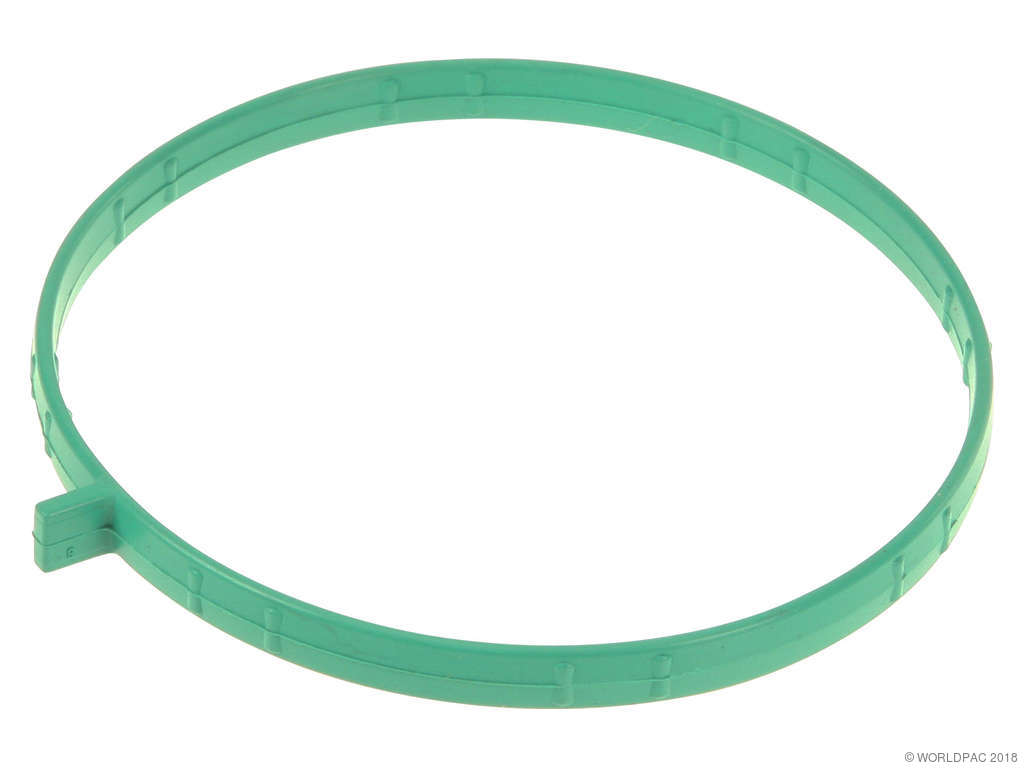
- It is highly recommended to replace the throttle body gasket (GM Part #12575463) to prevent future vacuum leaks. The original may be brittle or flattened.
- Reinstall the throttle body and torque the bolts to specification (typically 89 lb-in or 10 Nm). Reconnect all components.
- Reconnect the negative battery terminal.
- Perform the Idle Relearn Procedure: Start the engine and let it idle in Park with all accessories off for 3 minutes. Turn the engine off and wait for at least 60 seconds. Restart the engine and let it idle again in Park for another 3 minutes. The relearn is now complete.
- Clear the P0506 code with a scanner and test drive the vehicle to confirm the fix.
Parts You'll Likely Need
- Throttle Body Cleaner — This is the required solvent to safely break down the carbon buildup without damaging the electronic components or special coatings on the throttle plate.
Trusted brands: CRC, ACDelco, Gumout
OEM price range: $10-$15
Aftermarket price range: $8-$12 - Throttle Body Gasket
(OEM #12575463)— It is best practice to replace the gasket when removing the throttle body to prevent a future vacuum leak. The original may be brittle or flattened. This part number fits the I4 and I5 engines.
Trusted brands: ACDelco, Fel-Pro, Mahle
OEM price range: $5-$10
Aftermarket price range: $3-$7 - Electronic Throttle Body Assembly
(OEM #12565553 (for 2.8L/2.9L/3.5L/3.7L))— Only needed if the original throttle body is faulty (failed motor or sensor) and cleaning does not resolve the code. This is a rare requirement. Part number may vary by specific engine and year.
Trusted brands: ACDelco (OEM), SKP, ECCPP
OEM price range: $250-$400
Aftermarket price range: $100-$180
Related Codes That Often Appear With This One
- P0106 — A GM technical document notes that a dirty throttle body can also cause erratic readings from the Manifold Absolute Pressure (MAP) sensor, triggering P0106 alongside P0506.
- P0105 — Similar to P0106, this code relates to the MAP sensor circuit and can be triggered by the same carbon buildup issue in the throttle body.
Technical Service Bulletins (TSBs) & Recalls
- While no specific TSB for P0506 on this generation was found, a GM service document for 2004-2007 models acknowledges that codes P0105, P0106, and/or P0506 can be caused by excessive carbon buildup in the throttle body, with cleaning being the recommended fix.
- GM TSB #PIP4013D discusses engine misfires at idle (P0300) on these engines, which can sometimes be a related symptom. The bulletin points to potential valve seat issues, a known problem on early 3.5L engines.
Platform-Specific Known Issues
- Real Owner Experience: A user on 355nation.net with a 2006 Colorado reported classic P0506 symptoms: stalling at stop lights and a rough idle. After removing and cleaning the throttle body, which was heavily coated in black grime, and performing the idle relearn, the idle returned to a steady 650 RPM and the stalling issue was completely resolved. This is a typical story repeated hundreds of times across owner forums.
Mechanic-Grade Diagnostic Values
- Throttle Position Sensor (TPS) 1 & 2 Voltage at Idle (Key-On, Engine-Off) — expected: ~0.4V - 0.8V. Failure: Voltage significantly outside this range, or not changing smoothly as the throttle is manually opened, indicates a faulty sensor.
- Throttle Position Sensor (TPS) 1 & 2 Voltage at Wide-Open Throttle (Key-On, Engine-Off) — expected: ~4.5V - 5.0V. Failure: Voltage does not reach this range or readings are erratic, indicating a faulty sensor.
- Scan Tool - Desired vs. Actual Idle RPM — expected: Actual RPM should be within 25 RPM of the Desired RPM PID.. Failure: Actual RPM is consistently 100+ RPM below Desired RPM, confirming the condition for setting P0506.
- Throttle Actuator Control (TAC) Motor Resistance — expected: 2 to 15 Ohms between terminals A and B of the throttle body connector.. Failure: Resistance is over the limit (open circuit) or less than 1 Ohm (short circuit), indicating a failed actuator motor.
- TPS 1 Resistance (between terminals C and G) — expected: Between 2k and 4k Ohms.. Failure: Reading of 0 Ohms (short) or an open circuit indicates a faulty TPS sensor inside the throttle body.
Scan Tool Commands That Help
- Tech 2 / GDS2: Idle Learn Reset — This function should be used after cleaning or replacing the throttle body. It forces the ECM to erase old learned idle airflow values and start a new learning process with the clean/new component. While the manual relearn procedure often works, using the scan tool function is the official GM method and can be more reliable if the manual procedure fails.
Wiring & Ground Locations
- G101 — Lower left side of the engine block.. This is a primary ground for the Engine Control Module (ECM). A poor connection here can cause unstable voltage to the ECM, leading to incorrect calculations and erratic sensor readings, potentially contributing to idle control problems.
- G103 / G104 — G103 is on the cowl above the brake booster; G104 is on the rear of the driver's side cylinder head.. These are critical engine and body grounds. G103 grounds the BCM and Data Link Connector, while G104 is a key engine ground. Corrosion or looseness at these points can cause a host of electrical issues, including problems with modules that control engine functions.
- Splice Pack SP105 / SP106 — SP105 is under the hood near the battery (driver's side); SP106 is behind the engine airbox (passenger's side).. These splice packs consolidate many ground circuits. They are notorious for poor internal connections due to heat and moisture, causing intermittent electrical failures for components like the fuel pump, EBCM, and various sensors that the ECM relies on for idle calculations. A faulty ground here can mimic other component failures.
- Throttle Body Connector — The 6-pin connector on the electronic throttle body itself.. Provides power, ground, and signal paths for the throttle motor and dual TPS sensors. Corrosion, spread pins, or wire damage at this connector can directly cause P0506 and other throttle-related codes like P2135.
Real Owner Repair Stories
- 355nation.net user (2006 Chevrolet Colorado (mechanically identical)) — P0506 code, stalling at idle, rough idle. Symptoms persisted after cleaning the throttle body.
❌ Tried (didn't work) Cleaning the throttle body, Performing idle relearn procedure multiple times, Checking for vacuum leaks with carb cleaner
✅ What actually fixed it The brake booster check valve was cracked and leaking vacuum. Replacing the check valve and the attached hose resolved the low idle and cleared the P0506 code. - coloradofans.com user (2005 GMC Canyon 3.5L I5) — Persistent P0506 and rough idle, especially when cold.
❌ Tried (didn't work) Thoroughly cleaned throttle body, Replaced throttle body gasket, Smoke tested for vacuum leaks (none found)
✅ What actually fixed it The user discovered a small crack in the plastic PCV port on the valve cover where the hose connects. This created a small, hard-to-detect vacuum leak. Replacing the entire valve cover assembly (as the port is integrated) fixed the issue.
"I Checked Everything" — The Actual Cause
- In one documented case on a fan forum, a vehicle passed a smoke test, yet the P0506 code persisted. The actual cause was a failing brake booster check valve. This component can leak vacuum internally or intermittently under braking, a condition not always revealed by a static smoke test, but which robs the engine of metered air and causes the idle to drop.
OEM Part Supersession History
12565553→This part number remains current for the specified engines (2.8L/2.9L/3.5L/3.7L) across the 2004-2012 model years.— N/A
Heads up: While the part number is consistent, GM did issue a Special Coverage Adjustment (11273B) for the separate Throttle Position Sensor (TPS) on some 2009-2011 models due to a high failure rate causing P2135, but this did not result in a supersession of the entire throttle body assembly for P0506.
Model Year Variations Within This Range
- 2007-2012: In 2007, the engines were updated: the 2.8L I4 became the 2.9L (LLV) and the 3.5L I5 became the 3.7L (LLR). While the fundamental cause of P0506 (dirty throttle body) remains identical, and the same throttle body assembly is used, internal engine components and some sensor part numbers differ.
- 2009-2012: The optional 5.3L V8 engine was introduced. This engine uses a different, larger throttle body and its own set of potential causes for idle-related codes, though a dirty throttle body is still a common culprit.
Diagnostic Flowchart
Other Known Issues on This Vehicle
Issues unrelated to this code that are worth knowing about as an owner of this generation:
- Premature Valve Seat Wear (3.5L L52 Engine) 🔴 High — Common on 2004-2006 models with the 3.5L I5 engine, leading to misfires (P0300) at idle, rough running, and low compression. (Ref: GM TSB #PIP4013D addresses misfires at idle and recommends a cylinder leakage test to check for bad valve seats.)
- Passlock Anti-Theft System Failure 🟠 Medium — Widespread issue causing intermittent no-start conditions where the truck cranks but won't fire. Often requires replacing the ignition switch and performing a key relearn procedure.
- Blower Motor Resistor and Connector Failure 🟡 Low — Very common failure causing the HVAC fan to only work on the highest setting or not at all. The connector often melts and should be replaced with the resistor.
- Cracked Exhaust Manifold (I5 Engines) 🟠 Medium — The exhaust manifold on the 5-cylinder engines is prone to cracking, causing an exhaust leak noise (ticking) that is most noticeable on a cold start.
Used vs. New Parts: Buying Guide for This Vehicle
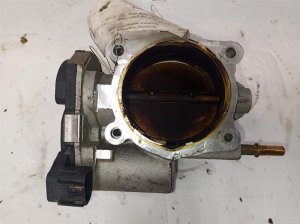
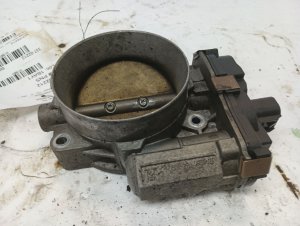
When a used part is the smart pick: If the original electronic throttle body has a confirmed internal electronic failure (bad motor or sensor) and cleaning did not fix the P0506 code, a used OEM throttle body from a reputable junkyard is a very sensible and cost-effective option. The primary failure mode for this part is carbon buildup, not electronic failure, so a clean, low-mileage used part has a high chance of success.
Donor-vehicle mileage cap: roughly under 100000 miles for the part to have meaningful remaining life.
What to inspect on the donor part:
- Check the throttle plate and bore for cleanliness. A part that is already clean suggests it was either well-maintained or replaced before.
- Ensure the electrical connector pins are straight, clean, and free of corrosion.
- Manually (gently) move the throttle plate; it should move smoothly with no binding or gritty feeling.
- Ask for the donor vehicle's VIN to verify the engine and year to ensure compatibility.
Aftermarket brands forum-validated for this vehicle:
- ACDelco (OEM)
- Standard Motor Products (SMP)
- NGK/NTK
- Dorman (often includes a new gasket)
Brands owners have reported issues with on this vehicle:
- Unbranded, 'no-name' parts from online marketplaces are a gamble. They often have higher failure rates for the internal electronics and may not be calibrated correctly, leading to persistent idle issues or other codes.
Real Owner Stories
Aggregated from forums and TSBs cited above. Mileages and costs reflect what owners reported in those sources.
2005 GMC Canyon 2.8l 4 cylinder — 116000 miles
Symptoms: Check engine light with codes P0300 and P0506, rough idle, idle jumps up and down between 500-600 RPM.
What fixed it: User suspected a dirty throttle body; attempted to diagnose by unplugging the MAF sensor which did not help.
Source hint: Reddit r/MechanicAdvice
2006 Chevrolet Colorado
Symptoms: Stalling at stop lights and a rough idle.
What fixed it: Removing and cleaning the throttle body, which was heavily coated in black grime, and performing the idle relearn procedure.
Source hint: 355nation.net - "P0506 Code - Cleaned TB, still have code... what next?"
Related OBD-II Codes
Frequently Asked Questions
What is the most common reason my GMC Canyon is throwing a P0506 code?
Is there a specific TSB for the P0506 code on 2004-2007 GMC Canyons?
What is the correct Idle Relearn Procedure for the GMC Canyon after cleaning the throttle body?
My 3.5L Canyon has a P0506 and a misfire code; could this be a mechanical issue?
Which throttle body gasket should I use for my GMC Canyon?
Can a vacuum leak cause P0506 on this truck?
Helpful Videos
Used OEM Parts in Stock
New Aftermarket Parts Available





The information in this article is provided for general reference and educational purposes only. Vehicle specifications, procedures, and part compatibility can vary by production date, trim level, and region. Always consult your vehicle's factory service manual and verify part numbers before purchasing or performing repairs. Safety-critical components such as airbags, seat belts, and braking systems should be installed by a qualified professional.
- GMC Canyon:
- 🧭 Diagnostic Flowchart
- 🎬 Helpful Videos
- 🛍️ Shop This Part
- What's Unique About the 2004-2012 GMC Canyon
- Symptoms You May Notice
- Most Likely Causes
- Rare But Worth Checking
- Diagnosis Steps
- Parts You'll Likely Need
- Related Codes That Often Appear With This One
- Technical Service Bulletins (TSBs) & Recalls
- Platform-Specific Known Issues
- Mechanic-Grade Diagnostic Values
- Scan Tool Commands That Help
- Wiring & Ground Locations
- Real Owner Repair Stories
- "I Checked Everything" — The Actual Cause
- OEM Part Supersession History
- Model Year Variations Within This Range
- Other Known Issues on This Vehicle
- Used vs. New Parts: Buying Guide for This Vehicle
- Real Owner Stories
- 2005 GMC Canyon 2.8l 4 cylinder — 116000 miles
- 2006 Chevrolet Colorado
- Related OBD-II Codes
- Frequently Asked Questions
- 🎟️ Get 5% Off