

P0506 on 2011-2015 Kia Sorento 3.5L V6: Low Idle Causes and Fixes
On a 2011-2015 Sorento 3.5L V6, P0506 almost always means the electronic throttle body is dirty. The most common and effective fix is cleaning the throttle body bore and plate with a dedicated cleaner, a DIY job that costs under $20. An idle relearn procedure is mandatory after cleaning.
- P0506 on this Sorento almost always means the throttle body is dirty, not broken.
- Start with the cheapest and easiest fix: a can of throttle body cleaner and a new gasket.
- An idle relearn procedure is necessary after cleaning the throttle body or disconnecting the battery to restore a smooth idle.
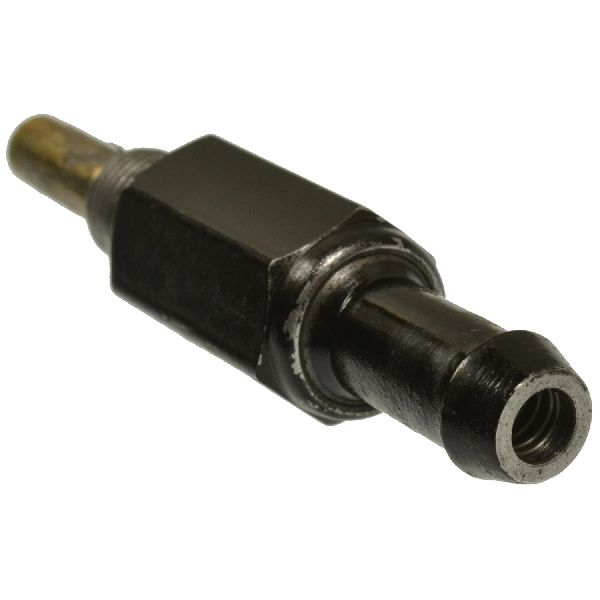
- While you're working on the intake, it's a good idea to check or replace the PCV valve (OEM #26740-3C200), as it's inexpensive and a primary contributor to the problem.
What's Unique About the 2011-2015 Kia Sorento
The 3.5L V6 in this generation Sorento uses an electronic throttle body for idle control. Vapors from the Positive Crankcase Ventilation (PCV) system can bake oil and carbon deposits around the throttle plate over time. This buildup restricts the small air gap needed for a stable idle, making P0506 a very common maintenance issue. Unlike major engine problems, this code is typically resolved with a simple cleaning rather than expensive part replacement.
Symptoms You May Notice
- Check Engine Light is on
- Engine idle speed is lower than normal (e.g., dropping to ~500 RPM)
- Rough or unstable idle, sometimes fluctuating
- Engine may stall when coming to a stop or at low speeds
- Slight hesitation during initial acceleration
- In some cases, a slight delay in throttle response
- Replacing the throttle body assembly when only a cleaning is needed.
- Replacing spark plugs or ignition coils, which are unlikely to be the primary cause of a P0506 code without other accompanying misfire codes.
Most Likely Causes
- Dirty Electronic Throttle Body 🔴 High Probability → Shop Fuel Injection Throttle Body Vapors from the PCV system deposit oil and carbon around the throttle plate over time, restricting the air gap needed for the engine to idle correctly. This is the most common cause for P0506 on this platform.
How to confirm: Remove the air intake hose from the throttle body and visually inspect the throttle plate and bore for a black, sticky layer of carbon buildup. The side facing the intake manifold is often the dirtiest.
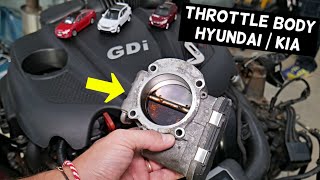
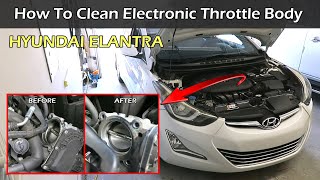
Typical fix: Thoroughly clean the throttle body plate and bore using a dedicated throttle body cleaner and a soft cloth or brush. 🎬 See this step-by-step guide on cleaning a GDI throttle body. It is recommended to remove the throttle body for cleaning to avoid damaging it and to clean it more effectively. An idle relearn procedure is required after cleaning.
Est. part cost: $10-$20 - Faulty PCV Valve 🟡 Medium Probability → Shop PCV Valve A PCV valve that is stuck open can create an unmetered air leak, disrupting the air-fuel mixture and causing the PCM to struggle with idle control. It also contributes to the oil vapor that contaminates the throttle body, making its failure a root cause of the dirty throttle body.
How to confirm: Remove the PCV valve and shake it. If it does not rattle, it is likely stuck and needs replacement. A visual inspection may also reveal oil sludge or blockage.
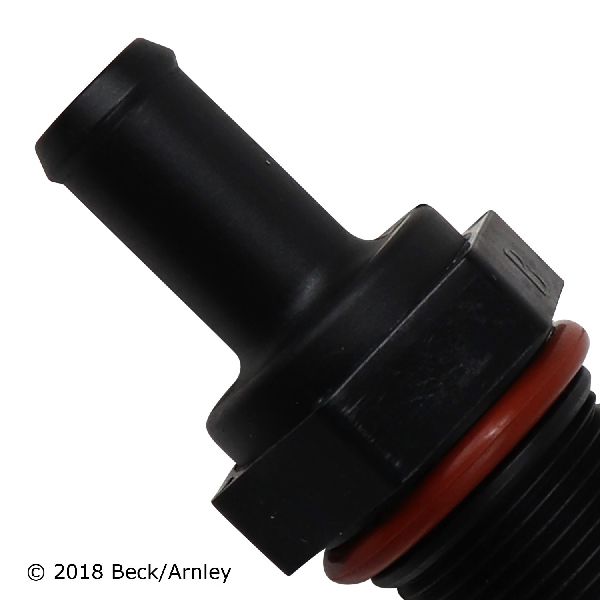
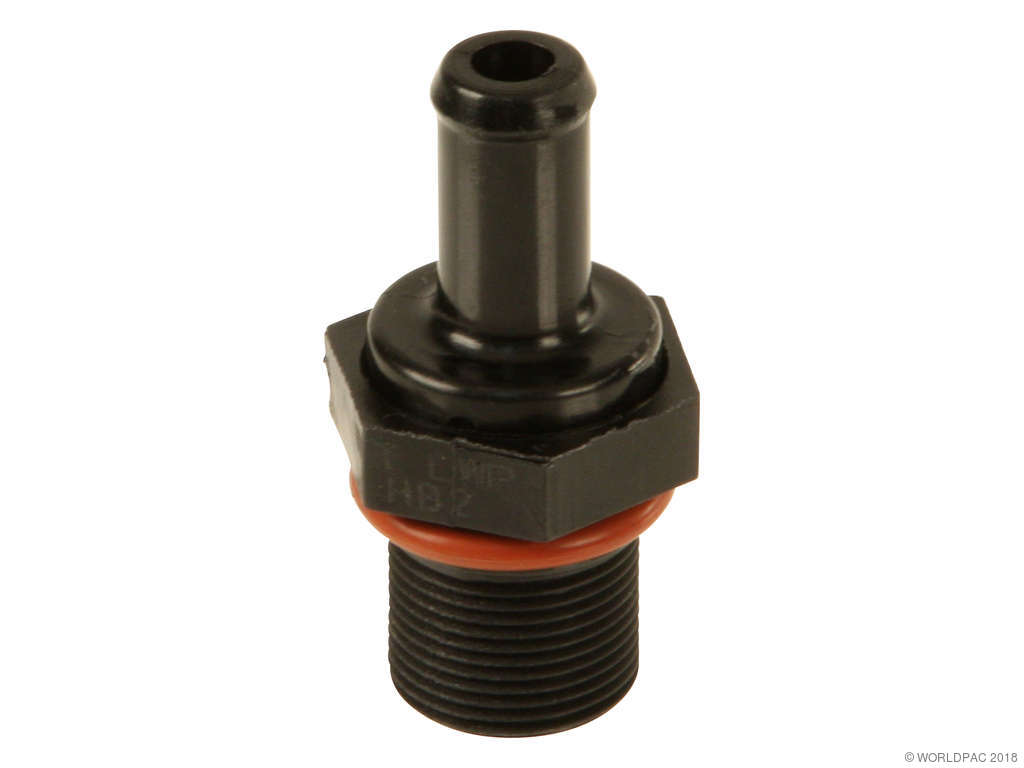
Typical fix: Replace the PCV valve. It is an inexpensive part (OEM Part No. 26740-3C200) and often replaced as preventative maintenance when cleaning the throttle body.
Est. part cost: $15-$40 - Vacuum Leak ⚪ Low Probability With age and heat cycles, rubber and plastic components in the intake system can crack. The large, accordion-style air intake boot is a common point of failure.
How to confirm: Perform a smoke test by introducing smoke into the intake system and watching for leaks from gaskets, hoses (especially the large accordion-style air intake hose), or the intake manifold itself.
Typical fix: Replace the cracked hose or faulty gasket that is causing the leak.
Est. part cost: $20-$150
Rare But Worth Checking
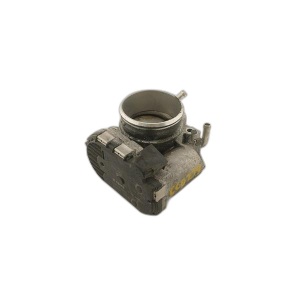
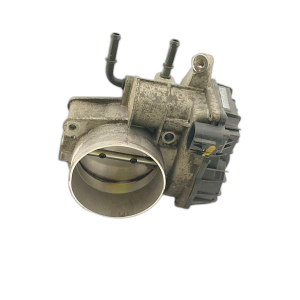
- Failing Electronic Throttle Body: → Shop Fuel Injection Throttle Body While cleaning usually resolves the issue, the internal motor or position sensor of the throttle body can fail. If a thorough cleaning and idle relearn do not fix the code, and no vacuum leaks are present, the throttle body itself may be the issue. Owners are advised to avoid cheap, unbranded throttle bodies from online marketplaces due to high failure rates.
- Wiring or Ground Issues: Corrosion on the 6-pin throttle body connector or a poor engine ground strap can cause erratic signals and lead to idle control problems. Check the main engine ground strap and the connector at the throttle body for any signs of damage or corrosion.
Diagnosis Steps
- Scan the vehicle for any other stored trouble codes.
- Visually inspect the air intake hose between the air filter box and the throttle body for cracks or loose connections.
- Remove the intake hose from the throttle body and inspect the throttle plate and bore for carbon buildup.
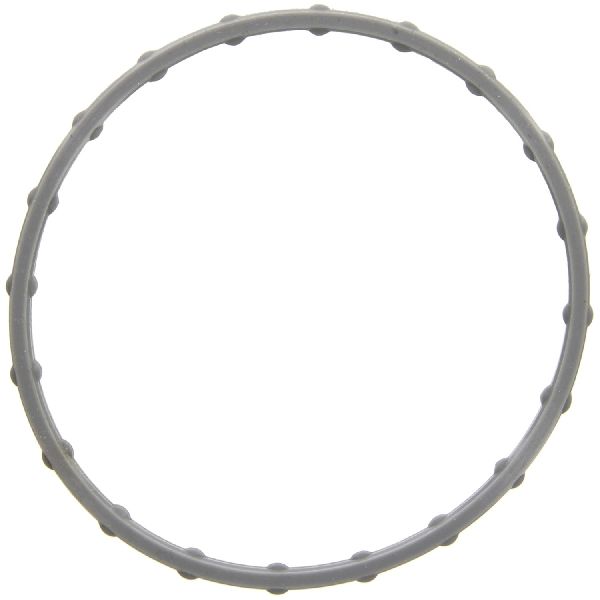
- If carbon is present, remove the throttle body for a thorough cleaning with a dedicated throttle body cleaner. Do not force the plate open while it is connected and powered. Replace the throttle body gasket (OEM Part No. 35101-3C400 or 35101-3C000) upon reinstallation.
- Inspect and test the PCV valve (OEM Part No. 26740-3C200). If it's original or appears contaminated, replace it.
- After cleaning the throttle body, perform an idle relearn procedure. A confirmed method is to turn the key to 'ON' (engine off) for 15 seconds, then 'OFF' for 5 seconds, repeating this cycle 5 times. Alternatively, disconnect the negative battery terminal for 30 minutes, reconnect, start the engine, and let it idle for 10-15 minutes to relearn.
- If the code returns, perform a smoke test to check for vacuum leaks from gaskets or hidden hoses.
- If no leaks are found and the code persists, the electronic throttle body assembly itself may be faulty and require replacement.
Parts You'll Likely Need
- Electronic Throttle Body Cleaner — This is the required solvent to remove the carbon buildup that is the most common cause of P0506.
Trusted brands: CRC, Permatex, Berryman
Aftermarket price range: $10-$20 - PCV Valve
(OEM #26740-3C200)— A faulty PCV valve can contribute to oil vapor buildup in the intake and is an inexpensive part to replace as a preventative measure or to rule out as a cause.
Trusted brands: Genuine Kia, Standard Motor Products
OEM price range: $25-$40
Aftermarket price range: $15-$30 - Throttle Body Gasket
(OEM #35101-3C000)— It is best practice to replace the gasket whenever the throttle body is removed for cleaning to prevent future vacuum leaks. Note: Pass 1 cited 35101-3C400, but 35101-3C000 is also listed for the 3.5L Sorento. Verify with VIN.
Trusted brands: Genuine Kia, Fel-Pro, Mahle
OEM price range: $10-$20
Aftermarket price range: $5-$15
Related Codes That Often Appear With This One
- P0507 — This code for 'Idle RPM Higher Than Expected' can sometimes appear if the PCM is over-correcting in an attempt to stabilize a fluctuating idle caused by a sticky throttle plate or vacuum leak.
- P0638 — This code for 'Throttle Actuator Control Range/Performance' can be caused by the same dirty/sticking throttle body issue. Kia has a TSB (ENG133R2 / SA153) for this code that involves an ECM update and a specific cleaning procedure.
Technical Service Bulletins (TSBs) & Recalls
- SA153 / TSB-ENG133R2: While specifically for P0638 (Throttle Actuator Control Range/Performance), this TSB is highly relevant. It instructs dealers to perform an ECM software update and an 'ETC motor cleaning' procedure for 2011-2013 Sorento 3.5L vehicles. This indicates Kia's acknowledgment of issues with throttle body contamination and control logic on this platform.
Platform-Specific Known Issues
- Real Owner Experience: Stalling Fixed with Cleaning: A user on a Kia forum with a 2012 Sorento V6 reported experiencing P0506 with stalling at stops. They removed and cleaned the throttle body, which was heavily coated in black carbon, especially on the engine side. After cleaning and reinstalling with a new gasket, and performing a battery-disconnect relearn, the code was resolved and the idle returned to a stable ~650 RPM.
Documented NHTSA Reports
NHTSA ODI #11513767 describes a situation where an owner encountered P0506 alongside a wide array of other codes including P0087, P2096, and multiple cylinder misfire codes (P0300-P0306). Similarly, NHTSA ODI #11499800 notes that an owner reported the P0506 code appearing in October, followed by fuel system and misfire codes in subsequent months, creating a concerning driving experience on the highway.
Mechanic-Grade Diagnostic Values
- Throttle Position Sensor (TPS) Voltage at Closed Throttle — expected: 300 - 900 millivolts (0.3V - 0.9V). Failure: Voltage outside this range at idle (Key On, Engine Off) suggests a sensor or adjustment issue. The sensor is integrated into the throttle body.
- Scan Tool Live Data: Throttle Plate Angle at Closed Throttle — expected: Approximately 4-5 degrees. Failure: A reading that is jumpy, does not sweep smoothly to 90 degrees at wide-open throttle, or is stuck indicates a failing throttle body assembly.
- Scan Tool Live Data: Desired vs. Actual Idle RPM — expected: Actual RPM should track within 25-50 RPM of Desired RPM.. Failure: A consistent deviation where Actual RPM is more than 100 RPM below Desired RPM for a sustained period will trigger P0506.
- ECM Ground Circuit Resistance — expected: Less than 0.1 ohms to chassis ground.. Failure: Resistance higher than 0.1 ohms indicates a poor ground connection, which can cause erratic sensor readings and trigger various codes, including idle control faults.
Scan Tool Commands That Help
- Kia GDS (Global Diagnostic System): Resetting Adaptive Values — This function, found under 'Vehicle Software Management' or 'Special Function', should be used after cleaning or replacing the throttle body. It clears the learned values for idle and airflow, forcing the ECM to relearn the new parameters of the clean/new component, which is critical for resolving the P0506 code.
- Kia GDS (Global Diagnostic System): Actuation Test: ETC Motor — This bidirectional test allows the technician to command the electronic throttle body motor to open and close with the engine off. It's used to verify if the throttle plate moves smoothly without sticking or hesitation, helping to confirm if the throttle body is mechanically sound or failing internally.
Wiring & Ground Locations
- ETC Connector — Directly on the Electronic Throttle Body assembly. It is a 6-pin connector.. Corrosion, moisture, or a loose connection at this primary connector can interrupt power to the throttle motor or corrupt the signals from the throttle position sensors, directly causing P0506 and other throttle-related codes.
- Engine Harness Ground — A primary ground point for the engine wiring harness is located on the engine itself, typically bolted to the block or cylinder head near the top of the engine.. A loose or corroded main engine ground can cause erratic voltage and unstable signals in all engine sensors, including the electronic throttle body. This can lead to incorrect idle control and trigger a P0506 code.
- Interior Fuse Box — Located on the driver's side, under the dashboard, behind a cover labeled 'FUSE'.. This box contains fuses for various interior and control modules. While less common, a fault in a related circuit could potentially impact ECM operation and idle control.
OEM Part Supersession History
35100-3C400→35100-3CAA0— Part update for the facelifted model with the 3.3L GDI engine.
Heads up: The 35100-3C400 is for the 2011-2013 3.5L MPI V6. The 35100-3CAA0 is for the 2014-2015 3.3L GDI V6 and is not backwards compatible. Using the wrong throttle body will result in incorrect operation and codes.
Model Year Variations Within This Range
- 2011-2013: These model years were equipped with the Lambda II 3.5L V6 engine, to which this article's information directly applies.
- 2014-2015: For the 2014 model year facelift, Kia replaced the 3.5L V6 with a new 3.3L GDI V6. This engine uses a different electronic throttle body (Part No. 35100-3CAA0) and may have different diagnostic procedures. While the cause of P0506 (dirty throttle body) is often similar, the specific parts and procedures are not identical.
Diagnostic Flowchart
Other Known Issues on This Vehicle
Issues unrelated to this code that are worth knowing about as an owner of this generation:
- Engine Failure (on 2.4L Theta II) 🔴 High — Very common on the 4-cylinder models, leading to recalls and lawsuits. The 3.5L V6 is not affected by this specific issue. (Ref: Recall SC147)
- Engine Compartment Fire Risk 🔴 High — Affects multiple model years; can be caused by ABS/HECU module short circuits. (Ref: Multiple recalls including 23V652000)
- Noisy Timing Chain on Startup 🟠 Medium — Can occur at higher mileage (100k+ miles) due to a faulty timing chain tensioner.
- AWD Transfer Case Spline Corrosion 🟠 Medium — Corrosion of the splined connection between the transfer case and transmission can cause a loss of power to the wheels, typically after 90,000 miles.
- Headlight Assembly/Connector Melting 🟡 Low — Widely reported issue where headlight bulbs burn out prematurely due to melting connectors.
- Paint Delamination/Peeling 🟡 Low — Often occurs on the roof and hood after 5-6 years of sun exposure.
Used vs. New Parts: Buying Guide for This Vehicle
When a used part is the smart pick: A used Electronic Throttle Body (ETB) from a junkyard can be a cost-effective option if a thorough cleaning of the original unit does not resolve the P0506 code, and you have ruled out wiring or vacuum leak issues. Since the failure mode is often electronic rather than just dirt, a used OEM part can be more reliable than a cheap, new aftermarket unit.
Donor-vehicle mileage cap: roughly under 80000 miles for the part to have meaningful remaining life.
What to inspect on the donor part:
- Verify the donor vehicle has the same 3.5L V6 engine, not the later 3.3L GDI.
- Inspect the connector pins for any signs of corrosion, moisture, or damage.
- Manually (with power off) feel the throttle plate for smooth movement; it should have some spring-loaded resistance but not feel gritty or stuck.
- Ask for the donor vehicle's VIN to cross-reference the part number (35100-3C400) and ensure it's from a 2011-2013 model.
OEM-only on this vehicle (don't cheap out):
- Electronic Throttle Body: While some aftermarket brands exist, forums and mechanics often report high failure rates or calibration issues with non-OEM units for this specific application. A used OEM part is often a better bet than a new, unbranded one.
Brands owners have reported issues with on this vehicle:
- Unbranded, no-name throttle bodies from online marketplaces like eBay or Amazon are frequently cited as having poor quality control and short lifespans.
Real Owner Stories
Aggregated from forums and TSBs cited above. Mileages and costs reflect what owners reported in those sources.
2012 Kia Sorento V6
Symptoms: The owner reported the vehicle was stalling at stops and the Check Engine Light was on for P0506.
What fixed it: Removed and cleaned the throttle body, which was heavily coated in black carbon (especially on the engine side), replaced the gasket, and performed a battery-disconnect relearn.
Source hint: vehicle_specific_issues: Real Owner Experience: Stalling Fixed with Cleaning
2011-2015 Kia Sorento V6
Symptoms: Stalling at idle and a P0506 code.
What fixed it: Disconnected the battery, removed the throttle body, cleaned it with CRC Throttle Body Cleaner, and replaced the gasket. The idle became immediately smooth.
Source hint: sorentonation.com - Thread: 'Stalling at idle, P0506'
Related OBD-II Codes
Frequently Asked Questions
Does TSB SA153 apply to my 2012 Kia Sorento 3.5L V6 regarding the P0506 code?
What is the correct OEM part number for the PCV valve on my 3.5L V6 Sorento?
I am cleaning my throttle body to fix P0506; do I need a new gasket for the 2011-2015 Sorento V6?
Is there a specific idle relearn procedure for the Kia Sorento after cleaning the throttle body?
Is the P0506 idle issue related to the engine failure recall SC147 on the Sorento?
Can a cracked air intake hose cause the P0506 code on my Sorento?
Helpful Videos


Used OEM Parts in Stock
New Aftermarket Parts Available


The information in this article is provided for general reference and educational purposes only. Vehicle specifications, procedures, and part compatibility can vary by production date, trim level, and region. Always consult your vehicle's factory service manual and verify part numbers before purchasing or performing repairs. Safety-critical components such as airbags, seat belts, and braking systems should be installed by a qualified professional.
- Kia Sorento:
- 🧭 Diagnostic Flowchart
- 🎬 Helpful Videos
- 🛍️ Shop This Part
- What's Unique About the 2011-2015 Kia Sorento
- Symptoms You May Notice
- Most Likely Causes
- Rare But Worth Checking
- Diagnosis Steps
- Parts You'll Likely Need
- Related Codes That Often Appear With This One
- Technical Service Bulletins (TSBs) & Recalls
- Platform-Specific Known Issues
- Documented NHTSA Reports
- Mechanic-Grade Diagnostic Values
- Scan Tool Commands That Help
- Wiring & Ground Locations
- OEM Part Supersession History
- Model Year Variations Within This Range
- Other Known Issues on This Vehicle
- Used vs. New Parts: Buying Guide for This Vehicle
- Real Owner Stories
- 2012 Kia Sorento V6
- 2011-2015 Kia Sorento V6
- Related OBD-II Codes
- Frequently Asked Questions
- 🎟️ Get 5% Off