

P0507 on 2009-2017 Buick Enclave: Causes for High Idle and How to Fix It
Code P0507 on a Buick Enclave means the engine idle speed is higher than the computer expects, typically by 100-200 RPM. The most common causes are a dirty throttle body due to carbon buildup or a vacuum leak from a cracked hose, particularly in the PCV system. Cleaning the throttle body and performing an idle relearn procedure is a common first step and often resolves the issue.
- P0507 means your Enclave's idle is too high, and the computer can't lower it.
- Start your diagnosis by thoroughly cleaning the throttle body; this is a low-cost and very common fix.
- The second most likely cause is a vacuum leak from a cracked hose, especially in the PCV system.
- A smoke test is the most reliable method for finding hard-to-see vacuum leaks.
- This code is almost always caused by unmetered air entering the engine, not faulty sensors.
What's Unique About the 2009-2017 Buick Enclave
The Buick Enclave's 3.6L LLT V6 engine uses an electronic throttle body to manage idle speed, meaning there is no separate Idle Air Control (IAC) valve like in older vehicles. This makes a dirty or carbon-fouled throttle body a very frequent cause of high idle issues, a problem noted in GM TSBs like PIP4578B for similar engines. Additionally, the PCV (Positive Crankcase Ventilation) system on this engine platform is a known weak point. The rear PCV hose, which connects to the back of the intake manifold, is particularly prone to becoming brittle and cracking, creating a significant vacuum leak that directly leads to a P0507 code.
Symptoms You May Notice
- Check Engine Light is on
- Engine idle speed is noticeably higher than normal (e.g., 1000-1200 RPM instead of the usual 650-800 RPM)
- Rough or surging idle, especially when stopped in gear
- Vehicle feels like it is 'pushing' against the brakes when stopped
- In some cases, the engine may stall, especially when shifting between drive and reverse or coming to a stop.
- Increased fuel consumption due to the higher idle speed.
- Harsh engagement when shifting from Park to Drive or Reverse.
- Replacing the accelerator pedal position (APP) sensor. This sensor tells the computer how far you're pressing the gas pedal, but it rarely causes a high idle at rest. A failure here usually has its own set of codes.
- Replacing oxygen sensors. While O2 sensors will report the lean condition caused by the vacuum leak (triggering P0171/P0174), they are not the root cause of the P0507 code.
- Assuming the throttle body is bad without cleaning it first. Carbon buildup is extremely common and cleaning is the first and most effective step.
Most Likely Causes
- Dirty Throttle Body 🔴 High Probability → Shop Fuel Injection Throttle Body The LLT direct-injection engine's PCV system routes oil vapors into the intake, which bake onto the throttle plate and bore over time. Unlike port-injected engines, there is no fuel spray to wash these deposits away. This buildup prevents the throttle plate from closing completely, allowing excess air to enter and causing a high idle. This is a well-documented issue on GM direct-injection engines.
How to confirm: Remove the air intake duct from the throttle body and visually inspect the throttle plate and bore for a ring of black carbon buildup. The plate may feel sticky or difficult to move by hand.
Typical fix: Clean the throttle body bore and both sides of the throttle plate using a dedicated throttle body cleaner and a soft cloth or brush. An Idle Relearn procedure is mandatory afterward to allow the ECM to learn the new, correct closed position.
Est. part cost: $5-$15 for cleaner - Vacuum Leak 🔴 High Probability Hoses in the engine bay, especially those connected to the PCV system and brake booster, are exposed to heat and can become brittle and crack over time, creating a source of unmetered air. The PCV hose on the back of the intake manifold is a very common failure point. A cracked intake manifold itself can also be a cause.
How to confirm: Perform a smoke test to find the source of the leak; this is the most reliable method. Alternatively, you can carefully listen for a hissing sound or spray short bursts of brake cleaner around vacuum lines and intake gaskets with the engine running; a change in idle RPM indicates a leak.
Typical fix: Replace the cracked or broken vacuum hose or gasket. The rear PCV hose is often the culprit.
Est. part cost: $10-$50 for hoses - Faulty PCV System 🟡 Medium Probability The PCV valve or its associated hoses can fail, get stuck open, or crack, creating a significant vacuum leak. On the 3.6L LLT engine, the primary PCV orifice is integrated into the valve cover. If this orifice becomes clogged, it can cause excessive crankcase pressure, potentially leading to oil leaks and other idle issues. However, a cracked PCV hose is a more common cause for P0507.
How to confirm: Inspect PCV hoses for cracks, softness, or collapse. A smoke test is highly effective for finding leaks in the PCV system.
Typical fix: Replace the faulty PCV hose. If the orifice in the valve cover is clogged, the valve cover itself may need to be replaced.
Est. part cost: $20-$100 - Failing Throttle Body Assembly ⚪ Low Probability → Shop Fuel Injection Throttle Body
How to confirm: If cleaning the throttle body and confirming there are no vacuum leaks does not resolve the issue, the internal electronics or motor of the throttle body may be failing. This is usually confirmed with an advanced scan tool that can monitor desired vs. actual throttle position and check for other throttle-related codes like P2119 or P2176.
Typical fix: Replace the entire throttle body assembly and perform the idle relearn procedure.
Est. part cost: $150-$400
Rare But Worth Checking
- Leaking Brake Booster: → Shop Power Brake Booster The diaphragm inside the brake booster can fail, creating a large vacuum leak. You can test for this by pinching off the vacuum hose to the booster with the engine running; if the idle returns to normal, the booster is likely at fault.
- EVAP Purge Solenoid Stuck Open: → Shop Vapor Canister If the evaporative emissions purge solenoid gets stuck open, it can create a vacuum leak. This is often accompanied by other EVAP-related codes like P0496 ('EVAP Flow During a Non-Purge Condition') or P0455 ('EVAP System Large Leak Detected').
- Leaking Intake Manifold Gasket: → Shop Engine Intake Manifold While less common than a cracked hose, the intake manifold gaskets can fail and create a vacuum leak, causing lean codes (P0171/P0174) and a high idle (P0507).
Diagnosis Steps
- Scan for any other trouble codes. Codes like P0171, P0174, or P0496 can help pinpoint the source of the problem.
- Inspect the air intake tube between the air filter box and the throttle body for any cracks, tears, or loose connections.
- Visually inspect all accessible vacuum hoses for obvious cracks, especially at connection points and bends. Pay close attention to the PCV hoses, particularly the one at the rear of the intake manifold.
- With the engine running, listen for a distinct hissing sound that would indicate a vacuum leak.
- Perform a smoke test on the intake system. This is the most effective way to find small, hard-to-see vacuum leaks from hoses, gaskets, or the intake manifold itself.
- If no vacuum leaks are found, remove the intake duct and inspect the throttle body. Clean it thoroughly with throttle body cleaner and a soft cloth, ensuring the throttle plate moves freely.
- After cleaning, perform a throttle relearn procedure. A common method for GM vehicles is to start the engine and let it idle in Park for 3 minutes, turn the engine off for 60 seconds, and repeat this cycle 2-3 times. A scan tool can also perform this function directly. Disconnecting the battery for 30 minutes may also work on some models.
- If the problem persists, inspect the brake booster by pinching off its vacuum line to see if the idle changes.
- As a final step, use a scan tool to monitor desired vs. actual throttle position sensor data to check for erratic readings that might indicate a faulty throttle body assembly.
Parts You'll Likely Need
- Throttle Body Assembly
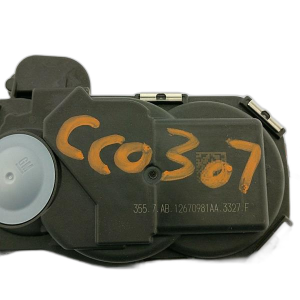
(OEM #12631186)— If cleaning doesn't fix the high idle, the electronic components of the throttle body may have failed. This part number is common for the LLT engine.
Trusted brands: ACDelco (OEM), Bosch, Hitachi
OEM price range: $250-$400
Aftermarket price range: $150-$250 - PCV Hose/Tube
(OEM #12590632)— The rear PCV hose that connects to the intake manifold is a very common failure point for vacuum leaks on the 3.6L engine, leading directly to a P0507 code.
Trusted brands: ACDelco (OEM), Dorman
OEM price range: $30-$60
Aftermarket price range: $10-$30
Related Codes That Often Appear With This One
- P0171 — System Too Lean (Bank 1) - Often appears with P0507 because the unmetered air from a vacuum leak creates a lean air/fuel mixture that the O2 sensor detects.
- P0174 — System Too Lean (Bank 2) - Same reason as P0171; a vacuum leak affects both cylinder banks.
- P0496 — EVAP Flow During a Non-Purge Condition - This points directly to a faulty EVAP purge solenoid, which can be the source of the vacuum leak causing the P0507.
- P2176 — Throttle Actuator Control System - Idle Position Not Learned. This code can appear after a throttle body cleaning or replacement if the relearn procedure is not performed correctly.
Technical Service Bulletins (TSBs) & Recalls
- TSB #PIP4578B: Addresses throttle position codes like P2119 on GM direct injection engines, citing carbon buildup as the cause and recommending cleaning and an idle relearn. While not directly for P0507, it describes the root cause of the most common fix.
- TSB #07-06-04-025M: Informs technicians that the ticking sound from the high-pressure fuel pump and injectors on SIDI engines (including the 3.6L LLT) is normal and not a fault. This is useful for distinguishing normal engine noise from a potential vacuum leak hiss.
Platform-Specific Known Issues
- The 3.6L LLT engine is known for timing chain stretch issues, which can sometimes cause erratic running conditions, though P0507 is not a primary symptom. However, if other timing-related codes (like P0008, P0017, etc.) are present, a larger issue may exist. GM issued a special coverage adjustment (11340C) for this on some 2009 models.
- A user on the GMT-Trucks.com forum with a P0507 code ultimately fixed their issue by replacing the entire throttle body assembly after cleaning and replacing the IAC (on an older model) did not work, suggesting the throttle body itself had failed.
Mechanic-Grade Diagnostic Values
- Long-Term Fuel Trim (LTFT) — expected: Close to 0% (ideally between -5% and +5%) at idle.. Failure: Consistently positive values above +10% suggest the ECM is adding fuel to compensate for unmetered air from a vacuum leak, a primary cause of P0507.
- Absolute Throttle Position Percentage — expected: On a clean throttle body, should be around 6-10% at idle.. Failure: A reading higher than 10-12% at idle can indicate carbon buildup is preventing the throttle plate from fully closing, forcing the ECM to register a higher 'at rest' position.
- Desired vs. Actual Idle RPM — expected: Actual RPM should be within 25-50 RPM of Desired RPM on a healthy engine.. Failure: When Actual RPM is consistently 100-200+ RPM higher than Desired RPM for a set period (e.g., 30 seconds), the P0507 code is triggered.
Scan Tool Commands That Help
- GDS2 (GM Global Diagnostic System 2): Idle Relearn / Throttle/Idle Learned Airflow Reset — This function is mandatory after cleaning or replacing the throttle body. It resets the learned values in the ECM, allowing it to establish a new baseline for the closed throttle position. Failure to perform this reset is a common reason for P0507 to persist after a repair.
- GDS2 (GM Global Diagnostic System 2): Throttle Position Sensor Learn — Used after replacing the throttle body assembly to ensure the ECM correctly reads the full sweep of the new throttle position sensors.
Wiring & Ground Locations
- G110 — Right front of the engine, mounted to the cylinder head.. This is a primary engine ground. A loose or corroded G110 can cause erratic behavior in various engine sensors and actuators, including the electronic throttle body, potentially contributing to idle control issues.
- G103 — Left side of the engine compartment, on the left inner fender panel, sometimes above the brake booster.. This ground serves the Body Control Module (BCM) and Engine Control Module (ECM). A poor connection here can lead to a wide range of seemingly unrelated electronic issues, including incorrect sensor readings and communication errors that could indirectly affect idle control.
- Throttle Body Connector (X87) — The 6-pin electrical connector on the throttle body assembly.. This is the single point of failure for all throttle control signals. The pins for the two Throttle Position Sensors (TPS1 and TPS2), their 5V reference, ground, and the motor control wires are all located here. Wires can fray or break at the back of the connector from vibration, leading to intermittent throttle faults and idle problems.
Real Owner Repair Stories
- acadiaforum.net user (2011 GMC Acadia (Lambda platform sibling with 3.6L LLT)) — High idle of 1100 RPM, P0507 code present.
❌ Tried (didn't work) Cleaned the throttle body., Replaced the throttle body., Performed multiple idle relearn procedures.
✅ What actually fixed it Replacing the rear PCV hose (part #12590632) that connects to the back of the intake manifold. The original hose had a hidden crack, causing a significant vacuum leak that was not resolved by throttle body service.
"I Checked Everything" — The Actual Cause
- In some cases involving a leaking brake booster, a standard smoke test of the intake manifold and vacuum lines may come back clean. The leak is internal to the booster itself and only manifests as a vacuum leak when the engine is running and providing vacuum to it. The definitive test is to clamp off the booster's vacuum hose with the engine running and see if the idle speed drops to normal.
OEM Part Supersession History
12616668, 12607362→12631186— Part consolidation and design updates by GM/ACDelco for the throttle body assembly.
Model Year Variations Within This Range
- 2009-2017: While the Enclave used the 3.6L V6 throughout this period, GM began phasing in the updated LFX version of the 3.6L engine in other vehicles starting in 2012. The LFX has a different intake manifold, ECM, and throttle body. It is critical to verify the engine code (LLT for this range of Enclave) when ordering parts like the throttle body or intake gaskets, as LFX parts are not compatible.
- 2009 vs 2013-2017: The Enclave received a facelift in 2013 which included revised styling but the core LLT powertrain and its common P0507 causes (dirty throttle body, PCV hoses) remained the same.
Diagnostic Flowchart
Other Known Issues on This Vehicle
Issues unrelated to this code that are worth knowing about as an owner of this generation:
- Premature Timing Chain Stretch 🔴 High — Common on early LLT engines, often before 100,000 miles. Less frequent on later LFX engines (2012+). Symptoms include rattling on startup and codes like P0008, P0017. (Ref: TSB 11340C (Special Coverage for 2009 models))
- Cracked 3-5-R Wave Plate (Transmission) 🔴 High — Very common on early models (especially 2008-2009) with the 6T75 transmission, typically occurring between 70k-120k miles. Results in sudden loss of 3rd, 5th, and Reverse gears. (Ref: TSB 14404B (Special Coverage, now expired))
- Power Steering Pump Failure / Leaks 🟠 Medium — Common across all first-generation years. Symptoms include a whining noise (especially when turning), fluid leaks, and intermittent loss of power assist at low speeds. (Ref: TSB 14329B (Special Warranty Coverage, now expired))
- Excessive Oil Consumption 🟠 Medium — Reported by many owners, sometimes attributed to PCV system issues or piston ring wear. Can lead to low oil levels and potential engine damage if not monitored. (Ref: TSB 10-06-01-008F (addresses consumption on some GM engines))
- Water Leaks into Cabin 🟡 Low — Often caused by clogged sunroof drain tubes, leading to a wet passenger-side floorboard and potential damage to electrical modules located there.
Used vs. New Parts: Buying Guide for This Vehicle
When a used part is the smart pick: A used part from a junkyard is generally not recommended for the key electronic components related to this code. However, for purely mechanical, non-wear items like the plastic engine cover or air intake ducting, a used part is a perfectly reasonable and cost-effective choice.
Donor-vehicle mileage cap: roughly under 75000 miles for the part to have meaningful remaining life.
What to inspect on the donor part:
- For a throttle body: Check for a clean throttle plate and bore. Avoid units with heavy, caked-on carbon or signs of physical damage to the connector.
- For hoses: Squeeze the hose to ensure it is still pliable and not brittle or mushy. Inspect carefully for any hairline cracks, especially near the ends.
- Check the donor vehicle's VIN to ensure it's from a compatible year and has the same LLT engine, not the later LFX.
OEM-only on this vehicle (don't cheap out):
- Throttle Body Assembly: Due to the sensitive electronics and the requirement for a precise idle relearn procedure, an OEM ACDelco part is strongly recommended to avoid compatibility and performance issues that are common with cheaper aftermarket units.
Aftermarket brands forum-validated for this vehicle:
- Dorman (for PCV hoses): Dorman often provides direct replacement hoses that are readily available and a cost-effective alternative to OEM.
Brands owners have reported issues with on this vehicle:
- No-name/unbranded electronic throttle bodies: Forum discussions frequently highlight issues with cheap, off-brand throttle bodies failing prematurely or being unable to complete the idle relearn procedure correctly.
Real Owner Stories
Aggregated from forums and TSBs cited above. Mileages and costs reflect what owners reported in those sources.
2012 Buick Enclave 3.6L V6
Symptoms: Owner was fighting various codes and drivability issues, describing it as a complex struggle with fueling and idle stability.
What fixed it: The owner had to perform a structured diagnosis including checking fuel trims and searching for vacuum leaks to manage the multiple drivability issues.
Source hint: ScannerDanner Forum - 'Fueling issues (I think so anyways) drivability'
2009 Buick Enclave 3.6L V6
Symptoms: High idle and P0507 code appearing immediately after the owner cleaned the throttle body.
What fixed it: Checking for vacuum leaks at the throttle body gasket, ensuring all hoses were reconnected, and verifying intake manifold bolt torque.
Source hint: GMTNation Forum - 'P0507 After Cleaning Throttle Body'
2009-2017 Buick Enclave 3.6L V6
Symptoms: The vehicle had a persistent P0507 code that remained even after cleaning the throttle body and attempting to fix the IAC (on related older designs).
What fixed it: Replacing the entire throttle body assembly.
Source hint: GMT-Trucks.com forum cited in vehicle_specific_issues
Related OBD-II Codes
Frequently Asked Questions
Why is my 3.6L LLT engine more prone to P0507 than other vehicles?
I cleaned my throttle body but now the idle is even higher. Did I break something?
Is there a TSB for the carbon buildup causing these idle issues?
I hear a ticking sound from the engine; is that a vacuum leak causing my P0507?
Could my timing chain issue be related to the P0507 code?
Where is the most common place for a vacuum leak on the Enclave?
Helpful Videos
We Have This Part in Stock

The information in this article is provided for general reference and educational purposes only. Vehicle specifications, procedures, and part compatibility can vary by production date, trim level, and region. Always consult your vehicle's factory service manual and verify part numbers before purchasing or performing repairs. Safety-critical components such as airbags, seat belts, and braking systems should be installed by a qualified professional.
- Buick Enclave:
- 🧭 Diagnostic Flowchart
- 🎬 Helpful Videos
- 🛍️ Shop This Part
- What's Unique About the 2009-2017 Buick Enclave
- Symptoms You May Notice
- Most Likely Causes
- Rare But Worth Checking
- Diagnosis Steps
- Parts You'll Likely Need
- Related Codes That Often Appear With This One
- Technical Service Bulletins (TSBs) & Recalls
- Platform-Specific Known Issues
- Mechanic-Grade Diagnostic Values
- Scan Tool Commands That Help
- Wiring & Ground Locations
- Real Owner Repair Stories
- "I Checked Everything" — The Actual Cause
- OEM Part Supersession History
- Model Year Variations Within This Range
- Other Known Issues on This Vehicle
- Used vs. New Parts: Buying Guide for This Vehicle
- Real Owner Stories
- 2012 Buick Enclave 3.6L V6
- 2009 Buick Enclave 3.6L V6
- 2009-2017 Buick Enclave 3.6L V6
- Related OBD-II Codes
- Frequently Asked Questions
- 🎟️ Get 5% Off