

P0507 on 2016-2024 Chevrolet Camaro 6.2L LT1: Causes for High Idle and Fixes
On a 2016-2024 Camaro with the 6.2L LT1, code P0507 is most often caused by a vacuum leak from a cracked PCV hose or loose intake connection, or a dirty electronic throttle body. A thorough cleaning of the throttle body and a smoke test to find air leaks are the most common fixes. The driver-side 'clean side' PCV tube is a particularly common failure point.
- P0507 on your Camaro LT1 means the engine is idling higher than the computer wants it to.
- Before buying any parts, perform a thorough check for vacuum leaks using a smoke machine, as this is the most common cause.
- The second most likely fix is cleaning the electronic throttle body of any carbon buildup.
- If you recently installed an aftermarket intake, throttle body, or manifold, the code likely indicates the need for a custom ECU tune.
- This engine does not have a separate Idle Air Control (IAC) valve; all idle functions are handled by the electronic throttle body.
What's Unique About the 2016-2024 Chevrolet Camaro
The 6th Generation Camaro's LT1 V8 uses a sophisticated 'drive-by-wire' electronic throttle body to manage idle speed, meaning there is no separate IAC valve to fail. This makes the code's cause almost always related to unmetered air entering the engine from sources like the PCV system or intake gaskets. This platform is also popular for modifications like cold air intakes and larger/ported throttle bodies; if these parts are installed without an updated ECU tune, the change in airflow can easily trigger a P0507 code as the factory computer struggles to adapt.
Symptoms You May Notice
- Check Engine Light is on
- Engine idle speed is noticeably higher than normal (e.g., over 800 RPM in park when warm)
- Engine may surge or have a slightly rough idle
- Vehicle may feel like it wants to 'creep' forward more at stops
- Manual transmission rev-matching feature may be disabled
- Hard starting, sometimes requiring a second crank attempt to fire up
- Replacing the Mass Airflow (MAF) sensor. A faulty MAF sensor usually triggers other codes and has different symptoms. While cleaning it is good maintenance, it's rarely the root cause of P0507.
- Looking for an Idle Air Control (IAC) Valve. This engine does not have one; idle is controlled by the main throttle body.
Most Likely Causes
- Vacuum Leak 🔴 High Probability The complex PCV system and numerous vacuum hoses can become brittle and crack from heat and age. A very common failure is the driver-side 'clean side' PCV tube assembly. Leaks are also common after installing aftermarket intake manifolds or cold air intakes if connections are not perfectly sealed.
How to confirm: Perform a smoke test. 🎬 Watch: See a smoke test performed on an LT1 engine. With the engine off, a smoke machine forces low-pressure smoke into the intake system. Smoke will visibly exit from any leak point, such as a cracked hose, bad gasket, or loose connection. Alternatively, you can carefully spray short bursts of brake cleaner or wave an unlit propane torch near suspected leak points with the engine idling; a change in idle RPM indicates a leak.
Typical fix: Replace the cracked hose or faulty gasket. Ensure all intake clamps and connections are tight. The driver-side PCV tube often requires replacement as a complete assembly.
Est. part cost: $10-$100 - Dirty Throttle Body 🔴 High Probability → Shop Fuel Injection Throttle Body The PCV system routes oil vapors and crankcase gases back into the intake, which can lead to carbon and oil sludge building up on the back of the throttle plate and in the throttle bore. This buildup can prevent the plate from closing completely at idle, creating a small air gap.
How to confirm: Remove the air intake tube from the throttle body and visually inspect the throttle plate and bore for black carbon deposits. The plate should be clean and move freely.
Typical fix: Clean the throttle body using a dedicated throttle body cleaner and a soft cloth or brush. Do not use aggressive carburetor cleaner. After cleaning, an idle relearn procedure is required for the ECM to learn the new closed position.
Est. part cost: $10-$20 for cleaner - Faulty PCV System 🟡 Medium Probability The Positive Crankcase Ventilation (PCV) system contains multiple plastic tubes and connections that can crack or become disconnected. A stuck-open PCV valve acts as a constant vacuum leak.
How to confirm: Inspect all PCV hoses for cracks or collapse, especially the line running to the driver's side valve cover. With the engine idling, removing the oil filler cap should cause a slight stumble or change in idle; if there is no change, the PCV system may not be properly sealed, indicating a leak elsewhere.
Typical fix: Replace the faulty PCV valve or damaged hoses. The specific hose assembly is often required.
Est. part cost: $20-$80 - Improperly Installed/Tuned Aftermarket Parts ⚪ Low Probability Common modifications like aftermarket cold air intakes, ported/larger throttle bodies, or intake manifolds alter the engine's airflow characteristics. Without a corresponding ECU tune, the factory software may not be able to adapt, causing a high idle.
How to confirm: This is the likely cause if the P0507 code appeared immediately after installing a new performance part. Check all installation steps, especially for intake manifold gaskets not being transferred to the new part. Also, verify all clamps and connections are tight.
Typical fix: Reinstall the factory parts to see if the code disappears. If the new parts are desired, the vehicle's ECU must be professionally tuned to account for the new hardware. Sometimes, just performing an idle relearn procedure is sufficient.
Est. part cost: $400-$800 for a custom tune
Rare But Worth Checking
- Faulty Electronic Throttle Body: → Shop Fuel Injection Throttle Body While cleaning often resolves the issue, the electronic motor or position sensor within the throttle body can fail, requiring a complete replacement. This is less common than a simple cleaning.
- Leaking Intake Manifold Gaskets: → Shop Engine Intake Manifold The gaskets sealing the intake manifold to the cylinder heads can fail, creating a vacuum leak. This is more likely on higher-mileage vehicles or if the manifold has been removed and reinstalled without new gaskets. A smoke test is the best way to confirm this.
Diagnosis Steps
- Read the code with an OBD-II scanner to confirm P0507 is present and check for any other codes.
- Visually inspect the entire air intake path from the air filter to the intake manifold. Look for any disconnected hoses, loose clamps, or obvious cracks.
- Specifically check all PCV hoses and connections, as they are a common failure point. The driver-side 'clean side' tube is a known weak spot.
- If a visual inspection reveals no issues, perform a smoke test to definitively identify any vacuum leaks. Pay close attention to the intake manifold gaskets, PCV lines, and throttle body seal.
- If no vacuum leaks are found, remove the air intake duct and inspect the electronic throttle body for carbon buildup.
- Clean the throttle body thoroughly with a dedicated cleaner and a soft rag. Ensure the throttle plate moves smoothly.
- After cleaning or replacing parts, perform an idle relearn procedure. 🎬 Watch: How to reset the idle using a scan tool. A common method is to start the engine and let it idle in Park for 3 minutes, then turn the engine off for 60 seconds. Repeat this cycle. A drive cycle of mixed city/highway driving may also be required for the ECU to fully adapt.
- If the code persists after these steps, especially if aftermarket parts are installed, the issue may be the throttle body itself or require a custom ECU tune.
Parts You'll Likely Need
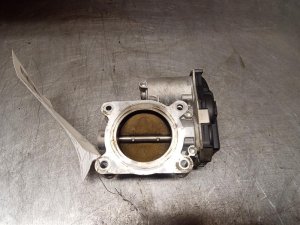
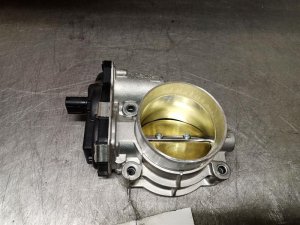
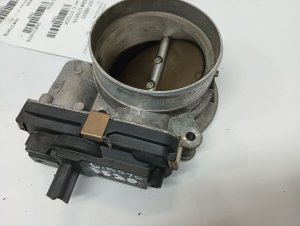
- Electronic Throttle Body
(OEM #12678223)— If cleaning does not resolve the high idle, the internal electronics may have failed, requiring replacement. This part controls the engine's idle speed.
Trusted brands: ACDelco, GM Genuine
OEM price range: $150-$250
Aftermarket price range: $100-$180 - PCV Tube (Clean Side)
(OEM #12667692)— This specific plastic hose assembly on the driver's side is a very common failure point. It becomes brittle from engine heat and cracks, causing a significant vacuum leak.
Trusted brands: ACDelco, GM Genuine
OEM price range: $30-$60
Aftermarket price range: $20-$40 - PCV Valve / Tube (Dirty Side)
(OEM #12640194)— The 'dirty side' PCV tube, which includes the valve, connects to the intake manifold. It can also crack or the internal valve can stick, creating a vacuum leak.
Trusted brands: ACDelco, GM Genuine
OEM price range: $40-$80
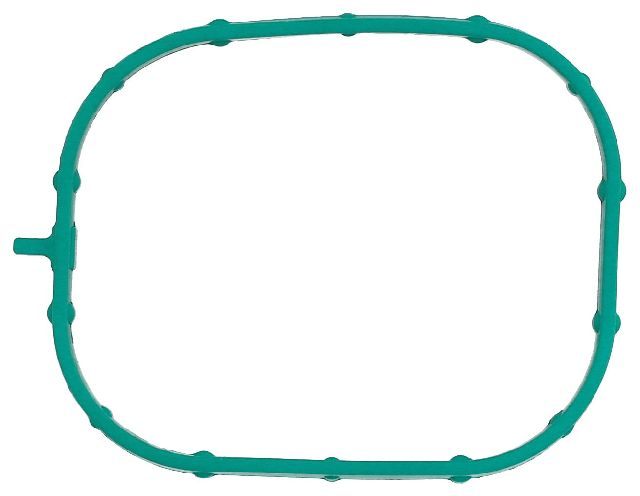
Aftermarket price range: $25-$50 - Intake Manifold Gasket Set — If a smoke test reveals a leak at the intake manifold, the gaskets must be replaced to ensure a proper seal.
Trusted brands: ACDelco, Fel-Pro
OEM price range: $40-$70
Aftermarket price range: $25-$50
Platform-Specific Known Issues
- Cracked Driver-Side PCV Tube: → Shop PCV Valve Hose The most frequently cited cause for P0507 in forum discussions is a crack in the 'clean side' PCV tube assembly (GM Part No. 12667692). It is a molded plastic part that runs across the driver-side valve cover and becomes brittle from heat cycles, often cracking near the connection points.
Mechanic-Grade Diagnostic Values
- Idle RPM Mismatch — expected: Actual RPM should be within ~50 RPM of Desired RPM.. Failure: P0507 is typically set when Actual RPM is 100-200 RPM or more above Desired RPM for a sustained period.
- Long Term Fuel Trim (LTFT) at Idle — expected: Within +/- 5% on a healthy, stock engine.. Failure: Sustained positive values above +10% suggest the ECM is adding fuel to compensate for unmetered air from a vacuum leak.
- Throttle Position Sensor (TPS) % at Idle — expected: A low, stable percentage (e.g., 12-15%) when the throttle is closed.. Failure: A higher than normal reading, or a reading that fluctuates at idle, can indicate carbon buildup preventing the throttle plate from fully closing or a faulty sensor.
Scan Tool Commands That Help
- GDS2 (GM Dealer Tool) or equivalent professional scanner: Idle Speed Control — To bidirectionally command the idle RPM up and down. If the engine RPM responds correctly, it suggests the throttle body motor is functional and the problem is likely unmetered air.
- GDS2 (GM Dealer Tool) or equivalent professional scanner: Idle Learn Reset / Throttle/Idle Learn — This function must be performed after cleaning or replacing the electronic throttle body. It resets the learned idle airflow values and forces the ECM to learn the new minimum throttle position.
Wiring & Ground Locations
- Engine Block Ground (near starter) — On the engine block, underneath the passenger side exhaust manifold, near the starter motor.. This is a primary engine-to-chassis ground. Forum members report this bolt can be loose from the factory, causing a variety of erratic electrical issues, including unstable sensor readings that could affect idle control.
- Cylinder Head Grounds — Two small ground wires are located on the back of the passenger side cylinder head.. These ground various engine sensors. A poor connection here can lead to incorrect sensor data being sent to the ECM, potentially impacting fuel and idle calculations.
- G103 — Located on the cowl in the engine compartment, above the brake booster.. This is a critical ground point for the Body Control Module (BCM) and the Data Link Connector (DLC). A fault here can cause communication issues with scan tools or other bizarre electronic symptoms.
Real Owner Repair Stories
- LS1Tech Forum User (LS1-powered vehicle (similar electronic throttle control principles)) — Persistent P0507 code and high idle around 1500 RPM that would only drop after coming to a complete stop.
❌ Tried (didn't work) Checked for vacuum leaks, Replaced IAC sensor (N/A for LT1, but part of their process), Cleaned MAF, Replaced throttle body sensor
✅ What actually fixed it The issue was traced to a faulty EVAP purge solenoid. It was allowing unmetered air/fuel vapor to enter the intake manifold without setting a specific EVAP system code, which the ECM interpreted as a vacuum leak causing the high idle. - camaro6.com Forum User (6th Gen Camaro SS 1LE) — P0507 code appeared after installing an aftermarket cold air intake, 103mm throttle body, and intake manifold.
❌ Tried (didn't work) Initial ECU tune did not resolve the code.
✅ What actually fixed it The final fix required a combination of ensuring there were no vacuum leaks from the new manifold installation and having the ECU tune adjusted specifically for the new airflow characteristics of the larger throttle body and intake. The discussion confirmed that large hardware changes without a proper tune are a direct cause.
"I Checked Everything" — The Actual Cause
- In at least one documented case on a similar GM V8, a persistent P0507 code that was not resolved by checking for vacuum leaks was ultimately caused by a faulty EVAP purge solenoid. The solenoid was leaking internally, allowing unmetered fuel vapor into the intake manifold, which the engine computer cannot distinguish from a traditional vacuum leak. This is a difficult diagnosis because a smoke test on the intake manifold will come back clean, and the EVAP system may not set its own fault code.
Documented NHTSA Reports
- In a report involving a similar GM platform (NHTSA ODI #11721239), an owner described a P0507 code appearing alongside transmission-related symptoms where the vehicle had delayed engagement from Park to Drive and eventually stopped moving forward on an incline.
- Another report (NHTSA ODI #10593542) noted that a P0507 code occurred in conjunction with a traction control disabled warning and a loss of reverse gear.
OEM Part Supersession History
12678223→12740727— Standard part revision by the manufacturer for improvements or supplier changes.
Heads up: The new part number 12740727 is the correct service replacement for 12678223 and is fully compatible.
Model Year Variations Within This Range
- 2016-2024: No significant variations in the design of the throttle body, PCV system, or engine control logic related to this code have been identified across the 2016-2024 model years for the LT1 engine. The diagnostic process is consistent for the entire generation.
Diagnostic Flowchart
Other Known Issues on This Vehicle
Issues unrelated to this code that are worth knowing about as an owner of this generation:
- A8 (8L90/8L45) Automatic Transmission Shudder 🔴 High — Very common on 2016-2019 models. Typically appears between 20,000-60,000 miles. Feels like driving over rumble strips at light throttle. (Ref: TSB 18-NA-355. The fix involves multiple transmission fluid flushes with an updated Mobil 1 Synthetic LV ATF HP fluid. If flushing doesn't work, torque converter replacement may be necessary.)
- AFM/DFM Lifter Failure 🔴 High — A known issue across many modern GM V8s with Active/Dynamic Fuel Management. Can occur at various mileages, sometimes under 50,000 miles. Symptoms include a persistent ticking noise, misfires, and eventual engine damage if ignored.
- Slow or Long Crank When Hot 🟡 Low — Common complaint where the engine cranks slowly after being shut down hot and restarted shortly after (heat soak). It sounds like a weak battery but is often due to high resistance in the starter wiring from heat. (Ref: No official TSB, but a common owner fix is adding a supplemental ground wire for the starter or installing a heat shield blanket around the starter.)
- Direct Injection Carbon Buildup 🟠 Medium — Inevitable on all direct-injected engines, including the LT1. Over time, carbon deposits build up on the back of intake valves, which can reduce performance. Typically requires cleaning (walnut blasting) every 80,000-100,000 miles.
- Infotainment Screen Blackout / Electrical Glitches 🟡 Low — Some owners report intermittent issues where the main infotainment screen goes black, the backup camera fails to display, or other minor electrical gremlins occur. Often resolved by restarting the car.
Used vs. New Parts: Buying Guide for This Vehicle
When a used part is the smart pick: For this repair, buying new is strongly recommended for all common failure parts (hoses, gaskets, throttle body). The cost savings on a used part are minimal compared to the risk of failure. A used intake manifold is acceptable if inspected for cracks or warpage.
Donor-vehicle mileage cap: roughly under 40000 miles for the part to have meaningful remaining life.
What to inspect on the donor part:
- For a throttle body, check the electrical connector pins for corrosion or damage.
- Inspect the throttle bore for deep scratches or scoring; light carbon is normal.
- Verify the throttle plate moves smoothly by hand (with ignition off).
- For PCV hoses, avoid any parts that are stiff, brittle, or show any signs of cracking.
OEM-only on this vehicle (don't cheap out):
- Electronic Throttle Body: To ensure compatibility with the factory ECU and avoid idle/tuning issues, an OEM part (ACDelco or GM Genuine) is highly recommended.
- PCV Hoses: While aftermarket is available, the molded OEM hoses guarantee perfect fitment and connection, which is critical for preventing vacuum leaks.
Aftermarket brands forum-validated for this vehicle:
- Fel-Pro for intake manifold gaskets.
- Dorman is a widely available aftermarket option for PCV hoses, but fitment should be carefully checked.
Brands owners have reported issues with on this vehicle:
- Unnamed or 'white-box' electronic throttle bodies from online marketplaces are a significant risk and often cause more issues than they solve.
Real Owner Stories
Aggregated from forums and TSBs cited above. Mileages and costs reflect what owners reported in those sources.
2016 Chevrolet Camaro LT1 6.2L V8
Symptoms: The engine had a noticeably high idle and the car felt like it wanted to 'creep' forward more than usual at stoplights. It also had a hard time starting, sometimes taking a second crank attempt to fire up.
What fixed it: Found a crack in the driver-side 'clean side' PCV tube assembly (GM Part No. 12667692). Replacing the brittle plastic tube resolved the vacuum leak and the high idle.
Source hint: vehicle_specific_issues: Cracked Driver-Side PCV Tube
2017 Chevrolet Camaro LT1 6.2L V8
Symptoms: Check Engine Light came on with code P0507. Upon inspection, the idle was over 800 RPM in park when the engine was warm.
What fixed it: Removed the air intake tube and found black carbon deposits on the throttle plate. Cleaned the throttle body with dedicated cleaner and performed the idle relearn procedure (idling in Park for 3-minute intervals).
Source hint: common_causes: Dirty Throttle Body
2016-2024 Chevrolet Camaro LT1 6.2L V8
Symptoms: P0507 code appeared immediately after installing a ported throttle body and an aftermarket intake manifold.
What fixed it: Verified all intake clamps were tight and eventually had the vehicle professionally tuned to account for the altered airflow characteristics of the performance parts.
Source hint: common_causes: Improperly Installed/Tuned Aftermarket Parts
Related OBD-II Codes
Frequently Asked Questions
I have a 2016 Camaro with the 8-speed automatic; could my high idle be related to the transmission shudder issue?
Is there a specific part on the LT1 engine known to cause the P0507 code?
I just installed a cold air intake on my LT1 Camaro and now I have a P0507. What should I check?
Why does my manual transmission Camaro's rev-matching feature stop working when the Check Engine Light is on for P0507?
How do I perform the idle relearn on my 6.2L V8 after cleaning the throttle body?
Can a dirty throttle body really cause a high idle on the LT1?
Helpful Videos


Used OEM Parts in Stock
New Aftermarket Parts Available



The information in this article is provided for general reference and educational purposes only. Vehicle specifications, procedures, and part compatibility can vary by production date, trim level, and region. Always consult your vehicle's factory service manual and verify part numbers before purchasing or performing repairs. Safety-critical components such as airbags, seat belts, and braking systems should be installed by a qualified professional.
- Chevrolet Camaro:
- 🧭 Diagnostic Flowchart
- 🎬 Helpful Videos
- 🛍️ Shop This Part
- What's Unique About the 2016-2024 Chevrolet Camaro
- Symptoms You May Notice
- Most Likely Causes
- Rare But Worth Checking
- Diagnosis Steps
- Parts You'll Likely Need
- Platform-Specific Known Issues
- Mechanic-Grade Diagnostic Values
- Scan Tool Commands That Help
- Wiring & Ground Locations
- Real Owner Repair Stories
- "I Checked Everything" — The Actual Cause
- Documented NHTSA Reports
- OEM Part Supersession History
- Model Year Variations Within This Range
- Other Known Issues on This Vehicle
- Used vs. New Parts: Buying Guide for This Vehicle
- Real Owner Stories
- 2016 Chevrolet Camaro LT1 6.2L V8
- 2017 Chevrolet Camaro LT1 6.2L V8
- 2016-2024 Chevrolet Camaro LT1 6.2L V8
- Related OBD-II Codes
- Frequently Asked Questions
- 🎟️ Get 5% Off