

P0507 on 2005-2013 Chevrolet Corvette: High Idle Causes and Fixes
On a C6 Corvette, code P0507 is almost always caused by unmetered air entering the engine, leading to a high idle. The most likely culprits are a vacuum leak (from a cracked PCV hose or intake gasket) or a dirty throttle body. Start by cleaning the throttle body and inspecting all vacuum lines, especially the PCV system.
- P0507 on a C6 Corvette means the idle is too high, usually due to a vacuum leak or a dirty throttle body.
- Do not look for an Idle Air Control (IAC) valve; this platform does not have one.
- Start your diagnosis by inspecting all PCV and vacuum hoses for cracks, then clean the throttle body.
- A smoke test is the most effective way to find a hidden vacuum leak.
- After cleaning the throttle body, you may need to perform an idle relearn procedure by letting the car idle and/or completing a drive cycle.
What's Unique About the 2005-2013 Chevrolet Corvette
The C6 Corvette platform uses a 'drive-by-wire' throttle system, which means a traditional Idle Air Control (IAC) valve is not present. The code's generic definition can be misleading, as there is no IAC valve to fail. Instead, P0507 points to a symptom—excessive engine speed at idle—which the ECM cannot correct by closing the throttle blade further. 🎬 Watch: A complete guide to fixing the P0507 high idle code. This is typically due to 'unmetered' air entering the engine from a source other than the throttle body, such as a vacuum leak, or a dirty throttle plate that's stuck slightly open, allowing more air than the ECM intends.
Symptoms You May Notice
- Check Engine Light is on
- Engine idle speed is higher than normal (e.g., 1000-1500 RPM when warm).
- Idle speed 'hangs' or is slow to drop when coming to a stop.
- Vehicle may feel like it's pushing against the brakes when stopped
- Inconsistent or surging idle
- Headers may glow red at idle due to the lean condition caused by a vacuum leak.
- In some Chevrolet vehicles, a high idle condition may be accompanied by a "Traction Control Disabled" message, as noted in NHTSA ODI #10593542.
- Replacing the throttle body when it only needed to be cleaned.
- Searching for a non-existent Idle Air Control (IAC) valve.
- Replacing O2 sensors when lean conditions (P0171/P0174) are actually caused by a vacuum leak.
- Replacing the mass airflow (MAF) sensor without checking for vacuum leaks first.
Most Likely Causes
- Vacuum Leak 🔴 High Probability The complex PCV system and numerous vacuum hoses on LS engines can become brittle and crack over time due to engine heat and age. The intake manifold gaskets are also a known potential leak point.
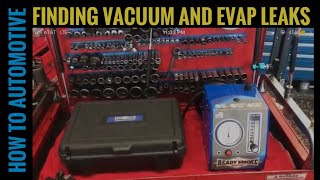
How to confirm: Perform a visual inspection of all vacuum lines, especially the PCV hoses near the valley cover and valve covers, and the brake booster hose. For hard-to-find leaks, a smoke test is the most effective method. 🎬 See how to perform a smoke test to find vacuum leaks. Alternatively, you can carefully spray carb cleaner or starter fluid around suspected leak points with the engine running; a change in idle RPM indicates a leak. Pinching off the brake booster hose can also test for a leaking booster diaphragm; if the idle drops, the booster is leaking internally.
Typical fix: Replace the cracked or disconnected hose. Intake manifold gaskets may also be a source and would require replacement.
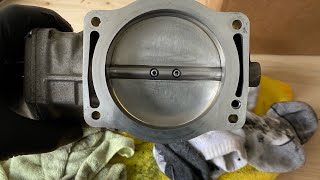
Est. part cost: $10-$150 - Dirty Throttle Body 🔴 High Probability → Shop Fuel Injection Throttle Body The PCV system routes oil vapors back into the intake, which can mix with dust and form carbon deposits around the throttle blade and bore. This buildup can prevent the blade from closing completely, creating a gap for unmetered air.
How to confirm: Remove the air intake duct from the throttle body and visually inspect the throttle plate and bore for a ring of black carbon buildup. The blade may feel sticky or not fully seated when gently pushed.
Typical fix: Clean the throttle body using a dedicated throttle body cleaner and a soft cloth. After cleaning, an idle relearn procedure is required 🎬 Watch: Step-by-step walkthrough for cleaning your Corvette throttle body. for the ECM to adapt to the new, correct airflow.
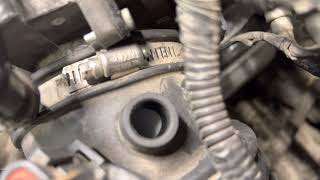
Est. part cost: $10-$20 - Faulty PCV System 🟡 Medium Probability The LS2/LS3/LS7 engines use a fixed-orifice PCV system located in the valley cover. While more reliable than older valve designs, the associated pre-formed hoses are notorious for cracking or becoming oil-saturated and soft, creating a significant vacuum leak.
How to confirm: Inspect the U-shaped hose from the valley cover to the intake manifold and the fresh air line from the valve cover to the air intake duct for cracks or loose connections. Clamping the PCV hose shut temporarily while monitoring idle speed can help diagnose a stuck-open system.
Typical fix: Replace the damaged PCV hose or tube. The most common failure is the pre-formed hose from the valley cover to the intake manifold.
Est. part cost: $15-$50
Rare But Worth Checking
- Faulty Electronic Throttle Body: → Shop Fuel Injection Throttle Body While less common than a simple cleaning, the electronic motor or position sensor within the throttle body can fail, causing erratic behavior. This is usually a last resort after ruling out vacuum leaks and cleaning. A scan tool may show a discrepancy between commanded and actual throttle position.
- Incorrect Engine Tune (Modified Vehicles): On Corvettes with significant modifications (like an aftermarket camshaft), cleaning a previously dirty throttle body can cause a high idle because the engine's tune was calibrated for the airflow of the dirty unit. The tune's minimum airflow tables may need to be adjusted by a professional tuner to correct the idle.
- Faulty E38 Engine Control Module (ECM): Extremely rare, but the E38 ECM used in these Corvettes can fail. Symptoms are often more severe and erratic than just a high idle, such as stalling when put in gear, but a failing injector driver or other internal fault could theoretically contribute to idle issues.
Diagnosis Steps
- Read the code with an OBD-II scanner and confirm P0507 is present. Note any other codes, especially P0171 or P0174, which strongly point to a vacuum leak.
- With the engine warm and idling, observe the RPM on a scan tool or the tachometer. Confirm it is elevated above the typical 600-800 RPM range.
- Perform a thorough visual inspection of all vacuum hoses. Pay close attention to the PCV lines running from the passenger valve cover and the front valley cover to the intake. Check the large brake booster hose for cracks.
- If no obvious leaks are found, perform a smoke test to definitively identify any sources of unmetered air. This is the most reliable method.
- If no vacuum leaks are present, remove the air intake tube and inspect the electronic throttle body for carbon buildup.
- If dirty, clean the throttle body using appropriate cleaner and a microfiber towel. Do not use abrasive tools. Manually moving the blade is generally acceptable for cleaning, but be gentle.
- After cleaning, perform an idle relearn procedure. This typically involves starting the engine and letting it idle in Park for 3 minutes, turning the ignition off for 60 seconds, starting it again and letting it idle for another 3 minutes. A short drive cycle may also be required for the ECM to fully adapt.
- If the high idle persists, use a scan tool to monitor commanded vs. actual throttle position. A significant discrepancy could indicate a faulty throttle body.
- If the vehicle is modified, especially with a cam, and the high idle appeared after cleaning the throttle body, consult your tuner to have the minimum airflow tables adjusted.
Parts You'll Likely Need
- Throttle Body Cleaner — This is the first and cheapest step to resolve a high idle caused by carbon buildup.
Trusted brands: CRC, ACDelco
OEM price range: $10-$15
Aftermarket price range: $8-$12 - PCV Tube/Hose (Valley Cover to Intake)
(OEM #12594779)— This pre-formed hose is a very common failure point for vacuum leaks due to its location and exposure to heat, causing it to crack.
Trusted brands: ACDelco, Dorman
OEM price range: $20-$30
Aftermarket price range: $15-$25 - Intake Manifold Gaskets
(OEM #19256623 (for LS3/L99) or Mahle MS19589)— If a smoke test reveals a leak at the intake manifold mating surface, these gaskets must be replaced. They are individual O-rings for each port.
Trusted brands: ACDelco, Fel-Pro, Mahle
OEM price range: $40-$60
Aftermarket price range: $25-$40 - Electronic Throttle Body Assembly
(OEM #12570790 (for LS2 'Silver Blade') or 19420707 (for LS3/LS7 'Gold Blade'))— If cleaning does not resolve the issue and the internal electronics have failed, the entire assembly must be replaced.
Trusted brands: ACDelco, Bosch
OEM price range: $250-$400
Aftermarket price range: $150-$250
Related Codes That Often Appear With This One
- P0171 — System Too Lean (Bank 1) - Often appears with P0507 if a vacuum leak is the root cause, as unmetered air creates a lean air/fuel mixture that the ECM detects via the oxygen sensors.
- P0174 — System Too Lean (Bank 2) - Similar to P0171, this indicates a lean condition on the other engine bank, strongly suggesting a vacuum leak affecting the entire engine, such as from the intake manifold or PCV system.
- P0700 / P2714 — Transmission control codes. As reported in NHTSA ODI #11721239 for a similar Chevrolet platform, P0507 can sometimes appear alongside transmission performance codes and symptoms like delayed engagement into drive.
Platform-Specific Known Issues
- Tune Adjustment After Throttle Body Cleaning on Modified Cars: → Shop Fuel Injection Throttle Body A well-documented issue on forums involves cars with aftermarket cams and tunes. The tuner often adjusts the idle airflow to compensate for a dirty throttle body. When the owner later cleans the throttle body, the idle shoots up, setting a P0507. The fix is not mechanical; the tune must be readjusted for the clean throttle body's increased airflow.
Mechanic-Grade Diagnostic Values
- Throttle Position Sensor 1 (TPS1) Voltage (LS2 'Silver Blade' TB) — expected: > 4.0V at closed throttle, decreases as throttle opens.. Failure: Voltage is low at closed throttle or does not sweep smoothly.
- Throttle Position Sensor 2 (TPS2) Voltage (LS2 'Silver Blade' TB) — expected: < 1.0V at closed throttle, increases as throttle opens.. Failure: Voltage is high at closed throttle or does not sweep smoothly.
- Long Term and Short Term Fuel Trims at idle — expected: Typically within +/- 5-10%.. Failure: In the case of a high idle caused by a tune issue after cleaning a throttle body, fuel trims may appear normal (e.g., 0-5%) because the ECM is not trying to correct for a perceived vacuum leak.
- Manifold Absolute Pressure (MAP) at idle (cammed engine) — expected: A cammed LS2 with a high idle from P0507 was observed with a MAP reading of 60 kPa.. Failure: This value is a data point, not a definitive failure indicator, but provides context for a modified engine with this code.
- Mass Airflow (MAF) at idle (cammed engine) — expected: A cammed LS2 with a high idle from P0507 was observed with a MAF reading of ~4,058 Hz or ~2.43 lb/min.. Failure: This value is a data point, not a definitive failure indicator, but provides context for a modified engine with this code.
Scan Tool Commands That Help
- Tech 2 / GDS2 / HP Tuners: Idle Learn Reset / Throttle Position Reset — This function must be used after cleaning or replacing the throttle body to force the ECM to relearn the new closed-throttle airflow characteristics. Failure to do so is a common cause of P0507.
- Tech 2 / GDS2: Throttle Position Control — This bidirectional command allows a technician to manually command the throttle blade to different percentages. It can be used to verify smooth operation of the throttle motor and to hold the blade open for easier cleaning without removing the throttle body.
Wiring & Ground Locations
- E38 ECM Location — Behind the right front fender, accessible after removing the passenger side wheel and wheelhouse liner.. Provides physical access to the ECM and its connectors for testing throttle body circuits if a wiring fault is suspected.
- G105, G106, G107 — Main engine block grounds. G106 is located on the right side of the engine block, above the starter.. These are the primary grounds for the engine management system, including the ECM and its sensors. A loose or corroded ground at these points can cause erratic sensor readings and unpredictable behavior, although it's a less common cause for a persistent P0507.
- Throttle Body Connector (E38 ECM) — 6-pin connector on the electronic throttle body.. This is the primary connection for all throttle control and position signals. Knowing the pinout allows for testing voltage and continuity between the ECM and throttle body. For example, Pin 21 is TPS1 Signal and Pin 13 is TPS2 Signal.
Real Owner Repair Stories
- CorvetteForum user report (2005 Chevrolet Corvette with aftermarket cam and tune) — High idle (1100-1200 RPM when warm) and P0507 code immediately after cleaning the throttle body. Headers were glowing red at idle.
❌ Tried (didn't work) Replacing the thermostat, Replacing the throttle body assembly, Performing an idle relearn with HP Tuners, Smoke testing for vacuum leaks (none found), Capping off EVAP and brake booster lines
✅ What actually fixed it The engine tune was adjusted by a professional tuner. The original tune's 'minimum airflow' was set based on the old, dirty throttle body. After cleaning, the increased airflow exceeded the ECM's ability to compensate, requiring the tune itself to be recalibrated for the clean throttle body. - CorvetteForum user report (Chevrolet Corvette with FAST 102 intake manifold) — Very high idle (2000 RPM), setting P0507.
❌ Tried (didn't work) Spraying brake cleaner around the intake and hoses to find a vacuum leak (no change in RPM).
✅ What actually fixed it The electronic throttle body itself was faulty. Replacing the LS2-style throttle body assembly resolved the issue, allowing the idle to settle correctly after the computer relearned its position. - NHTSA ODI #11721239 — An owner reported that P0507 appeared with other codes like P0505 and P1101; the vehicle experienced delayed engagement when moving from Park to Drive and eventually stopped moving forward while driving up an incline.
"I Checked Everything" — The Actual Cause
- A common scenario for P0507, especially on modified vehicles, is passing a smoke test but still having a high idle. The cause was found to be an engine tune calibrated for a dirty throttle body; after cleaning, the increased airflow required a tune adjustment, not a mechanical fix.
- A leaking power brake booster diaphragm can cause a significant vacuum leak that triggers P0507 but will not show up on a smoke test if the one-way check valve in the vacuum hose is functioning. The definitive test is to pinch off the booster's vacuum hose while the engine is running; if the idle drops, the booster is the source of the leak.
OEM Part Supersession History
12570790 (and similar)→19420707 / 12605109 (and similar)— Engine change from LS2 to LS3/LS7.
Heads up: CRITICAL: The LS2 'Silver Blade' throttle body (for 2005-early 2008) and the LS3/LS7 'Gold Blade' throttle body (late 2008-2013) are NOT interchangeable without extensive ECM retuning. Although they share the same bolt pattern, the 'Gold Blade' throttle plate rotates in the opposite direction. Installing the wrong type will result in throttle control faults.
Model Year Variations Within This Range
- 2005 only: The 2005 Corvette uses a one-year-only E40 Engine Control Module (ECM). This ECM is considered a transitional 'bridge' unit, is reportedly not repairable, and has limited availability. All 2006-2013 models use the more common and robust E38 ECM.
- 2008: This was a transition year for the throttle body. Early 2008 models with the LS3 engine still used the LS2-style 'Silver Blade' throttle body. Mid-year, production switched to the new 'Gold Blade' throttle body that operates differently. Verification by visual inspection (blade color) is crucial when replacing.
Diagnostic Flowchart
Other Known Issues on This Vehicle
Issues unrelated to this code that are worth knowing about as an owner of this generation:
- Harmonic Balancer Wobble/Failure 🔴 High — Very common across all C6 years (LS2/LS3/LS7). The rubber elastomer bonding the inner and outer rings fails, causing a wobble, belt chirp, and eventually separation, which can damage the timing cover or steering rack. (Ref: TSB 05-06-01-001A for early 2005 models with a loose bolt, but the more common issue is delamination which affects all years.)
- Fuel Level Sending Unit Failure 🟠 Medium — Extremely common. The sulfur content in gasoline corrodes the contacts on the sending units in the saddle tanks, causing the fuel gauge to read empty after a fill-up and triggering a Check Engine Light (P2068). (Ref: Multiple TSBs were issued. Using Techron concentrate can sometimes temporarily clean the contacts, but replacement is often the only permanent fix.)
- LS7 Dropped Valve Guide/Head Issue 🔴 High — Specific to the 7.0L LS7 engine in the Z06. Excessive valve guide wear can lead to valve failure and catastrophic engine destruction. Onset can be as early as 10,000 miles. (Ref: No official recall, but it is a widely known and documented engine defect among owners and specialists.)
- Roof Panel Adhesive Failure ('Flying Roof') 🔴 High — Common on early models (2005-2007). The adhesive bonding the roof panel to the frame fails, causing popping noises and, in the worst case, the roof panel detaching at speed. (Ref: NHTSA Recalls 06V383000 and 10V175000 were issued to address this by repairing or replacing the roof panel.)
- Active Handling System Errors / Steering Position Sensor 🟠 Medium — Frequent on 2005-2008 models. Movement in the steering column can tug on the steering wheel position sensor wiring, causing erroneous 'Service Active Handling' messages and potentially unwanted brake application. (Ref: TSB 06-02-35-002B addresses the issue, which often requires securing the wiring harness.)
Used vs. New Parts: Buying Guide for This Vehicle
When a used part is the smart pick: For this repair, a used OEM electronic throttle body from a low-mileage donor vehicle can be a cost-effective alternative to a new OEM unit. Intake manifolds are also very safe to buy used as they are simple plastic components with no moving parts.
Donor-vehicle mileage cap: roughly under 80000 miles for the part to have meaningful remaining life.
What to inspect on the donor part:
- For a throttle body, inspect the electrical connector for corrosion or broken tabs.
- Check that the throttle blade moves smoothly by hand (if applicable) without binding or notchiness.
- Ensure there is no physical damage or cracks in the housing.
- For an intake manifold, check all gasket surfaces and bolt holes for cracks or damage.
OEM-only on this vehicle (don't cheap out):
- Electronic Throttle Body Assembly: While some aftermarket units work, many forum users recommend sticking with ACDelco (OEM) to avoid calibration, voltage range, and longevity issues that can be difficult to diagnose.
- Engine Control Module (ECM): Especially for the 2005-only E40, a used, tested OEM unit is the only viable replacement, as new units are unavailable and repair services do not support them.
Aftermarket brands forum-validated for this vehicle:
- Fel-Pro (Intake Manifold Gaskets)
- Mahle (Intake Manifold Gaskets)
- Dorman (PCV Hoses)
Brands owners have reported issues with on this vehicle:
- Unnamed/white-box electronic throttle bodies from online marketplaces are a significant gamble and often have incorrect sensor voltage ranges, leading to persistent codes.
Real Owner Stories
Aggregated from forums and TSBs cited above. Mileages and costs reflect what owners reported in those sources.
2005-2007 Chevrolet Corvette LS2
Symptoms: The owner of a cammed LS2 experienced a persistent high idle after cleaning the throttle body. Despite replacing various parts over several months, the high idle remained.
What fixed it: Adjusting the minimum airflow settings in the vehicle's tune to account for the clean throttle body.
Source hint: CorvetteForum - Thread 'P0507 High Idle': A user details a months-long chase for a P0507 after cleaning the throttle body on his cammed LS2.
2006-2013 Chevrolet Corvette Z06 LS7
Symptoms: High idle code P0507; the diagnostic discussion focused on identifying unmetered air sources.
What fixed it: Checking for vacuum leaks using starter fluid or carb cleaner to find leaks before inspecting the throttle body.
Source hint: CorvetteForum - Thread 'P0507 high idle code': Discussion on a Z06 highlights the standard diagnostic path.
Chevrolet Platform Owner Report
Symptoms: A driver reported that the SES light and DTC P1810 appeared alongside P0507, resulting in the traction control being disabled (NHTSA ODI #10593542).
Related OBD-II Codes
Frequently Asked Questions
Why did my Corvette's idle speed increase after I cleaned the throttle body?
Can a vacuum leak on my LS2/LS3/LS7 cause the headers to glow red?
How can I tell if my brake booster is the cause of the P0507 high idle?
Is there a specific PCV hose on the LS engine known for causing this code?
What is the correct idle relearn procedure for a C6 Corvette after cleaning the throttle body?
Does the P0507 code on my Corvette relate to the common Harmonic Balancer issue?
Helpful Videos
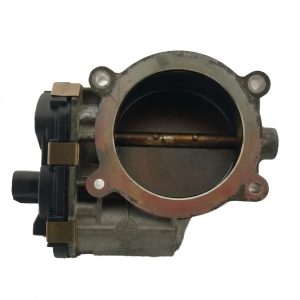
Used OEM Parts in Stock
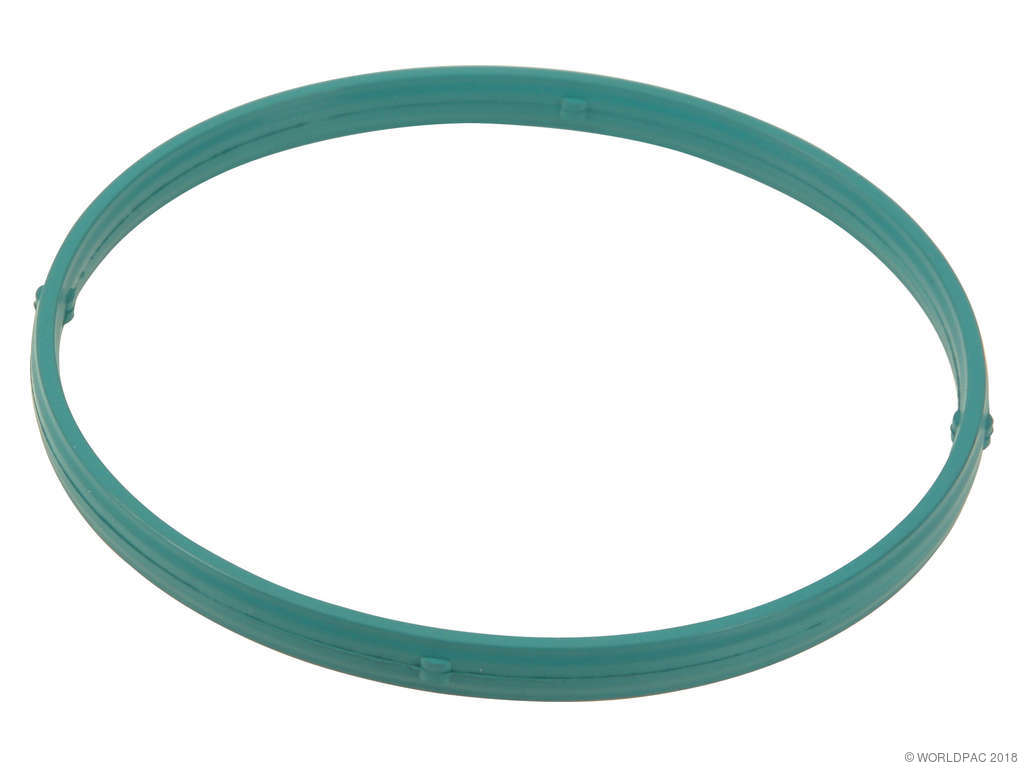
New Aftermarket Parts Available




The information in this article is provided for general reference and educational purposes only. Vehicle specifications, procedures, and part compatibility can vary by production date, trim level, and region. Always consult your vehicle's factory service manual and verify part numbers before purchasing or performing repairs. Safety-critical components such as airbags, seat belts, and braking systems should be installed by a qualified professional.
- Chevrolet Corvette:
- 🧭 Diagnostic Flowchart
- 🎬 Helpful Videos
- 🛍️ Shop This Part
- What's Unique About the 2005-2013 Chevrolet Corvette
- Symptoms You May Notice
- Most Likely Causes
- Rare But Worth Checking
- Diagnosis Steps
- Parts You'll Likely Need
- Related Codes That Often Appear With This One
- Platform-Specific Known Issues
- Mechanic-Grade Diagnostic Values
- Scan Tool Commands That Help
- Wiring & Ground Locations
- Real Owner Repair Stories
- "I Checked Everything" — The Actual Cause
- OEM Part Supersession History
- Model Year Variations Within This Range
- Other Known Issues on This Vehicle
- Used vs. New Parts: Buying Guide for This Vehicle
- Real Owner Stories
- 2005-2007 Chevrolet Corvette LS2
- 2006-2013 Chevrolet Corvette Z06 LS7
- Chevrolet Platform Owner Report
- Related OBD-II Codes
- Frequently Asked Questions
- 🎟️ Get 5% Off