

P0507 on 2001-2010 Chrysler PT Cruiser: High Idle Causes and Fixes
P0507 on a PT Cruiser means the engine is idling higher than the computer expects. The most common causes are vacuum leaks from old hoses (especially the PCV hose) or a dirty, failing Idle Air Control (IAC) valve. A thorough cleaning of the throttle body and IAC valve is a good first step.
- P0507 means the engine idle is too high.
- Start your diagnosis by checking for cracked or disconnected vacuum hoses, especially the PCV hose.
- The next most likely cause is a dirty Idle Air Control (IAC) valve or throttle body; cleaning these parts is often the fix.
- This is a common issue for older vehicles and is usually inexpensive to fix for a DIYer.
- Do not adjust the throttle stop screw unless you are certain it has been tampered with previously.
What's Unique About the 2001-2010 Chrysler PT Cruiser
The PT Cruiser, especially in this 2001-2010 year range, uses a fairly conventional cable-actuated throttle with a separate Idle Air Control (IAC) valve to manage idle. Unlike newer cars with electronic throttle control, the diagnosis often centers on this specific valve and the vacuum hoses connected to the intake manifold. Given the age of these vehicles, rubber and plastic components like vacuum hoses and gaskets are prone to becoming brittle and cracking, making vacuum leaks a very frequent cause of this code. The PCV hose, in particular, is a well-documented failure point that creates a large vacuum leak.
Generation note: The Chrysler PT Cruiser had one primary generation but received a facelift for the 2006 model year which included revised headlights, taillights, and interior updates. However, the core powertrain and idle control systems remained largely the same, so the causes and fixes for P0507 are consistent across the 2001-2010 range. Notably, the PCV system routing was updated on later models to reduce oil mist in the intake, but the hoses can still fail. The IAC valve part number also differs for 2001-2002 models versus 2003-2010 models.
Symptoms You May Notice
- Check Engine Light is on
- Engine idle speed is noticeably high (e.g., over 1000 RPM in Park/Neutral)
- Rough or surging idle
- Engine may stall when coming to a stop or when shifting gears
- Increased fuel consumption
- Harsh engagement when shifting from Park to Drive
- Replacing the throttle position sensor (TPS) without diagnosis. A faulty TPS usually sets its own specific codes and is less likely to cause a steady high idle than a vacuum leak or IAC issue.
- Replacing the IAC valve without first attempting to clean it and the throttle body.
Most Likely Causes
- Vacuum Leak 🔴 High Probability The rubber and plastic vacuum lines, intake manifold gaskets, and PCV hoses become brittle and crack with age and heat cycles, creating unmetered air leaks that the PCM cannot compensate for. The PCV hose is an especially common failure point.
How to confirm: Visually inspect all vacuum hoses for cracks, especially the lines connected to the intake manifold, PCV valve, and brake booster. A smoke test is the most effective method to find hidden leaks. You can also carefully spray carburetor cleaner or soapy water around suspected leak areas; a change in engine idle indicates a leak.
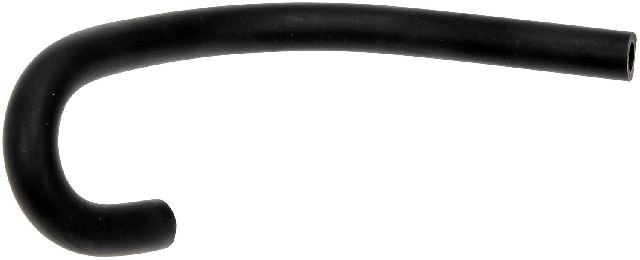
Typical fix: Replace the cracked or leaking vacuum hose(s) or gaskets. The PCV hose is often sold as a pre-formed part or can be replaced with bulk hose of the correct diameter.
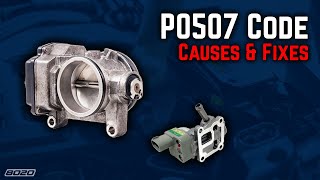
Est. part cost: $10-$50 - Dirty or Faulty Idle Air Control (IAC) Valve 🔴 High Probability → Shop Idle Air Control Valve Carbon and oil vapor from the crankcase ventilation system can build up on the IAC valve's pintle and seat, causing it to stick open and allow too much air to bypass the throttle.
How to confirm: Remove the IAC valve from the throttle body (it's held by a T-25 Torx screw 🎬 Watch this step-by-step guide to replacing the IAC valve.) and inspect it for carbon buildup. You can test its operation with a scan tool that can command the IAC position. If the idle doesn't change when commanded, the valve or its circuit is faulty.
Typical fix: Thoroughly clean the IAC valve and its port with throttle body cleaner. If cleaning doesn't resolve the issue, replace the IAC valve. The Mopar OEM part was discontinued but quality aftermarket replacements are available.
Est. part cost: $40-$120 - Dirty Throttle Body 🟡 Medium Probability → Shop Fuel Injection Throttle Body Carbon and grime can build up around the throttle plate, preventing it from closing completely. This creates a small opening that acts like a vacuum leak, raising the idle speed.
How to confirm: Remove the air intake hose from the throttle body and visually inspect the throttle plate and bore for black, sticky buildup. Check if anything has been physically ingested and is holding the plate open, as one owner found a piece of old air filter foam had become lodged there.
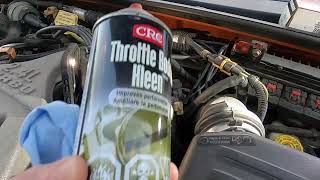
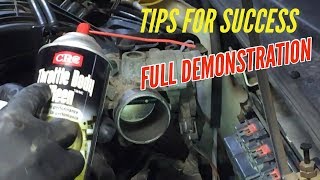
Typical fix: Clean the throttle body bore and plate with a dedicated throttle body cleaner and a soft brush or rag. Do not use carburetor cleaner. 🎬 Watch this quick DIY video on cleaning your throttle body.
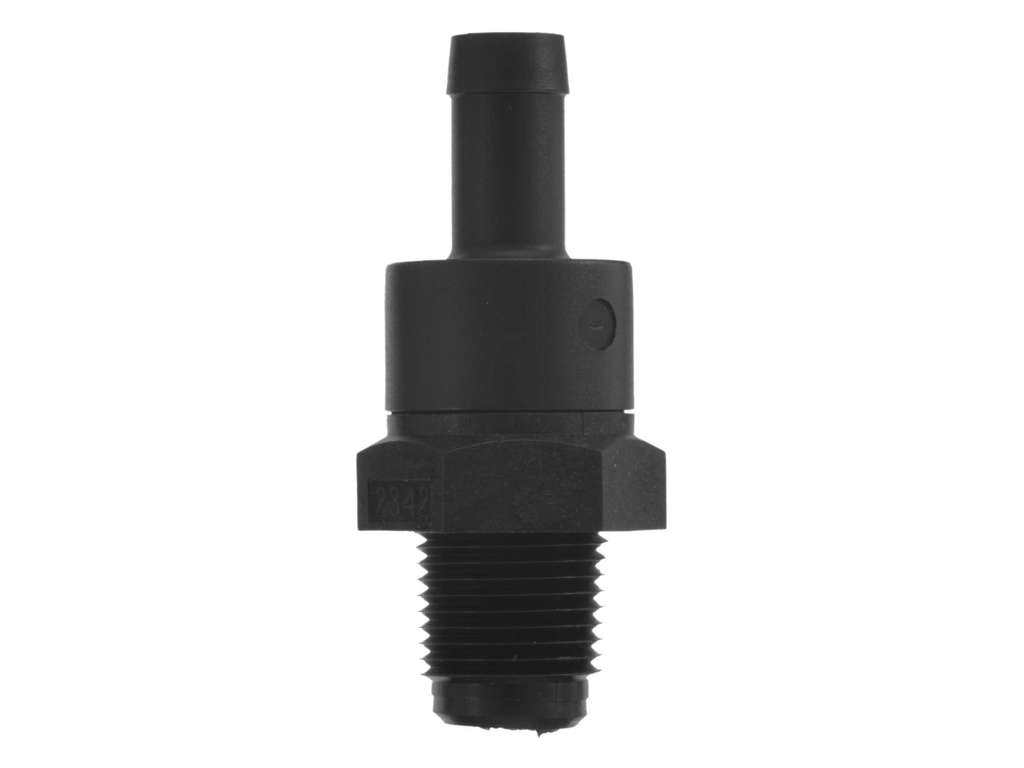
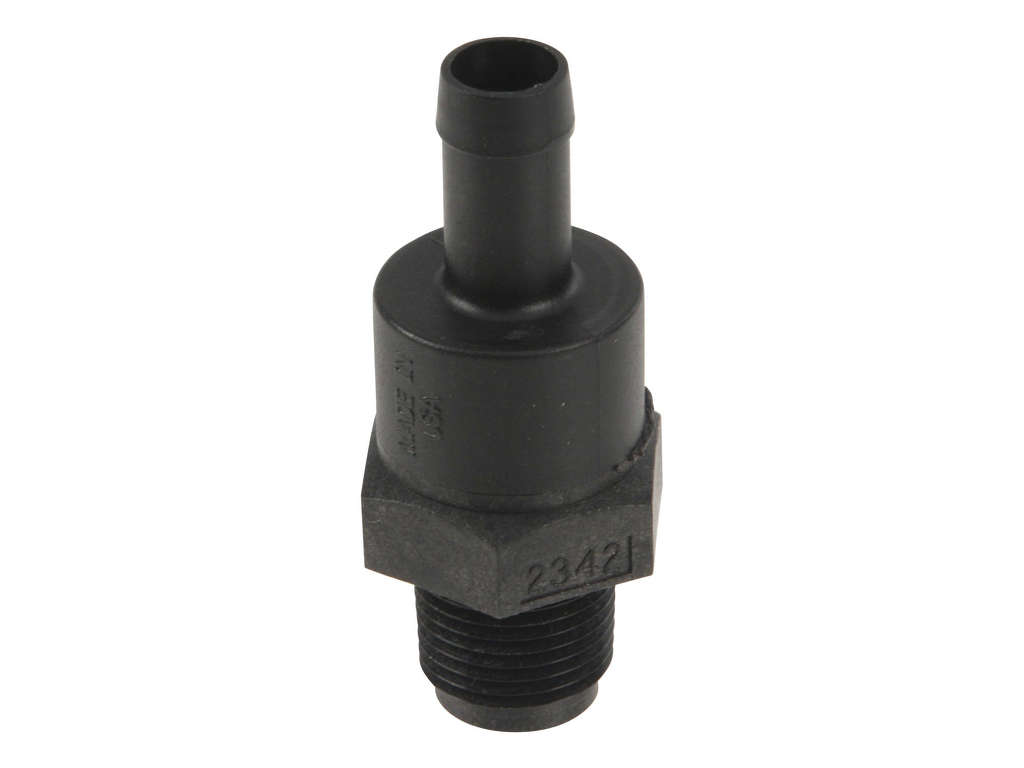
Est. part cost: $5-$15 (for cleaner) - Faulty PCV Valve or Hose 🟡 Medium Probability → Shop PCV Valve The PCV valve can get stuck open or its connecting hose can split, creating a significant vacuum leak. This is a very common failure point on many Chrysler vehicles of this era.
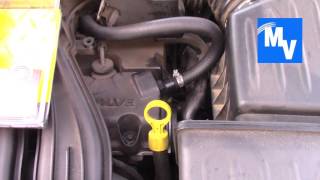
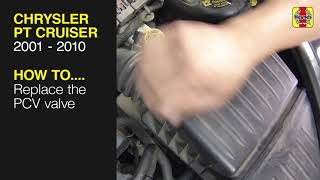
How to confirm: Inspect the PCV valve and its hoses for cracks or damage. A split hose is often the culprit and may cause an audible hissing sound. A good PCV valve will often rattle when shaken, but a quiet valve isn't necessarily bad. The valve itself unscrews from the valve cover.
Typical fix: Replace the PCV valve and any damaged hoses.
Est. part cost: $15-$40
Rare But Worth Checking
- Misadjusted Throttle Stop Screw: This should not be adjusted unless you are certain it has been tampered with previously. A forum user on ScannerDanner reported this was the ultimate cause after a previous shop had incorrectly adjusted it, holding the throttle plate open. Another user on Reddit reported a similar fix.
- Faulty Power Steering Pressure Switch: This switch signals the PCM to slightly increase idle when the steering wheel is turned (to compensate for the pump load). If it fails in the 'on' state, it can cause a persistently high idle.
- Leaking Brake Booster: → Shop Power Brake Booster A leak in the brake booster diaphragm or its vacuum hose can create a large, unmetered air leak. A symptom can be a change in idle speed or a hissing sound when the brake pedal is pressed.
Diagnosis Steps
- Verify the P0507 code is present using an OBD-II scanner.
- Check for any other stored codes that could point to a related issue.
- With the engine running, listen for audible hissing sounds around the engine bay, which indicate a vacuum leak. Pay close attention to the PCV and brake booster hoses.
- Perform a thorough visual inspection of all vacuum lines, the air intake tube, and the PCV system for any cracks, splits, or loose connections.
- If no obvious leaks are found, perform a smoke test to pinpoint any unmetered air leaks in the intake manifold, gaskets, or vacuum hoses.
- If no vacuum leaks are present, remove and inspect the Idle Air Control (IAC) valve for heavy carbon buildup. It is located on the throttle body and held by a single T-25 Torx screw.
- Clean the IAC valve and the port it sits in using throttle body cleaner. Also, clean the throttle body bore and plate, ensuring the throttle plate can close completely.
- Inspect the PCV valve to ensure it is not stuck open and its hose is not split.
- If cleaning does not resolve the issue, test the IAC valve circuit for proper voltage and ground signals from the PCM.
- After any repairs, clear the code and perform an idle relearn procedure if necessary (often involves disconnecting the battery for a period or driving the vehicle through a few cycles) and test drive to confirm the fix.
Parts You'll Likely Need
- Idle Air Control (IAC) Valve
(OEM #4861184AB (for 2004-2010 models), 4861184AA)— This valve is the primary component for controlling idle speed. It frequently gets clogged with carbon or fails electronically, causing it to stick open and result in a high idle. The OEM part has been discontinued by Mopar, but aftermarket versions are widely available.
Trusted brands: Mopar, Standard Motor Products, Delphi
OEM price range: $90-$150
Aftermarket price range: $40-$80 - PCV Valve and Hose — The rubber hose connected to the PCV valve is notorious for splitting, creating a large vacuum leak that directly causes a high idle. The valve itself can also stick open.
Trusted brands: Mopar, Gates, Dorman
OEM price range: $25-$50
Aftermarket price range: $10-$30 - Vacuum Hose Assortment — Multiple small vacuum lines connect to the intake manifold. Due to the vehicle's age, any of these can crack and cause a vacuum leak, which is a primary cause of P0507. A user on YouTube demonstrated a fix using generic hose from an auto parts store.
OEM price range: $20-$60 (for specific pre-formed hoses)
Aftermarket price range: $10-$20 (for bulk hose)
Technical Service Bulletins (TSBs) & Recalls
- TSB #1802004 - Date: May 04, 2004. NHTSA ID: #10007938. Title: 'FLASH: ENGINE SAG OR ROUGH IDLE OR VEICHLE SURGE AT ENGINE SPEEDS AROUND 3000 RPM.' While not specifically for P0507, this TSB addresses idle quality issues and may be relevant.
Platform-Specific Known Issues
- The PCV hose that runs from the valve cover to the intake is a very common point of failure, often splitting on the underside and causing a significant vacuum leak.
- On early models (2001-2002), the PCV hose routed oily vapor directly into the throttle body elbow, leading to faster carbon buildup. Later models rerouted this to the airbox pre-filter, a popular swap for older models.
Mechanic-Grade Diagnostic Values
- Idle Air Control (IAC) Valve Coil Resistance — expected: 10-30 Ohms for each of the 2-4 sets of coils in a stepper motor type IAC.. Failure: A reading significantly outside this range, or an open circuit (infinite resistance), indicates a faulty coil.
- IAC Valve Connector Voltage (Key On, Engine Off) — expected: 9-14V between the power supply pin and ground.. Failure: No voltage suggests a problem with the wiring or the PCM.
- MAP Sensor Reading at Idle — expected: Approximately 7.2" Hg (with a barometric pressure of 30" Hg, resulting in ~22.8" Hg of vacuum).. Failure: Significantly different readings can indicate a vacuum leak or sensor issue.
Scan Tool Commands That Help
- Chrysler DRB III or equivalent bidirectional scanner: IAC Motor Test / Active Test — This function allows the technician to directly command the IAC valve to open or close, raising and lowering the RPM. If the RPM changes as commanded, it confirms the IAC motor, wiring, and PCM driver are functional, pointing the diagnosis towards a vacuum leak or mechanical issue. If the idle does not respond, it indicates a fault in the IAC circuit or the valve itself.
Wiring & Ground Locations
- G102 — Located on the left front strut tower in the engine compartment.. This is a primary engine and PCM ground point. A poor connection here can cause erratic behavior from various sensors and actuators, including the IAC valve, leading to incorrect idle control.
- Cylinder Head to Chassis Ground Strap — A braided strap that connects from the back of the cylinder head to the firewall/chassis.. Provides a dedicated ground for the cylinder head and its mounted sensors. If this strap is broken or missing, which can happen after major engine work like a head gasket replacement, it can cause unstable sensor readings and contribute to idle control problems.
- IAC Motor Connector — A 4-pin connector directly on the Idle Air Control valve, which is mounted to the throttle body.. This is the direct connection point for testing voltage and resistance of the IAC valve. The pins correspond to the stepper motor coils controlled by the PCM.
Real Owner Repair Stories
- ScannerDanner Forum user 'DavidBrewer' (2007 Chrysler PT Cruiser) — High idle (950 RPM rising to 1200 RPM) and P0507 code after a head gasket replacement at another shop.
❌ Tried (didn't work) Smoke test (found and fixed a valve cover gasket leak, but idle was still high), Disconnecting purge valve, Swapping with a known-good IAC valve, Clearing adaptives with a scan tool, Checking cam timing via in-cylinder pressure analysis
✅ What actually fixed it The throttle stop screw had been tampered with and adjusted incorrectly. The user unplugged the IAC, adjusted the screw to bring the base idle down to ~500 RPM, and then reconnected the IAC, which resolved the high idle condition. - NHTSA ODI #11096744 — An owner of a related Chrysler model reported a P0507 code where the RPM was too high when idled, and the vehicle felt like it was slowing down on its own while driving on the highway.
"I Checked Everything" — The Actual Cause
- In one documented case, a 2007 PT Cruiser passed a smoke test (after a minor valve cover leak was fixed) but continued to have a high idle. The root cause was not a vacuum leak but an incorrectly adjusted throttle stop screw, which was holding the throttle plate open mechanically. This is often missed because technicians are taught not to adjust this screw.
OEM Part Supersession History
4861184AA→4861184AB— Standard part revision/update by manufacturer.
Heads up: The IAC valve for 2001-2002 models is different from the one used on 2003-2010 models. They are not interchangeable.
Model Year Variations Within This Range
- 2001-2002 vs 2003-2010: The Idle Air Control (IAC) valve part number is different between these two ranges. The early models use a different valve than the later models, and they are not compatible.
Diagnostic Flowchart
Other Known Issues on This Vehicle
Issues unrelated to this code that are worth knowing about as an owner of this generation:
- Premature Timing Belt Failure 🔴 High — The 2.4L is an interference engine. The recommended replacement interval is around 100,000 miles, but failure before this point is not uncommon. If the belt breaks, it will cause catastrophic engine damage.
- Front Control Arm Bushing Failure 🟠 Medium — The front lower control arm bushings are known to wear out prematurely, causing clunking noises over bumps, steering wander, and uneven tire wear. Complaints show this can occur as early as 50,000 miles.
- Overheating Issues 🟠 Medium — Often caused by a failing cooling fan assembly or a cracked plastic thermostat housing. A failing radiator cap is also a common culprit. (Ref: TSB #0700103 addresses engine overheating.)
- Automatic Transmission Problems 🟠 Medium — The 4-speed automatic can suffer from harsh shifting or delayed engagement. Sometimes this can be addressed with a PCM software flash or may indicate internal wear. (Ref: TSB #2100603A (Harsh 4-3 Downshift), TSB #2100503 (Delayed Engagement).)
- Camshaft Position Sensor Failure 🟡 Low — A failing camshaft position sensor is a common cause of no-start or stalling conditions, which can sometimes occur intermittently. It's a relatively simple and inexpensive part to replace.
Used vs. New Parts: Buying Guide for This Vehicle
When a used part is the smart pick: A complete throttle body assembly from a low-mileage donor car can be a good value if you suspect an issue beyond just the IAC, such as a worn throttle shaft or a tampered-with stop screw. Structural components like brackets or hoses that are in good visual condition are also fine to source from a junkyard.
Donor-vehicle mileage cap: roughly under 80000 miles for the part to have meaningful remaining life.
What to inspect on the donor part:
- For a throttle body, check for a clean throttle plate and bore with minimal carbon.
- Inspect for any signs of tampering with the throttle stop screw (e.g., broken paint marks, tool marks).
- For any used electronic part like an IAC, check that the connector pins are clean, straight, and free of corrosion.
- Verify rubber hoses are still pliable and not brittle or cracked.
Aftermarket brands forum-validated for this vehicle:
- Standard Motor Products (SMP) is a frequently cited aftermarket brand that owners have had success with for IAC valves and other sensors.
- Delphi is another well-regarded OEM supplier whose aftermarket parts are generally considered reliable.
Brands owners have reported issues with on this vehicle:
- Be cautious with unbranded, 'white-box' electronic parts from online marketplaces. While cheap, forums contain numerous stories of these parts being dead-on-arrival or failing within a short period, leading to repeated repairs.
Real Owner Stories
Aggregated from forums and TSBs cited above. Mileages and costs reflect what owners reported in those sources.
2007 Chrysler PT Cruiser
Symptoms: The vehicle had a P0507 code. The owner checked for vacuum leaks and tested the IAC valve but the high idle persisted.
What fixed it: The root cause was found to be a misadjusted throttle stop screw from a previous incorrect repair.
Source hint: ScannerDanner Forum thread titled '2007 Chrysler PT Cruiser P0507'
2002 Chrysler PT Cruiser
Symptoms: The owner discovered a split PCV hose causing a vacuum leak.
What fixed it: Replaced the split PCV hose using a generic hose (Part CV1532) and a clamp from an auto parts store, noting the two connection points are different sizes.
Cost: $5-$15
Source hint: YouTube - in VIGAS style video tutorial
2001-2010 Chrysler PT Cruiser
Symptoms: Owner posted a picture of a cracked hose asking for identification; the car was experiencing symptoms of a vacuum leak.
What fixed it: Identified and replaced the PCV/Crankcase Breather Hose, which is a common failure point.
Source hint: Reddit r/PTCruiser thread 'What is this hose?'
2001-2010 Chrysler PT Cruiser
Symptoms: High idle speed caused by the throttle plate not closing completely.
What fixed it: The owner found a piece of old air filter foam had become lodged in the throttle body, holding the plate open.
Source hint: Article Context - Common Causes: Dirty Throttle Body
Chrysler Owner Report (NHTSA ODI #11096744)
Symptoms: An owner reported a P0507 code with high idle RPM and noted that the car felt like it was slowing down on its own during highway driving.
What fixed it: The report associated the high idle and P0507 code with an Idle Air Control system fault.
Source hint: NHTSA ODI #11096744
Related OBD-II Codes
Frequently Asked Questions
Is there a TSB for idle issues on my PT Cruiser that might be related to P0507?
Where is the Idle Air Control (IAC) valve located on the PT Cruiser, and how do I remove it?
I heard the PCV hose is a common failure point; where does it usually break?
Can I use carburetor cleaner to clean my PT Cruiser's throttle body?
My PT Cruiser is shifting harshly into Drive; could this be related to the high idle?
Is the P0507 issue common to other Chrysler vehicles?
Helpful Videos



We Have This Part in Stock


The information in this article is provided for general reference and educational purposes only. Vehicle specifications, procedures, and part compatibility can vary by production date, trim level, and region. Always consult your vehicle's factory service manual and verify part numbers before purchasing or performing repairs. Safety-critical components such as airbags, seat belts, and braking systems should be installed by a qualified professional.
- Chrysler PT Cruiser:
- 🧭 Diagnostic Flowchart
- 🎬 Helpful Videos
- 🛍️ Shop This Part
- What's Unique About the 2001-2010 Chrysler PT Cruiser
- Symptoms You May Notice
- Most Likely Causes
- Rare But Worth Checking
- Diagnosis Steps
- Parts You'll Likely Need
- Technical Service Bulletins (TSBs) & Recalls
- Platform-Specific Known Issues
- Mechanic-Grade Diagnostic Values
- Scan Tool Commands That Help
- Wiring & Ground Locations
- Real Owner Repair Stories
- "I Checked Everything" — The Actual Cause
- OEM Part Supersession History
- Model Year Variations Within This Range
- Other Known Issues on This Vehicle
- Used vs. New Parts: Buying Guide for This Vehicle
- Real Owner Stories
- 2007 Chrysler PT Cruiser
- 2002 Chrysler PT Cruiser
- 2001-2010 Chrysler PT Cruiser
- 2001-2010 Chrysler PT Cruiser
- Chrysler Owner Report (NHTSA ODI #11096744)
- Related OBD-II Codes
- Frequently Asked Questions
- 🎟️ Get 5% Off